Buying the best budget music production gear gets messy fast because most producers do not need “the best” piece of gear in the abstract. They need the right next purchase for where their studio is right now.
That is why I wanted to break down the best budget music production gear by price point instead of making one giant ranked list where a $99 plugin sits next to a rack interface, and somehow they are supposed to compete with each other. They solve different problems, and the smartest purchase usually comes down to what is slowing you down in the room.
I have reviewed a lot of production gear over the years, and the products that stick with me are usually the ones that make a clear part of the process easier.
Some of these are plugins I reach for when I want to make decisions faster, some are controllers that help me get ideas down away from the main desk, and some are utility pieces that seem boring until they fix a real studio problem. If you are trying to find the best budget music production gear by price point, this is how I would think through the purchases.
Under $100
Bark24 | Dyn
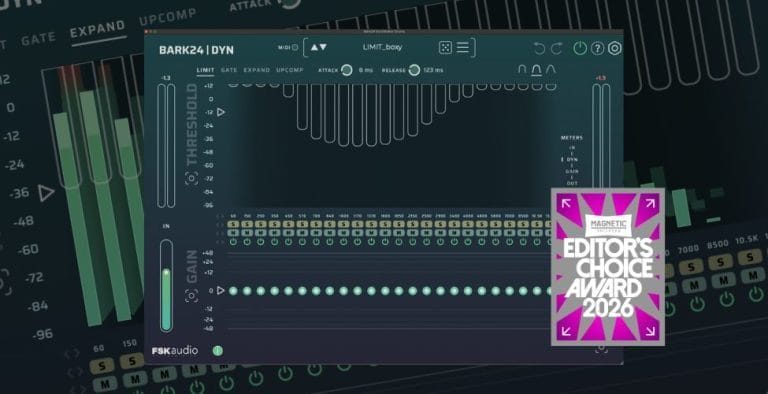
Bark24 | Dyn is a 24-band processor built around the Bark scale, and this one earned an Editor’s Choice award because it solved a real problem in my workflow faster than I expected. I found myself using it before the detailed mix stage, mostly when a synth, sample, piano, loop, or bus needed broader tonal control before I started reaching for a standard EQ. It gives me a way to shape sounds musically before I start making tiny corrective moves, and for $99, that makes it one of the cleaner low-cost recommendations on this list.
Who it’s for: This is for producers who work with synths, samples, loops, layered parts, and dense arrangements, especially if you want a faster way to place sounds before the mix gets too technical.
Who it’s not for: This is not for someone who only wants a normal EQ or a one-knob fixer. It is easy to use once the concept clicks, though it rewards producers who already understand broad frequency balance.
Waves Harmony

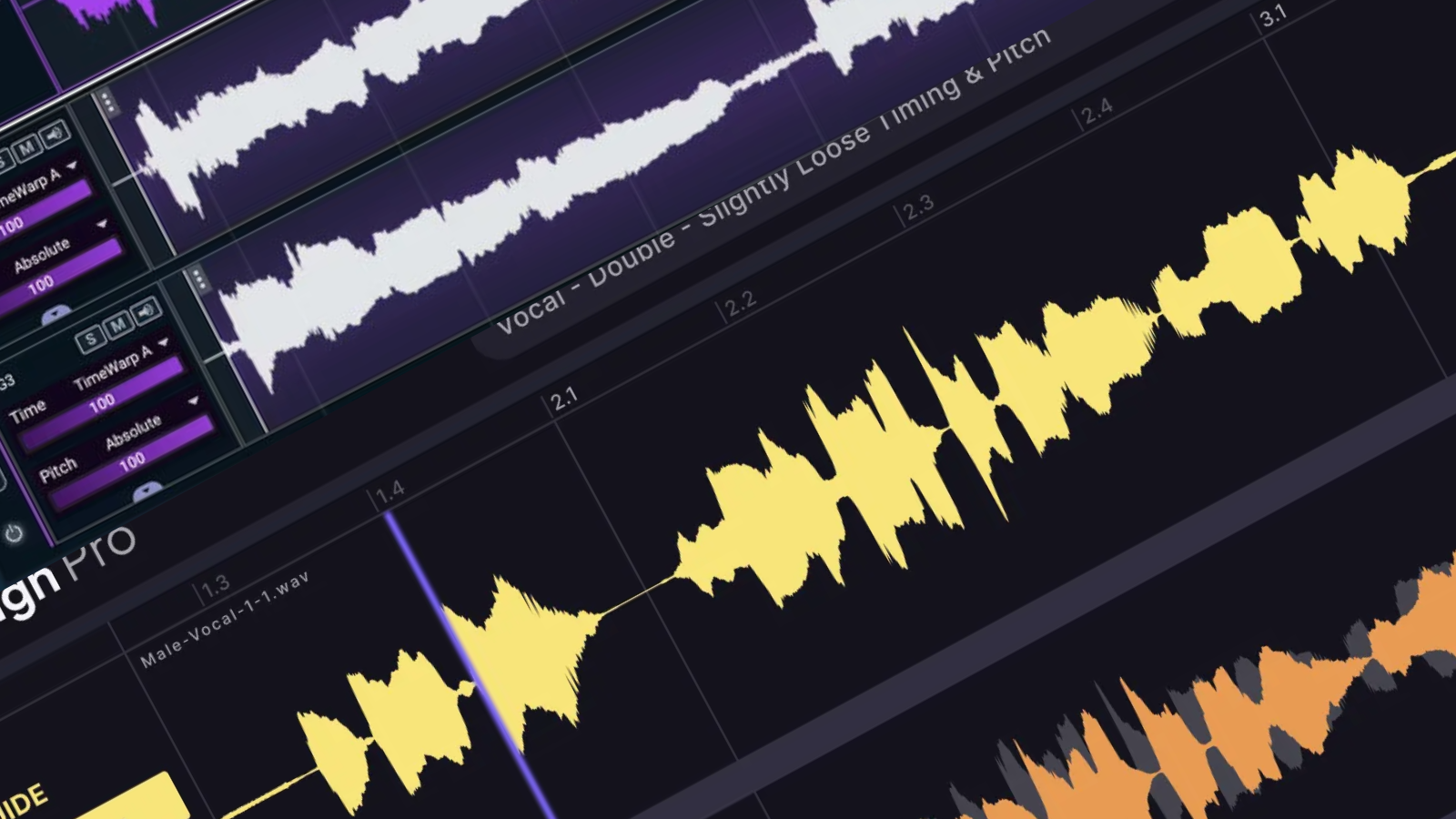
Waves Harmony is a real-time vocal harmony plugin that can generate up to eight harmony voices from one vocal, and I still think it makes sense for producers who do not always have access to singers for stacked parts. The value is simple: vocal harmonies take time, and this gives you a fast way to build out that part of the arrangement without recording several new passes. I liked the fact that it can work in the studio and in live settings, since low CPU use and quick preset access matter when you need the effect to behave reliably.
Who it’s for: This is for hobbyist singers, electronic producers, touring vocalists, and writers who want quick harmony stacks without spending hours recording or editing each part.
Who it’s not for: This is not for professional session singers who can record polished harmony parts quickly, and it is not essential if your music rarely uses vocals.
Learn More About This Mic While Supporting Our Team Of Writers Through Our Affiliate Partnership With Plugin Boutique At No Extra Cost To You Right Here
Nightfox Audio Rendition
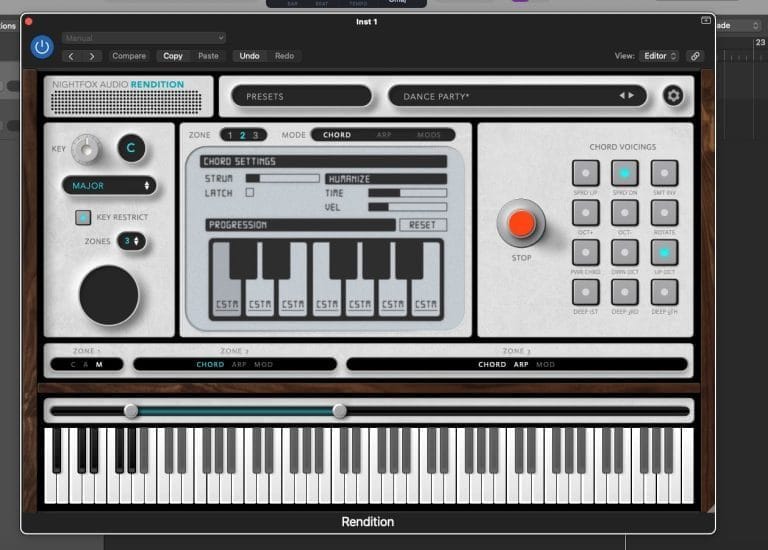
Nightfox Audio Rendition is a MIDI generator that can help you build new ideas from a single note, and I think that alone makes it interesting for producers who get stuck at the blank-session stage. I would not treat it as a replacement for writing, though I do like tools that get you moving when the first idea is the hardest part. In my opinion, MIDI tools like this are at their best when they give you a starting point, then get out of the way once the session has direction.
Who it’s for: This is for producers who like MIDI generators, chord tools, and idea-starters, especially if you write alone and want help getting the first few musical moves down.
Who it’s not for: This is not for producers who want full control over each note from the start. If you hate generated MIDI or prefer to write everything by hand, it may feel like extra noise.
Under $150
Arturia MiniLab 3

The Arturia MiniLab 3 is one of the easiest compact MIDI keyboard recommendations I have reviewed because it gets the beginner-controller formula right without pretending to be a flagship keyboard. It gives you 25 keys, pads, encoders, faders, USB-C, MIDI out, and a small enough footprint to fit into a tight setup. I like it most as a beginner keyboard or a secondary writing keyboard, and I do not think it needs to be judged against larger controllers with weighted keys.
Who it’s for: This is for beginner producers, laptop producers, producers working in small rooms, and anyone who wants a compact controller for writing chords, basslines, melodies, and simple automation.
Who it’s not for: This is not for pianists or producers who need full-size keys, weighted action, or a wide key range. It is a compact writing tool first.
Purchase this keyboard here and help support our team via our partnership with Sweetwater
Donner DMK-25 PRO
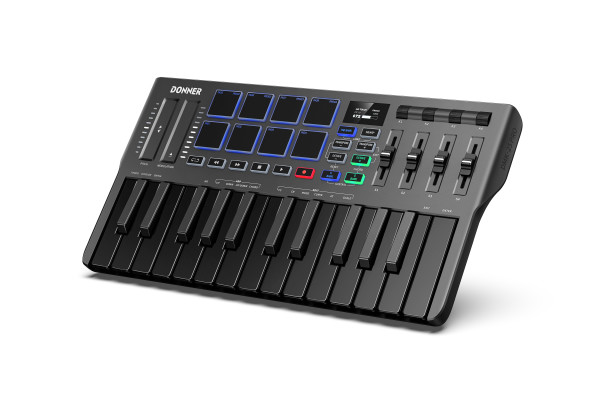
The Donner DMK-25 PRO is a 25-key MIDI controller that packs in mini keys, pads, knobs, sliders, touch strips, transport controls, and an OLED display. I spent time with it as a travel-minded and beginner-friendly controller, and the main appeal is how much control Donner fit into a small device. The scale features and real-time controls make sense for new producers who want to start writing fast without spending too much.
Who it’s for: This is for traveling producers, beginners, and anyone who wants a small MIDI controller with pads, keys, sliders, knobs, and transport controls in one place.
Who it’s not for: This is not for producers who care most about premium key feel or top-tier pad response. It is useful for the price, though it still sits in the budget-controller lane.
Orba 2
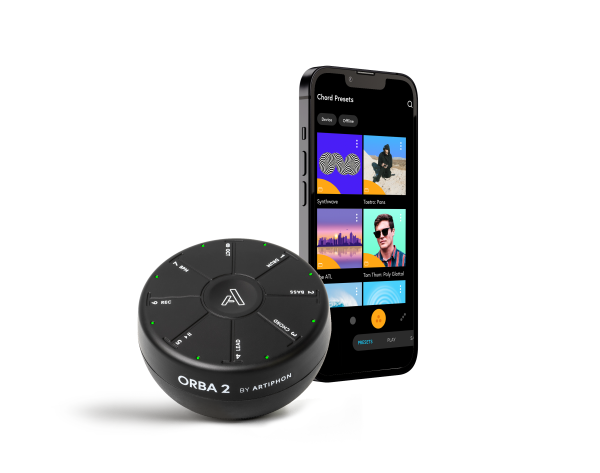
Orba 2 is a small drum machine, synth, groovebox, sampler, and MPE MIDI controller that fits in your hand. I think it makes the most sense when you treat it as an idea tool instead of a replacement for your DAW. It can help you sketch ideas, play with movement, record quick patterns, and experiment away from the main desk, though the app and export side are where the limits start to matter.
Who it’s for: This is for producers who want a small sketchpad, an expressive controller, or a low-pressure way to make ideas away from the main studio.
Who it’s not for: This is not for producers who need a polished standalone production system with clean export and full session control.
Under $250
Apogee JAM X

Apogee JAM X is a small instrument interface for guitar, bass, synths, and direct recording. I like it because it does one job clearly: plug in an instrument, get a clean signal, monitor it, and keep writing. It is one of those pieces that makes sense when you need a portable recording path rather than a full desktop interface with several inputs.
Who it’s for: This is for guitarists, bassists, synth users, and producers who need a portable way to record one instrument cleanly.
Who it’s not for: This is not for vocalists who need a mic preamp or producers who need several inputs at once. It is best when you already know you need a direct instrument input.
Learn More About This Interface While Supporting Our Small Team Of Writers Through Our Affiliate Partnership With Sweetware Here
Baby Audio Transit 2
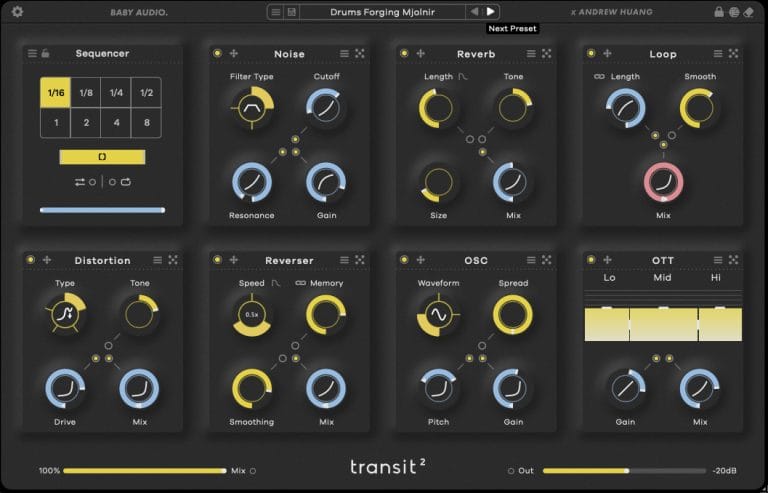
Baby Audio Transit 2 is a transition-focused multi-effect plugin made with Andrew Huang, and I think it works because it solves one of the most annoying parts of electronic arrangement. Instead of building long effect chains for risers, drops, fills, filter movement, delays, and noise sweeps, Transit 2 gives you a faster way to make those moves from inside one plugin. I liked the original Transit, and Transit 2 feels like a clearer version of the same core idea.
Who it’s for: This is for electronic producers who write arrangement-heavy music and want faster section changes without building effect chains from scratch each time.
Who it’s not for: This is not for producers who prefer fully manual automation with stock devices. If you already have a transition rack you love, this may overlap with what you already do.
Baby Audio Humanoid
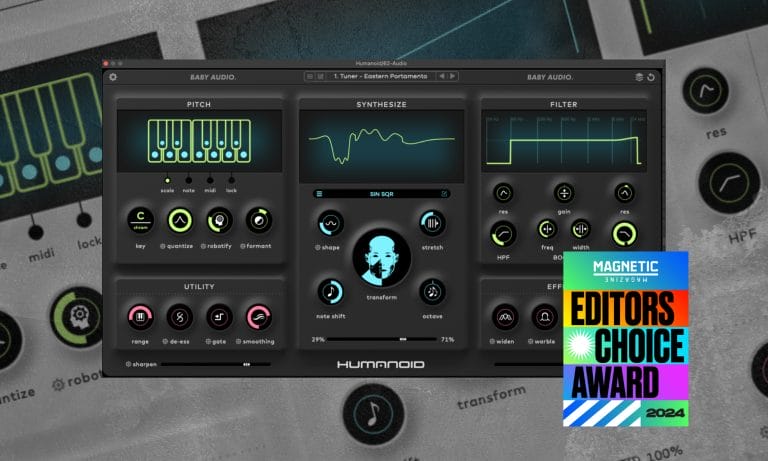
Baby Audio Humanoid is a vocal processing plugin that earned Editor’s Choice because it goes far past basic tuning. I think of it as a character tool for vocals, hooks, ad-libs, and parts that need to feel processed on purpose. It can reshape a vocal into something synthetic and highly controlled, and that makes it useful when a normal tuned lead is too plain for the role it needs to play.
Who it’s for: This is for producers who work with vocals and want fast synthetic vocal effects, robotic processing, and stylized vocal parts without building a long chain from scratch.
Who it’s not for: This is not for singers or engineers who only need transparent pitch correction. If you want the vocal to sound untouched, this is the wrong tool.
Under $500
Apogee BOOM
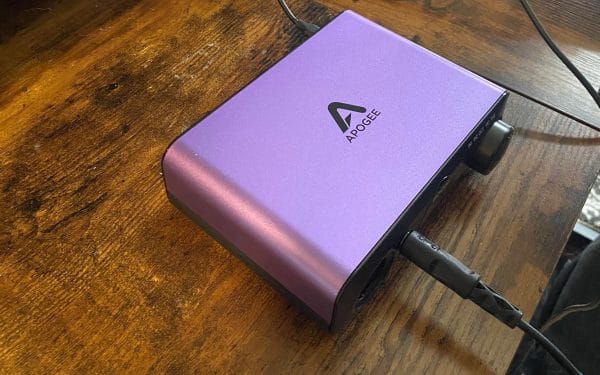
Apogee BOOM is a compact USB-C interface that I still think makes sense for producers who want a real upgrade from the cheapest starter boxes. It gives you Apogee conversion, simple operation, Loopback, and a compact form factor that works well for small studios. The main thing I like about BOOM is that it keeps the setup simple while still feeling like a real recording tool.
Who it’s for: This is for vocalists, songwriters, producers, podcasters, and small-studio creators who need a clean and simple interface for focused recording.
Who it’s not for: This is not for bands, drum recording, or hardware-heavy rooms that need several inputs and outputs. It is a compact interface for smaller setups.
Learn More About This Interface While Supporting Our Team Of Writers Through Out Affiliate Partnerships With Sweetwater Here
Universal Audio SD-1
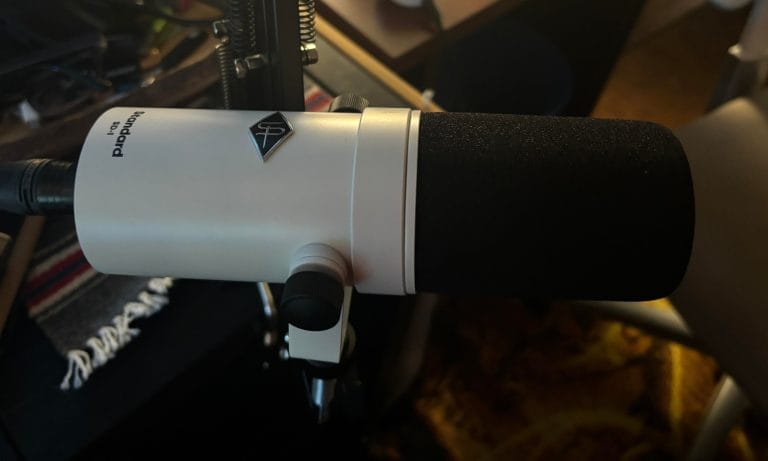
The Universal Audio SD-1 is a dynamic microphone built for vocals, podcasting, and instruments, and I was impressed by how many small details it got right. The directional recording was the big one for me, since a dynamic mic that rejects room noise well can be a much better fit than a condenser in a normal home studio. I also liked the vocal-friendly EQ curves and the fact that it felt more affordable than some of the obvious broadcast-style competitors.
Who it’s for: This is for producers, vocalists, podcasters, and creators recording in imperfect rooms where a sensitive condenser might pick up too much background sound.
Who it’s not for: This is not for people who want a bright condenser sound or who do not have enough interface gain. You may need to crank the preamp or use extra gain support depending on the interface.
Learn More About This Mic While Supporting Our Team of Writers Through Our Affiliate Partnership With Sweetwater At No Extra Cost To You – HERE
Universal Audio Standard SC-1

The Universal Audio Standard SC-1 is a large-diaphragm condenser mic that impressed me because of how clear and detailed it sounded for the price. I liked it most on vocals, guitars, and transient-heavy sources where detail mattered, and the Hemisphere modeling makes it more flexible than a standard condenser in this price range. I would not call it a total do-everything mic, though it gives small studios a lot of value if the room is under control.
Who it’s for: This is for vocalists, producers, songwriters, and small studios that need a clean condenser mic with modeling options.
Who it’s not for: This is not for untreated rooms or creators who need a shock mount included in the box. A condenser this detailed will pick up the room around the source.
Learn More About This Mic While Supporting Our Team Of Writers Through Our Affiliate Partnership With Sweetwater At No Extra Cost To You Right Here
Under $750
Black Lion Audio MIDI Eight
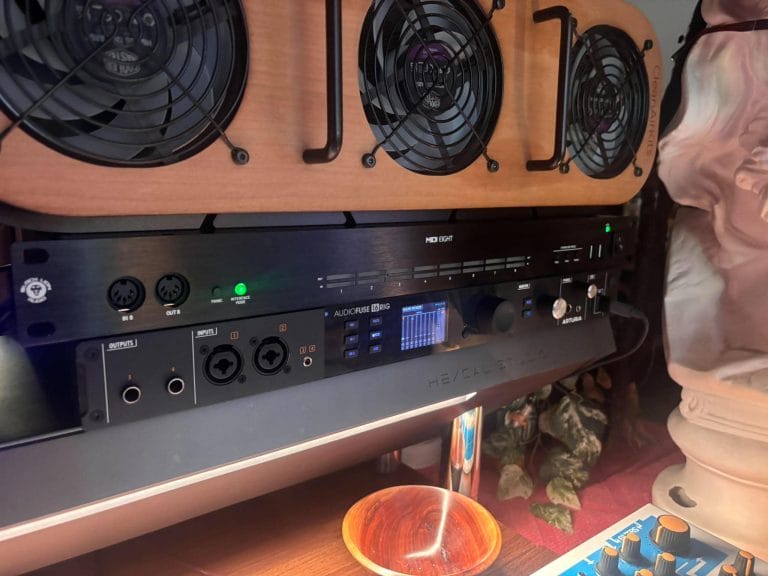
Black Lion Audio MIDI Eight earned Editor’s Choice because it solves a studio problem that is easy to ignore until your setup gets annoying. It is an 8-in, 8-out MIDI interface and router with standalone routing, a USB hub, activity LEDs, front I/O, rack format, and a Panic button. In my room, it pairs well with a larger audio interface because the audio side and MIDI side each have a dedicated box, and that makes the whole setup cleaner.
Who it’s for: This is for hardware-heavy producers, hybrid studios, and live rigs that need organized MIDI routing, clock distribution, and fewer cable headaches.
Who it’s not for: This is not for laptop-only producers. If you work fully inside the DAW, you probably do not need a dedicated MIDI router yet.
Learn More About This Mic While Supporting Our Team Of Writers Through Our Affiliate Partnership With Sweetwater At No Extra Cost To You Right Here
Donner Essential L1

The Donner Essential L1 is a budget analog mono synth that earned Editor’s Choice because it gives producers a real hands-on synth experience without jumping into boutique pricing. I like products like this because they give newer hardware users a clear way to learn signal flow, filter movement, envelopes, and performance controls outside the DAW. It also makes sense for producers who want hardware bass or lead parts without committing to a more expensive synth.
Who it’s for: This is for producers who want their first analog mono synth, hardware bass parts, simple lead lines, and a hands-on way to learn synthesis.
Who it’s not for: This is not for producers who need polyphony, presets for every patch, or a synth that can cover a whole track by itself.
ADDAC System Mixology

ADDAC System Mixology is a routing, mixing, and feedback pedal that I found most useful once I stopped thinking of it as an effect and started treating it as a control center for the pedals I already had. It lets you run two loops in parallel, in series, or in reverse order without physically repatching the board, and that is the real value. It does not create a sound by itself, which means it becomes more useful as the rest of your pedal setup gets better.
Who it’s for: This is for guitarists, synth users, hardware producers, and pedal-heavy setups that need better routing, blending, and feedback control.
Who it’s not for: This is not for someone looking for one pedal that instantly adds a new effect. Its value depends on what you plug into it.
Under $1,000
IK Multimedia iLoud Sub
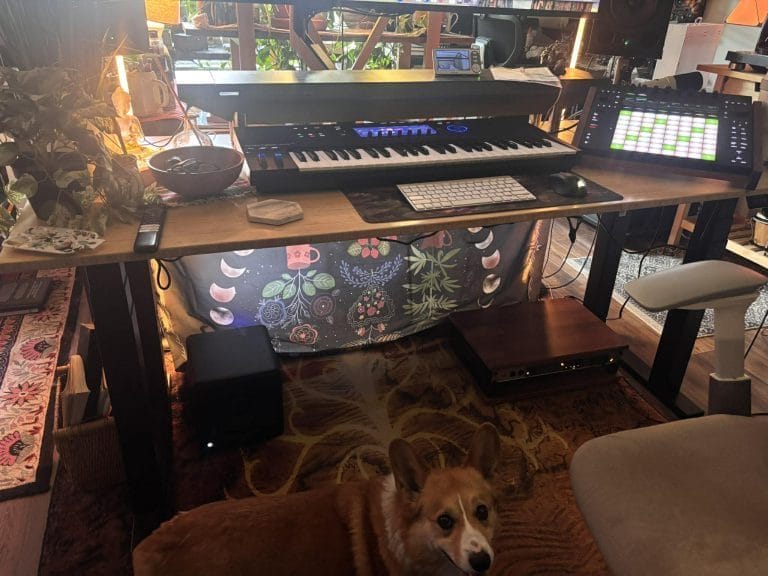
IK Multimedia iLoud Sub earned Editor’s Choice because it handles one of the hardest parts of small-room production: low-end trust. A compact sub can easily make a room worse if it is hard to place or hard to integrate, though this one gives small studios a more practical path toward hearing what is happening below the main monitor range. I think the real value is the way it supports the monitoring chain rather than just adding more low end.
Who it’s for: This is for producers in small rooms who already have decent monitors and need a better read on low-end extension, balance, and translation.
Who it’s not for: This is not for untreated rooms where the low end is already out of control. It can help, though it still needs sensible placement and setup.
Learn More About This Mic While Supporting Our Team Of Writers Through Our Affiliate Partnership With Sweetwater At No Extra Cost To You Right Here
Universal Audio Volt 876
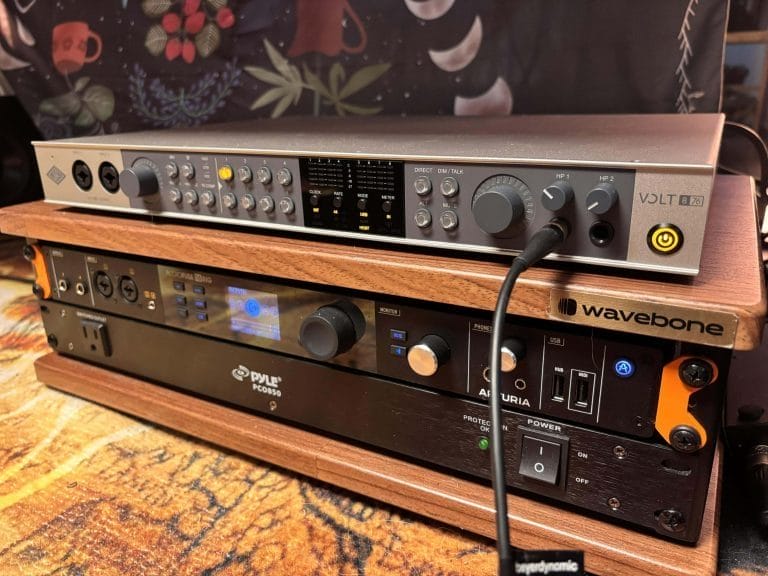
Universal Audio Volt 876 earned Editor’s Choice because it gives producers a rackmount interface with enough I/O and tracking tools to support a larger studio setup without jumping into high-end pricing. I like that the onboard analog tools are useful during tracking, though they do not distract from the core job of capturing clean, repeatable results. This is the kind of interface that starts to make sense once a two-input setup feels too cramped.
Who it’s for: This is for producers who record several sources, small bands, hardware setups, or multi-mic sessions and need a rack interface that can grow with the room.
Who it’s not for: This is not for someone recording one vocal or one synth at a time. If your setup is simple, a smaller interface will be easier and cheaper.
Learn More About This Mic While Supporting Our Team Of Writers Through Our Affiliate Partnership With Sweetwater At No Extra Cost To You Right Here
AIAIAI TMA-2 Wireless+
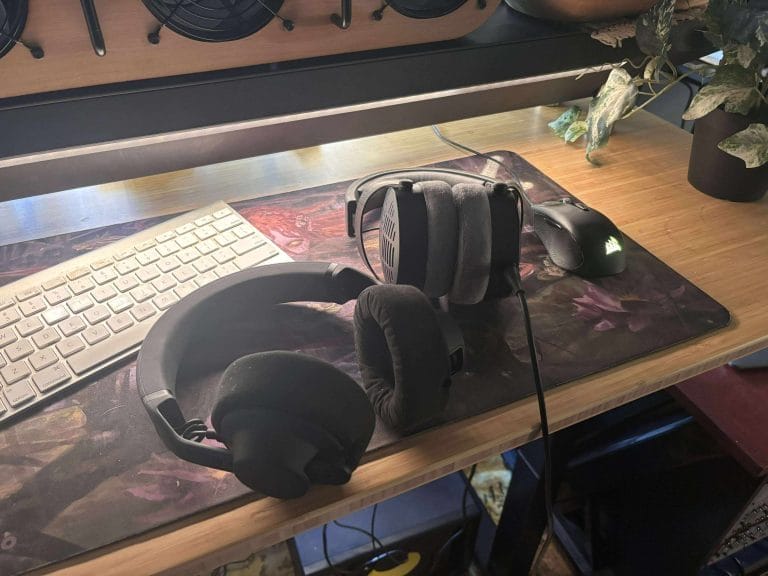
AIAIAI TMA-2 Wireless+ is one of the few wireless headphone systems I would actually take seriously in a studio context. I was skeptical before using it, though the low-latency Wireless+ system made the whole concept feel much more practical than Bluetooth monitoring. I also liked the modular design and the fact that it can work for long sessions without feeling like a heavy studio headphone clamped to my head all day.
Who it’s for: This is for producers, DJs, and creators who want wireless freedom without giving up the timing accuracy needed for studio work.
Who it’s not for: This is not for producers who want a traditional open-back mixing headphone or who do not care about wireless monitoring. If you stay at the desk and cables do not bother you, the wireless feature may not matter enough.
Learn More About This Mic While Supporting Our Team Of Writers Through Our Affiliate Partnership With Sweetwater At No Extra Cost To You Right Here
Final Thoughts On The Best Budget Music Production Gear
If I were building a setup from scratch, I would start with the thing that blocks the most work.
If you cannot hear clearly, buy headphones or fix the monitoring. If you cannot record cleanly, buy an interface and a mic. If you cannot get ideas down quickly, buy a MIDI controller. If your sessions keep stalling because arrangement moves take too long, buy a focused plugin like Transit 2. If your hardware setup is time-consuming, start looking into MIDI routing.
That is the main point of thinking about the best budget music production gear by price point. The right purchase is not always the cheapest or the most exciting. It is the piece that removes the clearest problem from your current setup so you can make more music with fewer avoidable interruptions.

Will Vance is a professional music producer who has been involved in the industry for the better part of a decade and has been the managing editor at Magnetic Magazine since mid-2022. In that time period, he has published thousands of articles on music production, industry think pieces and educational articles about the music industry. Over the last decade as a professional music producer, Will Vance has also ran multiple successful and highly respected record labels in the industry, including Where The Heart Is Records as well as having launched a new label with a focus on community through Magnetic Magazine. When not running these labels or producing his own music, Vance is likely writing for other top industry sites like Waves or the Hyperbits Masterclass or working on his upcoming book on mindfulness in music production. On the rare chance he's not thinking about music production, he's probably running a game of Dungeons and Dragons with his friends which he has been the dungeon master for for many years.