Table of Contents
With more people than ever getting into content creation of all different types, vocal microphones for podcasts and streaming have become a massively hot commodity. And while it can be easy to see titans like Joe Rogan sporting a whole fleet of Shure SMB7s and assume that that’s the best option for podcasting and vocal recording, there are many other, sometimes better choices you can invest in.
Despite being on the market for a few years, the UA SD-1 mic hasn’t gotten the same notoriety as some more well-recognized brands like Shure. But I had the opportunity to test out one of these gentle giants in the studio for a few weeks and was really impressed with a ton of smaller details that the SD-1 did far better than almost any other mic I’ve reviewed.
So, let’s talk about it! In this comprehensive review, we’ll go over this mic’s best features, what I wasn’t impressed by, and how it sounds (both on vocals and guitar) with the hopes that you come away with a more solid understanding of whether this is the best mic for you, your podcast, stream, and/or content.
Learn More About This Mic While Supporting Our Team of Writers Through Our Affiliate Partnership With Sweetwater At No Extra Cost To You – HERE
What Is The Universal Audio SD-1?

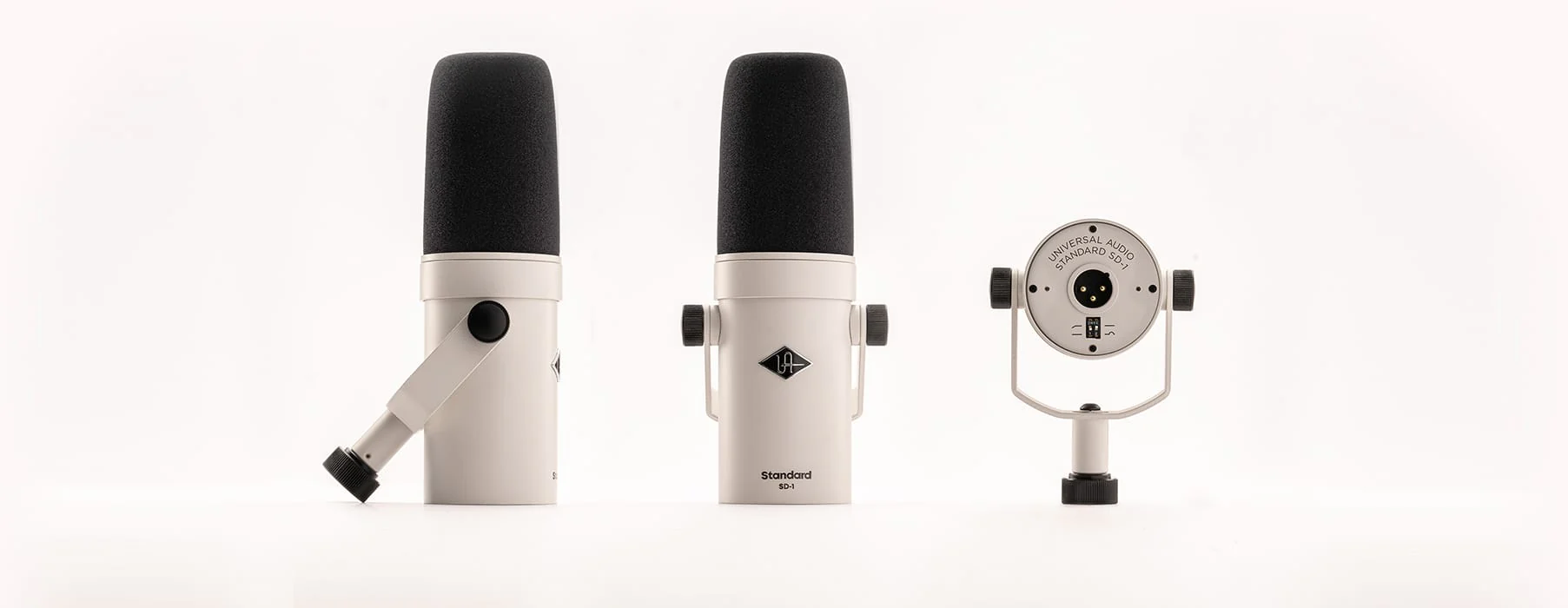
The Universal Audio SD-1 Dynamic Microphone is designed for recording vocals, podcast episodes, and instruments with exceptional clarity. Its flat frequency response captures a rich, natural sound. Its cardioid polar pattern effectively minimizes background noise, making it suitable for various recording environments. The SD-1 also includes Hemisphere, a microphone modeling plug-in with five iconic dynamic models, and UA-designed Apollo Channel Strip Presets for optimal audio settings.
Hemisphere enhances the SD-1 by offering virtual models of well-known microphones, including those used by artists like Michael Jackson and Frank Sinatra. This plug-in provides proximity, axis, and filter parameters, allowing users to fine-tune their recordings without physically adjusting the microphone. These features make achieving professional-quality sound in studio and home settings easy. The SD-1 also has low-cut and articulation boost switches to refine the audio output further.
The SD-1 requires a Universal Audio Apollo audio interface to utilize the Apollo Channel Strip Presets. The microphone’s design includes an internal shock mount and a built-in windscreen to reduce unwanted noise. It connects via XLR and has a frequency range of 50Hz-16kHz. Weighing 1.6 lbs and measuring 7.68″ x 2.36″, the SD-1 is a robust and reliable tool for enhancing audio recordings with high-quality sound and versatile functionality.
Universal Audio SD-1 Mic Review – The Pros
Amazing Directional Recording
As much as I like my Lauten LA-320 V2 for more dedicated vocal-recording sessions, that mic is a powerhouse player for that specific purpose but comes up short for a myriad of reasons when doing more casual stuff like podcast recordings (also linked below), Zoom meetings, and other interviews. This is mainly because the Lauten mic is omnidirectional and requires a fair amount of setup to get going when recording vocals of any kind.
Now, I don’t mind that when recording the vocals in a new single like the one I’ve linked below because I usually dedicate an entire night in the studio to recording those vocals and don’t mind taking an extra fifteen minutes or so to get the room and mic ready to record. But for things I want a high-quality recording of quickly and efficiently, my Lauten is just not the move.
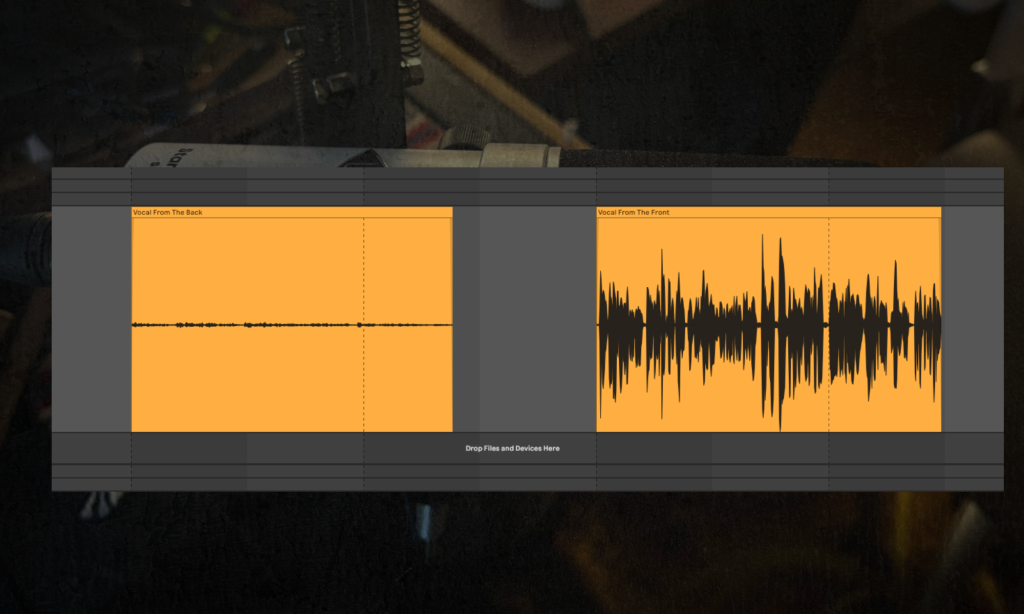
These situations are usually in Zoom meetings and interviews, and the directional pickups on the SD-1 are simply phenomenal. I use an air cleaner to filter out the dust in the studio, which runs pretty constantly (I hate dust on my synths). It is situated behind where I have my mics. The SD-1 doesn’t pick up ANY of the noise from the air cleaner, which was impressive but far from game-changing. It was amazing that it picked up little to no audio at all, even when I spoke behind the mic. You can tell in the audio example below that it completely omits almost all of the audio that’s not coming from directly in front of it, which means that it’s fantastic for recording conversations where both people are in the room together.
Vocal-Friendly EQ Curves
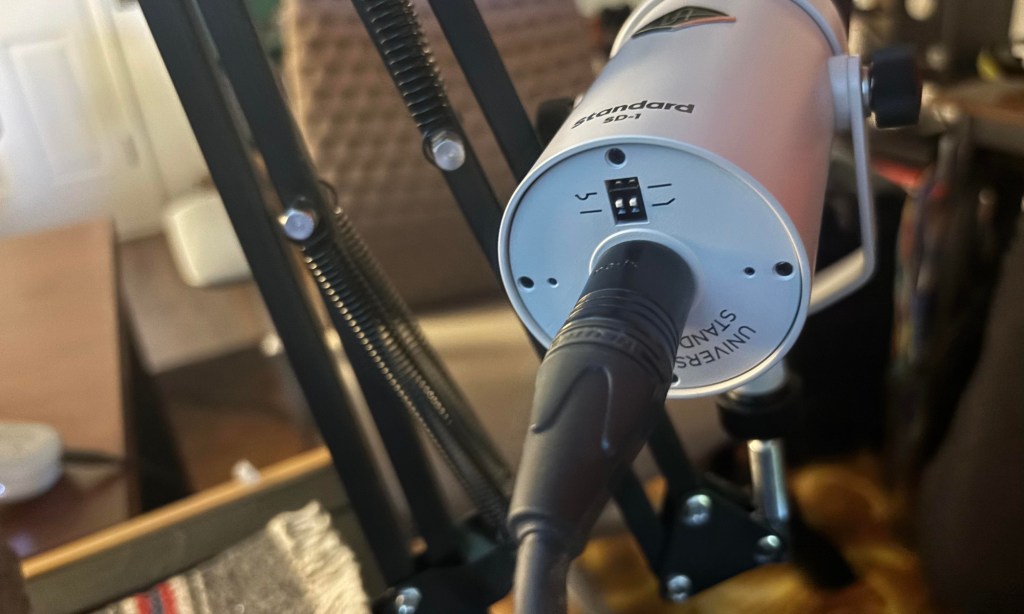
As I mentioned above, the SD-1 shines when recording vocals, especially conversational ones. Universal Audio is doubling down on that functionality and market by adding several EQ curves, which you can select at the mic’s base. Sure, it’s far from uncommon to have similar features, but most mics have just a flat curve or bass-removal options to toggle from, whereas the SD-1 has options to boost the upper mids for even more vocal clarity (this sounds good on guitars as well, but I’ll talk about that later on).
Looking at the spec sheet of the SMB7 vs. the SD-1, I noticed that they seem to sport similar profiles on paper, but in practice, I liked the SD-1 way more. It had a touch more warmth in the low end, which gave it a more lifelike and near-sounding recording.
I Love The Color
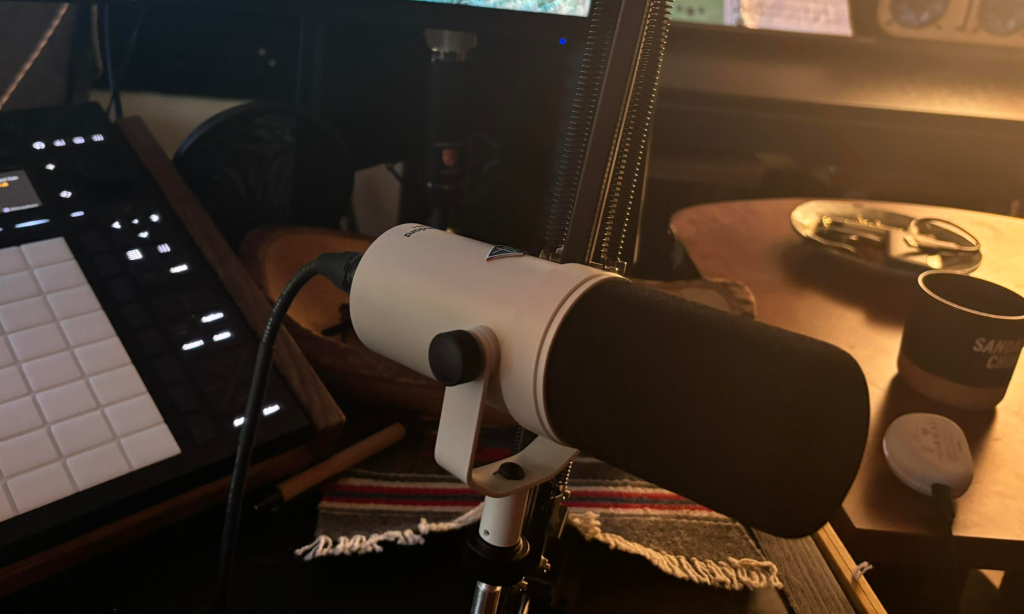
Aesthetics aren’t usually something that I highlight in these reviews as, let’s be honest, the sound quality is usually what is most important. But not remarking on the mic’s matte-finish beige coloring would be a disservice. So many mics these days are just monotonous black, which gets stale after a while (and after reviewing and using about ten black mics throughout my time running the reviews section of this website).
It was a breath of fresh air, to say the least, and a welcome addition to my studio!
It’s More Affordable Than Its Competitors!
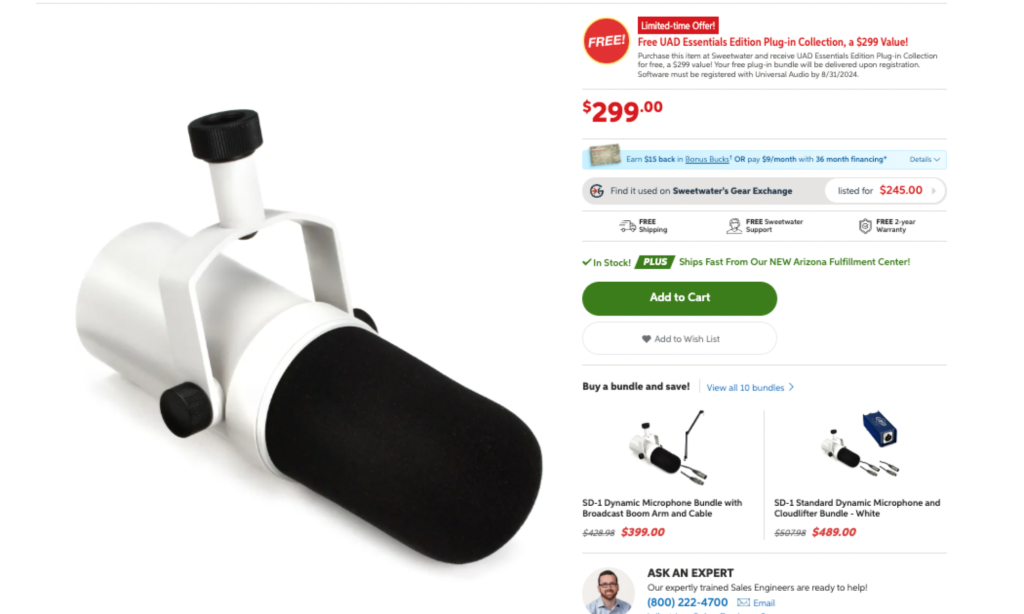
It’s no real secret that the Universal Audio SD-1 is a direct competitor to the Shure SMB7, as almost all of the bells and whistles that have made the Shure mic so popular have been recreated and mirrored in the UA SD-1. That being said, what the SD-1 does have going for it is that it’s $100 cheaper and sounds arguably just as great.
With more and more people getting into content creation, be it streaming or podcasting or whatever, more people than ever are starting to look for perfect, affordable mics to record their vocals, and the fact that the SD-1 is 25% cheaper than many of its direct and top competitors can sweeten the deal in UA’s favor.
And The Cons…
You Need To Crank The Amp Gain

Not sure if this is really that big of a deal breaker but I did want to be clear that you need to drive your interface’s gain to start to get a signal from this mic. This isn’t a big deal if you’re not swapping around instruments or anything, as you can set and forget the gain setting as long as you remember to turn the gain back down after you’re done with the mic.
I’ve read some other reviews of the SD-1 that said the reviewer needed to max out their interface’s +60dB gain, and I was nervous about trying to recreate that in my studio. But when push came to shove, I found I was getting comfortable and clean signals with only about 50dB of gain from my Arturia Audio Rig 16.
Buy A Mic Arm Before Hand!

The SD-1 indeed ranks among the “pro” mics, and this is despite its approachable $300 price tag.
While that is fantastic, it also assumes you already have many auxiliary gear in your home studio. These days, many mics come with a mic arm, shock mount, and other things so that you’re ready to make whatever content you want without any additional stuff immediately. But that is not the case with the SD-1, and you’ll undoubtedly want to buy a mic arm or some way to get the mic out of your hands and suspended near your mouth for recording.
Even the SMB7 can be purchased in creator bundles, albeit at a higher price. Still, it will come with a ton of extra things you need, like mic arms and whatnot, but with the SD-1, the only option you have is the mic, so do your research and know what else you need to get the most out of this fantastic mic when it hits your front doorstep.
The Universal Audio SD-1 On Non-Vocals
I mentioned above how when I’m recording vocals, like in my latest release, “Bright Eyed Ones,” I will dedicate an entire night to tracking and recording those vocals and don’t mind taking the extra time to set up my Lauten mic. But other times, when I’m in the creative flow, I want to grab my guitar or other instrument and just start jamming on the loops and sketches I have in Ableton. In these situations, the Luaten takes more time than it’s often worth, as I’ve usually lost the creative spark by the time I get the mic hooked up.
But the SD-1 records guitars well and I think the boost to the upper mids helps bring a touch more clarity to my fingerpicking. Here are a couple more examples of how this mic sounds on non-vocal instruments so that you can also reference them.
Learn More About This Mic While Supporting Our Team of Writers Through Our Affiliate Partnership With Sweetwater At No Extra Cost To You – HERE

Will Vance is a professional music producer who has been involved in the industry for the better part of a decade and has been the managing editor at Magnetic Magazine since mid-2022. In that time period, he has published thousands of articles on music production, industry think pieces and educational articles about the music industry. Over the last decade as a professional music producer, Will Vance has also ran multiple successful and highly respected record labels in the industry, including Where The Heart Is Records as well as having launched a new label with a focus on community through Magnetic Magazine. When not running these labels or producing his own music, Vance is likely writing for other top industry sites like Waves or the Hyperbits Masterclass or working on his upcoming book on mindfulness in music production. On the rare chance he's not thinking about music production, he's probably running a game of Dungeons and Dragons with his friends which he has been the dungeon master for for many years.