What We’ll Cover
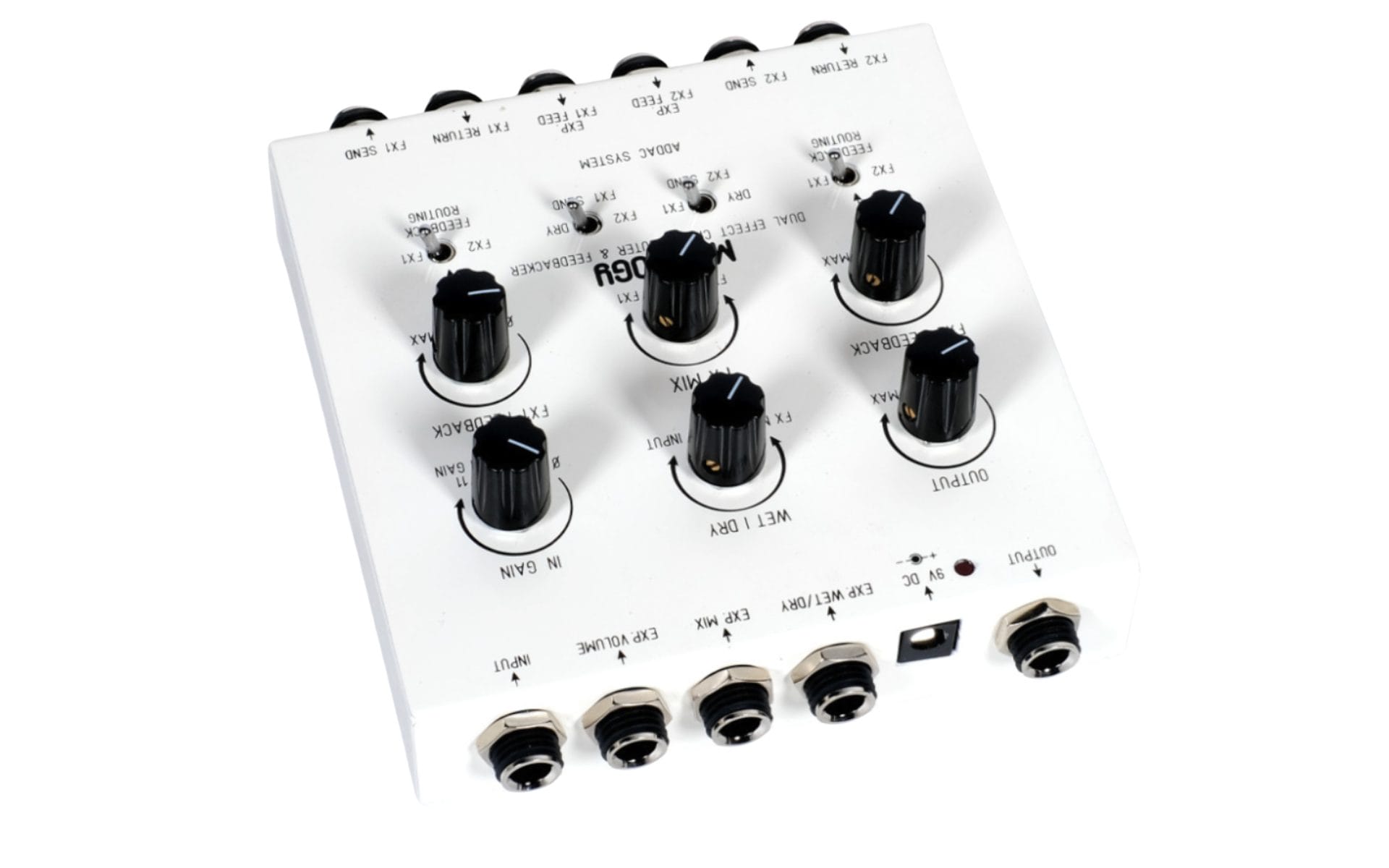
The ADDAC System Mixology started to make a whole lot more sense to me once I stopped thinking of it as just another effect pedal…
That sounds obvious once you spend time with it, but it really does matter. The Mixology does not add any new delay, reverb, fuzz, chorus, or filter, nor does it create an instantly recognizable sound on its own. What it does is take the pedals you already have and gives you a smarter way to route them, blend them, push them into feedback, control them with expression, and move between setups without rebuilding your whole chain every time.
That is the real value here, and it’s legit one of the only things on the market that can do this. If you already have pedals you like, especially older ones or simpler ones that do one thing well but maybe don’t allow for much dry/wet control, the Mixology gives them extra control. It turns a basic pedal chain into something closer to a modular-style routing system, which is why I think this thing makes a ton of sense for synth players, producers, guitarists with a few favorite pedals, and anyone who wants their pedalboard to feel less locked into one fixed order.
The Two-Loop System
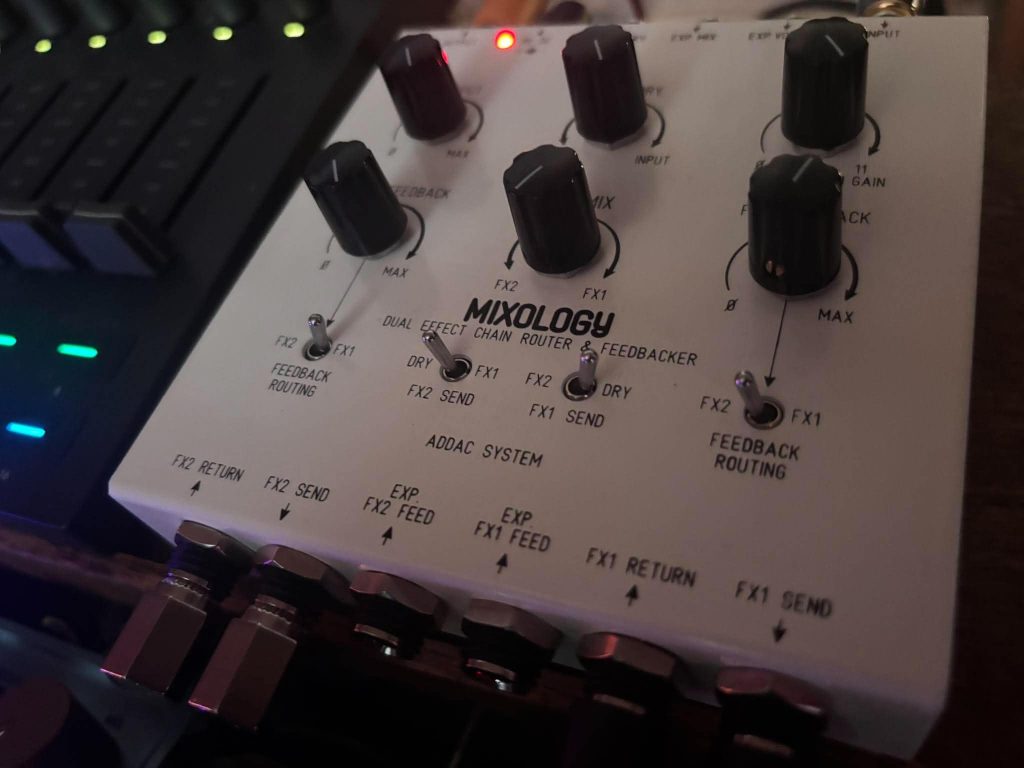
The first thing to understand is that Mixology is built around two effect loops. You can put one pedal or one chain of pedals in FX1, then put another pedal or chain in FX2.
From there, you can blend them, reorder them, run them in parallel or in series, or use the feedback section to send those returns back into themselves or into the opposite send.
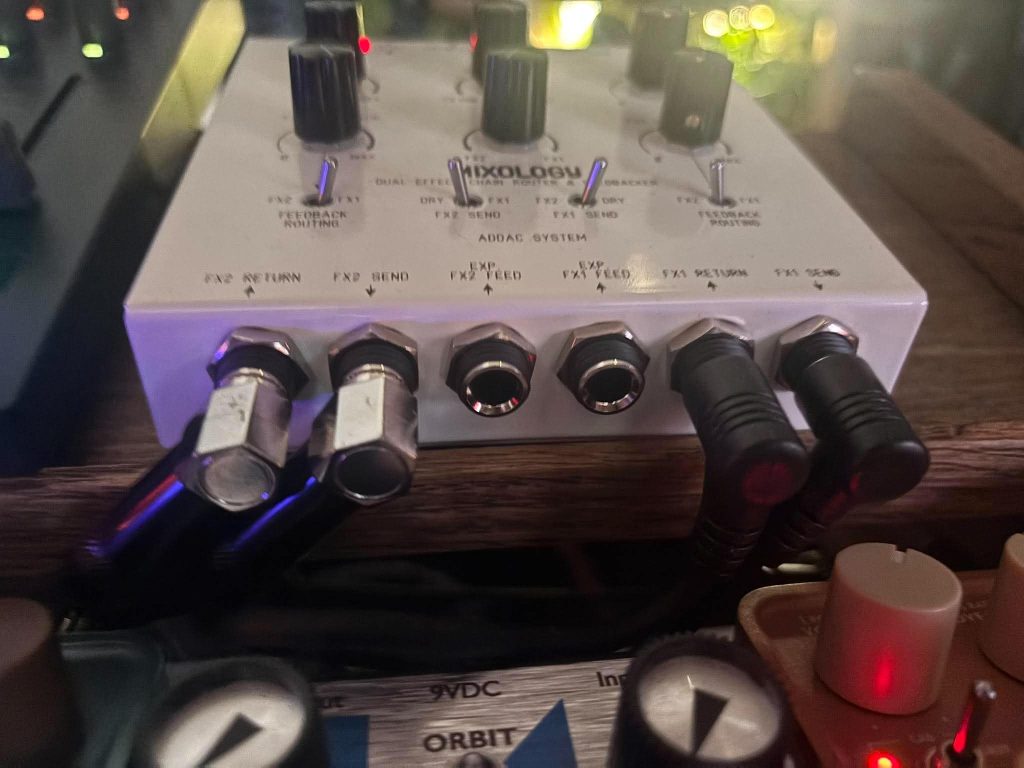
That is a lot for one small box to handle, and I will be honest, the first few minutes with it can feel a little technical. There are a lot of jacks, and there are a lot of controls, but this isn’t a “plug in one pedal and turn one knob” type of product and is instead something that, once the signal path clicks, the workflow becomes exponentially more powerful (and a hell of a lot more fun).
The key is to stop asking, “What effect does this add?” and start asking, “How do I want these effects to interact?”
That’s where the Mixology gets interesting, so let’s keep going, shall we?
The Core Routing Is The Whole Point
The Mixology has dedicated input and output gain controls, and I wouldn’t overlook that detail if you’re just getting started with this thing. With this type of routing, gain can get out of hand quickly, especially once feedback enters the setup. Having control at the start and end of the box makes it much easier to keep things usable, rather than letting the whole chain drift into a level-management problem.
The two FX loops are the core of the unit and were definitely my favorite things to play with
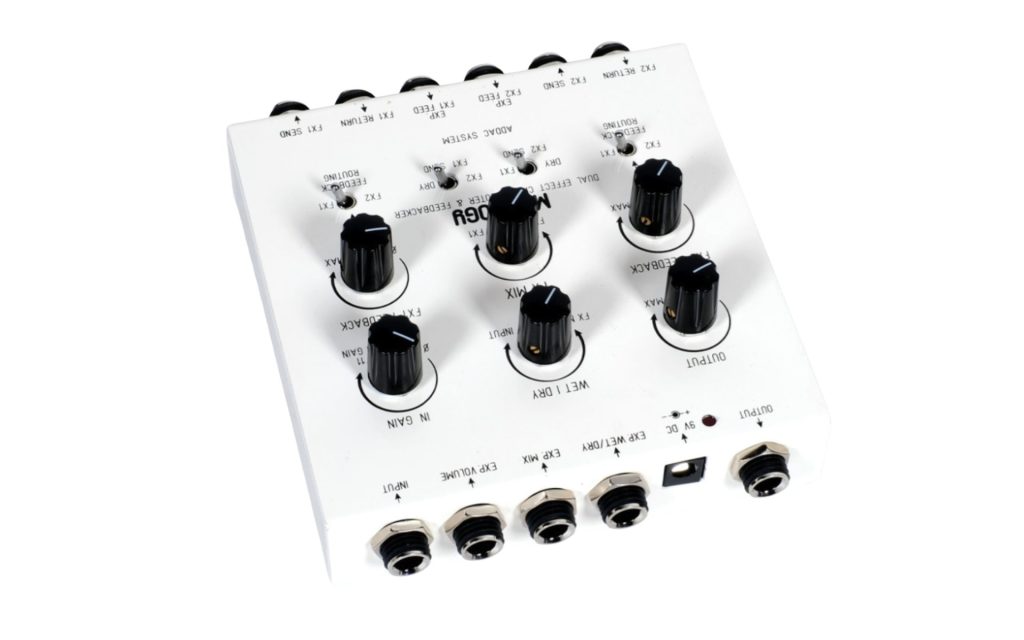
I can put a fuzz in FX1 and an overdrive in FX2, then use the FX knob to crossfade between them. That control is one of the most useful parts of the pedal, especially when you’re combining it with other pedals that sound great on synths, because it lets me blend two chains without committing to a fixed order or a single pedal. I like the idea of keeping the body and compression of a fuzz while mixing in the midrange focus and tighter low end of an overdrive. That kind of blend can feel much better than stacking one gain pedal after another and hoping the level balance works.
The WET | DRY control is just as practical to the overall design philosophy. It lets me blend the processed signal against the dry input from the same box. That matters a lot when the effects are heavy, such as overdrive, distortion, and even some cab emulations. If I am using a delay, reverb, filter, or modulation pedal that starts taking over the entire signal, I can pull the dry sound back in without changing the pedal itself.
This is one of the clearest reasons I think the Mixology works so well with older pedals: a simple one-knob phaser, for example, becomes much easier to place in a mix when the Mixology serves as the external blend control. Same thing with older analog delays that do not give you the level control you wish they had. Add expression control to the FX mix, and now that old delay can feel much easier to perform with.
The Feedback Section Is Next Level
The feedback section is why the Mixology feels different from a standard loop switcher or blend pedal.
There are two feedback loops, and each FX return can feed back into itself or into the opposite send. That gives you a controlled way to create feedback, unstable textures, extended repeats, and weirder routing behavior without needing a larger mixer or some unsafe cable trick.
Is Mixology Meant For Live Performance?
This is where the pedal starts to feel less like a utility box and more like a performance tool.
With delay in one loop and reverb in the other, the feedback controls can turn a clean ambient setup into something much richer without changing cables. You can keep the delay clear, push the reverb harder, or let one loop start influencing the other. It is easy to imagine this being useful for ambient guitar, hardware techno, drone, experimental synth work, or any setup where the feedback path is part of the performance rather than a mistake to avoid.
You do need to respect the gain structure.
Feedback can get loud, but maybe for some that could be the whole point? It can get messy, which is always fun, and it can go from cool to unusable pretty quickly if the levels aren’t set properly. That said, I would rather have this type of feedback control available from a dedicated unit than try to fake it with patch cables and a small mixer.
What Types Of Pedals Work Best With It?
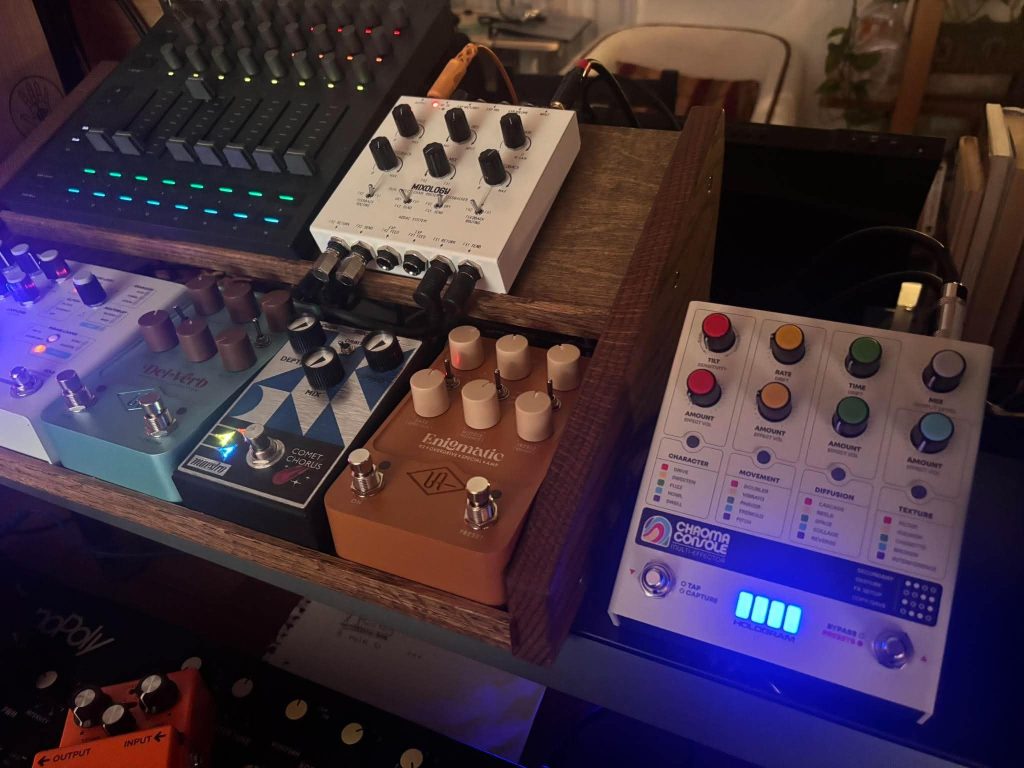
The Mixology makes the most sense with pedals that benefit from blending, feedback, or order changes.
Delay pedals are probably the easiest example. Put a delay in one loop, then use the Mixology to control how much of it enters the wet path. If it is an older analog delay, the FX mix expression control can become especially useful because you can change the repeat level while playing without bending down or touching the delay itself.
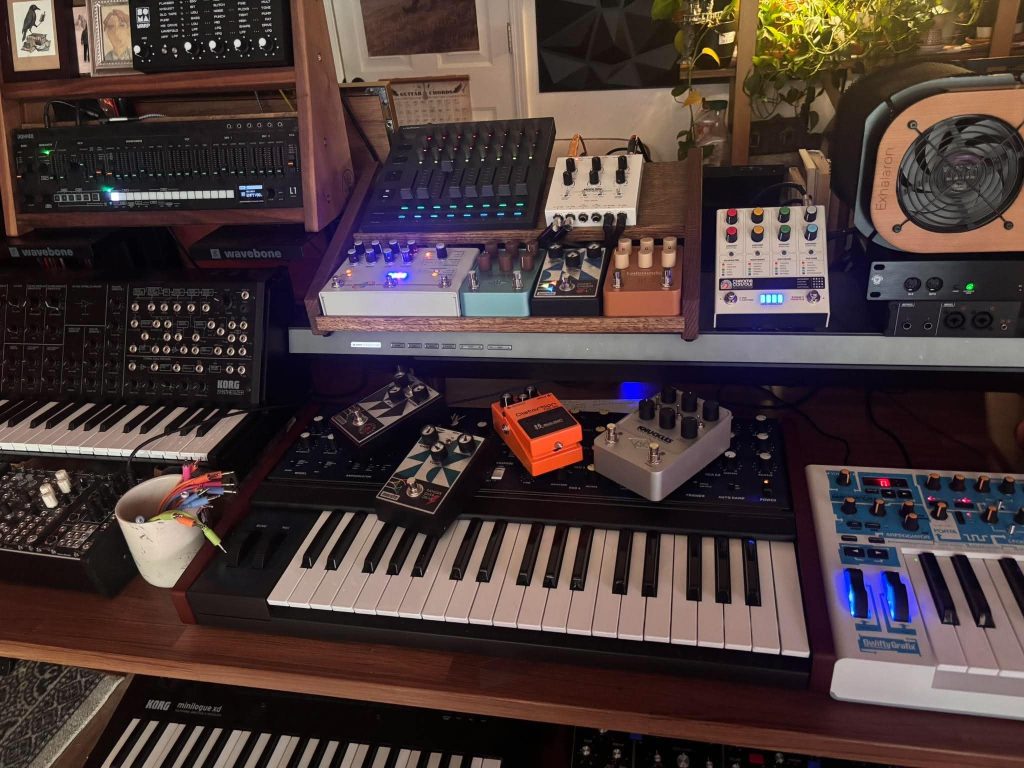
Reverb pedals are another obvious fit of course. A reverb in a feedback path can get large fast, so the wet/dry control and gain controls matter. This is especially useful for ambient setups where the reverb needs to feel playable rather than parked at one setting for the whole take, and the reverb pedal from UA that I have hooked up to this thing was an absolute dream boat; pun slightly intended.
Gain pedals are also a great use case, because they help bring a bit more control to an otherwise unruly sound profile. Fuzz, overdrive, and distortion do not always stack well when they are placed one after another. Running them in separate loops and blending them can give you a much better result. You can keep the low-end thickness of one pedal while bringing in the tighter focus of another.
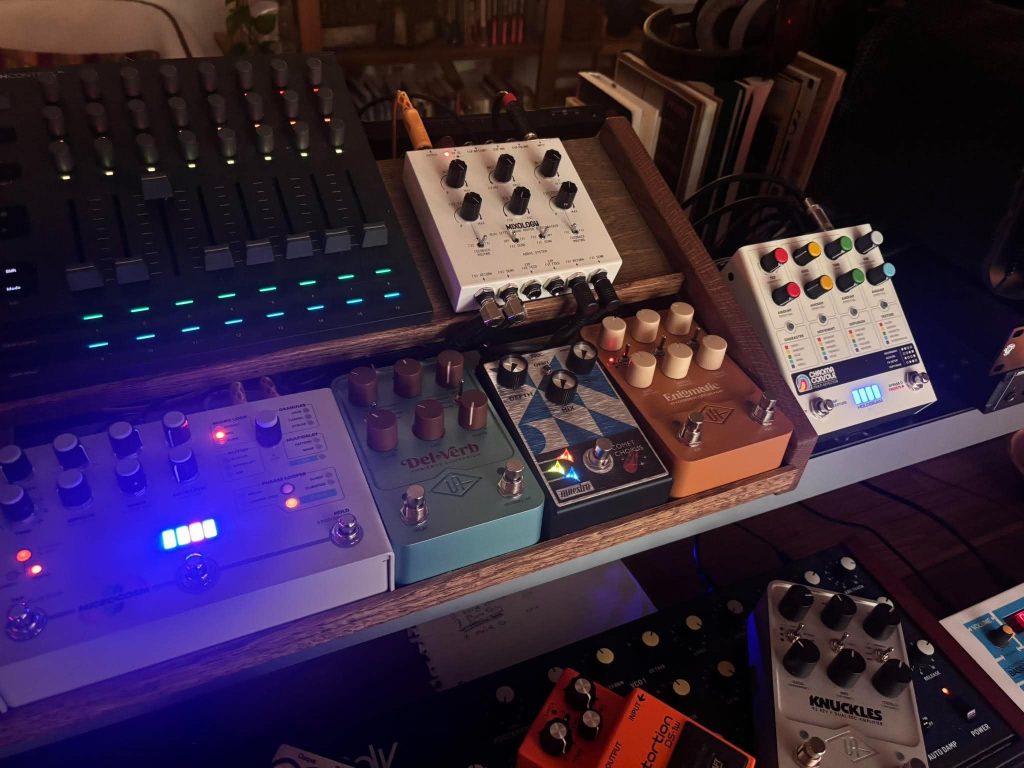
Modulation pedals also benefit from this, and I really wish I had a few more of these types of pedals to do more A/B comparisons. A phaser, chorus, flanger, or tremolo can be easier to place when the dry signal stays present. That is especially helpful with older pedals that sound great but do not give you enough mix control (I know I keep mentioning this, but it’s a massive X-factor with this unit specifically)
Is Mixology A Good Looper?
Loopers are another major use case that I think could bring a lot of flexibility into your studio flow. The Mixology can let you record loops with effects or without effects, then still place the same effect chain after the loop. That matters because loopers can lock you into one order once everything is plugged in. The Mixology gives you a way around that without rebuilding the rig.
Why It Makes The Most Sense On Synths
I think the Mixology is especially good for synth players because synth people are usually already comfortable with routing, gain staging, feedback, modulation, and hands-on control. This pedal feels closer to modular synth thinking than a traditional guitar utility pedal, and that is part of the learning curve.
For mono synths, bass synths, semi-modular gear, and hardware setups where I do not want to open a DAW, the Mixology feels very handy indeed. I can take a mono synth line, run a delay in one loop, run distortion or a filter in the other, blend the results, bring the dry signal back in, and use expression to move the whole thing while playing.
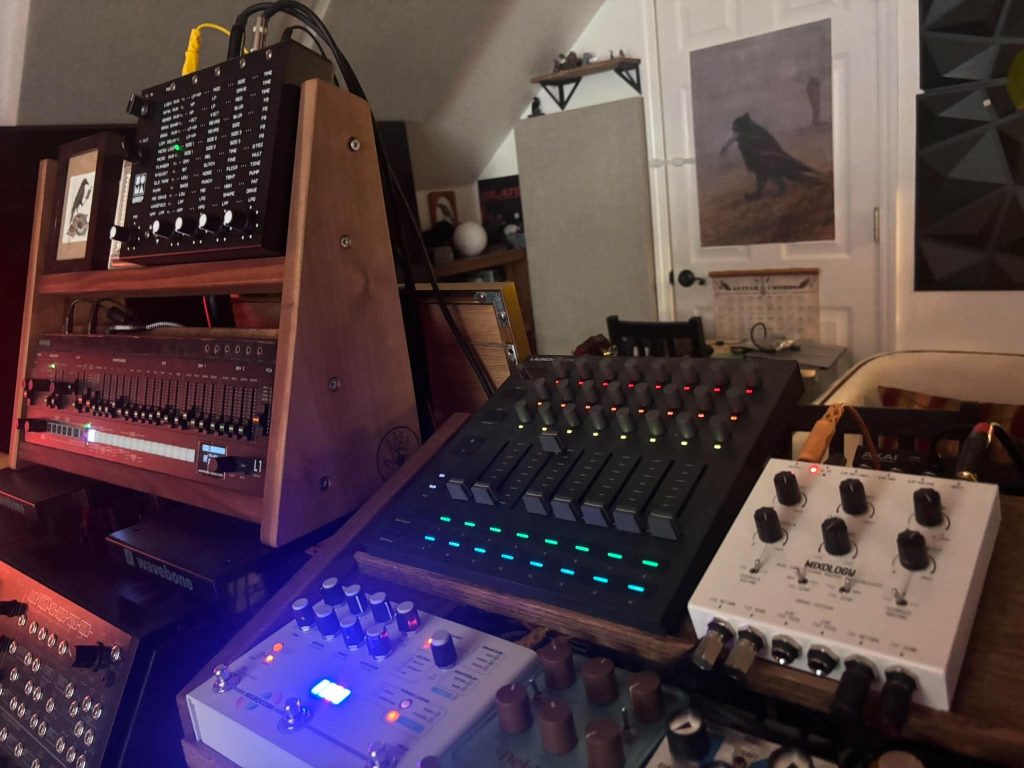
That is a great fit for synth work because synth patches can quickly lose definition when pushed through heavy effects. With the Mixology, the dry signal can stay present while the effects sit around it. For a bass synth, that matters a lot. I may want the delay or distortion, but I do not want the low end to disappear or smear out.
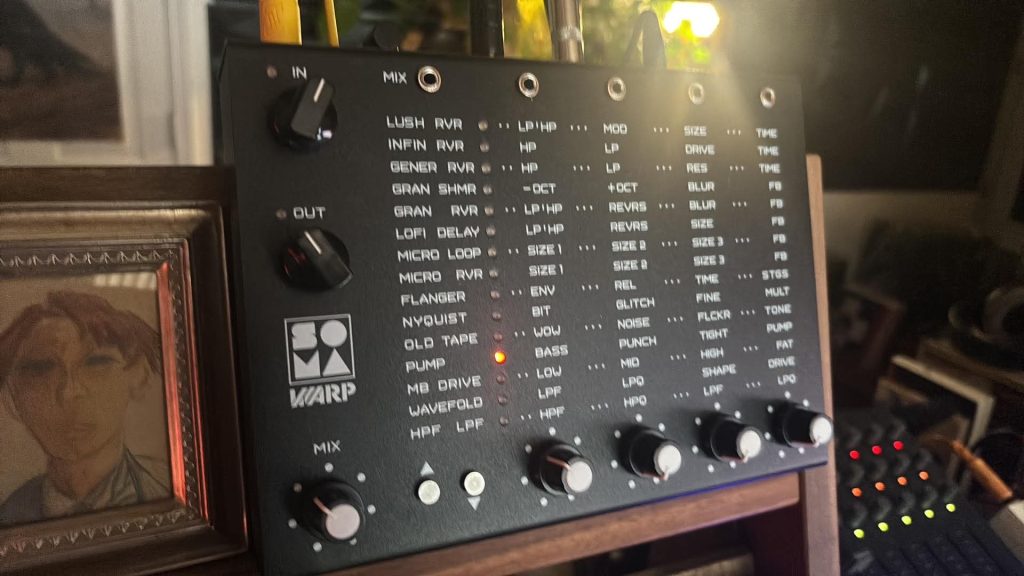
It also makes a ton of sense with drum machines and grooveboxes (especially when I pair it with the Soma Warp that I recently reviewed), as long as the mono format fits the setup. A percussion part could hit a delay feedback path without washing out the kick. A mono synth sequence could move between two effect chains during a live take.
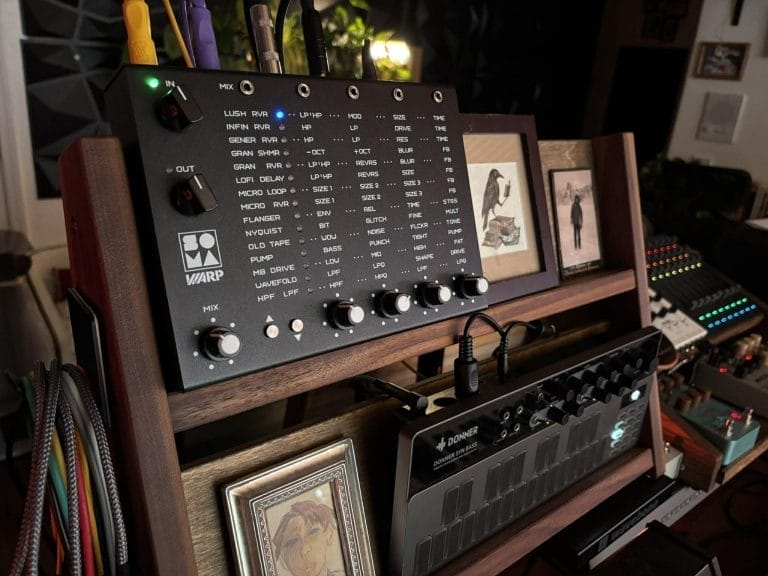
A simple hardware rig can feel much easier to perform with when the routing itself becomes part of the control surface. I loved running a bit of reverb and distortion on the drums, dialing in the sound so they sounded chunky and lively, and then sending the whole sound into the Warp to get some really pumped-up percussion that sounded larger than life.
The main limitation for synth users is that Mixology is mono.
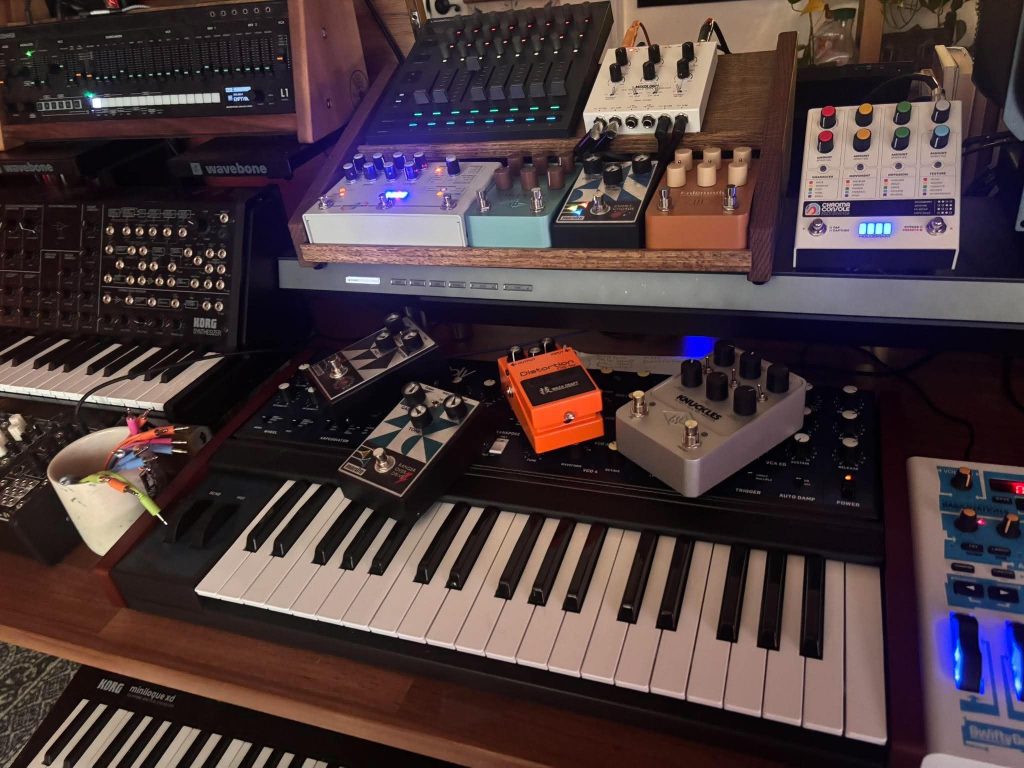
That matters for some synths (but not for others). A lot of modern synth rigs use stereo delays, stereo reverbs, stereo choruses, and performance mixers. I would be careful calling this a universal synth routing box because stereo inputs, stereo loops, and stereo outputs would make it much easier to place at the center of a modern synth setup. I loved it on all my synths, but most of what I have sounds just fine in mono, but if you have some of the newer, flashier synths with all their crazy stereo effects and pannable oscillator and all that, well, the MIxology pedal will shrink those.
I do think a stereo version would be much easier to recommend for a wider group of synth players. That is probably my biggest critique of the design. Even allowing stereo-dependent outputs would be cool to control the panning of each effect layer… but I think that starts to miss the point if we go too far down that rabbit hole.
Editor’s Choice Award
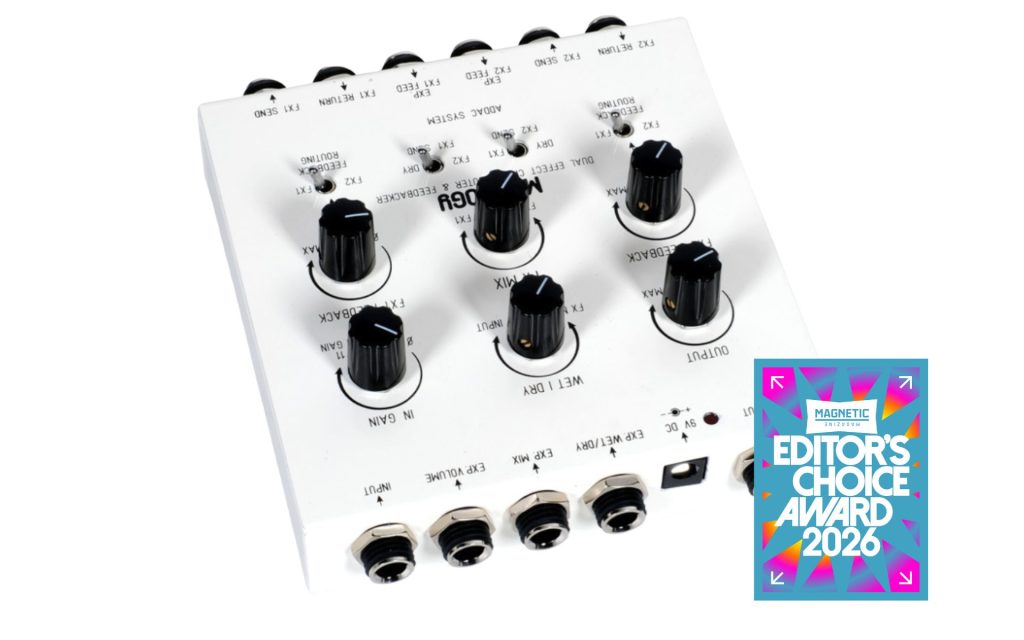
The ADDAC System Mixology earns the Editor’s Choice pick because it solves a specific problem that a lot of pedal-heavy setups run into: how to make existing pedals feel less fixed, less limited, and easier to perform with.
I like it because it does not try to sell itself as another flavor of effect, and it makes the pedals I already own easier to combine. That is the selling point. Parallel routing, series routing, feedback paths, wet/dry blending, FX crossfading, and expression control are all aimed at making a rig more flexible without forcing me to replace the pedals I already like.
That is a very big-time value add. It makes sense for guitarists who want more from familiar pedals, which is probably pretty obvious. It makes sense for producers who want a compact sound-design hub, and it makes sense for loopers who want to change where effects sit in the chain.
And it makes a TON of sense for synth players working with mono gear and feedback-friendly pedal setups, which is a massive X-factor of why I love this thing so damn much.
Final Verdict
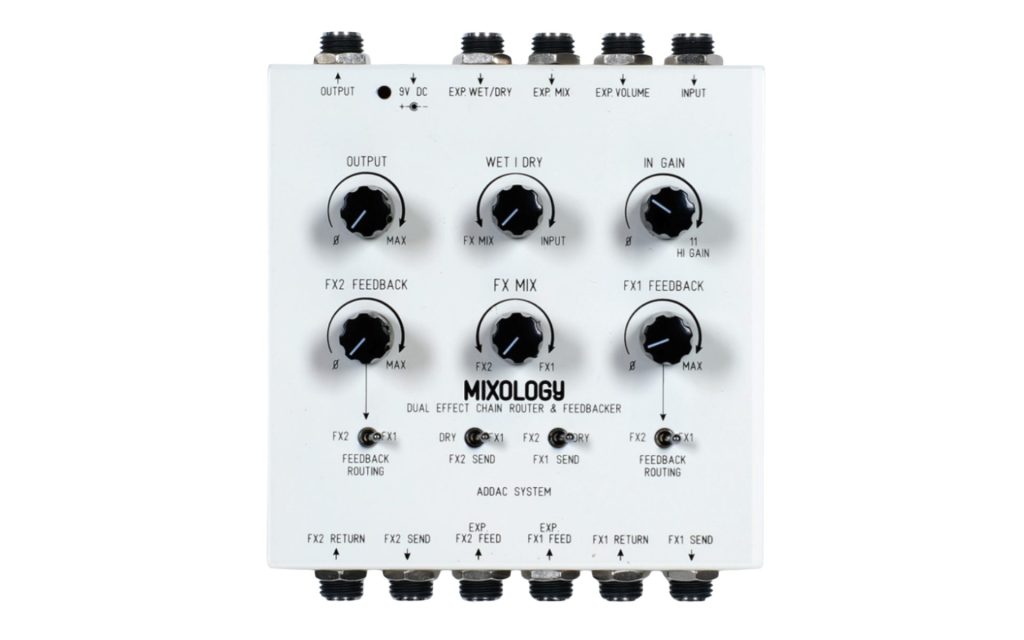
The clearest takeaway for me is that mixology is less about buying another effect and more about making the effects I already own behave in new ways.
That is why I think it is especially good for synths. Synth players usually care less about traditional pedalboard order and care a lot about routing, modulation, feedback, gain, and real-time control. The mono design is the main caveat, and it is a real one. If your setup is built around stereo pedals and stereo synths, think carefully before making this the center of the rig.
Inside a mono hardware setup, though, the Mixology makes a ton of sense.
In the studio, I would use it as a fast way to test pedal combinations. On a pedalboard, I would use it to blend and control two key effect chains. In a synth setup, I would use it with mono synths, mono pedals, and feedback-friendly textures where the routing is part of the performance.
The Mixology is best for players who already have a small collection of pedals and want a smarter way to combine them. If you are looking for a new sound effect, this probably is not the right buy. If you want your existing pedals to become more controllable, more performable, and much easier to reroute, the ADDAC002 Mixology is designed for that purpose.

Will Vance is a professional music producer who has been involved in the industry for the better part of a decade and has been the managing editor at Magnetic Magazine since mid-2022. In that time period, he has published thousands of articles on music production, industry think pieces and educational articles about the music industry. Over the last decade as a professional music producer, Will Vance has also ran multiple successful and highly respected record labels in the industry, including Where The Heart Is Records as well as having launched a new label with a focus on community through Magnetic Magazine. When not running these labels or producing his own music, Vance is likely writing for other top industry sites like Waves or the Hyperbits Masterclass or working on his upcoming book on mindfulness in music production. On the rare chance he's not thinking about music production, he's probably running a game of Dungeons and Dragons with his friends which he has been the dungeon master for for many years.