Review At A Glance
Small studios have a predictable problem. You get a pair of monitors that do a solid job through the mids and top end, you learn them well enough to get work done, and then the low end keeps forcing extra checks in headphones, in the car, and on any playback system with real bass extension.
At a certain point, you stop asking for extra bass and start asking for better information. That is the frame I kept coming back to with the IK Multimedia iLoud Sub, because this product feels less like a traditional subwoofer add-on and closer to a monitoring system upgrade built for people working in tight rooms with compact speakers.
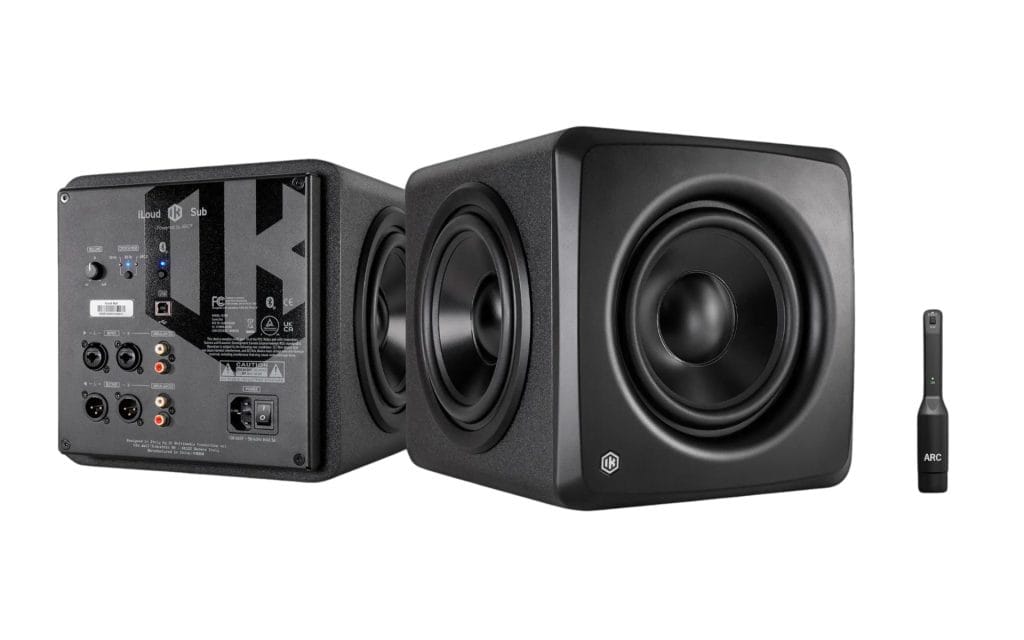
What separates it from a long list of small subs is the way it approaches the problem. The appeal is not limited to low-end extension, although getting down to 25 Hz from a cabinet this small is a real part of the story. The bigger draw is that it can correct the sub and the left and right monitors together as a single system. That changes the conversation immediately, because most low-end problems in home studios come from the room, crossover integration, level balance, and timing, not from a simple lack of bass output.
That distinction is a big deal in practice and in the studio!
Plenty of people have learned the hard way that adding a sub can make a room worse when the setup is handled badly. The bass gets larger, the room gets louder in the wrong places, the mains and sub pull against each other, and the end result gives you a bigger low end with less trust.
The iLoud Sub takes aim at that exact mess. From the way it is built, from the way it calibrates, and from the way people describe working on it once it is dialed in, this feels like a product meant to solve two issues at once. It extends the reach of small monitors, and it flattens the room response that usually makes those same monitors harder to trust below a certain point. So let’s dive into it all…
System Integration
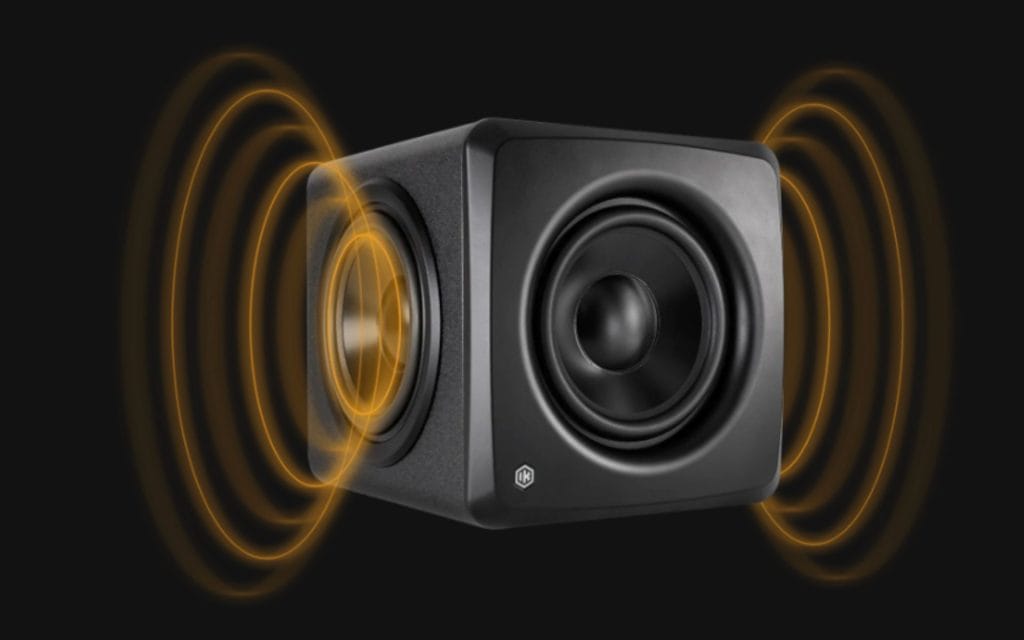
On the hardware side, IK kept the package compact without turning it into a toy. The iLoud Sub uses a 6.5-inch high-performance aluminum woofer, dual 6.5-inch passive radiators, 160 watts RMS, and 200 watts peak power. The frequency response is 25 Hz to 150 Hz at -6 dB, and the maximum SPL is rated at 106 dB peak at 40 Hz.
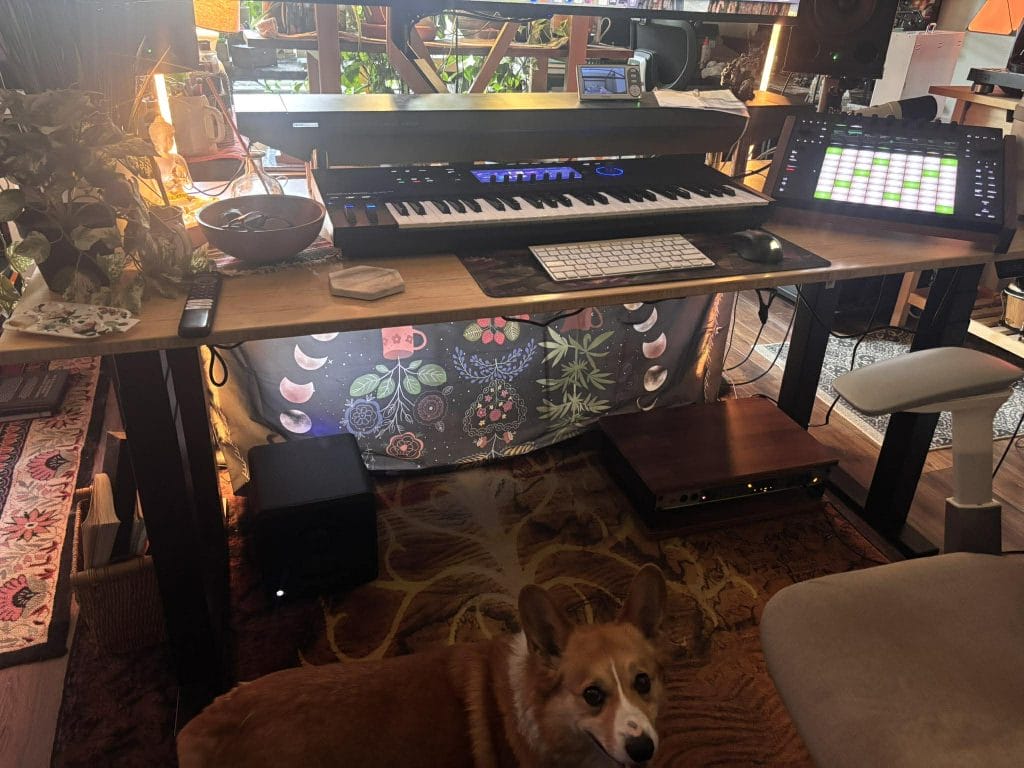
The physical size is a major part of the appeal for most of you out there. At 24.4 cm high, 25 cm wide, and 28.3 cm deep, with a total weight of 7.1 kg, it fits the kind of studio where every square foot is already spoken for. That means under-desk placement is realistic, side placement is realistic, and a desktop production room does not need a full redesign to accommodate it.

That may sound like a secondary point, though in smaller workspaces it is central to your buying decision. A lot of subs ask too much from the room before they even play a note. This one feels built around the reality of producers working in apartments, bedrooms, editing suites, and compact project studios.
That compact build also creates an angle I found especially useful, even for my space, which I will admit is likely larger than most bedroom studios and smaller creative spaces. I’ve heard it iLoud Sub as an alternative to replacing small monitors with larger ones, and I think that is one of the best ways to understand it. If you already like your speakers and the low end is the main area where they fall short, this can be a far better move than scrapping the setup and buying a bigger pair that may create new room problems.
In that situation, keeping the monitors you know and extending them with calibrated low-end support is a practical path forward.

Room correction is the real selling point
The iLoud Sub easily earns its place because calibration is built into the product from the beginning, and that changes how you think about the unit before you even start listening. ARC X is not there to decorate the feature list, it is the reason the system works as well as it does. Instead of handling bass on its own, the sub manages crossover, level, timing, and EQ throughout the monitoring chain, so the left speaker, right speaker, and sub operate as a coordinated system.
Once it is set up, the analog outputs carry a corrected, crossovered signal, and that turns one of the most annoying parts of adding a subwoofer into a process with structure and a clear result.
That approach is a big deal in a small studio because low end can get out of hand fast, and the problem usually starts with the room long before it starts with the speaker. In a bad setup, bass can swing wildly from one note to the next, and that is how mix decisions start drifting. The iLoud Sub is damn handy because it addresses that problem directly, and it does so in a way that gives you a flatter, easier picture of what is actually happening down there.
I also like how much of the ugly setup work it takes off your plate. Gain correction per speaker helps because left, right, and sub levels are rarely as even as people think, and delay correction helps because time alignment between mains and sub can get messy in a hurry. You can set the crossover at 50 Hz or 80 Hz, or let the software manage it inside the calibration process, and that gives the system a level of control that feels thought through instead of patched together. Viewed that way, the iLoud Sub reads less like a compact bass add-on and more like a monitoring tool built around low-end integration.
What I like most is the way it disappears once everything is dialed in. The system stops feeling like separate parts and starts feeling like one set of monitors with better reach, better focus, and a clearer picture of the record. That is how a subwoofer should behave in a studio: it should extend the speakers, keep the image coherent, and give you better access to the bottom end without drawing attention to itself. That is where the iLoud Sub does its best work, and it is the reason I look at it as a real monitoring upgrade instead of a simple add-on.
What it changes in day-to-day mixing
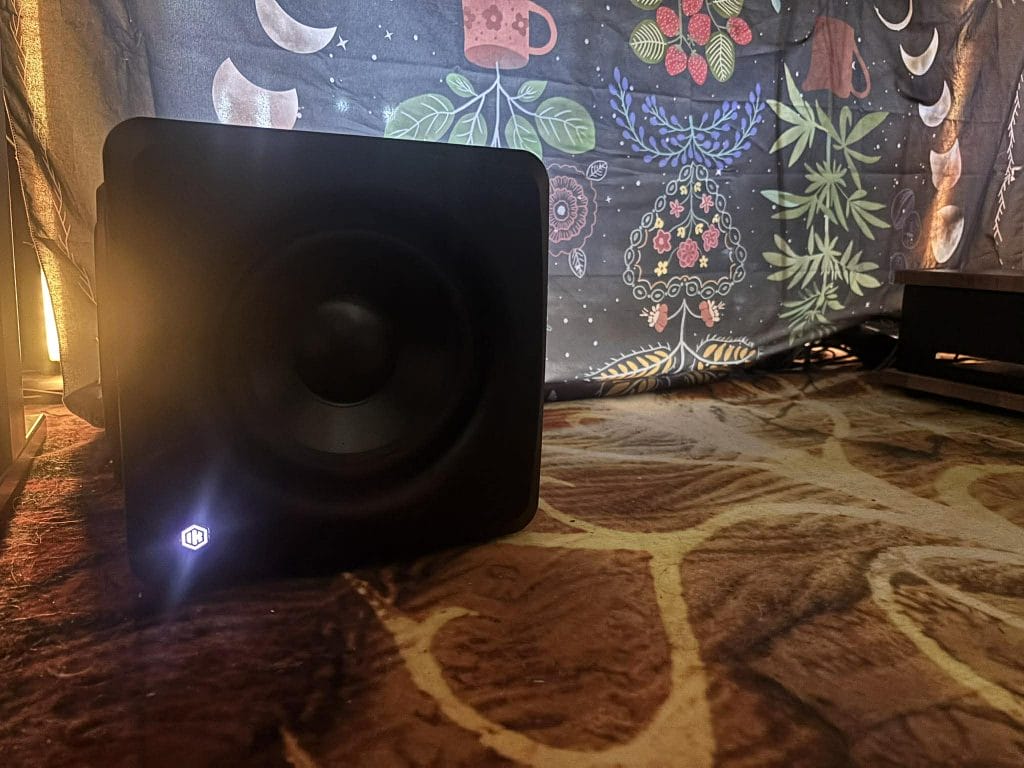
The first change is that the monitoring chain starts dividing the work in a smarter way. Once the deepest information moves to the sub, smaller monitors no longer have to carry the same low-frequency load, and that helps the whole system feel cleaner and more controlled. The low end firms up, the main speakers sound less stressed, and the setup covers a wider frequency range without feeling like anything is being pushed past its comfort zone.
That becomes useful very fast in electronic music, hip-hop, film scoring, and any production style where sub information shapes the final record. Kicks, basslines, low-synth fundamentals, and filter sweeps below 50 Hz are easier to place when the system can reproduce them with proper depth and timing. The iLoud Sub does a good job of revealing information that smaller setups tend to blur, flatten, or leave half-defined, which changes how you judge movement and spacing in the low end. You are hearing more of what is there, and that gives you a clearer sense of how those elements interact before the track ever leaves the room.
The workflow side is a big part of the appeal too. Once the system is calibrated and working as one unit, speakers stop feeling like the rough draft version of the mix, and they start giving you the kind of precision that usually pushes people back into headphones. That shift is useful because it lets you spend more time making decisions in the room instead of constantly second-guessing the bottom end somewhere else.
For club-focused music in particular, like the stuff I make, having that in-room reference changes a lot, because sub movement and low-end balance are much easier to judge when the system can present them clearly.
Translation is the next piece, and that is where a product like this earns its keep over time. A monitoring setup can sound pleasing in the studio and still fall apart once the mix hits the car, a club system, or a client’s speakers, so trust is everything. The iLoud Sub improves that trust by giving the low end a flatter, more coherent presentation, and that makes decisions around bass balance easier to commit to.
Connectivity and setup are handled well
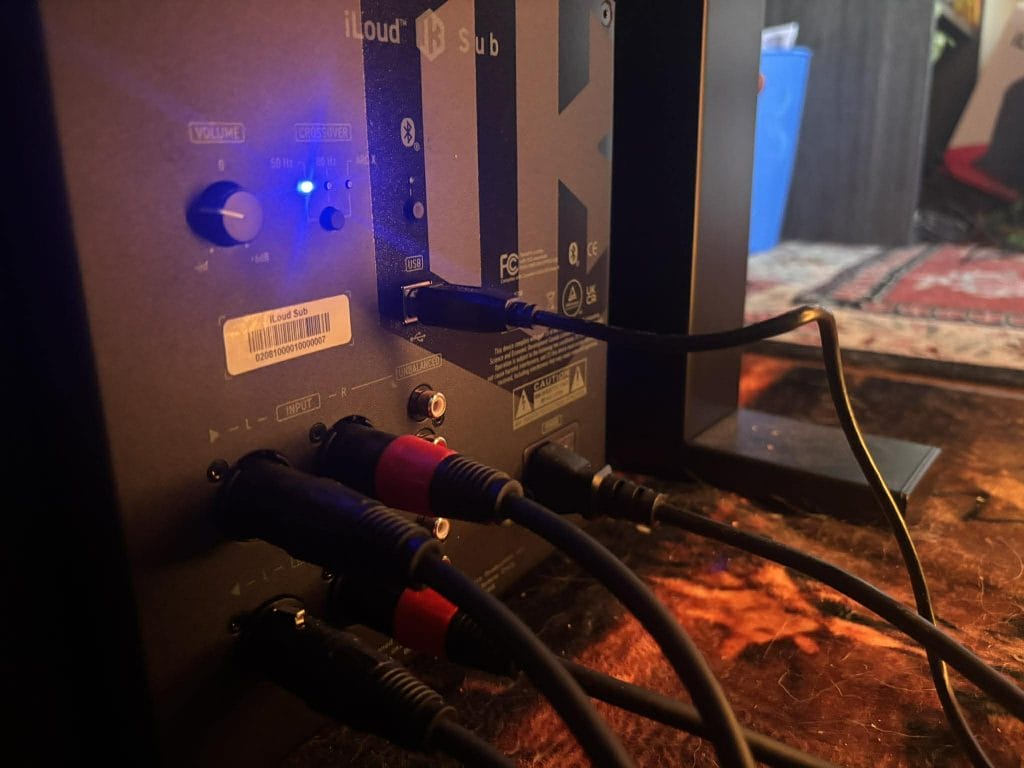
Connectivity is one of the easier things to appreciate here because the iLoud Sub arrives ready for real studio use instead of feeling half-finished out of the box. It gives you balanced XLR and quarter-inch combo inputs, RCA input and output, USB audio, Bluetooth, onboard level control from minus infinity to plus 6 dB, and selectable crossover points, so it can slot into a lot of different workflows without much drama. USB support runs up to 96 kHz, and the package includes the ARC measurement microphone with its clamp, a USB cable, and the power cable, which means the full calibration and routing experience is there from day one.
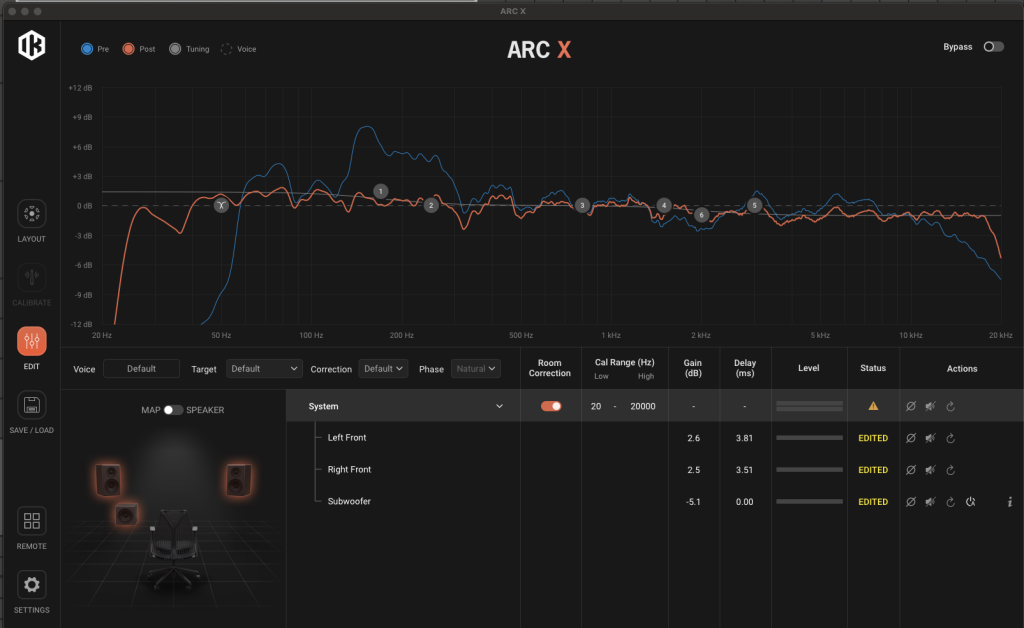
That completeness goes a long way in a product like this because the entire appeal depends on getting the system up and running properly without chasing extra pieces after the purchase.
That flexibility also gives the iLoud Sub a broader role than many compact studio subs. It can sit inside a standard analog monitor chain, work in a digital desktop setup, and handle casual playback over Bluetooth when you are using the room for listening rather than critical work.
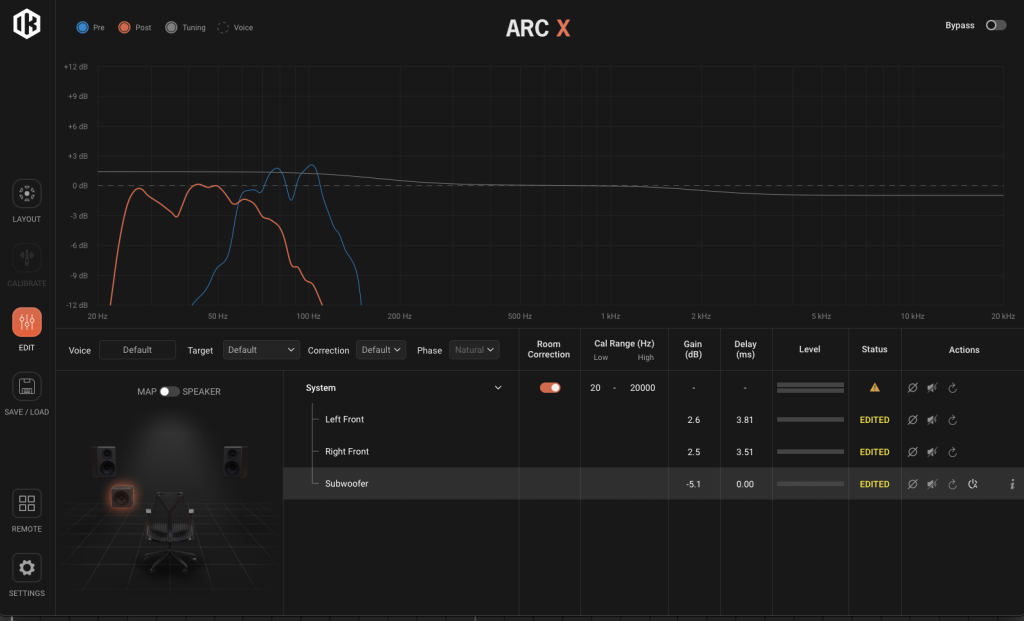
I still look at Bluetooth as a convenience feature rather than something I would lean on for serious monitoring, though it is useful to have when the unit is pulling double duty in a smaller studio. The bigger advantage is that the sub fits into a wide range of room layouts and signal chains without forcing odd routing decisions, and I would still stick with balanced cabling where possible because that is the cleaner way to wire a setup like this.
The only friction I would flag sits on the software side rather than the hardware side. Calibration state management can feel a little clumsy when you disconnect and reconnect, and profile switching could be smoother if you want to change correction behavior without stepping back into the software. Neither issue cuts into the sound quality or the overall usefulness of the sub though and I guess that’s the most important thing to note.
Price and limits

The clearest drawback is the price, because at about $600 this sits in considered-purchase territory for a smaller studio and not in casual-upgrade territory. I can still defend the cost because you are getting the subwoofer, the measurement mic, and the correction system in one purchase, which changes the math a bit once you look at the full package instead of the cabinet alone. If the alternative is moving up to much larger monitors and adding separate correction tools on top, the iLoud Sub starts to look like a more efficient way to spend that money while keeping the setup you already know.
There are limits here too, and they are the same limits that apply to any correction-based subwoofer.
DSP can pull down peaks, smooth large imbalances, and tighten the way the sub and mains work together, though it cannot fix poor bass decay or solve every acoustic problem in a difficult room. Acoustic treatment still has a place, and headphones still have a place, because there is a line between useful correction and basic room physics. Even with that ceiling in place, the iLoud Sub still improves the room enough to change how low-end decisions are made, and that is a meaningful gain in daily use.
I would also keep two smaller caveats in view before buying. When the sub is pushed hard on its own, there can be a bit of mechanical noise, though that seems to disappear once the full speaker system is back in play and working together as intended. The other issue is purely physical, because floor placement makes it easy to kick in a crowded studio, and a cone dent is a very believable accident when the unit is living under a desk or near your feet.
Editor’s Choice Winner
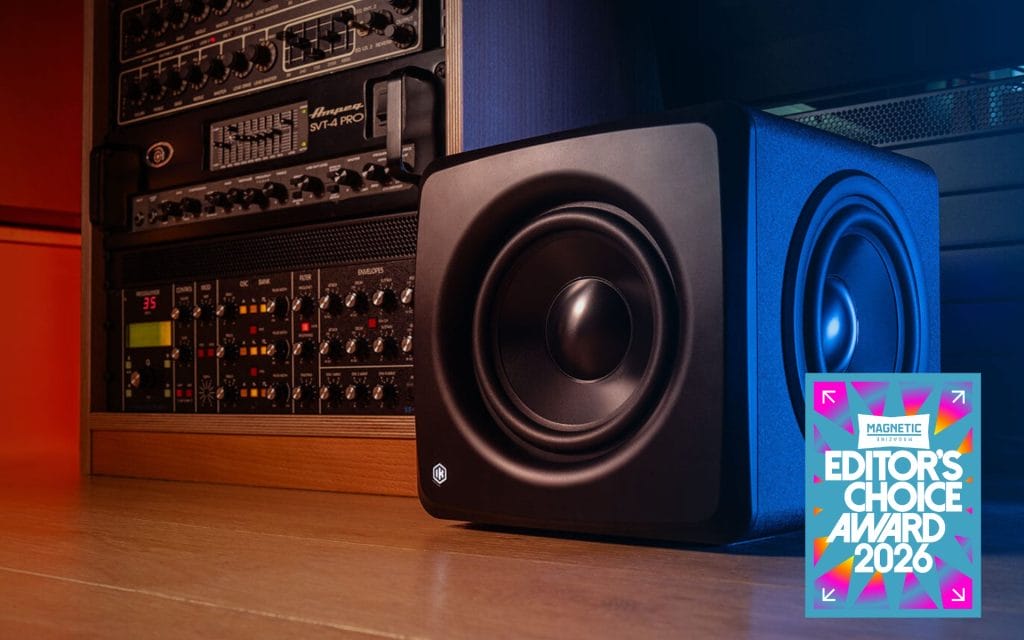
The iLoud Sub won an Editor’s Choice award in 2026 for bringing real low-end accuracy to studios that usually have to work around space limitations.
Its biggest advantage is the way ARC X calibrates the sub with the left and right monitors as a single system, giving producers a cleaner, far easier picture of the full frequency range. That system-level approach makes a huge difference in smaller rooms, where bass can pile up fast and push mix decisions off course. The hardware backs that up with extension down to 25 Hz, 160 watts RMS power, 200 watts peak power, a 6.5-inch aluminum woofer, and dual 6.5-inch passive radiators. Its footprint also helped push it into award territory, because it fits into compact workspaces without forcing a full studio rebuild. I also gave it high marks for compatibility, since it can slot into a wide range of setups via XLR, quarter-inch, RCA, USB, and Bluetooth.
It makes smaller monitors feel cleaner, less strained, and far better equipped to handle serious production work. That leads to better judgment on kicks, basslines, low-synth movement, and sub information, which smaller speakers usually blur or miss. The price places it in considered-purchase territory, though the correction system, including a measurement mic, and broad studio integration make the value easy to understand.
Taken as a full package, the iLoud Sub delivered one of the clearest and smartest low-end upgrades available for compact studios in 2026.
Final verdict on the iLoud Sub
The IK Multimedia iLoud Sub lands for me because it addresses the real problem rather than the obvious one. The obvious problem is the missing bass. The real problem is that smaller rooms and smaller monitors often leave producers working with an incomplete and unreliable picture of the low end.
This product addresses that second issue with much better focus than most compact subs do, which is why I think it has real value. It adds extension, it integrates the whole monitoring chain, and it gives small studios a path toward far better low-end trust without forcing a larger speaker upgrade.

Will Vance is a professional music producer who has been involved in the industry for the better part of a decade and has been the managing editor at Magnetic Magazine since mid-2022. In that time period, he has published thousands of articles on music production, industry think pieces and educational articles about the music industry. Over the last decade as a professional music producer, Will Vance has also ran multiple successful and highly respected record labels in the industry, including Where The Heart Is Records as well as having launched a new label with a focus on community through Magnetic Magazine. When not running these labels or producing his own music, Vance is likely writing for other top industry sites like Waves or the Hyperbits Masterclass or working on his upcoming book on mindfulness in music production. On the rare chance he's not thinking about music production, he's probably running a game of Dungeons and Dragons with his friends which he has been the dungeon master for for many years.