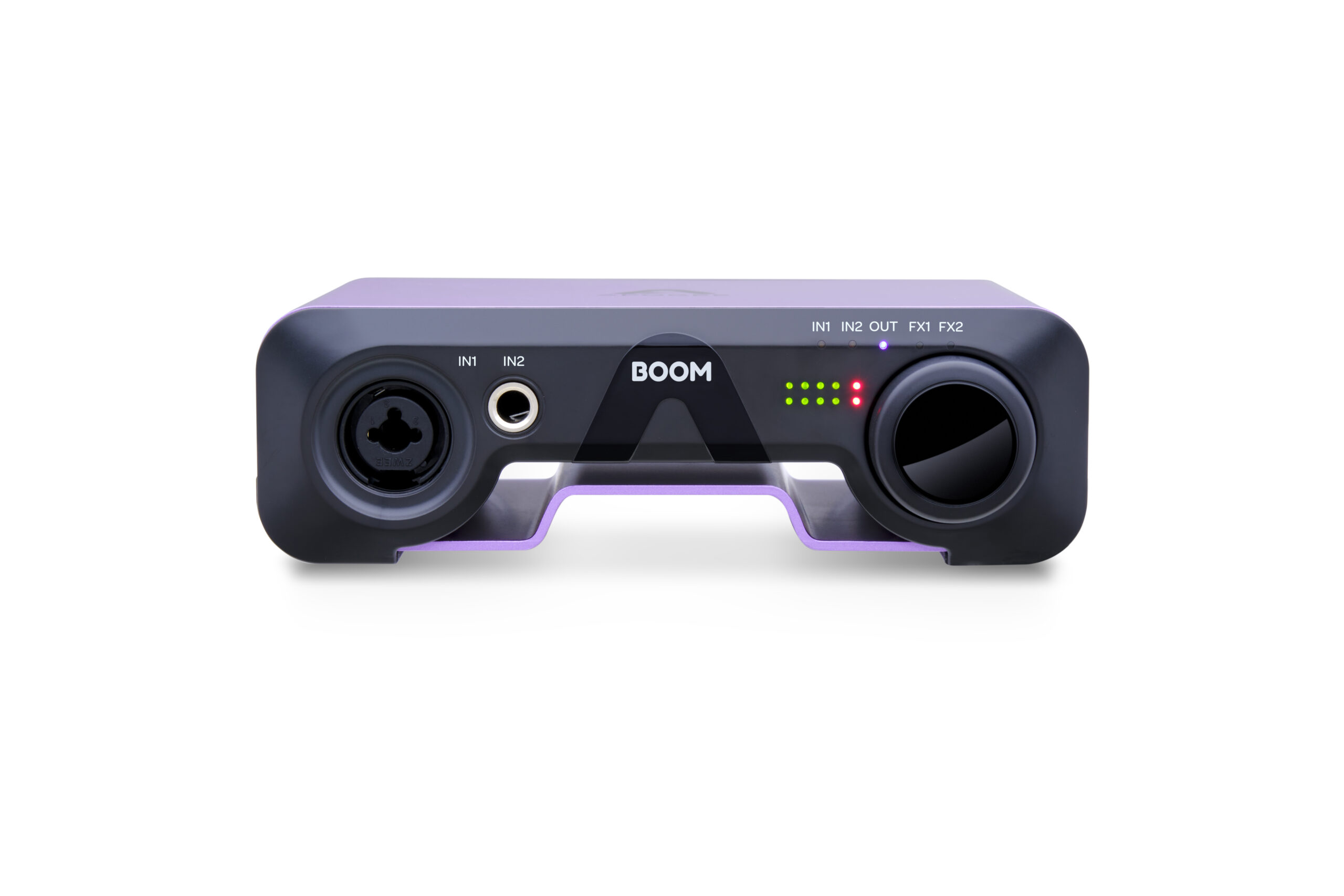
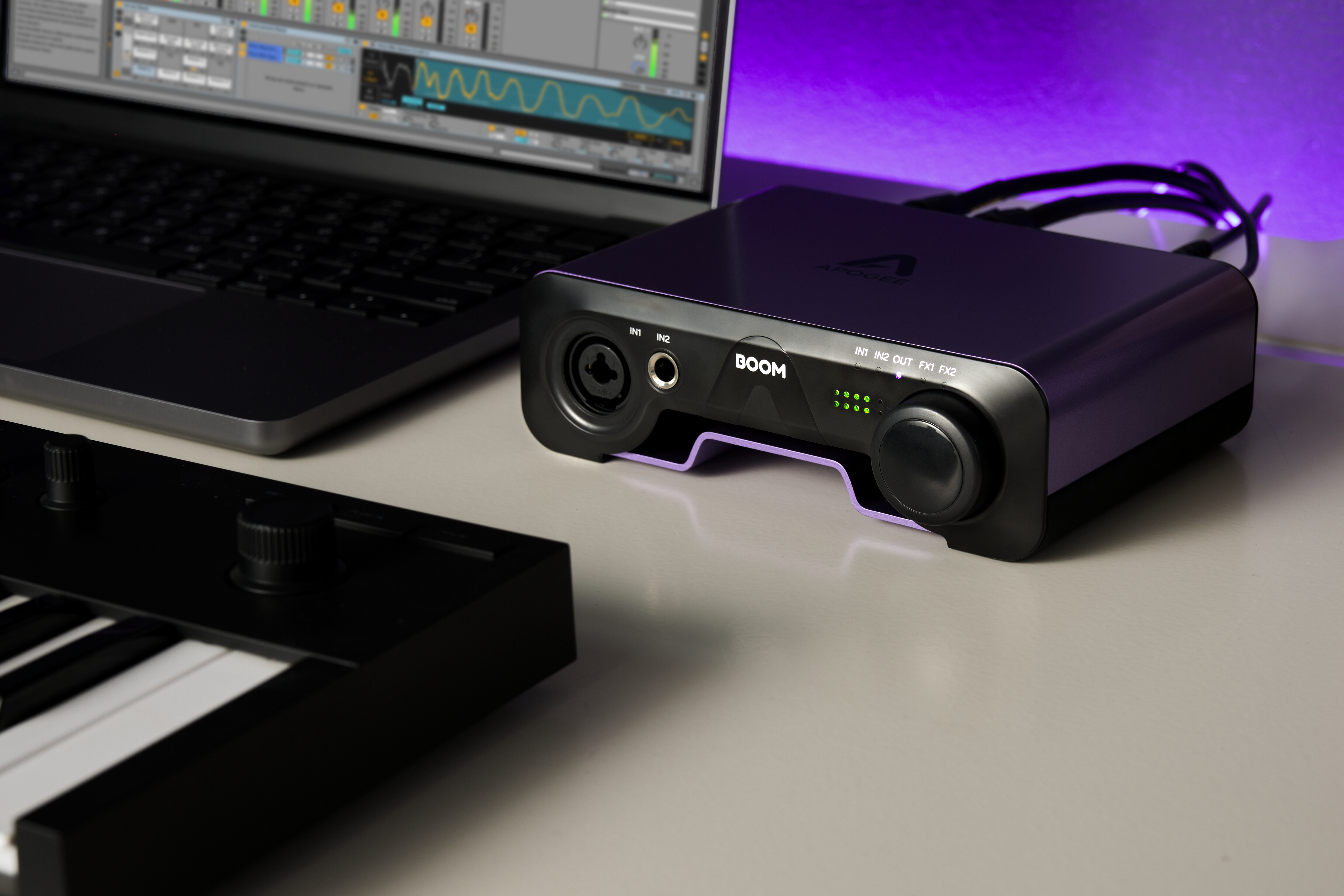
The Apogee BOOM is the company’s first foray into the competitive world of entry-level audio interfaces. And while this might sound like a simple endeavor, Apogee is a company whose entire brand has been built on designing industry-standard recording equipment for top-level audio professionals. Some could see a release of a consumer-level product as a far step outside their wheelhouse.
But those who have had the opportunity to use this interface will likely be nothing short of impressed by what the industry-leading has accomplished.
We’ll dive into much of this in more detail here shortly, but for now, know that Apogee hardly makes it hidden that this interface is hardly designed for Hollywood recording studios. On the contrary, they built this thing from the ground up with the quality-of-life features smaller creators would need daily. Features such as lightning-fast USB-C connection, Loopback mode, ease of operation, a sweet bundle of software (including Ableton and a great channel strip), and more – this simple audio interface does arm anyone with a mic and, potentially, an instrument with all that they need to start their journey into making fantastic music.
Now let’s dive into the nitty gritty!
Learn More About This Interface While Supporting Our Team Of Writers Through Out Affiliate Partnerships With Sweetwater Here
What I Like Most About The Apogee BOOM?
After using the Apogee BOOM for a couple of weeks in the studio and on the run (the phantom power means you don’t need to be plugged in), I found much to love about this interface. And while there are dozen more specialized features that this interface can pull off depending on the wants and needs of your studio, here are the three most standout features that caught my attention right out of the box.
It Lives Up To Apogee’s Standards
The two leading audio interfaces that Apogee has built its name on are the Symphony and the Duet 3; each outpaces the BOOM’s price tag many times. And while Symphony and the Duet 3 ($1,495 and $649, respectively) certainly warrant the price point, it also means that a wide majority of the audio community could not tap into the same level of audio excellence Apogee is known for.
But the BOOM brings many of the company’s same internals and level of quality into a much smaller device, including an extremely high dynamic range, a wide range of headphone compatibility, and a level of articulation and clarity in transient-heavy instruments that rivals that of their more premium interfaces.
This alone gives you plenty of bang for your buck!
It Comes With Some Free Stuff!
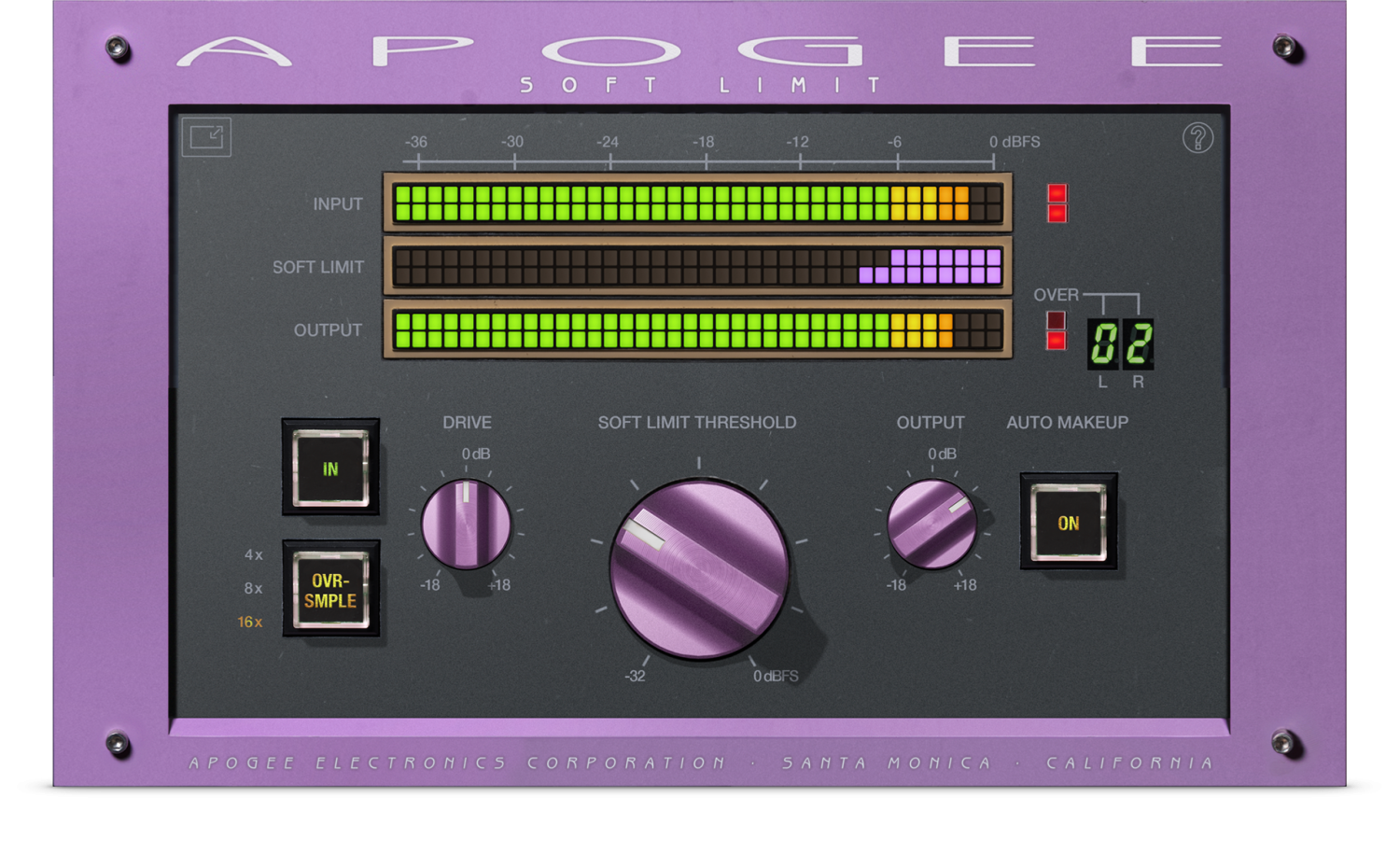
We understand that it has become commonplace for hardware gear like this to come bundled with software and plugins. While a lite version of Ableton is pretty much table stakes today, the BOOM’s X-factor includes their robust Soft Limit plugin. The Symphony ECS Channel Strip starts you off on the right footing to get the most out of your sounds. Other plugins are also available at a steep discount, an added benefit.
This ESC Strip was a pretty impressive feature in and of itself, which gave some pretty tasty coloration and drove to the signal that never really became that harsh to use. Modeled saturation and compression help drive the signal to a tasteful level without its dynamics becoming overly harsh and unruly, which can be a game-changer for producers and musicians used to working with digital plugins entirely in the box.
Sure, this interface doesn’t hook you up with as many freebies as other interfaces (the Volt series, for example, gives you an entire suite of tools, including Melodyn and more). Still, the small collection, coupled with the premium quality audio of the interface, makes it an easy sell.
It Doubles Down On Small Creator Functionality
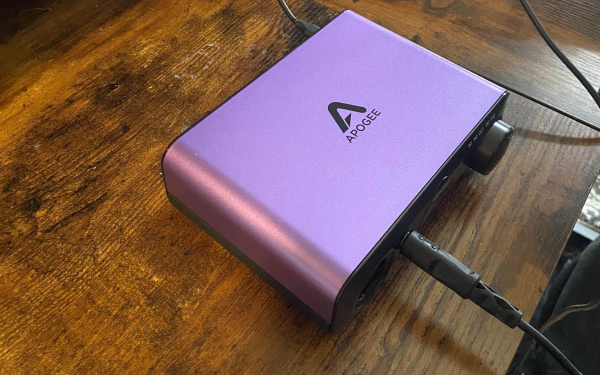
This interface is designed for smaller studios, newer producers, and creators who might not need the multi-input interfaces of more robust devices. Apogee trimmed all the fat to ensure they knocked this singular goal out of the park. Where many other interfaces at this price point try to do too many things simultaneously, the BOOM’s focus on their goal is straight and to the point. For instance:
- The lack of multiple inputs is offset by the speed, clarity, and functionality of the singular 1/4” input.
- Its phantom power means that you can bring the interface with you on the go to mobile gigs, recording sessions at another studio, and other remote work.
- Its sturdy construction means it can hold up against the wear and tear of the early stages of any musician’s career (younger producers are rarely as careful as they should be with their devices)
- It plays well with others, as its software allows the interface to easily connect to devices like iPads and more for a super streamlined way to create and work with your audio. This is a game-changer for streamers, podcasters, and other non-musical creators.
What I Wasn’t Crazy About
As with any budget-friendly interface or entry-level device, the BOOM is certainly not without its flaws. While we would imagine that most users would know this going into purchasing any interface at this level, the two gripes we had with it should be said…
It’s A Bit One Dimensional
The BOOM’s greatest assets are also its most significant flaw. The fact that it only has a single 1/4” input means that it simply cannot handle more extensive operations and will slow the workflow of producers looking to quickly and easily access an arsenal of hardware. While this shouldn’t affect smaller creators like podcasters, singers, and in-the-box producers, music makers focusing on more extensive gear collections might find themselves quickly outgrowing this interface.
Headphones Mute Your Monitors
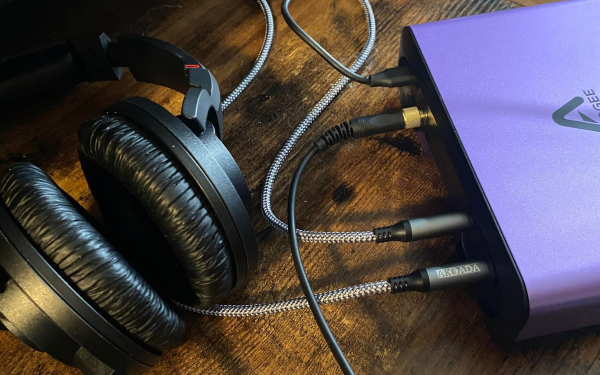
Whenever you plug your headphones into the interface, the audio from your monitors is muted. While we are sure this was designed to make referencing between the two easier, it seems a little janky in practice. The fact that the software doesn’t allow you to have both listening environments active simultaneously is a missed opportunity.
I know Apogee is a trusted name regarding build quality and design, but this makes us hope that the headphone ports can handle the constant removal of the headphone jack for users who switch between the two frequently. They held up fine over a few weeks for us, but only time will tell how it holds up after years of use.
Final Thoughts
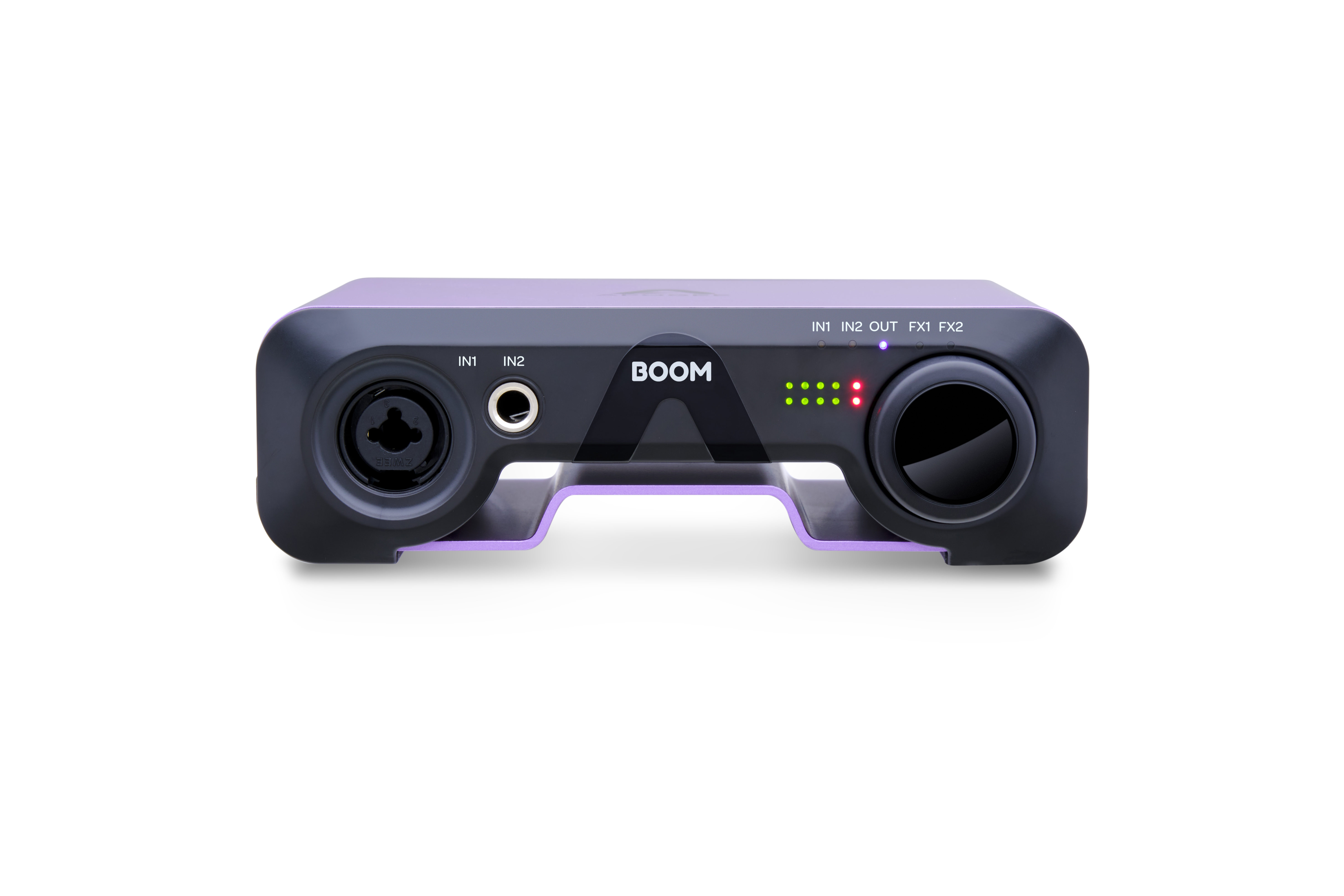
The Apogee BOOM is a compelling audio interface whose sheer sonic quality is second to none and far better than almost every other interface on the market at this price point. And while that sentence alone would make it an easy sell for a wide portion of the audio community looking for an entry-level interface, the couple of flaws in its design might also give certain producers and engineers pause.
That being said, we loved the BOOM. Over the weeks that we were using the interface, we quickly discovered that there is no rival to it for those looking for a powerful, clear, single-input interface, making it an excellent choice for podcasters, creators, singer/songwriters, in-the-box producers, and many more while those looking for an interface to handle their extensive techno live sets, complex modular rigs, and more might find better options in a multi-input interface like the Volt 746P or other device.
Learn More About This Interface While Supporting Our Team Of Writers Through Out Affiliate Partnerships With Sweetwater Here

Will Vance is a professional music producer who has been involved in the industry for the better part of a decade and has been the managing editor at Magnetic Magazine since mid-2022. In that time period, he has published thousands of articles on music production, industry think pieces and educational articles about the music industry. Over the last decade as a professional music producer, Will Vance has also ran multiple successful and highly respected record labels in the industry, including Where The Heart Is Records as well as having launched a new label with a focus on community through Magnetic Magazine. When not running these labels or producing his own music, Vance is likely writing for other top industry sites like Waves or the Hyperbits Masterclass or working on his upcoming book on mindfulness in music production. On the rare chance he's not thinking about music production, he's probably running a game of Dungeons and Dragons with his friends which he has been the dungeon master for for many years.