Most producers learn the DAW before they learn how to listen.
That is nobody’s fault, exactly; software gives fast feedback, tutorials explain the moves, presets make the early stages feel less impossible, and a new producer can get from blank session to something that sounds like music faster than ever. The harder part comes later, when the song is there, the mix is almost there, and the next decision depends less on knowing what an EQ does than knowing what the track is actually asking for.
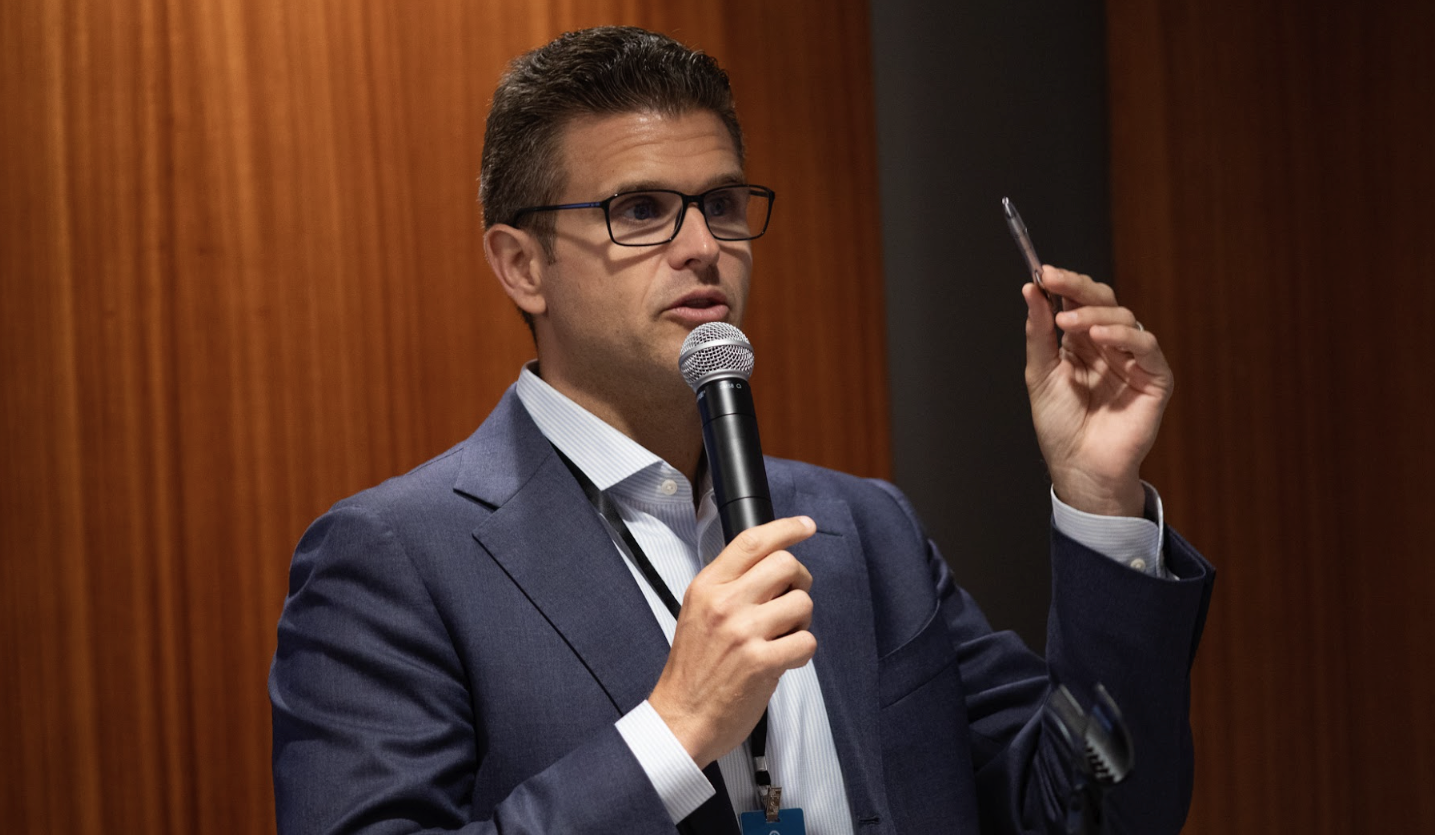
That is the problem SoundGym was built around. Noam Gingold, pictured above, came to the idea after running a music production school and watching the same pattern repeat with students: they understood the technical vocabulary, but mixing exposed the gap between knowledge and hearing.
They knew what compression was…
They knew what frequency boosts and cuts were supposed to do…
The issue was whether they could hear the difference clearly enough to make a confident decision without guessing, copying a preset, or staring at a graph until the graph started making the decision for them.
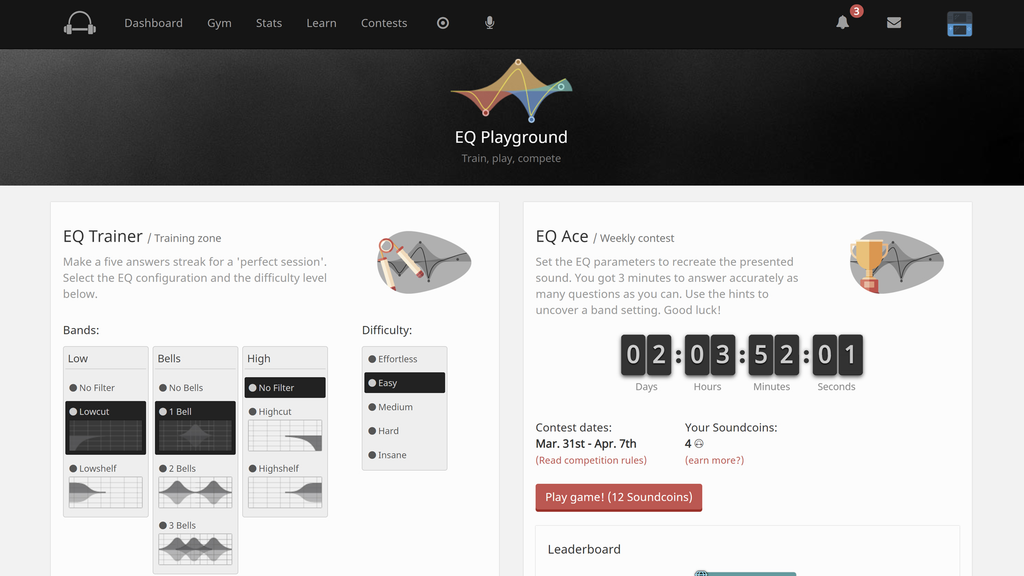
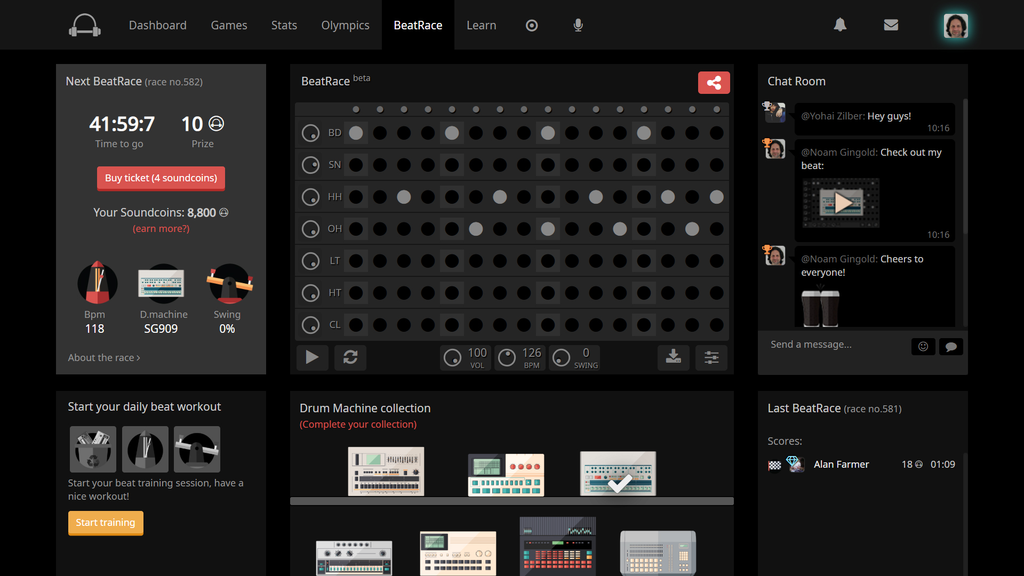
SoundGym turns that listening problem into a daily practice environment, with ear-training games, curated learning, stats, challenges, and a community around the work. The platform’s language is playful, but the idea underneath it is practical: if mixing is made of hundreds of tiny judgments around frequency, level, stereo width, space, and dynamics, then those judgments need repetition the same way an instrument does.
In the interview below, Gingold talks about “sound atoms,” software that can suggest a mix, why trained ears are becoming more important in an AI-heavy studio, and what six months of daily listening practice should change in the way a producer works.
Interview With Noam Gingold

What first made you think that listening deserved its own dedicated practice routine for producers, and what were you seeing people struggle with in the studio?
Before SoundGym, I owned and managed a music production school. Year after year I watched students go through the same process. They picked up the DAW quickly, learned the plugins, understood the theory, and then got stuck at mixing. Mixing is where everything comes together, and it is a very complex task. You make hundreds of small decisions about frequencies, dynamics, space and balance, and each one depends on what you hear.
What I realized was that the real problem wasn’t knowledge. Students knew what an EQ or a compressor does. They just couldn’t hear clearly enough what needed fixing, or whether their change made things better or worse. No tool, tutorial or preset can replace trained ears.
So in SoundGym we took the big, overwhelming skill of mixing and broke it down into what I call “sound atoms”: frequency detection, compression, gain and level differences, stereo image, and so on. Each atom can be isolated, practiced and measured on its own. It is the same idea as an athlete training specific muscles instead of just playing full matches. When each atom improves, the whole mixing ability improves with it.
As software takes on more corrective and assistive tasks, which listening judgments do you think producers most need to develop for themselves?
I believe no software can replace listening. Today’s tools can match frequencies to a reference, balance levels, even suggest a full mix. That is useful, but it only answers the technical question. It can’t answer the artistic one: what should this song feel like? What do I want the listener to notice first? Is this sound right for the story I’m telling?
Those are personal choices, and they are what make music belong to someone. In a world full of AI-generated music and AI tools, the technical baseline is becoming available to everyone. What separates an artist from everyone else is the ability to hear the difference and to make decisions based on their own taste. You can only accept or reject what a tool suggests if you can actually hear what it did.
That’s why I think ear training is more important now than ever before. For anyone who wants to call themselves an artist or a music maker, trained ears are what keep them in control of their own music instead of handing it over to the software.

How do you choose the audio used in an exercise, and how much does that choice affect what the participant learns?
The audio matters a lot, and the most important thing for us is variety. We offer a wide range of instruments and genres to train with, because every source behaves differently. A boost at 3 kHz sounds completely different on a vocal, a snare, a distorted guitar or a full mix. If you only train on one kind of material, you become good at hearing that one kind of material, and the skill doesn’t transfer well to real sessions, where you face everything.
By training on many different sources, you learn to recognize the change itself, not just what it sounds like on one familiar sound. That is what makes the skill useful in the studio.
We also let members train with music made by artists in the SoundGym community. This adds another layer: people practice on real productions made by producers like them, with all the imperfections of real-world material, and it connects the training with the community around it.
What helps people build a lasting practice habit after the initial excitement wears off, and what have you learned from people who return after a long absence?
Two things make the biggest difference: turning it into a habit, and being part of a community.
Ear training works a lot like physical training. Short, regular sessions are much more effective than occasional long ones. That’s why we built SoundGym around a daily workout that takes a few minutes. When practice becomes part of your routine, like a morning coffee, you stop depending on motivation.
The community is the second part. When you see other people training, competing in challenges, sharing their music and progressing, you feel part of something bigger. That sense of belonging keeps people coming back long after the initial excitement fades.
As for people who come back after a long break, they almost always tell us the same thing: their listening got worse while they were away. Hearing is a skill, and like any skill, it fades without practice. The encouraging part is that it comes back quickly. The foundation they built stays there, and after a short period of training they are back at their previous level and ready to keep improving.

If a producer spends six months practicing their listening, what would you hope changes about the way they work, even if you never saw their scores?
Better productions, better mixes, and simply better-sounding music. That is the whole goal. The scores and games are just the way we get there.
In practice, it also changes how people work. They make decisions faster and with more confidence, because they hear the problem instead of guessing. They stop endlessly tweaking and second-guessing, they rely less on presets and reference tricks, and their mixes translate better to other systems.
This is what our members keep reporting to us, and it’s the most rewarding part of what we do: after a period of consistent training, they hear a big difference in their sound, and so do the people listening to their music.
Closing Thoughts
SoundGym’s strongest argument is that production knowledge and listening ability are not the same thing. A producer can understand what a compressor does and still struggle to hear whether the compressor made the record feel better. That gap is where a lot of mixing frustration lives, because the person is not confused about the tool; they are unsure whether their ear can trust the result.
That connects directly with my article on why the graph can mislead you and why trusting your ears still matters in mixing. That piece was built around the same tension Gingold describes here: visual feedback can help, but it can also pull producers away from the actual sound. If the ear is not trained, the meter starts to feel more authoritative than the music.
The AI angle makes this more relevant, not less.
When software can balance levels, match references, suggest processing chains, and create technically acceptable results, the artist’s job shifts toward judgment. What should the song feel like? What should sit in front? What is worth leaving imperfect because the emotion needs it? What does this record want that a default “good mix” might miss?
That sits clearly beside Yeadon’s interview on progressive house in the AI era.
Yeadon talked about keeping the artist inside the decision-making process, while SoundGym addresses the skill that lets an artist stay there. You can only reject a suggestion, preset, AI chain, or reference-match result if you can hear what it did and know whether that serves the track.
The “sound atoms” idea is the most practical part of the interview. Mixing can feel vague because everything affects everything else, and when a producer is staring at the full problem at once, it becomes easy to overcorrect. Breaking the skill into frequency, dynamics, level, space, and stereo perception gives the ear smaller problems it can actually learn.
There is another natural link to ELPHNT’s interview on building a sustainable music life. ELPHNT’s work often centers on helping producers think better rather than simply collect more tricks, and SoundGym approaches a similar issue from the listening side. More information is not always the missing piece. Sometimes the missing piece is repetition, feedback, and a practice habit that makes the next decision less fragile.
That habit piece is where SoundGym’s gamified approach makes sense. Producers do not usually need one heroic ten-hour ear-training session. They need five or ten minutes often enough that the skill becomes part of how they hear music. That is not glamorous, but neither is practicing scales, training a jump shot, or learning to recognize when a vocal is crowding the upper mids. The result shows up later when the mix moves faster and the producer second-guesses less.
The broader takeaway is simple: trained ears keep the producer in control. Software can help, and modern assistive systems can solve plenty of technical problems, but they cannot decide what a track should mean or what the listener should feel first.
That judgment still belongs to the person making the music, and SoundGym’s whole argument is that the judgment gets better when listening becomes a practice rather than an accident.

Will Vance is a professional music producer who has been involved in the industry for the better part of a decade and has been the managing editor at Magnetic Magazine since mid-2022. In that time period, he has published thousands of articles on music production, industry think pieces and educational articles about the music industry. Over the last decade as a professional music producer, Will Vance has also ran multiple successful and highly respected record labels in the industry, including Where The Heart Is Records as well as having launched a new label with a focus on community through Magnetic Magazine. When not running these labels or producing his own music, Vance is likely writing for other top industry sites like Waves or the Hyperbits Masterclass or working on his upcoming book on mindfulness in music production. On the rare chance he's not thinking about music production, he's probably running a game of Dungeons and Dragons with his friends which he has been the dungeon master for for many years.