There are plenty of expensive synthesizers on the market, but relatively few manufacturers have attempted something as ambitious as the Schmidt Eightvoice. Introduced in 2012, the German-built instrument combined eight voices of discrete analog synthesis with extensive modulation, multiple filter circuits, and an enormous collection of dedicated controls. It was designed without many of the compromises associated with producing instruments at commercial scale, and its price reflected those decisions.
Now Schmidt-Synthesizer is preparing to end production after approximately fifteen years.
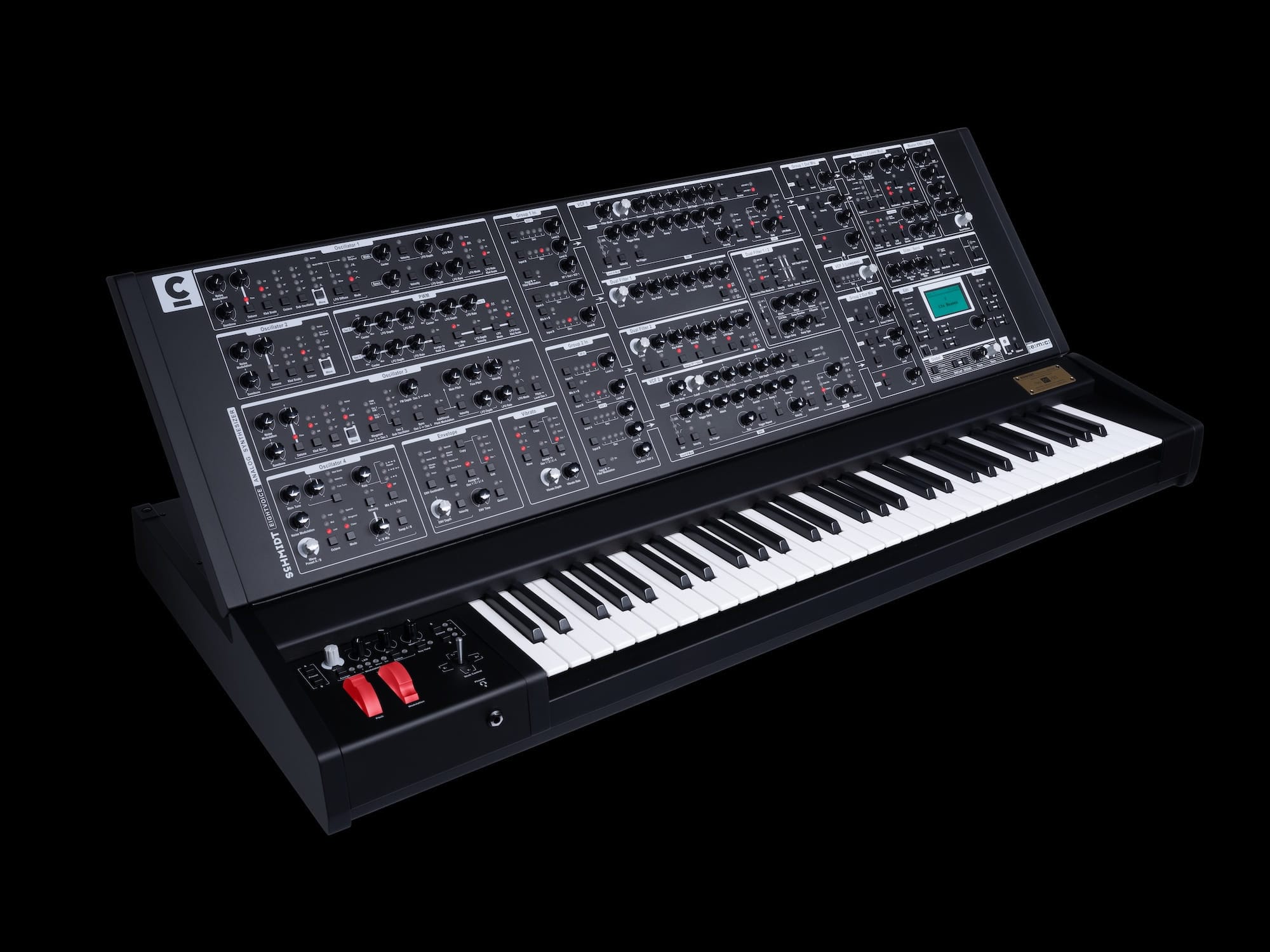
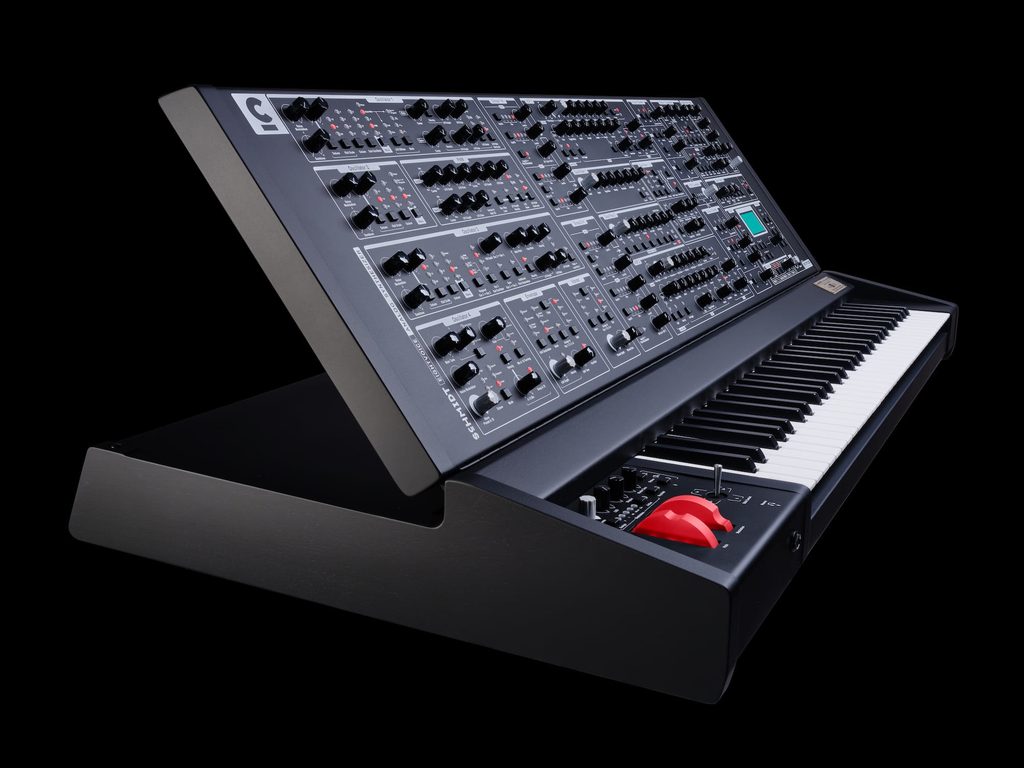
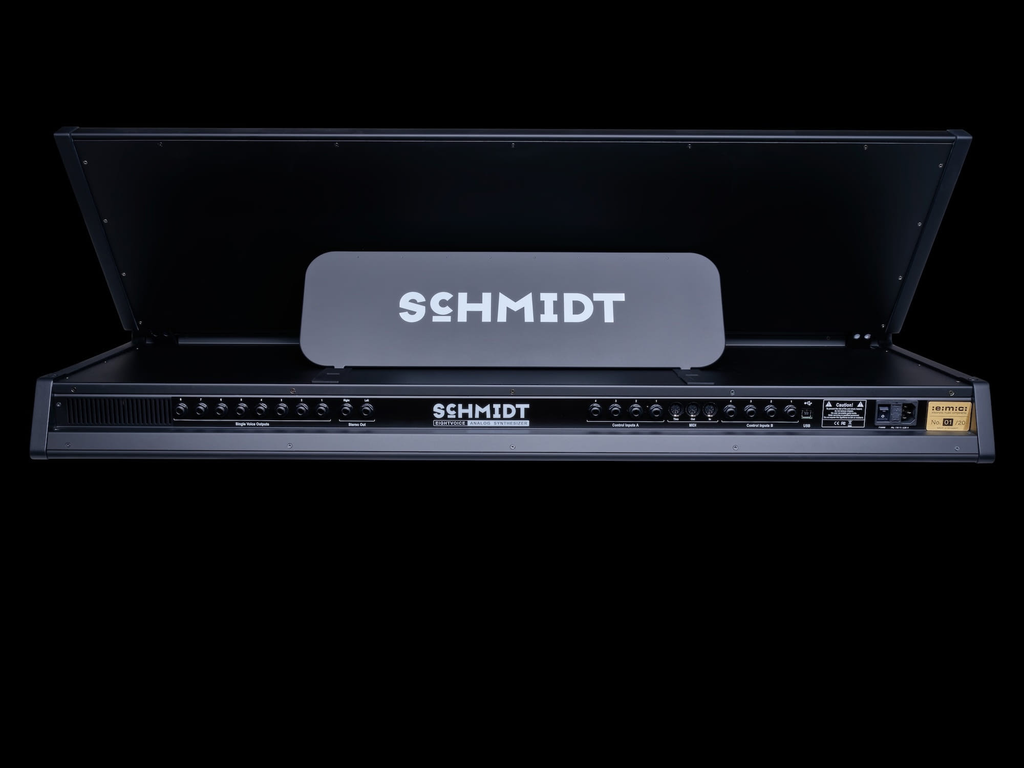
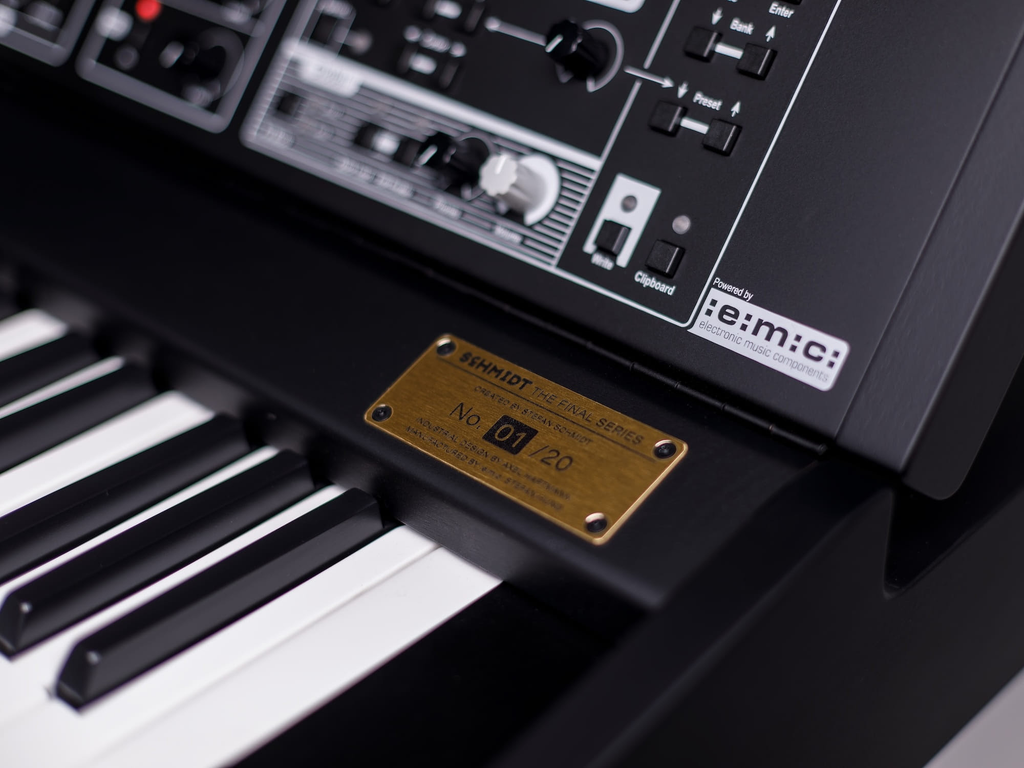
The company has introduced The Final Series, a collection of just 20 instruments finished in black and individually numbered with gold identification plaques. Priced at €18,900 including VAT, the limited run retains the original instrument’s internal design while introducing a different exterior developed by Axel Hartmann, who was also responsible for the original synthesizer’s industrial design.
The interesting part of this announcement extends beyond the limited edition. Schmidt is ending production because the manufacturing methods that established the instrument have become increasingly difficult to sustain financially.
At the same time, the company has introduced Schmidt Vi, a software recreation developed with UJAM that makes the underlying synthesizer architecture available to producers who could never justify spending nearly €19,000 on a single instrument.
Why Schmidt Is Ending Production After Fifteen Years
The Schmidt Eightvoice was developed by Stefan Schmidt, whose earlier work included the MAM MB-33, an analog bass synthesizer inspired by the Roland TB-303. His subsequent project was considerably more ambitious: an eight-voice analog instrument with digital preset management, extensive modulation, and a control surface intended to give musicians direct access to the synthesis engine.
The original Eightvoice appeared at Musikmesse in Frankfurt in 2012 and returned at NAMM in 2013. One of the earliest instruments was purchased by film composer Hans Zimmer, and the company initially planned a production run of just 25 units. Additional batches followed as interest continued, although the total number manufactured remained relatively small.
Schmidt’s decision to manufacture the instrument entirely in Germany created particular requirements for its construction. The company used discrete analog circuitry and conventional through-hole components rather than designing the instrument around highly integrated chips. That approach helped make individual components accessible for servicing and repairs, although it also required considerable assembly work.
The problem is that this type of manufacturing has become increasingly expensive.
Rising production costs and changes in component availability have made continuing the existing design financially difficult. The company has announced previous limited production runs, including one described as a final batch in 2016, so the distinction this time is its explicit decision to discontinue the instrument when the remaining inventory is sold.
What Makes the Schmidt Eightvoice Different?
The Schmidt’s synthesis engine remains the primary reason musicians have been interested in the instrument. It offers eight voices of true analog polyphony, with each voice incorporating multiple oscillators, filters, envelopes, modulation sources, and independent signal paths. Its oscillator section includes unusual configurations involving six pulse waves and a chain of five ring modulators, allowing users to generate complex harmonic structures that aren’t typical of conventional subtractive synthesizers.
The filter architecture is similarly extensive. Each voice includes multiple filters arranged across parallel signal paths, with options for processing and combining different versions of a sound. The synthesizer also supports eight-part multitimbral operation, allowing individual voices to be assigned different sounds, MIDI channels, keyboard ranges, and output configurations.
I’ve previously examined similarly ambitious approaches to synthesizer design in my coverage of alternatives to the Yamaha CS-80, where instruments such as the Waldorf Iridium demonstrate how manufacturers have approached complex synthesis through different combinations of hardware and digital control. Schmidt belongs to a different category because its sound generation remains analog, with digital systems handling programming and preset management.
The Final Series preserves those capabilities, concentrating its changes on the physical appearance. Hartmann’s new finish replaces the established exterior with an all-black design, while the numbered gold plaque identifies the instrument and credits Stefan Schmidt, Axel Hartmann, and manufacturing partner Stefan Hund of e:m.
Schmidt Vi Makes the Instrument Available in Software
The other part of the announcement is Schmidt Vi, a new virtual instrument developed through a collaboration with German software company UJAM. The plugin recreates the Eightvoice’s synthesis architecture inside a DAW, including the oscillator and filter systems, modulation controls, and original factory presets.
Schmidt Vi also introduces features unavailable on the hardware, including a sound randomization function, additional performance assignments, MPE compatibility, and parameter displays that show precise values. The software doesn’t reproduce the hardware’s eight-part multitimbral operation within a single instance, although producers can load multiple instances when they need independent sounds.
This approach to translating an established instrument into software connects with our recent coverage of UJAM’s acquisition of Virharmonic, which examined the company’s continued investment in virtual instrument development. UJAM has also explored recreating historically important synthesizer sounds through releases such as its Vox Humana plugin developed with the Bob Moog Foundation.
Schmidt Vi costs €179 including VAT and supports VST3, AU, and AAX formats on macOS and Windows. The hardware remains available in two versions, with the final Classic instruments priced at €17,900 and the 20-unit Final Series priced at €18,900, including VAT.
For the majority of producers, Schmidt Vi will be the more realistic option.
The software provides access to the instrument’s synthesis design without requiring an enormous financial investment, while the hardware edition remains a specialized purchase for musicians and collectors interested in its physical construction and direct controls.
What makes the announcement interesting is the contrast between those two releases. Schmidt is ending production of an instrument whose manufacturing requirements have become increasingly difficult to maintain, while simultaneously making its synthesis architecture accessible through software. The physical instrument will soon be unavailable as a new product, but its underlying design will remain accessible to musicians.
Learn more through the official Schmidt-Synthesizer website or explore The Final Series through Noisebug.

Will Vance is a professional music producer who has been involved in the industry for the better part of a decade and has been the managing editor at Magnetic Magazine since mid-2022. In that time period, he has published thousands of articles on music production, industry think pieces and educational articles about the music industry. Over the last decade as a professional music producer, Will Vance has also ran multiple successful and highly respected record labels in the industry, including Where The Heart Is Records as well as having launched a new label with a focus on community through Magnetic Magazine. When not running these labels or producing his own music, Vance is likely writing for other top industry sites like Waves or the Hyperbits Masterclass or working on his upcoming book on mindfulness in music production. On the rare chance he's not thinking about music production, he's probably running a game of Dungeons and Dragons with his friends which he has been the dungeon master for for many years.