Independent musicians have access to an enormous collection of production tools, and getting a professional recording together has become considerably easier than it was a decade ago. The problem is that finishing the music still leaves a long list of additional responsibilities, particularly for artists who release without a large label or management team. Mastering, promotional visuals, music videos, and preparing content for distribution can introduce costs that quickly exceed what an independent producer originally spent making the record.
SoundBoost.ai has been developing software to handle those responsibilities, starting with AI-assisted mastering and gradually expanding into other areas of music production and promotion.
Founded by Berkan Cesur, the platform launched in February 2024 as Diktatorial Suite, offering a mastering system that let musicians describe the changes they wanted with written instructions. In 2025, the company adopted the SoundBoost name and continued developing its processing tools, eventually adding stem separation, audio analysis, and visual content creation.
The company’s latest addition is a full-length AI Music Video Generator, which allows musicians to upload a finished recording, describe a visual concept, and review the proposed scenes before generating the completed video. What interests me about SoundBoost’s development is how the company has gradually expanded from solving individual audio problems into addressing the larger process of preparing and promoting a release.
There are plenty of specialized tools for each of these tasks, but bringing several related services together could make the process easier for producers who are handling most of their own work. We have a full review of the platform coming in the very near future, but I wanted to get ahead of the highlighting by touching on what the company is doing on a broader sense.
How SoundBoost.ai Developed Its Music Production Tools
SoundBoost’s original mastering system was designed around the idea that musicians should be able to communicate their intentions without needing to understand every technical parameter involved. Instead of relying entirely on predetermined styles, users could describe changes to the frequency balance, compression, or overall character of a recording, then generate another version based on those instructions. The company has continued refining that approach, introducing additional processing options and a revised mastering engine.
Its current mastering platform includes six AI mastering engineers with different processing preferences, alongside controls for revisions and reference-based adjustments. SoundBoost introduced its fourth-generation mastering engine in September 2026, rebuilding its digital signal processing system and expanding the functionality available through written prompts. The company states that its mastering engine is trained on internally generated audio rather than customer uploads, an important distinction for musicians concerned about how their recordings are handled.
SoundBoost has also developed a stem separation system capable of extracting vocals, drums, bass, guitar, piano, and other musical elements from finished recordings.
This connects with a broader change we’ve been following in music production software, including my coverage of LALAL.AI’s six-stem VST expansion. Producers increasingly have access to tools that can separate and manipulate individual elements of existing audio, although the quality of those results depends on the complexity of the recording and the underlying processing model.
SoundBoost approaches that category through its browser-based system, while also providing free utilities such as a LUFS meter, loudness checker, and metadata editor.
The New Music Video Generator Adds Visual Production
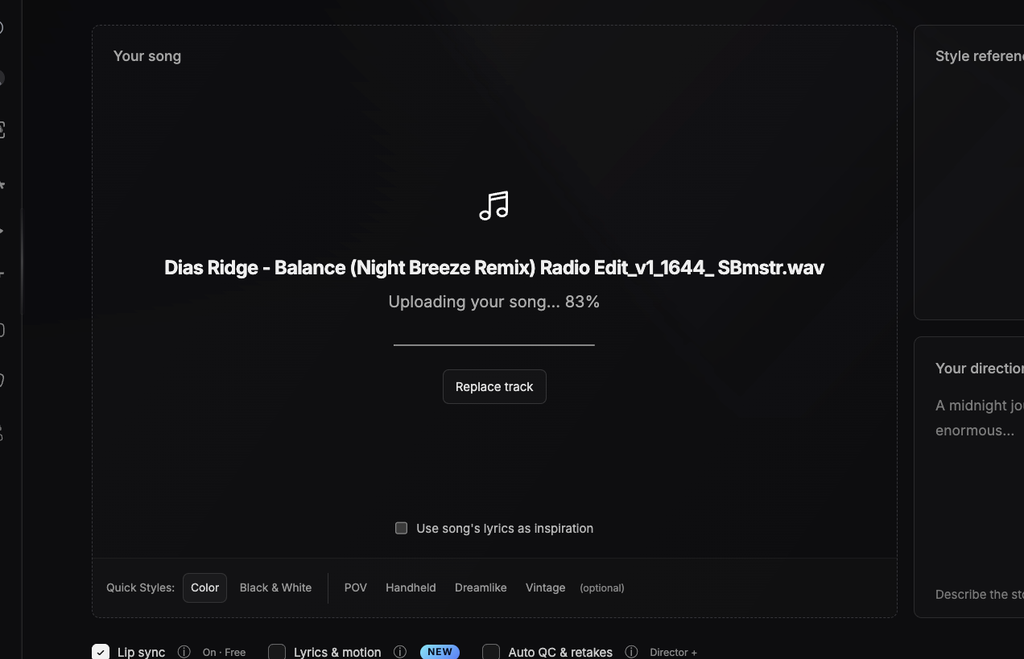
SoundBoost’s Music Video Generator expands the platform into a different part of the release process. Artists begin by uploading a finished recording, then provide a written description, reference images, photographs of performers, or other visual material.
The system analyzes the music to identify tempo, musical sections, vocal entries, and changes in intensity before developing a proposed visual treatment.
One of the more interesting decisions is that the software generates a storyboard before producing the actual video footage. Users can inspect individual scenes, review their placement within the recording, and request changes to the images or visual direction. That provides an opportunity to correct problems before committing additional credits to motion generation, which is typically the more expensive part of the process. Producers can also return to individual scenes afterward and generate replacements without necessarily recreating the complete video.
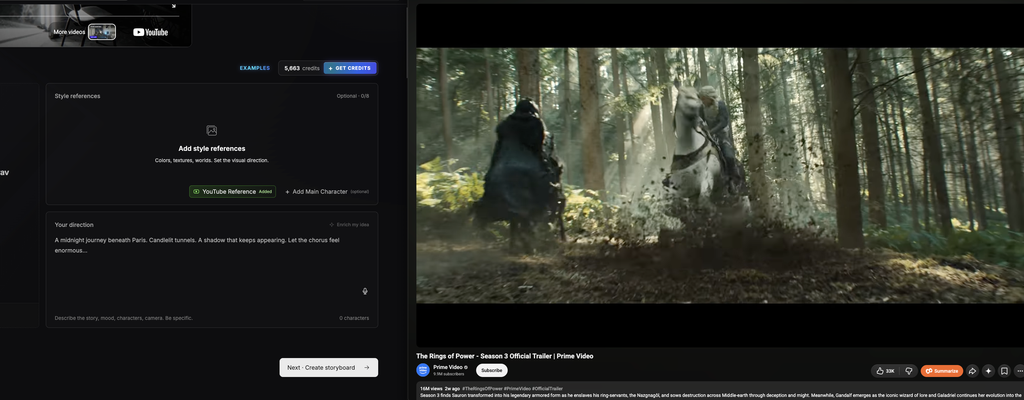
The system supports vocal lip-syncing, recurring characters based on reference photographs, and automatic editing synchronized to the musical arrangement. The company has published full-length examples covering techno, EBM, dubstep, and other electronic styles, illustrating how different source recordings can produce different visual treatments. The distinction between generating footage and retaining control over the final result is particularly relevant to the conversation I explored in The Producer’s Role in an AI-Assisted Studio. AI tools can reduce the amount of technical preparation required, but the artist still needs to determine whether the material communicates the intended ideas and accurately represents the music.
Why SoundBoost.ai Is Expanding Beyond Audio
The decision to add music video production reflects a familiar problem for independent artists. A professionally produced video can require planning, filming, editing, visual effects, and coordination with several people, depending on the concept. Those expenses can be difficult to justify when a producer is already managing recording, mastering, artwork, distribution, and promotional costs.
SoundBoost’s alternative is to consolidate much of that process into a browser-based application. The video generator offers a free 30-second storyboard preview, while paid subscriptions provide credits for longer projects and motion rendering. Introductory pricing begins at $29 per month, with SoundBoost estimating that a five-minute video can cost approximately $25 in credits at its promotional rates. Actual costs depend on the number of scenes, selected quality, and requested revisions.

Finished videos can be exported at up to 1080p without watermarks, and commercial licensing is included, provided users have the necessary rights to their source material.
There are still important considerations when using AI-generated visuals for official music releases.
Maintaining consistent characters, producing convincing performances, and developing scenes that communicate a coherent idea can require additional revisions. Ownership and permission are also relevant when incorporating photographs, recognizable people, or existing visual material. We explored related questions about access and creative responsibility in our discussion of how AI is changing sampling culture, and those concerns extend into video production as musicians gain additional ways to generate material from existing recordings and reference sources.
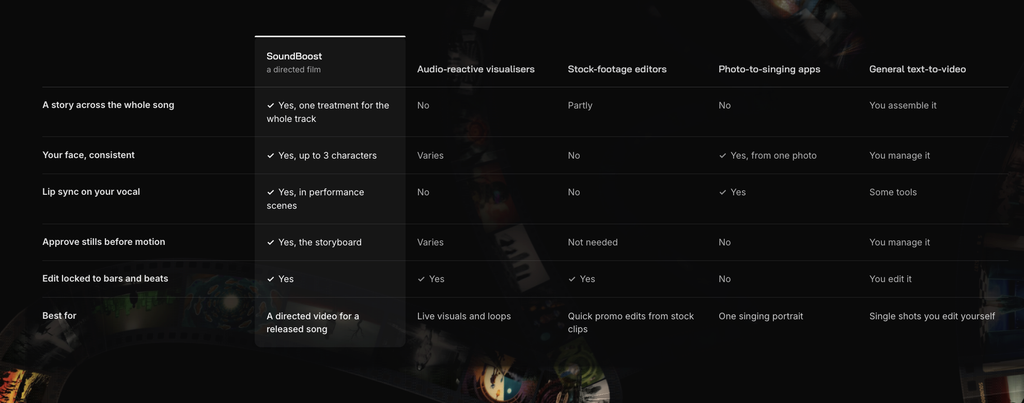
For SoundBoost, the larger development is the growing collection of services available within one platform. What began as a mastering application now includes audio separation, recording utilities, visual generation, and tools intended to help musicians prepare their releases.
The company reports hundreds of thousands of users, although that figure is self-reported, and the effectiveness of its newer features still needs to be established through independent testing.
I think the most interesting question is how well SoundBoost can maintain quality as it expands into additional production categories. Mastering a finished recording and developing a complete music video require different technical systems, and combining them within one service doesn’t automatically guarantee that each will meet professional expectations.
For independent producers, however, having access to these options through a single platform could simplify some of the work involved in releasing music, particularly when budgets and production resources are limited.
Explore the company’s tools at SoundBoost.ai or see its Music Video Generator and published examples.

Magnetic byline note: This byline is used for staff produced updates and short announcements, often based on press materials and official release information. Editorial responsibility: David Ireland (Editor in Chief) and Will Vance (Managing Editor). About: https://magneticmag.com/about/ Masthead: https://magneticmag.com/masthead/ Contact: https://magneticmag.com/contact/