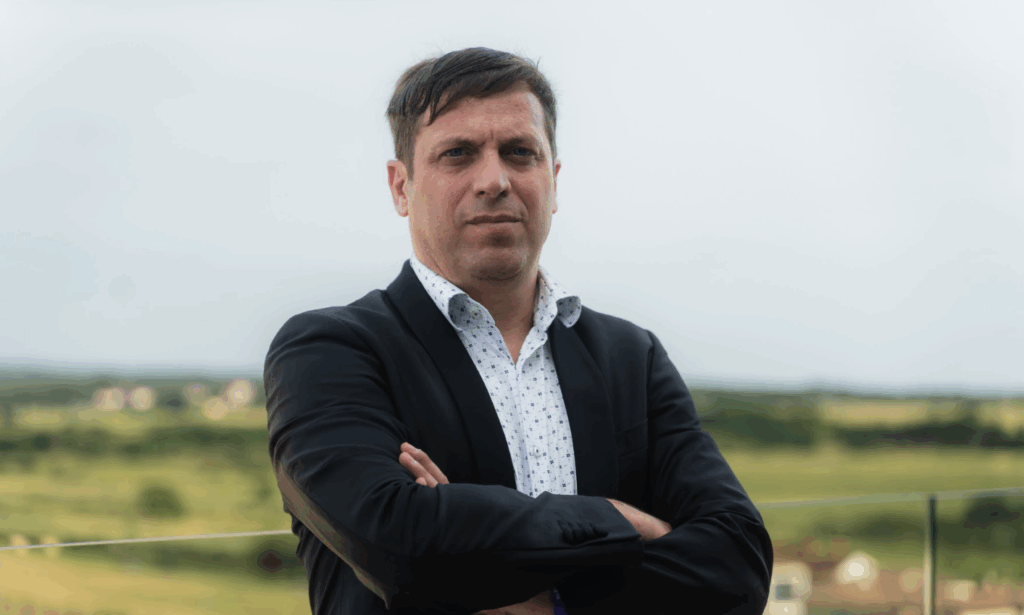
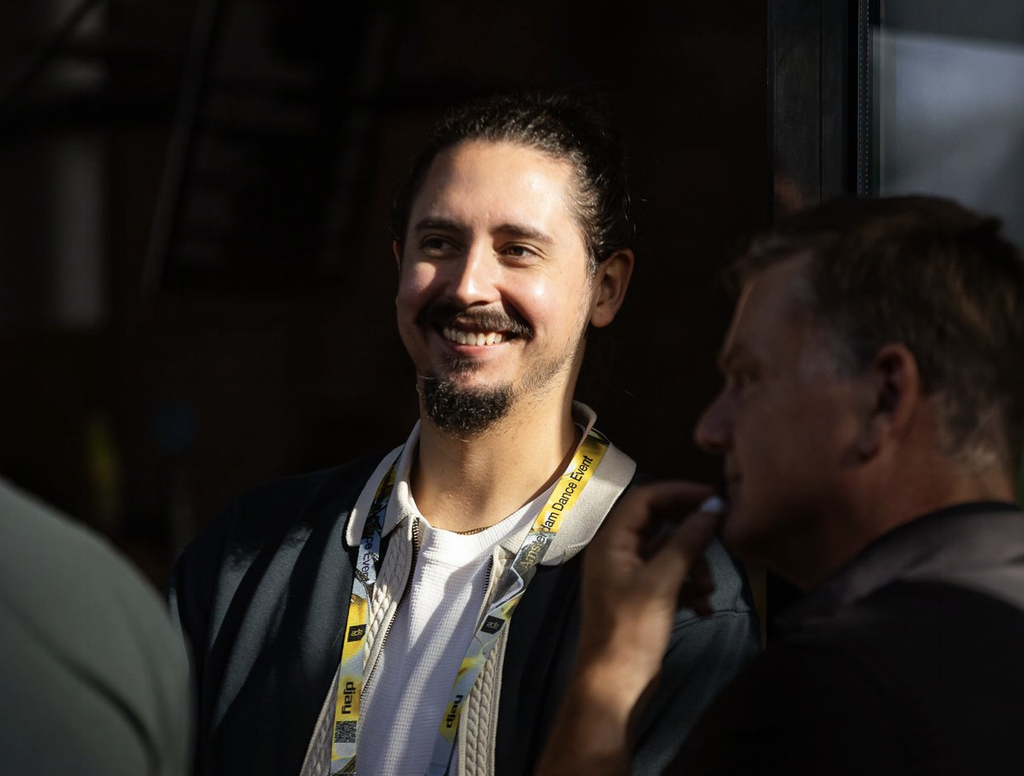
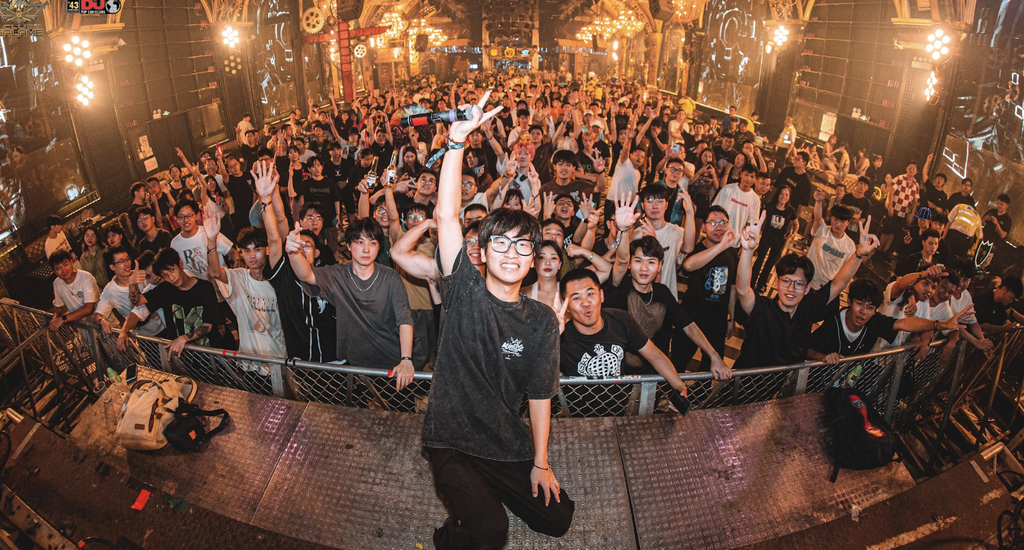
Official Press Photography Throughout Courtesy Of: JanitaAutio
Darude’s (@darude) Feel The Beat – Remixes brings one of the defining records in his catalog back into the present with new versions from Ilan Bluestone, Giuseppe Ottaviani, Emily Nash, Nilsix, EM11, and Junkkataxi. Released via his Vibing Out imprint, the package marks the first official remixes of “Feel The Beat” in more than 20 years, with newly recorded vocals from Austrian singer, songwriter, and producer PAENDA giving the project a present-day vocal shape while keeping the original’s identity recognizable.
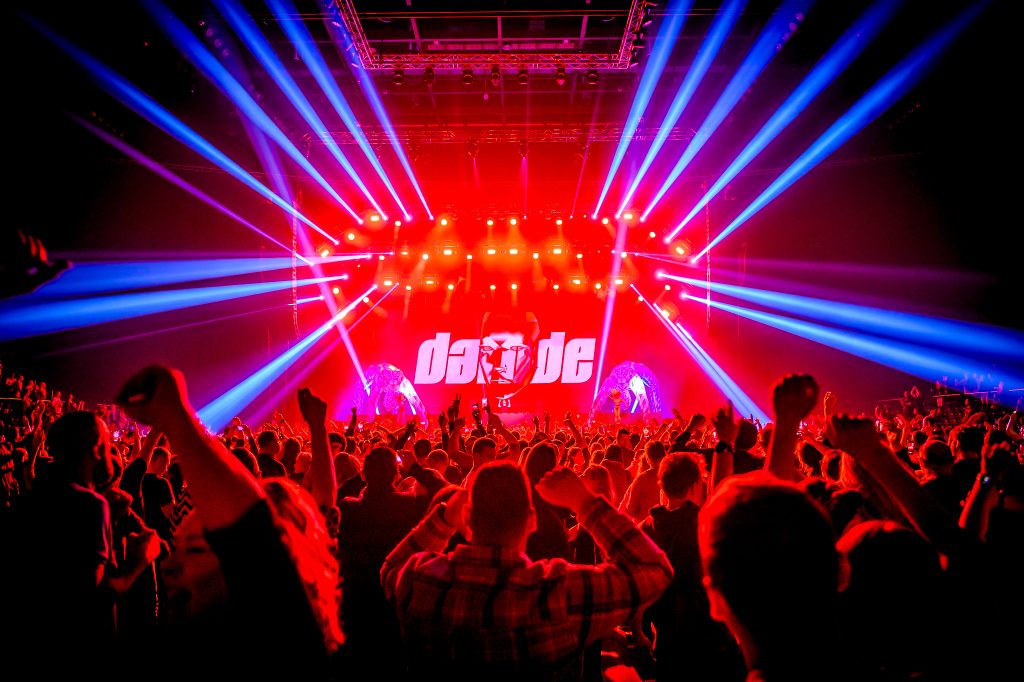
The remix package arrives after Darude’s STORM 25 Anniversary Tour and inside the wider run of his HYPE Tour DJ sets, where several of these versions were already being tested in front of crowds. That is the exact kinda background that gives the release a cleaner emotional basis from which it can work its magic.
This is Darude using his own history as a meeting point for peers, younger producers, Twitch-era fans, road-tested club reactions, and the community that now sits around his Vibing Out label.
That makes this interview less about nostalgia and more about responsibility, connection, and the real mechanics of DJ culture. Darude talks about staying after shows, peer support groups, Twitch as a lifeline during the pandemic, the difference between casual dancers and deeply invested fans, and why gratitude does not have to turn into debt.
His answers are long, detailed, and often more candid than the usual community talk, which is exactly what makes them worth reading.
Interview With Darude
How do you personally define community in the context of DJ culture?
To me, community is the whole dance-music ecosystem: the fans and listeners, the dancers, the club and festival goers, the promoters, the DJs, the music producers.
We all get something and we all give something, we create atmospheres and economies.
Are there intentional things you do to stay connected with other DJs, promoters, or dancers outside of gigs?
Nothing that feels like a formal strategy. I’ve approached it much the same way from the beginning.
I stay after shows whenever schedules allow, talk with people, take pictures, and continue those conversations online. At my shows, I am in front of a crowd as a kind of conductor and an example-giver, but even when I am the headliner, and people have come specifically to see and hear me, I don’t think I’m above the dancing crowds.
I’m with them, and I believe people see and feel that I love what I do, and I hope that’s infectious and radiates everywhere and we get this energy exchange going. I’ve befriended many promoters, dancers, and other staff over the years who I keep in touch with, but I don’t necessarily socialize with “random” ones just because.
I’m in a couple of pretty big DJ/producer WhatsApp groups where, in one, we converse daily about mixing, new tech, and production techniques and such, and in the other about the mental health aspects of our work and lifestyle both as a group and individually.
It’s a great circle of trust, and both of those groups help with both the daily private lives of ours and the work stuff, and it keeps us connected on a peer-to-peer level and makes it possible to cook up collaborations and also to connect on a very personal level.
Can you share a moment where a relationship or community you built totally changed the direction of your career?
I can’t think of one relationship that totally changed my direction overnight, but the Twitch community meaningfully shaped how one part of my career developed. I’d already irregularly streamed music production and DJ sets on Twitch since 2015. When the pandemic stopped touring and the initial “WTF do I do now?” panic set in, regular live streaming genuinely helped save the performer part of my brain and soul.
What began as a small community of tech-minded music fans, beginner producers and some gamers grew into thousands of dance-music-loving followers and also new closer connections to fellow DJs. It gave me a way to perform, stay connected with people and exchange positive energy during an incredibly uncertain time.
That atmosphere quickly became so central to the stream that I called it Vibing Out. We had already been planning a new record label before the pandemic, so the stream community didn’t create the idea, but when it came time to give the new label a name, Vibing Out felt right. It represented the supportive, family-like community that had grown around the streams and the energy we wanted the label to carry.
The label has now released my 2023 album Together and a couple of single releases like May 2026’s “Hype” with Mashd N Kutcher and July 2026’s “Feel The Beat” feat. PAENDA remix package, and more of mine is coming, plus we’ll start releasing other people’s music as well.

What helps you nurture meaningful connections in an industry that often moves fast and surface-level?
I don’t try to manufacture meaningful connections.
For me, they grow from making music I genuinely care about and being present with people in real life. While I have my socials team and we do post about events and releases and such, I don’t want to partake in creating nor receiving social media FOMO.
I myself pretty much only post about my skateboarding adventures and repost my peers’ and friends’ content. When I meet people on the road, they validate my efforts by not only having bought tix to the show, but with personal stories and anecdotes, even just locked eyes and smiles during a blissful breakdown, or a rager of a drop, and those connections are the meaningful ones, the ones that I don’t take for granted, but the ones I cherish and appreciate so much when they become reality.
Do you think the role of community has shifted in an era where social media often replaces IRL circles?
Yes, the shape of community has changed online, but the human connection in clubs and festivals still feels fundamentally the same to me. I think the word “community” is way too vague or broad.
Then again, I don’t want to define it narrower like “real fans” or “true music lovers” that you can see often in social media, someone trying to be better than others. Some people take shit way too seriously and so easily come across as either elitist or entitled, or both, or just mean and narrow-minded.
As DJ culture has shifted more toward being an artist or brand culture, and the crowds have grown, I feel that the highly engaged and knowledgeable part of the crowd might’ve stayed about the same size, and the more casual masses have grown on top and around it.
This might cause some friction sometimes, because in the minds of the “serious” people this waters down the scene, but at the same time I feel that the more the merrier, as any person coming new to the scene is a potential new “seriously invested” person in a year or two, through now having found gateway tracks and artists who have more commercial appeal, or more commercial exposure.
This is a difficult topic to convey so that you don’t piss anybody off, and that’s not my purpose, but what I’m trying to say is that the “real music lovers” who look into their faves down to minute details of production or the career turning points and the “casual” dancers who love this track because it says “Party, champagne, 1-2-3-jump,” but don’t know and don’t care who it is by are both a part of the scene, the community, and equally entitled to their level of dedication and vibes.
Social media can flatten community into metrics and FOMO, but it can also connect people who would never otherwise meet, as Twitch did for me during the pandemic.
What are the quiet or overlooked ways DJs support each other behind the scenes?
I don’t mean to be a nitpicker, but it’s worth distinguishing DJs, producers, live performers, artists and songwriters, because the behind-the-scenes support can look different in each role, and many people wear several of those hats. Regardless of the exact job description, just simply reaching out and connecting with same/similar genre peers and checking out their tracks, playing them in your sets and naming and tagging them in social media is definitely something positive you can do. Beginning producers could collaborate to both cross-pollinate their fan bases and to learn from each other.
Maybe one is a killer musician, but not tech savvy and the other knows everything there’s to know about tech, but doesn’t play any instruments. Boom, 1+1=3! As a DJ you could decide to “risk it” every show. Instead of playing it safe and playing all already solidified known hit records, you could play a track or two of similar style/BPM fitting, but unknown tracks instead. Won’t ruin your set, but could give you an edge playing good stuff nobody knows yet, and will also gain points from your peers.
Personally I’ve always tried to plug my Finnish producer friends any chance I get, because so many of them have made amazing bangers, but for a reason or another they haven’t ended up in big rotation globally yet, so for my gain they’ve been destroying dance floors as my not-so-secret weapons everywhere for years.
Last but not least, I highly recommend opening up about the challenges of being an artist, a performer or a DJ, and being an entrepreneur and having career and financial pressure, having to leave your family behind for days or weeks when on the road etc. It helps to realise you’re not alone with your feelings. I guarantee your peers experience similar things regardless of their status, level of success or years in the industry.
How has your sense of responsibility to your community evolved over time?
I’m not sure my sense of responsibility has evolved, because I’m cautious about framing community as an obligation. I’ve always felt responsible for my own conduct: to show up properly, treat people fairly, do honest business and give people my time and attention when I can. Over the years, especially around the STORM 25 tour, my gratitude has deepened enormously.
But gratitude isn’t debt.
Being around for a long time, or having success, doesn’t make me responsible for managing a scene or carrying an entire community. I’m part of it, not in charge of it. Through doing a bunch of interviews in which I looked back on specific career moments and the general span of it so far, but especially remixing my old music, revisiting the original sounds for the live show had this very profound effect on me. All the 60 shows were packed, a good bunch of them sold out, and at every show I had these overwhelming moments of gratitude for the highly intertwined work and private life I’ve been allowed to lead for the last 25 years, and it’s the crowd, my community, I have to thank for that.
They say they love my music and I get that, and I appreciate that, but they are the ones that have felt my music, bought records, streamed them, bought tix to the gigs, basically made it possible for me to make a living good enough out of this to support my family and to keep on making music and performing. I am an artist, I do make exactly the kind of music I want; I do make it to myself first and foremost, but after it leaves my studio as a product, then it’s everybody’s to enjoy, or not, and to have found such an audience it’s hard not to feel like I owe them something.
Which in tangible terms I think I don’t, but as a person and an artist it makes me happily take every last selfie and sign autographs until the Sharpies dry out, and even after that chat until I really need to leave.
Closing Thoughts From The Editor
Darude’s answers are unusually precise because he refuses to turn community into a soft-focus slogan or marketing buzzword.
He defines it as an ecosystem: dancers, fans, promoters, DJs, producers, venues, festivals, atmospheres, and economies all affecting each other. That is a more grounded answer than the usual “it’s all about the people” line, because it admits that dance music is emotional and practical at the same time. The feeling in the room is real, but so are the jobs, tickets, travel days, mental pressure, and business decisions that make the room possible.
That connects with my interview with DJ Susan on why showing up still opens doors for DJs, where community was treated less as a marketing asset and more as the result of repeated presence. Darude is talking from a much longer timeline, but the lesson is adjacent.
Staying after shows, taking photos, remembering promoters, plugging peers’ music, and staying available for real conversations all sound minor until you add them up over decades. The scene gets built in those small exchanges as much as it gets built by the records.
His Twitch answer gives the piece its clearest modern hinge as well because during the pandemic, streaming gave Darude a way to keep performing, stay sane, and build the Vibing Out identity around a group of people who were showing up when touring vanished.
That has a clear line to my conversation with Richie Blacker on why the best club nights do not fit into 30 seconds, because both conversations push back against the idea that dance music’s deepest moments should be judged by how well they compress into content. Darude is not dismissing online space. He is saying that online space works best when it extends the human exchange rather than replacing it with FOMO.
There is also a practical artist-life lesson here that reminded me of my interview with ANNA on energy, time off, and the long view of an artist’s life. Darude’s comments about peer WhatsApp groups, mental health, financial pressure, leaving family for days or weeks, and talking openly with other artists cut into a side of the job that rarely makes it into public-facing mythology. The audience sees the show. The artist still has to manage the private cost of constantly being asked to appear public, available, grateful, and creatively charged.
I also hear a link to my interview with Wally Lopez reflecting on an incredible career, because Darude’s answer about gratitude carries the same long-career tension: after enough years, the audience stops feeling like an abstraction. They become the reason the private life and the working life have been able to stay connected at all. Darude is careful not to frame gratitude as debt, and that distinction is the sharpest part of the interview.
He does not owe anyone control over his career, but he still owes people decent conduct, effort, presence, and enough respect to stay until the Sharpies dry out.
That is also what makes Feel The Beat – Remixes feel more personal than a standard catalog update.
The package only works because the original record kept living in other people’s sets, memories, hard drives, and remix folders long after its first era passed. Ilan Bluestone, Giuseppe Ottaviani, Emily Nash, Nilsix, EM11, Junkkataxi, PAENDA, the STORM 25 crowds, the HYPE Tour rooms, and the Vibing Out community all become part of the new version of the story. Darude’s point is simple, but it lands: community does not ask the artist to disappear into obligation. It asks the artist to keep showing up like a person.

Will Vance is a professional music producer who has been involved in the industry for the better part of a decade and has been the managing editor at Magnetic Magazine since mid-2022. In that time period, he has published thousands of articles on music production, industry think pieces and educational articles about the music industry. Over the last decade as a professional music producer, Will Vance has also ran multiple successful and highly respected record labels in the industry, including Where The Heart Is Records as well as having launched a new label with a focus on community through Magnetic Magazine. When not running these labels or producing his own music, Vance is likely writing for other top industry sites like Waves or the Hyperbits Masterclass or working on his upcoming book on mindfulness in music production. On the rare chance he's not thinking about music production, he's probably running a game of Dungeons and Dragons with his friends which he has been the dungeon master for for many years.