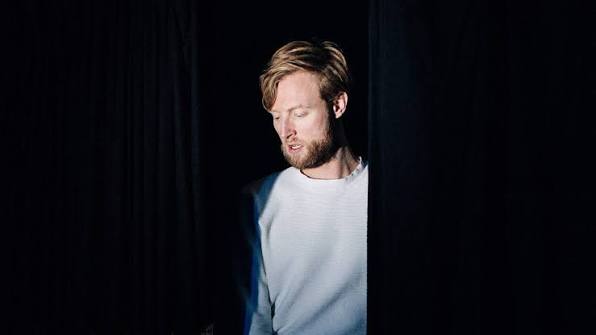
ELPHNT (@elphntx) has always sat in an interesting corner of music production culture.
It is an Ableton-focused project, a collection of Max for Live devices, a teaching platform, a design outlet, a newsletter, a writing practice, and a creative business all at once. For Tom, the person behind it, that breadth is the point. ELPHNT is not only a way to sell music-making tools. It is a way to build a life around music without forcing every part of that life to become a release schedule, artist brand, or public performance.
That distinction feels increasingly relevant right now.
Producers are expected to learn constantly, release constantly, post constantly, and keep proving that they still exist inside the algorithm. ELPHNT moves differently. Tom has slowed down his public pace over the last couple of years, stepped away from several dormant music projects, and put more attention into the work that has become most sustainable for him: teaching, building tools, writing clearly, designing better creative experiences, and talking directly with the people who use what he makes.
The timing also gives the conversation a sharper edge.
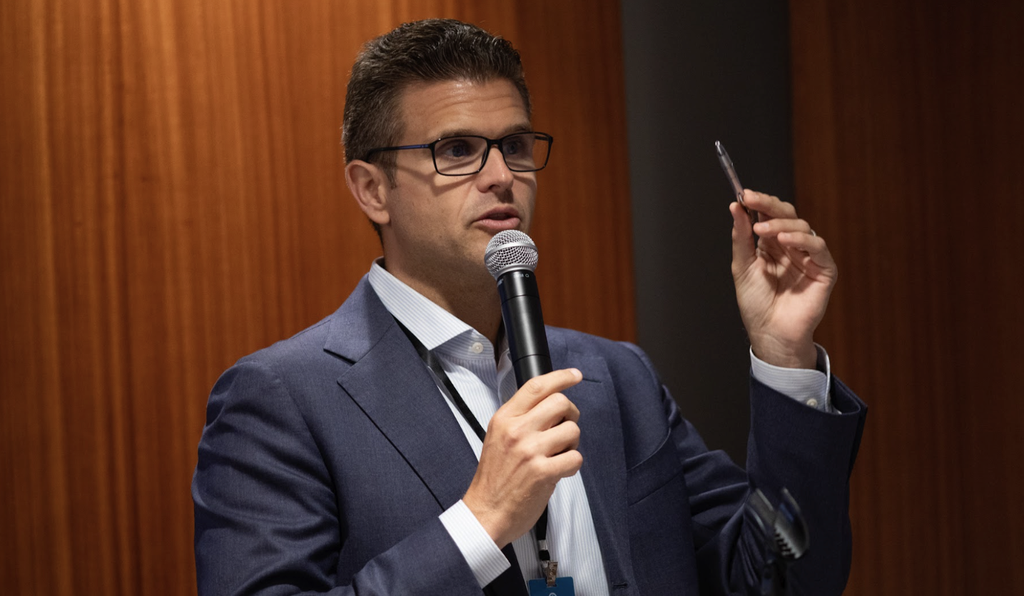
Tom is now part of Ableton Live itself, with his voice appearing inside Learn View tutorials in Live 12.4 and beyond, after years of creating educational content for Ableton’s official channels. He is also helping build Capture, a new London music-maker community focused on music tech, workshops, and a deliberately playful Y2K-styled visual identity. And despite being almost entirely in the box, his one regular hardware exception is an original Nintendo Game Boy running LSDj and other sound-generating ROMs.
That small detail says a lot about the larger ELPHNT philosophy: tools matter most when they keep curiosity alive.
Interview With ELPHNT

ELPHNT has become your main creative and business focus, so what does the project represent for you now that it occupies such a central place in your working life?
On one level ELPHNT is a business. It’s been that for years now, and it’s one of my main sources of income. But honestly, that part feels almost secondary. I tend to think of ELPHNT as a creative project as much as anything else. It’s the same way someone might think about a career as a musician, with its own releases, tours and workshops.
What I really enjoy is how broad it is as a creative outlet. Under one roof I get to work with sound and sound design. I write code and build Max for Live devices. I do a fair bit of design too, whether that’s product and interface design, my websites, or artwork for packs and product pages. I make educational content, and I do a lot of writing, from plain copy to tutorials to the newsletter.
So it lets me flex all these different creative muscles and pull them together through this one thing called ELPHNT. It pays the bills, but really it’s that creative side that makes it feel worthwhile.
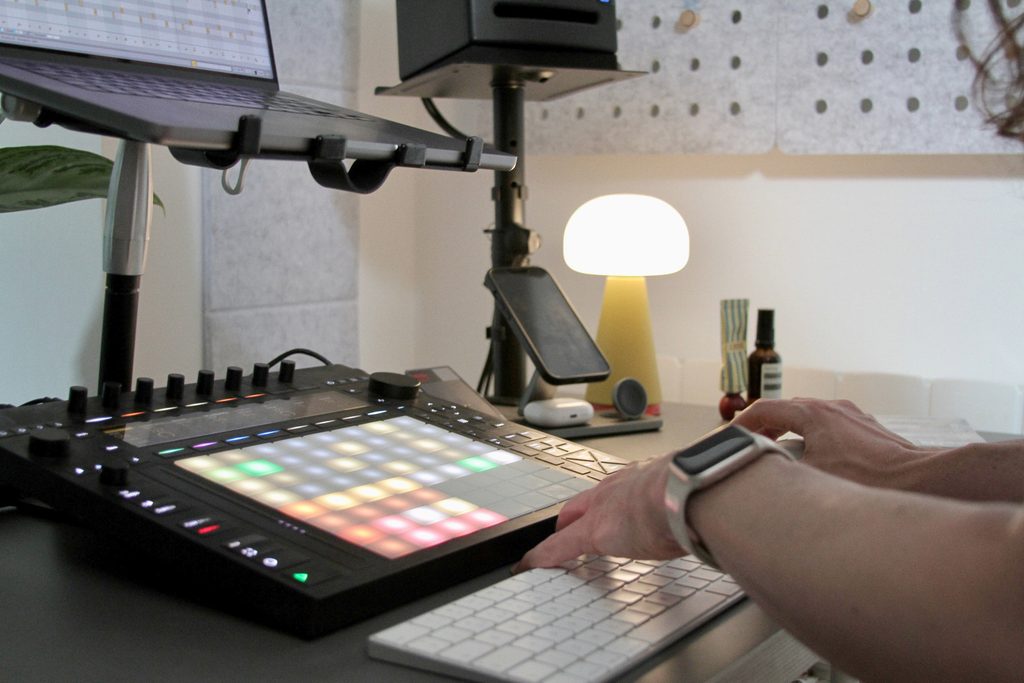
A lot of music education concentrates on software techniques and finished results, while your work often pays attention to the thinking behind those decisions. Why has that wider approach become so important to ELPHNT?
It comes from the way I think about teaching. For me, teaching isn’t about showing someone how to do one thing in one particular way, so they go off and only ever do that. It’s about helping people understand why something works. That way they can take an idea and apply it in situations I never showed them, and build their own understanding as they go.
A lot of what’s out there, especially on YouTube, is pretty prescriptive. Here’s a trick to get this result, and that’s kind of all you get. You can’t really take it and use it somewhere else. So whether it’s the tutorials I make or the tools I build, I’ve always tried to put the creator front and centre.
Sometimes that’s a tutorial that teaches the fundamentals rather than one specific move. Sometimes it’s a tool that’s deliberately open, so it works in loads of contexts instead of doing one single job. And it carries through everything around the tool as well. It’s in the way the interface works, the way the product page explains what the thing actually does, and the way a demo video shows off different situations you could use it in.
So really, ELPHNT is a lot about designing experiences. I want people to come away feeling more excited and inspired to go and make something. Ideally something better than the sum of the parts I gave them.

When your creative interests, audience expectations, and business needs compete for attention, how do you decide where your time should go?
I’m lucky that ELPHNT is a creative outlet in itself, so my own curiosity and the business side kind of feed each other. It’s all fairly symbiotic. Nearly everything I make comes straight out of my own practice. I’ll be sitting there making music and think it’d be great to have a sound or an effect that did a certain thing. So I go and build it, and it turns into a product. Or I’ll land on a technique I couldn’t have pulled off before, and start thinking about how to turn that into a tutorial.
That creative spark is always the starting point. The business stuff, the marketing and emails and social media, tends to fall into place around it. I’ve rarely made things by thinking “this is what people are after, so I’ll make something popular.” I mostly just make what I want to make, and then work out how to show why it might be useful, even to someone who didn’t realise they needed it.
The bit I do put real thought into is generalising things. Once a tool works for me, I’ll step back and think about how it holds up in a more general context. Often I’ll add features I wouldn’t personally use, but that make it more useful to different kinds of music makers. Part of that is an ongoing back and forth with my audience. I’m pretty open with people, and I get a lot of emails from someone who’s downloaded something and wishes it did this or that. Plenty of those are great ideas that end up in an update. When something doesn’t quite fit what I want a tool to be, I’ll just say so, and point them towards something else that’ll do the job. That’s a big part of why I keep the Max for Live curated collection going too.
As for where my time actually goes, it’s split pretty evenly between the creative side and the business side. There’s a fair bit of the business stuff I don’t really enjoy, so I try to keep it to a minimum. I automate what I can, set up little routines that make it easy, and these days I lean on AI for a lot of it. All of that frees up as much time as possible for the parts I care about, which is the making, and the chatting with people who use what I make.
Many producers feel pressure to release music, post content, learn new software, and remain visible at the same time. Which of those pressures have you had to question or reject?
There was definitely a stretch where I felt like I had to be posting all the time, staying current, keeping up with the algorithm. The internet is really good at making you feel like you constantly have to be hustling and getting stuff out there. I got to a point of proper burnout with it. A lot of what I was putting out didn’t feel that authentic, and I was doing it to chase engagement more than because it meant anything.
Over the last couple of years I’ve very deliberately shifted towards working with my own rhythms, instead of whatever the world seems to expect. Things move more slowly for me now. That does mean less activity on social media, but it frees up space for better kinds of engagement. I’d rather actually chat with people who reply to my emails than scramble to get the next post out. “Less but better” has always been part of ELPHNT’s DNA, and slowing down really helps with that. I get more time to make things as good as they can be, rather than pumping out frequent, shallower stuff.
When I first made that call, there was a real fear. Am I going to disappear? Are people going to forget about me? Is the whole thing going to fall apart? It just hasn’t panned out that way. If you build a strong brand and make things people care about, they tend to remember. I’ll send an email after a few quiet months and get these lovely replies saying it’s good to hear from me, glad I’m still around. That’s always quite touching.
It taught me it’s okay to go a bit quiet for a while. If the work is good and people feel strongly about it, they’re all the more pleased when you turn back up. If you build everything on constant, fast, slightly lower quality output, that becomes what people expect. Then the moment you slow down, it feels jarring. By making “slow, and put out when it feels right” my normal from the start, the people who gravitate towards what I do tend to be on that same wavelength anyway.

Several of your other musical projects are dormant at the moment. How did you decide to give ELPHNT priority, and was there any reluctance attached to placing those projects aside?
I’ve always had a few other music projects running alongside ELPHNT. Over the years there have been bands, collaborations with friends, and solo projects of my own, often several on the go at the same time. Earlier this year I decided to put all of them down for a bit and really focus on ELPHNT.
There were two things behind it. One was that I was feeling a bit burnt out on making music in general, with all those projects going at once. The other was that I could tell there was more I could be doing with ELPHNT if I gave it proper focus. I’ve got years of backlog, packs I’ve wanted to release and tutorials I’ve wanted to make. I’ve only really started working through all of that in the last several months.
Honestly, there wasn’t much reluctance. One of the nice things about music projects is they rarely go away, so you can pretty much always come back to them. I’ve even started dabbling again recently with an old project I hadn’t touched in years. And it’s not like ELPHNT is the only thing I do. I also work as an Ableton Certified Trainer and make a lot of content for the official Ableton channels, which feels pretty closely related anyway. So really it was just about simplifying things, and putting my focus on one project for a while so I could let it be the best it could be.
If someone wanted to build a long-term life around making music, what questions should they ask themselves before investing further time, money, and personal identity in that goal?
A few things come to mind. The first is to be honest with yourself that it’s not all glamour and fame. There’s a lot of hard work behind any kind of successful music career. Part of that is just because so many people would love to have that life, or even just a stable living making music. So it’s worth setting that expectation early. It’s a lot of work, and it’s not all fun.
But it’s also brilliant. I get to wake up most days and spend my time on something to do with music, whether that’s teaching, making content, building tools or actually making music. Everyone I’ve worked with who’s built something lasting has had to work hard for it. If you’re willing to put that in, you can get really great things out of it.
The second thing, and this is a big one, is to ask yourself what you actually want to do in music. And to ask whether you’ve explored options you might not have even thought of. When I set out, I assumed I wanted to be a performer. I started on drums, wanted to play in bands, studied sound engineering, then figured I wanted to work in studios. I toured with bands and realised it wasn’t really for me. I spent time in studios and realised that wasn’t quite it either. I sort of stumbled into teaching, making content and building plugins, and found I loved it. None of it was planned. I got there by staying open to unexpected opportunities, and following the things that caught my attention.
Nearly everyone comes to music tech because they love music and want to be involved in making it. But there are so many ways to build a life around that which don’t involve making music directly. You could be a stagehand, or a MIDI tech helping people set up their gear. You could be a sales rep for a music tech company, a teacher, someone making educational content, or a designer building hardware or software. And if you’re someone who loves making music, it’ll always find its way back in somehow.
The most important thing I’ve learned is this. I enjoyed making music the least when I piled all the pressure on it to be everything, my identity and my income at the same time. It got stressful, and I lost a lot of my love for it. Letting myself earn a living in other ways, through teaching and content, has given the music I make room to breathe. Now I can just do it for the fun and joy of it. That feels like a much better place to be than forcing myself down a path I once thought I wanted, and have since realised just isn’t mine.
Closing Thoughts
Tom’s answers make the most sense when ELPHNT is treated as a creative practice rather than a music-tech shop. That does not diminish the business side. If anything, it makes the business more interesting. The project works because it gives him one place to combine sound design, Max for Live development, teaching, writing, visual design, product thinking, and the slower craft of explaining why something works rather than only showing how to copy the result.
His comments about slowing down also sit beside Mystigrix on long-term growth, community, and avoiding social-media pressure. Mystigrix spoke from inside house culture, while Tom is speaking from the music-tech and education side, but the problem is almost identical. The internet makes everyone feel like disappearance begins the moment they stop posting. Both conversations argue for a steadier relationship to the work, where depth and direct connection can matter more than constant output.
There is another connection to Driver405 on Splice, AI, and protecting rough ideas.
Driver405 talked about the danger of mistaking polish for purpose when finished-sounding material is always nearby. ELPHNT’s teaching philosophy pushes against the same shortcut from another angle. A good tutorial or device should not leave a producer dependent on a trick. It should help them understand enough to make a different choice later.
Tom’s place inside Ableton Live also gives the piece a nice full-circle moment. After using Live for more than fifteen years and creating tutorials around it for ages, his voice now appears inside the software’s Learn View. That detail could easily be treated as a résumé note, but it says something more specific about trust. Ableton is placing his teaching voice at the moment when a user is trying to understand the program from the inside, which fits the way ELPHNT has always worked: practical, clear, and more interested in helping someone think than simply handing them a preset outcome.
The Game Boy detail may be the best small metaphor for ELPHNT.
Tom is almost entirely in the box, but the one piece of hardware he keeps close is an original Nintendo Game Boy running LSDj and other sound-generating ROMs, including some of his own. It is limited, odd, portable, tactile, and full of personality. That is not a contradiction to his Ableton and Max for Live work. It is the same instinct expressed in another form: constraints can make tools more alive.
The broader takeaway is that ELPHNT offers a different answer to the question of how to build a long-term life in music. Tom’s path did not settle into the standard performer fantasy, and that is exactly why it feels relevant. Teaching, designing, coding, writing, building devices, making official Ableton content, helping develop a local community, and leaving his own music enough room to breathe all belong to the same ecosystem.
ELPHNT is the proof that a music life can be built around support, explanation, utility, taste, and curiosity without becoming any less creative for it.

Will Vance is a professional music producer who has been involved in the industry for the better part of a decade and has been the managing editor at Magnetic Magazine since mid-2022. In that time period, he has published thousands of articles on music production, industry think pieces and educational articles about the music industry. Over the last decade as a professional music producer, Will Vance has also ran multiple successful and highly respected record labels in the industry, including Where The Heart Is Records as well as having launched a new label with a focus on community through Magnetic Magazine. When not running these labels or producing his own music, Vance is likely writing for other top industry sites like Waves or the Hyperbits Masterclass or working on his upcoming book on mindfulness in music production. On the rare chance he's not thinking about music production, he's probably running a game of Dungeons and Dragons with his friends which he has been the dungeon master for for many years.