Table of Contents
So you want the quick answer for what remastered means or the long one, cause we can, and will, get into the weeds if you want to keep reading…
A quick-and-dirty breakdown: a remastered piece of music means a new final master has been created from an older recording, usually so the music translates better on current playback systems or a new release format. In the strictest sense, the mastering engineer works from the existing stereo mix rather than reopening all the individual tracks.
They may change EQ, dynamics, stereo balance, noise, peak level, loudness, sequencing, or delivery format while trying to preserve the musical decisions already made in the original mix.
That is different from remixing, where the engineer goes back to separate drums, vocals, synths, and other parts and builds a new mix. It is also different from rerecording the song. The confusing part I’ve always found is that archival releases labeled “remastered” sometimes include restoration, edits, newly reconstructed mixes, or other work before the actual remaster happens, so the credits often tell you far more than the word itself.
The remastered meaning is pretty simple once you separate it from all of the marketing language around deluxe editions and anniversary releases. A remaster takes finished music and creates a new master for another release, format, or listening environment. The new version can be louder, quieter, brighter, darker, less noisy, less compressed, or almost indistinguishable from the original depending on what the engineer and artist want.
But here’s the thing… It does not automatically mean the recording was remixed or rebuilt from the multitracks.
I have spent years interviewing producers and publishing production breakdowns on Magnetic, and one thing that comes up again and again is that good mastering is usually about careful final decisions rather than rescuing a bad mix. That distinction matters even more with remastering because the goal is often to improve translation while keeping what made the old record worth revisiting in the first place.
The most interesting examples are the ones where artists have to decide how much of their younger selves they are willing to change.
Remastered Meaning Explained In Basic Terms
Cambridge defines remastering as making a new master of an earlier recording, usually to produce copies with improved sound quality. That is a good basic definition, but it leaves out the part I think listeners actually want to know: what can the engineer touch?
If this is a strict remaster, the stereo mix already exists.
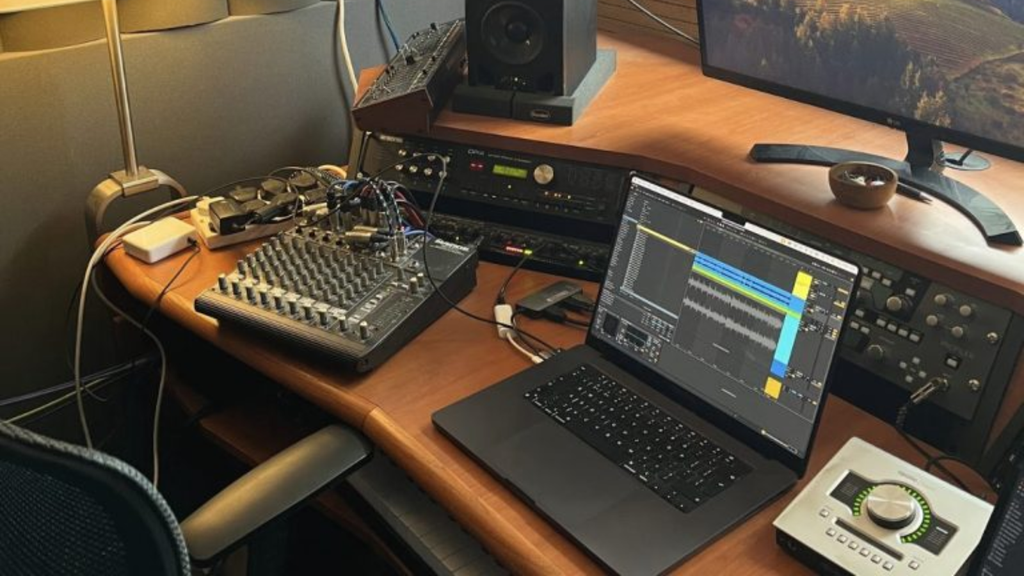
Imagine opening a DAW and seeing one stereo audio file rather than 60 channels of drums, basses, synths, vocals, reverbs, and automation. The mastering engineer can process that finished stereo file, but they cannot simply turn the vocal down 2 dB or move one hi-hat because those sounds are already combined.
That limitation is the entire distinction.
In an older article that I wrote on how mastering turns individual songs into a cohesive project, I described mastering as the stage where individual records are considered alongside the project they belong to. Tonal balance, loudness, dynamics, spacing between songs, and the way one track hands off to another all become part of that job.
Remastering applies that same thinking to material that already went through the process once.
Maybe the original was mastered for an early CD release. Maybe the only widely available digital version came from a transfer nobody is happy with. Maybe a house track released on vinyl in 2007 is finally coming back to streaming. Maybe an album is getting a 25th-anniversary pressing and the label wants the original tapes revisited.
Those are remastering jobs.
Remastering Versus Remixing Versus Rerecording
This is where the terminology starts getting sloppy.
A remaster normally starts from the finished stereo mix or another completed source master. The musical balance should remain fundamentally recognizable.
A remix goes back to the separate recorded parts and creates a new balance. Vocals can move. Drums can change level. Effects can be replaced. Panning can change. Parts can potentially be muted or emphasized.
A rerecording means performances are recorded again.
And then there are archival releases that use several of those processes before the record reaches the audience.
Giom gave me one of the best examples of that gray area when I interviewed him about Giom Classics Part. 2 and revisiting records from his back catalog. The release was presented as carefully remastered for modern dancefloors, but when he found the original session and reconstructed it in Ableton, he also discovered quiet wrong notes in the bassline and out-of-key material that he corrected.
Technically, those corrections happen before the strict mastering stage because changing an individual bass note means going back inside the mix.
That does not make the release misleading. It shows why the word “remastered” on a streaming service can describe the final presentation of a larger archival process.
Quazar gives us an even clearer distinction. Magnetic’s 2024 interview with Gert van Veen about The Seven Stars notes that Marco Antonio Spaventi remastered the original 1991 album, while van Veen separately created a 2024 recreation of the title track and had Olav Basoski mix it.
Those are two different things happening around the same catalog.
The album remaster revisits the existing recordings.
The recreation revisits the production itself.
If you see “2026 Remaster” beside a track title and want to know how different it should sound, checking the liner notes or credits for terms like new mix, reconstruction, restoration, or re-recording can tell you what actually happened.
What Actually Happens During A Remaster
The first job is finding the best source.
For a producer from the DAW era, that might be the original 24-bit premaster or final unmastered stereo mix. For an older catalog, it could involve a tape transfer, archival digital master, or another surviving source.

Apple’s current Apple Digital Masters documentation makes a point that matters here: use the highest-quality native source available rather than upsampling an older file and pretending new information has appeared. Turning a 16-bit file into a 24-bit container does not recreate detail that was never there.
Once the source is established, the engineer listens for problems that the new release is supposed to address.
That can mean tonal changes with EQ, controlling harsh peaks, repairing noise or clicks, adjusting dynamics, changing overall level, controlling true peaks, or preparing separate masters for different delivery formats. An old analog transfer may need restoration before any of the normal mastering decisions even begin.
The important part is restraint.

Mint Julep explained that idea well in their How It Was Made feature for Stray Fantasies. Their mastering engineer Carl Saff helped make the material shine while respecting “the tone of what we had in the original mixes.”
That incredibly basic and simple sentence gets close to what I want from a remaster, and I think that makes all the difference.
You are trying to improve how the old recording reaches the listener without erasing the decisions that made it that recording.
A Remaster Does Not Automatically Need To Be Louder
This is probably the biggest misconception.
A remaster can be louder.
It does not have to be.
The loudness wars trained listeners to associate a newer master with greater level, but streaming normalization has changed part of that equation. Spotify currently says its Normal playback level is adjusted to -14 LUFS, and it applies that gain change at playback rather than rewriting the uploaded master. Spotify also recommends keeping true peak at or below -1 dBTP around that target, and below -2 dBTP when delivering louder masters to reduce potential encoding distortion.
That does not mean every electronic record should be mastered to -14 LUFS.
I would be very careful about turning a playback-normalization figure into an artistic mastering target.
Foreign Air showed why in their How It Was Made feature for “Maniac”. Their master chain ended with FabFilter Pro-L 2, and they said they aimed for roughly -14 to -7 LUFS, depending on how the song reacted when pushed.
That last part is the important bit.
The song decides how much level it can take before the cost becomes obvious.
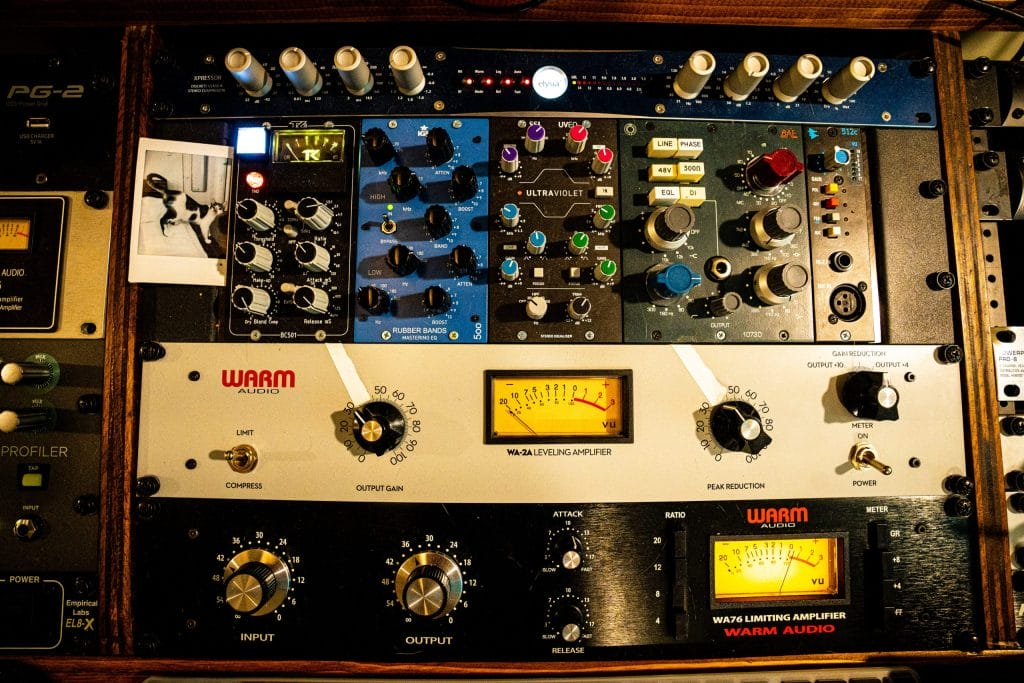
Gabry Ponte made a similar point in the production breakdown for “Motor City”. Their mastering chain used Pro-Q 3 for modest tonal shaping, Pro-L 2 for level, A.O.M. Invisible Limiter at the end, and LEVELS to watch LUFS, true peaks, and dynamic range. The advice was essentially to get the record loud enough for its job without choking its dynamics.
That is exactly how I would approach an electronic remaster.
If an older house record has a beautiful kick transient and space around the bassline, crushing another four decibels out of it because current club records are louder may defeat the reason people still love the original.
Why Level-Matched Comparison Matters So Much
A louder master usually sounds more impressive for the first few seconds.
That can make remaster comparisons nearly useless unless the versions are level matched.
Christophe Salin talked about this directly in his six mixdown tips for Magnetic. He uses ADPTR AUDIO Metric AB in his sessions and stresses equalizing the listening level when comparing his track with a reference.
I would do exactly the same thing with an original master and a remaster.
Turn the louder one down until the perceived levels are close, then listen for what actually changed.
Does the kick feel less congested?
Is there more air around the vocal?
Did tape hiss disappear along with some of the upper harmonics?
Are the transients sharper?
Does the low end feel tighter?
Did the new limiting make the record smaller once the loudness advantage disappeared?
This is also why I would never judge a remaster from a phone preview where one version happens to start louder.
If you care enough to compare them, level match them first.
The Artist Can Be The Biggest Risk In A Remaster
This is the part I find most interesting.
Twenty years after making a record, you know far more about production than you did when you made it.
That can be dangerous.
Giom laughed about finding errors when he reopened his old session, but he also gave me the sentence that I think should sit above every archival mastering desk: “the only thing that matters is the SONG.” He said that while discussing why older house records can still work decades after their original engineering choices have become dated in his Giom Classics interview.
That perspective is worth keeping.
An old record may have too much 300 Hz by current standards. Its stereo image might feel narrow. Its drums may look tiny beside a current tech-house master.
People may love it partly because of those things.
Quazar’s Seven Stars interview is another good example. The 1991 record came from a completely different production era, yet the point of the 2024 release was never to pretend it had been made last month.
A good remaster has to decide what is a limitation worth correcting and what is part of the record’s identity.
Those are not always the same thing.
How Modern Electronic Producers Approach The Master Bus
One advantage Magnetic has here is that hundreds of producers have told us exactly what they do before a track reaches the listener.
And their methods are all over the place.
Max Porcelli told me in his How It Was Made feature for “Lotus” that he often avoids compression during mixing when he can, using volume automation instead because he wants the natural dynamics left available for the mastering engineer.
That is one philosophy.

Longstoryshort goes much harder. In his breakdown of “IN MY MIND”, he explained his Pro-L 2 workflow in detail and said he often clips separately before the final limiter.
That is another.
Jewel Kid described a fast club-testing workflow in his How It Was Made feature for Explicit Behaviour. Before using Ozone, he likes the mix balanced and generally staying below roughly -6 dB peak, then uses Ozone to make something competitive enough for DJ testing and label demos.
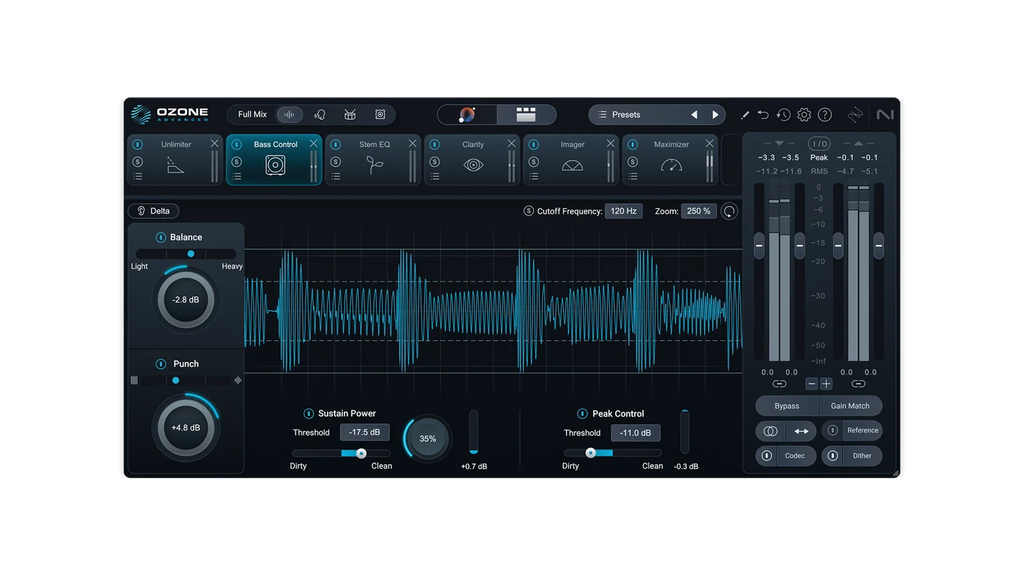
HASKELL described a similar division between testing master and final master in the production breakdown for “Afters”. Ozone 11 can make the track competitive enough to test in clubs, while the final mastering happens later.
This matters when we talk about remastering because there is no universal “modern master” setting waiting for an old record.
Electronic music alone contains wildly different approaches to dynamics and loudness.
A 1993 ambient techno record should not automatically receive the same treatment as a 2026 festival track.
What A Remaster Can Fix, And What It Cannot
A remaster can correct broad tonal imbalance.
It can tame harshness.
It can control excessive peaks.
It can change average level.
It can reduce certain kinds of noise or unwanted artifacts.
It can improve consistency between tracks on an album.
It can prepare the music differently for digital delivery, CD, or vinyl.
What it cannot do cleanly from one stereo file is repair every bad decision buried inside the mix.
If the vocal is 6 dB too loud, mastering does not give you a vocal fader.
If the kick and bass were badly chosen and constantly mask each other, a mastering engineer can manipulate the low end, but they cannot rebuild the arrangement without stems or the original session.
That is why the line between remaster and remix matters.
Parris Mitchell’s engineer Markus Schatz gave a good example of restraint in the How It Was Made feature for “Feel My Butterfly” with Nina Kraviz. The original material was rough, and the challenge was processing it without losing that roughness.
That is the same judgment a remastering engineer often has to make.
Fixing every technical imperfection can remove the thing people liked.
Does A Remaster Old Music Always Sound Better?
No.
It sounds different. and im talking like wayyy different (…sometimes).
Whether that difference is better depends on the source, the engineer, the playback system, and what you liked about the original.
Some remasters reveal detail that was buried in an old transfer. Others improve low-end translation or reduce ugly top-end artifacts.
Some are pushed too loud while others remove noise that listeners associate with the original.
Some change enough that longtime fans prefer an older pressing.
That subjectivity is why the phrase “digitally remastered” by itself tells me very little.
I want to know who mastered it, what source they used, whether the original mix was preserved, what format the release was prepared for, and whether restoration or remixing happened before the mastering stage.
Magnetic’s old Ben Watt interview with Abbey Road mastering engineer Miles Showell is a good reminder that format debates around vinyl and digital have been going on for decades. A new medium changes some of the technical considerations, but the final decision is still about how the record should sound on that medium.
What Does Remastering Cost?
There is no fixed rate because a straightforward stereo remaster and an archival restoration can be completely different jobs.
As current public benchmarks, Disc Makers lists its remastering service at $49 per song, while Abbey Road’s remote mastering service currently lists packages at $130, $200, and $325 per track depending on engineer choice and deliverables.
Those numbers should be treated as examples rather than an industry rate card.
If someone has to locate and transfer analog tape, repair damaged audio, reconstruct an old project, create separate vinyl and digital masters, or prepare an entire catalog, the bill can move considerably.
I also would not select the mastering engineer purely from price.
Dan McKie put it plainly in his Magnetic artist-advice column: “mastering is an art form within itself.”
He even described seeing an experienced artist who was qualified to master music hire someone else because an outside engineer could approach the record with fresh ears.
CID gave me the producer version of the same lesson in our interview about his workflow. Once you reach the last part of a record, your brain can lose perspective, and stepping away can expose decisions you stopped hearing.
That problem becomes even larger when you are remastering music you have lived with for ten or twenty years.
Wrapping Things Up
The simplest remastered meaning is that an older recording has gone through mastering again to create a new release master.
What matters is everything underneath that definition.
A strict remaster leaves the original mix in place and works on the finished recording. A remix reaches back into the individual parts. A reconstruction or rerecording can go further still.
The archive work I have published on Magnetic makes that distinction much easier to see in real life. Giom reopened an old session and corrected material before the final remaster, while Quazar paired a remastered historical album with a separately recreated version of its title track. Those projects show how loose the word can become once artists start working with decades-old music.
For producers thinking about remastering their own catalog, I would start with one question: what specific problem am I trying to solve?
If the old mix still says what it needs to say and the issues live at the final playback level, remaster it.
If the vocal balance, arrangement, sound choices, or performances are what bother you, call the project what it really is and reopen the mix.
The point is not to make an old record sound like it was produced in 2026.
The point is to let the old record reach a 2026 listener without losing the reason anyone cared about it in the first place.

Will Vance is a professional music producer who has been involved in the industry for the better part of a decade and has been the managing editor at Magnetic Magazine since mid-2022. In that time period, he has published thousands of articles on music production, industry think pieces and educational articles about the music industry. Over the last decade as a professional music producer, Will Vance has also ran multiple successful and highly respected record labels in the industry, including Where The Heart Is Records as well as having launched a new label with a focus on community through Magnetic Magazine. When not running these labels or producing his own music, Vance is likely writing for other top industry sites like Waves or the Hyperbits Masterclass or working on his upcoming book on mindfulness in music production. On the rare chance he's not thinking about music production, he's probably running a game of Dungeons and Dragons with his friends which he has been the dungeon master for for many years.