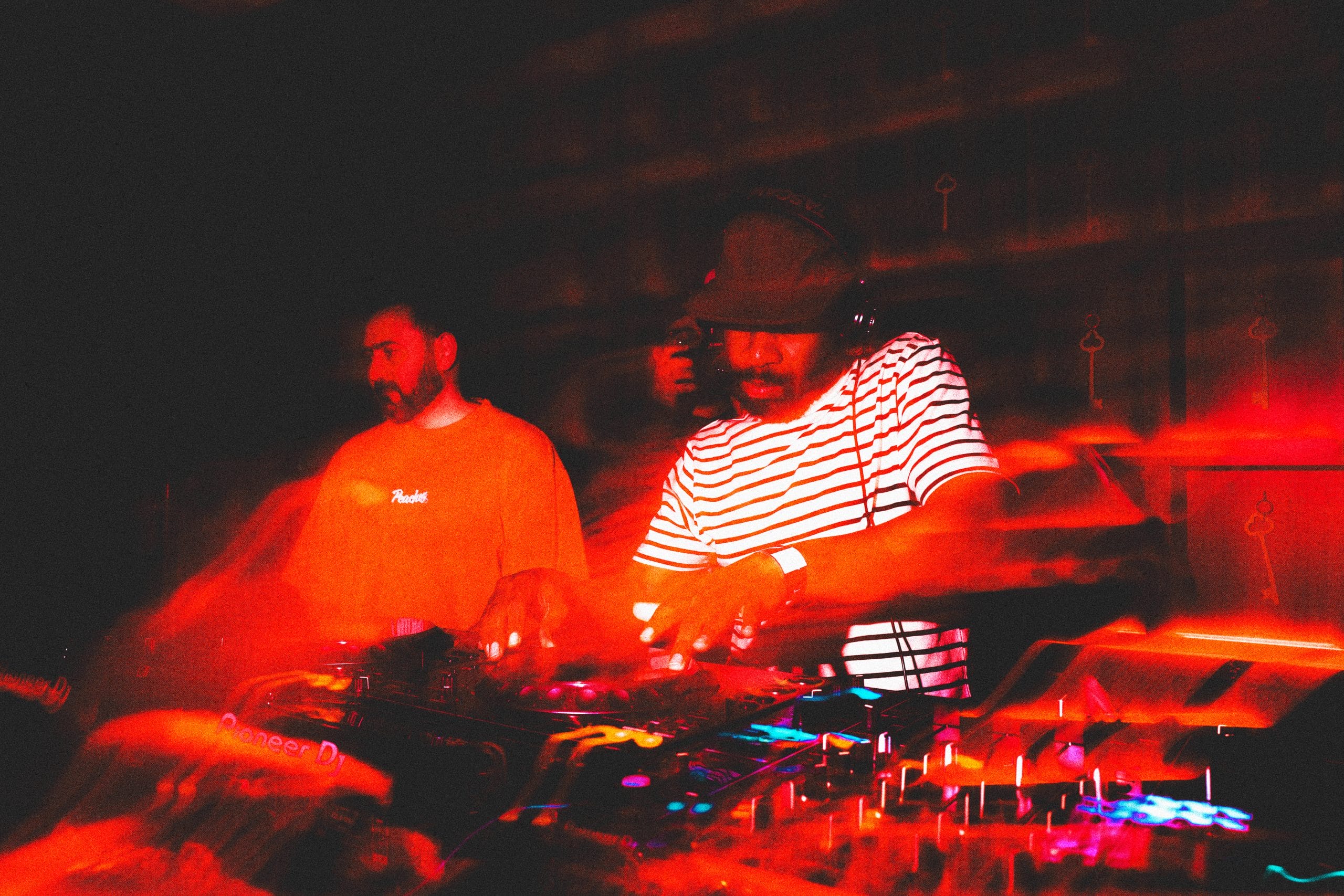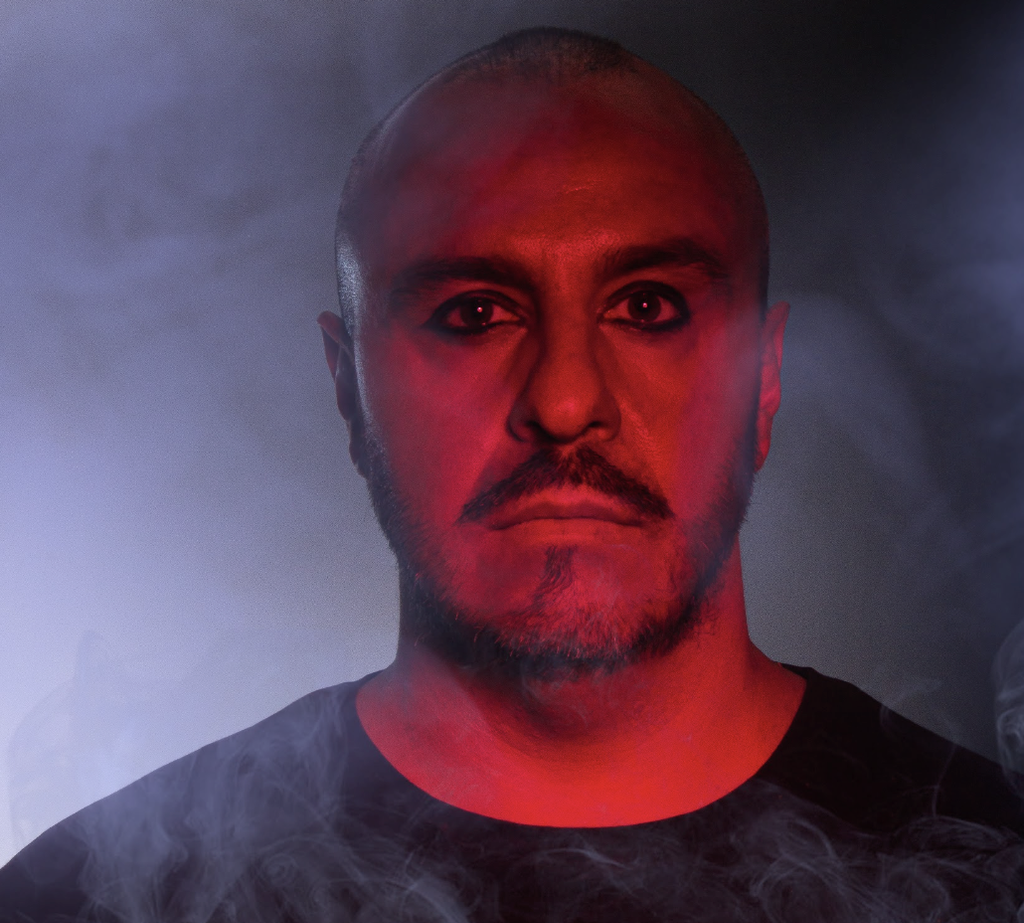
South African producer Da Africa Deep (@daafricadeep), born Teleki Wilfred Mphahlele, has spent the past several years building a career around Afro House that draws heavily from jazz, gospel, and the musical traditions he grew up with in South Africa. His catalog includes collaborations with Da Capo and Zakes Bantwini, releases such as “Feel The Love” and “Where We Belong,” and performances across Europe and Africa.
Now, with his debut album Love Your Life arriving October 28 through Mayonie Productions, he’s bringing much of that experience into a nine-track project centered on the personal events and experiences that have shaped his life. The album includes collaborations with Mici, Lyrik Shoxen, Jordan Arts, Sky White, and Nyeleti, among others, and gives some context to the approach to music production he discusses throughout this interview.
What’s interesting about Da Africa Deep’s approach is how much importance he places on the decisions that happen after the initial idea. Electronic music producers have access to an enormous amount of software, samples, presets, and production tools that can generate new material almost immediately, yet having access to those resources doesn’t necessarily make it any easier to finish a track that feels personal.
For someone working in Afro House, where percussion, repetition, melodic development, and the relationship between individual elements all contribute to the arrangement, those decisions can become especially important. Da Africa Deep’s approach prioritizes emotional intention and the ability to recognize when an otherwise impressive idea starts competing with the rest of the composition.
That thinking also connects directly to Love Your Life, an album concerned with finding peace and acceptance through personal experiences rather than following a single musical formula. Across the conversation below, Da Africa Deep explains how he decides which ideas are worth developing, why his African musical influences naturally shape his productions, and how he approaches the transition from an initial loop into a finished arrangement.
His answers offer a clear perspective on why knowing what to remove can be just as important as knowing what to add.
Interview With Da Africa Deep

If a tool or plugin gives you ten usable ideas in a matter of seconds, how should an artist decide which one deserves a place in the track?
For me, it’s never about how many ideas you can generate, but how deeply one of those ideas connects with what you’re trying to express. Technology can give you endless possibilities, but it can’t decide what you want people to feel. I always follow my instinct. Sometimes the simplest idea carries the strongest emotion.
If a sound speaks to me and feels aligned with the story I’m trying to tell, that’s the one I explore. The real value is not in having more options, but in knowing which ones mean something to you.
What turns a decent starting point into something that feels shaped by the taste of the artist?
I think it’s the personality you bring into the music.
Two producers can start with the same melody or sample and end up creating completely different tracks. It’s the choices you make along the way, the rhythm, the textures, the space you leave, and the emotions you build around that initial idea. For me, my African musical influences and personal experiences naturally find their way into my productions. That’s what gives the music its identity. It’s not necessarily about making something more complicated, but making it feel more like you.

Once the first loop, lyric, chord progression, or sound appears, what work has to happen next?
That’s when the real creative process begins.
A good loop can catch your attention, but it doesn’t necessarily make a good track. You have to develop it into a journey. I start thinking about how the energy should evolve, what emotions I want to create, and how each element contributes to the overall experience. Sometimes I’ll spend hours adjusting small details, changing arrangements, or experimenting with different sounds. Especially in Afro House, where rhythm and atmosphere are so important, the way a track progresses can be just as powerful as the original idea. The goal is to make people feel something from beginning to end.

How do producers decide when an impressive part is hurting the track?
That’s one of the hardest things about producing music, because sometimes you become attached to something simply because it sounds good on its own. But a track is bigger than any individual element. I’ve learned that a beautiful melody or a powerful sound doesn’t always belong in a particular production.
If it takes attention away from the emotion or the groove, then it might need to go. You have to learn to listen to the music as a whole rather than falling in love with individual parts. Sometimes removing your favourite element is exactly what makes the track stronger.
Why is learning what to remove such an important skill for producers now?
Because today we have access to almost unlimited sounds, plugins, and creative tools.
It’s very easy to keep adding layers because everything is available to us. But more doesn’t always mean better. I believe music needs space to breathe. Silence, simplicity, and restraint can be just as powerful as a strong bassline or melody. When you remove unnecessary elements, you allow the important ones to speak more clearly.
For me, maturity as a producer is understanding that you don’t need to show everything you can do in one track. Sometimes the most powerful statement is knowing when to stop.
Final Thoughts From The Editor
One of the things I found most interesting about Da Africa Deep’s answers was his willingness to separate the quality of an individual sound from its actual contribution to the finished record. I think that’s an important distinction for producers to understand, especially when they’re still learning how to arrange music. You can spend two hours programming a synth patch, dialing in the processing, and getting it to sound exactly how you imagined, only to discover the track worked better before you introduced it.
At that point, the amount of time you’ve invested has very little to do with whether the element belongs in the arrangement. Da Africa Deep seems comfortable acknowledging that distinction, and I think there’s a lot to learn from approaching production that way.
What makes this particularly relevant to Afro House is how much information can already exist within a relatively simple arrangement. A kick, bassline, a few percussion elements, and a repeating melodic phrase might look minimal when you’re staring at an Ableton session, but the relationships between those parts can be complicated enough without introducing another instrument. The timing of individual percussion hits, the length of the bass notes, the space between chords, and the way certain frequencies interact can all affect how the listener perceives the groove. Adding another layer might introduce an interesting musical idea, but it can also reduce the clarity of something that was already working.
This is something L’CORE discussed in his Magnetic Magazine interview about removing unnecessary production elements, where the conversation focused on how producers can recognize when an interesting sound starts competing with the central idea of a track.
And that’s where I think Da Africa Deep’s comments become particularly relevant for producers who are still developing their own musical identity. He
talks about African musical influences and personal experiences shaping his decisions, suggesting he evaluates production ideas based on what he wants the finished music to communicate. There are similarities to Demayä’s discussion about maintaining an identifiable artistic identity while experimenting with different production approaches. The specific influences and musical results are different, but the underlying production problem remains comparable. An artist has to decide which ideas belong in their music and which ones don’t align with their intentions. Those decisions matter most when producers have access to the same software, sample libraries, and creative resources as thousands of other artists.
Ultimately, I think the most important lesson here is that producers need to become increasingly comfortable evaluating their music independently of the effort required to create it. Something that took five minutes to program might contribute substantially to a finished record, while something that took an entire afternoon might introduce an unnecessary distraction. Recognizing that difference requires careful listening, familiarity with your own musical intentions, and enough confidence to decide without constantly searching for another option. Da Africa Deep’s perspective on Love Your Life reinforces that idea, especially because his album is rooted in personal experiences that give him a clear reason for those decisions.
The objective isn’t to demonstrate every production technique you know. It’s to make sure the elements you choose support the music you’re trying to finish.

Will Vance is a professional music producer who has been involved in the industry for the better part of a decade and has been the managing editor at Magnetic Magazine since mid-2022. In that time period, he has published thousands of articles on music production, industry think pieces and educational articles about the music industry. Over the last decade as a professional music producer, Will Vance has also ran multiple successful and highly respected record labels in the industry, including Where The Heart Is Records as well as having launched a new label with a focus on community through Magnetic Magazine. When not running these labels or producing his own music, Vance is likely writing for other top industry sites like Waves or the Hyperbits Masterclass or working on his upcoming book on mindfulness in music production. On the rare chance he's not thinking about music production, he's probably running a game of Dungeons and Dragons with his friends which he has been the dungeon master for for many years.