Musik Hack has officially released Master Plan 2, introducing a substantial collection of new processing tools and workflow improvements to its flagship mastering plugin. The update follows approximately three years of development and includes a redesigned limiting system, expanded saturation controls, new metering options, and additional functions for comparing and refining finished mixes.
Available now for $179, Master Plan 2 retains the accessible interface that helped establish the original plugin while adding considerably more control over the individual processes involved in mastering.
I’ve used the original Master Plan since reviewing it for Magnetic Magazine in February 2024, and one of the things I appreciated most was how quickly it let me get a track to a reasonably finished level without building an extensive mastering chain. It became part of my Ableton production template because I could work with louder, more developed mixes while writing and arranging, then make further adjustments when preparing tracks for release.
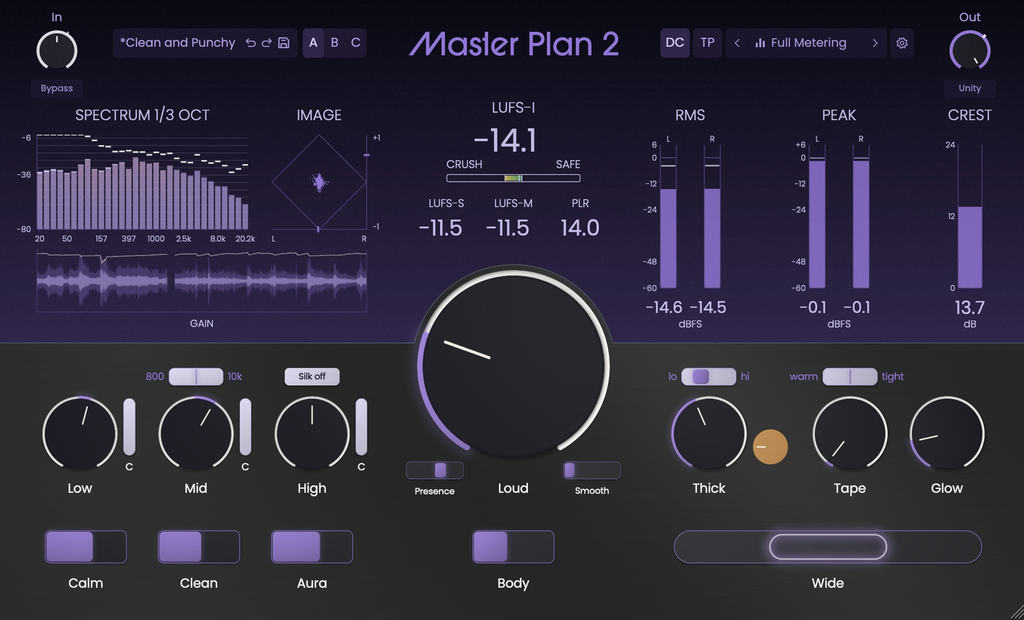
The original version also had limitations, particularly its relatively basic visual feedback and limited control over individual processing stages, so the additions in Master Plan 2 address several areas I wanted to see developed.
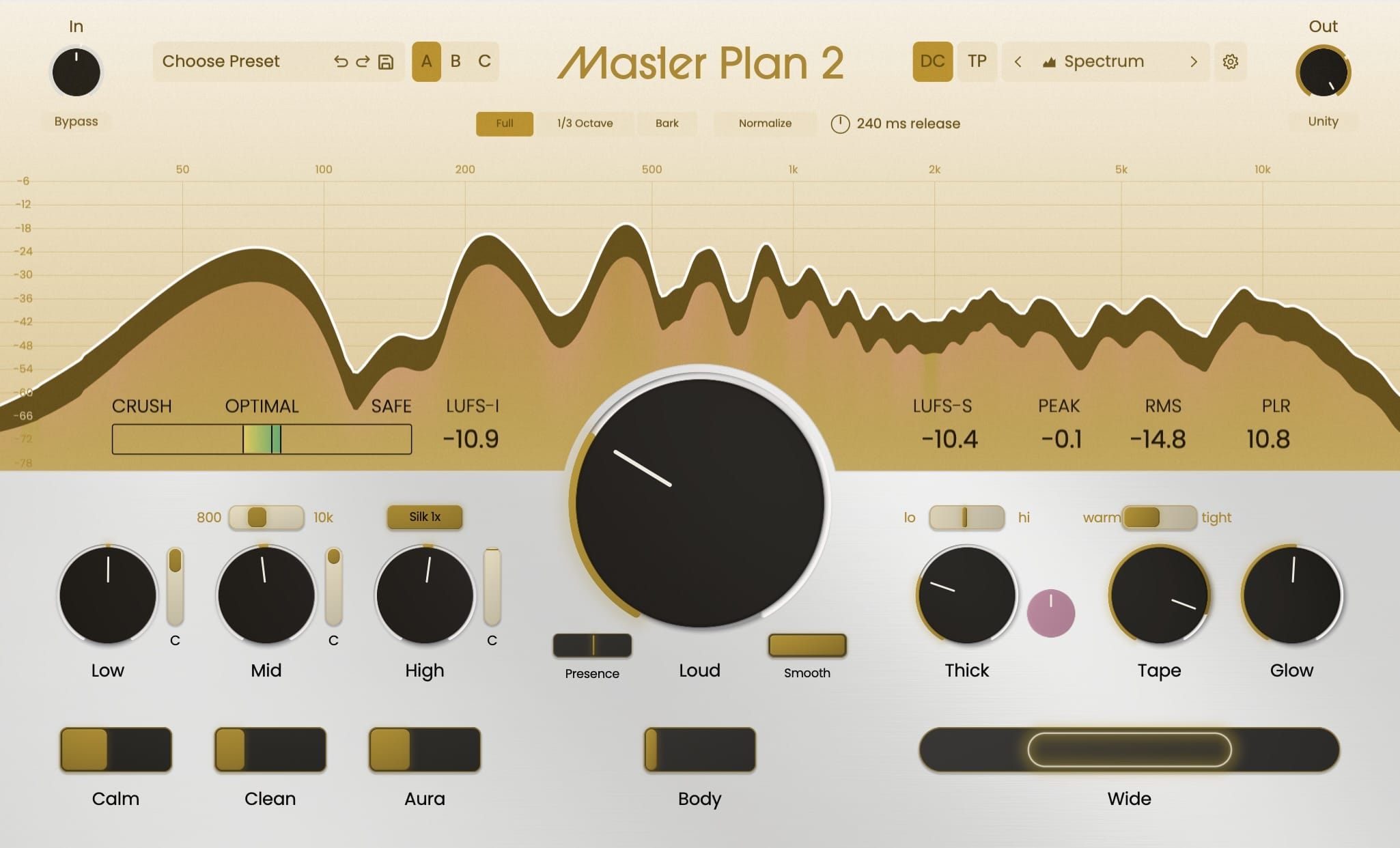
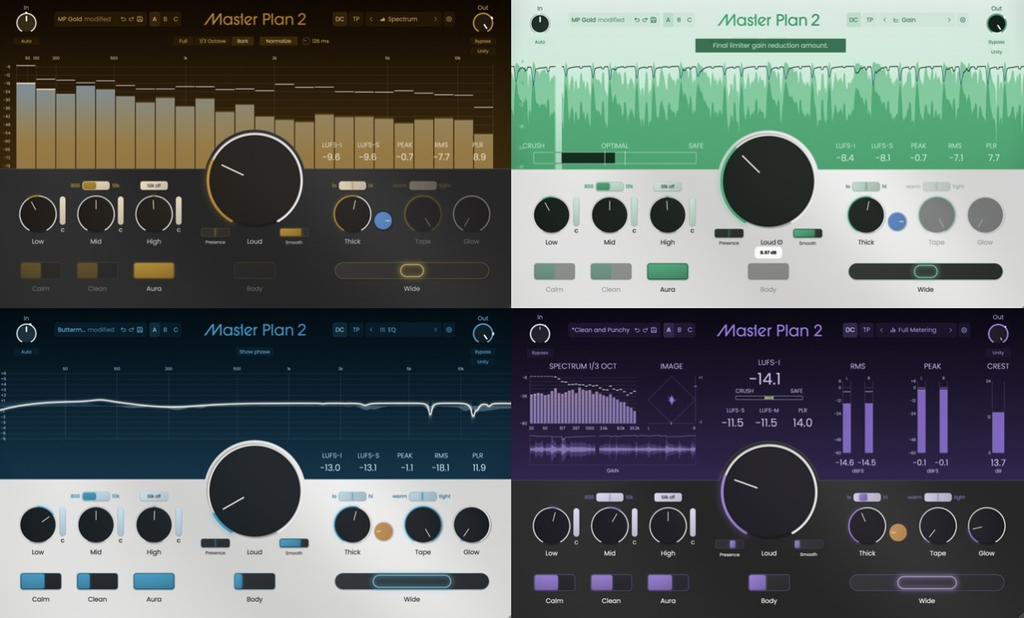
The new version retains the general concept of combining mastering processes within one plugin, although the underlying processing has been extensively revised. The limiter and clipper now use new algorithms, saturation can be directed to specific frequency ranges, and the updated metering system provides much more information about what is happening to the signal. Musik Hack has also introduced reference track comparisons, loudness-matched bypass functionality, and a system for saving different mastering settings that can be automated throughout a song.
These additions give users more ways to make deliberate mastering decisions while keeping the straightforward controls of the original release.
Master Plan 2 Introduces A Redesigned Limiter
The limiter was a defining component of the original Master Plan, and version two has seen extensive development. Musik Hack redesigned the Loud circuit with updated limiting and clipping algorithms to increase perceived loudness while preserving transients, low-frequency information, and the mix’s original character. The company also improved its True Peak processing and introduced a new Presence circuit, which offers two frequency-adaptive release algorithms to adjust the limiter’s behavior.
These additions matter most when processing electronic music, where a master may contain substantial low-frequency energy alongside relatively short percussion transients. Increasing loudness without introducing unwanted distortion or changing the relationship between the kick, bass, and other instruments requires careful management of those elements.
In my original Master Plan review, I discussed how quickly the plugin could produce a louder master and why that made it an appealing alternative to using Ableton’s stock limiter during production. I also noted that an automated or simplified mastering plugin cannot replace the judgment of an experienced mastering engineer.
Those observations remain relevant, though Master Plan 2 adds much more detailed processing and metering for users who want more control over their masters.

New Saturation And EQ Controls Offer More Precise Processing
One of the largest changes in Master Plan 2 is the expanded approach to saturation. The plugin now allows users to blend four saturation types and apply the processing to targeted frequency ranges, giving producers more control over which parts of the mix receive harmonic coloration. The original Thick circuit remains available, while the new Silk circuit introduces analog-inspired high-frequency saturation intended to add brightness and harmonic content to the upper frequencies.
Understanding the distinction between these controls is important.
Saturation adds harmonic content and can change a signal’s perceived density or brightness, depending on how the processing is implemented. Applying saturation across an entire mix may be appropriate in some circumstances, but it can also affect frequency ranges that do not require additional processing. Targeting the effect allows producers to concentrate harmonic changes in specific areas, such as adding density to the midrange while leaving the lowest frequencies relatively untouched.
Musik Hack has also revised its oversampling and anti-aliasing systems, incorporating Antiderivative Antialiasing alongside oversampling to reduce unwanted artifacts during nonlinear processing.
These technical improvements may be less immediately apparent through the interface, but they can influence how saturation and limiting behave when processing complex signals at higher levels.
Master Plan 2 Pricing And Availability
Master Plan 2 is available now through the official Musik Hack website for $179 during its introductory promotion, reduced from the regular price of $249. A rent-to-own option is also available for $14.92 per month over 12 payments, with ownership transferred after completing the payment plan.
Customers can cancel the installment arrangement, and the company offers upgrade options for existing Master Plan users.
The plugin supports VST3, AU, and AAX formats and requires macOS 11 or later and Windows 10 or later. Producers can try a free 10-day trial to evaluate the new processing before purchasing.
Master Plan 2 expands considerably on the original plugin, with several key changes that address issues I noticed during my initial review. The redesigned limiter, expanded metering, frequency-targeted saturation, and reference comparison tools add control over how a mix is processed, while the new interface and Legacy Mode give existing users more options for incorporating the update into established sessions.

Will Vance is a professional music producer who has been involved in the industry for the better part of a decade and has been the managing editor at Magnetic Magazine since mid-2022. In that time period, he has published thousands of articles on music production, industry think pieces and educational articles about the music industry. Over the last decade as a professional music producer, Will Vance has also ran multiple successful and highly respected record labels in the industry, including Where The Heart Is Records as well as having launched a new label with a focus on community through Magnetic Magazine. When not running these labels or producing his own music, Vance is likely writing for other top industry sites like Waves or the Hyperbits Masterclass or working on his upcoming book on mindfulness in music production. On the rare chance he's not thinking about music production, he's probably running a game of Dungeons and Dragons with his friends which he has been the dungeon master for for many years.