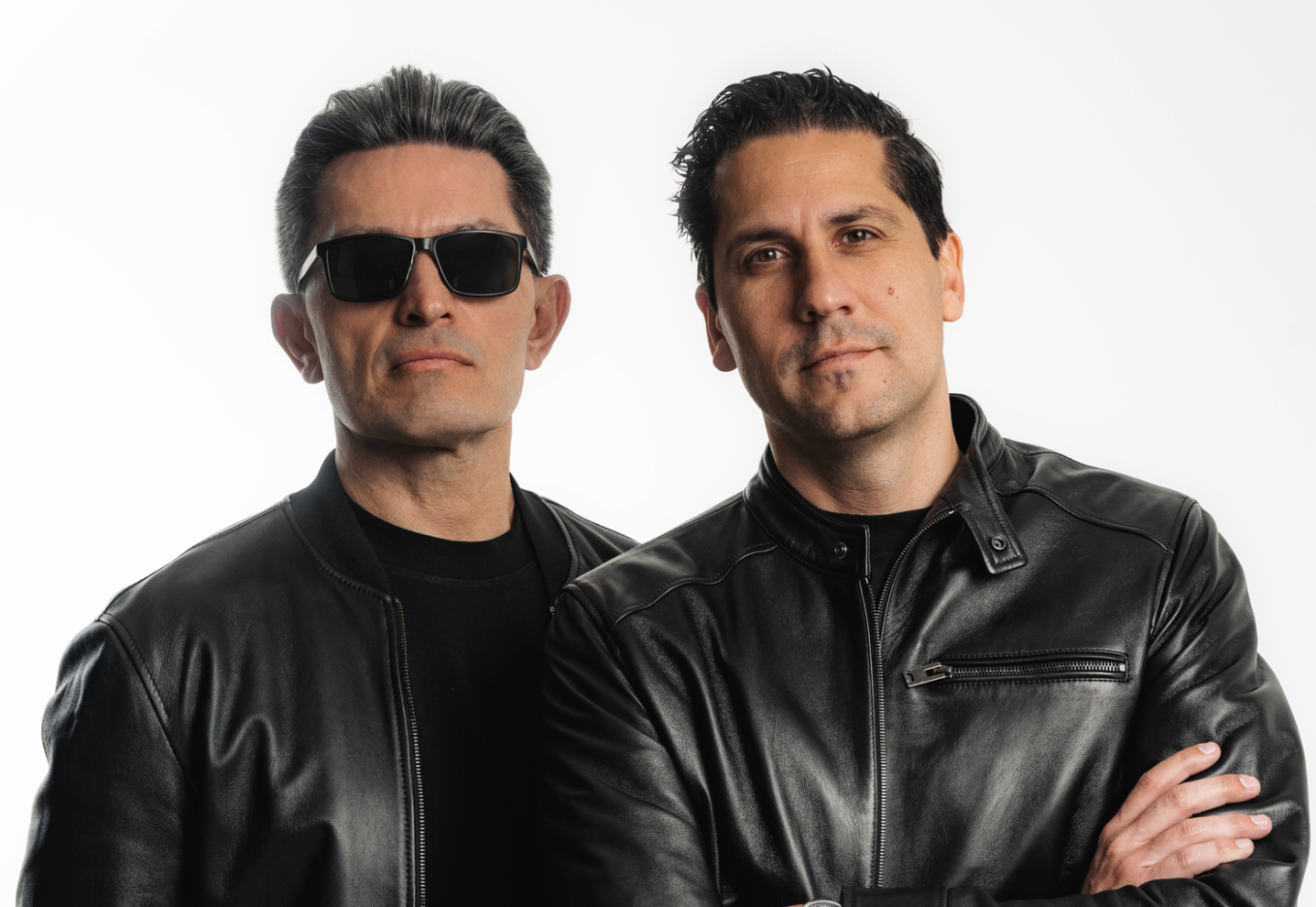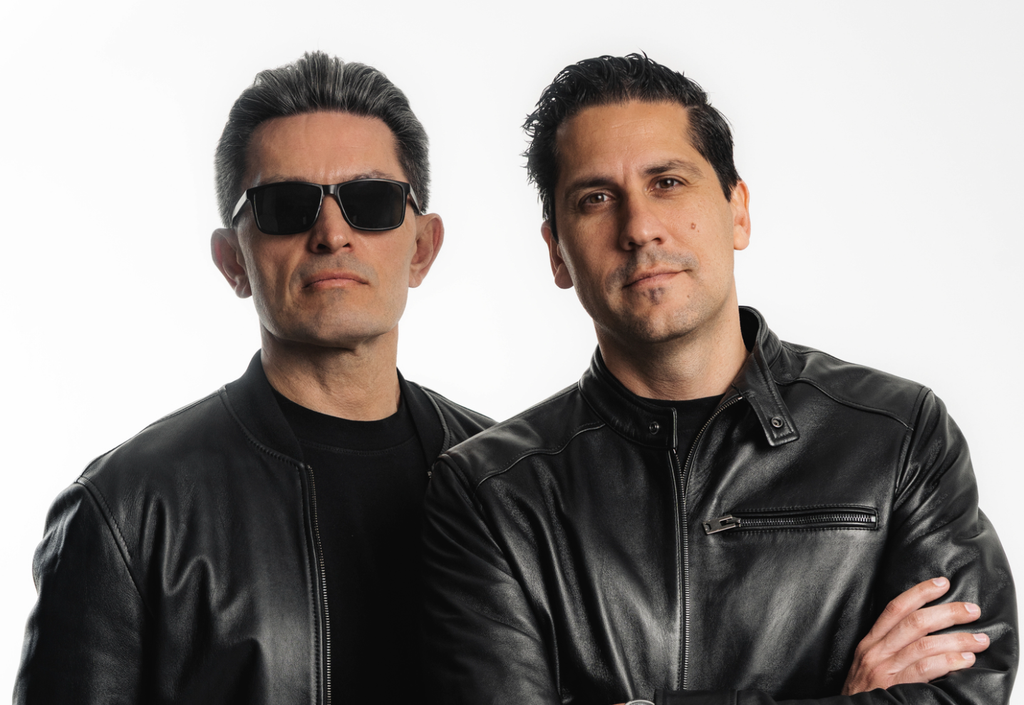
Foreign Air’s third album Such That I May Glow released on August 22, 2025, marking the next chapter for the DC/NC duo of Jesse Clasen and Jacob Michael. Known for pairing brooding atmosphere with punchy alt-electronic energy, the record carried a darker edge while leaning into soaring melodies and textured ’80s synth work. The band described the project as a reflection on purpose and perseverance, written in scattered sessions where they met for a week at a time to shut out distractions and focus on creating.
One of its highlights was “Maniac”, a song that began as a kitchen-table sketch on Teenage Engineering’s K.O. II before evolving into a fully fleshed production. Across its layers were Mellotron strings washed in Valhalla reverb, Juno-106 leads colored with chorus noise and modulation, Fender Telecaster runs processed through a Strymon Big Sky, and vocals captured with a Neumann U87 chain into classic outboard gear. The duo even approached the mix with intentional bus processing from FabFilter, Native Instruments, and UAD plugins to glue everything together while keeping the performance raw and alive.
In this How It Was Made feature, Foreign Air broke down each step of building “Maniac”, from the early drum loop and bassline to the vocal tracking and final mix chain. They also shared production tips for indie-electronic and alt-pop producers, emphasizing the importance of committing to sounds in real time, experimenting with pedals and saturation, and remembering that the vocal always drove the song.
Drums and Bass with K.O. II
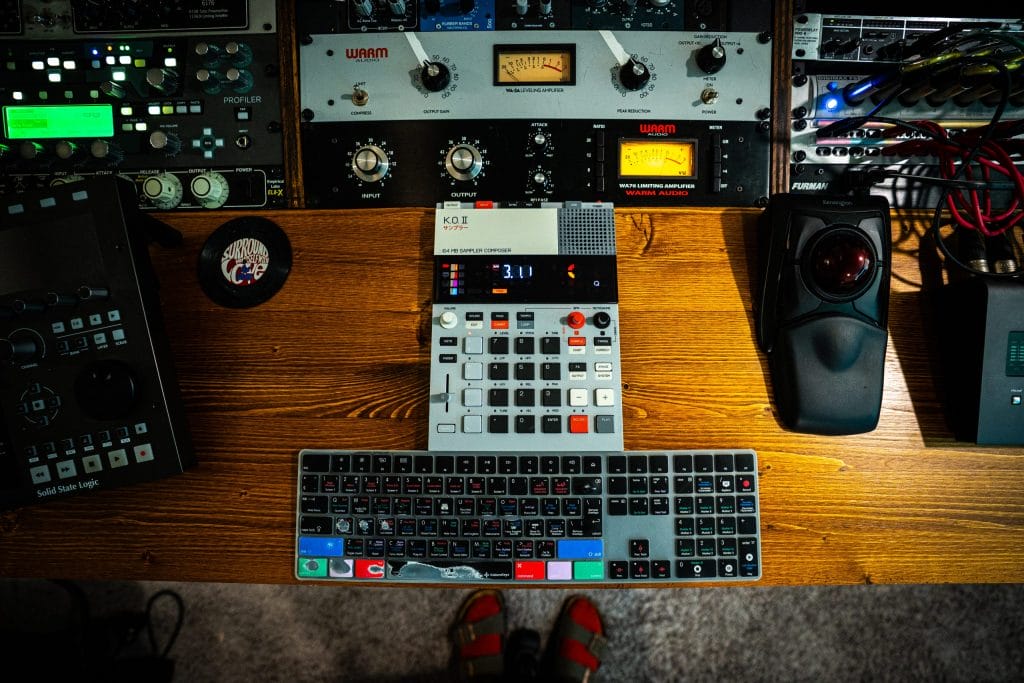
This track began using the K.O. II by Teenage Engineering. I love the K.O. II because it’s basically an MPC style sampler that looks like a huge crazy calculator from the 70’s or 80’s. You can quickly make beats with it, play instruments with the pads, sample your own sounds with its built-in microphone.
It also has an interesting way of adding effects in real time using the pads that are velocity sensitive. You can record the effects with automation while playing the pads as well. The battery life is insane with a couple double a’s. I bought it because I wanted the ability to make music at my kitchen table, drinking coffee in the morning, without having to look at my laptop screen.

It’s a really great device for creating little sketches and ideas that you can then take to the studio later to finish out. Maniac started off by creating the drum beat loop, I added the bass line and the little key melody. This was all using samples that came pre-loaded on the device. I then ran the drums through an outboard compressor (TK BC501) which is an SSL clone.
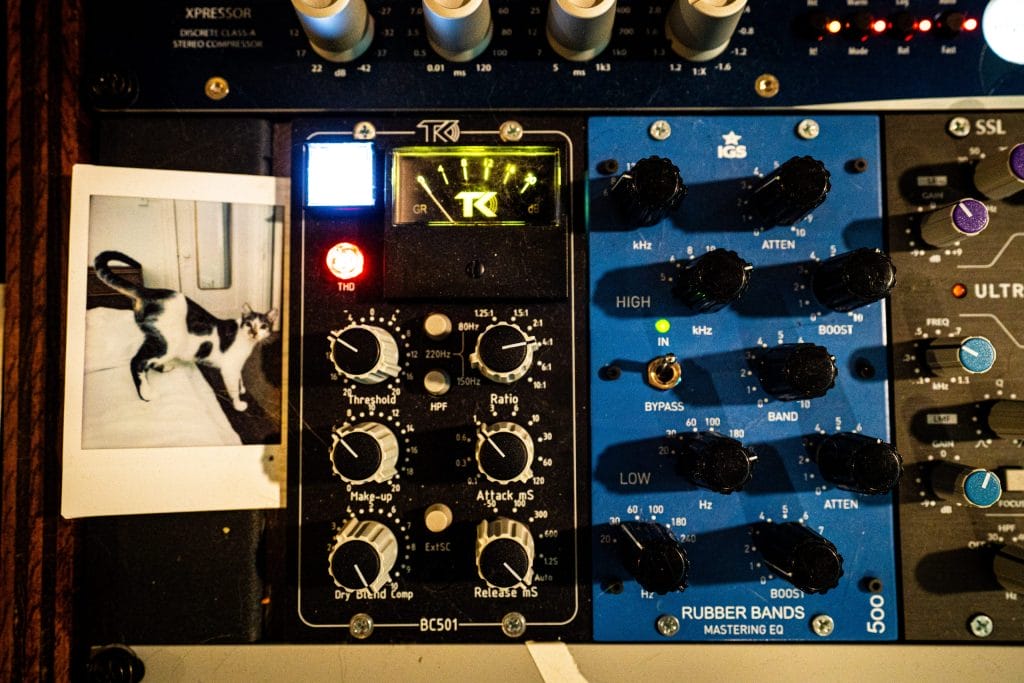
The TK has a lot of side chain filter options and a mix knob which the original SSL Bus Comp didn’t. I was using the HPF at 150hz, ratio 4:1, attack at 1, release on auto and I have THD on for some harmonics. I love this compressor for drums, you can really change how drums hit and also pull them forward or push them back in a mix. I used this on kick and snare only bussed together, that way I had more freedom over the sound without affecting the ride cymbal.
Hard Synths (Mellotron and Juno 106)
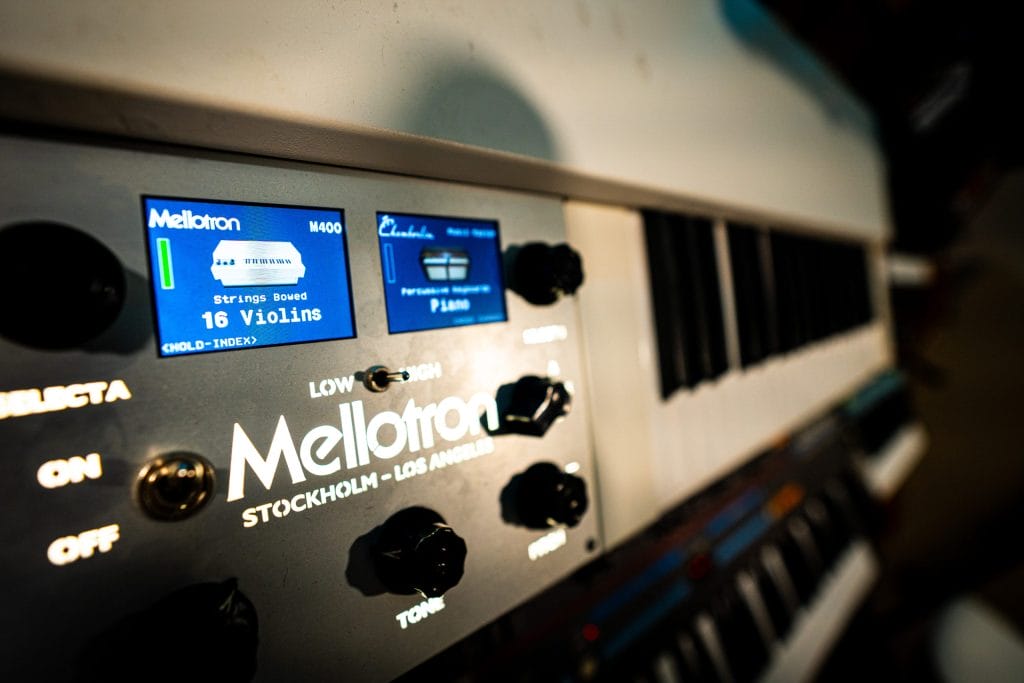
Next up was the mellotron 4000D, using the 16 Strings setting with a touch of Valhalla Vintage Reverb in concert hall mode with a 2.48 decay. The Mellotron has such a recognizable sound and the samples have an iconic vibe right out of the box. You either love it or hate it. We love it. There are plenty of plugin emulations of the Mellotron, we use them too if we are on the road or in a pinch. This is a great way to give your song a vintage feeling, adding some pedals in the mix with a little bit of warp is icing on top.
Then we added the Juno 106 to the bridge instrumental section, this synth got used a lot on this record too. It’s really great for everything from huge stereo chords and leads, to smaller mono lines too.
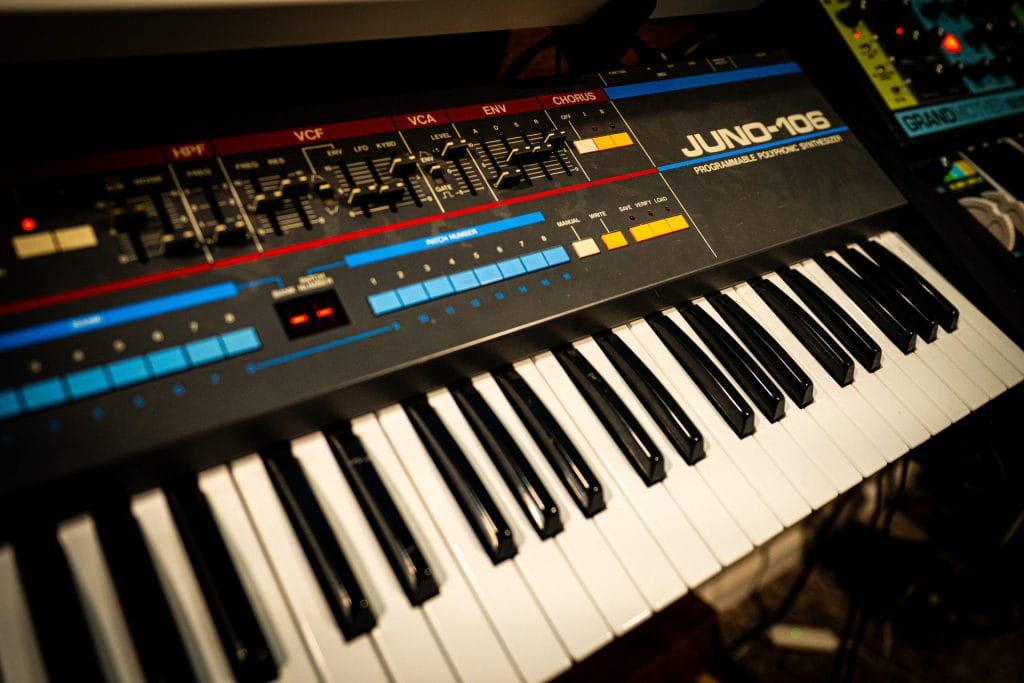
The chorus is pretty noisy but it adds character, I don’t mind a little hiss in the track. In Logic Pro, we added a touch of compression with Fabfilter Pro-C 2, reverb from Valhalla Vintage, a 5k push with UAD Pultec, and one of my favorite wave’s plugins MondoMod for some warp/modulation.
There are also plenty of Juno style plugins out there that sound great. This synth is a monster, it’s been in everything from John Carpenter films to giant pop songs. If you get your hands on one, I highly recommend loading the original presets from the 80’s which is an easy process using a quarter inch cable. There’s some gems in there. It’s also very simple to program from scratch which I think is a huge strength of the Juno.
Guitars
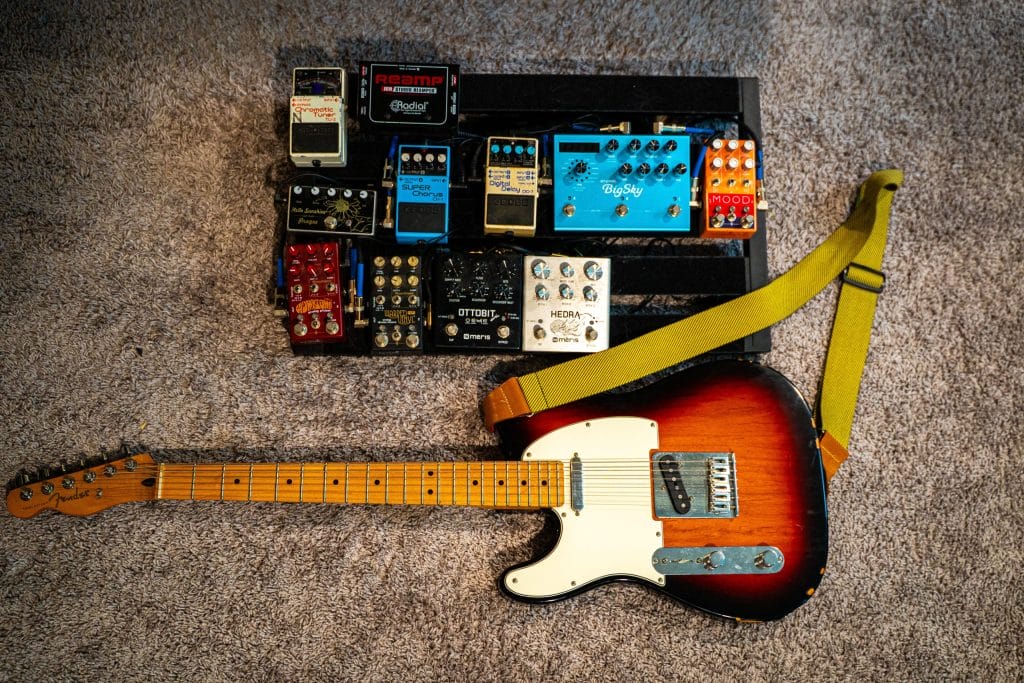
We finished the track musically by adding guitar (Fender Telecaster) thru a Strymon Big Sky into a Kemper Profiler. I usually dial in a sound and commit with any/all effects. For this track it was just some spring reverb and slap back on the choruses. We also added some wild delay effects in the bridge using the Strymon Big Sky. I really love the delay on that pedal because it has modulation.
A lot of times I’ll run the guitar I’ve recorded back out of a re-amp box into the pedal again so I can mess with the knobs in realtime. Don’t be afraid to commit to the sound going into your DAW, and then add even more on top of it. Send the signal back out into the real world thru your pedals again and hard pan the return to make the guitar stereo with the affected sound on the other side.
Tracking Vocals
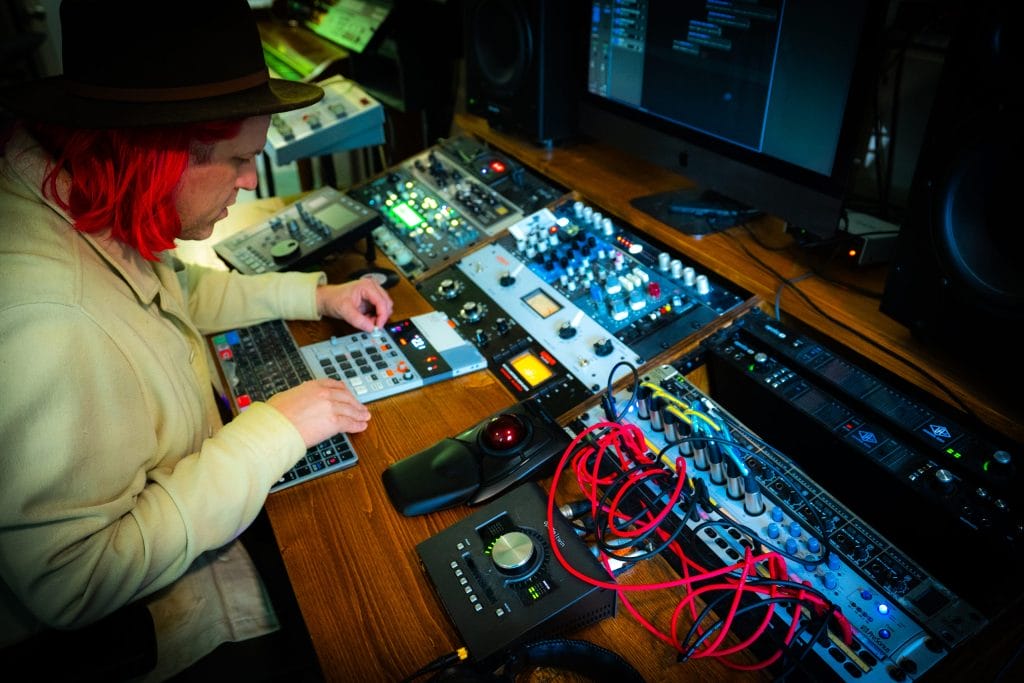
I recorded the vocals using a Neumann u87 thru the BAE 1073D pre amp which gives it some nice harmonics. I gain it up just enough before it’s distorting too much. The Neumann takes a lot less gain as opposed to the SM7b which is the other mic I use a decent amount on vocals. It then goes into the UA 1176LN compressor so I can have a healthy signal that’s under control and also gives me that compressed sound I want to sing into.
The setting’s were probably 4:1 Ratio, medium/fast attack and fast release, when I’m belting it’s probably taking a good 5-10 db in reduction. Getting the vocal sound feeling strong going into the computer really helps with getting into the performance/delivery when recording. This is probably the most important outboard gear that I own.
MIXING
I always add the master bus processing pretty early on that way I’m mixing into it. The master bus changes from track to track, I throw things on there on a whim when we’re building the track sometimes. Or sometimes there’s a new plugin out I wanna try. The master bus starts with Fabfilter Pro-q 3, dipping out a little bit of the 3k region because it hurts my ears. I’m dipping about .87db at 3100hz using the dynamics so it will catch anything spiking in that region. Also a shelf from 1k and up dipping out 1db.
We use Native Instruments Supercharger a lot too for color and parallel compression. It helps to make the track feel exciting off the bat. Less work to do on the individual tracks and it glues everything together. I’m gently hitting it with a mild saturation setting at 1.45 but not getting any gain reduction on this mix with it. Very subtle but a few subtle things really add up. Next is the UAD Verve tape emulation, which had just come out, so I used that on the Warm setting with Drive and Warble set around 10’o’clock.
Then I’m running the master through some outboard gear before hitting the final limiter. Outboard wise, I’m using the Rubber Bands Mastering Eq by IGS, boosting 5db at 10kHz with a wide band and boosting 1db at 30hz for some extra dimension to balance out the high boost. That signal then goes into an Elysia Xpressor at a 1.5 Ratio, with a medium release around 100, and medium/fast attack around 10. Using warm mode and the side chain filter set to 40hz. It’s really barely compressed here. If I’m compressing hard with the Xpressor, I normally use the auto fast release and the Log release buttons pressed as well.
There’s some trickery there where it compresses fast transients different from everything else. At the very end I have the Pro-L2 by fab filter to get the level up there competing with commercial releases out of habit. Shooting for -14 to -7 LUFS depending on how the song takes to being pushed that loud, I’ll use the Plugin Alliance BX Clipper if I need to shave some transients off the drums before the L2 either on the drum bus itself or on the master.
Tips For Making Music
Tip #1:
The most important part of our sounds is getting a drum beat that’s driving the song with a bass line that’s exciting. Next is the vocal! The vocal is everything, the delivery needs to be believable and come to life.
Tip #2:
A great song is a great song no matter what, however, a simple slapback delay on vocals and guitar can really elevate a recording. It goes from dull to straight vibe’n.
Tip #3:
When recording, have the effects already in place so you’re playing into them. Compression, delays, and reverbs will change the way you’re playing guitar and singing. Don’t save it for later, dial in your sound and make decisions going into your DAW.
Tip #4
You don’t need a ton of sample packs, just get your drum groove going and send it thru Decapitor, Devil Loc by SoundToys, or run it thru your guitar pedals. Something that started sounding very vanilla can really surprise you.
Tip #5
Keep it simple, don’t overthink it. If it’s sounding like something is not fitting, just mute it! Don’t be afraid of the mute button.

Will Vance is a professional music producer who has been involved in the industry for the better part of a decade and has been the managing editor at Magnetic Magazine since mid-2022. In that time period, he has published thousands of articles on music production, industry think pieces and educational articles about the music industry. Over the last decade as a professional music producer, Will Vance has also ran multiple successful and highly respected record labels in the industry, including Where The Heart Is Records as well as having launched a new label with a focus on community through Magnetic Magazine. When not running these labels or producing his own music, Vance is likely writing for other top industry sites like Waves or the Hyperbits Masterclass or working on his upcoming book on mindfulness in music production. On the rare chance he's not thinking about music production, he's probably running a game of Dungeons and Dragons with his friends which he has been the dungeon master for for many years.