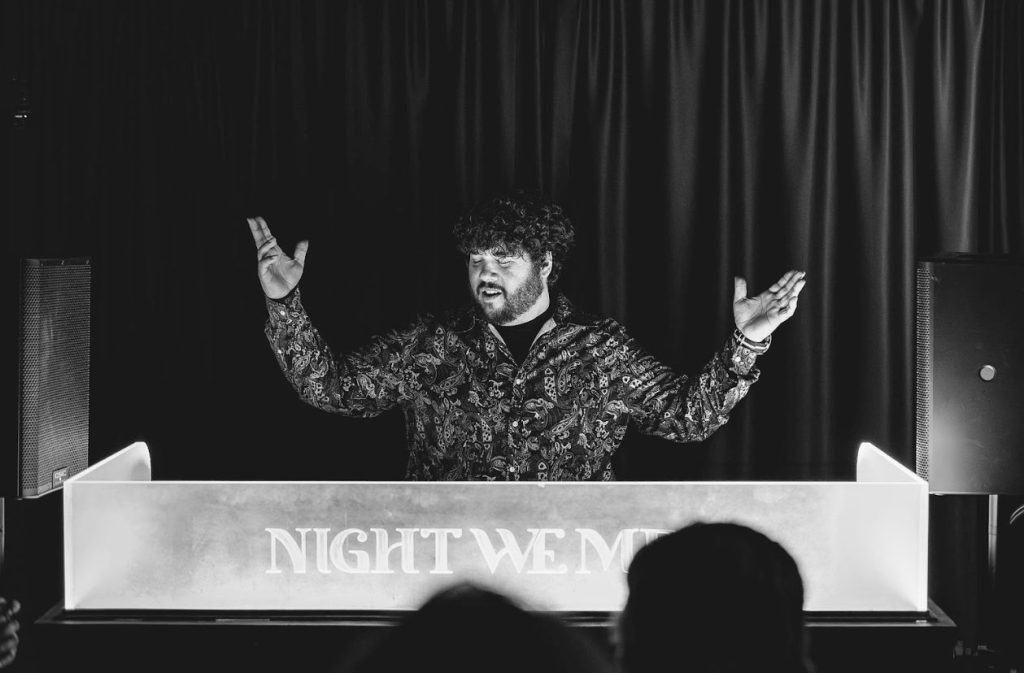
Few artists have managed to build a catalog that continues to resonate across multiple eras of house music quite like Giom. With Giom Classics Part. 2, the French producer opens the vault once again, bringing together three standout records from different chapters of his career—each carefully remastered for today’s dancefloors and, in two cases, finally receiving the vinyl treatment they deserve.
Released via his own Supremus Records, the EP celebrates the lasting appeal of timeless house music while looking ahead to the next chapter, with Giom Classics Part. 3 are already on the horizon.
We caught up with Giom to talk about revisiting his back catalogue, preserving the character of classic records, and what it means to see these tracks find a new audience nearly two decades after they were first created.
Interview With Giom

“As Darkness Falls” has become one of those rare tracks that has never really disappeared from DJs’ record bags. At what point did you realise it had become more than just another remix?
I think I probably owe my whole career to this remix. What an opportunity that was… I was just starting out and “As Darkness Falls” was the second remix I was ever asked to do, so I had no idea about how well it was going to be received. But shortly after it came out there was a buzz about me and I decided to travel to America to attend the Miami Winter Music Conference, where all the DJs and labels were going to be. There I heard pretty much all my heroes playing it, it was incredible. It was coming out of rooftops, hotel lobbies, pool parties and I even heard Mark Farina playing at one of the biggest gigs I attended for the label OM Records. Good times and good memories!
Apple Rochez’s vocal has become inseparable from that record. Looking back almost 20 years later, what do you think gives that vocal such lasting appeal on the dancefloor?
She’s so good, I’ve always loved her voice. Her tone is spot on, it’s hip and sexy. We’ve done 2 records together, this one and another one called Dr Zapp which came out in 2014 and at the time topped Beatport’s Indie Disco charts. Funnily enough we’ve only met in person once, and that was last summer in London. I hope we make more music together soon.
This release isn’t just a repress—it’s a careful remaster. Were there any moments during the mastering process where you thought, “I’d forgotten this was in the track”?
In a way, yes! I found my original session, imported it onto Ableton and carefully put it back together. That’s when I realised there were plenty of wrong notes in the bassline and some out-of-key elements, which I immediately corrected. Luckily they were pretty quiet in the mix and those changes do not make a lot of difference to the original but I feel a lot better about it.
“Summerized” spent over a decade unavailable digitally and never made it onto vinyl. Why was now the right time to finally give it the spotlight it deserves?
Honestly, I’ve always felt really proud of this track, I think it’s a banger! it’s different, still underground, got a great hypnotic groove and to me sounds kind of timeless… But no-one ever took notice of it ha ha! Often that’s how things go and that’s totally fine, but when the time came to select the tracks, there was no doubt this one was going to be on it.
“Play On” leans into a more nu-disco flavour compared to some of your deeper material. Has revisiting that side of your catalogue inspired any ideas for future productions?
I’m halfway through an album of original material. This kind of nu-Disco sound has been and will always be part of what I enjoy making so there’ll be some of that on the record for sure. Having said that, is an album still relevant these days? Might be split over EPs and singles, who knows?
Dance music often moves on quickly, yet these records still resonate years later. What do you think separates a timeless house record from one that’s simply of its moment?
I know some people will disagree on this but for me, the only thing that matters is the SONG, ie all the musical aspects of your track. Forever more important than the mixdown. Your chords and melodies are what will stand the test of time, end of. Of course mixdowns matter too but a GREAT song poorly mixed will still resonate in 20 years time, as opposed to an expertly mixed Hi-Fi tech house heater that has no music in it apart from a bongo loop. Why do people still go mad about records that were made 40 years ago? Certainly not because of the mixdown. Obsession with audio engineering in electronic music is the reason why so many records suck.
You’ve collaborated with artists across very different corners of electronic music throughout your career. Is there anyone from today’s scene you’d genuinely love to remix—or have remix one of your classics?
Oh hell yes! I would dream of a Robag Wruhme remix: this guy is a genius and having him tackle a track of mine would be a career highlight. Also, Isolée, my hero! These days I’m into an Italian producer called Bar.ba and also Fennec. Both brilliant producers and maybe one day I can get them to remix me, although I’m certain neither of them have ever heard of me.
As someone who’s experienced the vinyl era, the download boom, streaming and now the resurgence of records, what has been the biggest lesson about building a catalogue that lasts?
I think it’s important to always make music with your heart and try to feel proud of it. Because when you don’t, and I’ve certainly been guilty of that, you tend to find yourself in weird situations years later, like shitty labels constantly re-releasing your shitty remix you made for cash 10+ years prior. But it’s all good, it’s part of the game. I wish I could give a good clean to my Beatport page though.
You’ve described these tracks as classics, but are there any forgotten B-sides, unreleased demos or remixes sitting on a hard drive that fans would be surprised still exist?
There’s so much unfinished stuff that is just sitting on drives but I can’t put myself to release it just for the sake of it. I’ve had 3 attempts at making albums in the past so I have so much stuff floating around. Maybe one day…
With Giom Classics Part. 3 already lined up, once that chapter closes do you see yourself looking back less and focusing almost entirely on brand-new music, or do your archives still have plenty more stories to tell?
No, I think that after Part 3 it’s time to move on from all this nostalgic stuff and focus solely on new music. I’m having fun in the studio and find this current period well exciting.

Magnetic byline note: This byline is used for staff produced updates and short announcements, often based on press materials and official release information. Editorial responsibility: David Ireland (Editor in Chief) and Will Vance (Managing Editor). About: https://magneticmag.com/about/ Masthead: https://magneticmag.com/masthead/ Contact: https://magneticmag.com/contact/