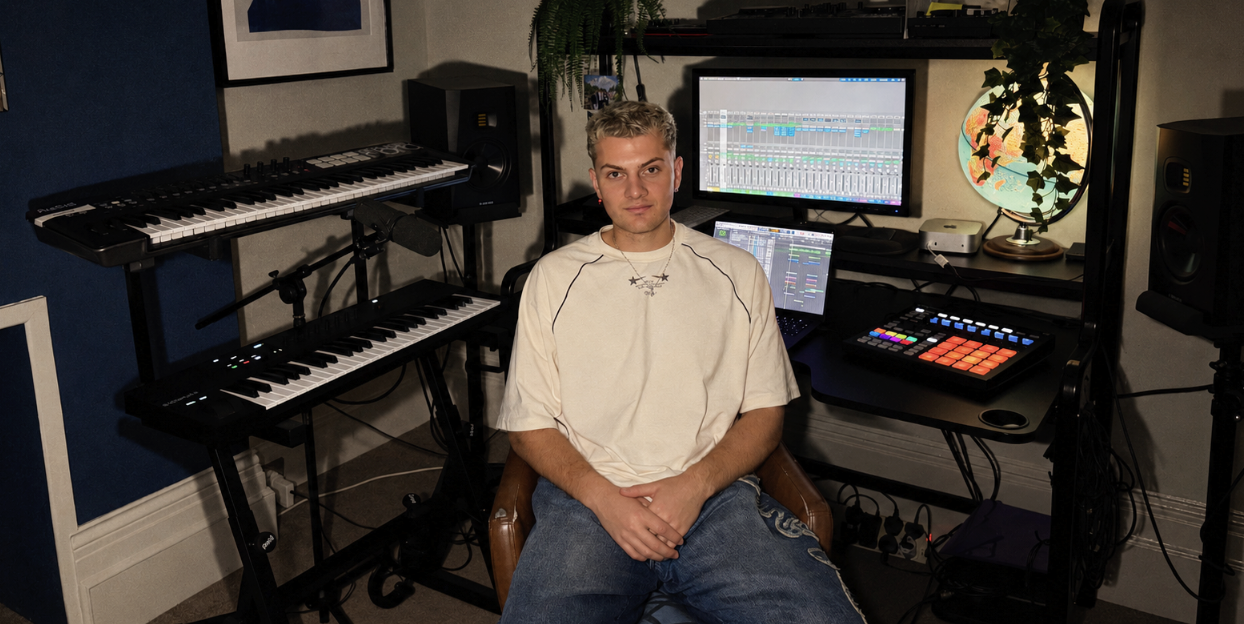
UK producer HASKELL breaks down the making of Afters, his latest release on Lotusland.
Built around a weighty low end, a memorable vocal and a blend of UK Garage, deep tech and tech house influences, the track is a lesson in keeping things simple.
Rather than relying on endless processing or expensive plug-ins, HASKELL explains how careful sound selection, solid arrangement and a small collection of trusted tools helped shape a record designed to work where it matters most: on a club sound system.
Kickstart 2

Like any good track, Afters started with the kick. For me, the kick is the foundation of everything in a tech house record. If the low end isn’t right, nothing else really matters.
One of the first things I focused on was creating that low-end power and weight that you feel on a proper club system. I spent a lot of time getting the relationship between the kick and the bassline working together so they complemented each other rather than fighting for space.
The kick and low-end bass in Afters actually don’t have a huge amount of processing on them. I think one of the biggest mistakes producers make is looking for a miracle plug-in when the real secret is choosing the right sounds from the start.
On the kick, we’ve mainly used stock Ableton plug-ins. We’ve used EQ Eight for shaping, an Auto Filter for controlling certain frequencies, and then focused on getting the sample selection right.

The bass channels are very similar. Again, we’ve used EQ and Auto Filter, alongside Whitewash Fade and Kickstarter. Those help create space between the bass and kick, ducking the bass slightly so the kick can punch through and remain the dominant element in the low end.
Serum 2

For the bass sound itself, we’ve used Serum 2. That’s probably my favourite synth at the moment. The amount of control you have over the sound design is brilliant and allows you to create movement, character and depth.
A lot of the tracks I make involve layering different bass patterns to create movement and interest throughout the arrangement. On Afters, we’ve got an initial bass pattern which I’ve labelled Retro Bass. We’ve slightly amended that pattern at key moments, particularly before breakdowns and transition sections, just to keep things evolving.
We’ve also added a secondary bass layer which Is a reese bass. Again, that’s built using Serum 2 with some tweaks to the sound design alongside EQ Eight to help it sit in its own space within the mix.
The synth that really gives this track its character started life as a sample that we’ve manipulated and shaped to fit the record. Around that, we’ve got some smaller melodic loops and textures. On those channels we’re using EQ Eight, Whitewash Fade and additional processing to create movement and depth without overcomplicating things.
There’s also a melodic Serum 2 layer which uses a simple chain of Serum 2 , Utility, EQ Eight and Kickstarter 2. It’s nothing revolutionary, but it adds another layer of variation and helps achieve the overall sound we’re aiming for.
The vocal is obviously a huge part of Afters. It’s a strong vocal and, once again, we haven’t used a massive amount of processing. Most of the work is being done through careful EQ, Whitewash Fade, Kickstarter 2 and some Valhalla effects.
I’m a big fan of Valhalla Delay and Valhalla Reverb. They’re straightforward, sound fantastic and help create the atmosphere and space that this type of record needs.
Overall, Afters isn’t an overly complicated production. It’s really a combination of UK Garage influences mixed with Deep Tech and Tech House elements. Because of that, you’re not relying on huge amounts of automation, endless effects or complex sound design.

The majority of the plug-ins we use are actually stock Ableton tools. EQ Eight, Auto Filter and Utility feature heavily throughout almost every project. Alongside those, Serum 2 is definitely one of my go-to synths, while Valhalla Delay and Reverb handle most of the spatial effects.
We’ve also built our own custom effects rack, which combines reverb washes, short delays, echoes and dry signal controls. That gets layered throughout the track to create transitions and add energy where needed.
On the master channel, we’re keeping things relatively simple before it goes off for final mastering. For DJ testing and demos, we’ll often use Ozone 11’s AI mastering tools just to get the track sounding competitive and club-ready while we’re working on it.
When it comes to plug-ins that feature heavily across all of my productions, there are definitely a handful that I come back to time and time again.
Decapitator
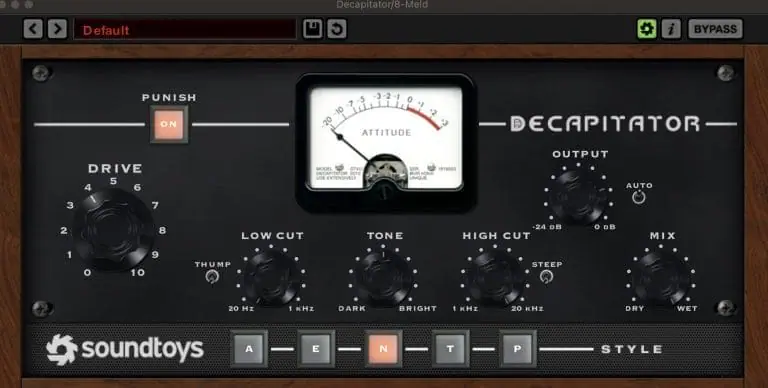
Soundtoys is probably the biggest one. I use Decapitator on drums and vocals all the time. It adds character, warmth and a bit of grit without having to do too much work. I also use EchoBoy and AlterBoy regularly.
Another plug-in that gets a lot of use is Sausage Fattener. If I need a little bit more weight, energy or presence, it’s often one of the first things I’ll reach for.
For EQ, I’ll either use Ableton’s stock EQ Eight or FabFilter Pro-Q3, depending on what I’m trying to achieve.
In terms of synthesis, Serum 2 is undoubtedly my go-to instrument. I’d say the majority of the basses, synths and melodic elements in my tracks start there.
The biggest thing I’ve learned over the years is not to get obsessed with having hundreds of plug-ins. A lot of producers spend more time downloading plug-ins than they do making music.
My approach is simple: find five or six plug-ins that you absolutely love, learn them inside out and master them. Once you truly understand your tools, you stop worrying about the technology and start focusing on what really matters making great records.
At the end of the day, tracks like Afters aren’t successful because of some secret plug-in or complicated processing chain. They’re successful because of good sound selection, strong musical ideas, solid arrangement choices and using a handful of trusted tools really well.
The end result is a track that hits hard, feels great in a club and does exactly what we wanted it to do.
HASKELL – Afters is out now on Lotusland