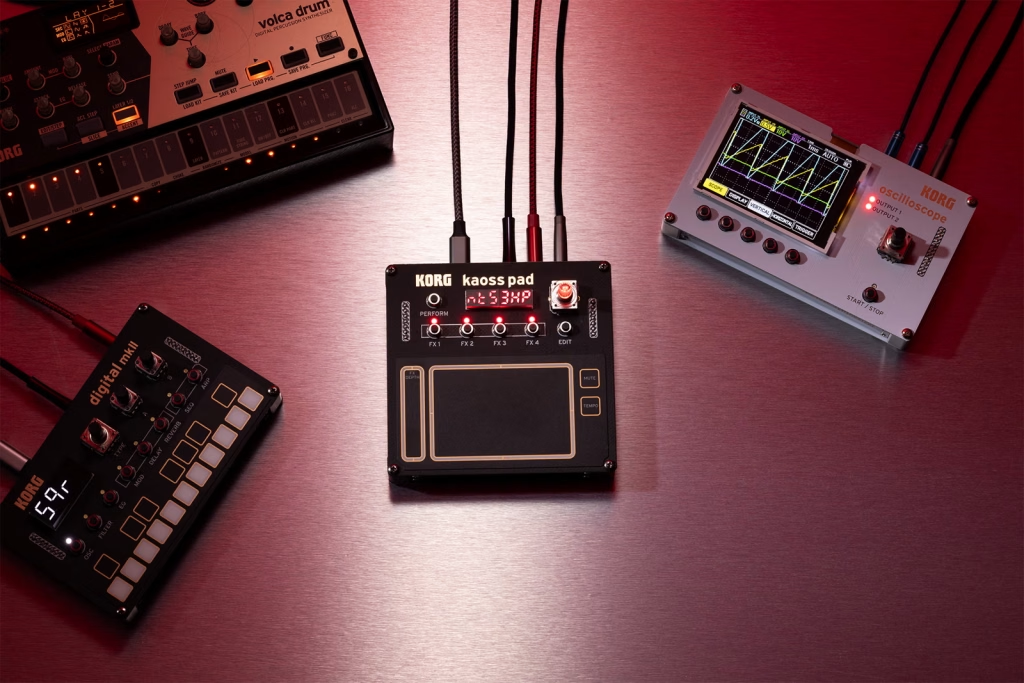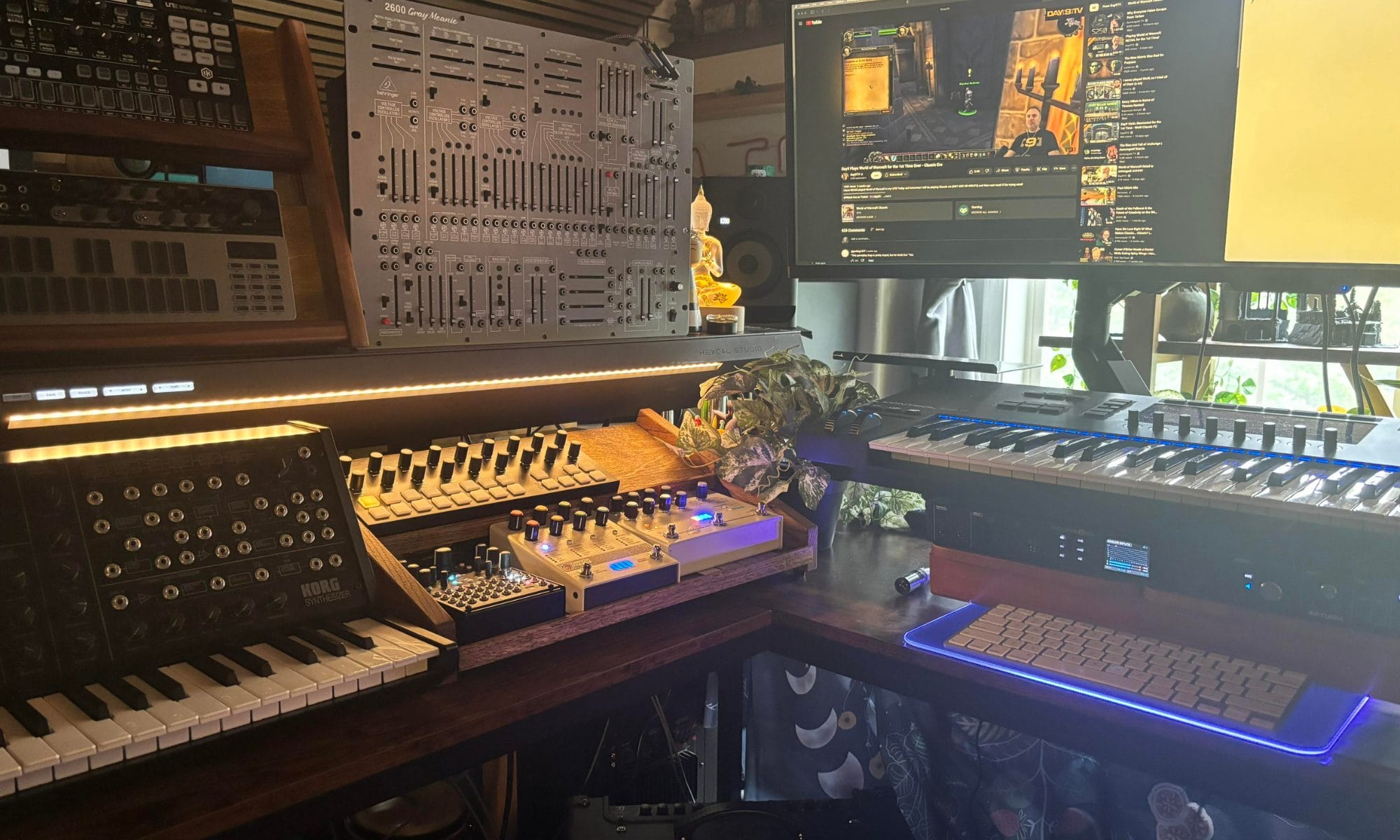
Audio interfaces are essential, no duh, but they serve a completley different purpose when you need them to act as the central hub of a gear collection and not just something to connect your laptop to your monitors. The best audio interfaces for hardware synth setups get a bit more interesting and are worth treating as their own category because synth rooms hit a very specific problem fast.
A small two-channel box can work when you have one synth on the desk, although it starts feeling cramped once drum machines, pedals, stereo synths, samplers, and controllers enter the room. I care most about line-level I/O, MIDI, ADAT expansion, monitor control, low-noise conversion, and how quickly I can get a sound recorded once the idea shows up.
This list is built around interfaces I have reviewed on Magnetic, plus a few team reviews that fit this exact hardware-synth use case too closely to leave out. The Arturia AudioFuse 16Rig is the clearest top pick for a synth-heavy setup because it was built around high channel count, MIDI, USB hosting, standalone use, and detailed routing. The Universal Audio Volt 876 and SSL 18 make the most sense when a rackmount interface needs to handle synths, vocals, guitars, outboard gear, and larger sessions from one place.
The Focusrite Scarlett 18i16, Volt 476P, and PreSonus Quantum ES 4 are smaller caveat picks, although each one can still work well when the setup is still growing.
| Interface | Main role | Best fit | Why I am including it |
|---|---|---|---|
| Arturia AudioFuse 16Rig | High-channel synth studio hub | Producers with several hardware synths, pedals, and routing needs | It gives a synth room serious I/O, MIDI In, Out, and Thru, standalone use, USB hosting, and DC-coupled outputs. |
| Universal Audio Volt 876 | Rackmount recording center | Producers who want UA color, eight mic/line channels, and room to expand | It feels like a larger Volt built for studios that have moved past small desktop interfaces. |
| Solid State Logic SSL 18 | Rackmount interface with SSL tone | Producers who want console-style workflow, inserts, ADAT, and MIDI I/O | It is a strong fit for hybrid rooms where synths, microphones, and external processors share the same setup. |
| Focusrite Scarlett 18i16 4th Gen | Mid-priced multichannel interface | Producers who need more channels without spending over $1,000 | It gives a growing synth room better routing, software control, Auto Gain, Clip Safe, and MIDI I/O at a friendlier price. |
| Universal Audio Volt 476P | Smaller desktop interface with UA color | Producers with a compact synth setup and a need for simple MIDI I/O | It works well when the rig is small, and the built-in 1176-style compression gives it a recording angle that most small boxes lack. |
| PreSonus Quantum ES 4 | Compact 4×4 interface | Producers who need a clean small-room box with MIDI and fast setup | It is the caveat pick for smaller synth rigs, especially if portability and simple gain-setting matter. |
Arturia AudioFuse 16Rig
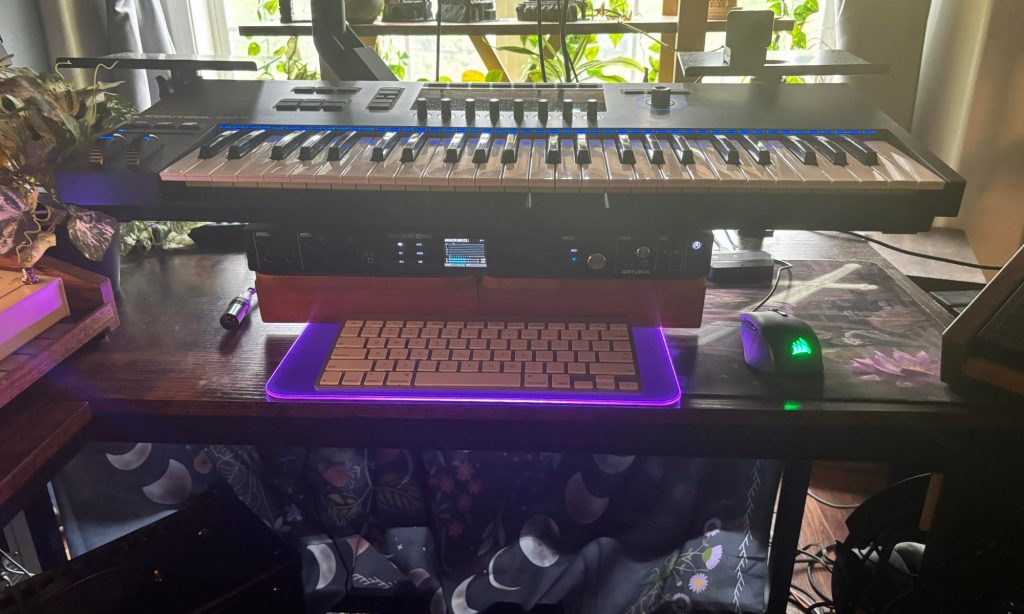
The Arturia AudioFuse 16Rig is the interface I would put at the top of this list because it feels built for the exact problem hardware synth users run into.
In my AudioFuse 16Rig review on Magnetic, I focused on the way it turns a studio into a fixed setup instead of a pile of cables that has to be rebuilt every time I want to record. The headline features are 32×28 total I/O, 16 analog TRS line channels, 12 outputs, dual ADAT I/O, Word Clock I/O, two front combo jacks, MIDI In, Out, and Thru, and a USB-A hub. The MIDI Thru and USB hub matter because hardware synth rooms usually need control data and USB devices handled at the same time as audio.
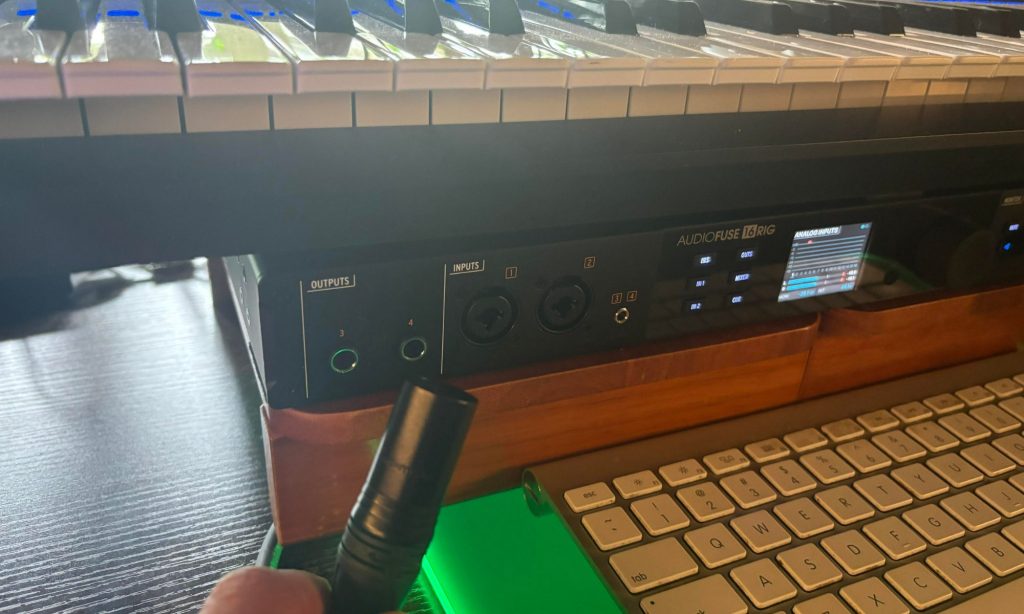
The DC-coupled outputs also give it a modular and CV angle that most interfaces in this list do not touch. Compared with the SSL 18, the AudioFuse 16Rig gives more built-in channel capacity and better standalone use, while SSL gives a more direct control feel and its own analog character.
This also connects with my Hannes Bieger interview on studio design, where he asks, “Is the technical setup well maintained so that it doesn’t put any roadblocks in your way?” That is exactly why I keep coming back to the AudioFuse 16Rig for synth-heavy rooms: it makes the studio feel ready before the first note is recorded.
Buy The Arturia AudioFuse 16Rig Here
Universal Audio Volt 876
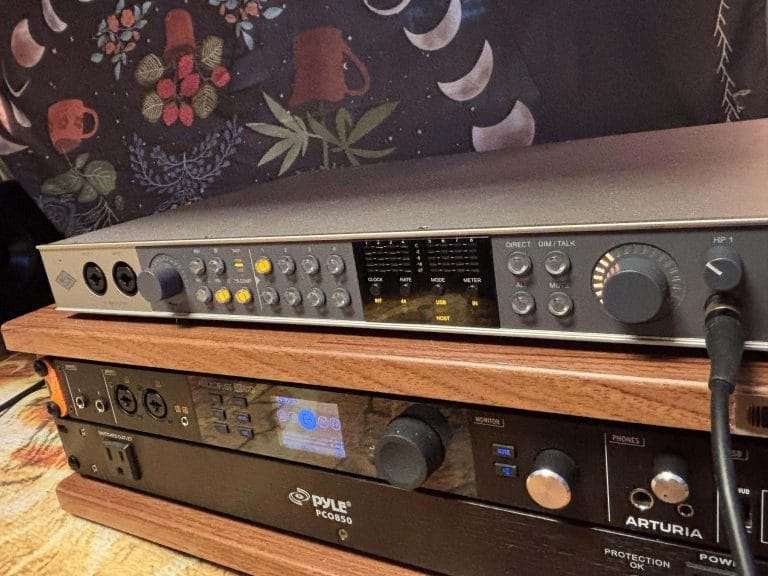
The Universal Audio Volt 876 is the interface I would look at when a producer wants to stay in the Volt family, but the room has grown past the smaller desktop boxes.
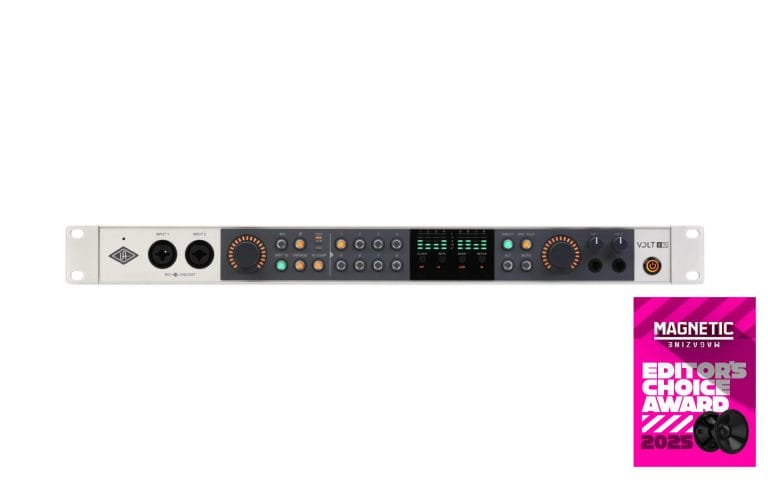
In my Volt 876 review on Magnetic, I talked about coming back to the Volt ecosystem after using the AudioFuse 16Rig, and the 876 felt like UA scaling that familiar idea into a rackmount interface for a larger studio. For hardware synth setups, the appeal is the mix of eight combo channels, ADAT expansion, word clock, eight analog outputs, MIDI I/O, Vintage Preamp mode, and built-in 1176-style compression.
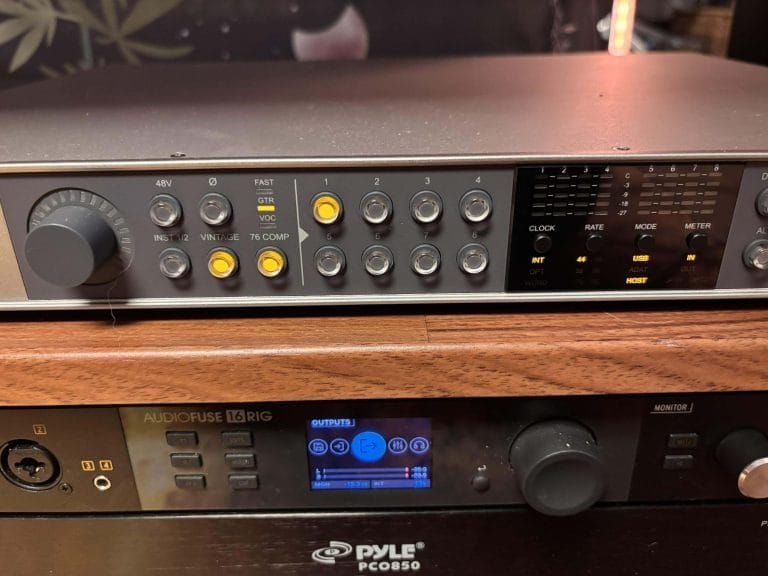
That last part matters because a synth room often has to decide whether the interface is purely a capture box or part of the tone chain. The Volt 876 sits closer to the second option, especially if you like committing subtle UA-style color on the way in. Compared with the AudioFuse 16Rig, this is less of a synth-routing specialist and more of a full tracking center. Compared with the Volt 476P later in this list, it gives the same general UA appeal with far more room for a studio that keeps adding hardware. I would use it when a setup needs more channels, rack placement, and quick color decisions without moving into Apollo pricing.
Buy The Universal Audio Volt 876 Here
Solid State Logic SSL 18

The SSL 18 is the choice I would point to when the interface needs to feel like the center of a hybrid studio rather than a basic computer accessory. In Kane’s SSL 18 review on Magnetic, the parts that matter most for this article are the dual headphone ports, dedicated send/return ports, MIDI In and Out, and ADAT expansion. He also calls out the Legacy 4K circuit and mentions how well it worked with his UDO Super 6, which is exactly the kind of hardware-synth context that makes this interface relevant here.
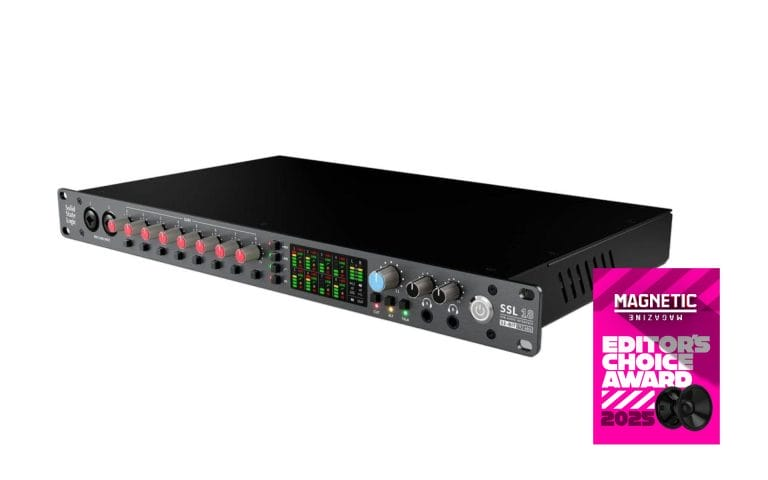
The SSL 18 makes the most sense when synths are part of a larger recording room with vocals, guitars, external processing, and people tracking at the same time. Compared with the AudioFuse 16Rig, the SSL has fewer channels at the same general price level, although it answers with a more immediate front-panel workflow and SSL’s own tone.
Compared with the Volt 876, the SSL 18 leans more into studio control, inserts, and the sound of the 4K button. I would not frame this as the most expandable synth interface in the list.
I would frame it as the option for producers who want their synths connected to a more polished recording setup that still has MIDI and ADAT room to grow.
Buy The Solid State Logic SSL 18 Here
Focusrite Scarlett 18i16 4th Gen
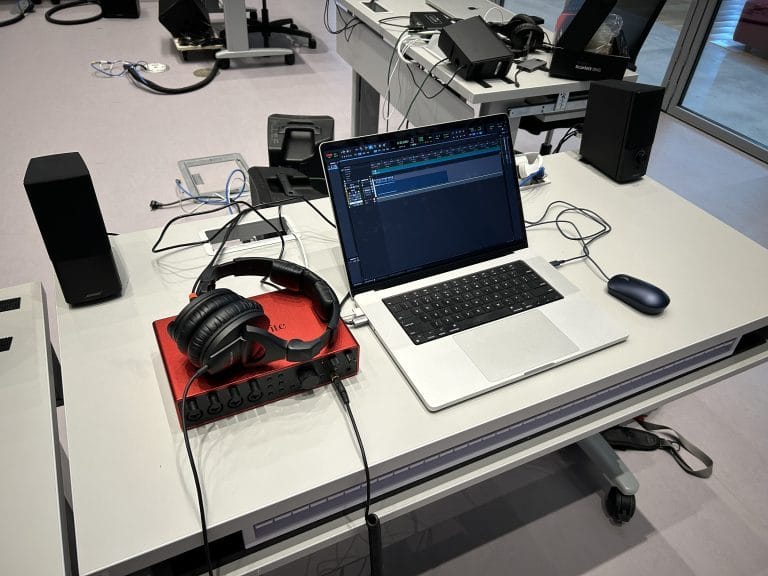
The Focusrite Scarlett 18i16 4th Gen is the mid-priced pick I would include for producers who need more I/O without jumping straight into the premium rack category.
In Ben Lepper’s Scarlett 18i16 review on Magnetic, he focused on RedNet-derived converters, Focusrite Control 2, Auto Gain, Clip Safe, and how quickly the unit was ready to use. That matters for hardware synth setups because most producers need less drama, not more setup time.
The 18i16 is also a cleaner fit than a smaller Scarlett if the room has stereo synths, drum machines, or external effects that need to stay connected. Compared with the AudioFuse 16Rig, it is less ambitious and gives up the deeper synth-room extras like DC-coupled outputs and standalone behavior.
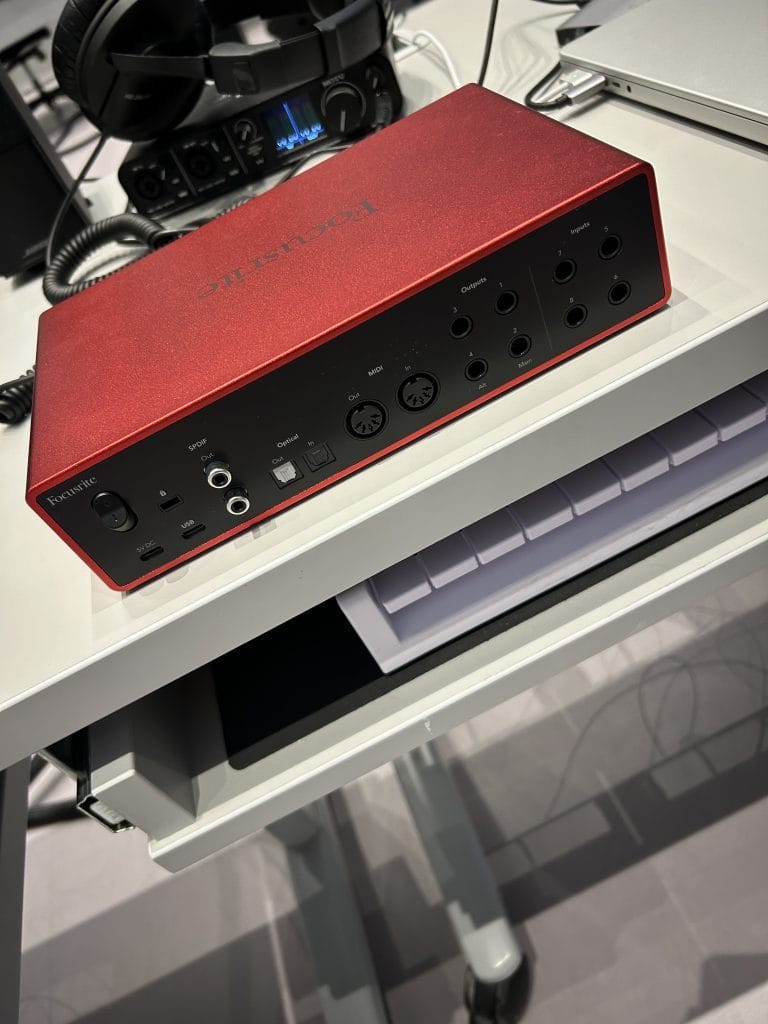
Compared with the PreSonus Quantum ES 4, it gives a larger studio a more realistic path once the number of hardware sources starts growing. I would choose this for the reader who wants a better interface for synths, microphones, and monitors without turning the purchase into a major studio investment. The main selling point is balance: more room than a tiny desktop interface, less cost than the large rack units, and enough control software to keep routing clear.
Buy The Focusrite Scarlett 18i16 4th Gen Here
Universal Audio Volt 476P
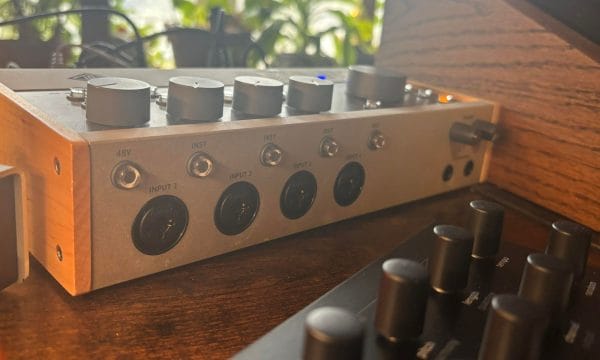
The Universal Audio Volt 476P is the smaller UA pick, and I would keep it in this article because not every hardware synth setup needs a full rack on day one. In my Volt 476P review on Magnetic, I specifically called out the problem of plugging and unplugging cables on a wall of synths, which is exactly the buying pain this article is trying to solve.
The 476P gives four mic preamps, two extra line channels, six analog outputs, two headphone outs, MIDI I/O, direct monitoring, Vintage Preamp mode, and built-in 1176-derived FET compression. For synths, the appeal is that you can keep a compact rig connected while adding a little UA color during recording.
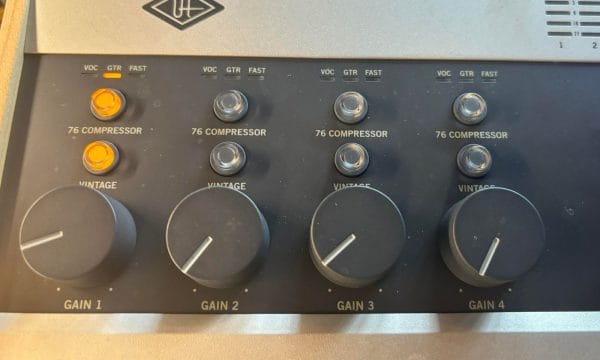
Compared with the Volt 876, the 476P is much easier to fit on a desk, although it runs out of room faster once stereo hardware starts stacking up. Compared with the Scarlett 18i16, it gives less I/O, but the analog-style front end gives it a clearer recording character.

I would recommend this when a producer has one or two main hardware pieces, records vocals or instruments too, and wants the interface to add a little tone on the way in. Once the room starts needing several stereo paths at once, the Volt 876 becomes the cleaner UA move.
Buy The Universal Audio Volt 476P Here
PreSonus Quantum ES 4
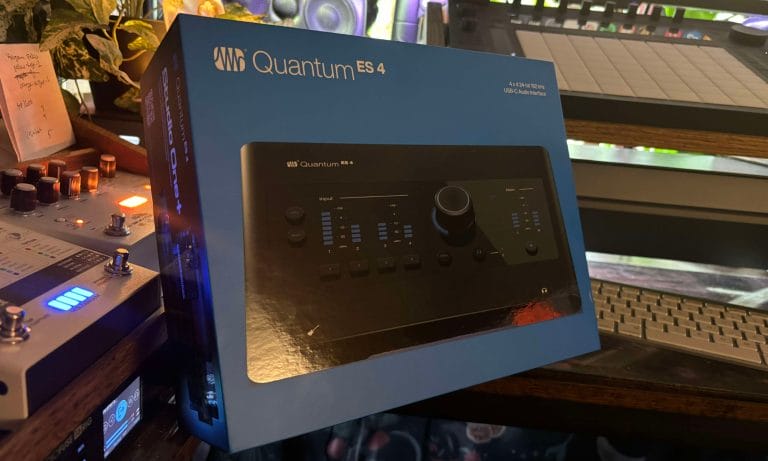
The PreSonus Quantum ES 4 is the smallest caveat pick in this roundup, and I would include it for producers who are still building the first version of a hardware setup.
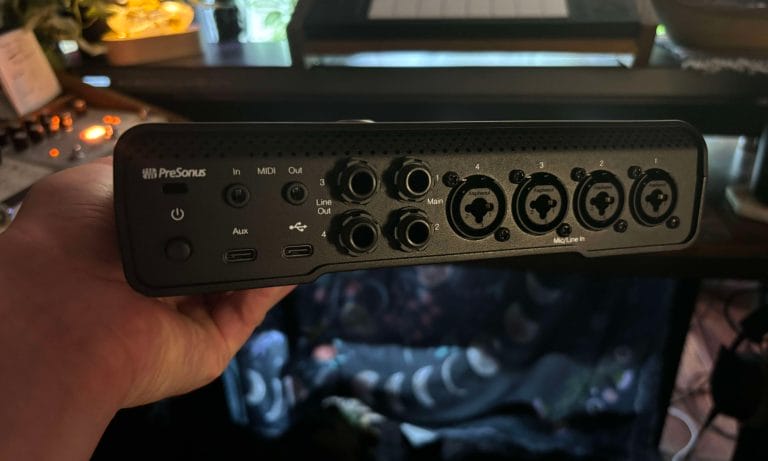
In my Quantum ES 4 review on Magnetic, I liked that the main jacks sit on the back, because a studio feels more permanent when the cables are not hanging off the front of the box. The ES 4 gives four mic/line channels, two dedicated guitar channels, four outputs, two headphone outs, Auto Gain, loopback, 24-bit/192kHz conversion, bus power, and rear 3.5mm TRS MIDI I/O. That MIDI format is the main caveat because some users will prefer full-size five-pin MIDI on a synth-focused interface. Compared with the Scarlett 18i16, the Quantum ES 4 is smaller and less suited to a growing room with several stereo synths.
Compared with the Volt 476P, it feels less focused on analog-style tone and more focused on speed, ergonomics, and ease of use. I would recommend it to producers who want a compact interface for one or two hardware pieces, guitar, vocals, and quick idea capture. It is not the interface I would pick for a large synth wall, although it can be a smart first step before the room needs a bigger hub.
Buy The PreSonus Quantum ES 4 Here
Honorable Mentions I Would Keep On The Radar
These interfaces fit the hardware-synth setup search intent, although I would keep them outside the main list until I have enough review time or stronger Magnetic source material.
| Interface | Why it is on my radar | Best fit |
| Focusrite Scarlett 18i20 4th Gen | It is the bigger Scarlett option with more mic preamps and a clear expansion path | Producers who want the Scarlett workflow with more room than the 18i16 |
| MOTU UltraLite-mk5 | It is a compact interface with strong I/O density and a long reputation in hybrid studios | Producers who want a smaller box with a lot of routing potential |
| Audient EVO 16 | It gives larger-channel recording at a midrange price with Smartgain and ADAT expansion | Producers who want fast setup and more channels without going premium |
| Universal Audio Apollo x8 Gen 2 | It brings UAD DSP, Thunderbolt, and a higher-end studio path | Producers who want the premium UA route for hardware and plugin-based tracking |
Wrapping Things Up
Best Audio Interfaces For Hardware Synth Setups should be chosen by the number of hardware sources you want connected all the time.
The Arturia AudioFuse 16Rig is my top pick when the room has several synths, pedals, MIDI devices, and modular or CV needs. The Universal Audio Volt 876 is the UA pick when the setup needs a rackmount center with color, ADAT, word clock, and room to track more sources. The SSL 18 is the option I would choose for a hybrid studio that values front-panel control, inserts, SSL tone, and ADAT expansion. The Focusrite Scarlett 18i16 4th Gen is the smarter mid-priced choice when a producer needs more I/O without moving into the $1,000-plus bracket. The Volt 476P is the smaller UA option for producers with a compact hardware setup who still want MIDI and analog-style recording color.
The PreSonus Quantum ES 4 is the entry point for smaller rigs where fast setup, rear cabling, and a compact footprint matter most. If I were building a synth-heavy room from scratch today, I would start by counting the stereo devices I want connected at all times, then choose the interface that gives me enough room to record without repatching every time I sit down.

Will Vance is a professional music producer who has been involved in the industry for the better part of a decade and has been the managing editor at Magnetic Magazine since mid-2022. In that time period, he has published thousands of articles on music production, industry think pieces and educational articles about the music industry. Over the last decade as a professional music producer, Will Vance has also ran multiple successful and highly respected record labels in the industry, including Where The Heart Is Records as well as having launched a new label with a focus on community through Magnetic Magazine. When not running these labels or producing his own music, Vance is likely writing for other top industry sites like Waves or the Hyperbits Masterclass or working on his upcoming book on mindfulness in music production. On the rare chance he's not thinking about music production, he's probably running a game of Dungeons and Dragons with his friends which he has been the dungeon master for for many years.