Table of Contents
I’ve spent enough time working with hardware synthesizers, external effects, and analog processors to know that owning a piece of equipment and actually incorporating it into your music regularly are two completely different things. And while I love having physical controls available when I’m producing, there are plenty of situations where opening another plugin is simply easier than sorting through cables, configuring inputs and outputs, and making sure everything returns to the DAW correctly.
It’s especially frustrating when you want to use several pieces of hardware across different projects, since maintaining a convenient setup can require extra connections, routing, and prep before you can get to work.
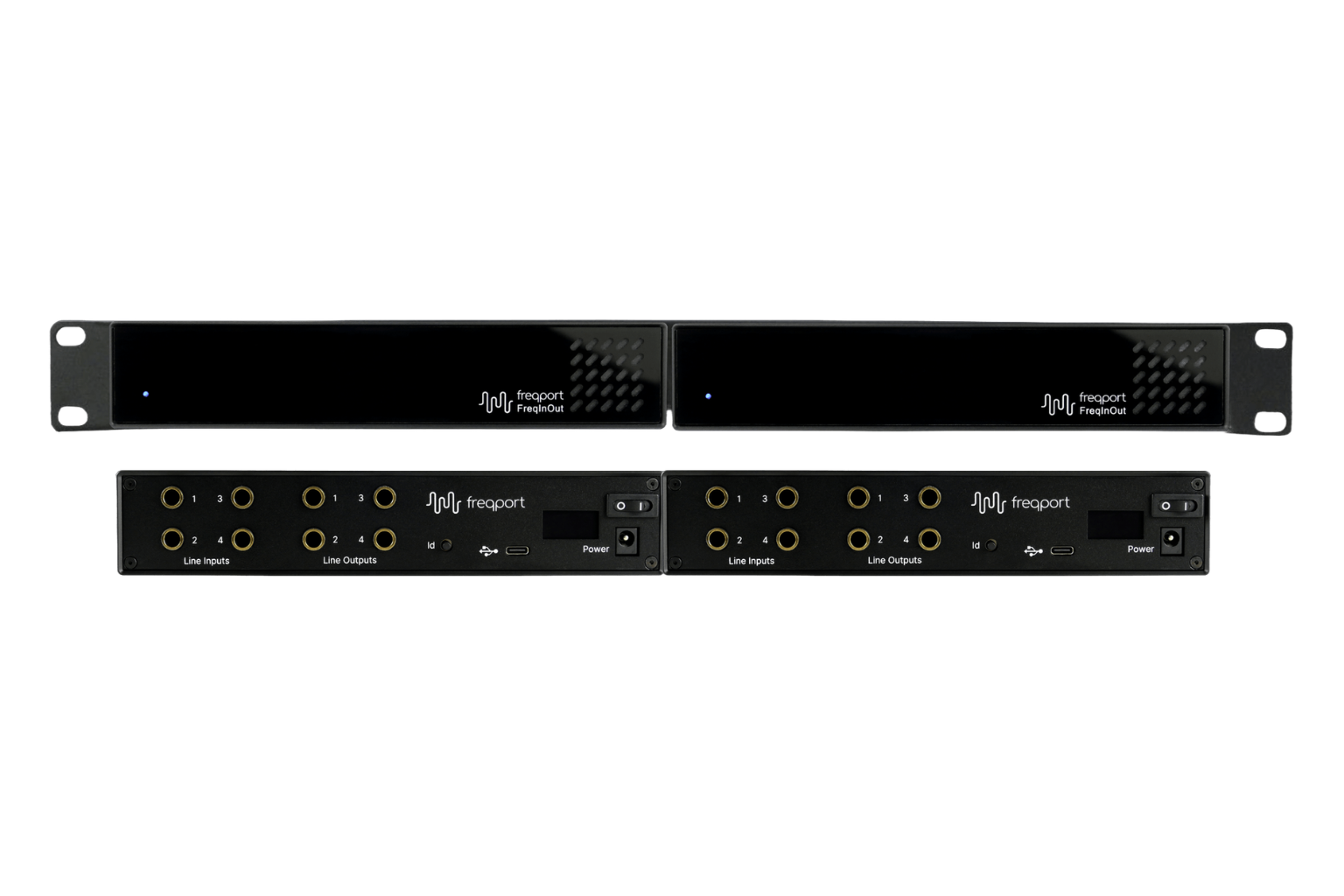
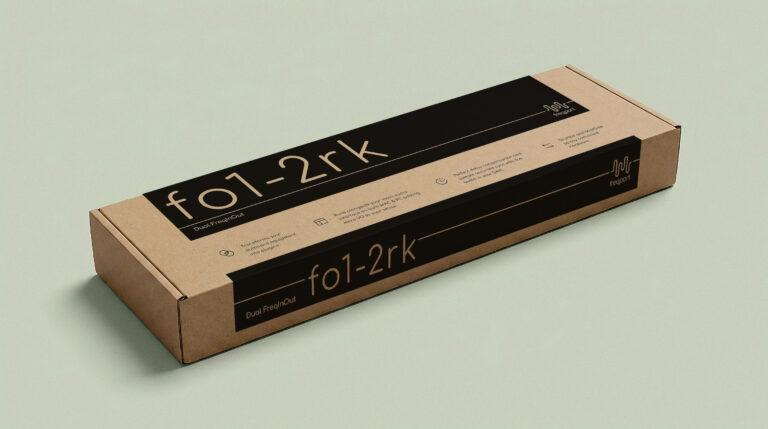
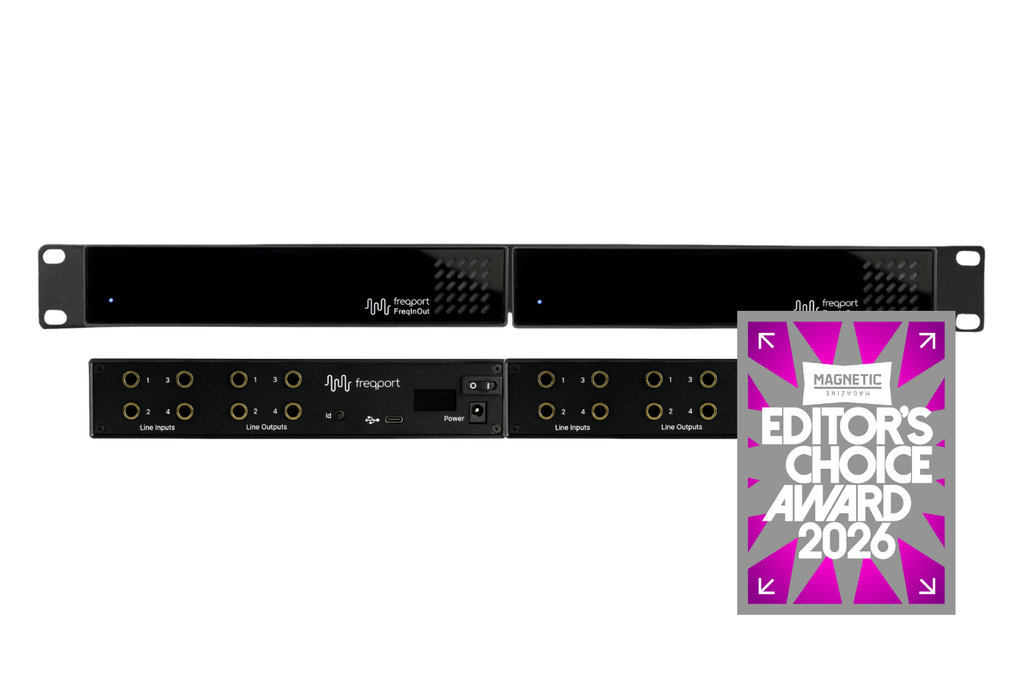
That’s what caught my attention about the Freqport Dual FreqInOut FO1_2RK, an eight-channel hardware integration system that combines two of the company’s FO1 modules inside a single 1U rack enclosure. Instead of asking producers to replace their existing audio interfaces or completely reorganize their studios, Freqport lets you get dedicated analog connections accessible through a plugin inside the DAW, along with routing, latency compensation, parallel processing, and a few additional functions that aren’t necessarily available on the hardware you’re connecting.
And while $1,175 certainly puts this in a category of equipment that deserves some consideration before purchasing, I think there’s an interesting argument for a product designed specifically to make external hardware easier to use, particularly for producers who already have a collection of compressors, EQs, and effects that they’d like to incorporate into their music regularly and, most importantly, more fluidly.
So let’s get into what the Dual FO1 offers, where its features matter most for electronic music production, and why I think its approach to hardware integration deserves attention. We’re going deep on this once, since it needs some nuance, so buckle up!
What Is the Freqport Dual FreqInOut FO1?
The first thing worth understanding about the Dual FO1 is that it doesn’t replace your existing audio interface, and I actually think that’s one of the most appealing parts of the design because plenty of producers already own an interface that handles their recording and monitoring needs perfectly well, even if that interface has relatively few unused connections for external processors.
The FO1 gives you dedicated send-and-return paths for compatible hardware, letting your existing interface handle its usual responsibilities while the Freqport system manages audio through your outboard equipment.
The dual rack configuration offers eight analog inputs and eight analog outputs, which means you can connect up to eight mono processing paths, four stereo processing paths, or a suitable combination depending on how you organize the two modules.
4 vs 8 Channels
I think the difference between four and eight channels becomes especially relevant once you start connecting stereo processors, since a single stereo compressor or reverb occupies two inputs and two outputs, and suddenly a smaller interface can feel fairly restrictive when you want several pieces of equipment available in the same session. Freqport offers both models, so it’s important to know which one is right for you so that you don’t overspend on more firepower than you need, so to speak.
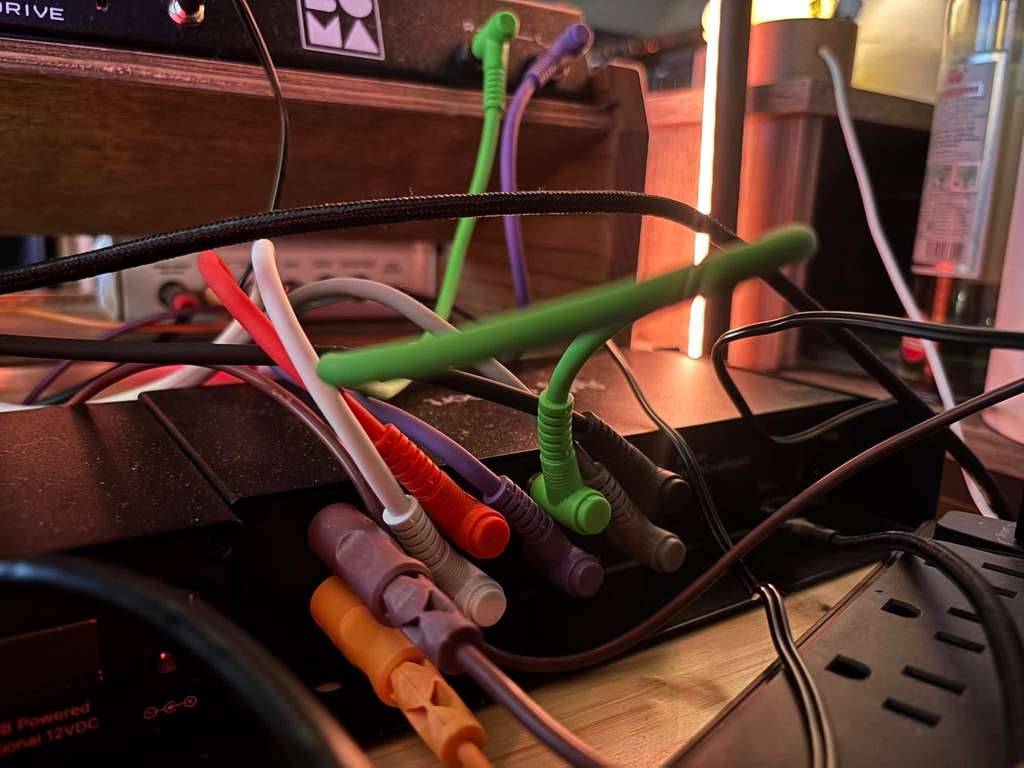
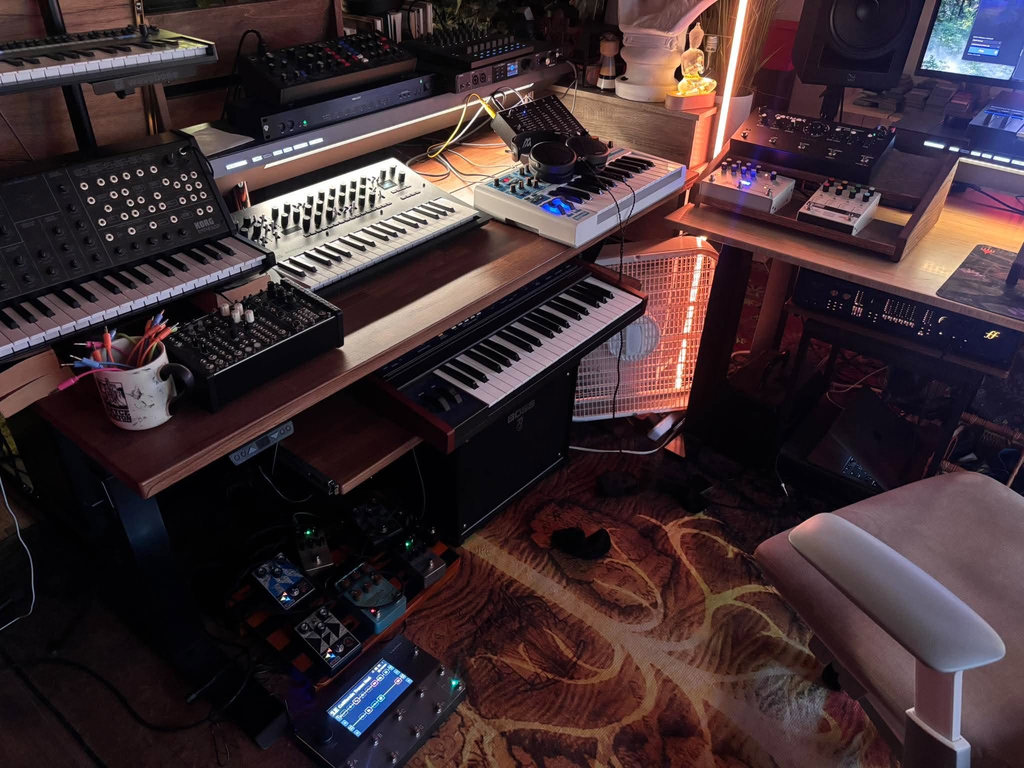
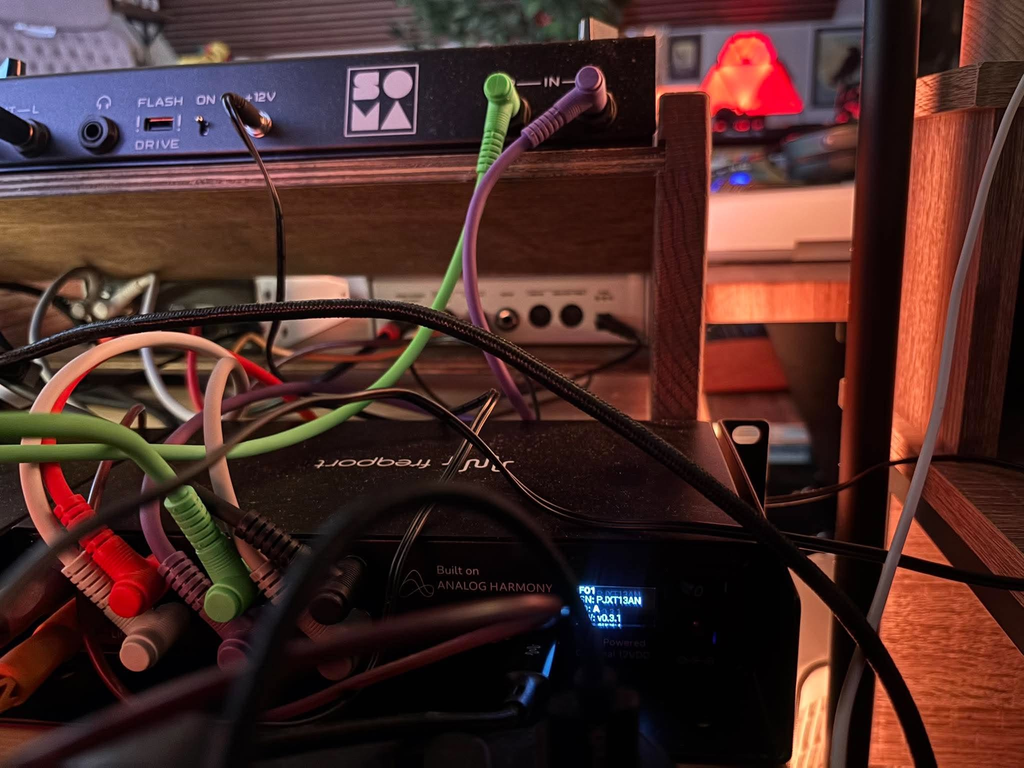
For my purposes, making texture-heavy melodic and progressive house music, I’d probably reserve one stereo pair for distortion and coloration, another for a modulation or spatial effect, and leave the remaining channels available for other processors that I might want to incorporate during sound design, like my Chroma Console. That seems like a reasonable amount of connectivity for a producer with a modest collection of external hardware, especially when the goal is to keep frequently used equipment connected rather than constantly swapping cables between sessions and the way I’ve set mine up in the studio is to basically act like a dedicated ambiance and soundscape hub all in one single section of my studio desk.
The 1U rack enclosure also seems like the right format, I think, for this sort of system because producers who own external compressors, EQs, and other rack processors are likely already organizing that equipment in a rack, and keeping the Freqport installed alongside those devices could make the initial wiring easier to manage. I don’t have no crazy or complex outboard dynamics controllers, but I do like having the option to send some signal to my compressor pedals for that extra bit of crunch and body.
It uses standard quarter-inch line connections, and I’d recommend balanced TRS cabling wherever the connected equipment supports it, although producers working with guitar pedals or older unbalanced equipment should account for differences in signal levels and impedance.
Tech Specs In Case You Need Em
| Specification | Freqport Dual FO1_2RK |
|---|---|
| Analog connections | 8 inputs and 8 outputs |
| Hardware configuration | Two FO1 modules in a 1U rack |
| Analog routing | Two independent 4×4 matrices |
| Conversion | 32-bit ESS converters |
| Maximum sample rate | 192 kHz |
| Maximum analog level | +18 dBu input and output |
| Computer connectivity | USB-C |
| System expansion | Up to 16 inputs and 16 outputs |
The converter specs suit a system meant to move audio between your computer and external gear, but I wouldn’t buy it based solely on the converter because its real value comes from how it organizes and controls external processing.
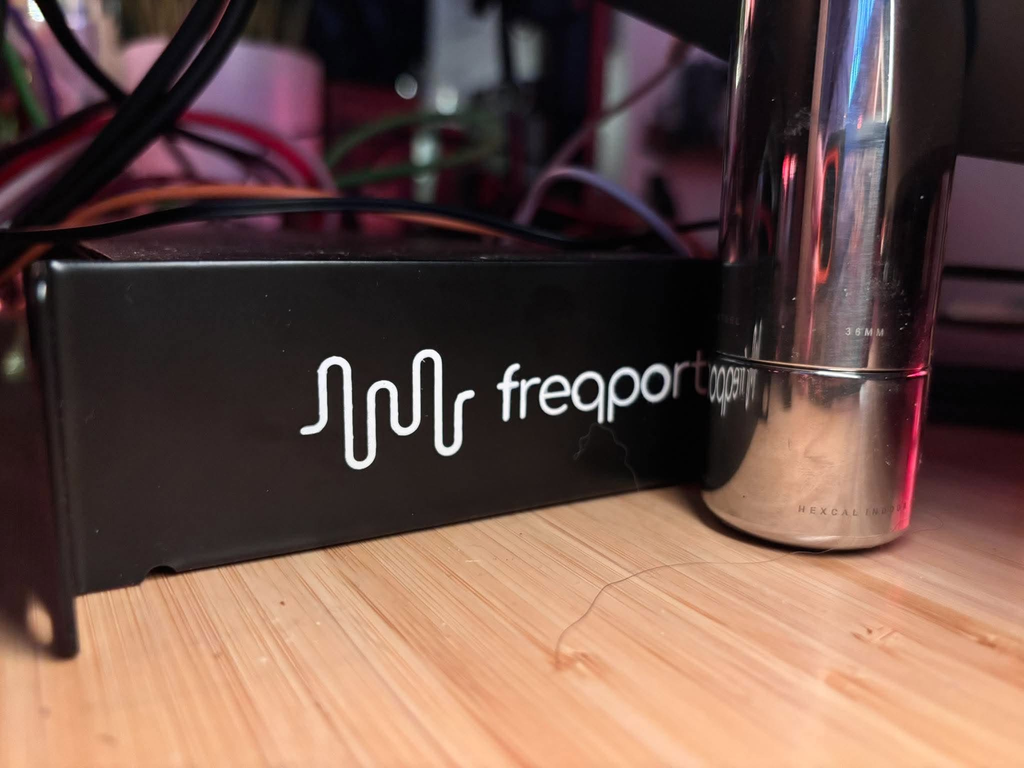
The FO1 itself doesn’t add saturation, compression, or a specific analog character, and the tonal changes you’re working toward will primarily depend on the connected hardware, its settings, and the complete signal path, which is why it operates so perfectly in my own setup as a dedicated sound design and ambiance-making hub where before each piece of this puzzle was spread across the studio desk depending on where I had connections, cable jacks, and space.
I covered Freqport’s approach to integrating hardware with software in my review of the FT-1 FreqTube, and while that device provides its own analog tube processing, the Dual FO1 addresses a different part of the production process by letting producers use compatible processors they already own.
I really dig that distinction because the system doesn’t assume you need to buy another compressor or saturation device to benefit from it, as long as you already have external equipment worth connecting.
Is the FreqInOut Plugin Easy to Use?
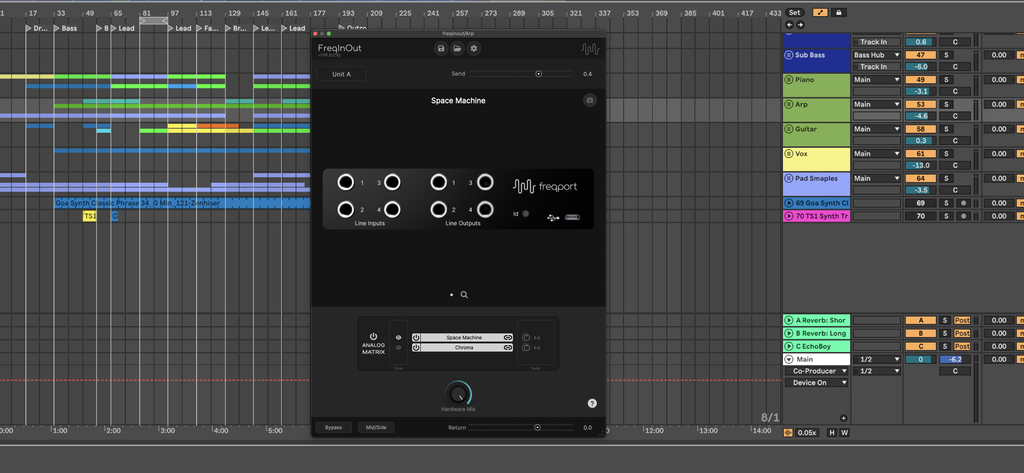
One of the reasons I find the Freqport approach interesting is that I’m already accustomed to handling nearly everything inside Ableton, and while I enjoy using external hardware, I still want the convenience of opening a plugin and getting directly to work rather than spending time configuring additional routing every time I want to use something.
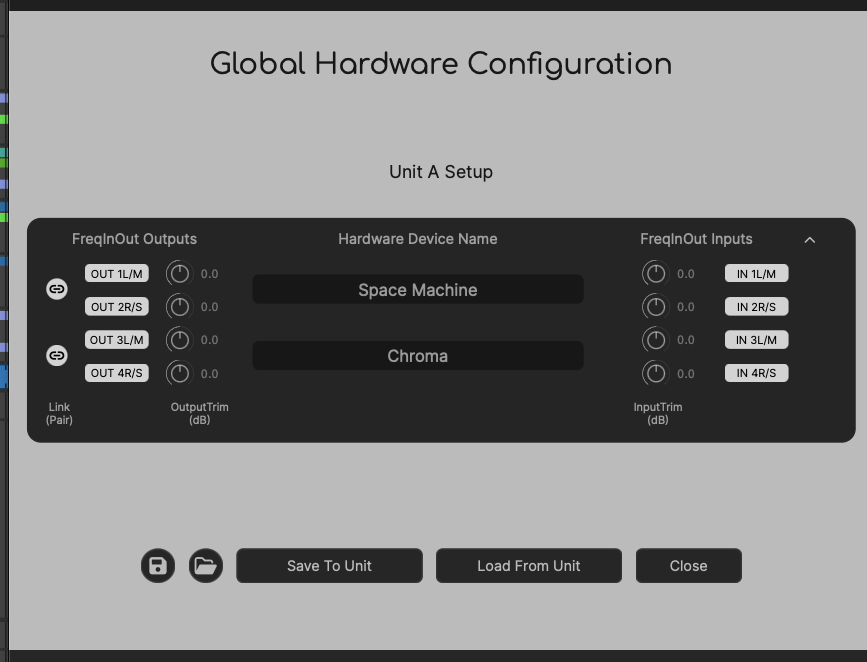
The Dual FO1 handles this through FreqSoft, which includes the FreqInOut plugin and analogHub, the background application that communicates with the hardware. Once installed, the plugin lets you access connected processors directly inside your DAW, while the Setup Wizard and Global Hardware Configuration page handle channel assignments, operating levels, and stereo connections. I particularly liked being able to name individual processors because when you’ve got several pedals and other devices connected, seeing their actual names instead of numbered inputs makes navigating the setup considerably easier.
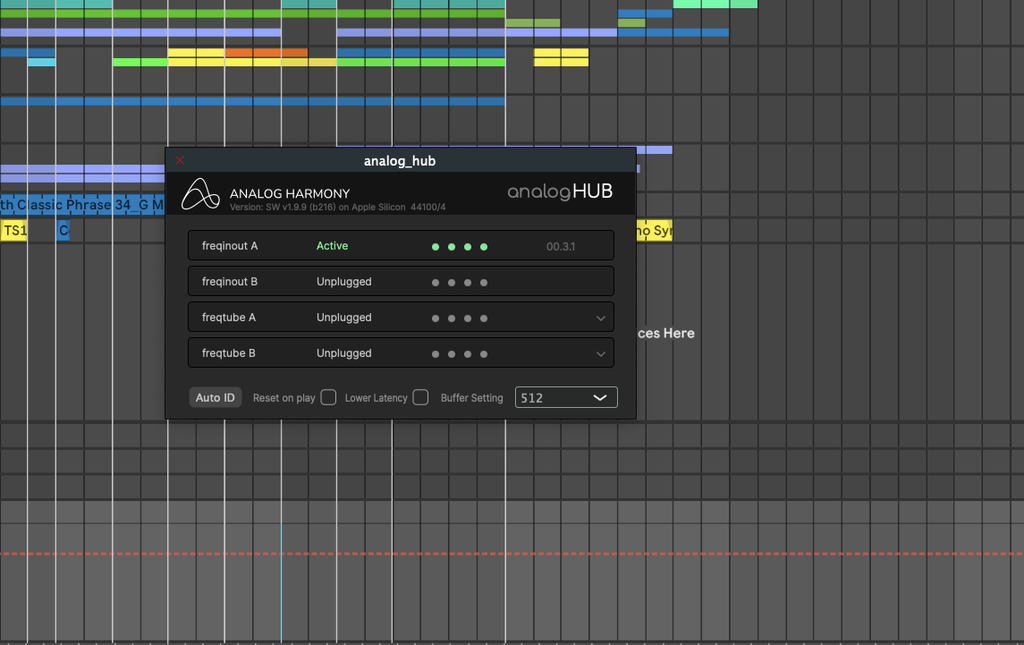
Getting everything configured does require some initial attention, especially since the dual rack contains two independent FO1 modules that need to be identified correctly; although once those connections are established, the idea is to keep your equipment available without repeatedly changing cables, and for anyone who likes things just plug-and-play, this might seem like a small bit of a wet blanket right out of the box. My one criticism is that I’d prefer quicker access to the Global Hardware Configuration settings, particularly when experimenting with different processors and adjusting their levels, but for something that can get as in-the-weeds as you want it, it’s really not too much to ask of the user.
Automatic latency compensation is another dope thing to include because external processing adds time as audio travels out of the computer and returns, and Freqport also provides manual delay adjustments for hardware that introduces its own processing latency.
Why Does the Freqport Analog Matrix Matter?
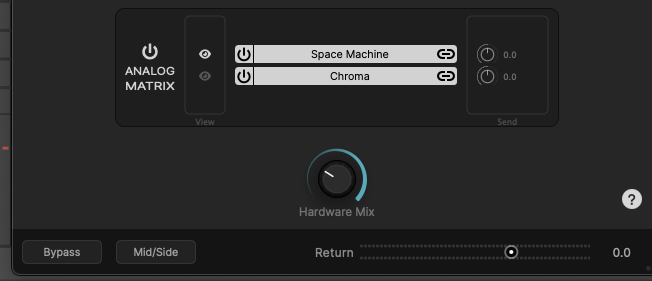
The Analog Matrix is probably the feature I find most interesting because it lets you change the order of connected hardware without physically reconnecting anything, and while that might seem like a relatively minor convenience, I think there’s considerable value in being able to experiment with different processing chains without interrupting a session to move cables around.
Each FO1 module contains its own four-channel Analog Matrix, meaning the dual rack gives you two independent routing systems rather than one unrestricted eight-channel matrix. Within each module, you can arrange compatible processors in different orders, whether that’s placing EQ before compression or experimenting with saturation before and after another effect, and the routing happens in the analog domain without requiring additional conversion stages between processors in the same chain.
Another feature I particularly like is Hardware Mix, which adds wet/dry blending to external processors that might not have that functionality themselves. I can see this being especially helpful for parallel drum compression or adding saturation to bass, since you can combine the processed and original signals directly through the plugin rather than setting up additional DAW routing.
You still need to watch signal levels and timing, especially when processing low frequencies, but having that control is a good thing to add.
There’s also Mid/Side processing, which lets compatible stereo hardware work with the center and side components of a signal without requiring a separate external encoder and decoder, and is legit one of my favorite things about this, seeing how much texture and ambiance matter in the music I make. For me, these features are the main reason to consider the Dual FO1 over simply adding more analog connections to an existing interface. Eight dedicated inputs and outputs are certainly convenient, but being able to change hardware processing order, blend external effects, and access Mid/Side processing directly inside the DAW gives the system a much clearer purpose.

How Would I Use the Dual FO1 for Music Production?
When I consider where the Dual FO1 would fit into my own production process, I keep coming back to my desk of synths, external effects, and the kind of processing that I want to use while developing an arrangement rather than leaving it until the mixing stage, which I’ve collected over the last five years writing about this type of stuff.
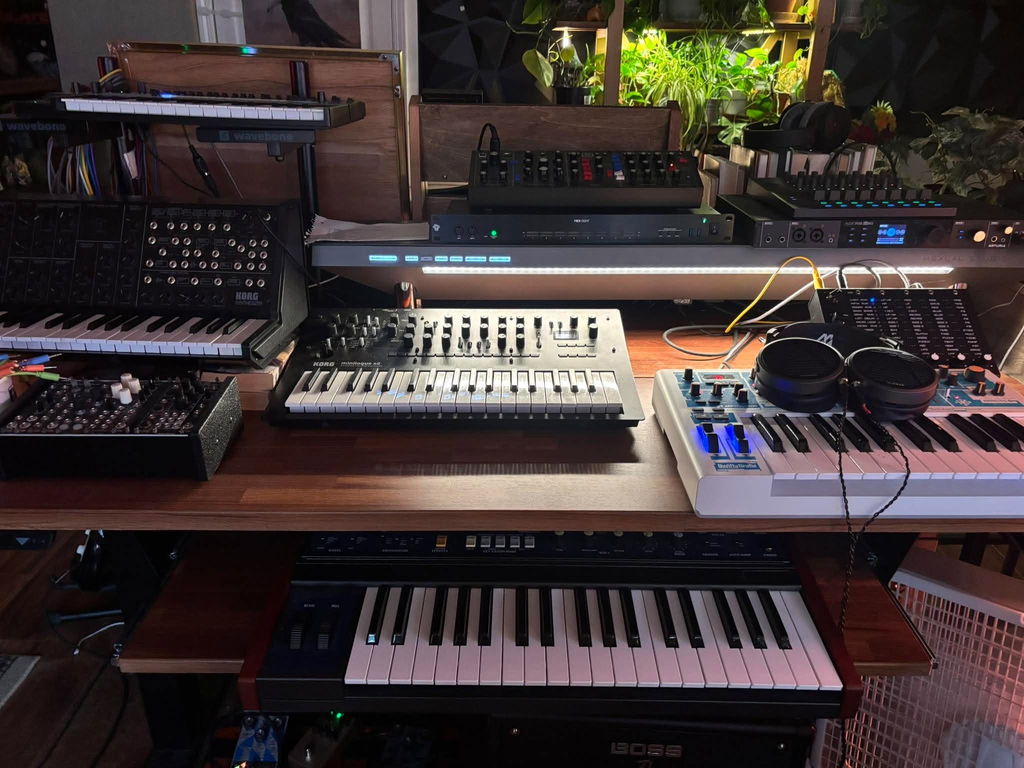
I produce a lot of melodic and progressive house music, and I tend to spend a fair amount of time working with delays, modulation effects, saturation, and granular processors, so having several pieces of hardware connected and accessible through plugin instances feels particularly relevant to how I approach sound design.
Synths and External Effects
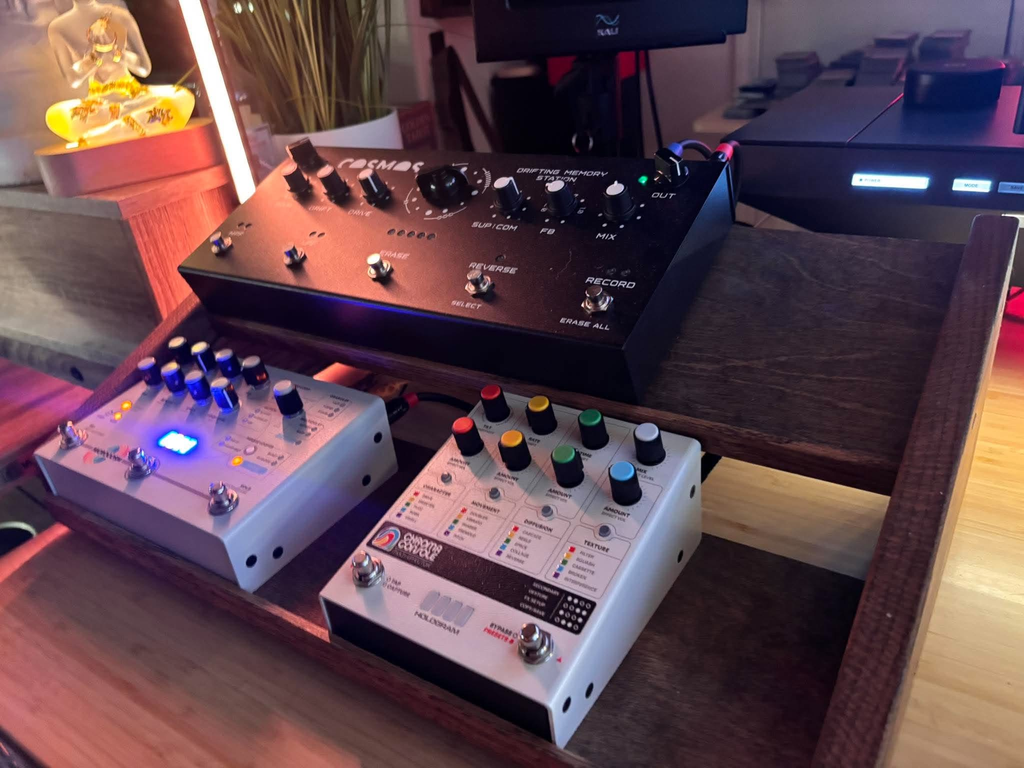
One example would be the Hologram Microcosm, which I’ve reviewed extensively here on the site, and which I’ve used for processing synthesizers in my own productions. It’s the type of equipment I’d want available during an arrangement because sending a relatively simple phrase through granular processing, recording the result, and editing that audio can produce material that becomes part of the finished track.
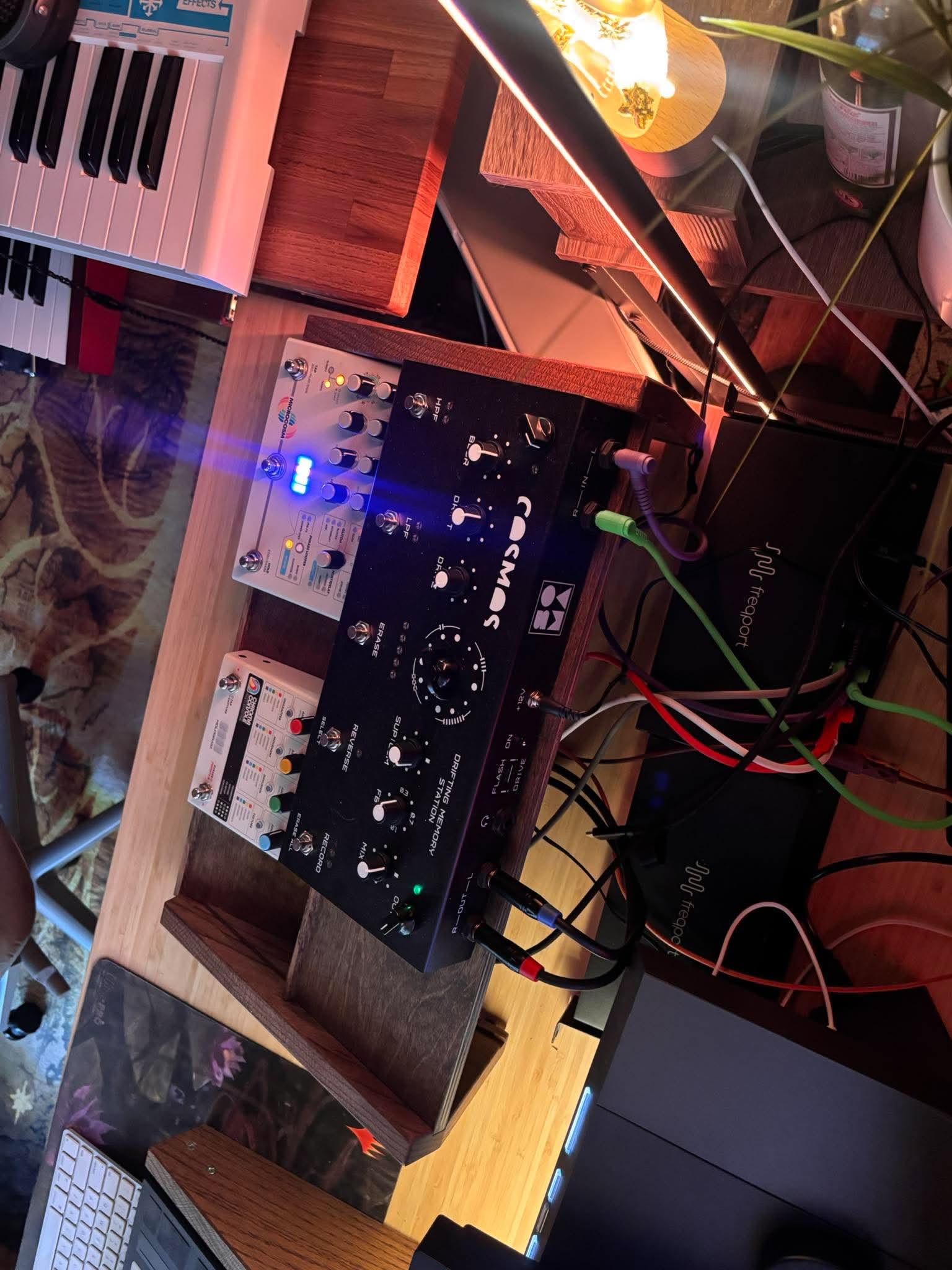
The Dual FO1 could make that process easier to organize by providing a dedicated path for compatible external effects, particularly when the initial setup and signal levels have already been established.
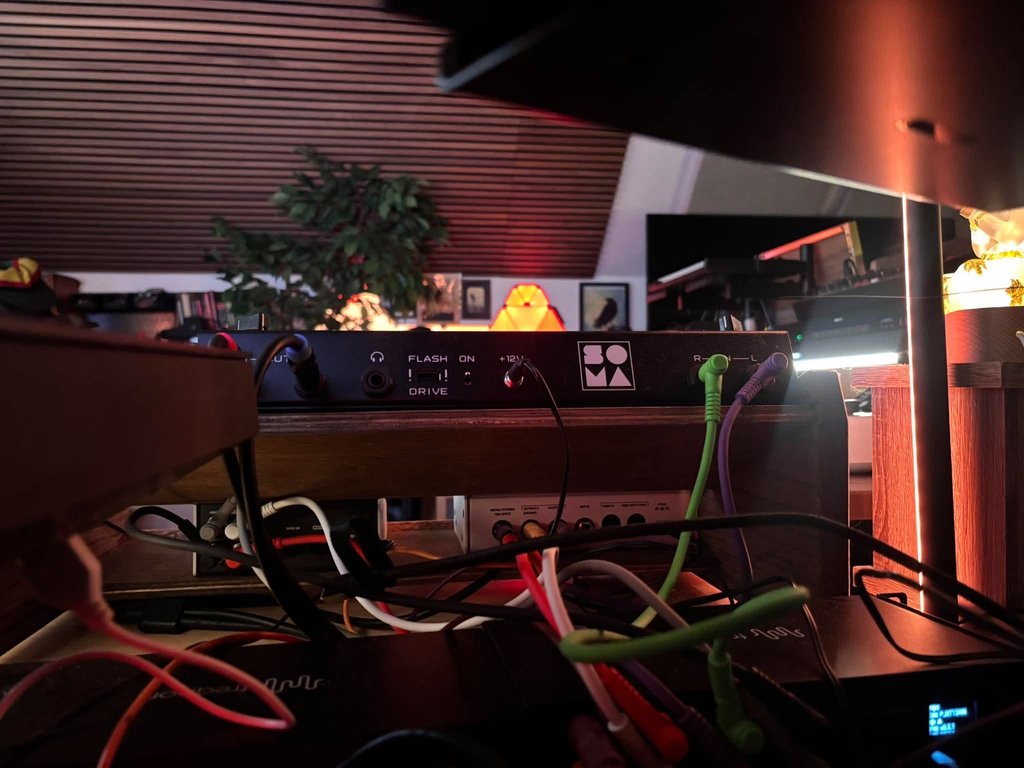
I’ve also written about my favorite hardware effects for synthesizers, and one recurring consideration is how well they handle synthesizer signals and how easily they can be incorporated into ordinary production sessions. The FO1 addresses that integration, since it lets suitable hardware stay connected while providing software controls for routing and levels.
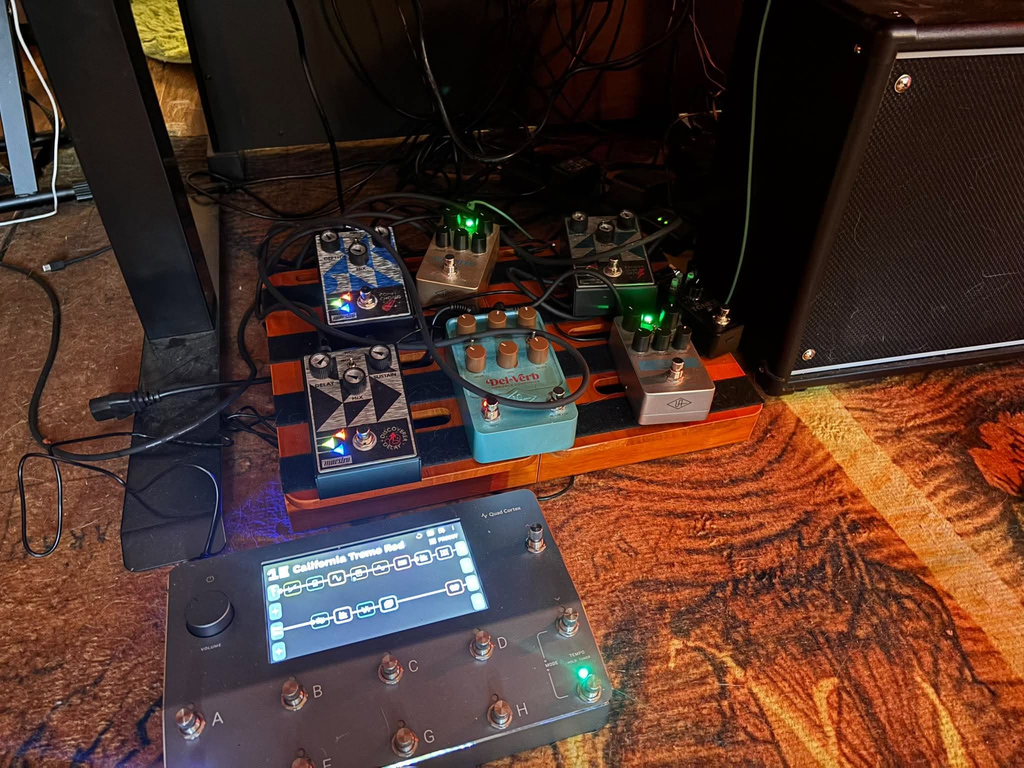
I’d also be interested in assigning an external saturation processor to a stereo synthesizer group, especially when I want several instruments to pass through the same processing circuit rather than treating them individually.
The send-level controls would give me another way to adjust how hard the processor is driven, although I’d want to compare the results at matched output levels before deciding whether the additional harmonics actually improve the arrangement.
Drums, Compression, and Bass
Drums are another area where I think the Dual FO1 could be particularly appealing, since external compression and saturation can be applied to individual percussion parts or complete groups, and the eight-channel configuration means those processors don’t need to consume all the available connections.
I can see myself leaving one stereo path connected to a compressor and using Hardware Mix to experiment with parallel compression, especially when I want the compressed signal to add density while retaining some of the original drum transients.
I also like the idea of using the Analog Matrix to compare equalization before compression against equalization afterward, since those arrangements can produce different results depending on the compressor’s behavior and the frequency content of the signal.
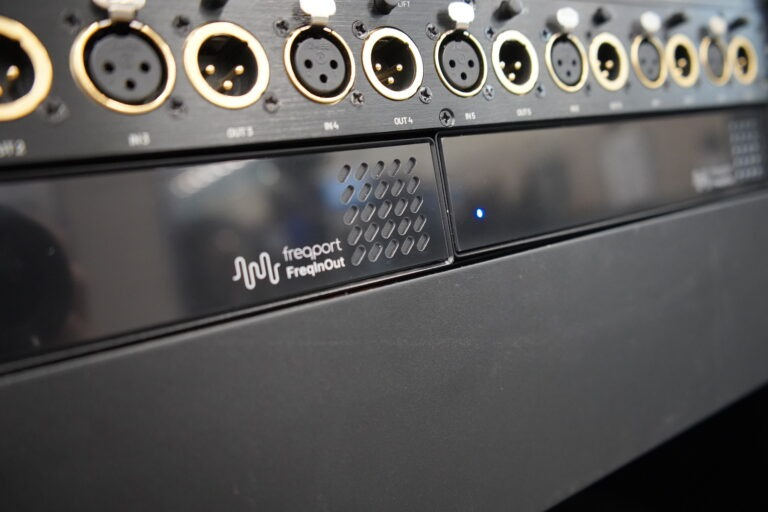
Bass processing deserves additional attention because combining an unprocessed bass signal with external distortion or saturation requires careful consideration of timing, phase, and gain. Adding upper harmonics can help certain bass sounds remain audible on smaller playback systems, although I’d want to make sure the processing doesn’t introduce unwanted changes to the low-frequency content.
For that reason, I’d pay close attention to the Hardware Mix control when working with bass, particularly if I were using a processor that introduces additional delay or phase shift, and I’d use the return-level adjustment to make sure the processed signal is appropriately balanced against the original.
Is the Freqport Dual FO1 Worth $1,175?
I think the Dual FO1 makes a convincing case for producers who already own external hardware and want an easier way to incorporate it into their DAW sessions.
Eight dedicated analog channels, software-controlled routing, and automatic latency compensation address several frustrations of working with outboard equipment, and I particularly appreciate that Freqport offers all of this without requiring producers to replace their existing audio interfaces.
There are a few things I’d like to see improved, particularly the ability to route processors across one shared eight-channel Analog Matrix rather than two independent four-channel systems, and I’d appreciate quicker access to the global hardware configuration settings. Physical controls still need to be recalled manually, and external processing requires real-time recording, although those are familiar considerations for anyone regularly working with analog equipment.
At $1,175, I wouldn’t recommend the Dual FO1 to someone producing entirely inside their DAW or using only one external effects pedal, but for producers with several compressors, EQs, and other processors, I think the combination of Hardware Mix, Mid/Side processing, and flexible analog routing makes the investment easier to justify. The ability to leave equipment connected and access it directly through plugin instances is particularly appealing for the way I approach melodic and progressive house production.
And that’s why I’m giving the Freqport Dual FreqInOut FO1_2RK our Magnetic Magazine Editor’s Choice Award.
Freqport has developed a comprehensive system for integrating external processors into an existing studio, and while there’s room to improve the software and routing flexibility, I think the overall approach addresses the needs of producers who regularly work with analog hardware. If you’ve already invested in outboard equipment and want to make it easier to incorporate into your productions, the Dual FO1 is an easy recommendation from me.

Will Vance is a professional music producer who has been involved in the industry for the better part of a decade and has been the managing editor at Magnetic Magazine since mid-2022. In that time period, he has published thousands of articles on music production, industry think pieces and educational articles about the music industry. Over the last decade as a professional music producer, Will Vance has also ran multiple successful and highly respected record labels in the industry, including Where The Heart Is Records as well as having launched a new label with a focus on community through Magnetic Magazine. When not running these labels or producing his own music, Vance is likely writing for other top industry sites like Waves or the Hyperbits Masterclass or working on his upcoming book on mindfulness in music production. On the rare chance he's not thinking about music production, he's probably running a game of Dungeons and Dragons with his friends which he has been the dungeon master for for many years.