The relationship between compression, saturation, and clipping is something I spend a lot of time thinking about when mixing electronic music.
Each process changes how a recording behaves, and combining them can produce considerably different results depending on the order, intensity, and frequency range being processed. The challenge is getting those individual stages to work together without unnecessarily complicating a session or introducing problems elsewhere in the frequency spectrum.
Freqport has introduced a new plugin that approaches those processes within a single interface.
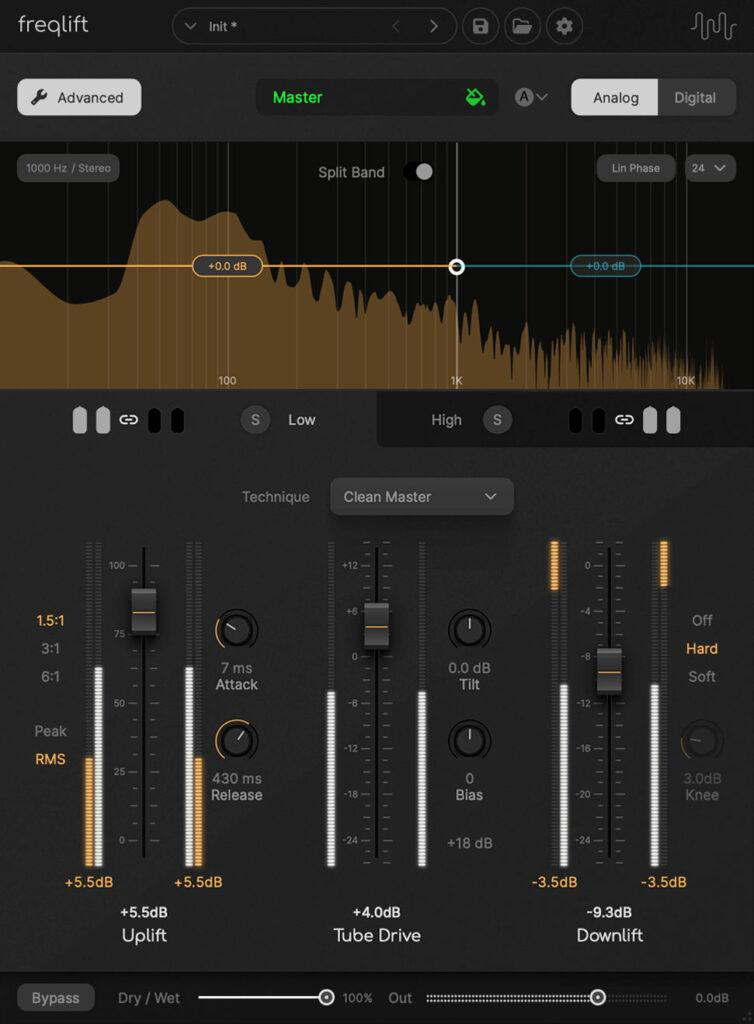
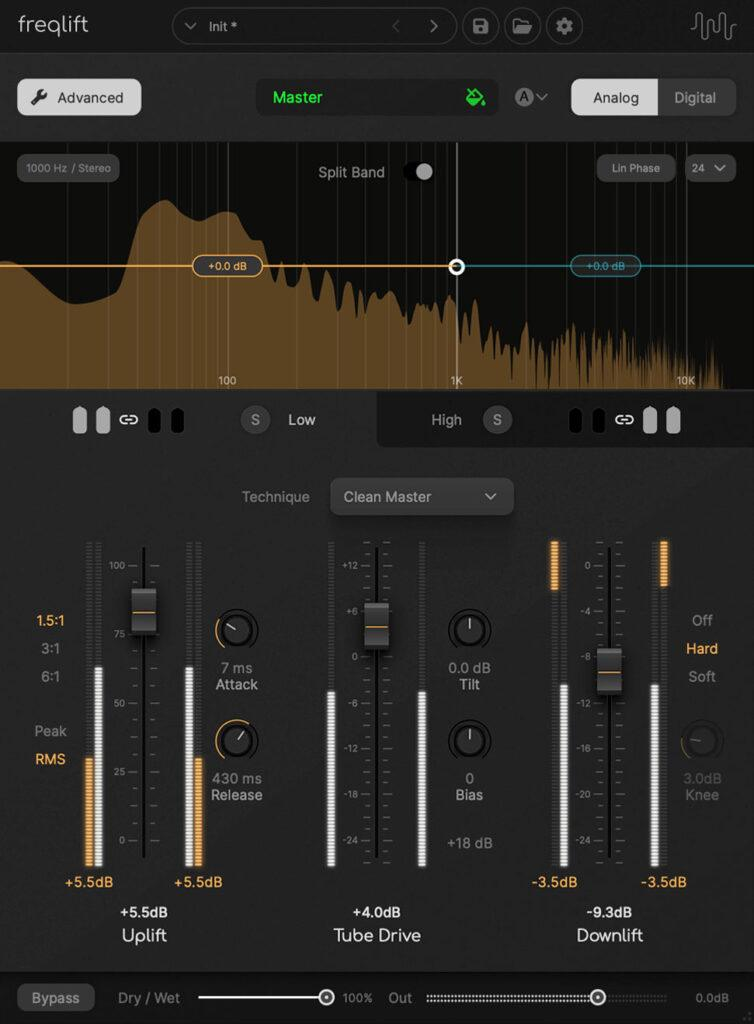
FreqLift combines upward and downward dynamics, tube saturation, and advanced clipping, allowing producers to work on quieter material, harmonic content, and transient peaks without building a separate chain of processors. The company has also incorporated its existing FreqTube technology, giving owners of the FT1 hardware the option to replace the plugin’s modeled tube stage with actual analog processing.
I’ve followed Freqport’s development for several years, including spending considerable time with its original FreqTube FT1 hardware in my studio.
What interests me about FreqLift is how the company is expanding that technology into software that doesn’t require purchasing physical equipment. There’s an obvious appeal in being able to experiment with Freqport’s processing approach for €99, especially since its hardware has traditionally required a considerably larger investment.
FreqLift Combines Multiband Dynamics, Saturation, and Clipping
The main feature is FreqLift’s multiband dynamics processing, which separates the incoming signal into low- and high-frequency ranges using a linear-phase crossover. Producers can adjust the processing independently across those bands, bringing quieter details forward without applying identical treatment across the entire recording.
Upward dynamics are particularly interesting because they work differently from conventional downward compression. Instead of concentrating primarily on reducing louder material, upward processing increases the level of quieter information.
That can help bring forward reverb tails, sustained notes, subtle percussion, and other elements that might otherwise become difficult to hear within a dense arrangement.
I discussed similar techniques in my article on mastering methods that deserve more attention, particularly how upward compression can help reveal quieter details when used alongside conventional peak management. The important consideration is restraint. Bringing quieter material forward can also increase background noise, unwanted ambience, or low-frequency information that competes with the rest of the mix.
FreqLift allows producers to combine that processing with downward dynamics, tube saturation, and oversampled clipping. The saturation stage introduces additional harmonics, while soft and hard clipping options provide ways to manage peaks and increase perceived level.
A wet/dry control also lets you blend the processed signal with the original, which is especially relevant when applying the plugin across drum groups, instrument buses, or complete mixes.
Freqport’s Hybrid Mode Connects Software With Real Tubes
The other interesting part of FreqLift is its relationship with the company’s existing hardware. The plugin operates in a standalone digital mode, meaning producers can use its processing features without owning a FreqTube FT1. For those who already have the hardware, an optional Analog mode sends the tube-processing stage through the FT1’s physical circuitry.
This distinction is important because FreqLift doesn’t require analog equipment to function. Its dynamics and clipping processors operate within the plugin, while the saturation stage can use modeled tube processing or the hardware’s actual tubes. The selected settings remain accessible through the DAW, with Freqport’s AnalogHub software handling communication and hardware allocation.
I spent several months testing the original FT1 for my Freqport FreqTube review, and one of the things I appreciated was the ability to control actual tube saturation from inside a DAW session. It let me incorporate external processing into my normal mixing routine without constantly managing physical connections and manually documenting settings.
FreqLift extends that approach to a different category of processing. Producers can work entirely in software when traveling or using a smaller setup, then access the FT1’s analog saturation when the equipment is connected. I also discussed the original hardware’s integration in my NAMM 2023 equipment roundup, where Freqport was already concentrating on making physical audio processing easier to incorporate into computer-based production.

Freqport Introduces the €99 Tube Collection Bundle
Alongside FreqLift, Freqport has introduced the Tube Collection, which combines the new plugin with FreqTube FT1-EMU. The latter recreates the original FT1’s tube circuitry through component-level modeling, including saturation, harmonic controls, and filtering. It also supports the same optional hardware integration for customers who own a compatible FT1 unit.
The two plugins address different parts of the mixing process.
FT1-EMU concentrates on tube coloration and tonal adjustments, while FreqLift adds multiband dynamics and clipping alongside its own saturation stage. Producers can use either plugin independently or combine them within a larger processing chain, depending on the recording.
FreqLift is available for €99, with the launch code FreqLift25 reducing the price by 25% to approximately €74.25 before applicable taxes. The Tube Collection normally costs €149 and is currently available for €99 without a discount code, saving €50. These are limited-time promotional offers, although Freqport’s announcement doesn’t specify a closing date.
For me, FreqLift’s appeal is the combination of processing stages rather than any single feature. Upward dynamics, saturation, and clipping are familiar techniques, but the ability to adjust them across separate frequency bands and optionally use real analog tubes gives the plugin several applications worth exploring. The €99 Tube Collection is also worth examining if you’re interested in Freqport’s processing software but haven’t invested in its hardware.
Learn more about FreqLift or explore the Freqport Tube Collection.

Will Vance is a professional music producer who has been involved in the industry for the better part of a decade and has been the managing editor at Magnetic Magazine since mid-2022. In that time period, he has published thousands of articles on music production, industry think pieces and educational articles about the music industry. Over the last decade as a professional music producer, Will Vance has also ran multiple successful and highly respected record labels in the industry, including Where The Heart Is Records as well as having launched a new label with a focus on community through Magnetic Magazine. When not running these labels or producing his own music, Vance is likely writing for other top industry sites like Waves or the Hyperbits Masterclass or working on his upcoming book on mindfulness in music production. On the rare chance he's not thinking about music production, he's probably running a game of Dungeons and Dragons with his friends which he has been the dungeon master for for many years.