Table of Contents
Meet Blast Box, the revolutionary new gadget that is taking radio back to the DJ, and by that I mean human selector. In an era when just about every streaming platform tells you what you like through algorithms and engagement hacks, turning music into a competitive sport measured by likes, shares, and follower counts, Blast Radio is making radio exciting again, a place of discovery, not analyzed metrics, spoon-feeding your music to you.
It’s like a legit pirate radio. How I have been missing this for so long is one of the first questions I asked myself.
The pirate radio spirit and breakin parties are what helped shape underground music culture in the first place—except now it’s running through your phone and powered by a surprisingly simple piece of hardware called the Blast Box.
After spending time with the Blast Box and the Blast Radio app, it’s clear that Blast isn’t trying to build another social media platform. It’s trying to create a space where music comes first, and that is the cultural currency for the stations; if you play great music, people just might show up.
And honestly, that’s become a surprisingly radical idea that’s baffling, I know, but for all intents and purposes, so is the rise of vinyl, cassettes, and even CDs. The simple answer I always arrive at is that people want to collect music they care about, and they want humans to curate discovery, not a feedback loop.
What Is Blast Radio?
Blast Radio is a live broadcasting platform built specifically for DJs, selectors, collectors, musicians, and anyone who wants to share music without chasing vanity metrics.
The concept is as simple as the broadcast mechanics. If you want to share your love of Dub and get as nerdy as you want for people who love Dub, you can.
You broadcast live. Listeners tune in. The show remains available for 24 hours after the stream ends. Then it disappears.
No permanent archive sitting around waiting to be judged by future versions of yourself. No pressure to create “evergreen content.” No endless content treadmill. And if you do want to archive it, you can just save the recording and post it on Mixcloud.
That temporary nature gives Blast an energy that feels more like attending a real event than posting to the internet. I love the temporary nature of it, just like great street art, it’s there, and then it’s not. Enjoy it while you can.
The platform has already attracted some serious musical heavyweights, including Derrick May, Osunlade, A Guy Called Gerald, and a growing list of respected selectors and underground tastemakers. Spend a few minutes exploring, and you’ll quickly realize this isn’t another influencer ecosystem pretending to care about music. It’s populated by people who genuinely live and breathe it.
Genre-wise, Blast Radio is all over the map in the best possible way. House, soul, jazz, rare groove, disco, techno, downtempo, ambient, electronic, drum and bass, global sounds, and deep collector culture all have a home here.
The experience feels closer to crate-digging than a playlist; most of the time, there is an actual human mixing live. What I do wish is that more of these curators would check in, do some track IDs, etc., as there is no way to see what track is playing in the app, it’s just a waveform and audio. I think as the ecosystem continues to grow, the DJs that engage with their audience will see faster growth and return listeners, as it’s nice to get to know the human behind the selections, at least for me it is.

The Blast Radio Manifesto – Music First, Metrics Last
One of Blast Radio’s smartest decisions is what it leaves out. There are no visible likes. No public scoreboards tell you whether a mix is succeeding; they only tell you if it’s live and how many hours are left for you to listen.
That being said, it’s not completely walled off, and there are ways to give props. Instead of clicking a soulless LIKE button, listeners can send fan mail directly through the platform, creating a more personal connection between broadcaster and audience. There’s also a booking feature that allows listeners, promoters, and venues to connect directly with talent.
It’s social in the ways that actually matter.
You get interaction without the performative layer that has come to dominate most music platforms.
The result is a surprisingly relaxed environment where DJs seem more willing to take risks, dig deeper into collections, and play things because they love them—not because an algorithm rewards them.
Blast Radio’s One Missing Piece
If there’s one thing I’d love to see Blast address, it’s desktop support. Currently, Blast Radio exists entirely through mobile apps.
While the mobile-first approach makes sense for modern listening habits, there were multiple occasions where I wanted to pull up stations on my desktop while working, writing, or managing other projects.
Music discovery often happens while sitting in front of a computer, and being able to browse stations, send messages, interact with broadcasters, and manage listening sessions from a browser would be a welcome addition.
The phone apps work well, but a web or desktop app version seems like the next logical step. So not a huge negative here, as I just found myself wanting another access point because I like the content so much.
The Broadcast Hardware: The Blast Box
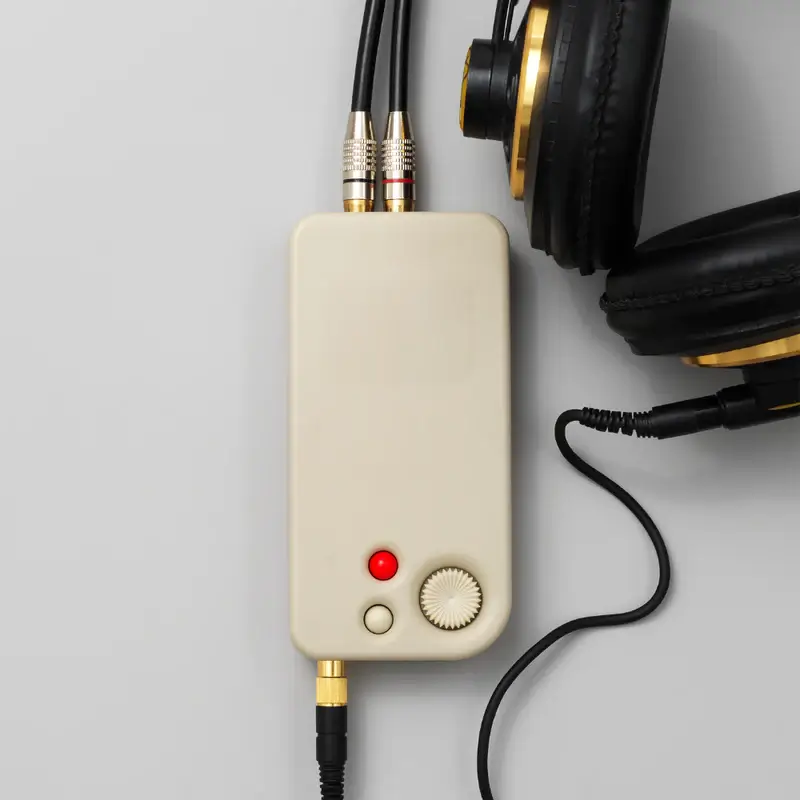
The Blast Box is the engine of the ecosystem and what makes it unique.
Think of it as a purpose-built broadcasting device designed to take virtually any audio source and send it directly to Blast Radio, with syndication options for YouTube, and Twitch as well.
The setup is easy and takes minutes to get going. It takes longer to set up your profile than it does to get your first broadcast going. Connect an audio source through the RCA inputs, pair with your phone via Bluetooth, connect to WiFi, and you’re ready to stream.
Turntables. DJ mixers. Rotary mixers. CDJs. Drum machines. Synth rigs. Tape decks. Vintage receivers. If it outputs audio, the Blast Box can probably broadcast it.
Blast Box is available for $199, and there is also a Blast Mic that incorporates a Mic into the hardware so you can do interviews out in the field, and Blast Desktop Broadcast Software that lets you broadcast from a DAW via a plugin or other audio sources on your computer
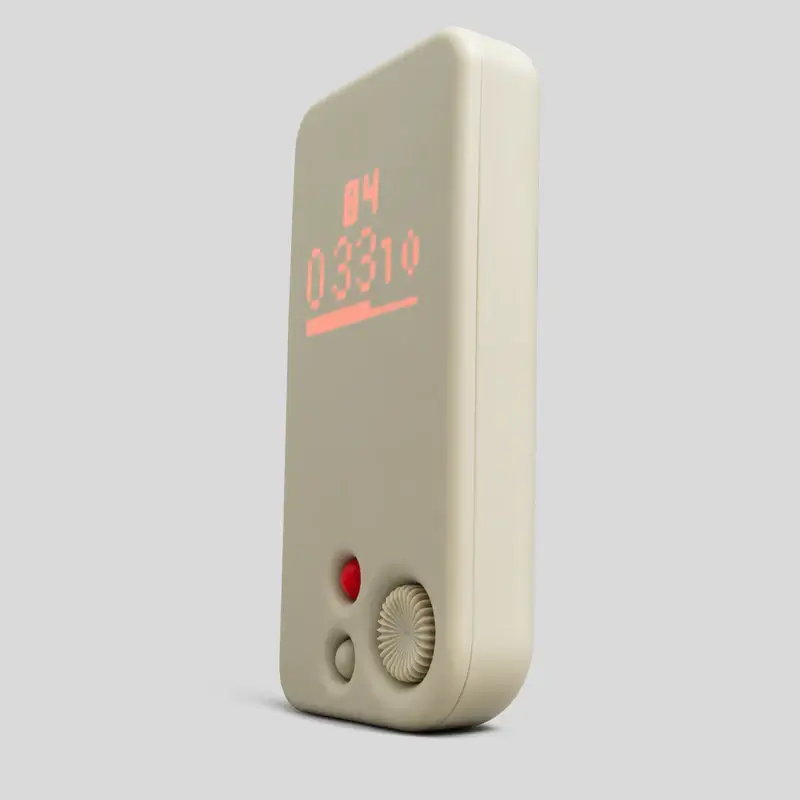
Build Quality & Design
The Blast Box isn’t trying to impress anyone with flashy industrial design; it’s simple and clean looking.
The matte tan polycarbonate semi-translucent casing feels durable enough to survive regular transport between studios, living rooms, record shops, events, and outdoor sessions. At just 5.8 ounces and measuring 5.6 x 3.8 x 1 inches, it’s compact enough to disappear into a backpack or record bag.
Which means you’ll actually bring it with you.
And that’s arguably more important than looking fancy.
The internal battery provides roughly eight hours of broadcasting time, enough for most marathon DJ sessions, extended listening parties, or festival-side camp setups.
Audio Quality That Exceeds Expectations
Where the Blast Box gets genuinely impressive is under the hood.
The onboard signal processing is designed to maximize audio quality before transmission, while the hardware itself includes a 102 dB signal-to-noise ratio ADC and a surprisingly robust headphone amplifier.
Blast streams uncompressed PCM audio packets to the cloud, avoiding many of the compromises listeners have come to expect from internet broadcasting.
The result is a broadcast chain that sounds significantly cleaner and more detailed than most casual streaming setups.
This matters because many DJs spend thousands of dollars obsessing over cartridges, mixers, DACs, cables, and speaker systems, only to throw everything through a mediocre streaming workflow.
The Blast Box feels designed by people who understand that contradiction.
Built for Broadcasters, Not Content Creators
That’s perhaps the biggest distinction. The Blast Box doesn’t feel like a tool designed for influencers. It feels like a tool designed for radio people. People who discover a rare groove 12-inch and immediately want twenty strangers around the world to hear it.
That spirit runs through the entire ecosystem. And it makes the Blast Box feel less like another piece of creator hardware and more like a gateway into a community.
Magnetic Magazine Is Joining the Airwaves
You can find us on Blast Radio at @magneticmagazine, where we’ll be launching regular broadcasts featuring house, soul jazz, rare groove, downtempo, electronic music, drum and bass, and whatever other gems we happen to pull from the shelves or latest promo drop.
Check Magnetic’s Broadcast Schedule HERE
Because that’s ultimately where Blast shines for music fans. It’s in creating a space where passionate people can share music with other passionate people without every interaction being measured.
You can download the app in the App Store and learn more about broadcasting HERE. Drop us a email in the fan mail, we would love to hear from you.
Updates – Blast Radio now works with Patreon, allowing broadcasters to monetize through the platform, yet another way to monetize your efforts.

David Ireland is a professional strategist, creative, and marketer. He began his career in 1995 as creator and publisher of BPM Magazine. In August 2000, BPM Magazine merged with djmixed.com LLC, an online media company based in Los Angeles, which later evolved into the Overamerica Media Group [OMG] in 2003. In 2009, Ireland left Overamerica Media Group to serve as the VP of Marketing at Diesel. In 2011, he returned to his roots in media and cofounded the online electronic music publication Magnetic Magazine and created The Magnetic Agency Group. In June 2018, Ireland joined Winter Music Conference (now owned by Ultra Music Festival) as the Director to lead the reboot for 2019 and usher in a new era for the iconic brand. He served as Chief Marketing Officer at Victrola for three years, guiding product innovation and brand growth. He currently serves on the advisory board of Audiopool, a new music tech startup focused on AI-generated music licensing and artist revenue models.






![Baby Audio HyperWarp Review: Why Less [Processing] Is More](https://magneticmag.com/wp-content/uploads/2026/10/Untitled-Design-88-1024x683.png)
![How It Was Made: Lang Father i(Junkyard Dog) [Welofi]](https://magneticmag.com/wp-content/uploads/2026/10/Press-Pic_2-1024x576.jpg)