Table of Contents
When I first covered DaVinci’s move into dedicated concentrate devices, the quartz heating system and on-device controls were the parts that caught my attention. After spending time with the complete Jacuzzi Collection, those remain the clearest reasons to consider it, and the overall experience earns the DaVinci EQ an Editor’s Choice award.
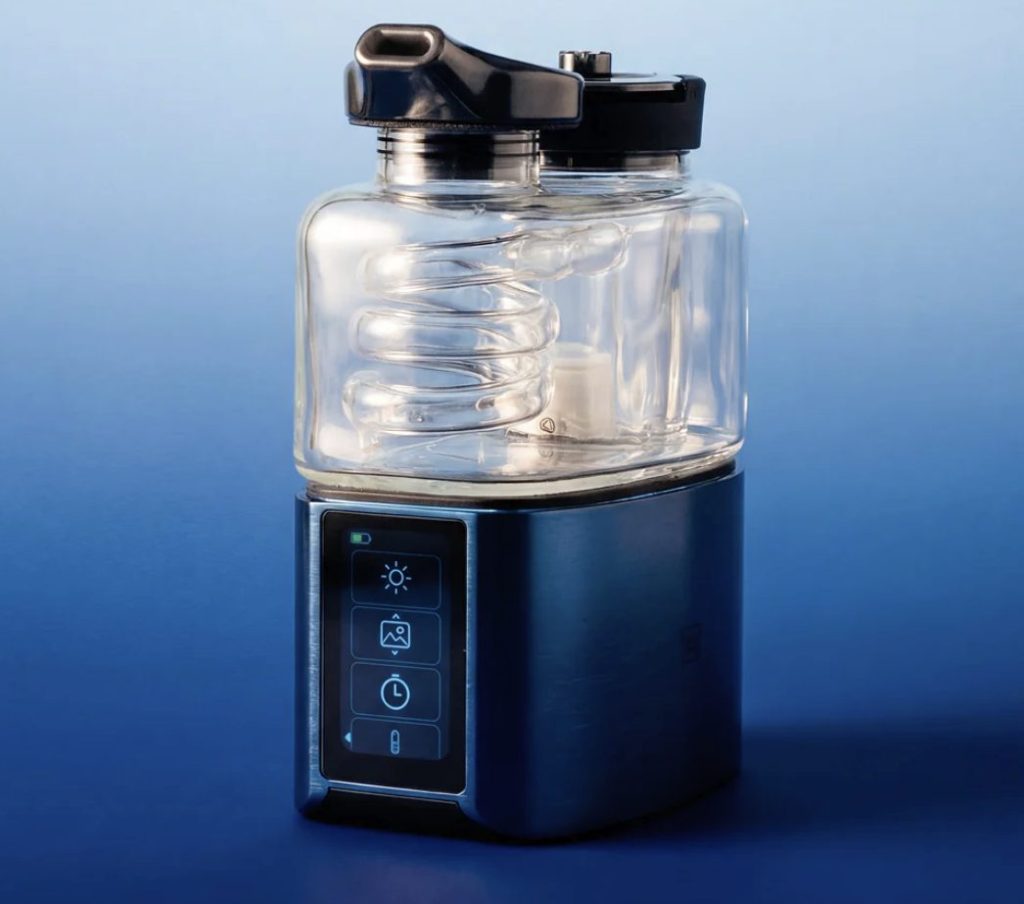
The DaVinci EQ uses a removable quartz crucible, integrated touchscreen, and large water bubbler to create smooth, flavor-focused sessions. This is DaVinci’s first electronic rig made specifically for concentrates, and its $549 price places it firmly in premium territory.
There is plenty here that I like, especially the visible quartz chamber, magnetic assembly, and ability to control temperature directly from the device. The substantial aluminum base and large Jacuzzi Bubbler also make it clear that the EQ works best at home, where I can set it on a table and take my time with the complete setup.
The main consideration is vapor output…
Lower temperatures can deliver clean flavor and smooth draws, although smaller loads may produce lighter results than some buyers expect at this price. Temperature, load size, start method, and carb-cap movement all affect the session, giving the EQ a learning curve that deserves some attention.
What is the DaVinci EQ Jacuzzi Collection?

EQ stands for Electric Quartz, which describes the system well because it uses a quartz atomizer and a removable quartz crucible. Concentrate sits inside that crucible while heat is applied from beneath; the vapor then moves through the water-filled Jacuzzi Bubbler before reaching the zirconia mouthpiece.
The EQ is made exclusively for concentrates.
DaVinci offers a temperature range of 450°F to 650°F, with Precision Temperature Mode for holding a single setting and four customizable Smart Paths that gradually raise the heat during a session. Everything is controlled from the touchscreen, so there is no required phone application.
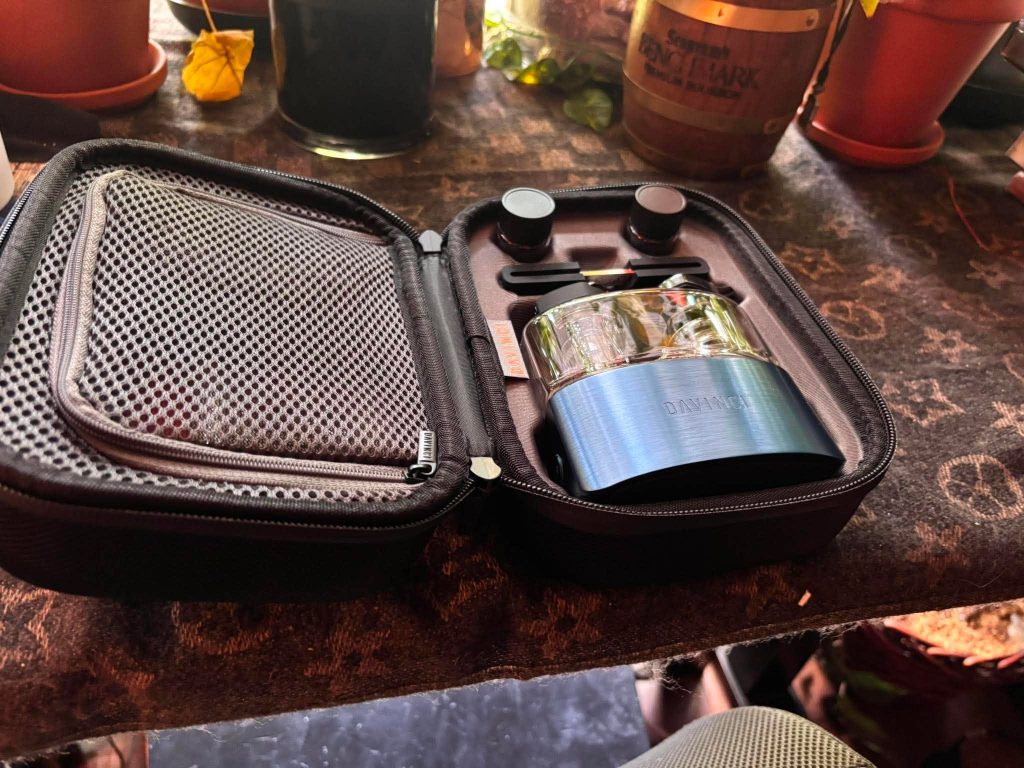
The DaVinci EQ Jacuzzi Collection currently sells for $549 and comes in Onyx, Gunmetal, Sapphire, and Amethyst finishes. DaVinci covers the device with a two-year warranty.
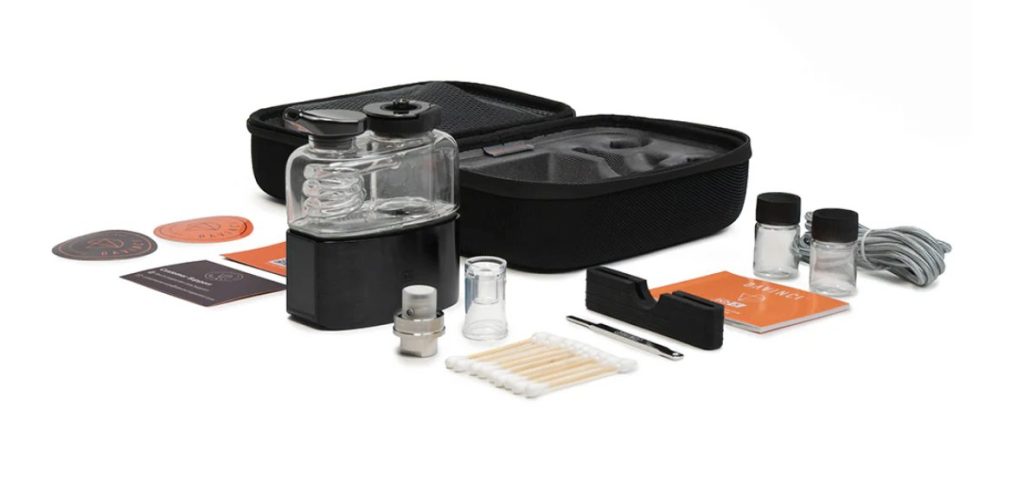
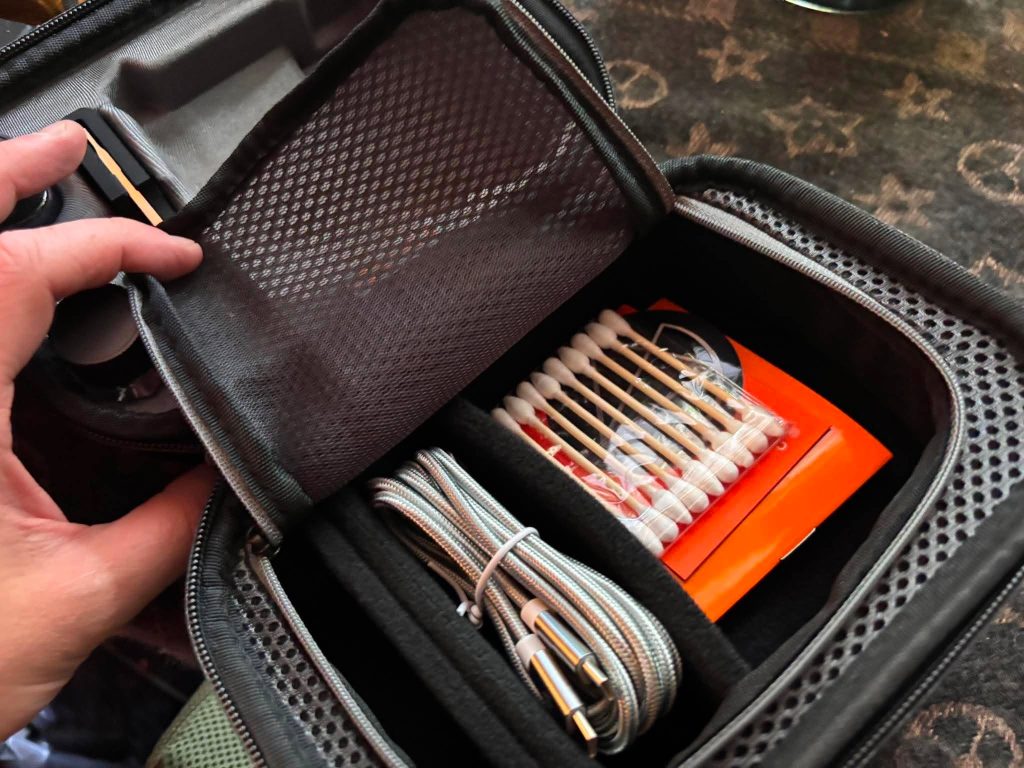
The package includes the EQ base, quartz atomizer, quartz crucible, glass Jacuzzi Bubbler, zirconia carb cap, zirconia mouthpiece, loading tool with holder, nine cleaning swabs, two alcohol bottles, a USB-C cable, and a smell-resistant travel case.
That is a fairly complete package, and the included cleaning supplies are particularly welcome because the quartz needs attention after each session. The shaped case protects the glass and base during storage, although its fixed compartments may leave limited room for larger jars or alternate tools.
How does the DaVinci EQ design feel?

The brushed-aluminum base feels substantial and stays securely planted on a table, while the quartz and glass components give the system the finish I would expect from equipment at this price. The complete base measures 114 by 98 by 56 millimeters and weighs 520 grams, placing it closer to a desktop setup than a handheld device.
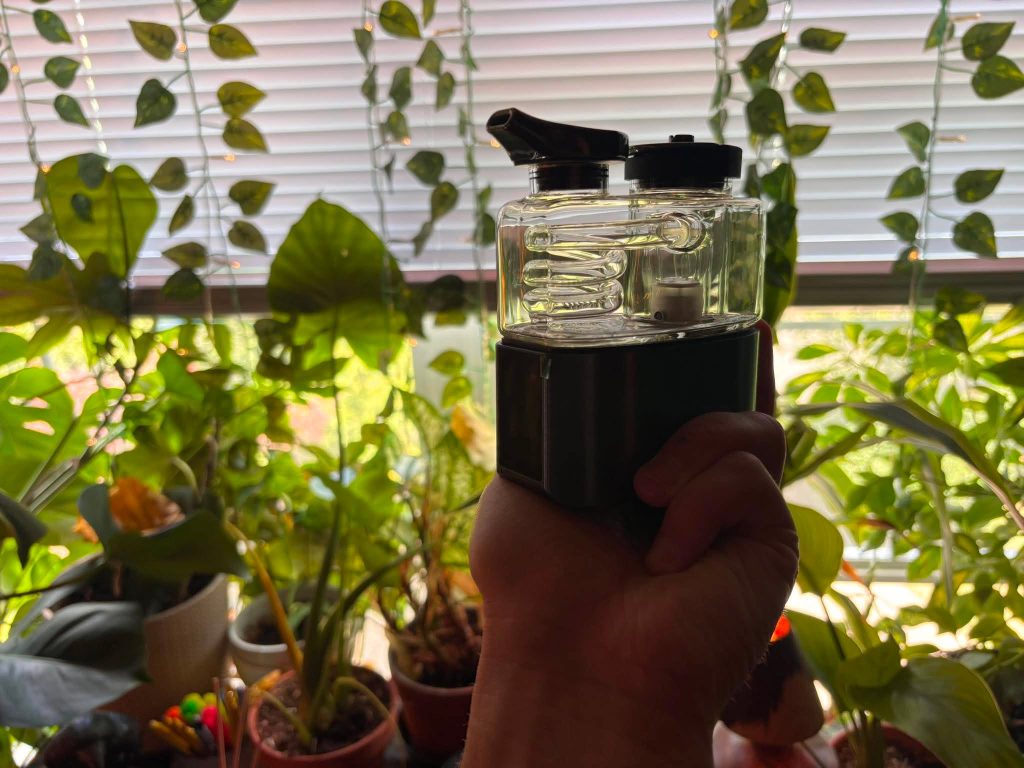
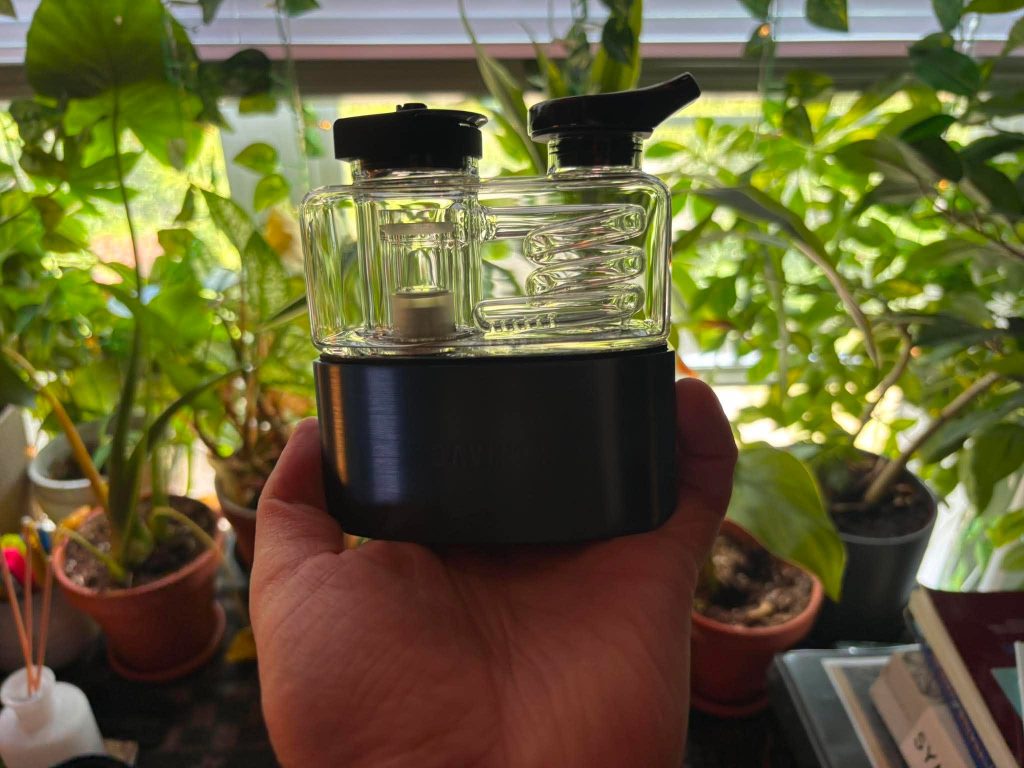
The visible quartz chamber is one of my favorite parts of the design because I can watch the concentrate melt and see how much remains after a session. That visibility also helps with cleaning since any residue around the crucible is easy to identify.

Magnetic connections keep assembly simple, and the bubbler, crucible, atomizer, and mouthpiece can be replaced separately. The quartz crucible currently costs $24, while the heater is listed at $45, which could keep routine replacement costs lower than systems that require a complete chamber assembly.
The angular body creates the main handling issue. It gives the EQ a recognizable shape, although it feels less comfortable to grip than a rounded e-rig. The 520-gram weight and large glass attachment also encourage me to leave it on a stable surface during use.
The size places the EQ in a different category from something like the compact Dr. Dabber XS I reviewed, which is much easier to bring along for a casual session. The EQ feels built for someone who accepts a larger home setup in exchange for a bigger water attachment and deeper on-device control.
Is the DaVinci EQ portable?
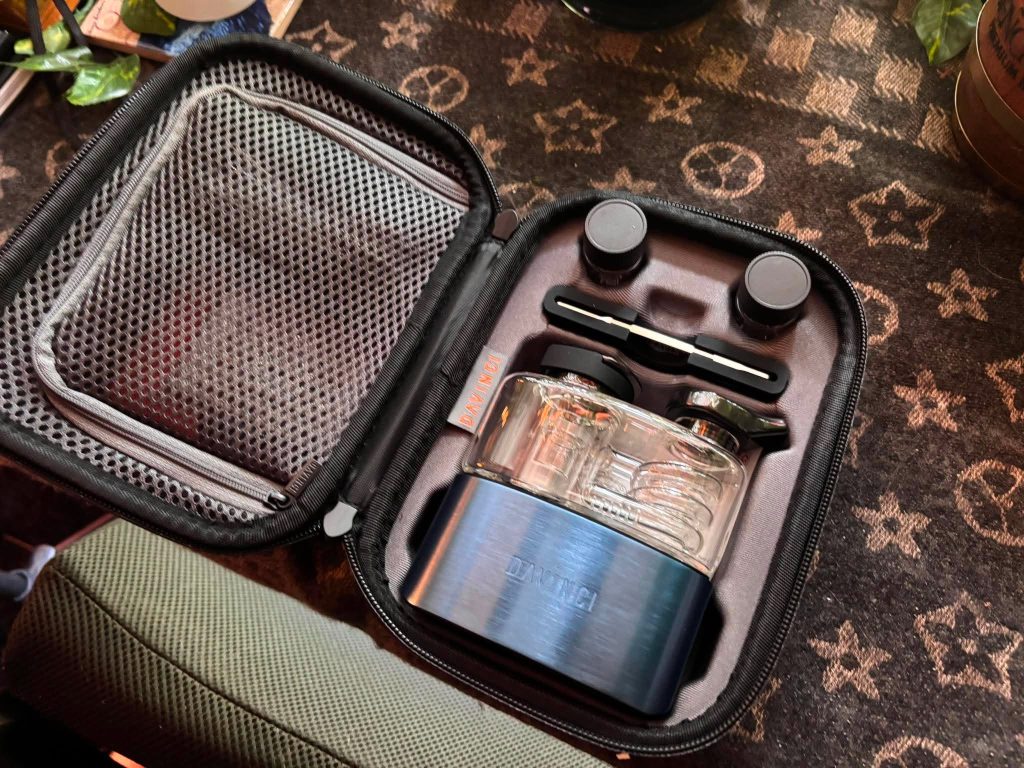
DaVinci includes a smell-resistant travel case, so the EQ can be transported when needed. I would still treat it as a home system because the bubbler needs careful packing and all water should be emptied before it goes into the case.
It can travel between locations, although this is far removed from a pocket-sized concentrate device. The base, glass, loading tool, and cleaning supplies require enough space that I would only bring the EQ when I knew I had a suitable place to set it up.
Readers who place portability near the top of their list may want to compare this approach with the G Pen Roam, which pairs water filtration with a slimmer form designed around using concentrates away from home.
How easy is the DaVinci EQ to use?
Five presses of the command button turn the EQ on, after which the touchscreen becomes available before heating begins. I like being able to select my temperature and adjust the session time without immediately starting the heater.
Pressing and holding the command button for two seconds begins heating. The device vibrates, then the LEDs turn green once it reaches the selected temperature. A standard 45-second session begins automatically, and a single button press can add 20 seconds, up to 60 added seconds per session.

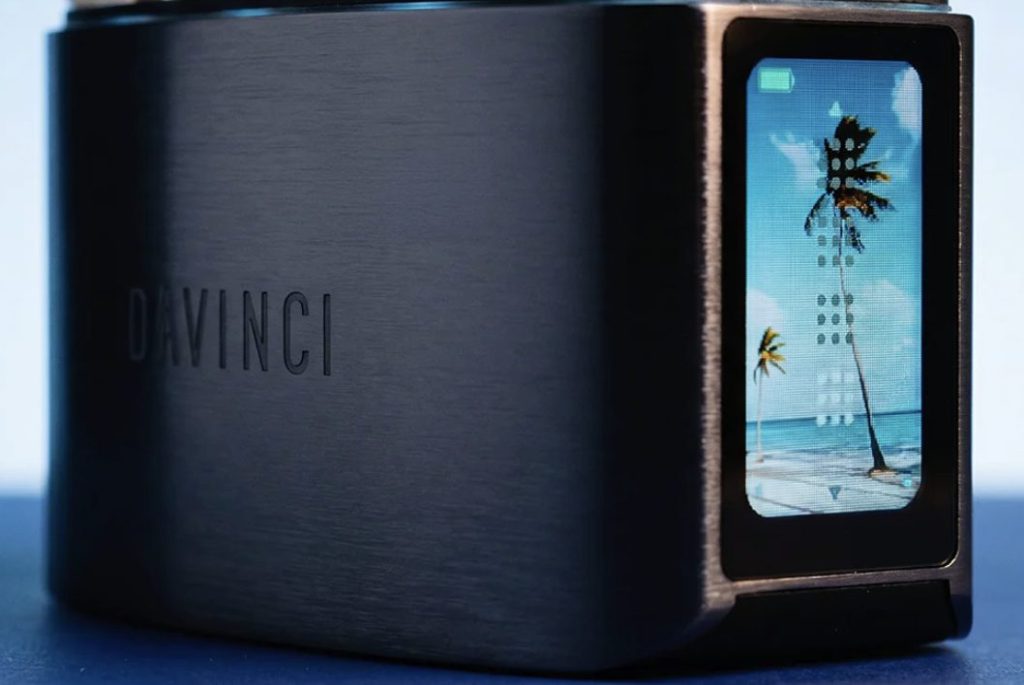
The screen displays current temperature, target temperature, and remaining session time. It also provides access to brightness, lighting, themes, session duration, temperature units, and tutorials. DaVinci includes over 30 background themes, which is a fun addition even if it has little effect on actual performance.
The interface works, although the small controls can feel cramped when scrolling through temperatures. Precise selections may take a second attempt, especially with larger fingers. I still prefer seeing the exact temperature rather than memorizing colored indicators, though a larger screen or a physical dial would make adjustments easier.
This self-contained approach separates the EQ from systems that place some controls inside a companion app. That difference will appeal to anyone who wants exact temperature settings without dealing with Bluetooth pairing or phone compatibility.
Precision Temperature Mode vs Smart Path Mode

Precision Temperature Mode holds any selected temperature between 450°F and 650°F. It works well when I already know how hot I want the crucible or when I want repeatable results across several sessions.
Smart Path Mode gradually increases the temperature within a selected range. DaVinci includes four default paths called Terpene, Flavor, Clouds, and Atomic, and each path can be renamed or adjusted through the settings menu. The default Terpene path runs from 480°F to 500°F, while Flavor covers 520°F to 540°F. Clouds increase from 560°F to 580°F, and Atomic moves from 600°F to 620°F. These paths make it easy to begin at one temperature and finish hotter without stopping to adjust the screen.
How good are the DaVinci EQ flavor and vapor quality?
Flavor is the clearest reason to consider the EQ. Quartz is already familiar to people who use traditional concentrate rigs, and the combination of a quartz crucible, glass bubbler, and zirconia mouthpiece keeps the vapor away from coated or composite chamber surfaces.
At lower temperatures, the EQ can produce smooth vapor with clear flavor, especially with rosin or another concentrate selected for its terpene profile. The Jacuzzi Bubbler holds approximately 60ml of water, giving the vapor plenty of contact time before it reaches the mouthpiece.
DaVinci recommends filling the bubbler no higher than halfway and removing it from the base before adding water. That last point is important because spilling water into the base could damage the electronics.
The EQ’s approach differs from the chamber design covered in my Puffco Peak Pro 3DXL review, where even heating and clean extraction from smaller dabs were central parts of the experience. The EQ places greater emphasis on quartz contact and gradual temperature control, though it may require additional adjustment to clear a conservative load.
What is the best temperature for the DaVinci EQ?
The range from 450°F to 510°F is a good place to begin when flavor is the priority. Cold-start loading works well here because the concentrate heats gradually inside the quartz crucible, although smaller loads may create lighter vapor and leave material behind.
Between 520°F and 570°F, the EQ reaches a comfortable middle ground. There is enough heat to increase vapor production while retaining much of the flavor that makes the quartz system appealing. The default 550°F setting is a sensible starting point for learning how the device responds.
Settings above 580°F produce denser vapor and extract the load faster. Hot-start loading can help here, since the concentrate enters a crucible that has already reached temperature. The 650°F ceiling provides ample room for hotter sessions, though the flavor becomes less defined as the temperature rises.
How long does the DaVinci EQ battery last?
The EQ uses two 3,000mAh internal batteries, and DaVinci claims up to 50 sessions per charge. Actual battery life will depend on temperature and session duration, with repeated high-temperature cycles consuming additional power.
DaVinci lists a heating range of 25 to 150 seconds, depending on the selected temperature and operating conditions. The heater can reach lower settings quickly, while temperatures near the 650°F maximum naturally require a longer wait.
Charging takes approximately two to three hours with the included USB-C cable. The EQ supports pass-through operation, so it can continue running while connected to power. That feature fits the desktop-oriented design well because an empty battery does not have to end a home session.
Battery capacity is worth considering alongside size because larger devices can provide longer sessions at the expense of portability. My article on what makes a good vape pen breaks down how battery capacity and charging affect smaller devices, while the EQ shows how those same priorities change in a larger home system.
How do you clean the DaVinci EQ?
The quartz crucible should be cleaned after each session while it remains warm. DaVinci recommends using a cotton swab with isopropyl alcohol and wiping the crucible in a circular motion, which prevents residue from hardening between sessions.
The modular design keeps the process manageable because the glass, crucible, mouthpiece, and carb cap can be handled separately. The visible chamber also makes it easier to see where buildup has started.
For a deeper glass cleaning, DaVinci recommends removing the Jacuzzi Bubbler from the base, discarding the water, and cleaning the glass with isopropyl alcohol and rock salt. The bubbler needs a complete rinse afterward so no solvent residue remains.
The connection between the heater and base should also be checked periodically. An isopropyl wipe or cotton swab can remove residue from the contact points, and the LEDs beneath the heater flash green when the connection is successful.
The cleaning routine will feel familiar to anyone who already uses a traditional glass rig. Someone moving from a small concentrate pen should expect additional maintenance because the water attachment and removable components create several surfaces that collect residue.
Is the DaVinci EQ Jacuzzi Collection worth buying?
The DaVinci EQ Jacuzzi Collection makes the clearest case for itself as an at-home system for someone who cares about quartz flavor, water cooling, and exact temperature control. The materials feel appropriate for premium equipment, the magnetic construction makes setup simple, and the touchscreen provides far greater control than a few fixed presets.
Its limitations narrow the recommendation.
The angular base works better on a table than in my hand, the touchscreen can feel cramped, and lower-temperature sessions may produce lighter vapor than some buyers expect from a $549 e-rig.
I would consider the EQ if I regularly use rosin, enjoy adjusting temperature, and want the cooling provided by a larger water attachment. The replaceable $24 crucible and $45 heater also make maintenance costs relatively easy to understand.
I would look elsewhere if I wanted discreet carrying, comfortable one-handed operation, or dense vapor from a conservative load with minimal adjustment. The original Puffco Peak review remains a helpful reference for readers who value simple operation and easier maintenance, while the newer alternatives mentioned above provide different balances of size, chamber coverage, and temperature control.
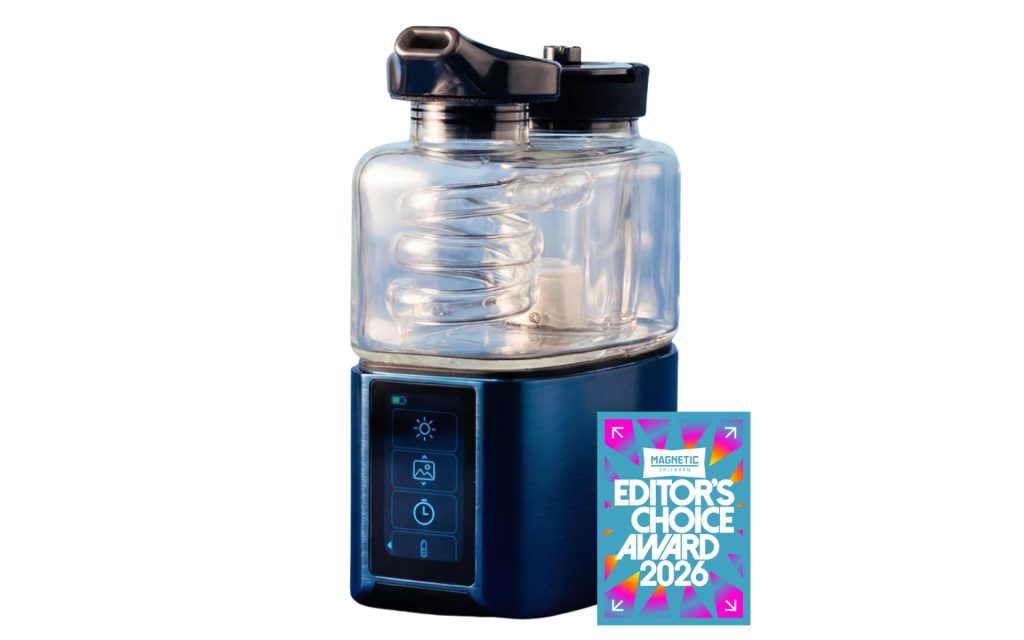
Those qualities earn the DaVinci EQ Jacuzzi Collection an Editor’s Choice award. For $549, I would recommend it to someone who values flavor and wants detailed session control from a fixed home setup, while readers focused mainly on immediate vapor output should compare it closely with the main alternatives before deciding.

Will Vance is a professional music producer who has been involved in the industry for the better part of a decade and has been the managing editor at Magnetic Magazine since mid-2022. In that time period, he has published thousands of articles on music production, industry think pieces and educational articles about the music industry. Over the last decade as a professional music producer, Will Vance has also ran multiple successful and highly respected record labels in the industry, including Where The Heart Is Records as well as having launched a new label with a focus on community through Magnetic Magazine. When not running these labels or producing his own music, Vance is likely writing for other top industry sites like Waves or the Hyperbits Masterclass or working on his upcoming book on mindfulness in music production. On the rare chance he's not thinking about music production, he's probably running a game of Dungeons and Dragons with his friends which he has been the dungeon master for for many years.