The two.valve and The Resurgence of Rotary: More Than Nostalgia
Table of Contents
I’ve been a fan of rotary mixers for a long time; they are kind of like old Ferraris with those gate shifters – you’ve got to know how to drive them, and when you do, they purr. There has been a revival of the old rotary-style mixer as the vinyl format makes a comeback, especially within the growing HiFi bar culture that has been popping up almost everywhere. There is something, dare I say, sexy about them, the layout, the knobs, the vintage vibes that say, “if you use me, you better know what you are doing.”
Younger DJs, enamored with complex mixers featuring onboard FX and more complex features, are experimenting with simplifying their setups to express themselves, even if they’re not playing vinyl. Another appeal is the history and DNA of these mixers and the iconic DJs that used them. The rotary mixer has a legendary status in the house and techno communities, dating back to the days of Frankie Knuckles and Larry Levan at the Warehouse and Paradise Garage.
Rotary mixers have also long been a part of audiophile folklore, residing in elite clubs, esoteric Hi-Fi setups, or in the studios or home setups of seasoned disco and house selectors. If you visit any major city these days, chances are there is at least one HiFi bar concept with walls full of records, some impressive gear, and probably a very nice rotary mixer. These mixers are purpose-built for more control over the mix, allowing DJs who prioritize long, textured blends and crave the warmth of analog sound to achieve their desired results.
Without getting too philosophical or technical, there is nothing quite like a pure analog signal path. When you compare that to a digital signal path, it’s noticeably different for most listeners.
Union Audio’s two.valve rotary mixer (which you can take a look at via our affiliate partnership with Sweetwater here) takes the analog ride a step further using tube amps instead of solid-state, which, for many, adds another dimension of depth and vibe. Tubes can be a detail that might not be as important to some, but for purists who want the most out of their analog signal, the extra cost is worth it.
Union Audio also produces non-tube amp rotary mixers that are more budget-friendly, which you can explore here.
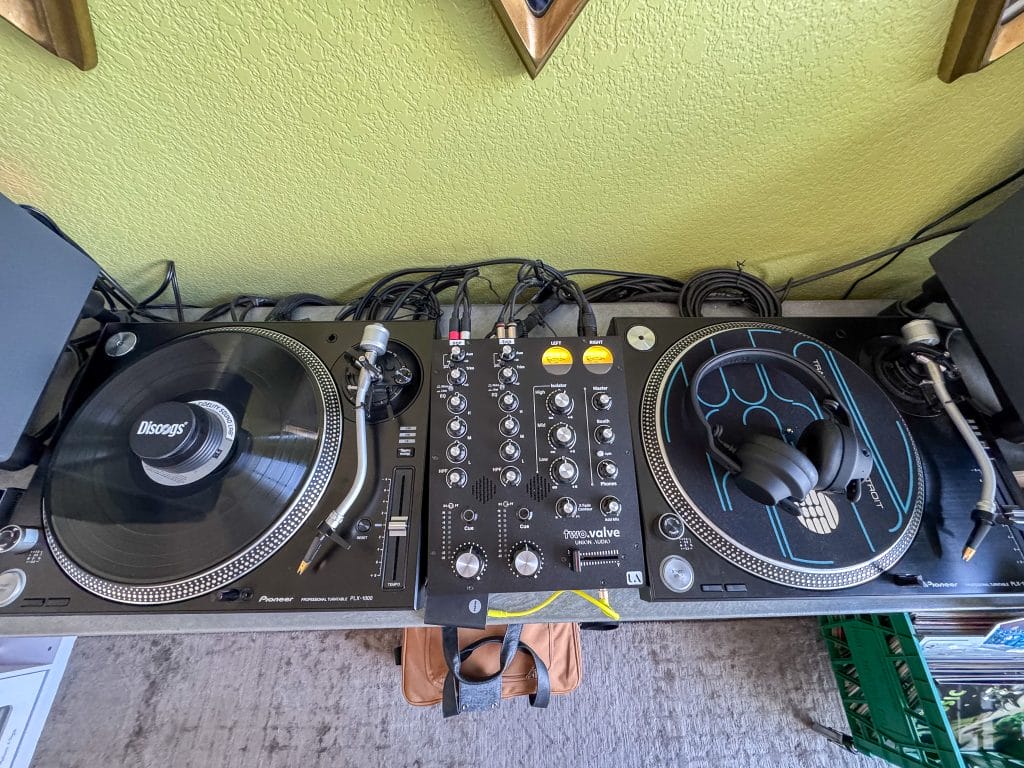
The setup that I have now is two Pioneer PLX-1000 direct drive turntables, AiAiAi TMA-2 Wireless DJ Headphones, Ortofon Concorde Elite Cartridge and Stylus, and the Union Audio two.valve mixer with Fluid Audio Image 2 Studio Monitors and matching Sub Woofer – All set up in my kitchen, yeah, my wife is cool like that and family vinyl nights are a regular thing.
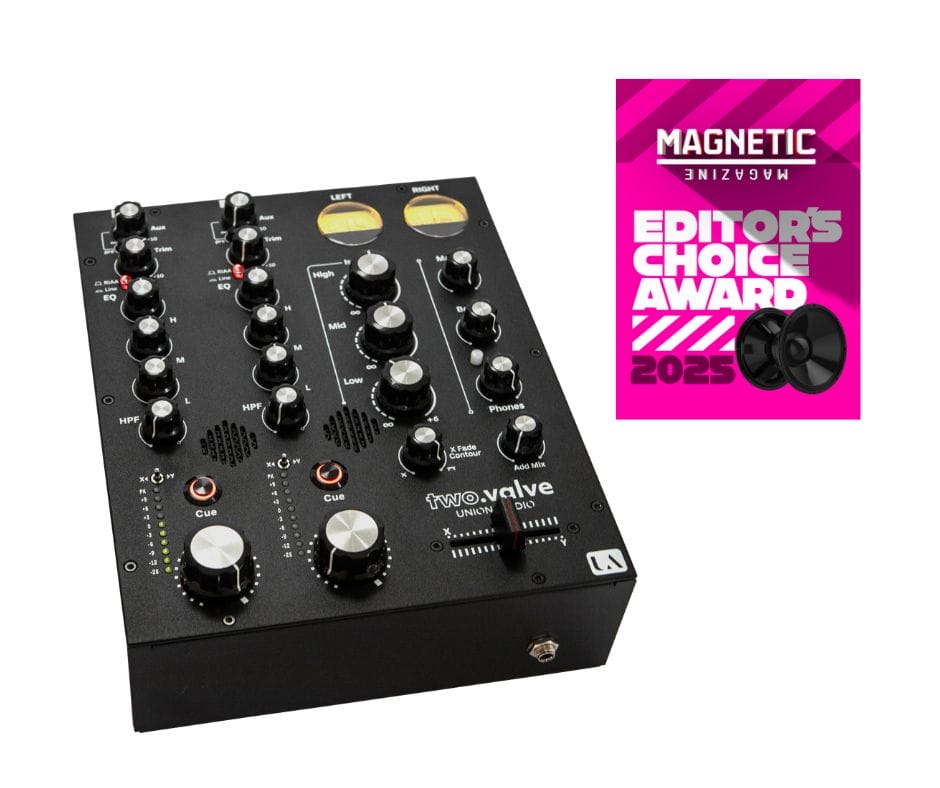
Let’s delve into why this mixer is deserving of the Editor’s Award and why it’s something you should definitely consider if you’re in the market for a rotary mixer to create your own Hi-Fi DJ setup.
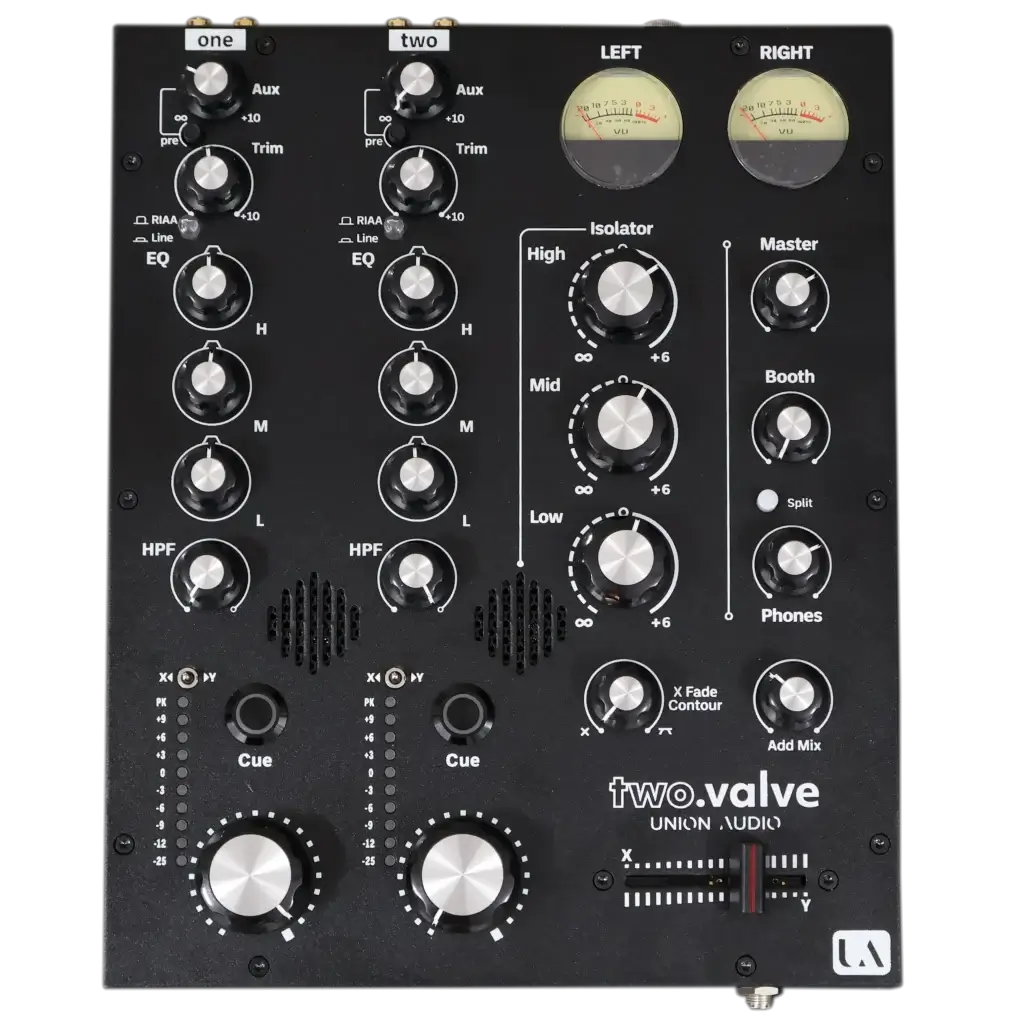
First, let’s start with a brief summary of the origin story of Union Audio, the company owned by legendary audio engineer Andy Rigby-Jones, based in Cornwall, England. Rigby-Jones gained notoriety during his tenure at Allen & Heath, where he created some of the most beloved DJ mixers of the 1990s and early 2000s; he then went on to develop the MODEL.1 with Richie Hawtin and eventually founded Union Audio. There is some serious DNA here, and it shows in every detail, from sound to craftsmanship. This mixer is the work of a true master.
Check out our feature on Union Audio and Andy Rigby-Jones HERE
Build Quality & Craftsmanship: The two.valve is Built Like a Tank, Feels Like Art
When you unpack the two.valve, you immediately know you’re not dealing with a mass-market product. The box is simple, with no flashy packaging or a significant unboxing experience; it’s just the basics to ensure the precious cargo is protected. There is even a hand-checked quality control card that gets a sign-off from the team before it’s shipped, so you know it’s passed muster.
The knobs have a silky, weighted feel that makes even simple EQ sweeps feel satisfying. The rotary dials are mounted to a thick aluminum faceplate with zero play or wobble. The valve (tube) grate glows a soft amber when powered up—a subtle visual cue that you’re working with tubes, not transistors.
Internally, Union Audio is using audiophile-grade components throughout—no corners cut—this attention to detail matters. Lesser mixers suffer from lower quality knobs, muddy signal paths, or mechanical failure over time. The Union Audio two.valve feels like it will age as gracefully as a McIntosh amp or an old Bozak. It’s small enough for mobile gigs or Hi-Fi rigs but substantial enough for professional booths. And unlike some boutique mixers that feel cobbled together, this one feels polished and deserving of the price tag.
The two.valve Sound: Tubes Are the Soul of This Mixer
The real magic is in the valve (tube) circuitry. Each channel runs through its own tube stage—no modeling, no emulation. This is the real deal.
What does that mean for sound?
- Bass Response: The low end gains texture and roundness. Kicks feel weightier, and basslines sound richer and thicker.
- Mids: You’ll notice vocals, Rhodes keys, and guitar parts bloom more with a gentle harmonic lift that enhances musicality.
- Highs: Crisp but not brittle. Cymbals shimmer without slicing. Digital sibilance is smoothed out without feeling dull.
Compare that to solid-state gear—like my old Omnitronic TRM-202 MK3, which I used for years—and it’s night and day. The Omnitronic provided clean, usable mixes, but unfortunately, it only lasted about 3 years before it died on me. But switching to the two.valve, the difference was immediate: deeper stereo field, warmer timbre, and just a fuller, warmer sound. You might want to call bullshit, but hearing is believing and everyone who has heard it notices the difference.
It felt like my records had been remastered. A simple analogy might be that the Omnitronic felt like store-bought maple syrup, and the two.valve was like getting the syrup right out of the tree, thick and rich, versus thin and processed.
Tube Design Details:
- The tubes in the two.valve act as active gain stages, not just passive colorizers. They are positioned within the signal path, not just the output, which means every signal—phono or line—is affected.
- They introduce subtle harmonic distortion, which our ears interpret as warmth and depth. The amazing sound is why audio nerds love tubes, pay a lot for them, and wax poetic; that lovely warmth is a religious experience.
And because the signal path is fully analog, none of that richness gets lost in conversion. What goes in is transformed—not digitized.
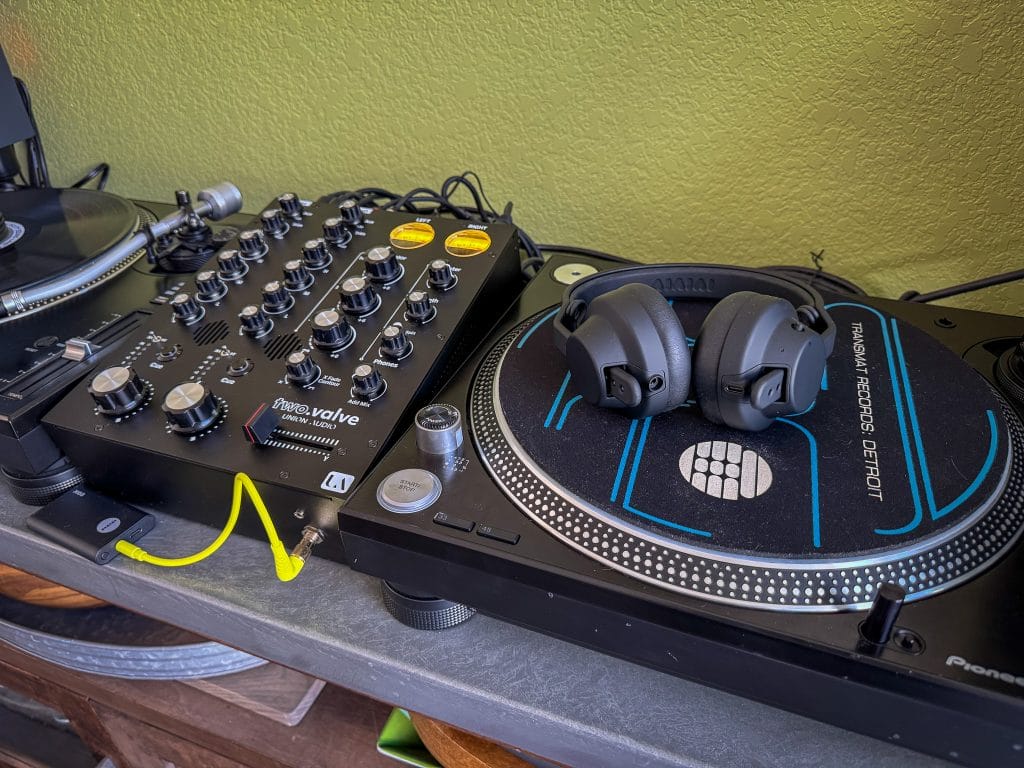
User Interface: Simplicity With Innovation
There’s a beauty in how little you have to think when using the two.valve. The rotary layout naturally leads you to blend longer, ride EQs more creatively, and slow down your transitions. That’s why rotary mixers are beloved in house, techno and disco scenes—they reward patience and finesse. I find myself pushing myself to do 32 bar mixes, or find records that I can mix as long as possible.
The EQs aren’t surgical. They are expressive with a nice and gentle ramp as you turn them up or down. With thre EQ knobs, one for high, one mids, one low, you can make subtle changes to the song and the mix, with gentle energy shifts. You can get extra crafty with the High Pass Filter on each channel and add the isolators for H, M, and L on the master, and you’re the king of your domain. These knobs allow you to think like a chef, finding different spices in your frequencies, cutting, adding, until you have perfection.
Cueing is handled with an intuitive blend knob and punchy headphone amp. You can preview mixes with clarity and balance, and there’s no audible hiss or hum—always a concern in analog systems. Even when running at high volume, the mixer remains whisper-quiet.
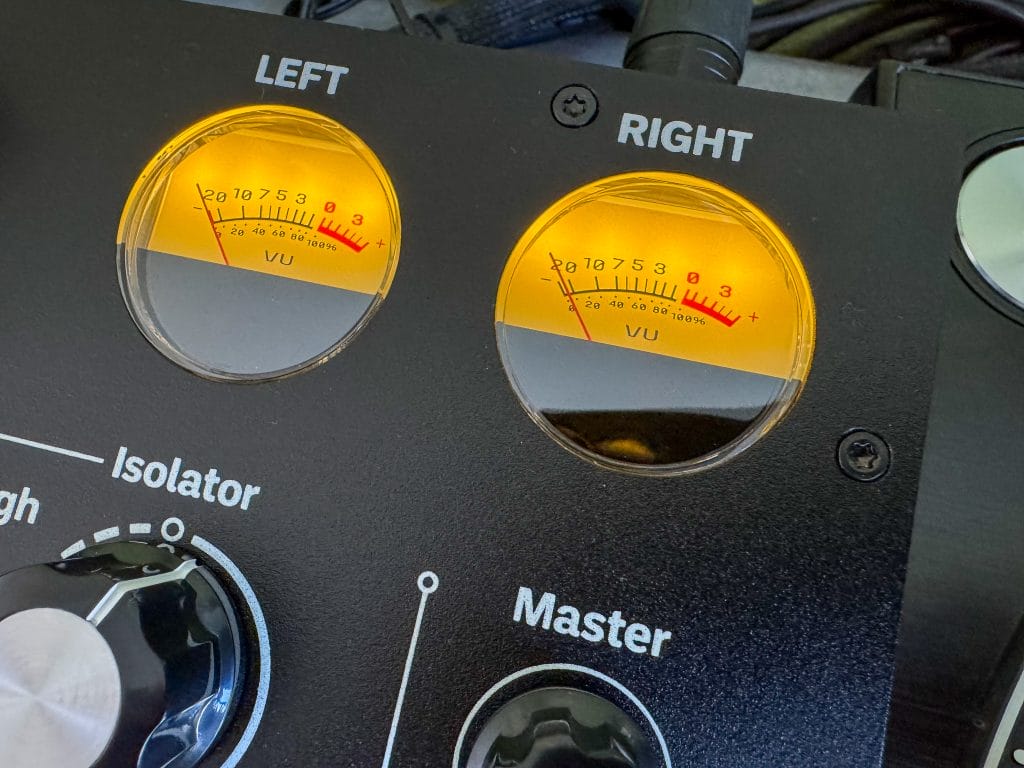
A nice visual touch for monitoring your sound output are the Left and Right channel VU meters or Volume Unit meters. These handy visual guides help ensure your mix doesn’t come in too hot or too soft. With the visual light meter on each channel, you have no excuse to biff the mix, unless you’re a few martinis in; that’s fine.
The trim knobs at the top of each channel also come in handy if you are playing a mix of old and new records, as often these can have very different outputs, with older records coming in a lot softer. A simple trim adjustment can easily level up older records, and some EQing can get them where they need to be frequency-wise.
Oh, and here’s the cherry on top: there is a crossfader, too! I can hear the Rotary Mixer group on Facebook groaning at the mere mention of this, but sorry nerds, this is a welcome feature for DJs and comes in handy when you want to play Drum and Bass, Hip Hop, or Jazz. Not everyone will use it, but it adds versatility without clutter.
Here is a great article that discusses Tube Amps vs. Solid State – Arendal Sound

Versatility: Club Mixer Meets HiFi Component
One of the most interesting aspects of the two.valve is its dual identity. It’s a DJ mixer—but it could just as easily live in a high-end home listening room. Plug a pair of turntables into it, route the output to a tube amp or powered monitors, and you’ve got an audiophile-grade analog preamp with creative tools.
Vinyl purists will appreciate the phono stage quality. And for hybrid DJs who spin records and use digital sources, having both line and phono inputs per channel makes setup simple. There’s no onboard FX or USB interface—and that’s the point. This mixer exists purely to serve the music.
Who Should Buy This Mixer?
This is a boutique product with a specific user in mind. You’re probably one of them if:
- You play vinyl regularly and want to hear it at its best. You’re building a home listening room and want a creative centerpiece. You’re a house/disco/deep techno DJ who values long mixes.
- You appreciate gear that’s as well-made as the records you play.
- You want an analog signal chain with soul.
If you’re a controller DJ, use a laptop or USB sticks, or are heavily reliant on FX and loops, this may not be your daily driver. But even then, you’d be surprised how refreshing it is to step into this world for a set.
Final Thoughts on the two.valve: The Return of the Warmth
The Union Audio two.valve is more than a great mixer. It’s a statement. A commitment to sound, to analog, and to gear that puts music first. It’s not the most affordable mixer available, but still very attainable compared to some other models out there that don’t have tubes.
But if you believe that DJing is an art form and sound quality matters as much as track selection, it’s worth every penny. As you can tell, I got a little preachy here and for good reason, I don’t often get a mixer that gets me in front of my decks even more, and our nightly vinyl sessions are now just about every night. Congrats to the entire team at Union Audio, you have built something special.
The Union Audio two.valve at Sweetwater in the USA ($1499) and at UnionAudio.co.uk if you are in the UK/EU
Specs
Distortion plus Noise (THD+N) un-weighted
0dBu, 20Hz to 20kHz, Line In to Mix Out +4dBu 0.1% Typically
Frequency Response
Line in to Mix Out +/-1dB 20Hz – 50kHz
RIAA Accuracy +/-1dB 20Hz to 20kHz
Shutoff and Crosstalk
Fader Shutoff > -80dB
L/R Crosstalk Line in to Mix Out 1kHz <-75dB
Noise 22Hz to 22kHz Un-Weighted
Residual Output noise <-92dBu
Line In to Mix Out Unity <-85dBu
Maximum Output Level Mix Out
0.5% THD +27dBu
Dynamic Range
Dynamic Range 116dB
EQ and Filter Frequency
Channel High-Pass Filter Fully Clockwise -3dB/1500Hz
Master 3 Band Isolator 200Hz, 800Hz, 2000Hz
Headphone Amplifier
Maximum output level 750mW RMS – 33 ohms
Power Supply
Type External SMPSU
Mains Voltage range 90-260VAC
Output 18V DC 30-40W
Efficiency LEVEL VI

David Ireland is a professional strategist, creative, and marketer. He began his career in 1995 as creator and publisher of BPM Magazine. In August 2000, BPM Magazine merged with djmixed.com LLC, an online media company based in Los Angeles, which later evolved into the Overamerica Media Group [OMG] in 2003. In 2009, Ireland left Overamerica Media Group to serve as the VP of Marketing at Diesel. In 2011, he returned to his roots in media and cofounded the online electronic music publication Magnetic Magazine and created The Magnetic Agency Group. In June 2018, Ireland joined Winter Music Conference (now owned by Ultra Music Festival) as the Director to lead the reboot for 2019 and usher in a new era for the iconic brand. He served as Chief Marketing Officer at Victrola for three years, guiding product innovation and brand growth. He currently serves on the advisory board of Audiopool, a new music tech startup focused on AI-generated music licensing and artist revenue models.