Images Courtesy Of Apos
Music producers talk a lot about controllers.
Pads. Faders. knobs. weighted keys. clip launchers. MIDI keyboards. But the computer keyboard usually does more quiet work than almost anything else on the desk. It handles DAW shortcuts, naming tracks, editing clips, searching samples, loading plugins, splitting regions, bouncing stems, toggling tools, saving versions, moving around timelines, and all the tiny commands that decide whether a session keeps moving.
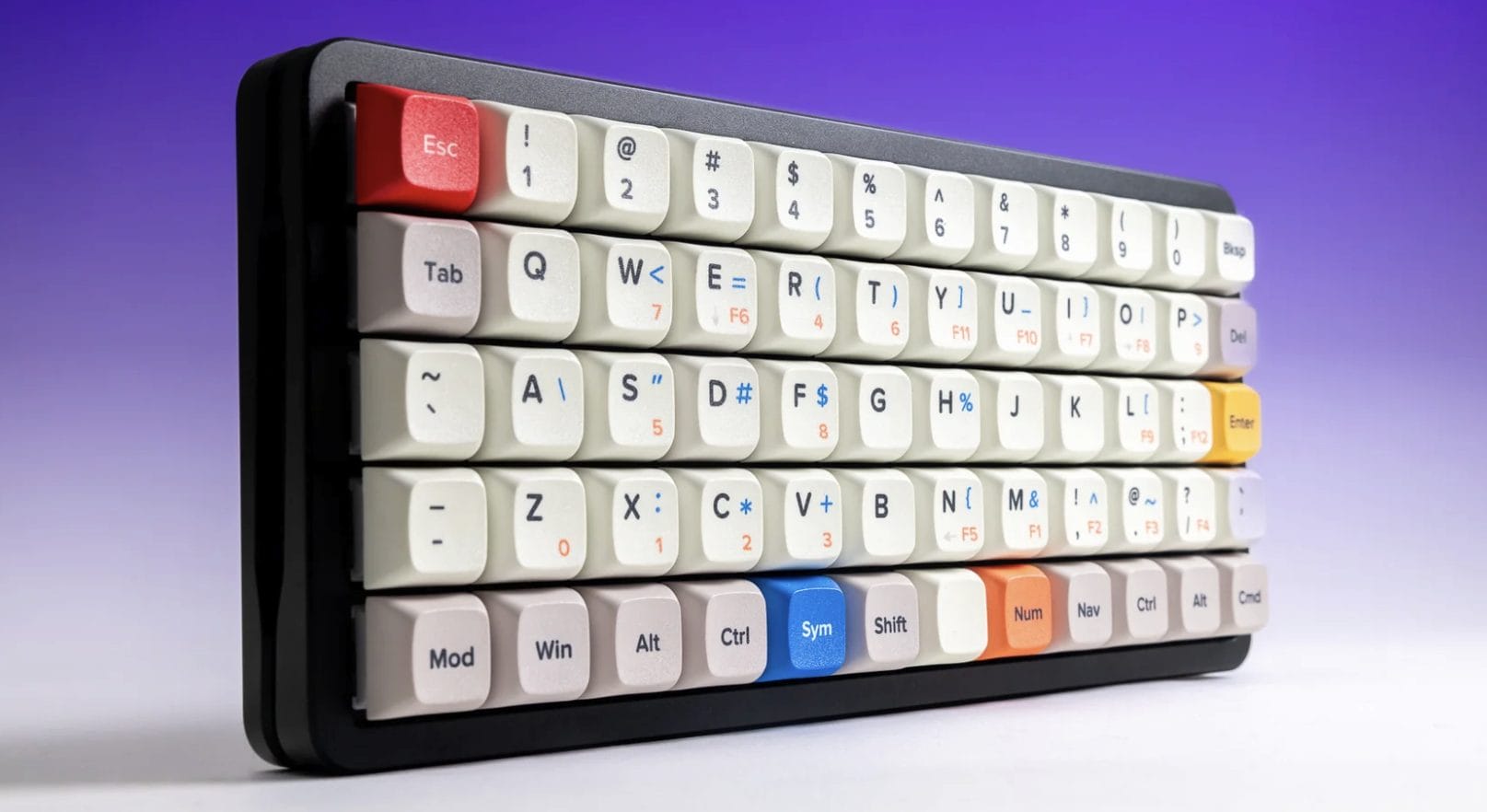
That is why the Apos x OLKB Preonic Rev 4 Ortholinear Keyboard is more relevant to producers than it first appears.
On paper, it is a compact custom mechanical keyboard kit. For studio use, the more interesting read is that it can become a small command center for music production. The ortholinear layout keeps keys in a uniform grid, the dedicated number row keeps common shortcuts close, and QMK compatibility opens the door to custom layers, macros, transport controls, editing commands, plugin workflows, and repeatable DAW actions.
At $190 on pre-order, with the expected ship date listed for the end of November 2026, it is not a throwaway desk accessory. It is a keyboard for people who want the main typing surface to become part of the studio system.
Ortholinear layout can make shortcuts feel closer
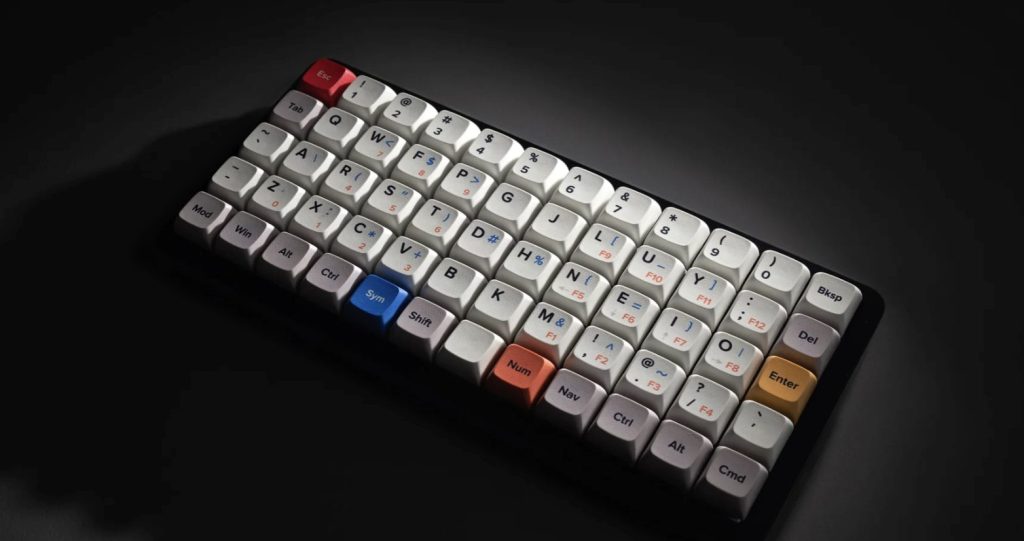
The Preonic Rev 4 uses an ortholinear 50% layout, which means the keys sit in a clean grid instead of the staggered layout most keyboards inherited from typewriters.
That change is not only aesthetic. A grid layout can make layered shortcuts easier to memorize because the key positions become more geometric. For producers who live inside shortcut-heavy DAWs, that can matter.
Ableton Live, FL Studio, Logic, Cubase, Pro Tools, Studio One, and Reaper all reward muscle memory. The less time a producer spends hunting for commands, the faster arrangement decisions happen. The Preonic layout keeps the board compact while adding a dedicated number row, so producers get more direct access than a smaller 40% board without giving up too much desk space.
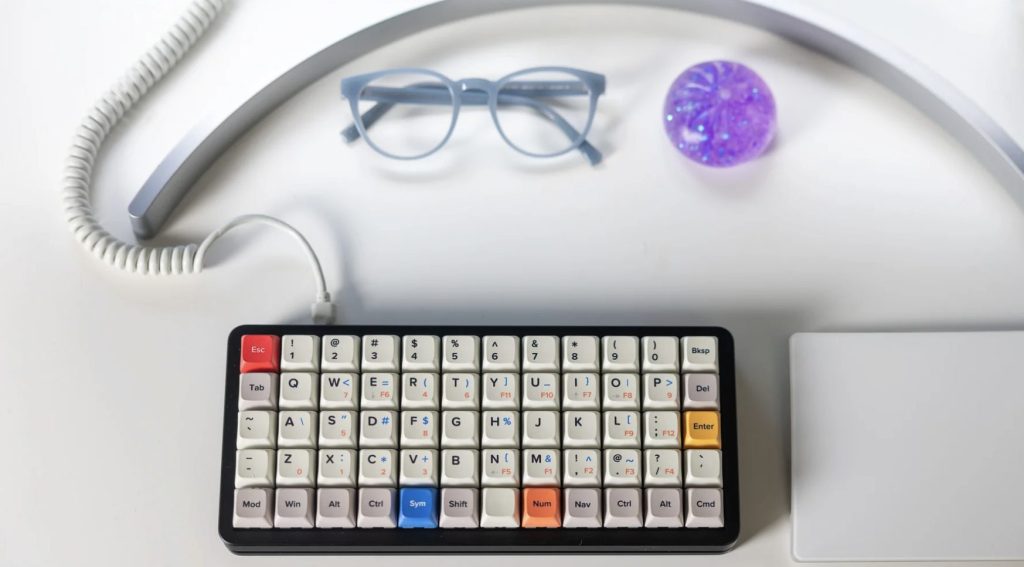
Desk space matters in music production because a keyboard has to coexist with audio interfaces, controllers, desktop synths, trackpads, mice, headphones, notebooks, hard drives, and coffee that should not be near any of it.
That is the angle I keep coming back to. A compact keyboard is not about minimalism for its own sake. It is about giving the main studio desk more room to breathe.
QMK turns the keyboard into a DAW shortcut surface
The real studio value comes from QMK.
QMK-compatible keyboards can be programmed with layers, macros, and custom keymaps. For producers, that means the Preonic Rev 4 can move beyond typing and become a dedicated DAW command surface.
A layer could handle transport: play, stop, record, loop, metronome, punch, marker controls, and arrangement navigation. Another layer could be built around editing: split, consolidate, duplicate, crop, quantize, reverse, freeze, flatten, bounce, rename, and color-track commands. Another could focus on sample digging: search, preview, next, previous, tag, load, and browser navigation.
That kind of mapping can cut down on repetitive movements.
It also fits the same mindset behind my article on speeding up music production with chord progressions. The larger point is not that one shortcut makes a song better. It is that less mechanical drag gives producers more chances to stay inside the idea before it goes cold.
The Preonic Rev 4 gives that philosophy a hardware surface.
Encoder support is the producer feature hiding in plain sight
The Preonic Rev 4 supports up to ten encoder positions.
That is where the keyboard starts to overlap with the way producers already think about controls. Rotary encoders can be mapped for volume, scrolling, media controls, layer switching, timeline movement, browser movement, zoom, or custom commands. With the right setup, they can also support more specialized tasks depending on the DAW, utility software, and MIDI or macro bridge being used.
Even one encoder can change a workflow. Put zoom on a knob and the arrangement view becomes easier to navigate. Put browser scrolling on a knob and sample selection becomes less click-heavy. Use one encoder for system volume and another for transport-adjacent movement. Use a press function to toggle layers.
The source page notes improved support for double-detent encoders, which opens another route for precise stepped movement. Producers doing editing work may appreciate that more than gamers or writers because timelines, browsers, and plugin lists often reward repeatable small moves.
This is also where the Preonic Rev 4 sits near the broader studio-controller conversation in our piece on Novation FLkey Mini and FLkey 37. Dedicated music controllers handle notes, pads, and DAW-specific control. A programmable keyboard handles the command layer underneath the session.
The best studio setups usually need each part.
The number row matters more than it sounds
The Preonic sits between tiny keyboard culture and daily studio reality.
The original Planck-style idea is compact, grid-based, and layer-driven. The Preonic expands that concept by adding a dedicated number row, and that addition makes it more realistic for producers who still need fast access to numeric shortcuts, track selection, marker jumps, plugin search habits, and naming tasks.
Music production is full of numbers.
Bar numbers. track numbers. plugin versions. mix revisions. BPM values. MIDI notes. take names. stem labels. routing names. file exports. project dates. A dedicated number row keeps that part from feeling buried behind a layer every time the producer needs it.
That may sound small, but studio tools are judged by how often small annoyances repeat. If a command happens hundreds of times per week, its placement matters.
For producers who already like compact keyboards but find 40% boards a little too cramped for DAW work, the Preonic Rev 4 may hit a better middle point.
RGB is not only desk candy
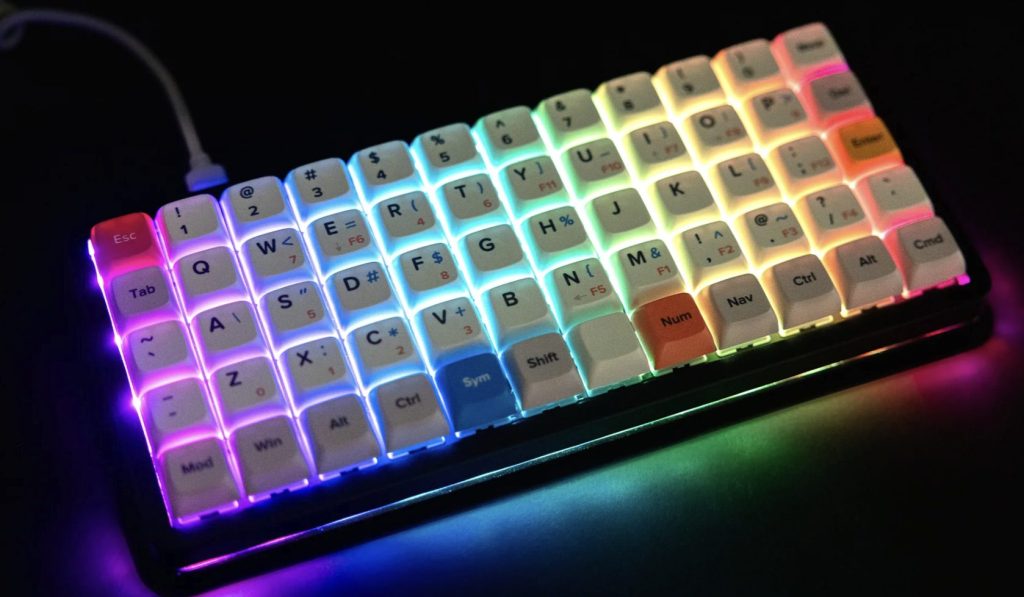
The Preonic Rev 4 includes full per-key RGB backlighting and integrated underglow.
For producers, the lighting can be more than a visual flex. Per-key RGB can be used as a memory system. Transport keys in one color. editing keys in another. browser keys in another. layer keys marked clearly. shortcut clusters grouped visually.
That kind of setup can help when working in darker rooms, especially in studio environments where mood lighting is common and the keyboard sits below monitors or controller stands.
The underglow is more decorative, but there is nothing wrong with a desk feeling intentional. Producers spend long hours at their stations. A keyboard that can match a studio’s lighting vibe is not essential, but it can help the workspace feel more deliberate.
The danger, of course, is turning the desk into a full-spectrum distraction. The smarter move is to use lighting sparingly: highlight commands, mark layers, and keep the rest calm enough that the keyboard supports the work instead of competing with it.
The Preonic Rev 4 fits the shortcut-heavy producer
The Apos x OLKB Preonic Rev 4 is not going to replace a MIDI keyboard, pad controller, Push-style device, mixer, or fader surface.
It should not.
Its role is more specific. It is a compact, programmable, shortcut-focused keyboard for producers who want the main computer input to feel less generic. The combination of ortholinear layout, number row, QMK, encoder support, RGB mapping, and a small aluminum case makes it easy to imagine as a dedicated DAW companion.
That is the right way to read this product for music makers.
Not as a keyboard hobby object sitting beside the studio, but as part of the studio. A place for macros, commands, navigation, repetitive edits, sample searching, transport moves, and the daily muscle memory that keeps sessions from slowing down.
The Preonic Rev 4 is available for pre-order at $190, with kits expected to ship at the end of November 2026.
For producers who already spend hours customizing templates, racks, shortcuts, sample libraries, and controller mappings, a programmable keyboard like this is another way to make the studio respond faster.

Will Vance is a professional music producer who has been involved in the industry for the better part of a decade and has been the managing editor at Magnetic Magazine since mid-2022. In that time period, he has published thousands of articles on music production, industry think pieces and educational articles about the music industry. Over the last decade as a professional music producer, Will Vance has also ran multiple successful and highly respected record labels in the industry, including Where The Heart Is Records as well as having launched a new label with a focus on community through Magnetic Magazine. When not running these labels or producing his own music, Vance is likely writing for other top industry sites like Waves or the Hyperbits Masterclass or working on his upcoming book on mindfulness in music production. On the rare chance he's not thinking about music production, he's probably running a game of Dungeons and Dragons with his friends which he has been the dungeon master for for many years.