Table of Contents
Overview
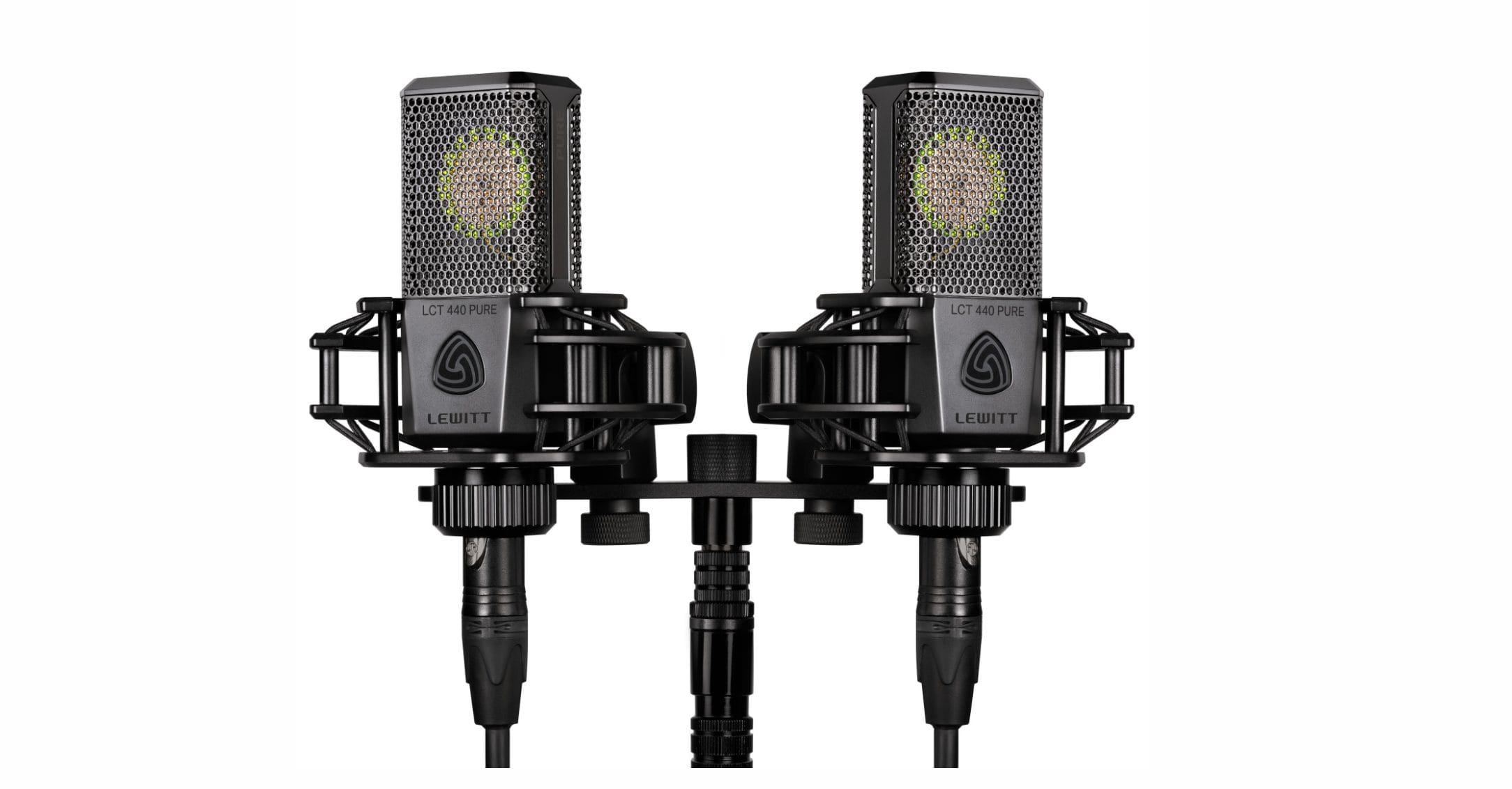
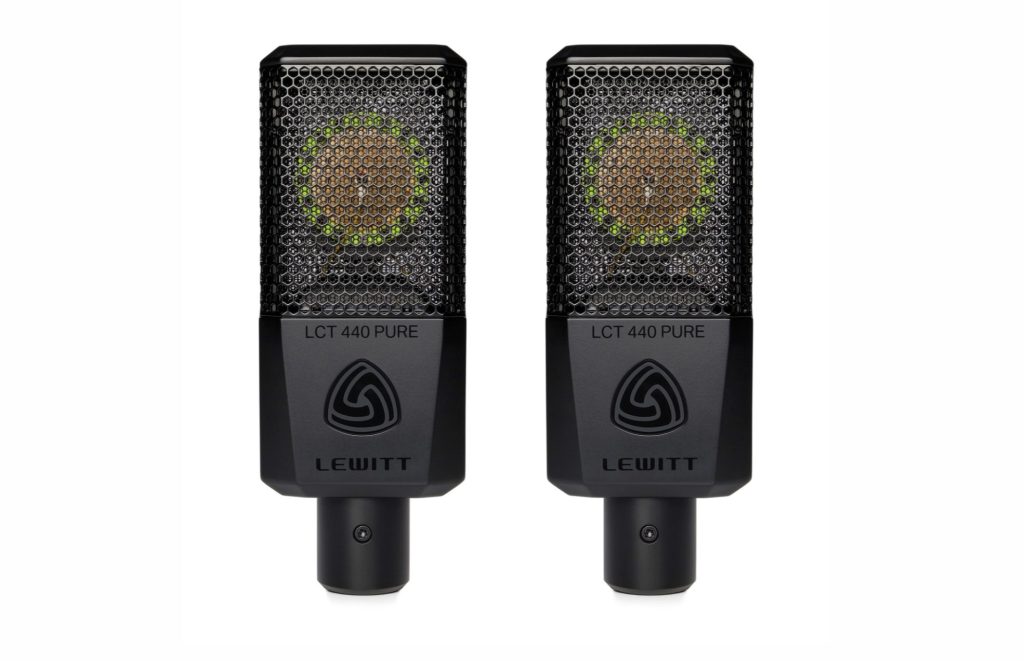
The Lewitt LCT 440 Pure stereo pair might just be the solution you have been looking for or didn’t know you needed! Stereo recording has quietly become one of those things you don’t fully appreciate until you’ve done it properly. You can fake width with plugins, throw on a stereo enhancer, or duplicate a mono track and hope nobody notices. But the moment you put a genuinely matched pair of condensers in front of an acoustic guitar, a drum kit, a piano, or even a choir, there’s a realism that software simply can’t manufacture.
That’s exactly where the new LEWITT LCT 440 PURE Stereo Pair comes in.
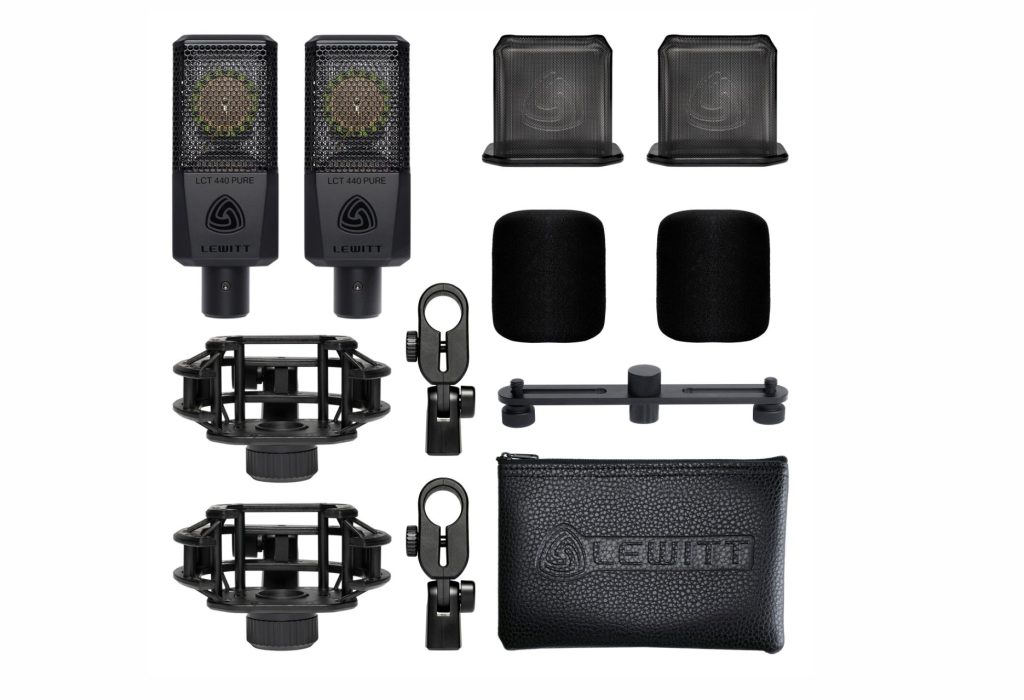
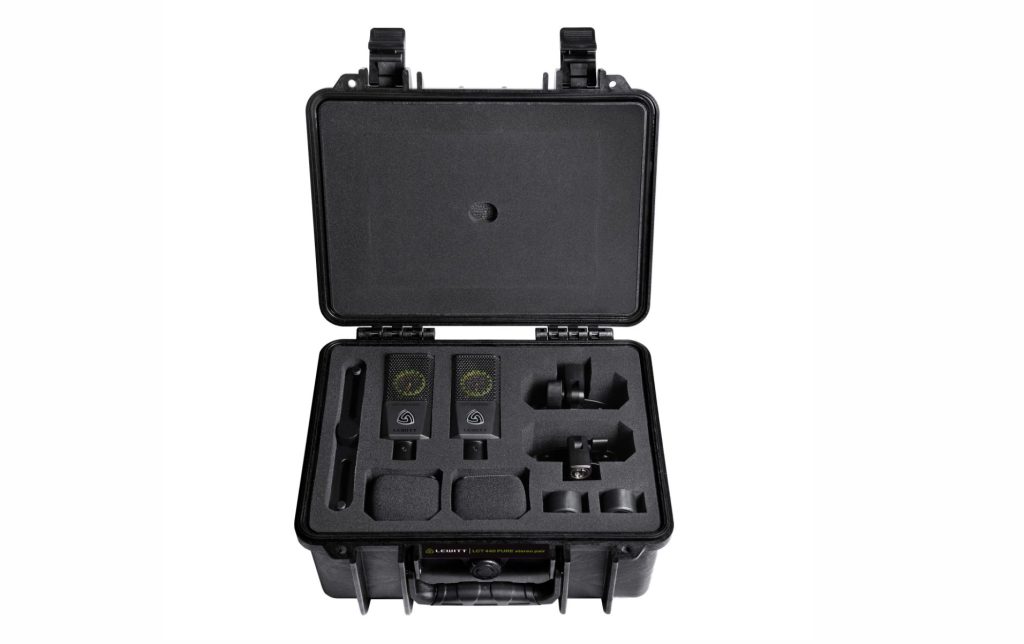
Rather than simply bundling two microphones together and calling it a day, LEWITT has taken its already excellent LCT 440 PURE condenser and created a precisely matched stereo package complete with stereo bar, dual shock mounts, pop filters, windscreens, and perhaps one of the nicest surprises in the box—a rugged hard transport case that actually feels worthy of protecting professional gear instead of the usual cardboard afterthought. The microphones themselves are individually measured and algorithmically paired to ensure their frequency response and sensitivity match as closely as possible, delivering a stereo image that stays stable instead of subtly pulling left or right.
Whether you’re recording acoustic instruments, drum overheads, orchestras, ambient field recordings, choirs, or simply want a premium pair of microphones ready for serious production work, this package makes a compelling argument that sometimes buying two really good microphones is smarter than buying one expensive one.
To purchase the Lewitt LCT 440 Pure Stereo Pair for $599, you can visit the site HERE
LEWITT: Quietly Becoming One of Audio’s Best Success Stories
If you’ve spent any time around recording studios over the last decade, you’ve probably noticed LEWITT microphones popping up more and more often. That isn’t an accident.
Founded in Vienna, Austria in 2009, LEWITT entered a microphone market dominated by brands that had been around since your grandparents were dancing to vinyl. Instead of leaning on nostalgia, LEWITT focused on engineering, modern manufacturing, and rigorous quality control.
That strategy has paid off.
Today you’ll find LEWITT microphones inside studios like Blackbird, Metropolis, Sound Factory, and Atlantic Records, while engineers working with everyone from Stevie Wonder and The Rolling Stones to Doja Cat and Post Malone have added them to their microphone lockers.
What’s impressive isn’t that LEWITT makes flagship microphones costing thousands of dollars. Plenty of companies do that.
What’s impressive is how consistently they squeeze premium performance into products that normal musicians can actually afford.
The LCT 440 PURE has been one of those sleeper hits for years—a microphone engineers recommend almost reluctantly because it undercuts products costing significantly more. Now it’s finally available as a factory-matched stereo pair, which feels like the logical next step.
Build Quality & Design
There’s something refreshing about the LCT 440 PURE. It doesn’t try to look vintage. There’s no fake brass finish pretending to be a 1960s classic, no oversized grille trying to imitate a U87, and thankfully no chrome-plated spaceship aesthetic that belongs on a 1998 techno album cover.
Instead, LEWITT went for understated professionalism.
The zinc die-cast metal body feels reassuringly dense without becoming overly heavy, while the matte black finish looks equally comfortable in a commercial studio, a bedroom production setup, or mounted above a drum kit. At roughly 310 grams each, they’re substantial enough to inspire confidence without becoming awkward to position on lighter boom stands.
The included accessories deserve just as much praise.
Each microphone comes with its own shock mount, magnetic pop filter, microphone clip, foam windscreen, and the stereo pair includes a dedicated stereo mounting bar that makes XY or ORTF setups painless.
Then there’s the hard case.
Honestly, it’s one of my favorite parts of the package.
Instead of tossing everything into soft pouches you’ll inevitably lose under a pile of XLR cables, LEWITT includes a rugged transport case with custom-cut foam that neatly holds every accessory. Whether you’re heading to a commercial studio, taking the pair on location, or just trying to keep your home studio organized, it’s the sort of inclusion you don’t appreciate until you’ve owned microphones that didn’t come with one.
Why Buy a Matched Stereo Pair Instead of Two Individual Microphones?
This is where people often ask, “Can’t I just buy two LCT 440 PUREs?” and yes, I asked the same question because I’ve not done a lot of stereo recording. Even extremely well-manufactured microphones have tiny variations in sensitivity and frequency response. Normally, those differences don’t matter when recording in mono; the sound quality from mic to mic is going to feel pretty consistent.
In stereo recording, they absolutely can. If one microphone is slightly brighter or slightly louder than the other, your stereo image starts leaning in ways that feel oddly unnatural, especially to trained ears and in good headphone monitors like the Sennheiser 480 Pros. You may never consciously hear it, but you’ll definitely feel something isn’t quite centered. Sounds weird, but it can be very irritating, just like a hum in your studio monitors you can figure out; it just bothers you in that uncanny valley sort of way.
LEWITT individually measures every LCT 440 PURE before production, then uses software to compare each microphone’s complete frequency response before pairing units that match as closely as possible. The result is a stereo image that feels stable, accurate, and believable rather than slightly skewed.
For anyone recording professionally, this is nonnegotiable, so even if you plan on evolving your recording it’s worth the extra spend.
Specifications
LEWITT LCT 440 PURE Stereo Pair Specifications
- Type: Externally polarized condenser
- Capsule: 1-inch true condenser
- Diaphragm: 3-micron gold-sputtered Mylar
- Polar Pattern: Cardioid
- Frequency Response: 20 Hz – 20 kHz
- Sensitivity: 27.4 mV/Pa
- Self Noise: 7 dB(A)
- Maximum SPL: 140 dB SPL
- Dynamic Range: 133 dB(A)
- Signal-to-Noise Ratio: 87 dB(A)
- Connector: Gold-plated 3-pin XLR
- Housing: Zinc die-cast metal
- Phantom Power: 48V
- Weight: 310 g per microphone
Included in the stereo package:
- 2× LCT 440 PURE microphones
- 2× Shock mounts
- 2× Microphone clips
- 2× Magnetic pop filters
- 2× Foam windscreens
- Stereo mounting bar
- Rugged hard transport case
- Carry bag and documentation
Who Is This Stereo Pair For?
For electronic music producers, a stereo pair might be overkill unless you are recording live instruments and chopping them up, or you want a stereo stage for your vocals. These are built for a very specific task, and they are very good at what they do, but if you are not doing the aforementioned types of recordings, you probably are just wasting your money.
For producers doing more live instrument recordings like acoustic percussion and drum kits, the drum overheads are probably the most obvious application. A matched stereo pair captures cymbal detail while maintaining a balanced image across the kit.
Acoustic guitar is another standout. An XY setup at the 12th fret delivers a focused, natural sound, while ORTF introduces extra width without becoming exaggerated. Piano recordings immediately benefit from stereo imaging, whether you’re working on intimate jazz sessions or cinematic film scores.
Choirs, string quartets, percussion ensembles, room microphones, ambient recordings, podcasts with two hosts, Foley work, orchestras—the list gets surprisingly long once you own a proper stereo pair. As I approached this type of recording, it started to push my creative buttons, like how could I record a thumb piano or orther trippy percussion instruments to make them stand out in the mix
So yes even electronic producers should pay attention to this technique to push creativity and experimentation in your work. Layering synthetic sounds is easy. Capturing genuine acoustic space is much harder, and kind of fun in today’s world of in-the-box production.
Whether you’re sampling percussion, recording found sounds for techno, or building lush cinematic textures, stereo microphones open creative doors plugins can’t quite replicate.

Setting Them Up Inside Your DAW
The microphones are only half the equation. The other half is placing them correctly and routing them properly inside your recording software.
XY Recording
Probably the easiest place to start.
Mount both microphones on the supplied stereo bar with capsules crossing at roughly 90 degrees.
In your DAW:
- Create two mono tracks or one stereo track with inputs 1 & 2 if you want to go the easy route. I use Logic Pro, which allows you to create one stereo track and have both mics run through dual inputs to one track.
- Assign Mic 1 to Input 1.
- Assign Mic 2 to Input 2.
- Pan one hard left.
- Pan the other hard right.
- Record simultaneously.
This creates a focused stereo image with excellent mono compatibility.
Perfect for:
- Acoustic guitar
- Drum overheads
- Piano
- Podcasts
- Live performances
ORTF
For a wider stereo field, position the microphones approximately 17 cm apart with a 110-degree angle.
You’ll hear:
- More room ambience
- Better depth
- Increased realism
- Wider stereo image
Excellent for:
- Choirs
- String ensembles
- Ambient recording
- Classical music
Spaced Pair (A/B)
Separate the microphones anywhere from one to several feet depending on the source.
Ideal for:
- Room microphones
- Orchestra
- Drum rooms
- Nature recordings
The wider spacing creates an enormous stereo field, though you’ll want to check for phase issues during mixing.
Mid/Side?
Not with these. Since both microphones are cardioid-only, Mid/Side recording isn’t their intended application. If that’s your workflow, LEWITT’s multipattern microphones would be a better fit.
What Audio Interface Do You Need?
If you’ve gotten this far, you probably already know this, but these aren’t USB microphones. They’re professional XLR condensers. That means you’ll need an audio interface capable of providing clean 48V phantom power across two microphone inputs. Fortunately, that doesn’t mean spending thousands.
Excellent options include:
- Focusrite Scarlett 2i2 or 4i4
- Universal Audio Volt series
- MOTU M2 or M4
- SSL 2+
- Audient iD24
- LEWITT Connect 6
The cleaner the preamps, the more you’ll appreciate just how quiet these microphones are. With only 7 dB(A) of self-noise, they’re remarkably silent, making them equally comfortable capturing whisper-quiet fingerpicked guitar passages or explosive drum overheads without introducing distracting hiss.
Final Thoughts
The LEWITT LCT 440 PURE Stereo Pair feels like one of those products that should have existed years ago.
The original 440 PURE already had a reputation for punching well above its price bracket. Packaging two perfectly matched microphones together with a quality stereo bar, complete accessory bundle, and genuinely excellent hard case simply makes an already compelling microphone even more attractive.
More importantly, it encourages people to think in stereo.
That’s not just a recording technique—it’s a different way of hearing music.
Instead of chasing width later with plugins, you capture it at the source. Instead of trying to manufacture realism during mixing, you record it from the very beginning.
For home studio musicians, content creators, producers, engineers, and anyone looking to elevate their recording game without entering boutique microphone pricing, this stereo package strikes a sweet spot that’s becoming increasingly rare. It delivers professional performance, thoughtful accessories, and the sort of build quality that suggests it’ll still be sitting in your mic locker long after you’ve upgraded everything else around it.
And that’s probably the highest compliment you can pay a microphone. It doesn’t demand attention. It simply keeps making everything you record sound better.
Other Mics you might consider for just vocals HERE

David Ireland is a professional strategist, creative, and marketer. He began his career in 1995 as creator and publisher of BPM Magazine. In August 2000, BPM Magazine merged with djmixed.com LLC, an online media company based in Los Angeles, which later evolved into the Overamerica Media Group [OMG] in 2003. In 2009, Ireland left Overamerica Media Group to serve as the VP of Marketing at Diesel. In 2011, he returned to his roots in media and cofounded the online electronic music publication Magnetic Magazine and created The Magnetic Agency Group. In June 2018, Ireland joined Winter Music Conference (now owned by Ultra Music Festival) as the Director to lead the reboot for 2019 and usher in a new era for the iconic brand. He served as Chief Marketing Officer at Victrola for three years, guiding product innovation and brand growth. He currently serves on the advisory board of Audiopool, a new music tech startup focused on AI-generated music licensing and artist revenue models.