Music producers spend a ridiculous amount of time thinking about their equipment, from the monitors they use to make mixing decisions to the controllers, synthesizers, and plugins that occupy almost every available inch of their desks, yet lighting is one of those things that often gets overlooked until you’ve spent several hours working in a room that isn’t particularly comfortable to be in.
And since so many of us produce music in bedrooms, spare rooms, or home studios that weren’t designed for extended sessions, having some control over the lighting can make a difference in how we use these spaces throughout the day.
I’ve always been interested in studio lighting because I think the room you work in deserves the same consideration as the equipment you fill it with, although I’ve also found that improving a studio’s appearance can quickly become expensive or inconvenient when you’re dealing with wall-mounted panels, adhesive LED strips, and permanent fixtures that aren’t particularly easy to rearrange.

That’s where a freestanding lamp comes in, especially if you want something that can sit behind your production desk, provide indirect illumination, and give you several lighting options without modifying the room. Sure, there are a lot of competitors out there, Nanoleaf being a personal favorite of mine, but that doesn’t mean that they’re the only brand trying to make vibe-drenched lighting for gamers and creators.
The Govee RGBICW Smart Floor Lamp Basic, model H6076, takes that approach with a relatively slim aluminum design, 1,000 lumens of rated brightness, individually configurable color segments, and a substantial collection of lighting presets that you can control through the Govee Home app. It also includes music-responsive lighting and smart-home compatibility, which makes it particularly interesting for producers who use their studios for recording videos, livestreaming, and listening to music outside their regular production sessions.
But how much of that functionality is genuinely relevant to music production, and does this relatively affordable lamp offer enough to justify adding another piece of equipment to your studio? Are they vibier than Nanoleaf? Do they even need to be??? Let’s go…
First Impressions, Build Quality, and Setting Up the Govee RGBICW Floor Lamp

One of the first things I dug about the Govee RGBICW Floor Lamp is how little space it takes up, especially given how much control it gives you over the surrounding lighting.
The lamp measures about 53.7 inches tall, with a 7.9 by 7.9-inch base, and that compact footprint matters when you’re working in a room already filled with studio monitors, acoustic treatment, synthesizers, and the assortment of furniture that tends to accumulate around a music production setup.
I also like that Govee hasn’t made the physical design unnecessarily complicated. The aluminum construction and narrow vertical profile give it a fairly restrained appearance, and when the lamp is switched off, it doesn’t demand much attention, which I think is exactly what you want from something intended primarily to illuminate the surrounding room. For smaller studios, where another floor-standing fixture could mean rearranging furniture or losing valuable space, being able to position the lamp in a corner or behind an existing desk is a fairly convincing selling point.
This is something I covered in my earlier article on music studio aesthetics and making better use of your space, where I emphasized choosing equipment and furnishings that complement the room rather than adding unnecessary clutter. I think the Govee follows that principle reasonably well, particularly because it doesn’t require permanent installation, specialized mounting hardware, or additional desk space.
RGBICW Lighting Quality, Brightness, and Creating a Comfortable Studio Environment
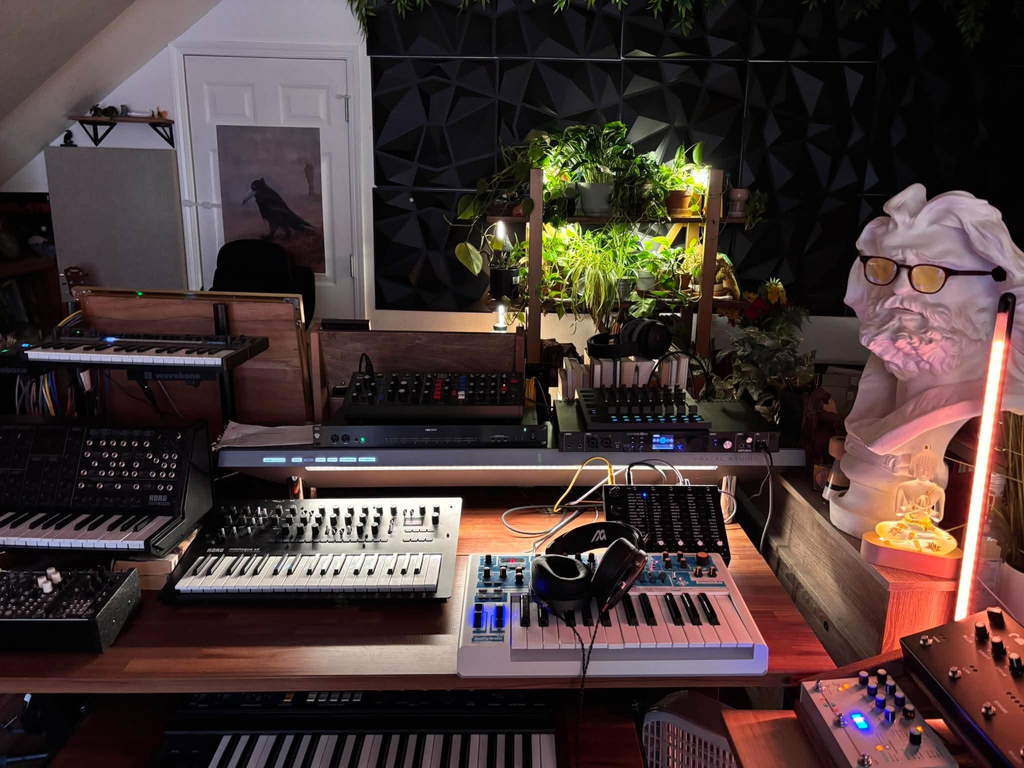
The RGBICW lighting system is the main reason I’d consider this lamp over a conventional floor light, and while Govee includes plenty of animated effects and colorful presets, I think the more interesting feature is the control you have over the actual illumination.
RGBIC lets multiple colors appear across separate sections of the light rather than requiring the entire strip to display one uniform color, while the added warm-white option gives you another choice when saturated RGB lighting isn’t appropriate. The H6076 provides 14 independently configurable sections through its DIY settings, which means you can create gradual color transitions, use contrasting colors across different portions of the fixture, or keep everything relatively consistent.
For a home studio, I can see a blue-to-purple gradient working particularly well behind a production desk, especially if the surrounding walls are relatively neutral, although I’d personally lean toward subdued amber or warm-white lighting during longer writing sessions.
The important thing is that you aren’t restricted to constantly moving colors or particularly intense lighting effects, and I appreciate having the option to configure something restrained that can remain in the background while I’m working.
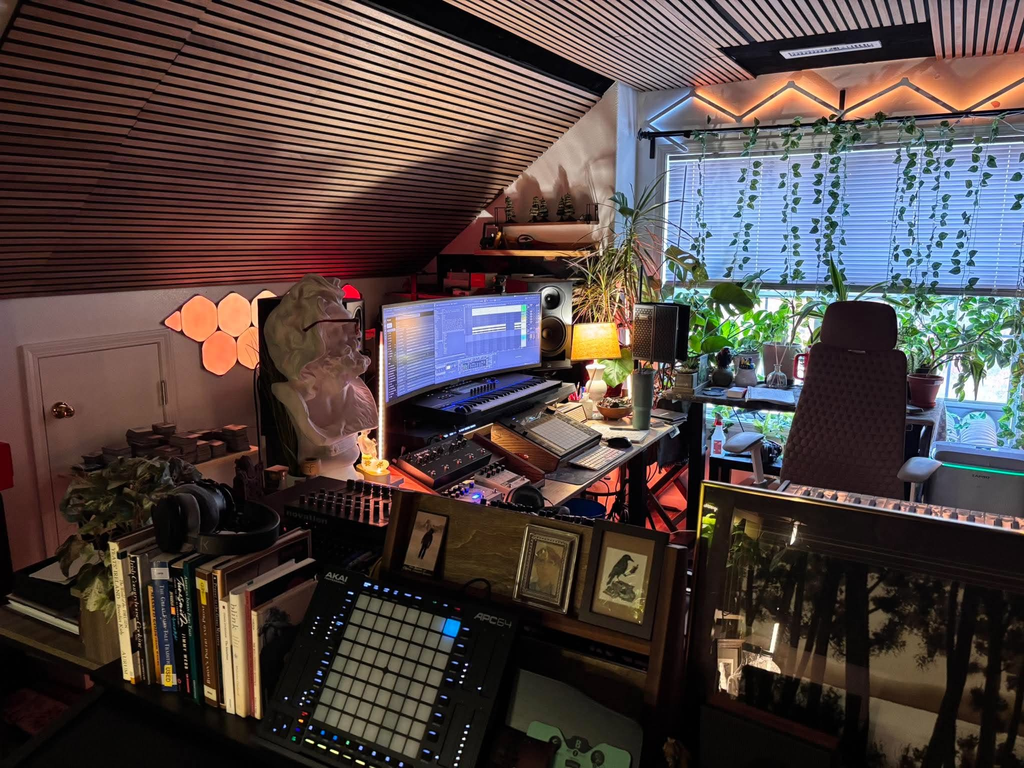
I think this is where indirect lighting becomes especially important. Rather than positioning the lamp with the illuminated strip facing directly toward your listening position, I’d prioritize placing it near a corner where the light can spread across the adjacent surfaces.
That arrangement should reduce direct glare, make the individual LED points less noticeable, and distribute illumination around the room instead of concentrating it along one visible strip.
This type of fixture also has a legitimate limitation on how much diffusion you get. The individual LEDs and transitions between sections can become more apparent when you’re looking directly at the lamp, particularly compared with lighting products that use larger diffusers, and I think that’s worth considering if you intend to position it somewhere prominent in your studio. The results will depend a lot on placement, which is why I would experiment with several positions before deciding where the lamp should stay.

I discussed this in my Nanoleaf Skylight review, where I examined how valuable it is to have lighting that can accommodate ordinary studio work alongside more atmospheric settings.
The Nanoleaf system takes a different approach with considerably greater room illumination and ceiling-mounted installation, while the Govee is a smaller, freestanding option intended primarily for accent lighting.

I was also reminded of my conversation with Hannes Bieger about studio design and lighting, where he explained his preference for indirect lighting and the importance of adjusting a room’s illumination to suit what he’s doing. That distinction is worth remembering because no amount of colored lighting will compensate for a room that’s uncomfortable to work in, and I think the Govee makes the most sense when it complements existing studio lighting rather than attempting to handle every illumination requirement on its own.
Music Sync, Livestreaming, and Lighting for Music Production Content
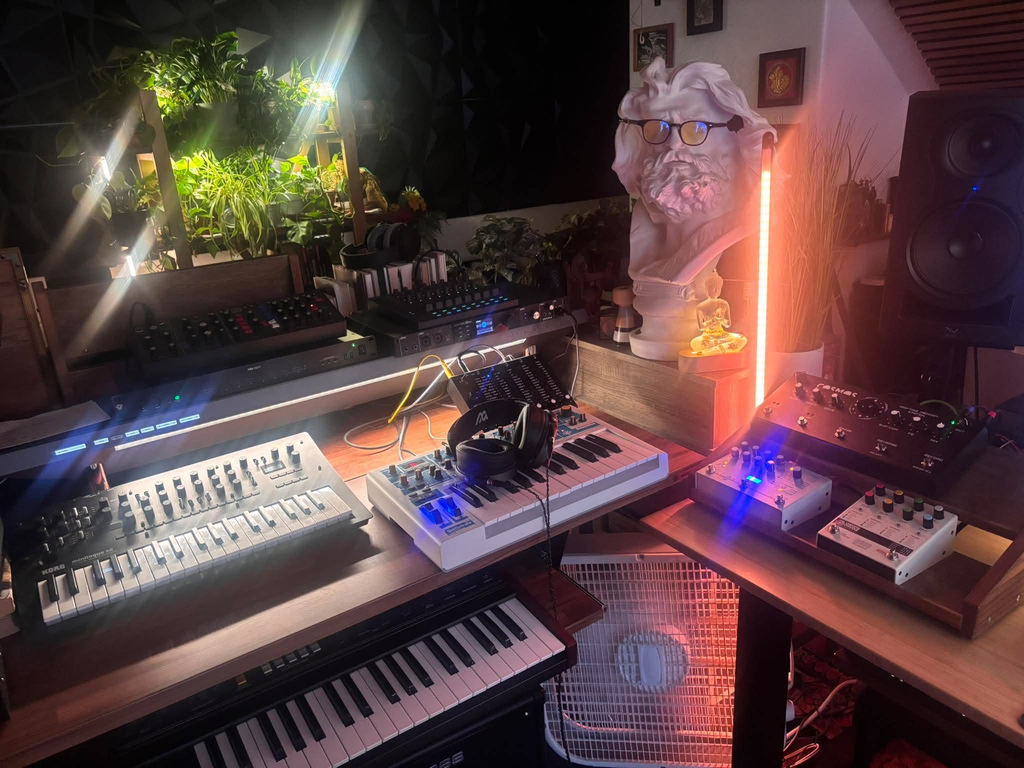
Music synchronization is one of the features that makes the Govee particularly relevant to producers and DJs, though it’s important to know where this functionality fits and where it could become distracting.
The lamp includes six music modes that allow the lighting to react to audio, changing its appearance in response to the music being played. That’s an interesting option for casual listening sessions, DJ rooms, or when you’re demonstrating a new track to friends, especially because it adds responsive lighting without requiring a dedicated DMX controller or professional lighting software.
I can see this working particularly well when playing finished music through studio monitors, when the purpose is to listen and enjoy the arrangement rather than concentrate on individual mixing decisions. I’d be interested in how sensitively the effects respond to quieter passages compared with louder sections, and whether the transitions feel appropriately connected to the music, although I would regard these modes primarily as entertainment features rather than precise tools for evaluating audio.
I think static colors are generally preferable for spoken tutorials or production walkthroughs, where shifting lighting could distract the viewer, while animated effects might suit DJ performances or shorter promotional videos. It’s also worth checking for visible flicker, banding, or unexpected color reproduction at your preferred recording frame rate, since an effect that looks appealing in the room may look different on camera.
There’s an interesting connection here to Magnetic’s interview with Jason Bentley about livestreaming and broadcasting from his home studio, where he discussed how lighting and the physical presentation of his space became part of the experience of broadcasting to an online audience.
I think that consideration applies to producers recording YouTube content or streaming DJ sets today, particularly when a relatively small lighting adjustment can change how the surrounding room appears on camera.
For that application, I would consider the Govee a background light rather than a replacement for a dedicated key light or softbox. It can add color and illumination to the environment, but it isn’t designed to provide the controlled, evenly distributed lighting you’d generally want when recording someone speaking directly to the camera.
Final Thoughts From The Editor On The Govee RGBICW Smart Floor Lamp
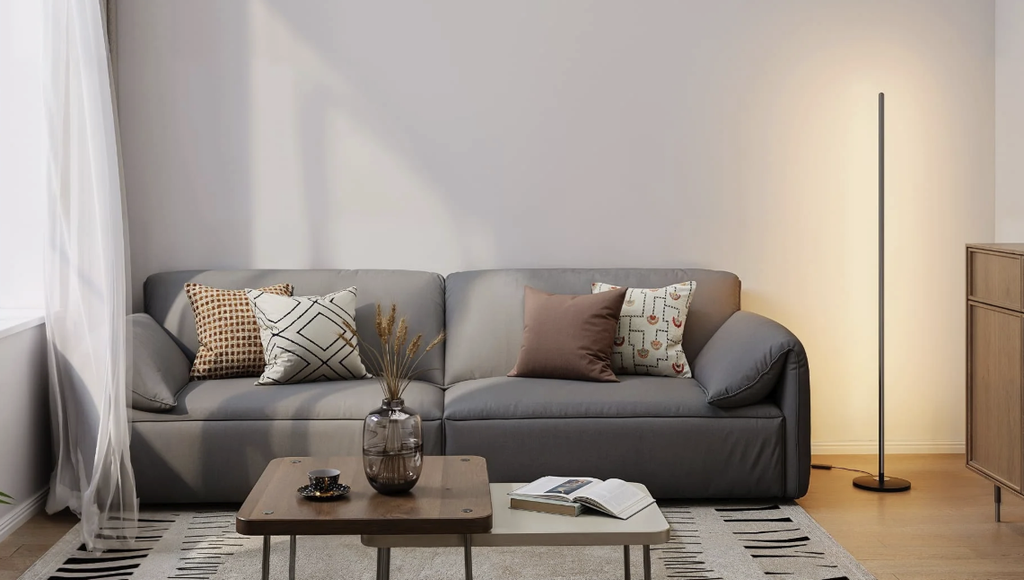
I think the Govee RGBICW Smart Floor Lamp Basic deserves consideration for music producers who want greater control over their studio’s appearance without committing to permanent lighting installations or buying an expensive collection of individual fixtures.
The compact design, 14-zone color customization, app controls, and selection of static and animated effects offer solid flexibility for the price, especially if you’re working in a smaller room where a single lamp can illuminate a substantial portion of the surrounding wall.
What appeals to me most is the ability to configure the lighting around the activity rather than using the same settings for everything. A subdued warm color makes sense when you’re spending an evening working on music, a multicolor arrangement can add definition to the background when filming content, and the music-responsive effects offer another option when you’re listening to finished tracks or hosting people in the studio.
Limitations around brightness, diffusion, white-light flexibility, and placement mean I wouldn’t recommend this lamp as your only studio light source.
But if you already have your primary lighting sorted out and want an affordable way to add adjustable color and indirect illumination, the H6076 offers an appealing combination of features without taking up much extra space.
For bedroom producers, home studio owners, DJs, and musicians who regularly create content, I think the Govee RGBICW Smart Floor Lamp Basic makes the strongest case, especially at one of its discounted prices.

Will Vance is a professional music producer who has been involved in the industry for the better part of a decade and has been the managing editor at Magnetic Magazine since mid-2022. In that time period, he has published thousands of articles on music production, industry think pieces and educational articles about the music industry. Over the last decade as a professional music producer, Will Vance has also ran multiple successful and highly respected record labels in the industry, including Where The Heart Is Records as well as having launched a new label with a focus on community through Magnetic Magazine. When not running these labels or producing his own music, Vance is likely writing for other top industry sites like Waves or the Hyperbits Masterclass or working on his upcoming book on mindfulness in music production. On the rare chance he's not thinking about music production, he's probably running a game of Dungeons and Dragons with his friends which he has been the dungeon master for for many years.