Most producers are familiar with transient shapers that increase or decrease the attack and sustain of a sound, and there’s no shortage of plugins that handle those tasks. What gets considerably more complicated is deciding which transients should receive processing, especially when you’re working with a drum loop, recorded percussion, or an instrument with a wide range of performance intensities. You might want distortion on louder snare hits, additional reverb on quieter notes, or an EQ adjustment that affects certain portions of a recording without changing everything else. Doing that with conventional processing often requires extra tracks, automation, and multiple plugin instances.
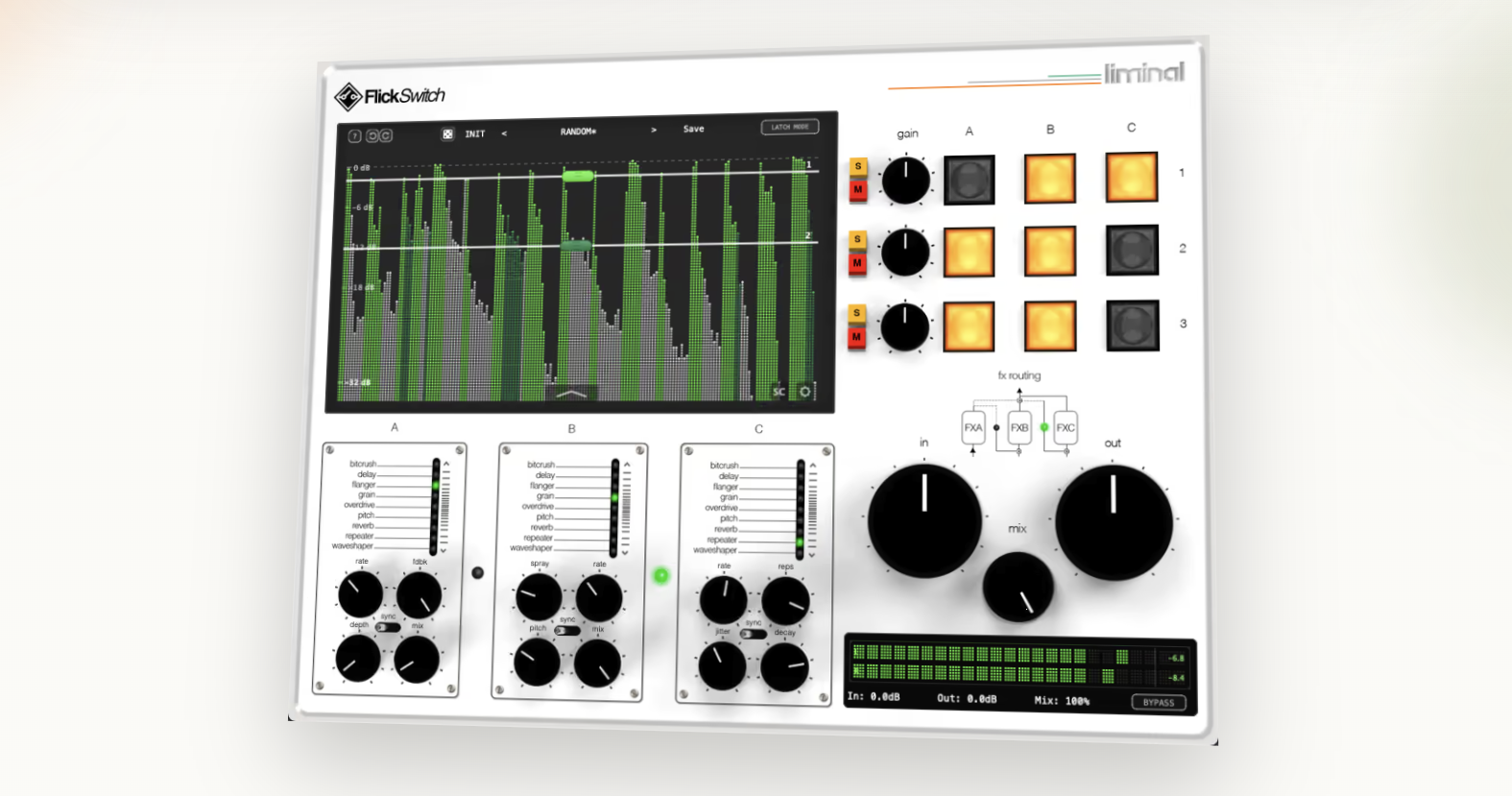
FlickSwitch Audio approaches that problem differently with Liminal, a dynamic threshold processor that separates incoming audio into three lanes according to transient intensity. Released earlier this year, the plugin allows producers to process louder hits, softer hits, and the remaining signal independently, with each lane offering dedicated controls and access to nine built-in effects.
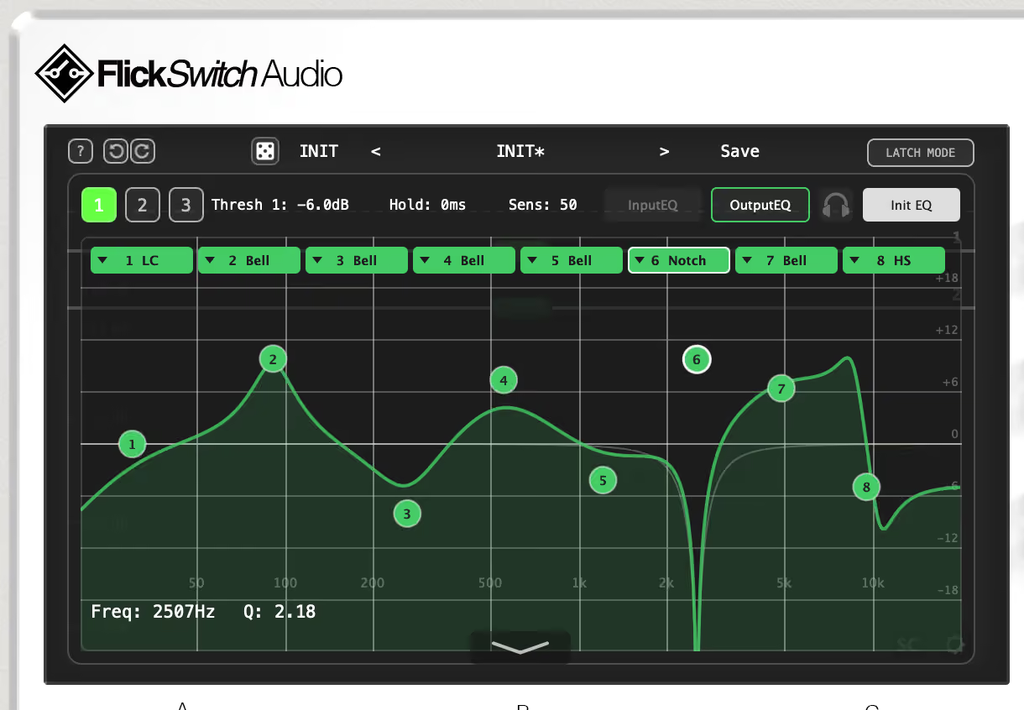
The company has now released version 1.1, introducing multi-output routing, eight-band EQ on every lane, and AAX compatibility for Pro Tools. The update is free for existing customers and arrives alongside an early Black Friday promotion reducing the plugin’s price to $59.
The new routing functionality is particularly interesting because it changes how Liminal can interact with the rest of a production session. Instead of requiring every processing decision to happen inside the plugin, producers can now send individual transient lanes to separate DAW channels, where they can apply additional effects, adjust levels, or record the results independently.
Combined with the new EQ and existing effects system, the update gives Liminal considerably more flexibility for producers who want detailed control over percussion, instrumental performances, and experimental sound design.
How Liminal Processes Audio Differently From Conventional Transient Shapers
Traditional transient processing typically concentrates on the amplitude envelope of incoming audio. A producer adjusts the attack or sustain, and the processing responds according to the plugin’s detection system. These tools can be effective when changing the overall character of a drum recording, although applying different effects to individual hits often requires additional routing or more specialized processing.
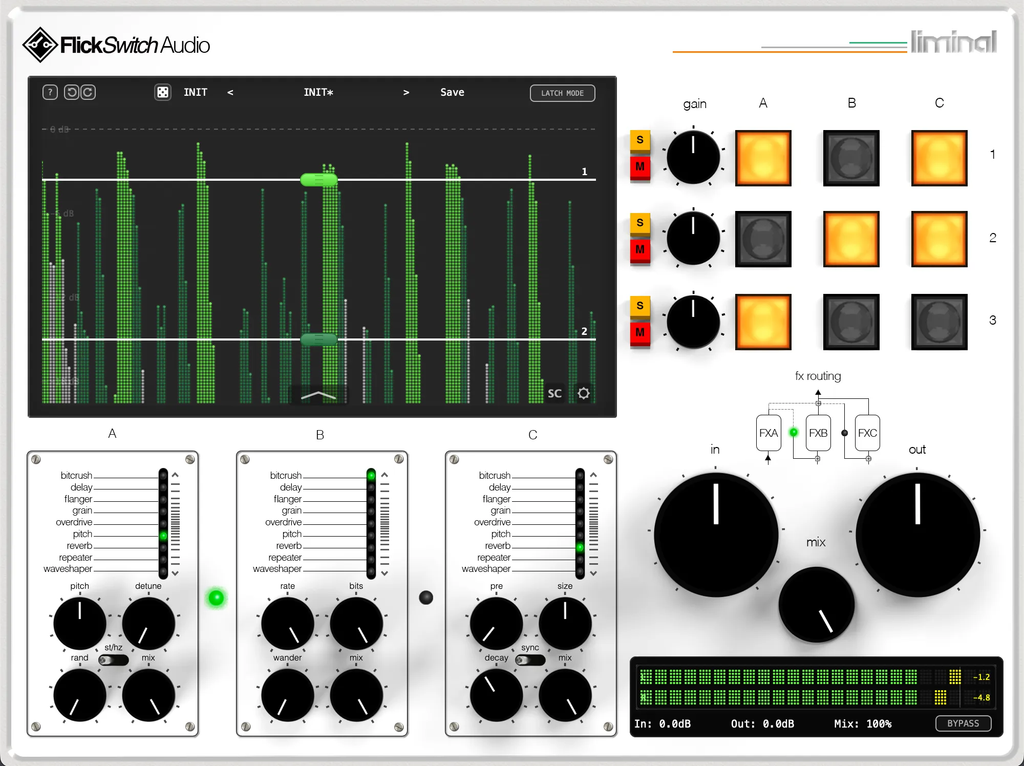
Liminal uses two adjustable thresholds to divide the signal into three categories. Lane 1 handles louder events that exceed the upper threshold, Lane 2 handles events that exceed the lower threshold without reaching the upper threshold, and Lane 3 receives the remaining signal. The plugin supports Percussive, Sustained, and Adaptive detection modes, allowing it to respond to short drum transients, longer instrumental performances, or mixed material.
An important detail is that the lanes represent mutually exclusive portions of the incoming signal. Liminal allocates the audio between them rather than creating three permanently active copies. When the lane gains remain at their default settings and no effects are engaged, the combined output reproduces the input signal, apart from the plugin’s reported lookahead delay.
That behavior creates opportunities for processing that would otherwise require additional editing.
A producer working with a recorded drum performance could apply distortion to the loudest snare hits while leaving the quieter notes relatively untouched. Another application would involve routing the softer portions of a piano performance through reverb while maintaining a comparatively dry presentation for louder notes.
Liminal 1.1 Adds Multi-Output Routing for More Detailed Mixing
The largest new feature in Liminal 1.1 is a dedicated multi-output instrument version, available in AU and VST3 formats. Producers can load this version as an instrument, route incoming audio through its sidechain input, and access five separate outputs within a compatible DAW.
These outputs include the complete processed mix, three individual transient lanes, and a dedicated effects bus. Importantly, the individual lane outputs are taken before the plugin’s effects processing, while the effects bus provides the processed signal. That separation lets users apply additional plugins to the detected material without losing access to the original performance.
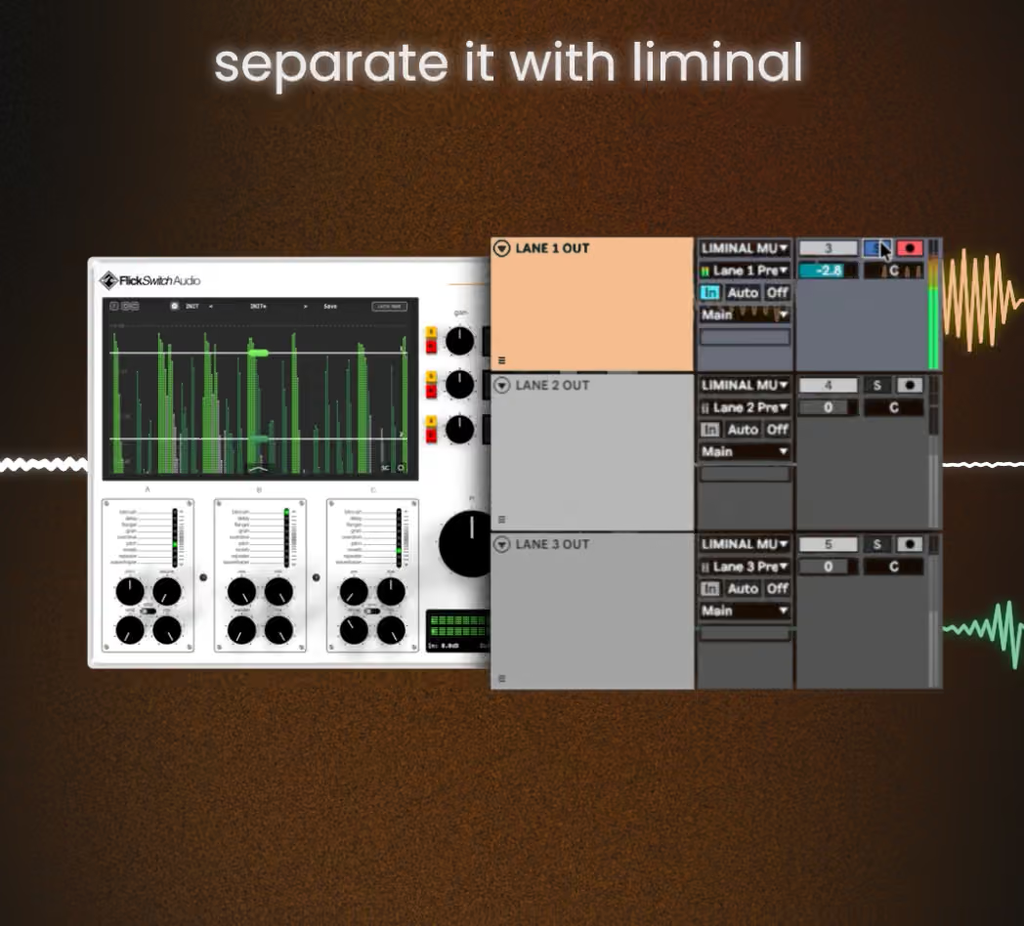
For example, a producer working in Ableton Live could route a drum recording into the multi-output version of Liminal, then create separate audio tracks for the loudest hits, quieter hits, and remaining material. Those channels could receive independent compression, saturation, or other processing, allowing the producer to address specific parts of the original performance without manually extracting each hit.
There is one technical consideration worth understanding.
The multi-output version also requires a DAW that supports the necessary instrument routing and sidechain configuration. Setup will depend on the host application, and the instrument version is not available in AAX format.
Liminal 1.1 Pricing, Compatibility, and Availability
FlickSwitch Audio released Liminal 1.1 on November 2, 2026. The update is free for all existing customers and introduces the new multi-output instrument, eight-band EQ, AAX support, and further processing optimizations.
The standard effects plugin supports VST3 and AAX on Windows and macOS, with AU also available on macOS. The multi-output instrument is available in AU and VST3 only.
System requirements include macOS 10.15 or later or Windows 10 or later, at least 8GB RAM, and at least 250MB of available storage. The company recommends 16GB RAM and a relatively capable processor for demanding sessions.
Liminal is currently listed at $59 during FlickSwitch Audio’s early Black Friday promotion, reduced from its regular $99 price. The company also offers a 14-day unrestricted trial and perpetual licensing, with up to three activations per purchase. Existing owners receive the version 1.1 update without an additional charge.
For producers who regularly manipulate percussion or spend time developing effects chains around individual drum hits, this could reduce the amount of manual editing involved in creating those arrangements. The new EQ also adds tonal control without taking up any internal effects slots.
The main question is how accurately the detection system identifies the events a producer wants to process, especially when working with complex source material. That’s something worth evaluating through the free trial rather than assuming every drum loop or instrumental recording will respond in the same way.

Will Vance is a professional music producer who has been involved in the industry for the better part of a decade and has been the managing editor at Magnetic Magazine since mid-2022. In that time period, he has published thousands of articles on music production, industry think pieces and educational articles about the music industry. Over the last decade as a professional music producer, Will Vance has also ran multiple successful and highly respected record labels in the industry, including Where The Heart Is Records as well as having launched a new label with a focus on community through Magnetic Magazine. When not running these labels or producing his own music, Vance is likely writing for other top industry sites like Waves or the Hyperbits Masterclass or working on his upcoming book on mindfulness in music production. On the rare chance he's not thinking about music production, he's probably running a game of Dungeons and Dragons with his friends which he has been the dungeon master for for many years.