Table of Contents
I’ve spent enough time mixing electronic music in less-than-perfect rooms to know how frustrating low-end monitoring can be, especially when a kick and bassline seem perfectly balanced in the studio, only for you to hear the track somewhere else and realize you’ve been compensating for something your speakers weren’t accurately reproducing. That’s one reason I’ve come to appreciate having a reliable pair of headphones alongside my monitors, and it’s also why the Audeze MM-520 caught my attention, especially given how much of its updated design focuses on low-frequency reproduction.
At $1,699, the MM-520 is clearly intended for people who spend a considerable amount of time producing, mixing, and mastering music, and Audeze has built on its collaboration with Grammy-winning engineer Manny Marroquin by introducing SLAM acoustic technology, revised planar magnetic tuning, and redesigned memory-foam earpads.
There are some interesting changes compared with the MM-500, especially in how the headphones handle sub-bass and upper-midrange frequencies, though it raises the question of whether these improvements justify the price when plenty of less expensive headphones can already do a decent job in the studio.

What I was most interested in was how the MM-520 would fit into the way I actually make and mix my music, since I’m constantly moving between sound design, writing, mixing, and listening to reference tracks throughout the day (I’m not as disciplined as many of those other workflow-oriented artists).
I wanted to know whether the additional bass extension would help me make better decisions, whether the smoother frequency response would make longer sessions easier, and whether I could realistically see myself reaching for these instead of headphones I’ve already spent years getting familiar with.
Is The Audeze MM-520 Design Any Good?

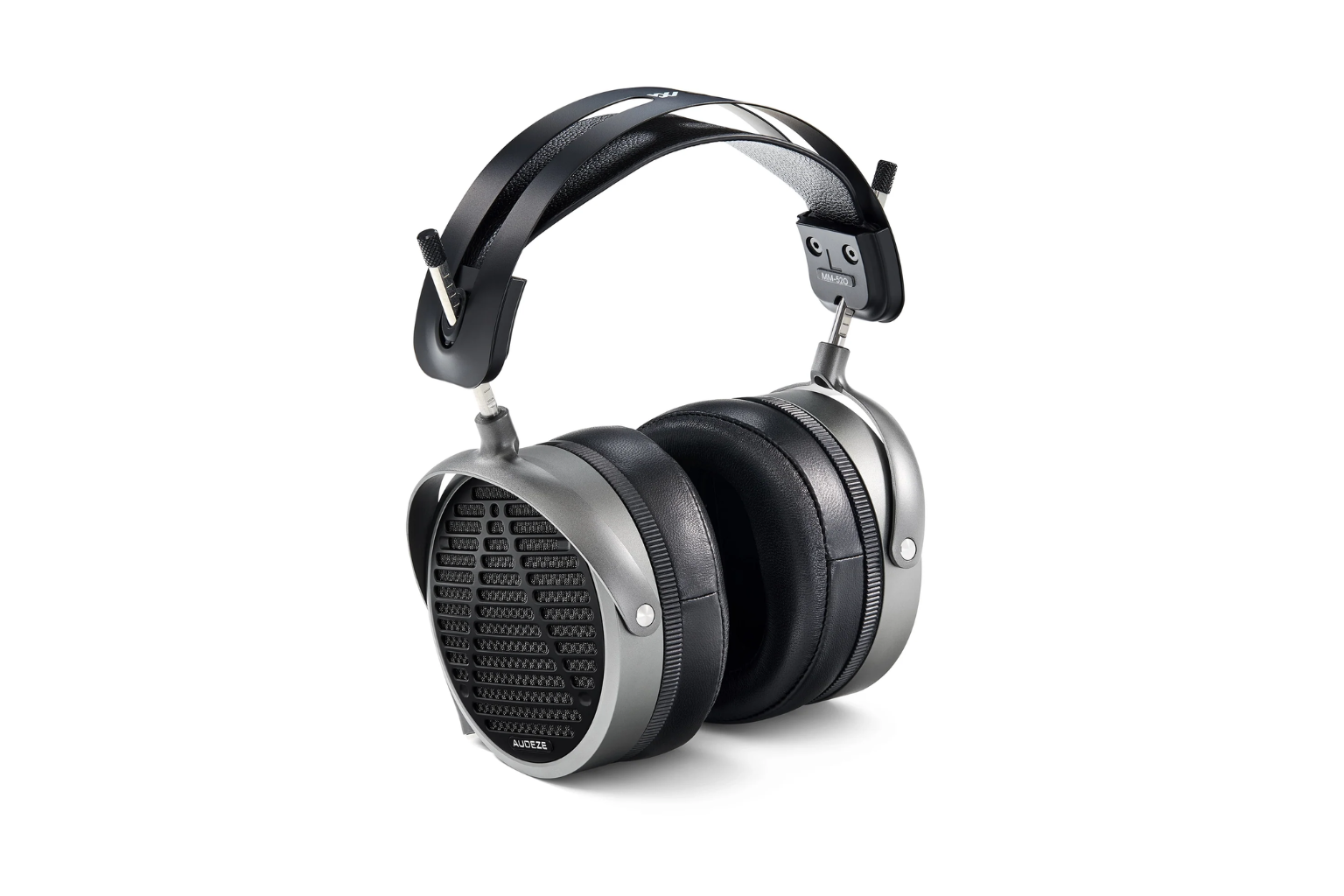
The first thing I really dug about the MM-520 is how straightforward its physical design is, especially for a premium headphone intended for professional production work. The large circular earcups, metal grilles, spring-steel headband, and substantial construction give it the appearance of equipment designed for regular studio use, and Audeze has retained much of the overall design established with the MM-500 rather than changing the entire enclosure.

That construction comes with a fairly considerable weight penalty, though; the MM-520 is noticeably heavier on paper than the 495-gram MM-500. I think this is worth addressing because producers can easily spend several hours on the same arrangement, and headphone comfort becomes increasingly important when you’re moving between writing, detailed editing, mixing, and reference listening without changing your monitoring setup.
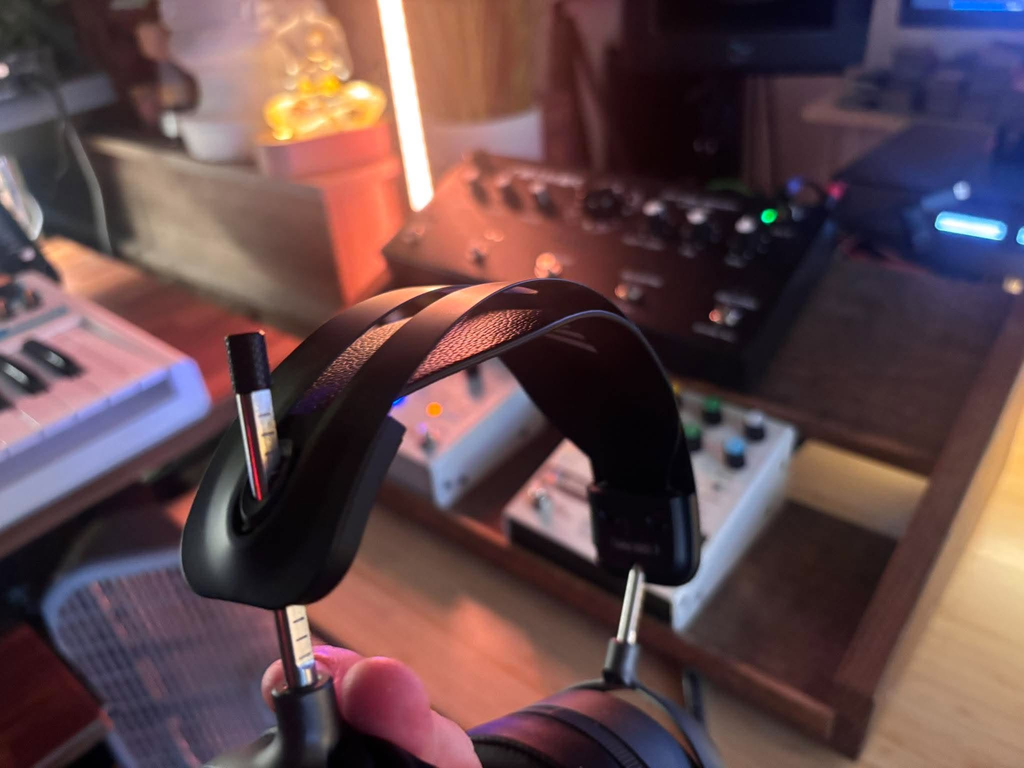
The suspension-style headband distributes that weight across the top of your head, while the redesigned memory-foam earpads provide a broad contact area around your ears. I appreciate that Audeze has paid attention to pressure distribution, though I wouldn’t automatically assume thicker padding makes a heavy headphone comfortable for everyone, particularly if you’re used to lighter studio models.
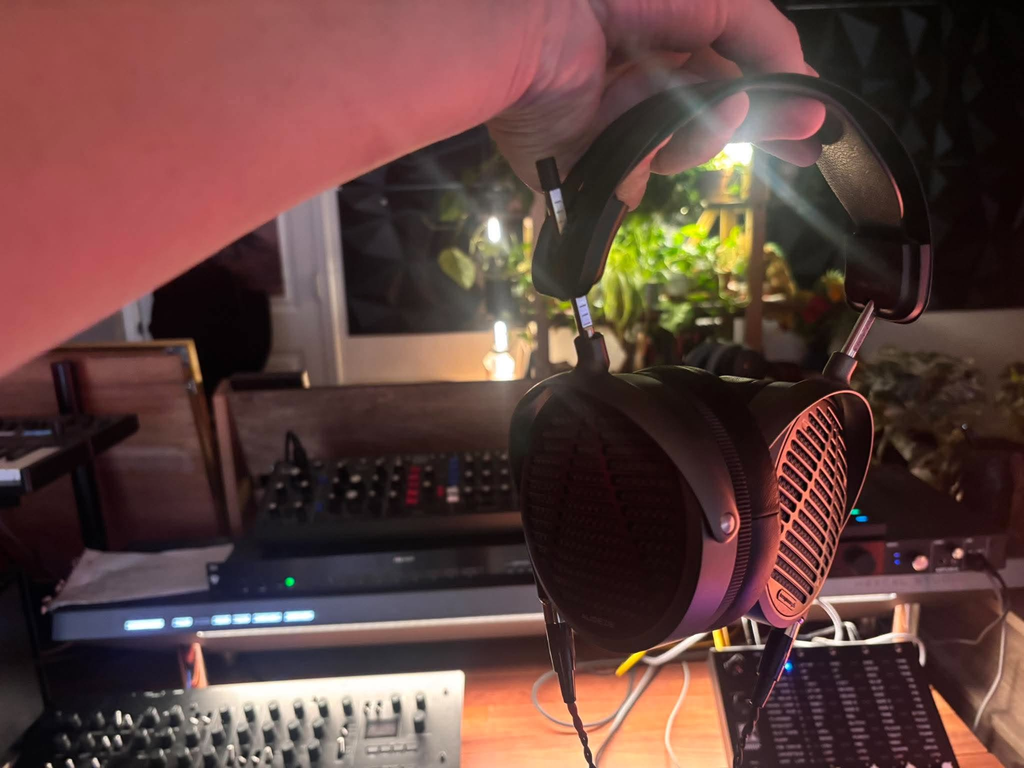
The ability of the earcups to articulate also matters here, since getting the pads positioned evenly around the ears can affect comfort and the consistency of the acoustic seal.
One of my favorite physical changes is the magnetic earpad attachment system, which replaces the adhesive-based approach used on the MM-500. This might sound relatively minor compared with the changes to the driver technology, although anyone who has owned expensive studio headphones for several years will understand why easier maintenance matters. Earpads wear down, accumulate moisture, and gradually change shape, and making them easier to replace is a sensible decision for equipment intended for long-term professional use.
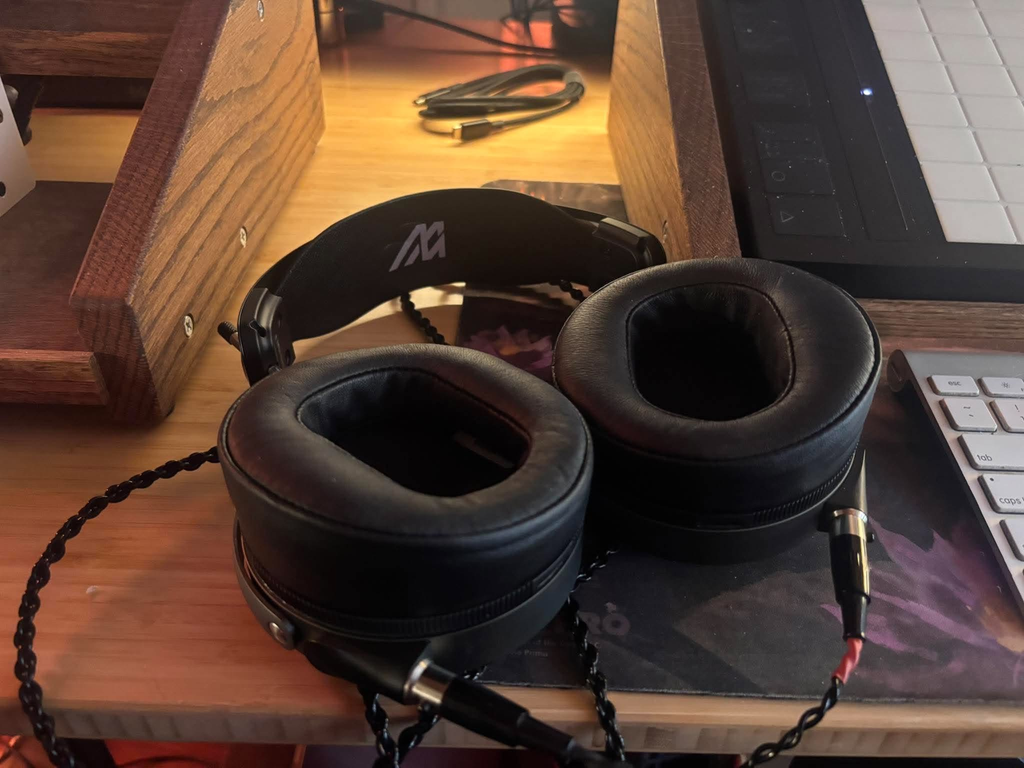
Earpads are also part of the acoustic system, so I would stick with compatible replacements rather than assuming any pad with similar dimensions will preserve the intended tuning. In a headphone where small differences in bass response and upper-midrange balance matter, changing the distance between the driver and your ear can change what you hear.
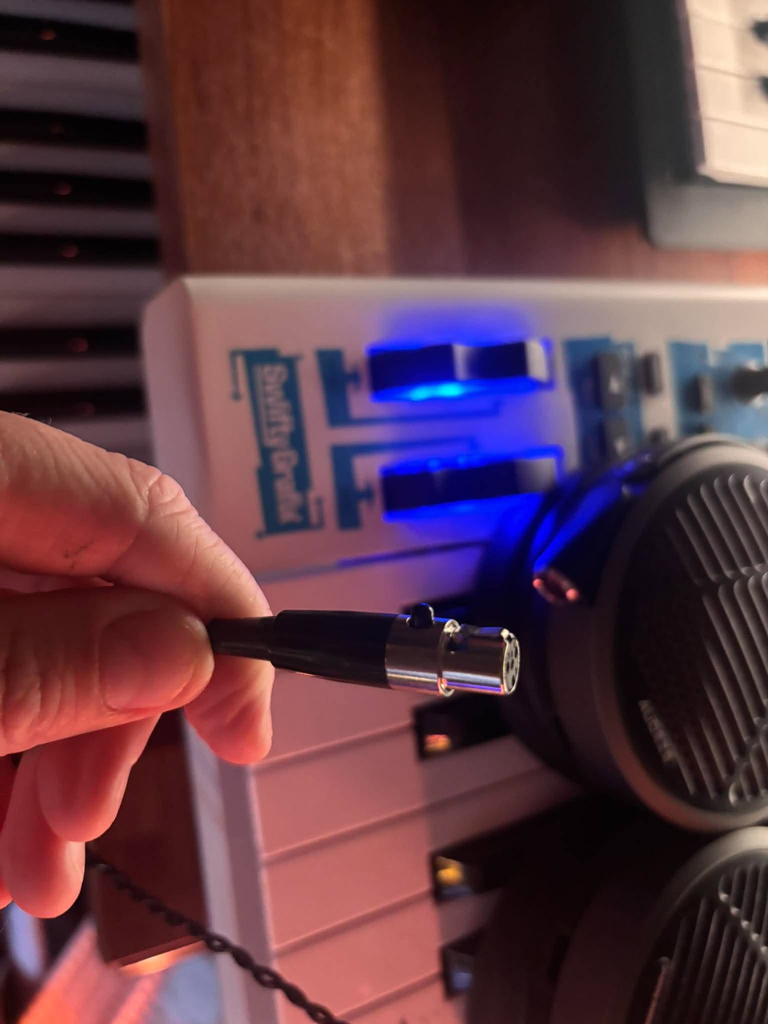
Audeze includes a 2.5-meter detachable headphone cable, a 3.5 mm adapter, a standard travel case, and a soft carrying bag. The cable length suits a typical desk-based studio setup, and the detachable connections mean you can replace a damaged cable without servicing the headphones.

I appreciate that approach, especially since there’s no battery, charging system, wireless pairing, or extra software required to operate the MM-520.

How Do the Audeze MM-520’s Planar Magnetic Drivers and SLAM Technology Work
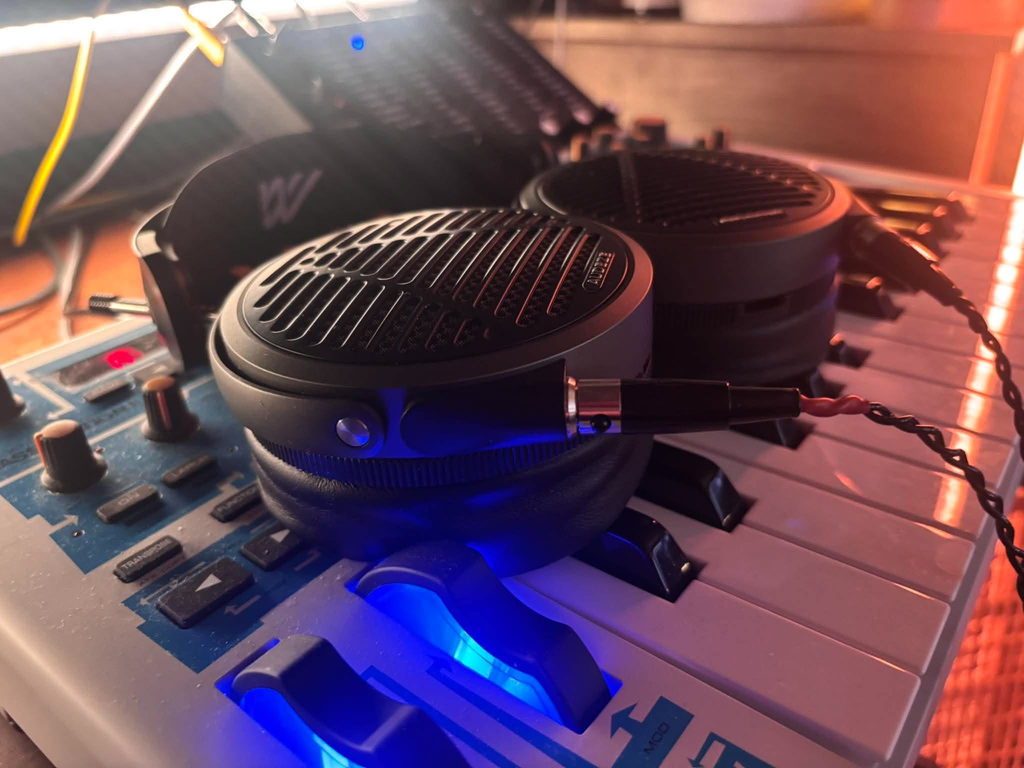
Underneath the physical design, the MM-520 uses 90 mm planar magnetic drivers with Audeze’s Ultra-Thin Uniforce diaphragms, Fluxor magnet arrays, and Fazor acoustic elements. These technologies are intended to control diaphragm movement, manage the sound passing through the driver assembly, and reduce unwanted distortion, although the specification that interests me most is the addition of SLAM.
SLAM stands for Symmetric Linear Acoustic Modulator, and it uses carefully designed acoustic channels within the headphone assembly to manage pressure between the diaphragm and the listener’s ear. The idea is to improve low-frequency performance while maintaining controlled diaphragm movement; unlike an electronic bass enhancement system, this happens through physical acoustic design rather than DSP or a software-based EQ curve.
I find this pretty damn interesting, since one of the most common problems in electronic music production is accurately judging frequencies below 100 Hz, especially when you’re using smaller studio monitors without a subwoofer. Audeze lists a frequency-response range of 5 Hz to 50 kHz for the MM-520, but that shouldn’t be interpreted as a guarantee of flat output across that range, and it certainly doesn’t mean you’ll hear a 5 Hz tone.
What is most important, in my opinion, is whether the headphone provides enough usable low-frequency information to make small adjustments with confidence (I guess I have my Arc OnEars as well to supplement).
What I find most interesting about the MM-520’s approach is that Audeze is managing low-frequency reproduction through the physical acoustic design, rather than relying on electronic bass enhancement or software processing. The intention is to extend the bass response while preserving the control and definition that matter when you’re making detailed mixing decisions.
Is The Audeze MM-520 Sound Quality Any Good?

The overall sound character is relatively balanced, although I wouldn’t describe the MM-520 as completely “neutral” in the strictest sense, since its fuller low-frequency presentation and slightly relaxed upper mids influence how certain instruments are perceived.
What I like about this tuning is that it avoids relying on exaggerated treble to create an immediate impression of detail, and the smoother presentation makes it easier to concentrate on the relationships between instruments rather than constantly noticing a particular frequency range.
All About The Bass

Bass is arguably the most interesting part of the MM-520’s performance, especially for producers working in house, techno, hip-hop, and other genres where the relationship between a kick drum and bassline determines much of the mix’s low-frequency balance, but I also do lessons and feedback through my A&R work and knowing that low end is absolutely vital for communicating to artists about notes and critiques.
I appreciate the extension into the sub-bass region because there’s a considerable difference between hearing the upper harmonics of a bass instrument and having enough fundamental information to judge its actual level, pitch, and envelope.
That distinction is essential when you’re working with longer sustained notes, particularly sine-based bass patches where changes to saturation, decay, and amplitude can be subtle. The fuller low-frequency presentation helps communicate those differences without needing an exaggerated amount of mid-bass energy, which is valuable when you’re trying to determine whether the mix has too much energy around 100 to 200 Hz or whether the problem is further down the frequency spectrum.
I also think the separation between bass quantity and bass definition deserves attention, because adding sub-bass output doesn’t automatically make a monitoring system more accurate. The MM-520 has enough low-frequency presence that I would spend time listening to familiar commercial records before making final bass decisions, especially if I were coming from a leaner headphone where I had become accustomed to compensating for the lack of sub-bass extension.
How is the midrange?

Moving into the midrange, I like the relatively full presentation of vocals, guitars, keyboards, and synthesizers, since the headphones preserve a sense of body without making the presence region excessively aggressive. Compared with the MM-500’s more forward upper-midrange character, I personally think that the MM-520 takes a smoother approach, and I can see that appealing to producers who spend considerable time working with bright synthesizers, distorted percussion, and heavily processed vocals.
I write and produce a lot of melodic house, which uses a lot of vocals and textures that thrive in this frequency band, and having accurate monitoring here on headphones especially is essential (see/hear why if you wanted to listen to my stuff below).
There is a compromise worth acknowledging here, though, because a more relaxed response around approximately 2 to 4 kHz can influence how prominently vocals appear in a mix. If you’re accustomed to headphones with a pronounced presence region, the MM-520 may initially encourage you to increase vocal brightness or level, so I would pay particular attention to that adjustment when moving between these headphones and familiar studio monitors.
The upper frequencies follow a similar approach, with a controlled presentation that allows cymbals, high-frequency percussion, and reverb tails to remain audible without becoming unnecessarily sharp. I appreciate that because detailed listening often involves hearing the same short section of music repeatedly, and a headphone that constantly exaggerates consonants, cymbal transients, or synthesizer harmonics can become tiring during those sessions.
Stereo Imaging
Stereo imaging is another area where the MM-520 deserves attention, particularly because its perceived soundstage is relatively contained rather than unusually wide. I don’t consider that an automatic disadvantage, since perceived stage width and the accuracy of individual instrument placement are different characteristics, and I would rather have clearly defined positions for instruments and effects than an exaggerated sense of separation that influences how I pan elements.
There’s enough spatial detail to make the relationships between foreground instruments, background ambience, and stereo effects interesting to examine, especially when working with shorter room reverbs and longer atmospheric effects. I appreciate the ability to concentrate on the decay and placement of those effects, although I would still confirm stereo width and center-image decisions through speakers because conventional headphone listening presents left and right channel information differently from loudspeakers.
Mixing Electronic Music With the Audeze MM-520

For me, the most convincing reason to consider the MM-520 is the role it can play when producing and mixing electronic music, where so many decisions depend on small differences in transient response, low-frequency balance, and the interaction between layered instruments.
You can have an arrangement that sounds perfectly acceptable on smaller monitors, yet when you listen through a system with additional low-frequency extension, you may discover the bassline has excessive sub energy or the kick’s decay overlaps the next note.
I think the MM-520 is especially relevant when designing kick drums, since the relationship between the initial transient, fundamental pitch, and subsequent decay needs to remain controlled. When you’re adjusting a compressor’s attack time or changing the envelope of a synthesized kick, you want to understand whether you’re modifying the transient itself or simply changing the perceived balance between the transient and the low-frequency body of the sound.
The same applies to bass synthesis, particularly when working with sustained notes, saturation, or sidechain compression. I appreciate having enough low-frequency information to assess how a compressor’s release time affects the relationship between the kick and bassline, and it’s also helpful when determining whether a bass patch has enough upper-harmonic information to remain audible on smaller playback systems.
This is where headphone monitoring really pays off in home studios. When I spoke with David Shevyn from GIK Acoustics about common studio problems, we discussed how room dimensions, speaker placement, and acoustic treatment influence low-frequency monitoring, and those considerations are especially important when you’re producing bass-focused music in a smaller room.
Headphones also remove the room’s influence on the sound traveling from your speakers to your ears, so you’re no longer dealing with those same room-induced peaks and cancellations when assessing bass. Of course, external noise can still affect what you hear through open-back headphones, and the MM-520 won’t reproduce the physical sensation of a full-range speaker system with a properly integrated subwoofer. That’s a big-time advantage if your speakers struggle below 50 Hz or your room has substantial low-frequency inconsistencies, although the MM-520 cannot reproduce the physical sensation of a full-range speaker system with a properly integrated subwoofer.
Beyond bass, I think the relatively organized midrange and detailed transient presentation make the MM-520 relevant for evaluating compression, EQ, saturation, and smaller automation changes. When you’re deciding whether two synthesizer layers need separate EQ treatment or whether one simply needs a different arrangement or level, identifying their individual tonal characteristics matters, and the same applies when listening for distortion introduced by saturation plugins.

This reminds me of something Manny Marroquin himself mentioned when I interviewed him about mixing on headphones for the site. He explained how headphone listening makes subtle details easier to examine, particularly delay tails and small frequency differences, and he also emphasized how important it is to become familiar with the monitoring system before making confident decisions.
That last point is especially relevant to the MM-520 because its fuller bass and smoother presence region may require adjustment if you’re used to a different reference.
I wouldn’t immediately reach for corrective EQ or assume the headphones need to match a particular frequency-response target, since listening to familiar records and checking mixes across other systems can help you determine which differences come from the headphones and which are actually in the production.
Why the Audeze MM-520 Earned Our Editor’s Choice Award

I think the biggest thing I appreciate about the MM-520 is how Audeze has approached the low end, because that’s an area where I think a lot of producers, myself included, can benefit from having an additional perspective outside of their regular studio monitors.
There’s enough extension and definition here to make the relationship between kick drums, sustained bass notes, and lower-frequency harmonics easier to examine, and when you’re producing electronic music where those elements account for so much of the arrangement, having that additional information available can make a genuine difference to how confidently you approach your mix.
I also appreciate that Audeze hasn’t tried to make the headphones sound excessively bright or analytical simply to give the impression of additional detail, since the relatively smooth upper frequencies and controlled midrange make them easier to listen to for extended periods. I do think the slightly relaxed upper-midrange response will take some getting used to, especially if you’re coming from something like the MM-500, although once you’re familiar with that presentation, there’s a lot to appreciate about how the MM-520 handles instrument separation, stereo placement, and smaller processing decisions.
Of course, there are some compromises, and I wouldn’t recommend spending $1,699 on these without considering them. They’re heavy, the open-back construction limits where you can use them, and I wouldn’t suggest replacing a monitoring system you’re already familiar with simply because the MM-520 offers additional low-frequency extension. You still need to learn how they respond, spend time listening to familiar records, and check your mixes on other systems, because that’s part of making accurate production decisions regardless of how expensive your headphones are.
But after considering the actual production applications, I’m giving the Audeze MM-520 a Magnetic Magazine Editor’s Choice Award, primarily because of how well its low-frequency reproduction, detailed imaging, and relatively smooth presentation work together for the type of music production I spend most of my time doing.
For producers working in house, techno, progressive house, and other forms of electronic music where low-frequency accuracy matters most, I think the MM-520 deserves serious consideration. It’s not going to eliminate the need for studio monitors or additional reference systems, and I wouldn’t pretend that it will, although as a dedicated professional headphone that can handle sound design, detailed mixing, and critical listening within the same setup, it offers exactly the kind of performance and functionality I want to see at this price.

Will Vance is a professional music producer who has been involved in the industry for the better part of a decade and has been the managing editor at Magnetic Magazine since mid-2022. In that time period, he has published thousands of articles on music production, industry think pieces and educational articles about the music industry. Over the last decade as a professional music producer, Will Vance has also ran multiple successful and highly respected record labels in the industry, including Where The Heart Is Records as well as having launched a new label with a focus on community through Magnetic Magazine. When not running these labels or producing his own music, Vance is likely writing for other top industry sites like Waves or the Hyperbits Masterclass or working on his upcoming book on mindfulness in music production. On the rare chance he's not thinking about music production, he's probably running a game of Dungeons and Dragons with his friends which he has been the dungeon master for for many years.