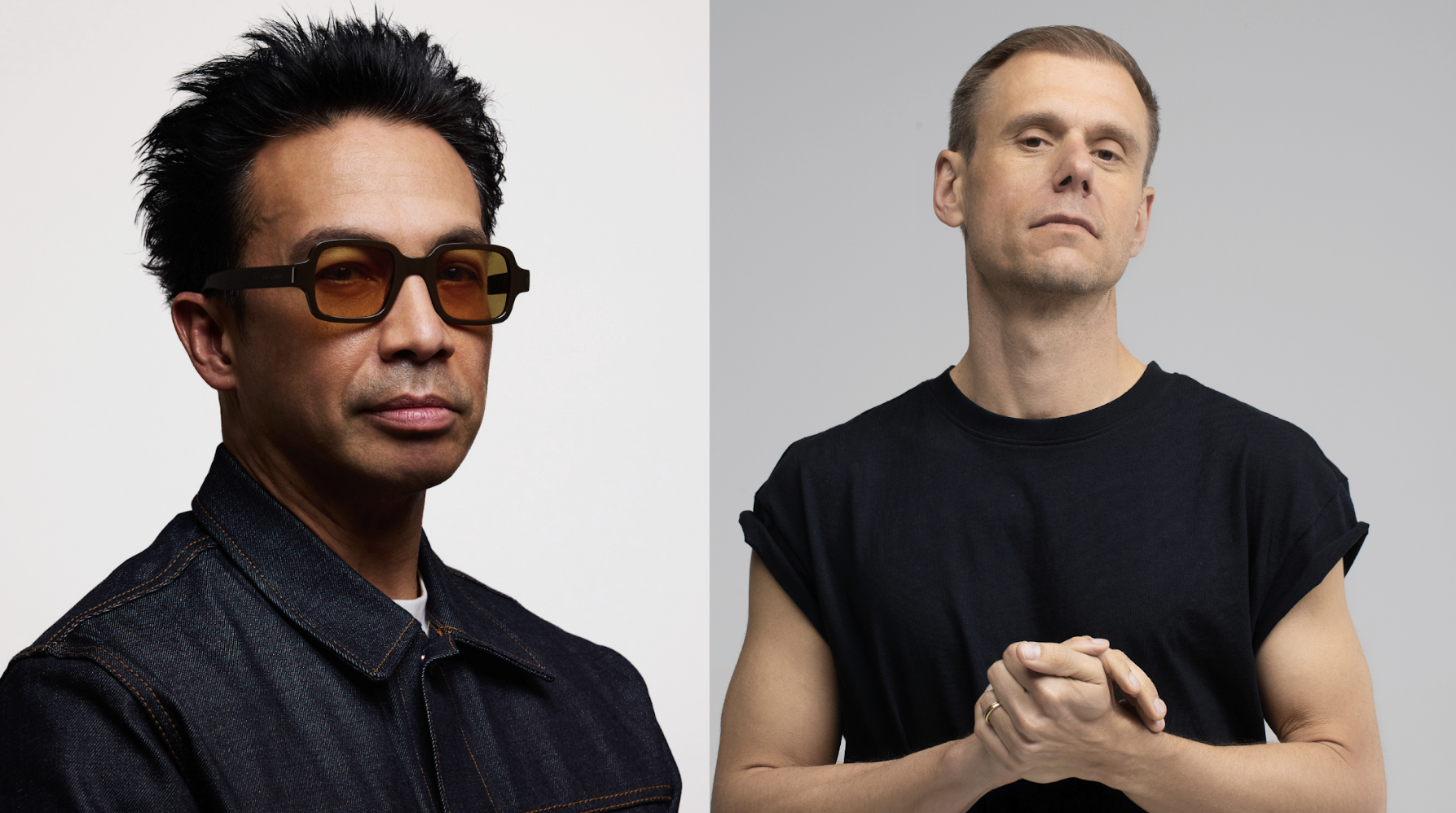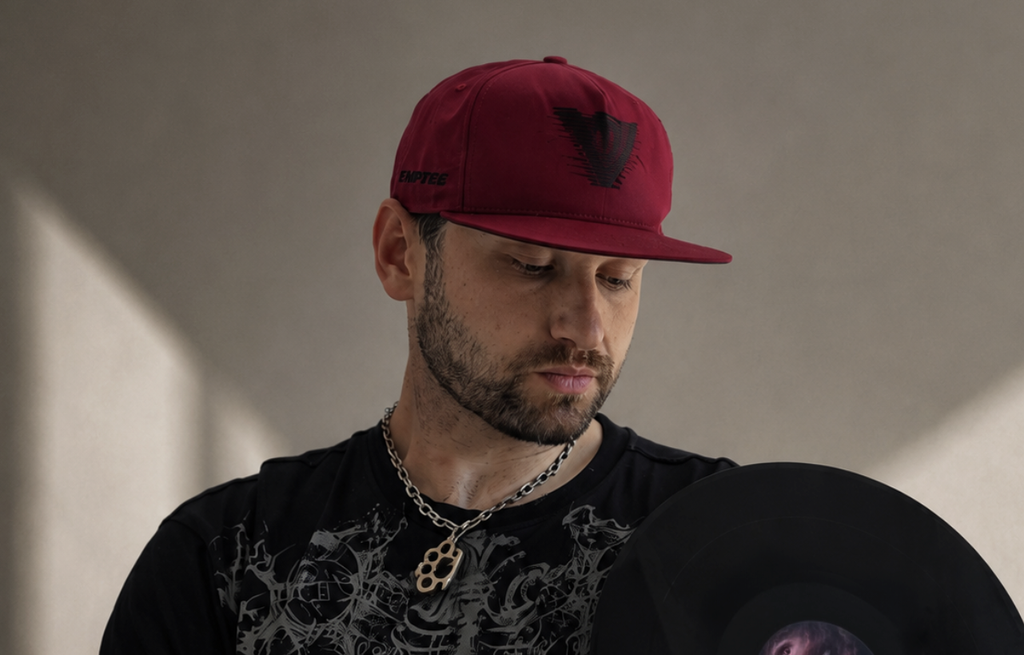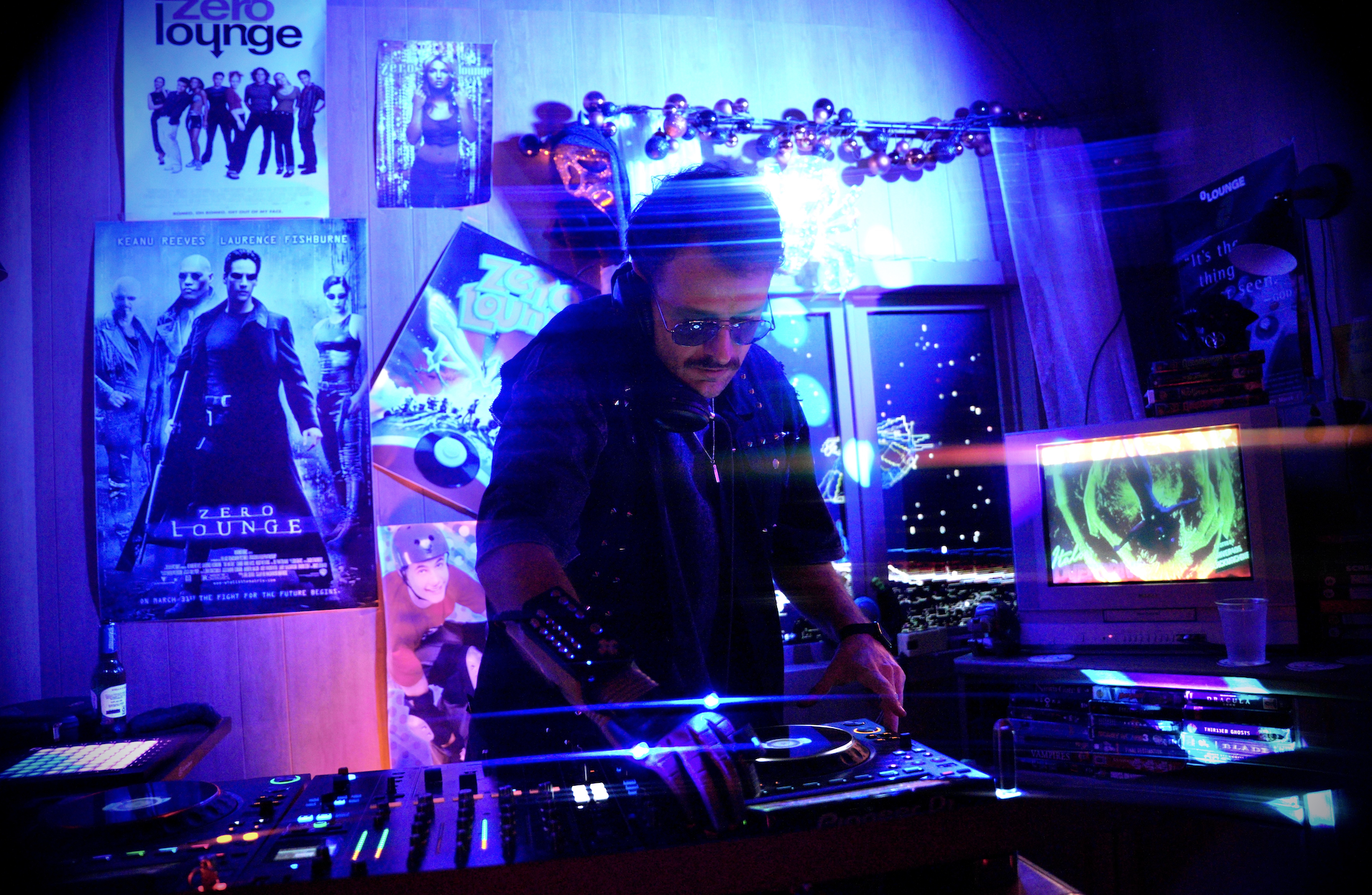
Driver405’s (@driver405) remix of Valley Lights’ “Alexandra” lands on Outland Recordings as a high-energy rework built from heartbreak, synthpop shine, Italo momentum, and an EBM-leaning bite. The original comes from Valley Lights’ Devil May Care, and Driver405 heard something in the vocal that could move into his own darker, club-focused lane almost immediately.
That instinct shaped the whole remix. Instead of treating “Alexandra” as a simple tempo lift, Driver405 builds a more narrative version of the song’s emotional center, using wedding bells as an image of a union lost, melancholy synth writing to trace the softer stages of grief, and an EBM breakdown to push the remix into anger before the final section gathers everything into acceptance. The result feels bright on the surface, but there is something bruised underneath it.
The interview below gets into both sides of that process. Driver405 talks about the friendship behind the remix, why remixes give him a more productive creative frame than a blank page, and how artists can keep rough ideas alive in an era of polished loops, generative tools, and instant finish.
For a producer whose work already sits between nostalgia and club pressure, the answer is clear: the surface can be sharp, but the track still needs a reason to exist.
Interview With Driver405

What is the story behind your new “Alexandra” remix on Outland Recordings?
I met Kai, Valley Lights, through the LA synthwave scene and we performed a show at Molly Malone’s together years ago. He recently hit me up asking if I’d be interested in doing a remix from his sophomore album, Devil May Care. When I heard “Alexandra,” it was this super catchy, chillwave sort of mid-tempo track, but I could hear the vocal being used alongside my sort of Italo/EBM style stuff and immediately caught a vibe.
I often throw a lot of ideas at the wall when I start out, but this one came together really quick. I also wanted to tell a story with this remix. The song is full of emotional lyrics, so I knew I wanted to take a euphoric approach with an added kind of darker twist.
I added the wedding bells as a sort of ode to heartbreak and I explored the stages of grief: building on bargaining, denial, and sadness with the melancholy synth melodies, and then anger with the EBM breakdown/bridge part, and finally, acceptance at the end where all the elements come together.
Do you prefer producing remixes or originals?
I do prefer doing remixes or collabs at least. I think half of my releases are remixes haha. But, I like to treat them almost as if I’m writing an original… if that makes sense.
Remixes give me a starting point and sort of a box to work in, when sometimes a blank piece of paper is the hardest part of writing music. I like to treat remixes almost like brand-new originals built around the core vocal, but then adding my own vocal treatment, drums, synths, percussion, FX, and bass. I want to breathe new life into a track, and more recently, have been making the tracks a bit DJ/club friendly.
Early ideas are often rough. How should artists treat that stage when polished outputs from Splice or generative plugins are always nearby? Some tracks sound polished without saying anything authentic. How can artists avoid mistaking polish for purpose?
This took me a while to learn, but you absolutely have to be comfortable in the uncertainty.
Treat every track like sculpting wet clay. It’s not going to look or sound perfect in the first session. But you will know if it is worth finishing after a few hours. Maybe you discovered a groove, a bassline, a riff, a vocal idea, that needs to see the light of day. My advice to artists is: don’t worry about what your peers are doing, just build the music that calls to you first and foremost. Once the idea is there, then focus on arranging as fast as possible so you don’t get stuck in a loop.
Treat it like an outline.
Then later, you can worry about the mixing, the levels, the sound design, the mastering, the final 5%, etc.

How can producers stay patient with unfinished work when finished-sounding material is easy to generate?
Remember why you started writing music in the first place.
The satisfaction of performing and vibing to a track that you created with your own brain is one of the most rewarding experiences that you can have as a musician. Actually playing a hardware synth, twisting a knob, strumming a guitar, singing into a microphone — the act of creating and exploring — that is the fun of it for me. Splice loops are a great tool, but if a track is built entirely out of pre-made loops without your own original spin, it’s harder for your distinct voice as an artist to come through.
For producers already comparing themselves to others online, how does AI’s ability to instantly make music affect the whole equation? What perspective would help artists who feel discouraged by AI’s ability to imitate parts of the process?
AI is a term that has been used since like the 1950s and nowadays refers mostly to generative LLMs and prompting. If we are discussing how prompting can instantly make a song from scratch, I would argue that this is a derivative result calculated and, perhaps unethically trained, from thousands of hours of real human music. Things are changing for sure, but musicians and producers shouldn’t worry about AI replacing them completely, since people will always relate to other people — live, on camera, etc.
There is also backlash online considerably, creators should be open to recording the process a little, showing their work, and I think this will help you stand out.
Here is my soapbox: if you choose to use AI tools, how you use them and how much you use them matters immensely here. There is a line in the sand that we need to draw as a culture. Is 5% or 25% acceptable? I’m not exactly sure. Sequencers exist. Randomizers exist.
Digital synths exist. Technology should define the era, so maybe AI has a very small place at the table. If an ethically trained tool or stem separator is considered AI, there may be some room for that in the creative process as an effect, a way to get inspired, create DJ tools, or as an assistant. But I would argue that people who only use prompting to make music don’t really enjoy making music. The honest thing to do would be to disclose if your song is 100% AI. If you skip the creation part entirely, you’re missing out on why we do this in the first place — to tap into something bigger than us. To communicate a feeling, a message, a memory, a story.

Closing Thoughts From The Editor
Driver405’s best point is that a remix can be a constraint without being a limitation.
The vocal, lyric, and emotional premise give him a starting place, but he still has to make the track his own through drums, bass, synths, FX, arrangement, and tone. That is what separates a remix from a functional edit. “Alexandra” does not just get more energy in his hands. It gets a different emotional architecture.
That connects directly to my earlier interview with Roy LaCroix on reviving ’90s classics with modern energy. That piece dealt with Ryan’s other alias and the question of how older musical references can be brought forward without flattening them into pure nostalgia. Driver405 applies the same logic from a different angle here. The remix nods to Italo, synthwave, EBM, and dark club aesthetics, but the point is not cosplay. The point is emotional translation.
There is also a clean link to my coverage of Blipblox and Driver405’s Retro Drive sound pack for myTRACKS. That release showed how specific his sound palette has become: Italo, synthwave, and EBM-inspired tones that can be played, shaped, and performed rather than treated as static retro decoration. “Alexandra” feels like the artist version of the same idea. The sound design has a period reference, but the arrangement is built for current rooms.
The connection to The Midnight’s “Runaway” production breakdown is also worth making because Driver405’s 2026 remix of The Midnight and Bonnie McKee sits in the background of this run.
The broader synthwave lane has always depended on balancing nostalgia with modern songwriting, and “Alexandra” gives Driver405 a chance to push that balance toward the club. He keeps the emotional vocal intact, then surrounds it with enough Italo and EBM force to make the heartbreak move differently.
That same thread runs through Kenji Takashima’s interview on why the creative process still counts in the AI era. Kenji’s point was that making music by hand still teaches the artist something, even as tools become faster and more capable. Driver405 gives that argument a physical shape: playing hardware synths, twisting knobs, strumming guitars, singing into microphones, and feeling the satisfaction of performing something that started in your own brain. That process is not filler before the finished file. It is the reason the finished file carries identity.
That is what makes “Alexandra” feel like the right record for this conversation.
It is polished, but it does not mistake polish for purpose. The remix has a clear club function, but it also has wedding bells, grief, melancholy, anger, and acceptance sitting inside the arrangement. Driver405 takes the original’s heartbreak and turns it into motion without sanding down the hurt that gave the song its charge. That is the real trick: making it hit harder while letting it feel more exposed.

Will Vance is a professional music producer who has been involved in the industry for the better part of a decade and has been the managing editor at Magnetic Magazine since mid-2022. In that time period, he has published thousands of articles on music production, industry think pieces and educational articles about the music industry. Over the last decade as a professional music producer, Will Vance has also ran multiple successful and highly respected record labels in the industry, including Where The Heart Is Records as well as having launched a new label with a focus on community through Magnetic Magazine. When not running these labels or producing his own music, Vance is likely writing for other top industry sites like Waves or the Hyperbits Masterclass or working on his upcoming book on mindfulness in music production. On the rare chance he's not thinking about music production, he's probably running a game of Dungeons and Dragons with his friends which he has been the dungeon master for for many years.