DJing can look intimidating from the outside.
The gear has its own language. rekordbox has its own workflow. Beatmatching, phrasing, cue points, EQ, effects, track selection, and energy control all feel simple once they click, but the first few steps can make the entire process feel harder than it needs to be.
That is the gap AlphaTheta and FEMME HOUSE are trying to close with Intro to DJing with AlphaTheta x FEMME HOUSE, a new four-session online course built for aspiring DJs who want a clearer path into the basics.
The course pairs FEMME HOUSE’s education model with AlphaTheta and Pioneer DJ hardware, centering the Pioneer DJ DDJ-FLX4 while keeping the lessons open enough for students using the AlphaTheta DDJ-FLX2 to follow along. It is led by Gera Akate, a DJ, producer, and educator whose role here is not only to explain the gear, but to make the first stage of DJing feel less like a wall.
That matters because learning DJing is not only about knowing what every button does. It is about building enough confidence to press play, hear what is happening, and recover when the mix does not behave the way you expected.
Enrollment is offered on a pay-what-you-can basis and is now open at thisisfemmehouse.com

The course starts with real DJ workflow
The curriculum covers the early skills that new DJs usually need most.
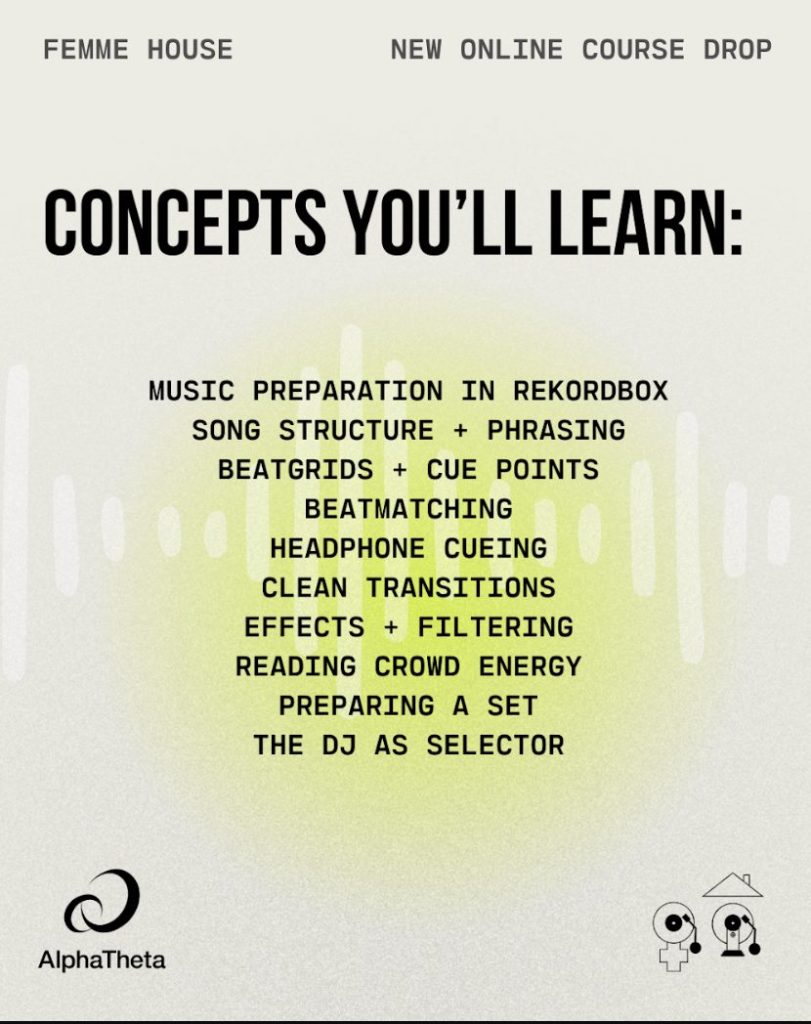
Students will work on DJ equipment fundamentals, rekordbox preparation, music organization, beatmatching, cueing, song structure, phrasing, EQ, effects, transitions, track selection, energy control, performance preparation, and club workflow.
That list matters because it does not treat DJing as one isolated skill.
A clean mix starts long before the transition. It starts with how tracks are organized, how cue points are set, how well the DJ understands song structure, and how quickly they can read energy in a room or recording context. A beginner who only learns button presses can still feel lost when it is time to build a set. A beginner who learns workflow has a better chance of understanding why each technical move matters.
That is where this course seems most relevant. It gives new DJs a first system, not only a first lesson.
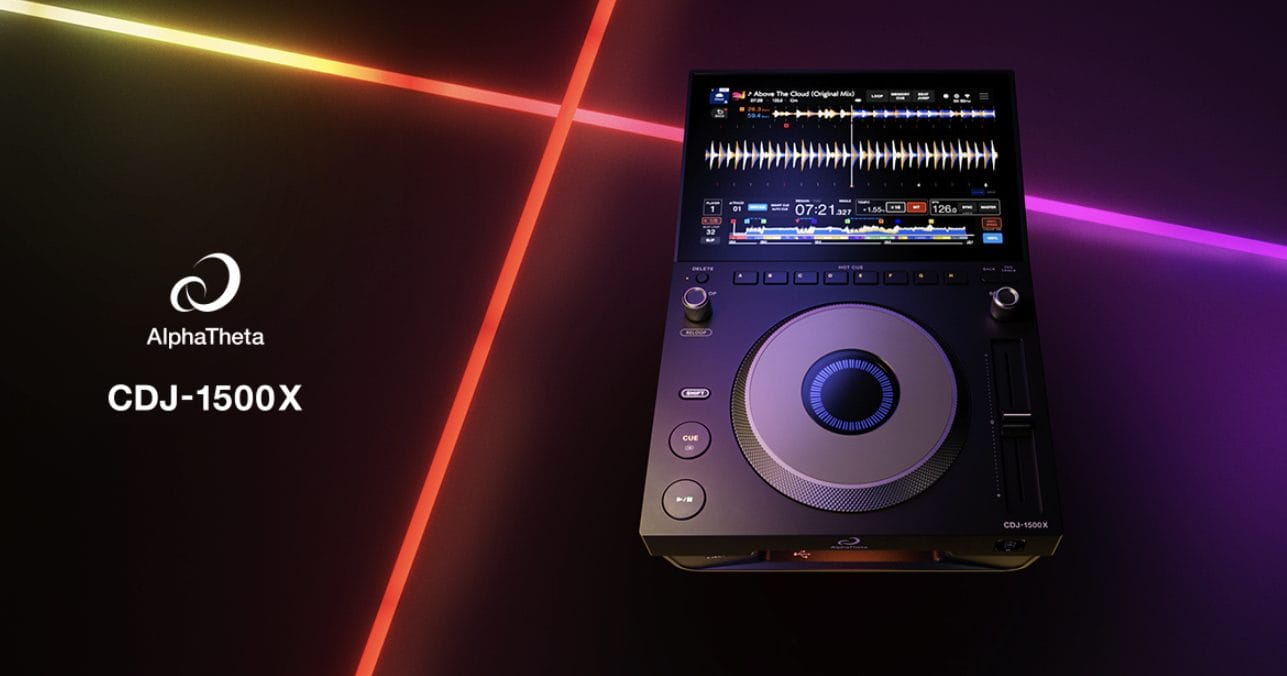
It also connects naturally with the wider AlphaTheta ecosystem I have covered before, including my article on the AlphaTheta CDJ-1500X, where the larger story was how the company keeps building gear around the actual habits of DJs. This course brings that same idea down to the beginner level: learn the workflow early, then let the gear feel less foreign later.
FEMME HOUSE gives the program its center
FEMME HOUSE has built its reputation around making music education more accessible for communities that have historically had fewer open doors in the industry.
That includes women, gender expansive and non-conforming creators, LGBTQIA+ creators, and BIPOC creators. The organization has already served thousands of students across dozens of countries through online courses, workshops, fellowships, scholarships, and community programming.
That background gives this course more weight than a basic brand tutorial.
The point is not only to teach someone how to use a controller. The point is to reduce the intimidation factor around DJing and make the first step feel less gatekept. That is a real issue in dance music, where gear knowledge, booth confidence, and scene access have often been treated like things people are supposed to magically absorb.
LP Giobbi, Co-Founder of FEMME HOUSE, frames the mission around making music education more accessible and giving students real skills and lasting confidence. That is exactly the kind of framing this subject needs. New DJs do not only need a course. They need permission to start badly, learn the basics, and keep going.
The DDJ-FLX4 gives students a clear starting point
The course is built around the Pioneer DJ DDJ-FLX4.
That choice makes sense because the FLX4 sits in a lane that new DJs can actually approach. It is not a club mixer and multi-player setup, but it teaches the muscle memory and controller logic that helps students understand larger AlphaTheta and Pioneer DJ systems later.
That bridge is one of the most important parts of the course. Students are not only learning a home-controller workflow. They are being shown how those early skills translate to club-standard environments.
That matters for anyone who wants to move beyond bedroom practice and into parties, bars, local nights, radio shows, livestreams, or club booths. The jump from a first controller to a professional booth can be mentally brutal if the underlying workflow is unclear. The more a beginner understands cueing, phrasing, EQ, transitions, and track prep, the less alien that booth feels.
AlphaTheta’s recent product direction has been especially focused on that bridge between entry-level learning and club-level systems. My piece on the AlphaTheta DJM-V5 looked at how smaller-format gear can still carry serious DJ logic. This course takes a similar philosophy and applies it to education.
Confidence is part of the curriculum
The best part of this announcement is that confidence is treated as part of the skill set.
That can sound soft until you remember what DJing actually asks from a person. You have to select music in real time. You have to make decisions under pressure. You have to learn from mistakes without freezing. You have to understand when the room needs a lift, when it needs restraint, and when your original plan is no longer working.
Technical skills matter, but confidence is what lets those skills show up when someone is listening.
That is also why education programs like this need to cover performance preparation and energy control alongside beatmatching and cue points. The best beginner DJ courses should not stop at making two tracks line up. They should help students understand why one track follows another, why a transition works emotionally, and how a set can feel intentional without becoming rigid.
For a parallel piece of AlphaTheta culture, our coverage of the AlphaTheta HDJ-F10 wireless headphones touched on the way modern DJ gear keeps adapting to the conditions performers actually face. The new FEMME HOUSE course takes that same real-world concern and applies it before the booth even enters the picture.
Enrollment is open now
Intro to DJing with AlphaTheta x FEMME HOUSE is open now at thisisfemmehouse.com.
The four-session course gives aspiring DJs a structured way into rekordbox preparation, controller workflow, beatmatching, phrasing, transitions, effects, track selection, energy control, and performance readiness. It is built around the Pioneer DJ DDJ-FLX4, with lessons that can also support students using the AlphaTheta DDJ-FLX2.
For people who have wanted to start DJing but felt blocked by cost, gear confusion, or the feeling that everyone else already knows the rules, this is the kind of course that can make the first step feel more manageable.
That is the real value here. DJing should still take time, taste, patience, and repetition. But the doorway does not need to feel guarded.

Will Vance is a professional music producer who has been involved in the industry for the better part of a decade and has been the managing editor at Magnetic Magazine since mid-2022. In that time period, he has published thousands of articles on music production, industry think pieces and educational articles about the music industry. Over the last decade as a professional music producer, Will Vance has also ran multiple successful and highly respected record labels in the industry, including Where The Heart Is Records as well as having launched a new label with a focus on community through Magnetic Magazine. When not running these labels or producing his own music, Vance is likely writing for other top industry sites like Waves or the Hyperbits Masterclass or working on his upcoming book on mindfulness in music production. On the rare chance he's not thinking about music production, he's probably running a game of Dungeons and Dragons with his friends which he has been the dungeon master for for many years.