Above Image Credit: Hansen Adrian
There is an easy way to write about grief, and most of the time it makes the song feel smaller. You zoom out too far, make everything too symbolic, and suddenly the person at the center of the work starts to disappear behind the language.
Jimmy Lim’s “Assphalt” works because it moves in the other direction.
It stays close to what his grandmother left behind and lets those details carry the meaning without forcing them into an easy explanation.
The video centers on objects that become important because of who touched them, used them, or kept them nearby: cards, coffee, eggs, kemoceng, clove cigarettes, and the sarong his grandmother used in the morning. None of those details need to be inflated into something more poetic than they already are. That is the point. Grief usually does not live in the big statement. It lives in the small things that keep acting like proof that someone was here.
Created in collaboration with 4th District Co., “Assphalt” follows Lim in the back of a pickup truck through Orange, Massachusetts, moving through a landscape that feels open, plain, and heavy in a way that does not announce itself right away. The work arrives on October 20, the anniversary of both his grandmother’s birth and death, and that date gives the piece a personal weight without making it feel like a formal tribute.
It feels more like a journal entry that took years to become public.
That fits Lim’s wider practice. He is an Indonesian American artist, producer, vocalist, sound artist, and Berklee professor whose work often moves through voice, electronics, found sound, wearable instruments, sensors, and the idea that music can hold a record of where someone was and what they were paying attention to at the time.
“Assphalt” pulls all of that into one focused gesture. It is a song, a video, and a memorial built around a simple idea: here she is.
Interview with Jimmy Lim

You describe making music as a form of journaling. What were you trying to document when you started “Assphalt”?
I started “Assphalt” thinking of people and objects that are no longer there.
You know how asphalt makes terrible holes and bumps? And we have to deal with them no matter what, in our rolling, day-to-day lives, because life keeps going even after objects and people leave, disappear, or are gone. In this case, these are objects that were dear to my grandmother.
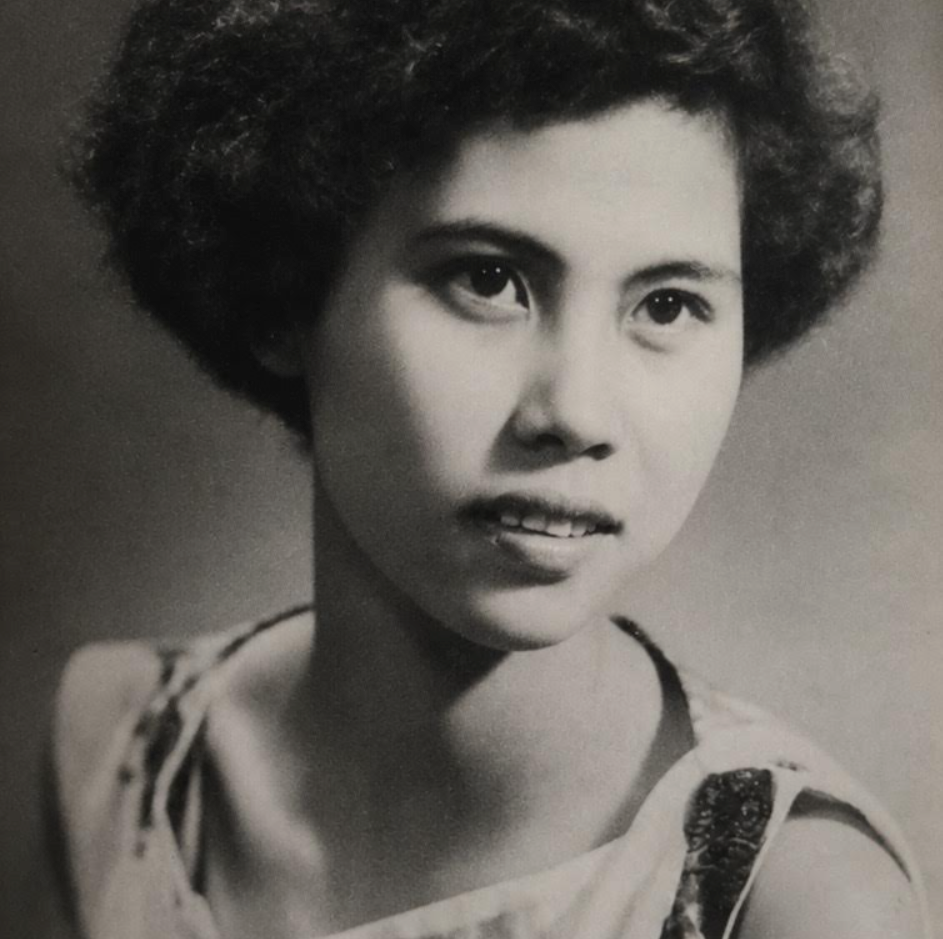
In the video, you can find me building a shrine for her: a deck of cards, a jar of coffee, eggs, feathers, which we call kemoceng in Bahasa, meaning duster, a pack of clove cigarettes, carpeted with a sarong that she always used in the morning to ground everything down.
When writing about someone close to you, how do you decide what to share and what to keep private?
I write from personal experience, but I believe that there is something universal in anything personal.
I think it is amazing to hear various cultures and people from many different locations sharing parallels and shared experiences in their lives. In this case, with my grandmother, I think all of us know or have one, no matter how close or fragile the relationship is or was.
I also tend to share codes instead of a blatant “my grandmother likes to drink coffee every day!” I think symbols and ceremonies are cool in a way that they become a gate between the private and the public.
Everything is shared, yet simultaneously it stays hidden.
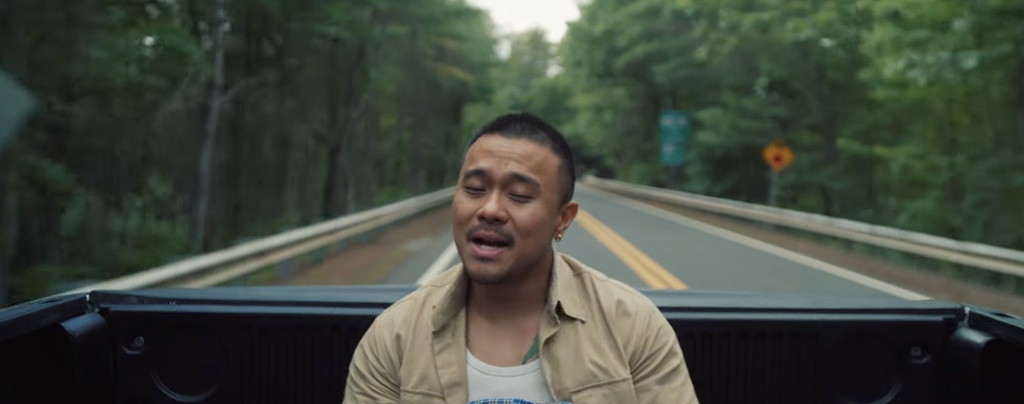
You filmed in Orange, Massachusetts. What led you to that location, and how did the surroundings affect your plans?
Because it is beautiful in its own winding way.
My co-director for the project from 4th District Co., Aaron Hwang, also had a history where his grandmother immigrated to Deerfield, Massachusetts. It became a full-circle loop where we connected with our matriarchs.
We also recorded some parts at the Arnold Arboretum in Boston, around the remnants of Benjamin Bussey’s old Woodland Hill estate. His mansion used to sit on what is now Bussey Hill, and there is something I love about filming in a place where a structure disappeared but traces of its history are still embedded in the landscape.
We were not necessarily looking for places that literally represented grief or memory, but instead places that already seemed to carry their own histories, no matter how ordinary-looking, and then brought ours into them.
How has teaching music production at Berklee changed how you explain your decisions, and how do you protect time to make music yourself?
Someone said that when you scientize, is that a word, something, it loses half its magic.
Teaching is a way for me to be against that idea. Actually, knowing is a way to sediment the magic, to turn it into an object.
This is also why I mentioned that my music is journaling, since I do not rush when I write. I want it to become physical.
I started “Assphalt” in 2019, and I am happy to say that it is finally ready to come out of my journal for people to see.

With “Assphalt” becoming public, what do you hope a listener might notice about the people, objects or sounds they would want to document in their own life?
I hope that people can turn goodbyes into something else. At least, a journal.
The act of flowing, forming, shape-shifting into something else hopefully reminds us that we are indeed part of a bigger universe. We are creatures of remembrance, and I personally wanted to highlight the extraordinary ordinary life of us via “Assphalt.”
In this case with my grandmother, I wanted it to become a shrine for her, so she can be symbolized in a form of a song. Her humor, grace, and darkness were all there, and this is a way of me saying, “here she is.”
There is also a very basic scrolling game that I vibe-coded as a memory of her wit and fun, and how she introduced me to these simple card games when I was younger. My earliest memory of play might have come from her, so it only makes sense for me to dedicate a truck, bicycle, running-man “Assphalt” video game in memoriam.

Closing Thoughts
The thing that makes “Assphalt” work is that Lim does not try to make grief look impressive. He lets it stay close to ordinary life. That is usually where it hurts anyway.
Not in the large symbolic gestures, but in the things that suddenly feel too specific to be replaceable. The morning sarong. The cigarettes. Objects that would look minor to someone else until the person who remembers arranges them.
That is also what gives the video its shape.
A pickup truck, a shifting landscape, a road, a shrine, a grave, a game, a song. None of it feels separated into neat categories. It all becomes part of one memorial system, which makes sense for an artist who already treats sound as something that can hold history, place, and bodily memory at the same time.
Lim’s answer about privacy may be the most useful part of the whole interview.
He talks about sharing codes instead of spelling everything out. That is a good way to think about emotionally personal art in general. The work does not need to expose every private fact in order to be honest. Sometimes the symbol does a better job because it protects the person while still letting the feeling reach someone else.
That also connects with Mikhail Ilyin’s interview around What is real?. Ilyin’s record deals with memory, perception, and lived experience from a more compositional, philosophical angle. Lim’s “Assphalt” is earthier and more domestic, but both artists are asking how much of a life can be held in sound once the original moment is gone.
The Berklee piece adds another layer because Lim is making this work not only from inside his own practice. He is also teaching production, sound, and decision-making to students. His answer pushes back against the idea that explaining something kills the magic.
That feels important if you really think about it…
A lot of artists protect mystery by refusing to explain anything, but Lim seems more interested in turning knowledge into material. The more he understands the process, the more physical the memory becomes.
That same thinking sits behind the Berklee Intersectional Soundbox Archive, where Lim is listed as one of the project leads. The archive’s focus on voices, stories, instruments, and sound-based expressions helps make sense of “Assphalt” as part of a wider practice.
There is also a link to Sample Focus founder Daniel Trostli’s conversation about building a better sample library, not because the projects are the same, but because both raise the question of what a sound becomes once it is collected and reused. In Lim’s case, the archive is not only sonic. It is emotional. A sound, an object, a place, or a game can become a way to keep speaking to someone who is no longer physically there.
That is the deeper reason “Assphalt” feels less like a music video premiere and more like a small archive opening itself to the public. Lim is not only saying goodbye. He is giving the goodbye a shape it can keep changing inside. A song, a video, a digital game, a set of objects, a road in Massachusetts, and a date on the calendar all point back to one person.
The line that stays with me is his simplest one: “here she is.”
That is what the whole piece is doing. It does not claim to explain a life completely. It does not turn grief into a clean lesson. It gathers what it can, gives those fragments motion, and lets the rest remain private.

Will Vance is a professional music producer who has been involved in the industry for the better part of a decade and has been the managing editor at Magnetic Magazine since mid-2022. In that time period, he has published thousands of articles on music production, industry think pieces and educational articles about the music industry. Over the last decade as a professional music producer, Will Vance has also ran multiple successful and highly respected record labels in the industry, including Where The Heart Is Records as well as having launched a new label with a focus on community through Magnetic Magazine. When not running these labels or producing his own music, Vance is likely writing for other top industry sites like Waves or the Hyperbits Masterclass or working on his upcoming book on mindfulness in music production. On the rare chance he's not thinking about music production, he's probably running a game of Dungeons and Dragons with his friends which he has been the dungeon master for for many years.