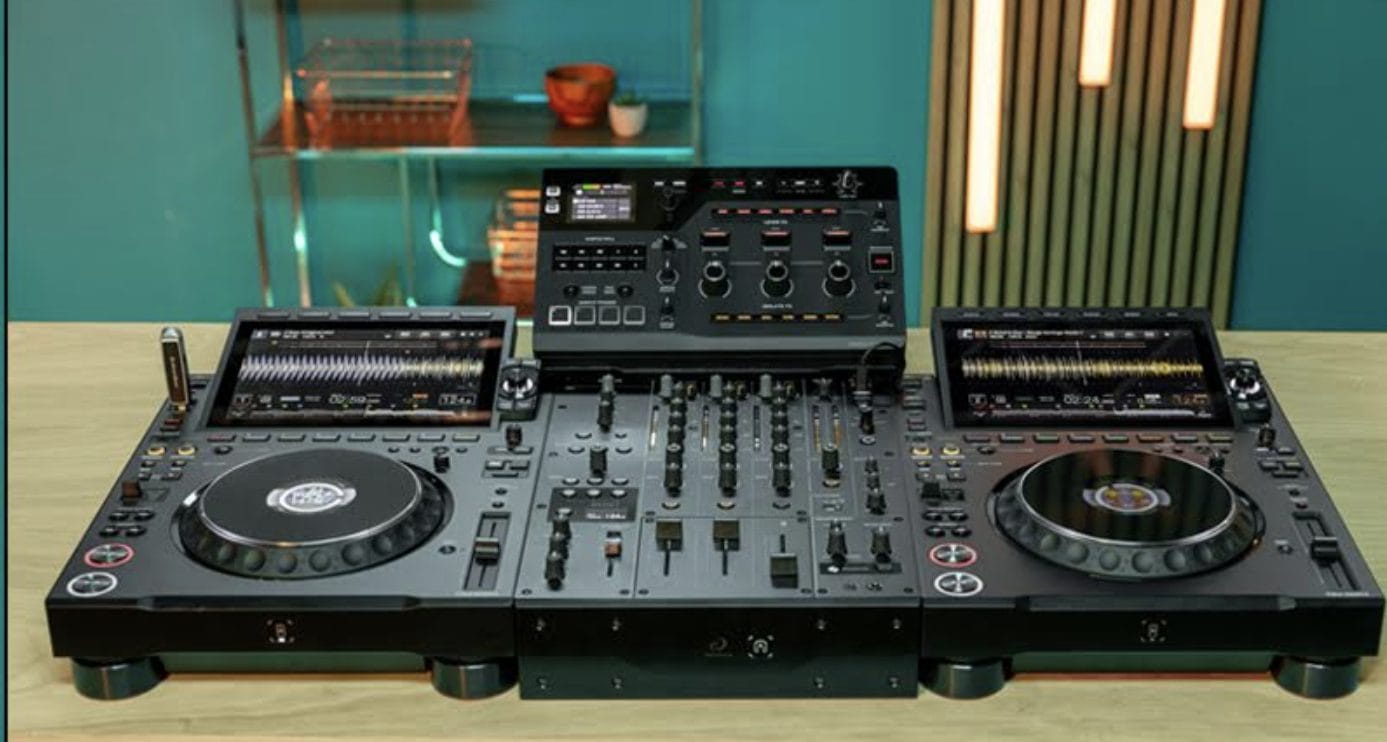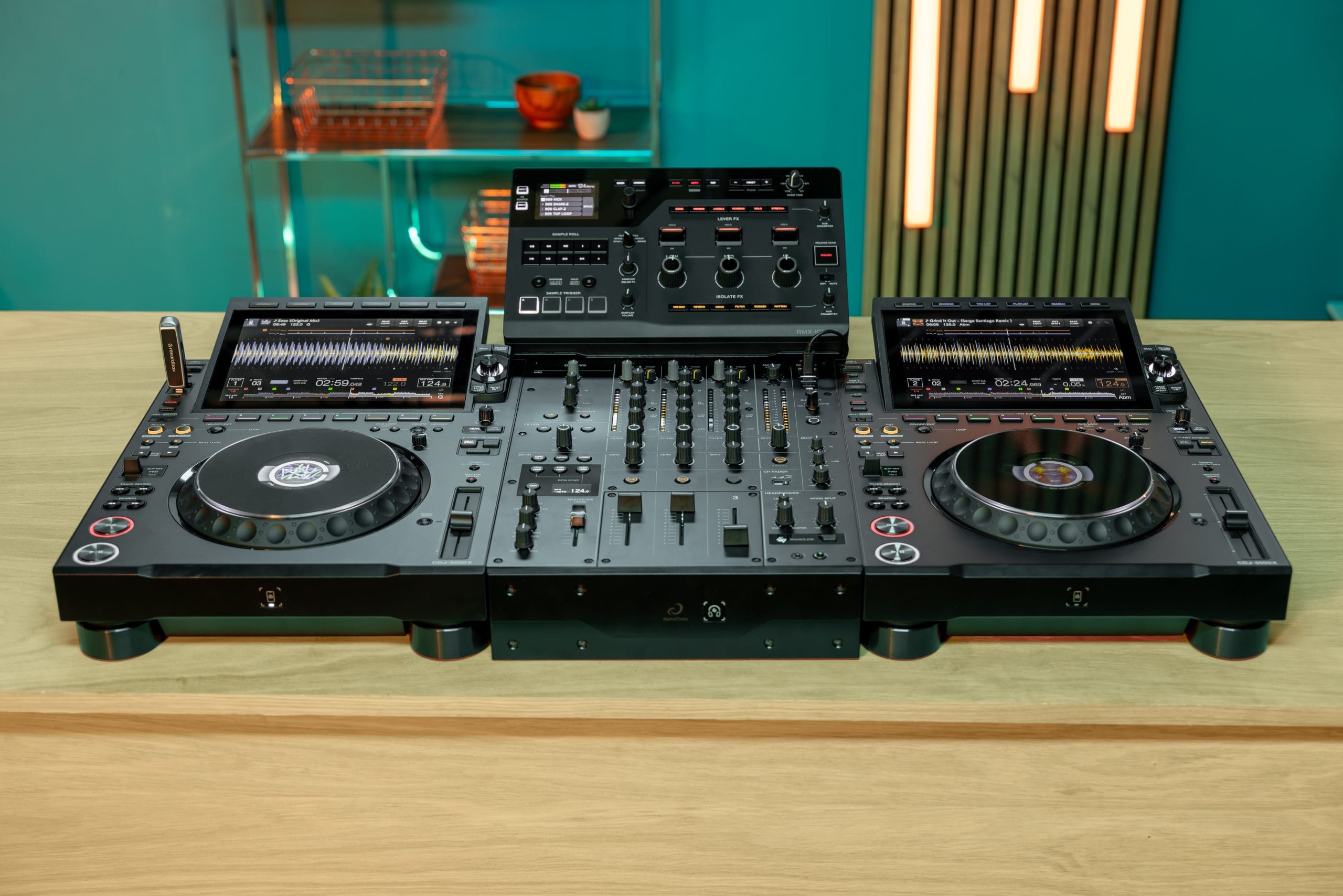
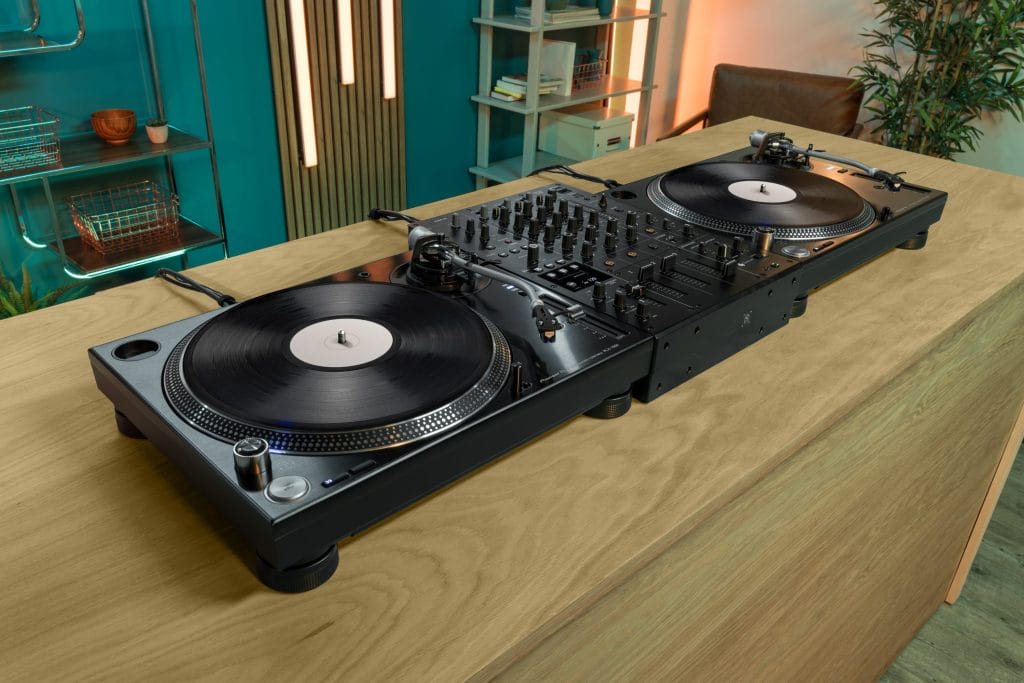
I look at the AlphaTheta DJM-V5 as a mixer designed around intention rather than scale, because instead of stripping features to hit a smaller footprint, it condenses the DJM-V10 philosophy into a form that actually fits how many DJs work right now.
The layout feels familiar immediately, but nothing feels cramped, and the focus stays on sound control instead of surface complexity.
Sound Design and Mixing Feel
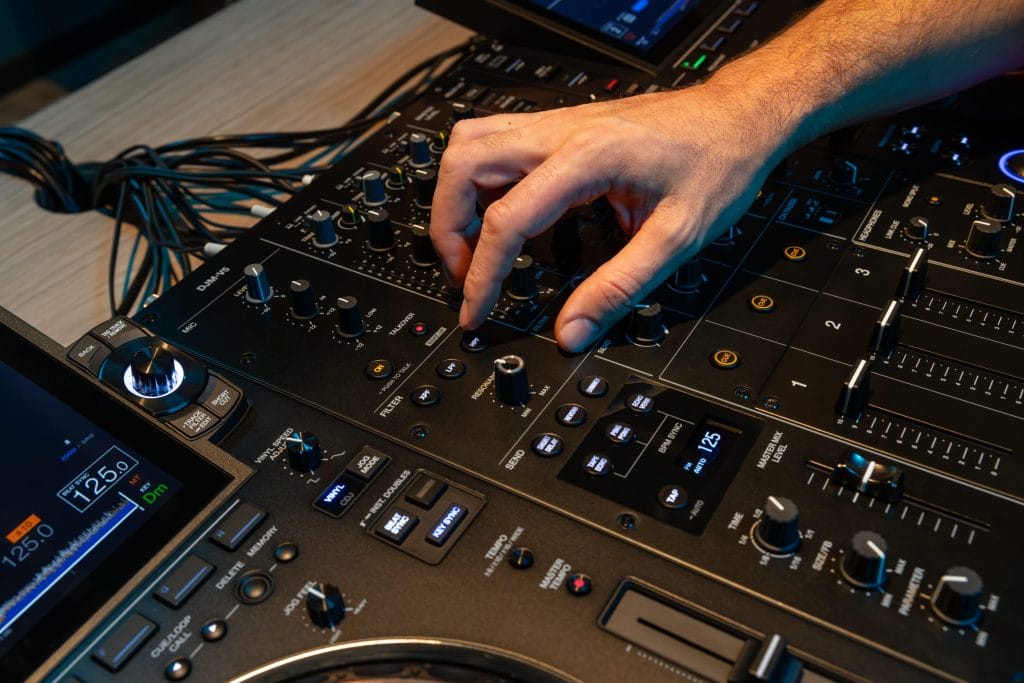
The DJM-V5 carries over the four-band EQ, channel compressor, filters, and Send FX structure from the DJM-V10, and that decision defines how this mixer behaves under pressure. The 60 mm long-throw faders paired with the Soft Mix Curve mode make transitions smoother without dulling detail, and that subtle high-frequency attenuation during blends helps layered mixes stay controlled instead of brittle.
Audio quality holds up when sessions get dense. The mixer runs 96 kHz 64-bit DSP with 32-bit ESS A/D and D/A conversion on the channel inputs and master output, and that architecture keeps separation intact even when multiple sources stack. Low frequencies stay present without masking mids, and the overall presentation avoids saturation when pushing levels, which matters when playing extended sets rather than short showcase mixes.
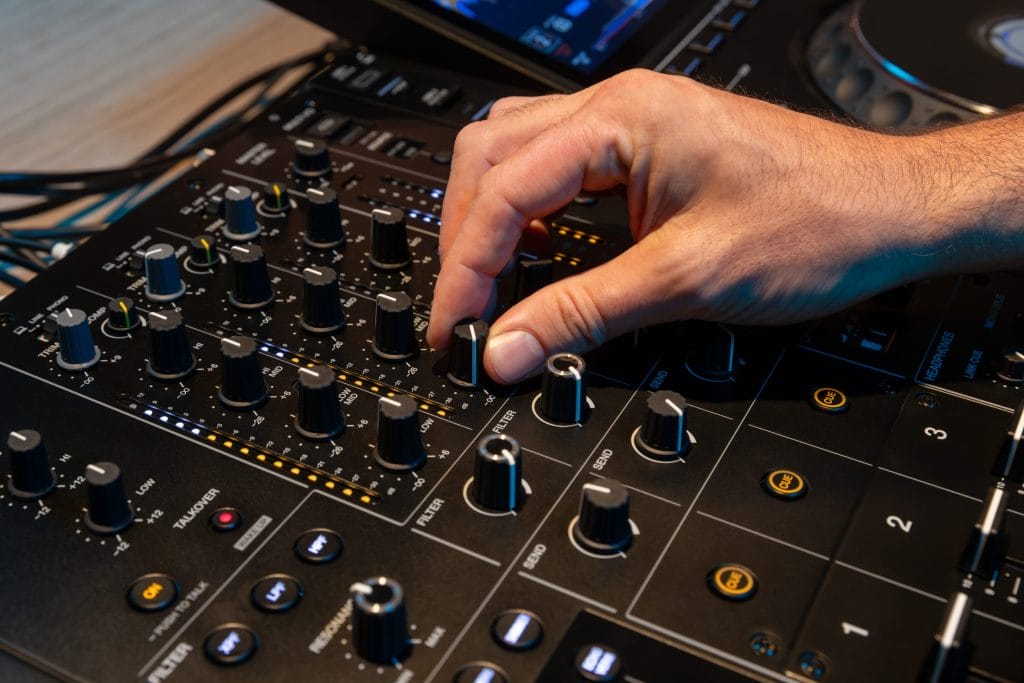
Effects feel playable instead of decorative. Six Send FX options sit behind dedicated per-channel send knobs, and the time knob behavior changes depending on the effect type, which means tempo-locked clicks for rhythmic delays and smooth control for spatial effects. Filters expand beyond standard low-pass and high-pass modes with the addition of cross-pass filtering, which lets me shape mids and highs while keeping low-end energy stable, and that opens up performance options without draining momentum.
Wireless Monitoring and Performance Integration
The built-in SonicLink transmitter changes how flexible monitoring feels in practice. Wireless headphone monitoring with ultra-low latency removes one more physical constraint from the booth, and pairing stays quick without adding friction to setup. That freedom matters when space is limited or movement is part of performance flow.

Integration across modern DJ setups stays tight. PRO DJ LINK support enables BPM-accurate effect timing, Link Cue allows track previewing without loading, and mixer settings can be recalled instantly from USB or rekordbox. Dual USB-C ports support computers and mobile devices, insert routing allows external processing, and the overall I/O layout covers club performance, recording, and streaming without forcing workarounds.
What stands out to me is that the DJM-V5 does not feel like a reduced version of a flagship mixer. It feels like a deliberate re-focus on sound shaping, performance control, and flexibility, all packed into a format that makes sense for real booths and real workflows.

Will Vance is a professional music producer who has been involved in the industry for the better part of a decade and has been the managing editor at Magnetic Magazine since mid-2022. In that time period, he has published thousands of articles on music production, industry think pieces and educational articles about the music industry. Over the last decade as a professional music producer, Will Vance has also ran multiple successful and highly respected record labels in the industry, including Where The Heart Is Records as well as having launched a new label with a focus on community through Magnetic Magazine. When not running these labels or producing his own music, Vance is likely writing for other top industry sites like Waves or the Hyperbits Masterclass or working on his upcoming book on mindfulness in music production. On the rare chance he's not thinking about music production, he's probably running a game of Dungeons and Dragons with his friends which he has been the dungeon master for for many years.