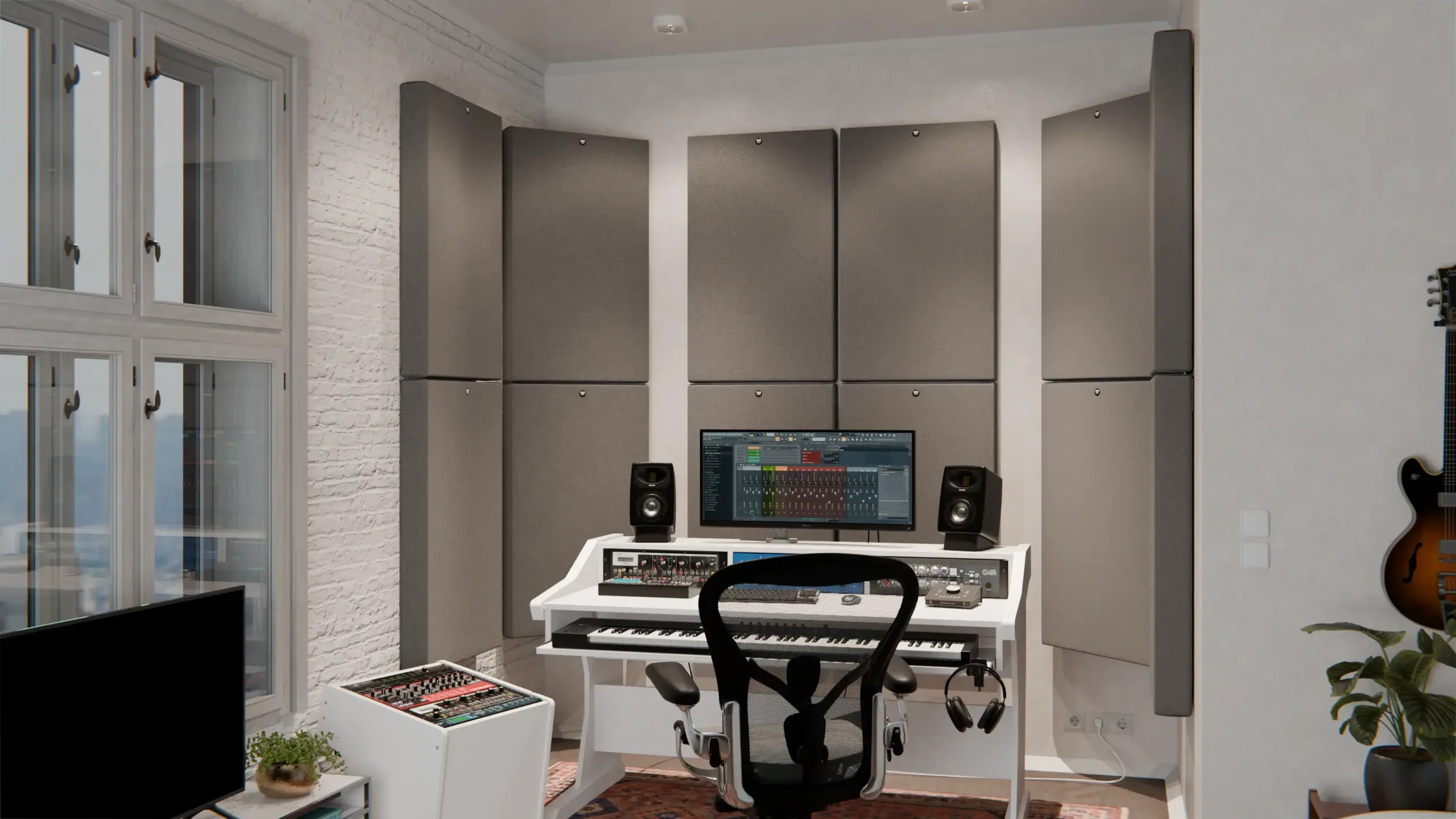
Buso Audio’s Unity panel is aimed at one of the most common problems in home studios and production rooms: getting acoustic treatment that helps with low-mid buildup without turning the room into something dead, awkward, or impossible to set up.
The Unity is a wideband absorber panel with Class A rated broadband absorption from 100 Hz to 10 kHz, and that range is the part worth paying attention to. A lot of thinner acoustic panels help with reflections in the upper mids and highs, which can make a room feel less harsh, though they often do much less where producers usually struggle most: low mids, room modes, and that cloudy area that makes kick, bass, vocals, synths, and reverb decisions harder to trust.
Buso is positioning Unity as a panel for critical listening rooms, live recording spaces, and post-production suites, and the specs make that angle pretty clear. It carries an NRC of 1.0, an SAA of 1.0, and a weighted absorption coefficient of 1.0, with Class A sound absorption to BS EN ISO 11654.
The Low-Mid Control Is The Main Sell
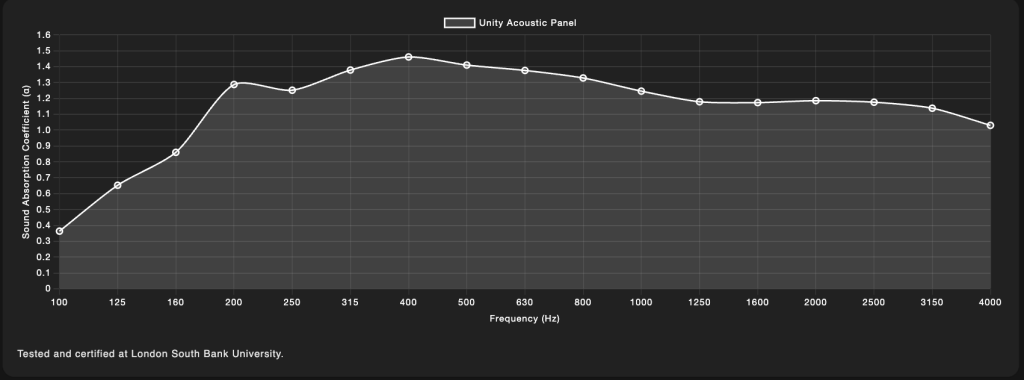
The most useful detail here is the low-frequency performance. Unity was independently tested in a 202 m³ reverberation chamber to BS EN ISO 354, with absorption coefficients above 1.0 from 200 Hz to 5 kHz, plus meaningful absorption down to 100 Hz.
That matters because 200 Hz to 500 Hz is where a lot of small rooms start lying to you. It is the area where mixes can feel boxy, vocals can sound thick, bass decisions can get blurry, and reverb tails can feel like they are hanging around too long. Unity peaks at an absorption coefficient of 1.46 at 400 Hz with a 50 mm air gap, which places the panel right in the area where untreated rooms often create the most frustration.
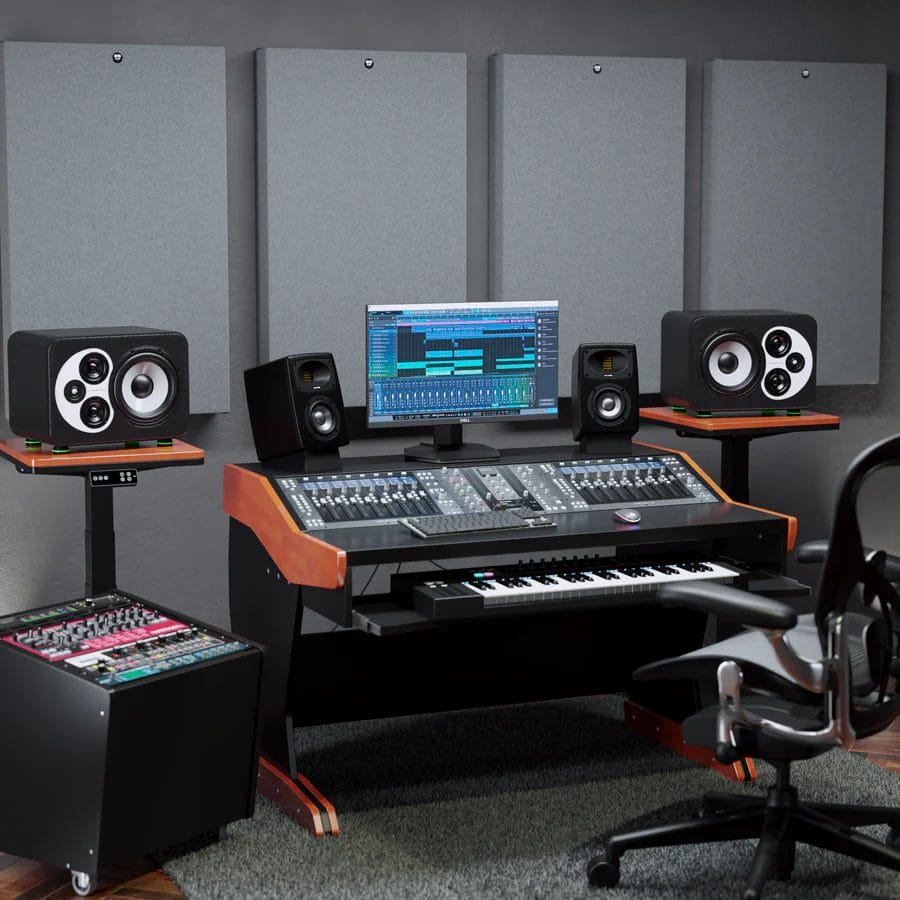
The recommended 50 mm air gap is also practical. You are not being asked to give up half the room just to get better low-mid control, and the panel’s 104 x 64 x 10 cm size makes it flexible enough for first reflection points, rear walls, ceiling clouds, vocal areas, or larger wall arrays.
Built For Rooms, Not Just Lab Claims
A lot of acoustic treatment copy sounds good until you realize the numbers were pulled from a setup that does not match how anyone actually installs panels. Unity’s tested configuration used 15 panels in a 5 x 3 grid, which makes the performance claims feel more useful for studios, schools, content rooms, and small post-production spaces where multiple panels are usually needed.
The panel weighs 5 kg and is hand-built in the EU by Buso Audio using in-house construction and acoustic materials selected for repeatable performance. It is available in gray, white, and black at $188 per panel, which places it in a realistic range for producers building a room in stages.
For music producers, the point is simple. Better acoustic treatment does not make the mix for you, though it can make decisions easier to trust. If the room is ringing in the low mids or throwing early reflections back at the listening position, you end up EQing against the room instead of the track. Unity is built for the part of treatment that actually helps with those problems.
Buso has already built a name around studio workstations, and Unity feels like a logical move from furniture into the room itself. A desk can clean up the workflow, though the room still decides how clearly you hear what you are doing. Unity is Buso’s answer to that next step.

Will Vance is a professional music producer who has been involved in the industry for the better part of a decade and has been the managing editor at Magnetic Magazine since mid-2022. In that time period, he has published thousands of articles on music production, industry think pieces and educational articles about the music industry. Over the last decade as a professional music producer, Will Vance has also ran multiple successful and highly respected record labels in the industry, including Where The Heart Is Records as well as having launched a new label with a focus on community through Magnetic Magazine. When not running these labels or producing his own music, Vance is likely writing for other top industry sites like Waves or the Hyperbits Masterclass or working on his upcoming book on mindfulness in music production. On the rare chance he's not thinking about music production, he's probably running a game of Dungeons and Dragons with his friends which he has been the dungeon master for for many years.