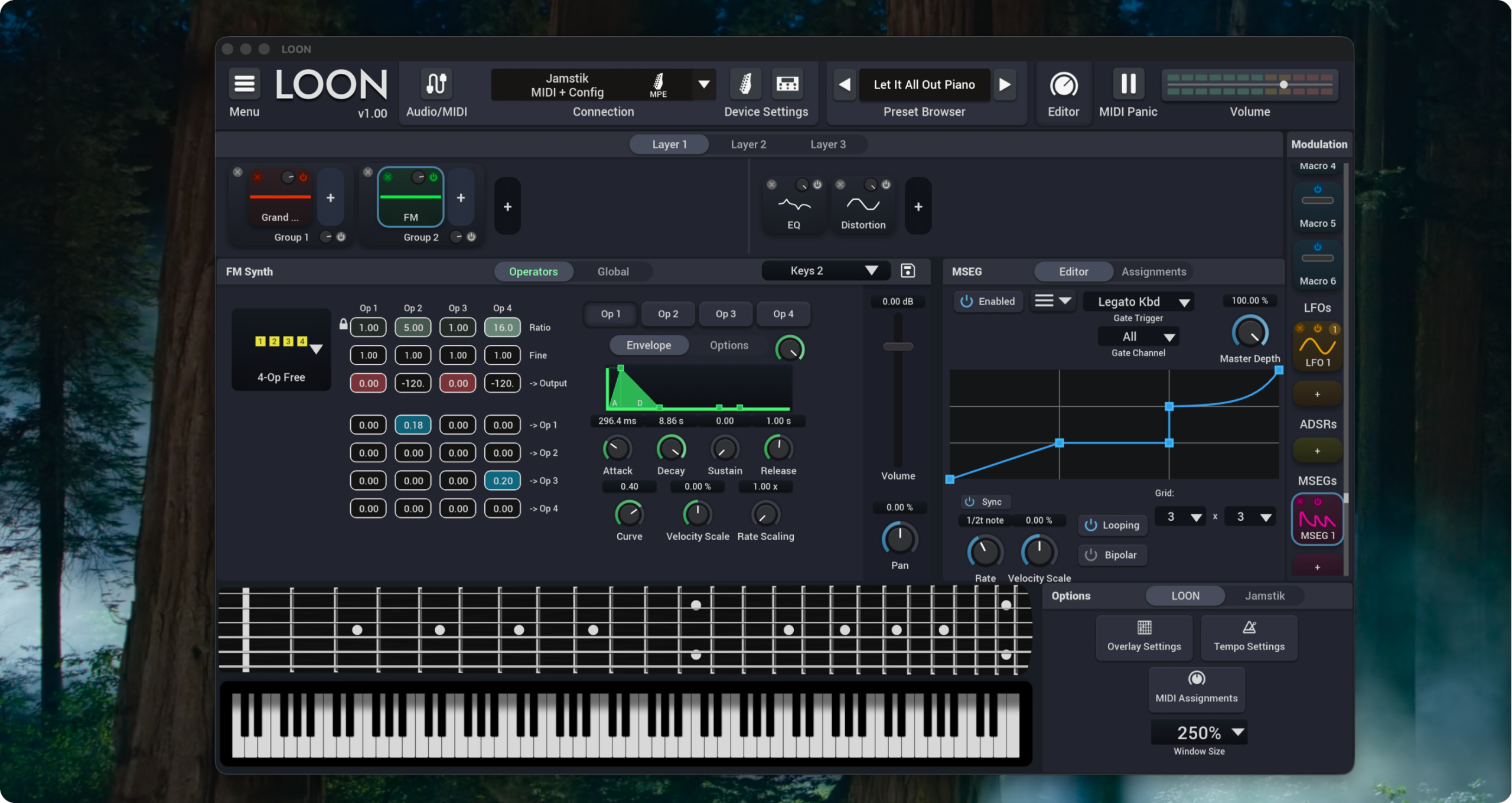
Jamstik has introduced LOON, a new software instrument built around layered sound creation, expressive performance, and a cleaner workflow for musicians who want depth without getting pulled into a maze of menus.
The instrument is available as a standalone application and as a VST3, AU, and AAX plugin for macOS and Windows. It launches July 15, 2026, at an introductory price of $49.99, with regular pricing set at $99.99.
LOON’s main idea is a three-layer, multitimbral architecture. Each layer has its own instruments, effects, and performance controls, which lets a producer build complete patches across separate signal paths inside one preset. That matters because layered instruments are a huge part of modern production, though building them often means loading several plugins, routing them manually, then trying to keep the result playable.
LOON tries to keep that process inside one instrument.
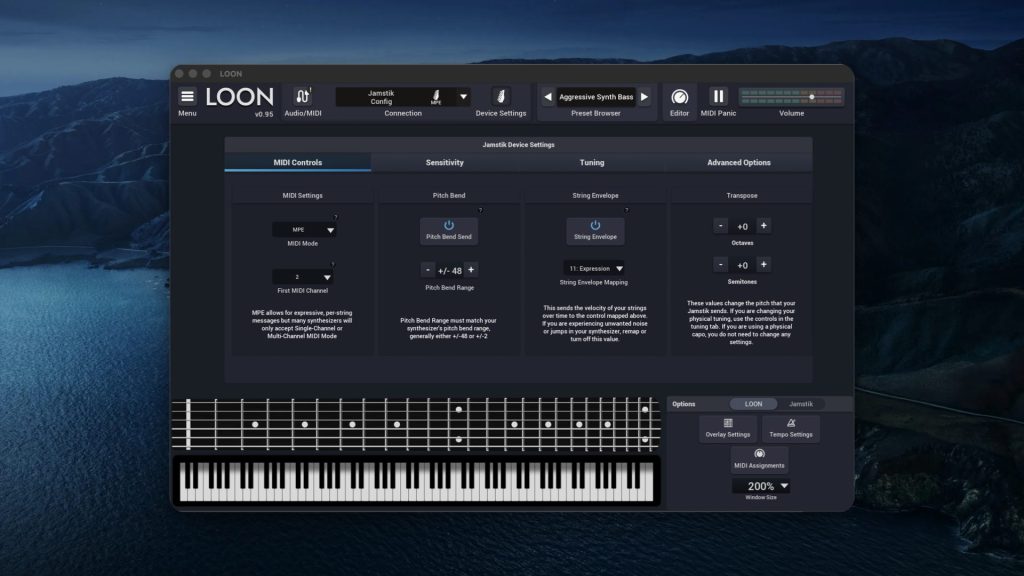
LOON Makes Layered Patches Feel Less Like a Routing Project
The most practical part of LOON is the three-layer design. Each layer can carry its own synthesis, FM, sampling, filtering, effects, and modulation. That gives users a way to combine direct instrumental tones, synthetic movement, sampled material, and processed detail without building a larger DAW chain first.
That should appeal to composers and producers who want a single playable sound to do more than one job. A patch could hold a soft sampled attack, a synthetic midrange body, and a processed upper layer, all tied together through macros and performance controls. The result is closer to a complete instrument than a simple preset.
That kind of architecture is especially useful when writing under time pressure. A layered sound can create the emotional direction of a cue or track quickly, but only if it remains playable. LOON appears to be aimed at that balance: enough depth for sound design, with enough performance control to keep the musician close to the idea.
Jamstik’s MIDI Guitar Background Gives LOON a Clear Performance Angle
LOON was originally developed alongside Jamstik’s expressive MIDI guitar platform before growing into a broader software instrument for keyboardists, composers, producers, sound designers, and guitarists. That backstory matters because Jamstik has spent years thinking about how physical performance can move into MIDI and software environments.
I reviewed that side of the company in my Jamstik Studio MIDI Guitar article, where the value came from giving guitarists a more natural path into MIDI-driven production. LOON takes the same larger concern, which is expressive control, and moves it into a software instrument built for a wider group of players.
That also connects to my later coverage of the Jamstik Core MIDI Guitar launch, where the company was again focused on making MIDI guitar workflows more accessible. LOON is not a guitar-only product, but it clearly comes from a company that understands why touch, response, and playability matter.

MPE Support and Six Macros Keep the Instrument Playable
LOON includes full MIDI Polyphonic Expression support and six assignable macros. Those two features are important because the plugin’s layered engine could become too static without a clear way to perform it.
MPE support gives compatible controllers a way to send more detailed expression per note, while the macros can bring several sound-design moves into simple, playable controls. That matters for producers who want movement and variation without automating a dozen separate parameters by hand.
The instrument also includes a curated factory library, which should give users a set of ready-made starting points before they begin building their own layered patches. Factory presets can be filler in some instruments, but they are more important when a synth is built around a deeper architecture. Good presets show how the system thinks.
LOON Fits the Current Shift Toward Instruments That Help Producers Write Faster
A lot of software instruments now have the same challenge. They need enough depth to keep producers interested, but they cannot turn the first ten minutes of a session into technical setup. LOON seems built around that exact tension.
That is also why the three-layer architecture makes sense. Instead of asking producers to build every complex patch from separate synths and samplers, LOON gives them a contained space where multiple signal paths can work together.
I covered a related idea in my article on Scaler Music’s Carbon Electra 2, where the appeal came from keeping musical writing and synth control closer together. LOON comes at the issue from a different angle, but the goal is similar: let producers shape the sound without losing the musical idea that made them open the instrument in the first place.
Pricing and Availability
LOON is available beginning July 15, 2026, as a standalone application and as a VST3, AU, and AAX plugin for macOS and Windows.
The launch price is $49.99 for a limited time. After the introductory period, LOON will be priced at $99.99.
For Jamstik, this is a natural extension of its larger mission around expressive music technology. The company is best known for MIDI guitar hardware, but LOON gives it a software instrument that can speak to a much wider group of producers, composers, keyboard players, guitarists, and sound designers.
The main appeal is simple: build layered sounds from multiple signal paths, keep them playable, and make the process feel like writing music instead of managing a routing system.

Will Vance is a professional music producer who has been involved in the industry for the better part of a decade and has been the managing editor at Magnetic Magazine since mid-2022. In that time period, he has published thousands of articles on music production, industry think pieces and educational articles about the music industry. Over the last decade as a professional music producer, Will Vance has also ran multiple successful and highly respected record labels in the industry, including Where The Heart Is Records as well as having launched a new label with a focus on community through Magnetic Magazine. When not running these labels or producing his own music, Vance is likely writing for other top industry sites like Waves or the Hyperbits Masterclass or working on his upcoming book on mindfulness in music production. On the rare chance he's not thinking about music production, he's probably running a game of Dungeons and Dragons with his friends which he has been the dungeon master for for many years.