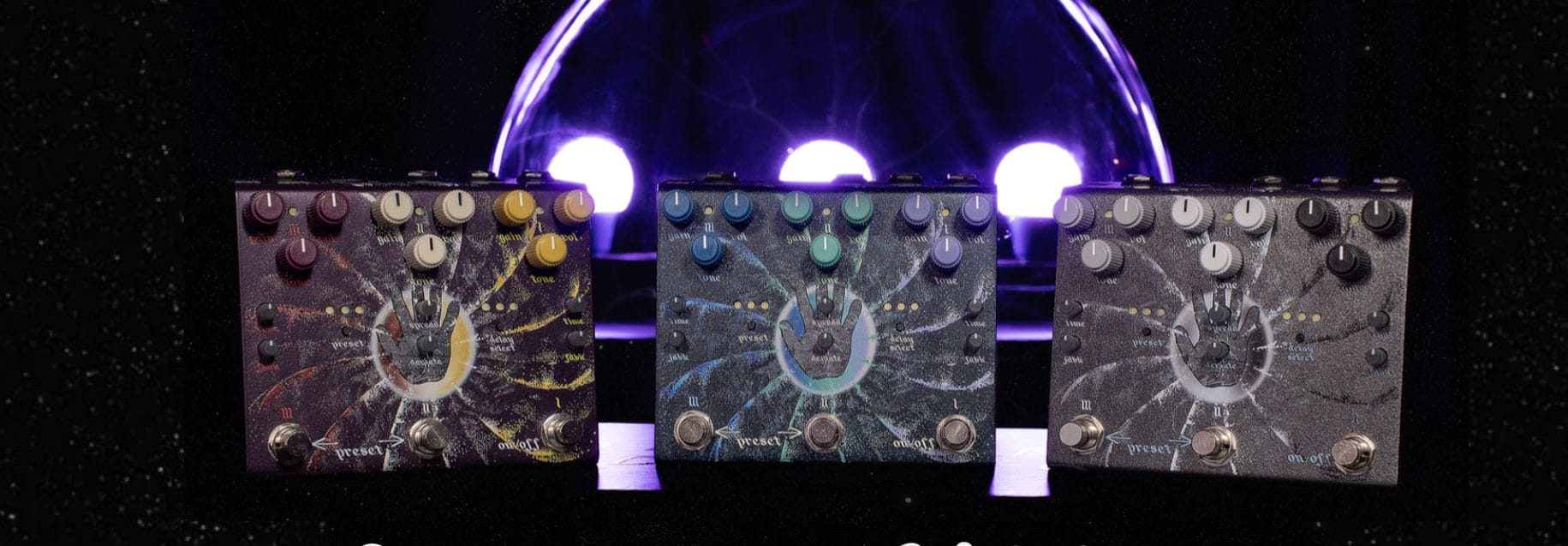
The idea behind Beam Splitter V2 is simple in the best way: make one guitar feel like it was tracked several times.
Old Blood Noise Endeavors built the pedal around the sound of a guitar recorded in multiple passes, where each take has a slightly different drive character, timing feel, and placement. Instead of asking the player to recreate that in a DAW after the fact, Beam Splitter V2 puts the concept on the floor.
A single input becomes three drive paths. Each path has its own Gain, Volume, and Tone controls. Two of those paths can be delayed in time. All three can run in parallel. The result is a pedal less focused on one perfect overdrive tone and more interested in turning the guitar into a small stack of performances.
That is the part that gives Beam Splitter V2 its identity. It is not only about gain. It is about doubling, width, timing, and the slight instability that happens when parts do not sit perfectly on top of each other.
For guitarists, producers, and pedal-heavy electronic musicians, that is a far more interesting starting point than another drive box with a new enclosure.
Three drive voices, one source
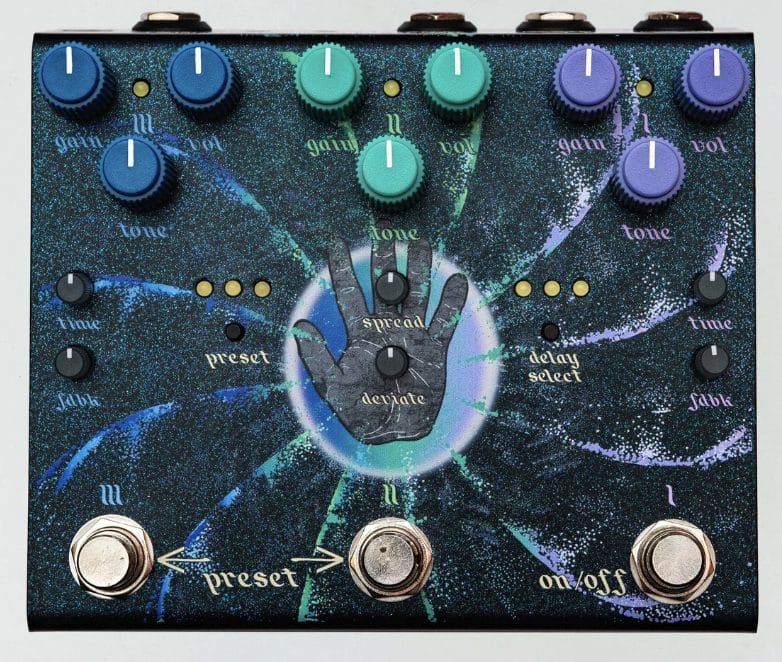
Beam Splitter V2 includes three different overdrive voices designed to work together.
That phrase is important because parallel drive can get messy fast. If the voices fight each other, the result turns into a blur. OBNE’s approach appears to be less about giving players three unrelated gain circuits and more about creating three takes that can sit in the same part.
Each drive has Gain, Volume, and Tone controls, which gives players enough control to shape the stack without turning the pedal into a menu-first machine. From there, the delays handle the timing differences between the takes, while the Time and Feedback controls let those delayed paths move from small tracking offsets into more obvious repeats.
That puts Beam Splitter V2 in a lane close to production thinking. Guitarists have been double-tracking forever, but the difference between a tight double and a messy one often comes down to tiny timing changes, tonal contrast, and panning. This pedal gives those decisions a hardware shape.
It also connects naturally with our earlier conversation around vocal and production layering, where the appeal often comes from turning one source into something with more motion and depth. Beam Splitter V2 is doing that for guitar, but with pedals, routing, and live control.
Mono, stereo, and trereo make the routing the point
The routing options are a major part of the update.
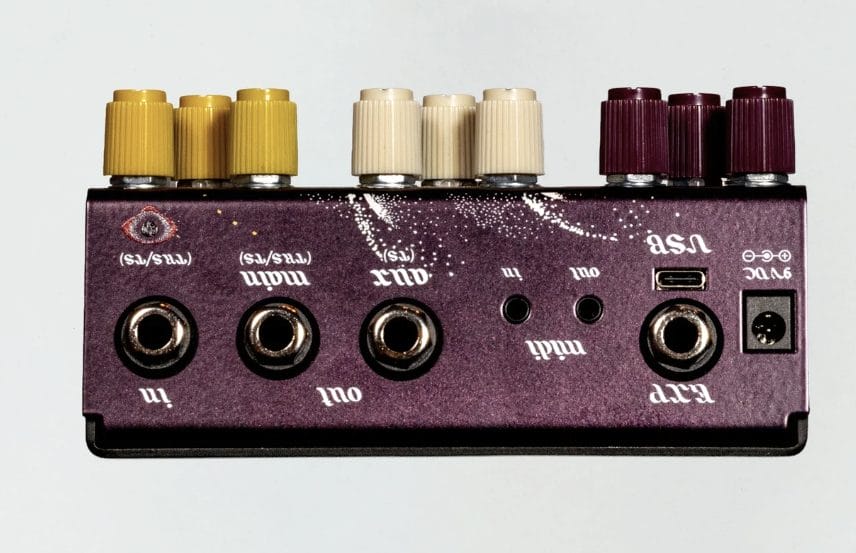
Beam Splitter V2 supports mono, mono-to-stereo, mono-to-“trereo,” and stereo input that collapses internally when the pedal is active. OBNE’s “trereo” system is the most OBNE detail here, and it fits the pedal’s overall idea: one input becomes three related signals with their own placement and behavior.
That makes the pedal interesting for more than standard guitar rigs.
In mono, it can still act like a layered drive and timing pedal. In stereo, it can spread the three voices across a wider rig. In trereo, it moves into a more specialized setup for players who want three outputs and more physical placement in the room.
That kind of routing is where pedals have become more relevant to producers again. A guitar pedal is no longer only something that sits between a Telecaster and an amp. It can sit on a synth send, a drum bus, a reamp chain, a hardware effects loop, or a live electronic rig.
We touched a related hardware mindset in our Korg Minilogue XD review, where the appeal came from physical controls, hands-on shaping, and sound design that happens outside the screen. Beam Splitter V2 belongs in that same broader creative habit: turn knobs, route signals, and let the hardware push the idea somewhere you did not fully plan.
MIDI, expression, and presets make it stage-ready
Beam Splitter V2 adds the kind of control set that takes it beyond a one-setting studio pedal.
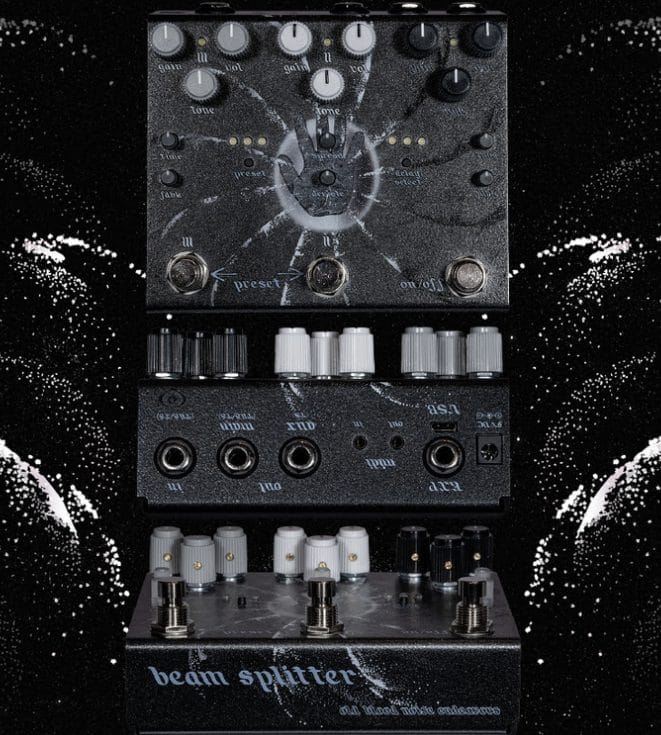
The pedal includes three footswitches that can handle on/off and preset cycling, or individual on/off for each drive. That second mode is the more performance-minded one because it lets players bring voices in and out like parts of an arrangement.
Expression control covers the main knobs, which should make the pedal more playable in real time. MIDI control extends that further by opening access to all parameters, up to three onboard presets, and up to 127 presets via MIDI.
That is a serious control set for a pedal built around parallel drives and timing movement. It means a guitarist can move from a tight mono drive sound to a wide delayed triple-take part inside a set without needing to bend down and rebuild the whole patch.
For electronic musicians, it also means the pedal can be folded into a more automated hardware rig. MIDI control over parameters makes Beam Splitter V2 more than a guitar effect. It becomes a controllable processing box for anyone who wants drive, widening, delay offsets, and timing drift as part of a larger setup.

Will Vance is a professional music producer who has been involved in the industry for the better part of a decade and has been the managing editor at Magnetic Magazine since mid-2022. In that time period, he has published thousands of articles on music production, industry think pieces and educational articles about the music industry. Over the last decade as a professional music producer, Will Vance has also ran multiple successful and highly respected record labels in the industry, including Where The Heart Is Records as well as having launched a new label with a focus on community through Magnetic Magazine. When not running these labels or producing his own music, Vance is likely writing for other top industry sites like Waves or the Hyperbits Masterclass or working on his upcoming book on mindfulness in music production. On the rare chance he's not thinking about music production, he's probably running a game of Dungeons and Dragons with his friends which he has been the dungeon master for for many years.