Table of Contents
For producers, engineers, musicians, and anyone who spends serious time listening critically to music, the room in which you are listening is part of the monitoring chain. SessionDesk’s SessionbloX takes a different approach to controlling that room, offering a modular acoustic treatment system that can be configured, moved, and expanded as your studio needs change.
If you are just getting started in setting up a studio space, I recommend checking out our Managing Editor Will Vance’s 2024 article Recording Studio Acoustic Treatment: What You Need to Buy before diving in here. It offers some great understanding about the challenges we face when dealing with audio and how the spaces we work in are impacted by the way we set them up.
My current studio set-up
I’m a believer in knowing about the equipment a reviewer is using when they write a review.
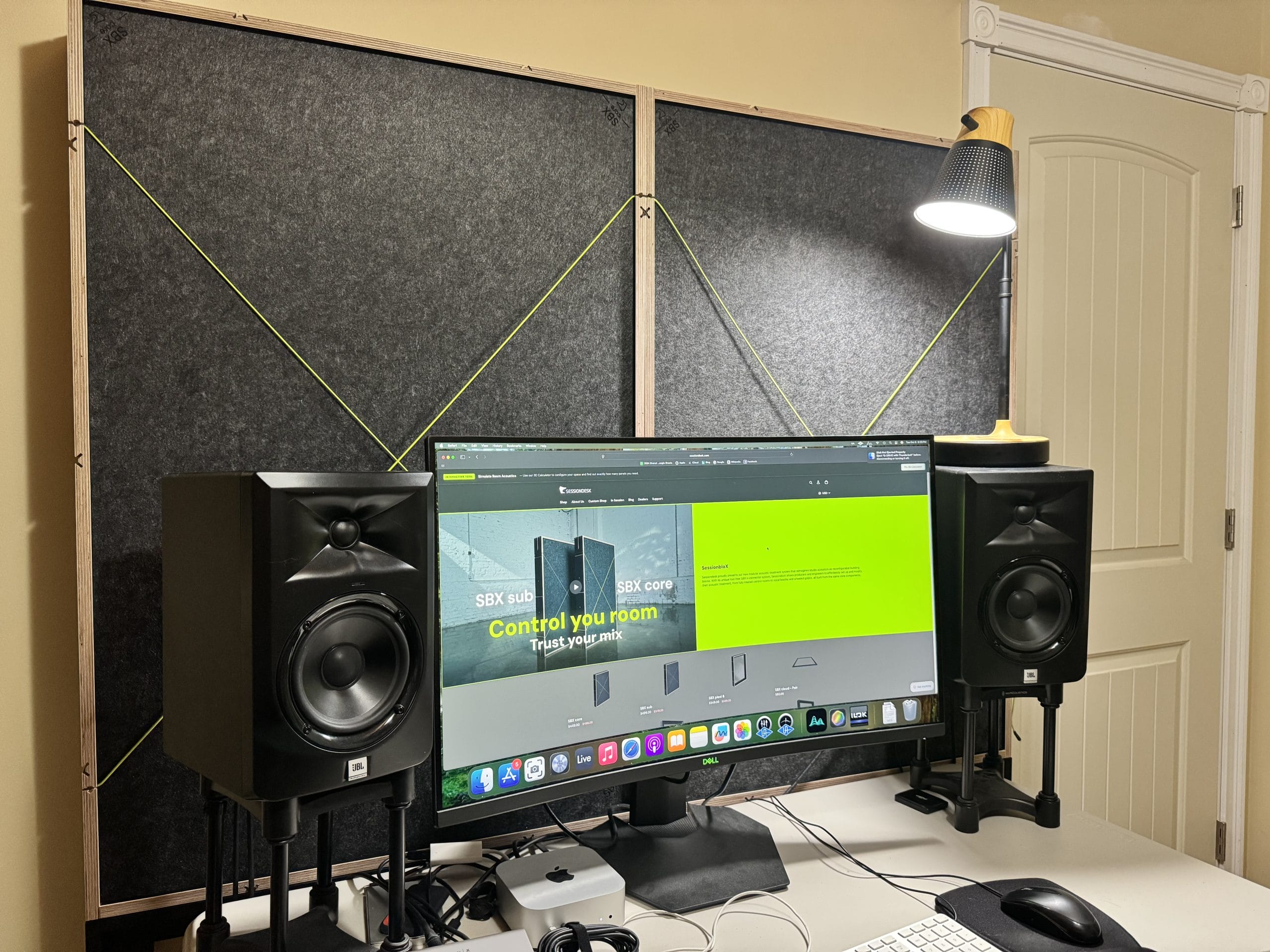
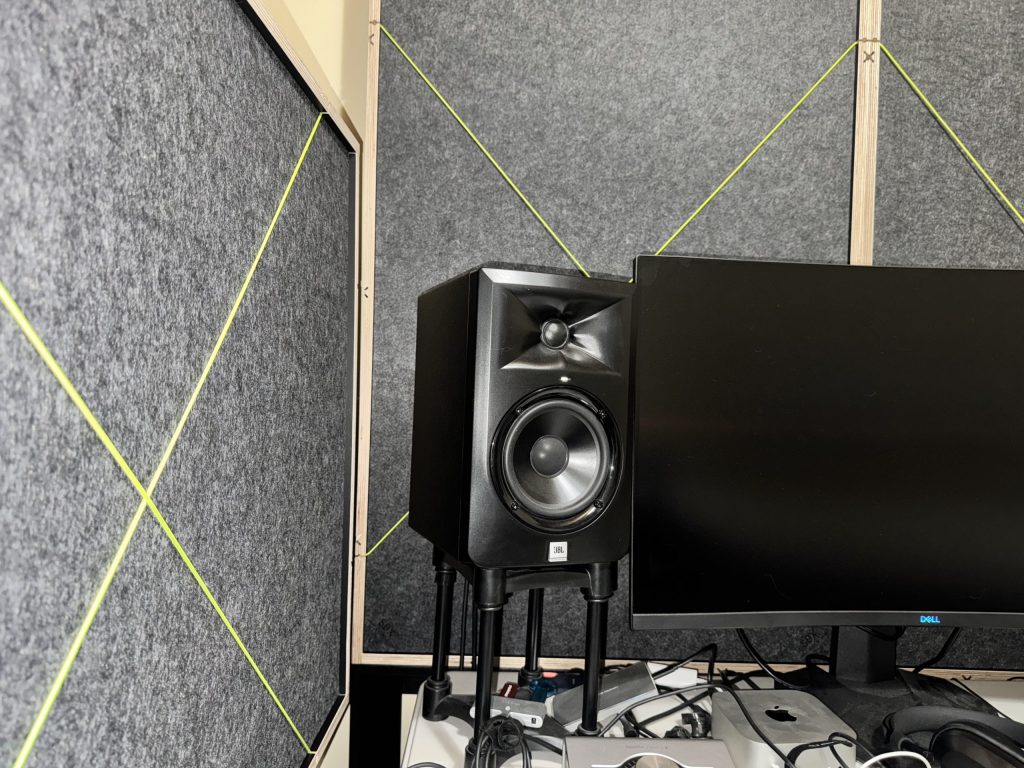
For my current temporary studio set-up, I’m running a 2024 Apple Mac Mini running on the M4 Pro, routing my audio through a Universal Audio Apollo Twin X (covered by Magnetic in 2024), which are connected to my trusty JBL LSR305 studio monitors that have been with me for nearly 10 years.
The Room is Part of the Mix
Getting a mix to translate outside the studio is one of the ongoing challenges of music production. A track that sounds balanced through studio monitors can reveal unexpected problems when played through a car stereo, a club system, a pair of earbuds, or even a phone.
Some of those problems begin before the signal ever reaches the speakers.
Room reflections can dramatically influence what we hear, particularly in spaces with hard surfaces. Hardwood floors, tile, glass, untreated walls, and other reflective materials can create an environment where certain frequencies become exaggerated or obscured.
Headphones and earbuds provide an excellent alternative when a properly treated monitoring environment isn’t available, but studio monitors remain valuable for producers who want to develop a reliable relationship with their room.
That makes acoustic treatment an important part of the studio setup.
SessionDesk’s SessionbloX approaches that problem with an emphasis on flexibility. Rather than treating acoustic panels as permanent fixtures, the system is built around modular components that can be assembled into different configurations.
SessionDesk says the system can be used for control rooms, vocal booths, gobos, and other configurations using its X-connector system.
Meet the SBX Core
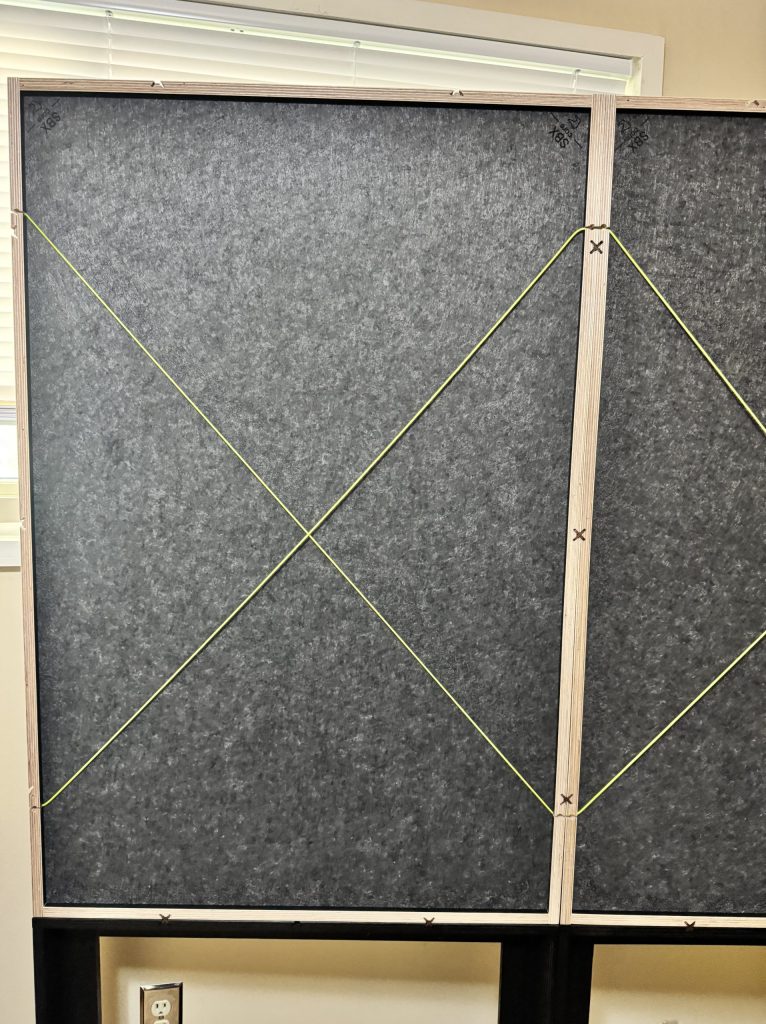
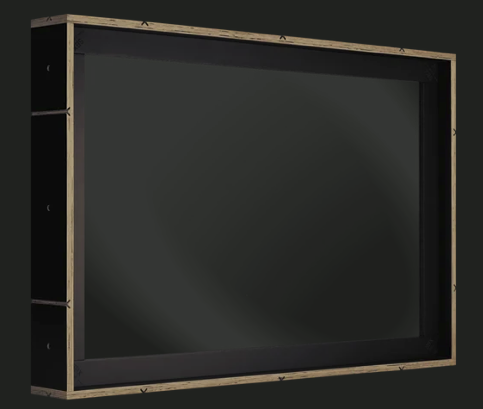
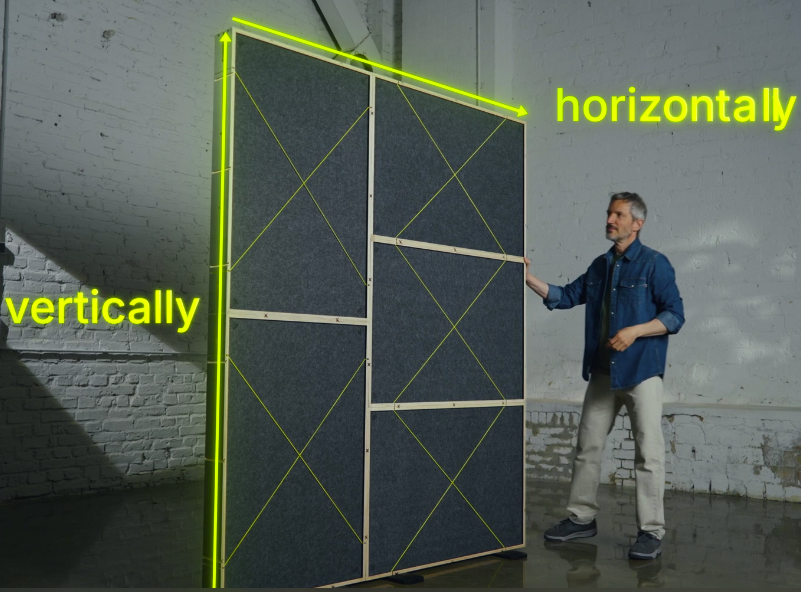
The foundation of the system is the SBX Core, a broadband absorber panel measuring approximately 42.5 x 28.2 x 4.7 inches.
The panel uses a multilayer porous absorber construction inside a birch plywood frame. SessionDesk says the Core is made with recycled PET and sustainable wood fibers, with the interior using natural wood fiber rather than mineral wool or synthetic foam. That distinction is a piece of what sets this product line apart from more affordable acoustic treatment options.
The panel is designed to work either vertically or horizontally, while the modular X-connector system allows multiple components to be combined.
That’s where SessionbloX starts to become more interesting than a conventional acoustic panel.
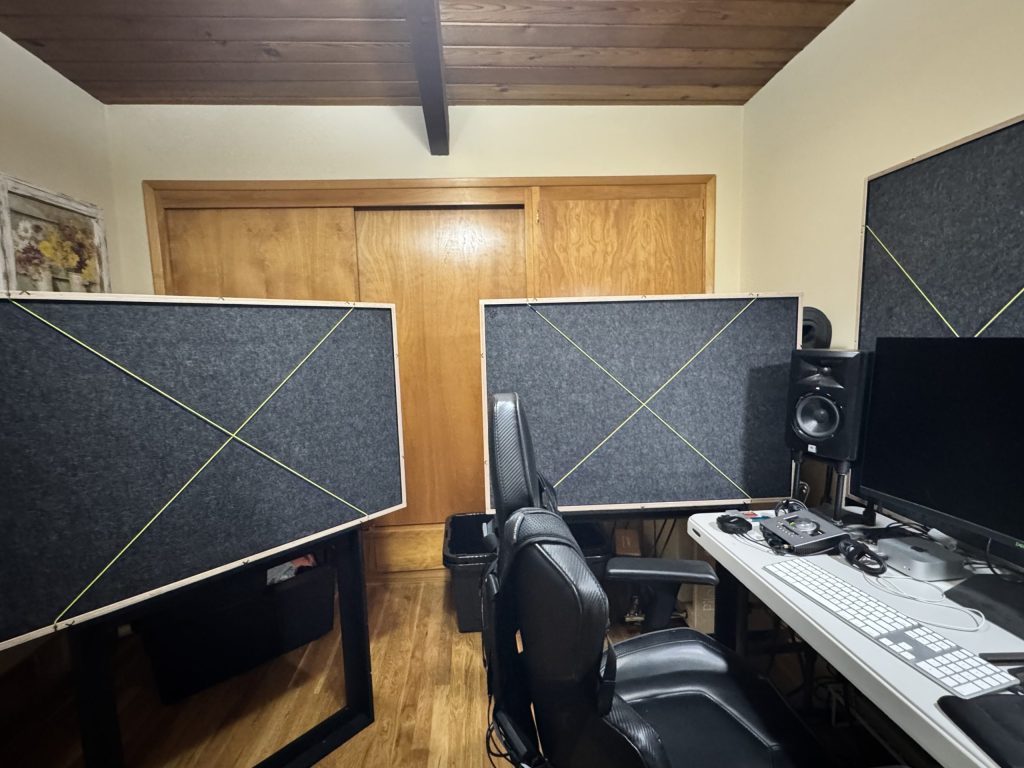
My Six-Panel Setup
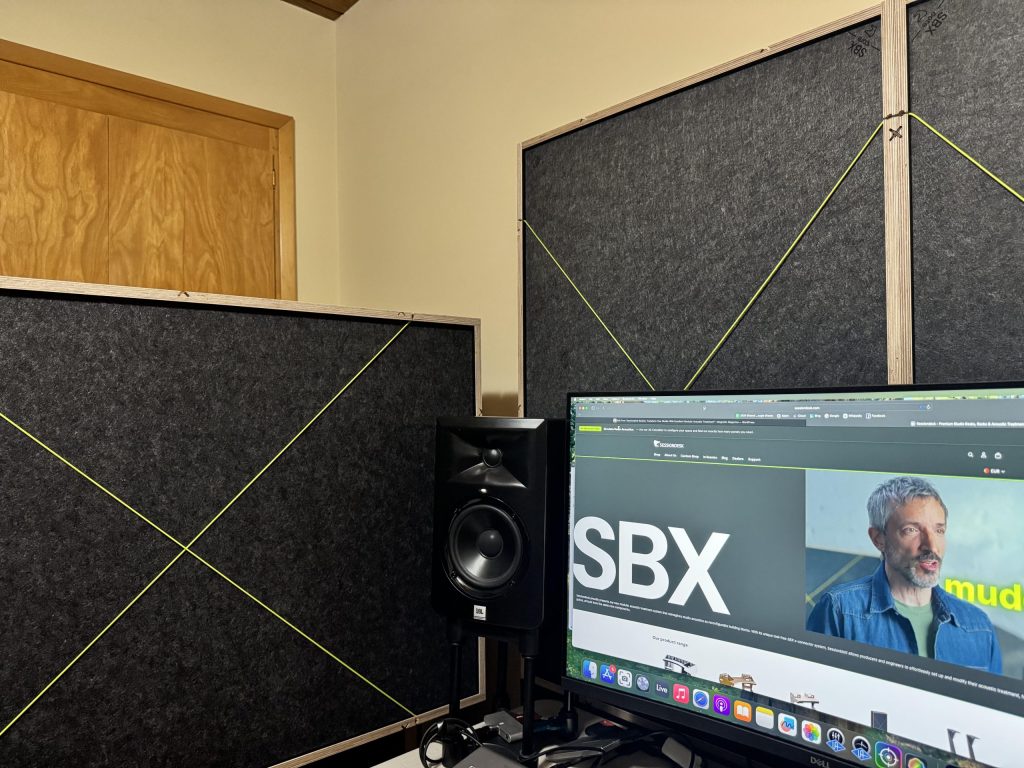
For this review, I worked with six SBX Core panels and six SBX Stand 2|2 units.
My primary recording studio is currently undergoing renovation, so I’ve been working out of a spare bedroom. The room has a hardwood floor and a cedar plank ceiling, making it a challenging temporary environment for critical listening.
The ability to position the SessionbloX panels around the room without permanently mounting anything became one of the biggest advantages of the system.
I could experiment with placement, move the panels around the listening position, and change the configuration as needed.
That may sound like a relatively minor convenience, but it’s one of the features that separates SessionbloX from traditional acoustic treatment.
I should note that I did not randomly choose to receive six SBX Core panels. Prior to SessionDesk sending my shipment, I used the very helpful 3D modeling tool available HERE.
Setup and Reconfiguration
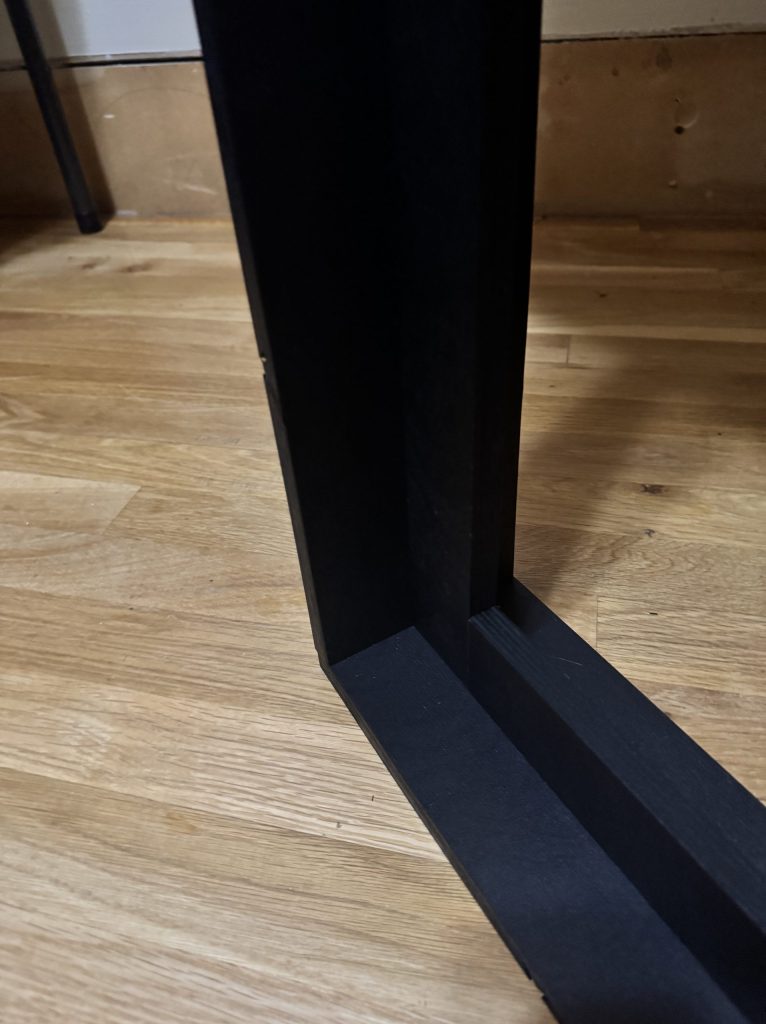
Putting the stands together was straightforward. Assembly required a hex key, and although I didn’t receive instructions with my review units, the construction was intuitive enough that I didn’t find myself searching for a manual.
It is worth noting that connecting units to each other is amazingly easy. There’s even a short tutorial video.
The X connectors make the system particularly easy to reconfigure. SessionDesk’s current design uses tool-free connectors specifically to allow panels to be assembled and rearranged without permanently committing to a particular configuration.
There is one caveat worth mentioning.
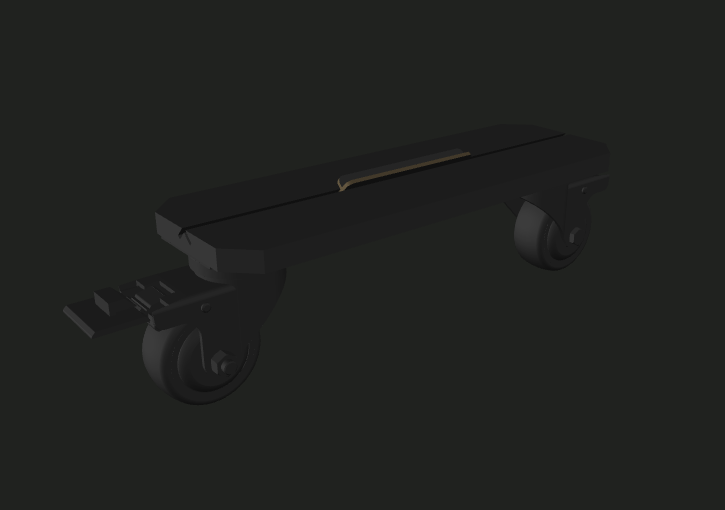
When an SBX Core is mounted horizontally on an SBX Stand 2|2, there is only a single connection point. In a room where people are likely to bump into the panels, I’d recommend adding the appropriate SBX Feet or another stabilization solution.
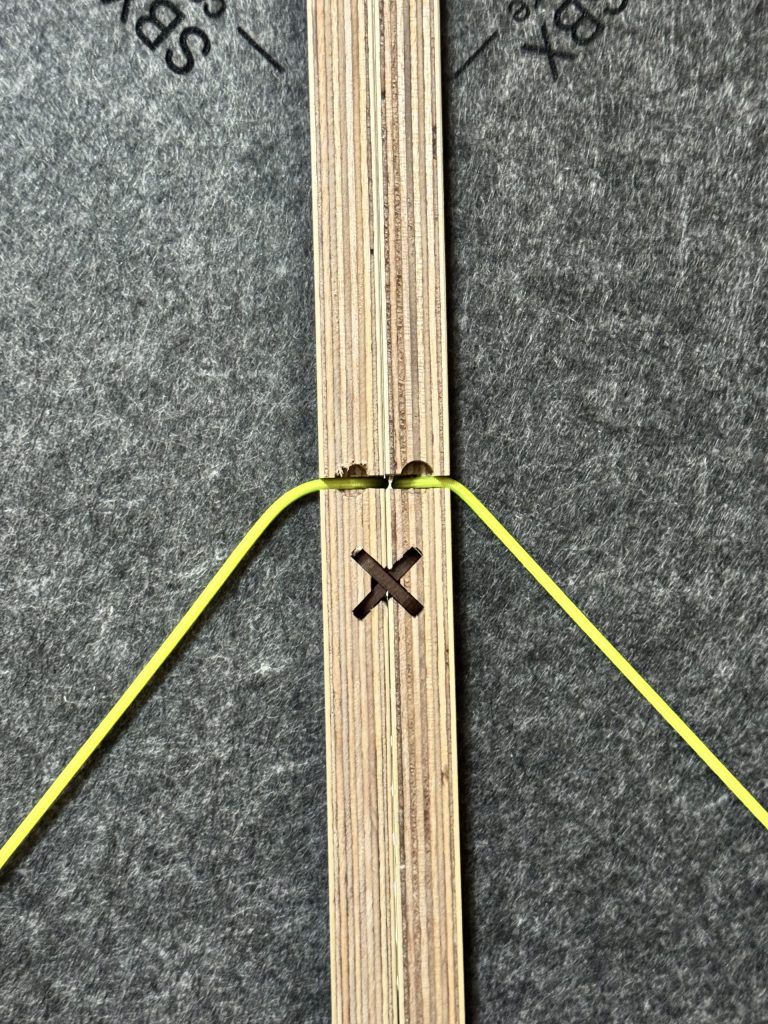
SessionDesk currently offers both standard SBX Feet and a wheeled version that can turn the panels into mobile acoustic gobos.
I’d also like to see additional connection points along the longer edge of the Core which would make horizontal configurations more secure without requiring additional accessories.
What Did I Hear?
The most important question is what happened to the sound of the room.
With the six SBX Core panels in place, I noticed greater clarity in the upper midrange of my mixes. I also perceived less of the ambiguous or “phantom” bass that had been present before installing acoustic treatment.
I’m not using the SBX Sub in this particular setup, so I wouldn’t characterize the Core as a dedicated solution for low-frequency problems. Rather, the overall room felt more controlled, which made it easier to make decisions about what I was hearing.
For electronic music production, that matters.
When you’re working with kick drums, basslines, synthesizers, percussion, effects, and dense layers of sound, relatively small changes in perceived frequency balance can affect the decisions you make while mixing.
My ultimate goal is to produce dance music that translates from my studio to my car and, eventually, a nightclub environment. Having a more controlled monitoring environment makes that process easier.
Expanding Into Bass Treatment
SessionbloX isn’t limited to broadband absorption.
The SBX Sub is designed specifically for low-frequency absorption and integrates into the same modular system. SessionDesk describes it as a low-frequency absorption panel designed to reduce bass buildup and standing waves.
This is an important distinction for anyone planning a complete studio treatment strategy. Broadband absorption and low-frequency treatment address different problems, and producers shouldn’t expect a handful of broadband panels to solve every issue in the bottom end.
The 3D room acoustics calculator mentioned earlier in this review will help prospective buyers figure out how many Core and Sub panels they may need based on the dimensions and acoustic characteristics of their room.
More Than a Mixing Room
One of the more appealing things about the SessionbloX concept is how far you can take the modular approach.
The SBX Plexi 6, for example, incorporates plexiglass into the system and can be used as part of a standalone vocal recording setup. The company also offers ceiling mounting, wall mounting, VESA mounting, stands, feet, wheels, and other accessories.
That gives the system applications beyond simply treating the area around a pair of studio monitors.
You can build a more isolated vocal area, create a gobo for recording, treat a larger room, or eventually move the components into another studio.
For someone who rents their home or regularly changes their workspace, that versatility could be a major advantage.
Premium Treatment at a Premium Price
There’s no getting around the cost.
The SBX Core is currently listed at $449 US, reduced from its $499 regular price. The SBX Stand 2|2 is currently $160, while the SBX Sub is listed at $499 on sale.
Once you start multiplying those numbers across an entire room, SessionbloX becomes a substantial investment.
This isn’t budget acoustic treatment.
The value proposition is instead tied to the modularity. You’re paying for a system that can be configured, moved, expanded, and repurposed rather than a collection of panels that have one permanent position on the wall.
For some producers, that distinction won’t justify the additional cost. For others, particularly renters and people working in multipurpose spaces, it may.
Design That Looks Like Studio Equipment
Aesthetics aren’t the primary reason to purchase acoustic treatment, but they do matter when you’re placing several large panels in a room.
The black birch plywood frames give the SBX Core units a polished appearance, and the overall design feels more like purpose-built studio equipment than something added to a room as an afterthought.
SessionDesk also offers customization options for the PET facing and colored lassos, giving users some ability to personalize the appearance.
The Verdict
SessionbloX isn’t going to be the right acoustic treatment solution for every studio.
If you’re building a permanent professional facility and cost is your primary concern, conventional acoustic treatment may provide more coverage for less money.
But that’s also missing the point of what SessionbloX is trying to accomplish.
The strength of this system is flexibility.
In my temporary bedroom studio, I’ve been able to treat the room without permanently modifying it. I can move the panels when I want to change my setup, and I can eventually take the entire system with me when my primary studio renovation is complete.
More importantly, I can hear the difference.
The improvement in upper-midrange clarity and the reduction in some of the room’s less predictable bass response have made the space more useful for electronic music production. I’m more confident making mixing decisions because the room is giving me a more controlled representation of what is coming out of my monitors.
The price keeps SessionbloX from being an automatic recommendation for everyone. But if you have the budget and value the ability to reconfigure your acoustic treatment, it’s a very compelling solution.
Overall: 8/10
Modularity: 9/10
Sound Absorption: 9/10
Aesthetics: 8/10
Value: 8/10
For me, the biggest selling point isn’t any single acoustic specification. It’s the ability to change my mind and switch up my whole setup.
For more information, check out the SessionDesk website.

Nick Wax is a producer, singer/songwriter based in Seattle, WA. He has more than 2 decades networking in the music business. He’s passionate about connecting people through their shared love of electronic music. Most people know him as the guy who makes that one mashup they like. When he’s not nerding out in the studio, you can usually catch him hanging out with his wife and cats.