Whilst acoustic treatment isn’t often at the top of most people’s priority lists, ensuring you have a good acoustic environment will lay the foundations down for you to record and mix high-quality sounds. Without acoustically treating your recording studio, your space is likely to suffer with reverberation problems and unclear sound quality, even if you’re using the most expensive or top of the range equipment. Along with improving quality, having good room acoustics to begin with will make postproduction and editing simpler and less time consuming!
However, the question remains – what acoustic treatment do you need for your recording studio? How much do you need and where is best to place it? This recording studio treatment guide should give you a good idea of what products will help improve the acoustics of your space and create a good base for recording high quality sounds.
Bass Traps
Most small and medium-sized rooms suffer with an uneven bass response since low frequency soundwaves are much longer than those of high frequencies. When these waves are a similar length to the room, they build up and cause unclear sounds.
Bass traps are an essential acoustic treatment to prevent this build-up. As the low frequency sound waves are longer, thicker levels of foam are required to effectively absorb the sound. To combat this, bass traps are thicker than typical acoustic panels, allowing them to absorb more of the low frequency soundwaves.
Bass Trap Placement
The number of bass traps you use and where you place them does depend on the size and shape of the room, as well as your budget. There are several ways to place bass traps, but they typically go in the corners of rooms and/or where adjacent walls meet.
If you’re budget is on the lower end, we recommend starting with 4 or 8 bass traps. These would go in each trihedral corner of the room. If you’re starting with just 4, placing them in the upper corners of the room will give you the benefits of the bass traps whilst saving you floor space.

If your budget can stretch further, we recommend placing ceiling to ceiling bass traps in vertical dihedral corners (where two adjacent walls meet) to further combat build-up of low frequency sound waves.

Acoustic Panels
Acoustic panels are soft, sound absorbent wall panels with a ‘foamy’ feel and appearance. When placed in a recording studio, they will reduce reverberation and help create crisp, clear sound.
Fluffo Soft Edge Stick Acoustic Panel
Fluffo’s Stick Edge is ideal if you’re on a budget. The panel has a class B sound absorption rating, making it excellent value for the price and a popular choice for recording studio environments. The foam works to absorb echo and reverb, creating a better ambiance for recording in.
MuffleWall
MuffleWall is another great option for reducing reverberation in recording studios. The wall panels are rated Class A for sound absorption, meaning they offer the highest levels of sound absorption that an acoustic product can. Despite their high performance, these acoustic panels are relatively affordable – ideal if you’re on a lower budget.

Microphone Reflection Filter
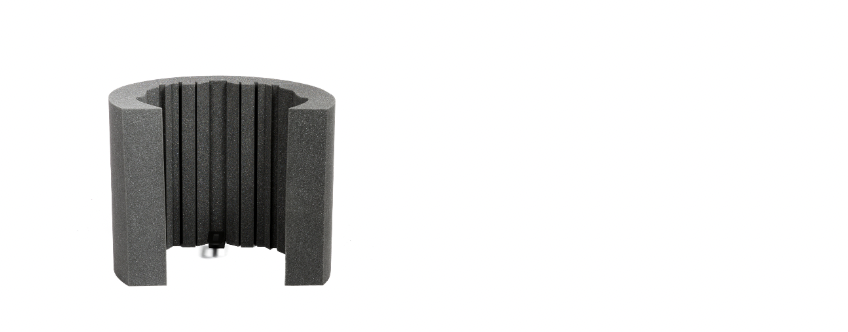
A microphone reflection filter is a great addition to any recording studio but particularly if you do a lot of close-mic work or live recording. The reflection filter works to block background noise that could otherwise be picked up from the microphone and create unclear sound recordings.
Recording Booth
If your budget can stretch further, an acoustic booth can be a great addition to recording studios. They offer complete privacy, excellent interior acoustics, and a professional appearance. Recording booths are particularly ideal for recording studios that are used by multiple artists, as they allow two people to record at the same time without disrupting each other.
Remember, Not All Studios Are the Same
Recording studios come in all kinds of shapes and sizes, so it’s important to consider that every studio may require slightly different acoustic treatment. Generally, every studio will benefit from bass traps and acoustic panels, but other treatments, such as the microphone reflection filter, can be useful to some more than others. This is why it’s important and highly beneficial to talk to an acoustics expert to get the best treatment for your space.

Magnetic byline note: This byline is used for staff produced updates and short announcements, often based on press materials and official release information. Editorial responsibility: David Ireland (Editor in Chief) and Will Vance (Managing Editor). About: https://magneticmag.com/about/ Masthead: https://magneticmag.com/masthead/ Contact: https://magneticmag.com/contact/