Images Courtesy Of Grovemade
Most producer desks become junk drawers with legs.
That is not because producers are careless.
Modern studio work asks one surface to do too many jobs. The same desk has to hold monitors, an interface, headphones, controllers, hard drives, a laptop, notebooks, adapters, maybe a small synth, maybe a MIDI keyboard, probably three cables you swear you still need, and whatever coffee cup is closest to becoming part of the furniture.
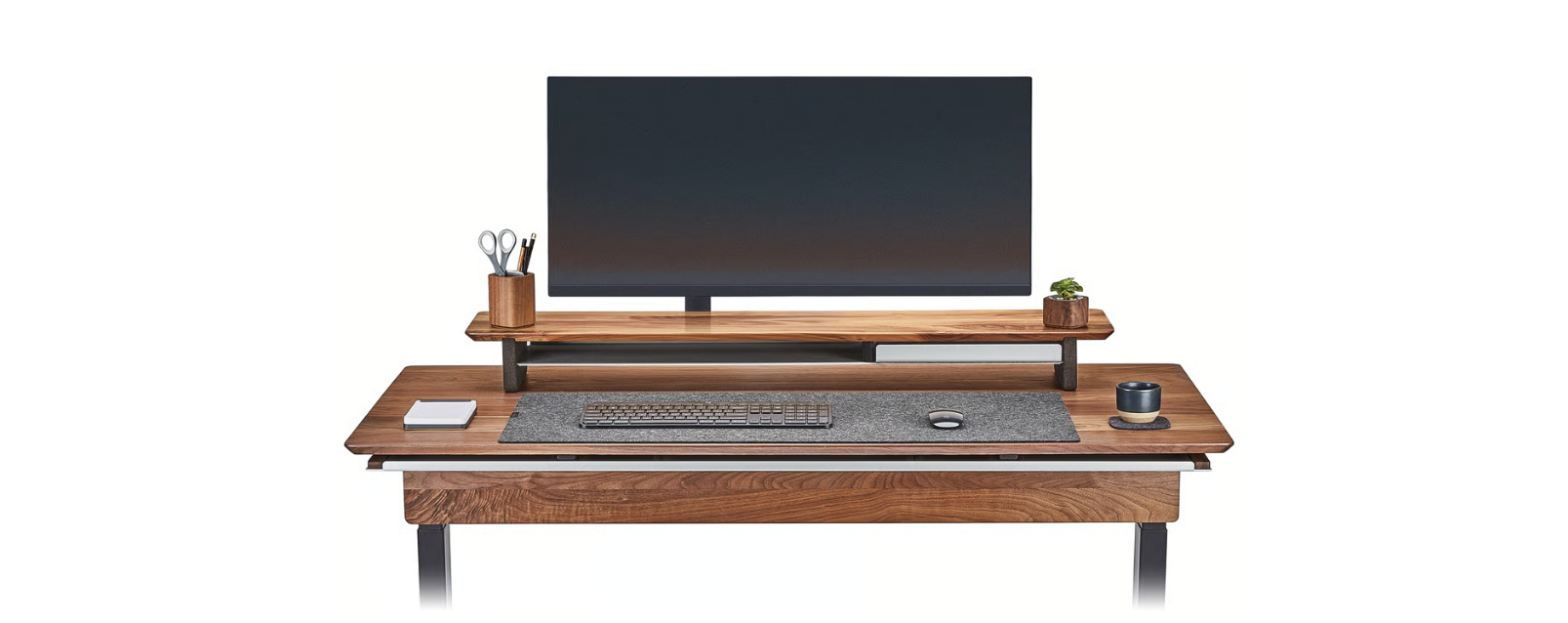
Grovemade’s new standing desk feels aimed at a different version of that problem.
The company is not pitching it as a studio desk in the traditional rack-space, speaker-bridge, producer-station sense. But for many modern music makers, especially those working out of home studios, writing rooms, or hybrid office-studio setups, the pitch is clear.
This is a desk for people who want the room to feel less like a pile of gear and more like a place where they can actually think.
The price makes it a serious purchase though…
Plywood versions start at $2,700, while hardwood versions sit at $3,500. That puts it well outside impulse-buy territory. But the idea here is not cheap furniture with a motor. Grovemade sells a finished workstation with wood options, storage, power management, cable control, and an ecosystem of shelves, trays, pads, and accessories that can make the whole room feel considered.
For producers, that’s really appealing. A studio isn’t just about speakers, plugins, and synths. The room itself changes how long you can stay focused, how quickly you can find things, and how much low-level annoyance builds up over a long day.
Cable Management Is a Studio Problem
Cable management is boring until it ruins your room.
Producers know this better than almost anyone. Power cables, USB cables, Thunderbolt cables, MIDI cables, audio lines, headphone extensions, charger bricks, SSDs, camera cables, controller cables, monitor power, laptop power, interface power. It adds up fast, and it usually ends up hanging behind the desk like a haunted extension cord sculpture.
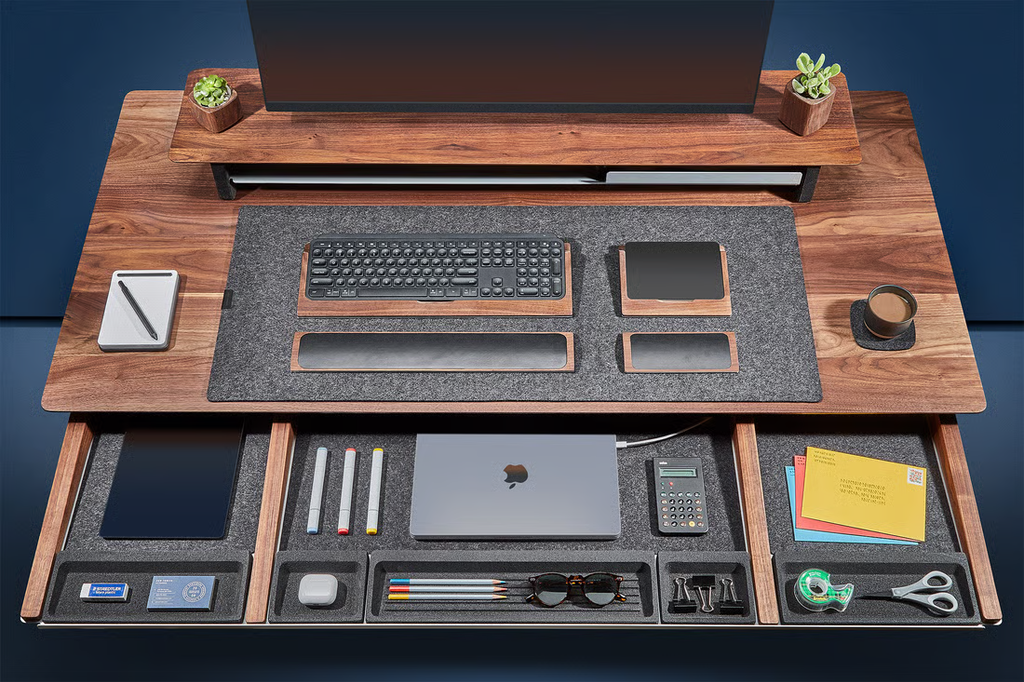
The Grovemade Desk is built around hiding most of that mess. The page copy points to a power panel, an accommodating trough, a merino-lined drawer, and a single braided cord connecting the desk to the wall. That is a very producer-friendly idea, even if Grovemade is speaking more broadly to desk people.
A single-cord setup matters in a studio because visual noise becomes mental noise. If every writing day starts with cable spaghetti under your knees, loose chargers on the desk, and a power strip you have to fish out every time something needs charging, the room starts fighting you before the track even opens.
The large slide-out drawer is the other important piece. For producers, that drawer is where the small chaos can disappear: hard drives, dongles, field recorders, spare adapters, headphone cables, guitar picks, USB hubs, notebooks, thumb drives, pens, tuning pedals, and all the little objects that somehow multiply between ideas.
That does not replace proper studio furniture for every setup. People with outboard racks, larger controllers, full-size keyboards, and big monitor systems may still need more specialized furniture. But for a producer working mostly in the box, with a few key pieces around them, the Grovemade Desk solves a problem many studio desks ignore: the invisible clutter around the work.
Standing Desks Make More Sense for Producers Than People Admit
Standing desks are usually talked about in office language. Emails. Calls. Ergonomics. Productivity. The kind of words that make most producers immediately tune out.
But music makers spend absurd amounts of time sitting still.
Writing, editing, comping, arranging, mixing, bouncing stems, making small automation moves, searching for the one percussion layer that is somehow too loud and too quiet at the same time. Hours pass quickly, and the body pays for it.
A standing desk doesn’t fix bad habits on its own, but moving between sitting and standing during a long studio day can change how the work feels. Standing while writing melodies, editing drums, organizing samples, or doing less delicate arrangement work can keep the body from locking into one position for too long.
That is especially relevant for producers who use the same room for everything. If the studio is also the office, admin corner, email station, label desk, mix room, and writing room, the body never gets a clean break between roles. A movable desk gives the room one small way to change without needing a second space.
I would still be careful with expectations. Nobody should buy a $2,700 desk thinking it will magically make better records. But a desk can remove small daily pain points, and those add up. The less the room gets in the way, the easier it is to stay with the idea in front of you.
I made a similar point about lighting in my piece on adding more vibe to a studio with Lepro smart lighting. The room doesn’t write the music for you, but it can make returning to the room feel better.
Wood Changes the Room
The wood options matter more in a studio than people may think.
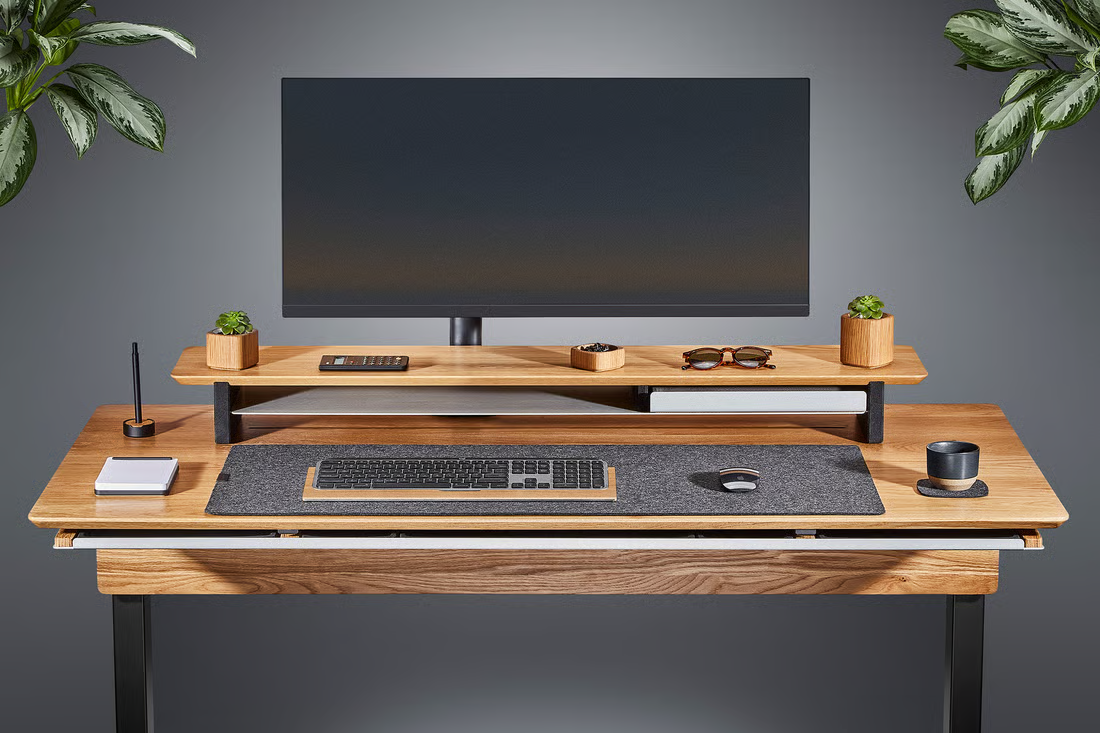
Grovemade is offering the desk in walnut, oak, and maple, with plywood and hardwood versions. That is partly an aesthetic choice, of course, but studio rooms are visual rooms now.
Producers make music, take calls, film reels, shoot walkthroughs, teach, stream, and post clips from the same setup.
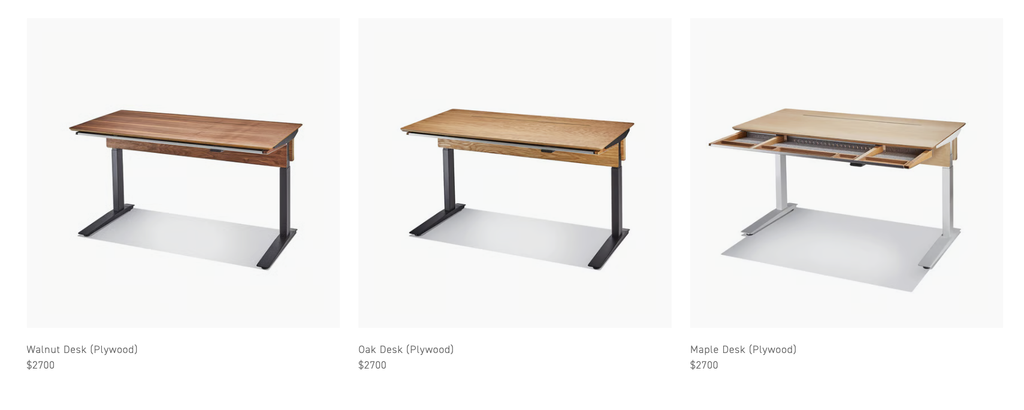
A desk with real material presence can make a room feel more finished without loading it up with décor. Walnut gives the room a darker, warmer feel. Maple reads lighter and cleaner. Oak sits somewhere in that more classic furniture space.
That visual language matters for producers who want the room to feel like a studio without it looking like a spaceship or a startup office.
Grovemade also sells coordinated shelves, trays, and desk pads, which helps if the goal is a tighter studio surface. The large desk shelves are listed at $290, desk pads at $70, and trays from $110 to $190. That can get expensive quickly, but it also lets the room build in one visual direction.
I wrote about similar room-building from a more old-school studio angle in The Magnetic Studio Project Part 3. The details around the desk, lighting, and room setup change the emotional tone of the whole space.


Will Vance is a professional music producer who has been involved in the industry for the better part of a decade and has been the managing editor at Magnetic Magazine since mid-2022. In that time period, he has published thousands of articles on music production, industry think pieces and educational articles about the music industry. Over the last decade as a professional music producer, Will Vance has also ran multiple successful and highly respected record labels in the industry, including Where The Heart Is Records as well as having launched a new label with a focus on community through Magnetic Magazine. When not running these labels or producing his own music, Vance is likely writing for other top industry sites like Waves or the Hyperbits Masterclass or working on his upcoming book on mindfulness in music production. On the rare chance he's not thinking about music production, he's probably running a game of Dungeons and Dragons with his friends which he has been the dungeon master for for many years.