Here’s What We’re Going Over
To avoid getting to prosey, let’s just skip all that and dive right into the best live vocal processors for electronic artists so you can get what you came for and GTFO.
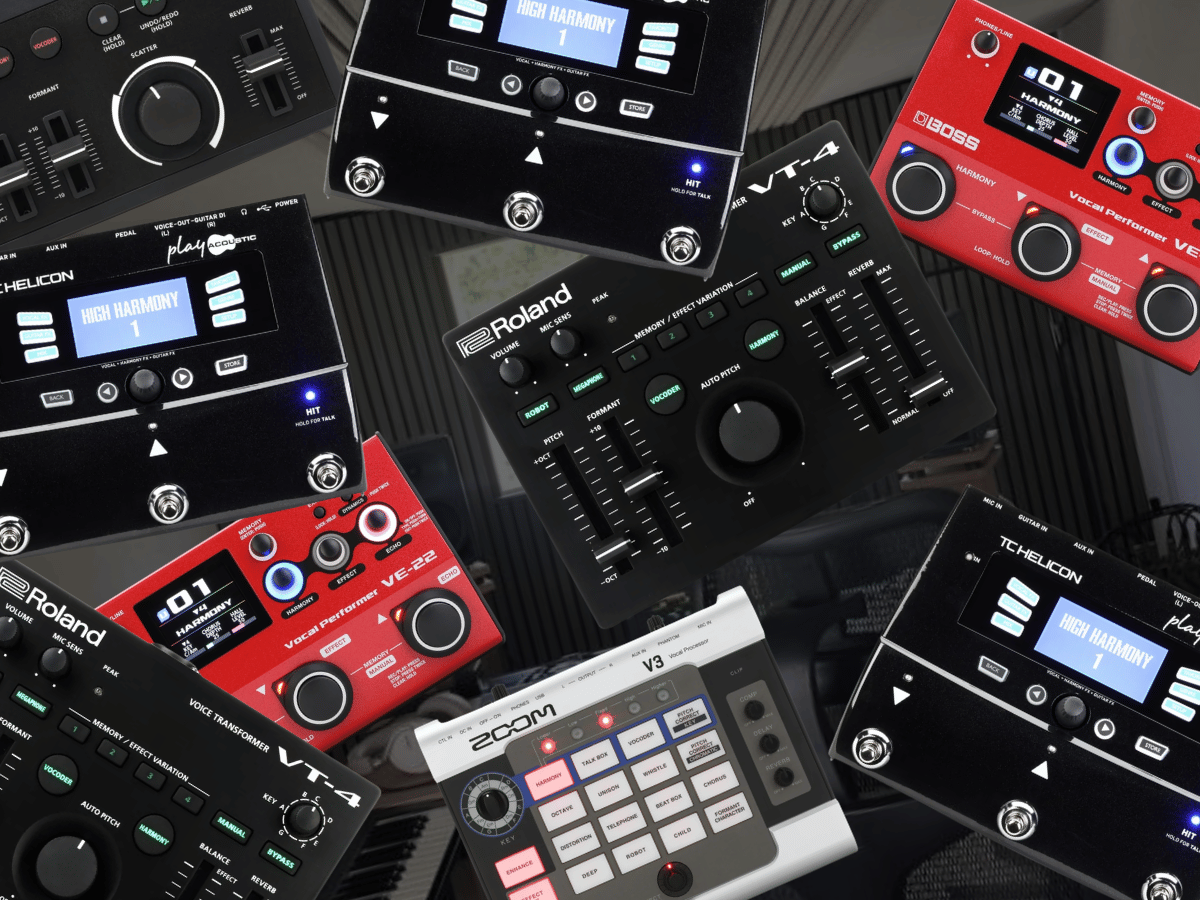
The BOSS VE-22 is the vocals pedal I would recommend to the widest range of electronic artists because it handles pitch correction, harmony, doubling, delay, reverb, looping, preset recall, and USB recording while still being easy to operate from the floor. The Roland VT-4 is the better option when pitch, formant, vocoding, and hard tuning are supposed to become part of the performance itself.
The Roland AIRA Compact E-4 moves higher on my list when looping, MIDI, rhythmic processing, and portability matter most, while the Zoom V3 fits a tabletop rig beside a mixer, sequencer, or synth. The TC-Helicon VoiceLive Play is the lower-cost floor option for singers who care primarily about pitch correction, harmonies, ambience, and preset recall. I would add the SOMA Laboratory WARP when the voice needs to stop behaving like a normal vocal entirely, since its granular reverbs, micro-looping, degradation, drive, filtering, and CV control can turn a vocal feed into raw electronic material.
Disclosure: This article contains affiliate links. Magnetic may receive a commission if you purchase something after following one of them. That does not change which products I include or what I say about their limitations.
How I Chose These Live Vocal Processors
The first thing I looked at was physical control.
That is the part a lot of generic buying pages miss.
A vocalist holding a microphone can operate a floor unit like the BOSS VE-22 very differently from a producer standing behind a mixer with one hand already moving synth parameters. If I want to change vocal scenes with my feet, I need proper switches and predictable preset behavior. If I want to ride pitch, formant, granular feedback, or filter movement during a breakdown, I would rather have the processor beside my other hardware.
The second consideration was how far the processor can take the voice.
Pitch correction and harmony cover one job. Vocoding, formant changes, extreme pitch movement, rhythmic gating, looping, granular processing, distortion, and heavy spatial processing cover another.
That distinction comes up constantly in Magnetic’s archive. DALO described her gated staccato vocals in the How It Was Made feature for “GUM” as “a way of using the Voice as a rhythmic instrument.” That sentence gets very close to what separates this article from the usual singer-focused vocal-processor roundup.
I also looked at microphone connections, phantom power, outputs, MIDI, CV, USB audio, battery operation, looping time, scene storage, and whether extra hardware is needed before the processor will accept a microphone properly.
Finally, I kept coming back to what artists actually do with processed vocals once the basic effect works.
In my feature with Baby Audio on manipulating vocals, the wider lesson was that pitch, formant, resynthesis, harmonies, and modulation work best when they serve the identity of the part. Hardware should give you access to those ideas quickly enough that they become performance decisions.
| Vocal processor | Best use | Key specification | Main limitation | Typical price |
|---|---|---|---|---|
| BOSS VE-22 | Best overall | XLR mic input, phantom power, pitch correction, harmony, 37-second looper, USB-C | Less immediate for extreme formant performance | Around $400 |
| Roland VT-4 | Best for transformation | Pitch and formant faders, vocoder, hard tuning, MIDI, 8 scenes | No integrated looper | Around $300 |
| Roland AIRA Compact E-4 | Best portable looper and voice tweaker | Auto Pitch, harmony, vocoder, Scatter, 24-second looper, MIDI | 1/4-inch mic input rather than XLR | Around $270 |
| Zoom V3 | Best tabletop processor | 16 voice effects, 3-part harmony, XLR, phantom power, USB audio | Hands-free control needs optional hardware | Around $280 |
| TC-Helicon VoiceLive Play | Best affordable floor processor | 200+ presets, harmony, pitch correction, looper | Older design and less focus on voice transformation | Around $230 |
| SOMA Laboratory WARP | Best experimental processor | 15 algorithms, stereo I/O, micro-loops, granular effects, CV control | Needs a mic preamp or mixer before it and has no preset recall | Around $650–$720 |
BOSS VE-22
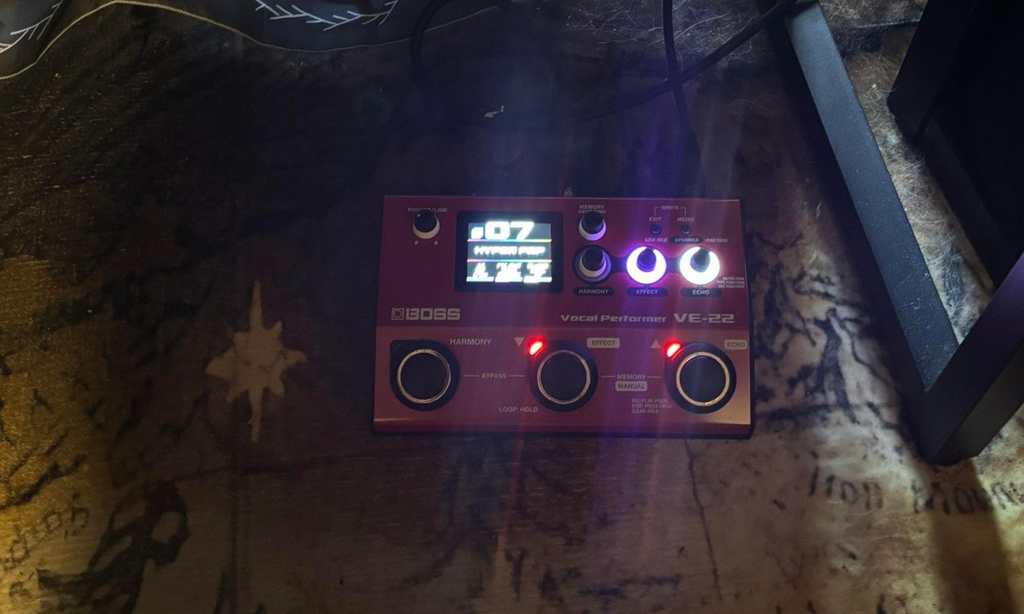
The BOSS VE-22 is where I would start because it covers enough normal vocal work to handle a full set while still giving electronic artists room to get weird.
I spent proper time with it for my BOSS VE-22 review on Magnetic, and one thing I liked was that the hardware never felt like it expected me to become a vocal-processing technician before I could get something going. You get pitch correction, harmony, doubling, EQ, compression, delay, echo, reverb, specialty effects, user presets, and a looper.
The connection side is equally relevant. There is a normal XLR microphone input with phantom power, stereo XLR outputs, headphones, auxiliary input, and USB-C audio, so the unit can sit onstage and still come back into a DAW later without forcing another recording chain into the setup.
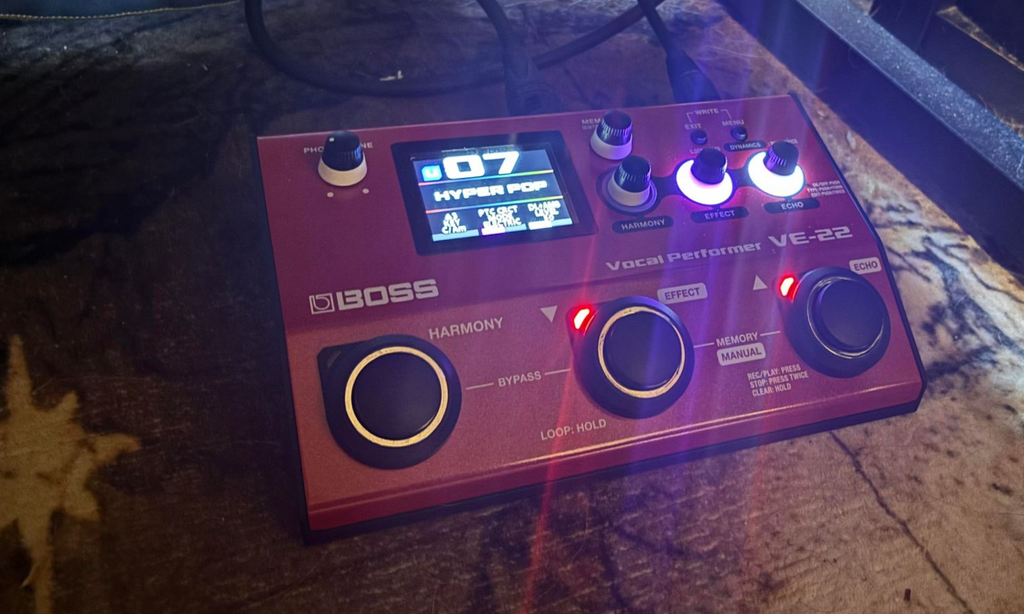
I also ended up using it in the studio far more often than I expected. In my review, I talked about using pitch correction before Ableton and processing breaths or vocal shots with effects before reaching for another plugin.
That studio use is important for electronic artists because the same vocal processing can become part of the writing stage.
BIJOU describes a similar idea from the software side in his How It Was Made feature for “Mind Eraser”. He stacked vocal processing to give the lead grit and backing harmonies while keeping the lyric intelligible, then used Ableton Spectral Resonator for robotic details. A VE-22 lets a producer hear that kind of layered identity while the take is happening instead of building every part afterward.

Compared with the VT-4, the VE-22 is where I would go if the singer still needs to sound recognizably like themselves for most of the set. Roland gives much faster access to radical pitch and formant moves, whereas BOSS gives me a broader vocal chain.
The floor format also matters. I can change scenes with my feet while my hands are on a keyboard or controller, and that can be a bigger reason to buy it than another page of effect names.
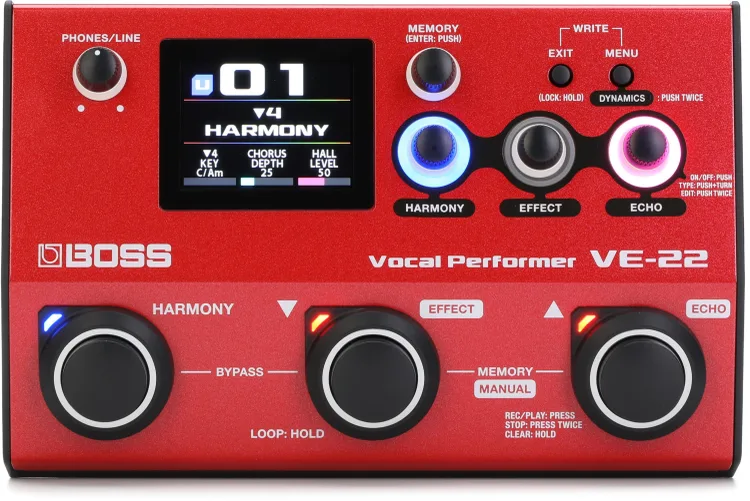
Who should buy it: Producer-vocalists who need one unit for normal singing, harmony, pitch correction, special effects, looping, rehearsal, and recording.
Who should skip it: Artists whose main interest is riding pitch, formant, vocoder behavior, granular effects, or external modulation in real time.
Roland VT-4
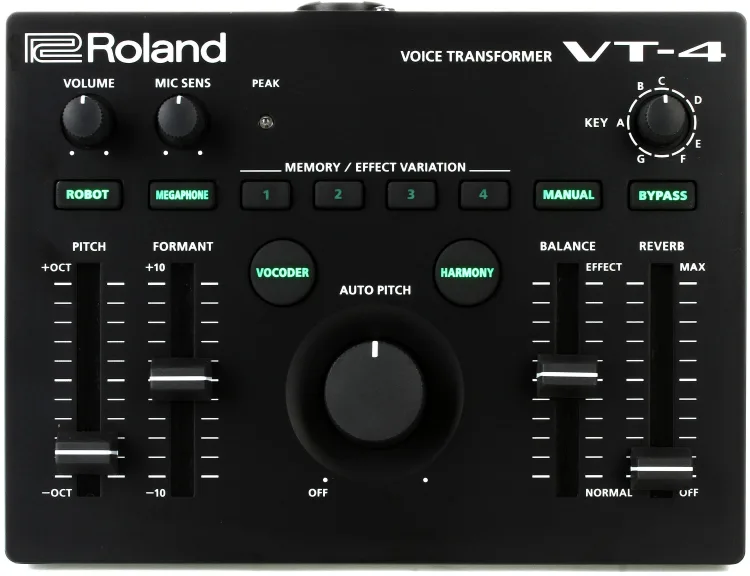
The Roland VT-4 is the one I would buy when changing the identity of the voice is part of actually playing the set.
SHaded gave Magnetic one of the clearest endorsements I have found for any piece of vocal hardware in his How It Was Made feature for “Holla Atcha Boy”: “I love this thing so much that I almost use it on every record.”
His examples are exactly why it belongs here.
He used the VT-4 for lower-pitched vocals, higher-pitched layers, vocoder harmonies, atmospheric noises, sweeps, and Auto-Pitch. That covers a lot of what I would want from a vocals pedal for producers making techno, electro, house, or anything where vocals move between hooks and effects.
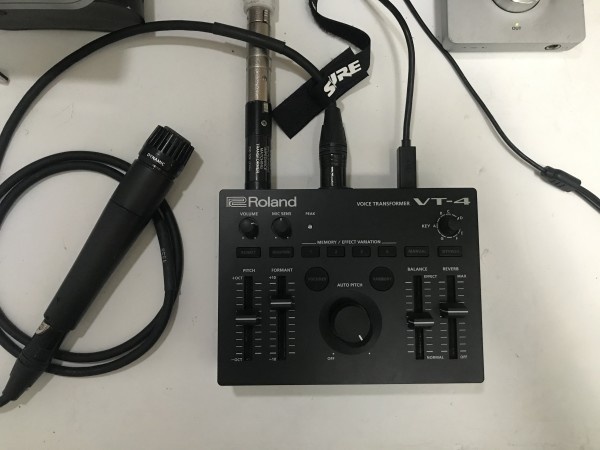
The hardware is built around that kind of interaction. Dedicated pitch and formant faders sit right in front of you, and Roland includes vocoder, harmony, Robot modes, hard tuning, megaphone-style treatments, reverb, echo, and delay.
MIDI input is another reason this one gets interesting for electronic music. Harmony, pitch behavior, and vocoder notes can follow external MIDI, meaning the voice can respond to a keyboard or sequencer rather than behaving like an isolated effect box.
That connects nicely with Dada Life’s approach in the How It Was Made feature for “See What I See”. They stacked three Ableton vocoders for the “demon voice,” using noise as one carrier and different synths for the others. The VT-4 gives a live performer access to the same general concept without building several software lanes during the show.

The rear mic input accepts XLR or TRS, phantom power is available, and the unit has stereo outputs, headphones, USB audio, MIDI input, and battery operation.
The missing looper is the main limitation. If I want the voice to become repeating rhythmic material during transitions, the E-4 has a better argument.
Who should buy it: Electronic artists who want pitch, formant, harmony, vocoding, hard tuning, and MIDI to become active performance controls.
Who should skip it: Singers who primarily want a conventional floor pedal for vocal polish, looping, and large preset libraries.
Roland AIRA Compact E-4

The Roland AIRA Compact E-4 is the smaller option, and I am treating this as an editorial caveat because I have covered it as an alternative rather than publishing the same type of long-term Magnetic review I did for the VE-22.
Roland gives you Auto Pitch, harmony, vocoder processing, pitch, formant control, Scatter, reverb, delay, echo, chorus, and a 24-second looper. MIDI can control pitch, harmony, and vocoder functions, while audio, MIDI, sync connections, and USB-C make it easier to fit beside other compact electronic hardware.
That is why I think of the E-4 less like a normal singer’s pedal and closer to a voice box that belongs near a groovebox.
The best Magnetic example actually comes from DALO rather than an E-4 user. In her “GUM” production breakdown, she describes the gated staccato voice as rhythmic material. That is exactly the kind of job where the E-4’s looping and Scatter controls begin to justify themselves.
HWIN gets at the same idea from another direction in his How It Was Made feature for “Love Is All I Need”. He talks about using breaths, mouth noises, reversed pieces, and tiny vocal fragments as musical material rather than focusing only on finished lead takes. An E-4 can bring that mentality onto the stage because the voice can be captured and manipulated before the next phrase begins.
Portability is another reason to consider it. It is small enough to sit beside compact synths or controllers without taking over the entire performance surface.
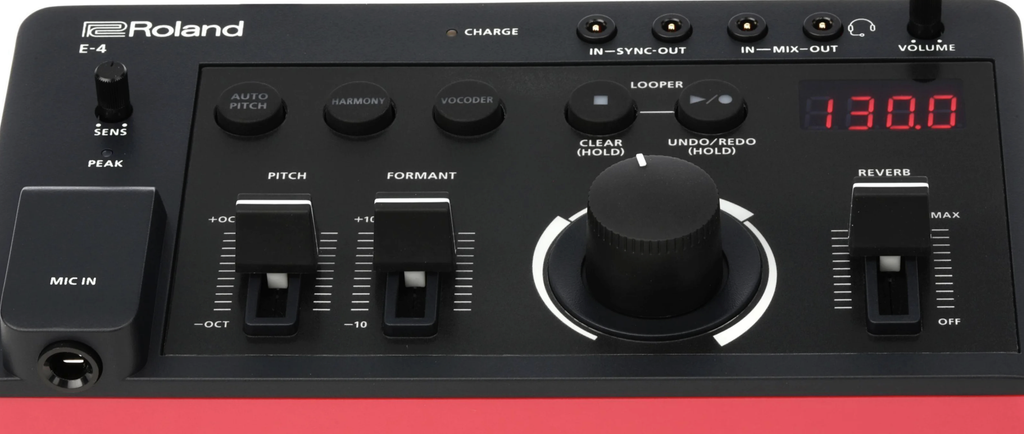
The biggest limitation is the microphone connection. It uses a 1/4-inch input rather than a standard XLR stage input, which means I would think about cabling and mic compatibility before deciding this is the center of a live vocal setup.
Compared with the VT-4, the E-4 is where I would go for loop-based voice work and portability. VT-4 gives better hands-on pitch and formant performance.
Who should buy it: Artists building compact electronic rigs where voice loops, rhythmic processing, MIDI, and vocoding matter.
Who should skip it: Singers who need a conventional XLR vocal chain with phantom power and a large collection of recallable live scenes.
Roland AIRA Compact E-4 at Sweetwater
Zoom V3

The Zoom V3 is the tabletop choice, and the reason I like it for electronic artists is that a tabletop processor can be easier to use than a pedal when the performer is already standing behind a mixer.
It gives you an XLR microphone input with phantom power, 16 voice treatments, three-part harmony, independent compression, delay, and reverb controls, USB audio, and an expression-pedal connection.
The available treatments cover vocoder, Talk Box, Pitch Correct, octave processing, distortion, telephone effects, chorus, Robot, and formant shifting.
Magnetic’s best live reference here comes from UTOPIA’s HYBRID Live performance at Kadinjača. They did not identify the exact Zoom model, so I am not claiming they used the V3, though their setup is a good example of where this category fits.
Their rig combined analog synths, live vocals, drum machines, effects processors, Ableton sequences, a Pioneer Toraiz SP-16, and a V10 mixer. They wrote that everything was connected for real-time control, and they specifically chose a Zoom vocal processor for the vocal part of that setup.

That is the buying context I care about.
I can put the V3 near the mixer, keep compression, delay, and reverb within reach, use one of the more obvious voice effects for a breakdown, and keep the vocal processor in the same physical area as the rest of the hardware.
UTOPIA also gives us one of the better live-performance lessons I have published: “The more you plan, the more room you have to be creative.” That applies directly to vocal processing. Program the vocal behavior and audio routing before the venue, then leave the creative decisions for the performance.
The main drawback is hands-free control. Zoom supports external foot and expression control, but that means extra hardware if I need to trigger vocal changes while my hands stay occupied.
Who should buy it: Producers who perform behind mixers and synths and want the vocal processor sitting beside the rest of the hardware.
Who should skip it: Singers who need several preset changes underfoot and do not want to add external foot control.
TC-Helicon VoiceLive Play

The TC-Helicon VoiceLive Play is the budget floor option in this group.
It includes intelligent pitch correction, harmonies, adaptive vocal effects, a looper, and a large factory preset library. That makes it appealing for singers who want to get into processed live vocals without moving directly toward a more expensive unit.
My Magnetic example comes from an older member of the same VoiceLive family rather than VoiceLive Play itself, and that distinction is important.
Atelier used a TC-Helicon VoiceLive 2 in their Do It Live breakdown, and their comments contain two lessons that are far more valuable than another product description.
The first is preset restraint.
Jaś said, “I just make my own presets that are as simple as possible,” then explained that he focused on standard reverb, delay, doubling, and harmonies rather than getting lost in every parameter.
I think that is one of the best pieces of advice in this article.
Two hundred presets look great while shopping. Onstage, I would rather have five sounds that I know exactly.
The second lesson is routing.
Atelier split their processed vocal so the effected version went to the main mixer while a dry version went to the stage monitors to reduce feedback. That is a far more interesting consideration for a live electronic artist than whether one pedal has another chorus algorithm.
Compared with the VE-22, VoiceLive Play costs less and covers familiar jobs around pitch correction, harmony, ambience, and looping. BOSS gives a newer workflow and a wider fit for studio work.
Compared with the VT-4, the TC unit is aimed much more at supporting a singer. I would choose Roland when voice transformation itself is part of the act.
Who should buy it: Singers who want pitch correction, harmony, looping, ambience, and floor control at a lower entry price.
Who should skip it: Electronic artists who want MIDI-driven vocoders, formant performance, granular processing, or deeper interaction with a hardware rig.
TC-Helicon VoiceLive Play at Sweetwater
SOMA Laboratory WARP
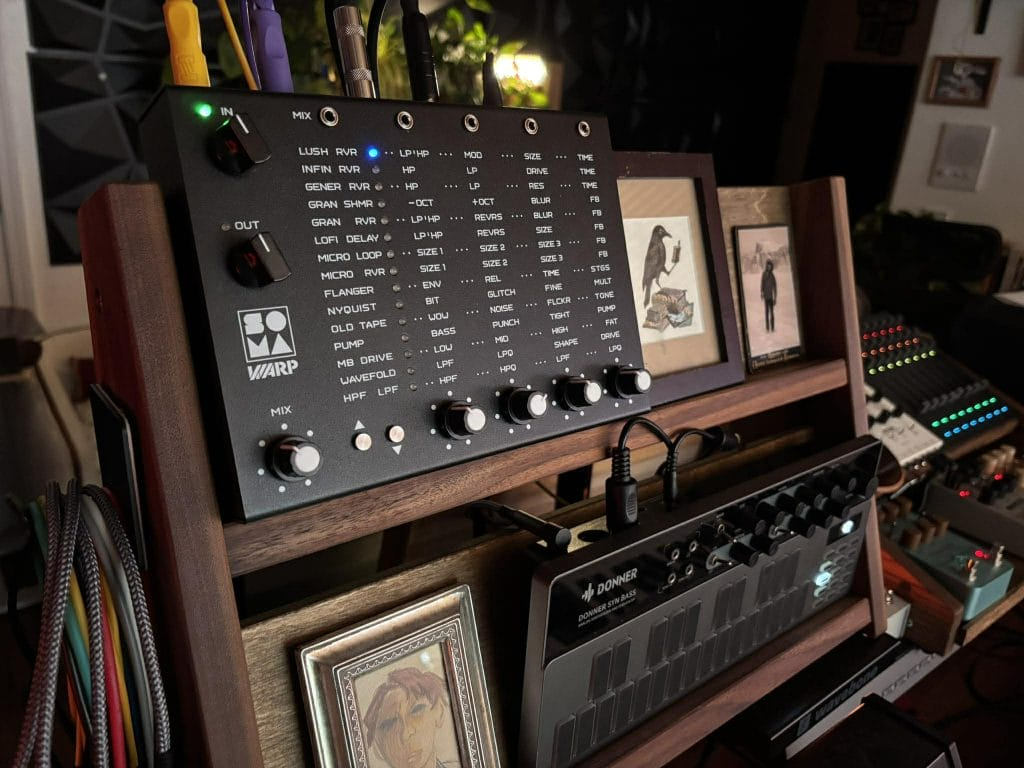
The SOMA Laboratory WARP is the wildcard in this article because it is not really a vocals pedal in the conventional sense, and that is exactly why I wanted it here.
I spent about two months with it before publishing my SOMA WARP review on Magnetic, and the first thing that clicked for me was how directly the whole box responds to whatever you feed it. There is no screen and there are no nested pages, with the front panel instead giving you input and output level, dry/wet control, algorithm selection, and four parameters for the selected effect.
WARP has 15 algorithms, and several of them are immediately interesting for vocals. Infinity Reverb and Generative Reverb can turn a short phrase into material that keeps moving long after the singer stops, while Granular Shimmer and Granular Reverb can pitch, reverse, and smear a vocal until it operates more like texture than lead audio.
Micro Loops and Micro Loops Reverb are where I would start if I wanted rhythmic voice fragments. In my review, I found those algorithms far closer to layered and drifting sound manipulation than a normal delay, and pushing their feedback could send them toward ongoing self-generating behavior.
That connects directly with what DALO described in her “GUM” production breakdown and with HWIN’s use of breaths and tiny vocal fragments in “Love Is All I Need”. WARP gives me a hardware environment where that kind of thinking can happen in real time.
The stranger algorithms push the idea further. Nyquist combines sample-rate reduction and bit crushing with a harmonic-tracking mode, Old Tape introduces wow, noise, flicker, and tonal degradation, Multiband Drive separates distortion across frequency areas, and the wavefolder can push a relatively simple vocal source into a much rougher electronic tone.
The biggest reason it belongs in an electronic-performance article is CV.
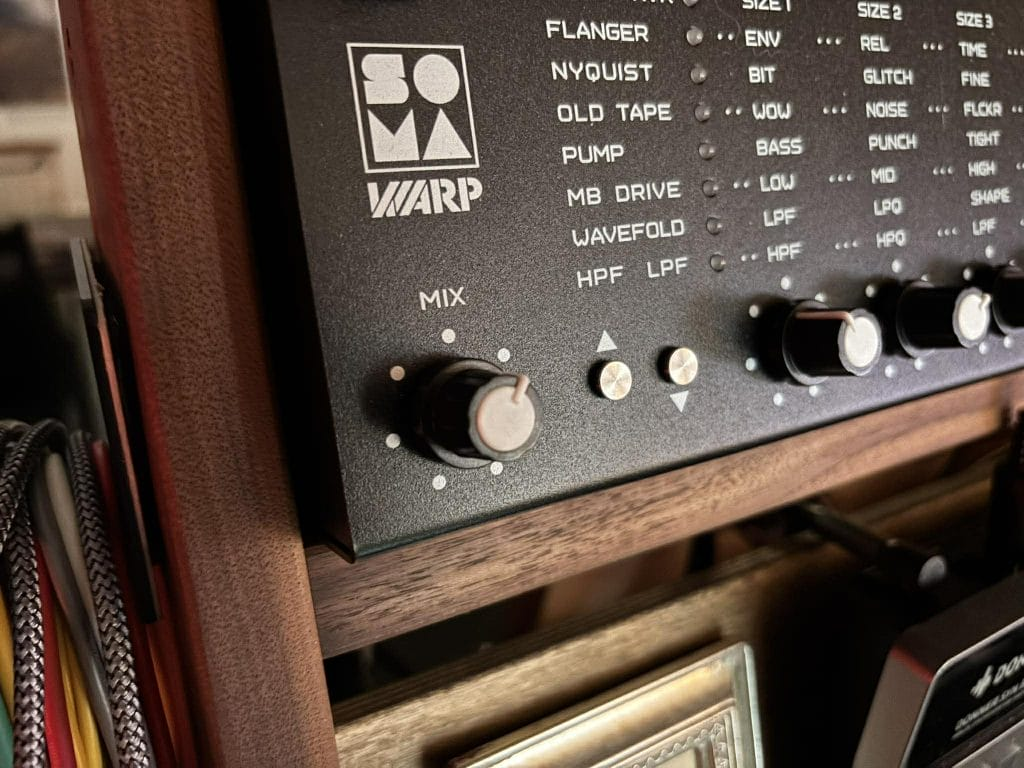
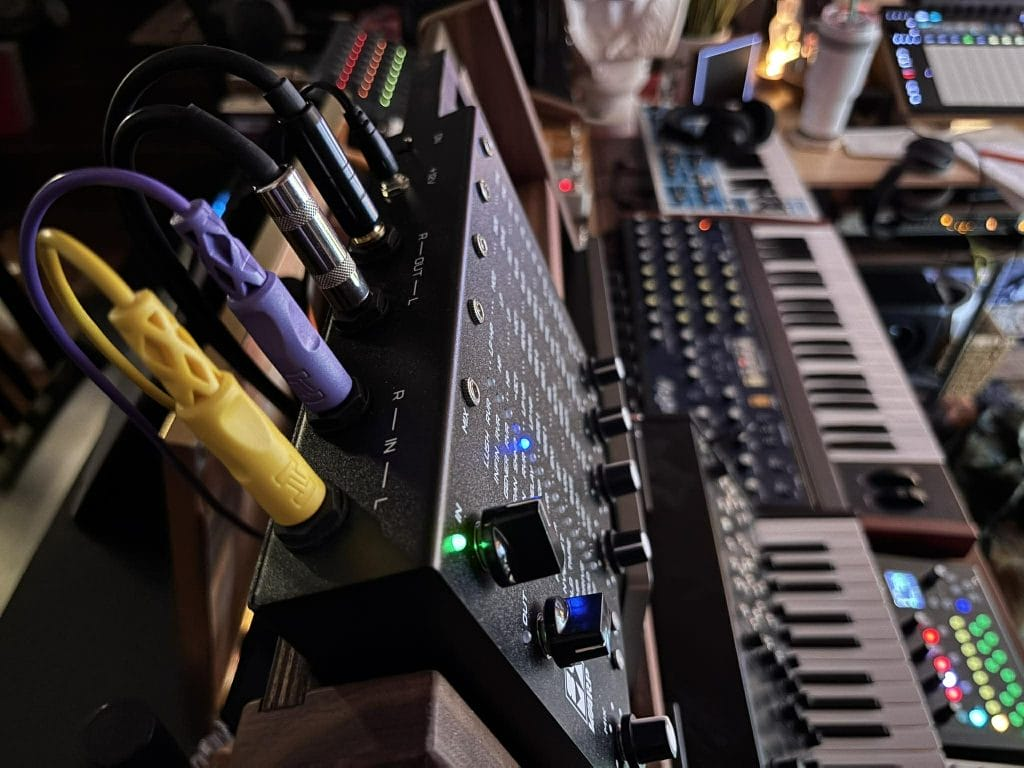
Every main processing parameter gets its own CV input, including the mix control, so a modular system or other CV source can animate the effect while the vocalist performs. That puts WARP in a completely different category from the VE-22 or VoiceLive Play because it can behave almost like another modular voice in the rig.
There are important caveats.
WARP has stereo 1/4-inch audio inputs rather than an XLR microphone input with phantom power. I would therefore route the microphone into a proper preamp, mixer, audio interface, or another vocal processor first, then send that signal into WARP.
It also runs one algorithm at a time, has no conventional preset-recall system, and algorithm changes are not something I would build an entire synchronized show around. In my review, I actually liked the lack of preset recall because it made the unit feel like something I was actively playing, though that is also the exact reason I would never recommend it as the primary vocal processor for someone who needs the same six sounds every night.
I would use WARP after something like a VE-22, VT-4, or mixer send.
That lets the first device handle microphone level, pitch correction, harmony, and basic vocal duties, while WARP handles the moments when the voice needs to leave normal vocal territory completely.
Who should buy it: Experimental electronic artists, modular performers, and producer-vocalists who want granular processing, self-generating effects, degradation, distortion, filtering, and CV control.
Who should skip it: Singers looking for a microphone-first pedal with pitch correction, harmony, XLR input, phantom power, and dependable preset recall.
Honorable Mentions
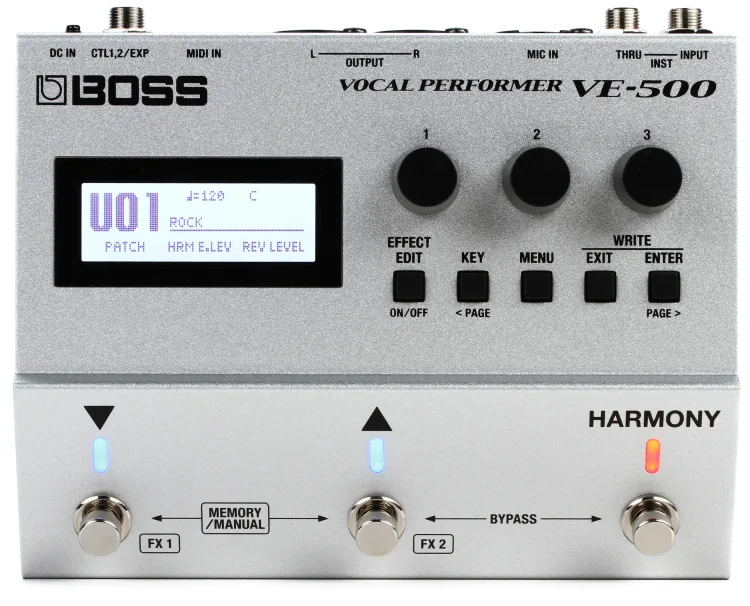
BOSS VE-500: This adds deeper BOSS processing, MIDI, intelligent harmony, user presets, and a larger pedalboard-oriented system. I would look here when the VE-22 feels too limited and the stage setup is already built around foot control.

Zoom V6-SP: This takes Zoom’s processing into a floor format with dedicated voice, harmony, and effects areas. It is the one I would investigate if I liked the V3 concept but needed most of the control under my feet.
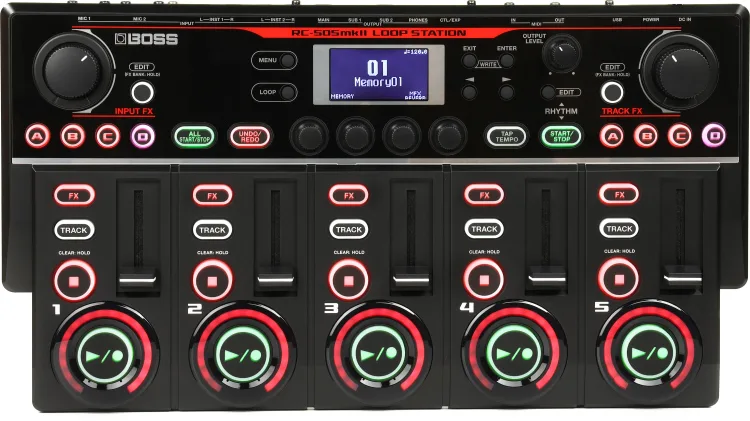
BOSS RC-505mkII: This is a loop station first, so it belongs outside the main vocals pedal comparison, though vocal loopers should absolutely consider it when layering depth matters more than pitch correction.
Frequently Asked Questions
What is a vocals pedal?
A vocals pedal is a hardware processor placed between a microphone and the rest of the live audio system. Depending on the model, it can add pitch correction, harmony, delay, reverb, distortion, vocoding, looping, or other treatments before the voice reaches the mixer.
Can I use Auto-Tune live without a laptop?
Yes. Hardware such as the VE-22, VT-4, and E-4 provides real-time pitch processing without running a plugin host onstage.
Can I use normal studio effects hardware on live vocals?
Yes, provided the levels and connections are handled correctly. My SOMA WARP review is a good example because WARP can process vocals, though I would feed it from a mixer, preamp, interface, or another vocal processor rather than expecting it to accept a stage microphone like the VE-22.
Can vocal effects cause feedback?
Yes. Reverb, delay, gain changes, harmonies, and monitor placement can all affect feedback behavior. Atelier’s VoiceLive routing setup is worth studying because they kept the effected voice in the main system and sent a separate dry feed to the monitors.
Which vocal processor is best for vocoder effects?
I would start with the VT-4 when real-time vocoder performance and MIDI control are central to the set. The E-4 also includes vocoder processing and MIDI control in a smaller box.
What should I use if I want experimental granular vocal effects?
WARP is the most interesting option here for that job. Its granular reverbs, Micro Loops algorithms, self-generating effects, distortion, filtering, and CV control make far more sense for experimental processing than a normal pitch-and-harmony vocal pedal.
Wrapping Things Up
The best live vocal processors for electronic artists should fit the way the voice behaves inside the actual performance.
The BOSS VE-22 is my first recommendation for most producer-vocalists because it covers pitch correction, harmonies, doubling, ambience, special effects, looping, recording, and floor control in one box. My own VE-22 testing is also why I trust it outside the stage, since I found it creeping into studio recording and sound-design work as well.
The Roland VT-4 is where I would go when the voice needs to become part of the performance electronics, and SHaded’s use of it across pitched vocals, vocoder layers, atmosphere, and Auto-Pitch gives that recommendation real artist context.
E-4 is the smaller option when looping, rhythmic voice treatment, MIDI, and portability drive the purchase. Zoom V3 fits a tabletop electronic rig, which is exactly why UTOPIA’s integration of a Zoom processor into a larger Ableton-and-hardware setup is such a relevant example even though they did not name the exact Zoom model.
VoiceLive Play is the lower-cost floor processor for singers who want harmony, tuning, presets, and looping without moving into the higher price brackets.
WARP is the outlier, and my two months spent reviewing it are exactly why I think it belongs here. I would never tell somebody to buy it as their only vocal processor, but once the microphone and basic vocal chain are handled, its granular processing, Micro Loops, degradation, drive, filtering, and CV control open a completely different approach where the voice becomes another piece of electronic source material.
I would make the final decision by answering two questions.
Do I want the voice supported, or do I want the voice transformed?
And do I need to control those changes with my feet, my hands, or the rest of my hardware rig?
Once those are answered, the right processor becomes much easier to see.

Will Vance is a professional music producer who has been involved in the industry for the better part of a decade and has been the managing editor at Magnetic Magazine since mid-2022. In that time period, he has published thousands of articles on music production, industry think pieces and educational articles about the music industry. Over the last decade as a professional music producer, Will Vance has also ran multiple successful and highly respected record labels in the industry, including Where The Heart Is Records as well as having launched a new label with a focus on community through Magnetic Magazine. When not running these labels or producing his own music, Vance is likely writing for other top industry sites like Waves or the Hyperbits Masterclass or working on his upcoming book on mindfulness in music production. On the rare chance he's not thinking about music production, he's probably running a game of Dungeons and Dragons with his friends which he has been the dungeon master for for many years.