I spend most of my workday looking at screens, so computer glasses have become a normal part of my desk setup. On any given day, I can be writing an article, handling label administration, editing images, or working on music, often while moving between my laptop and larger displays for hours.
That means a pair like the GUNNAR Tioga has to keep colors accurate, ease some of the fatigue I associate with long screen days, and remain comfortable enough that I am not constantly thinking about what is sitting on my face.
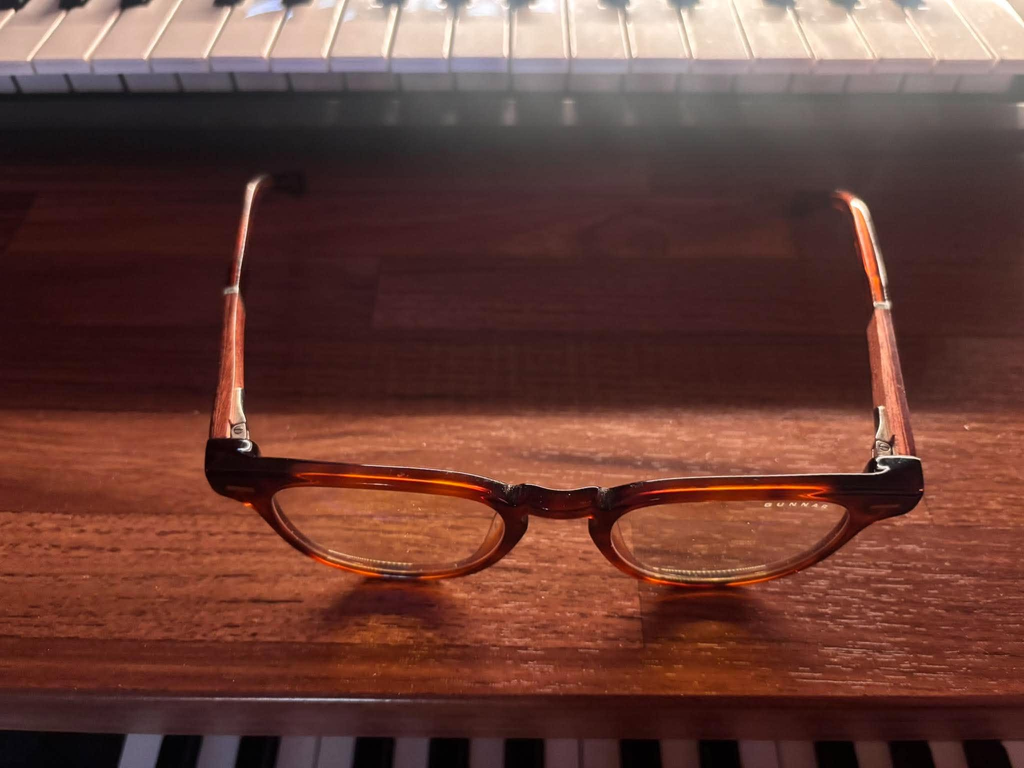
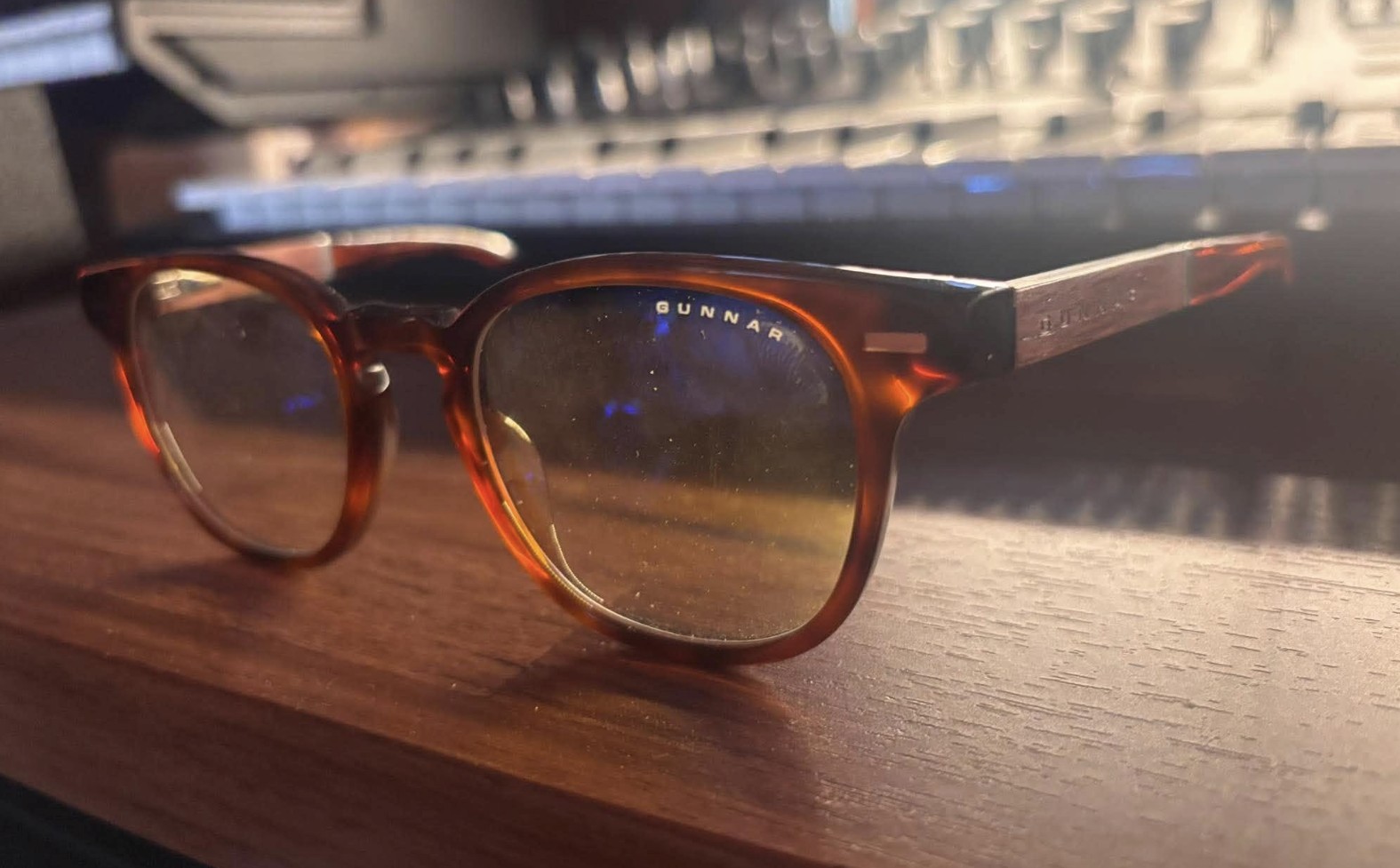
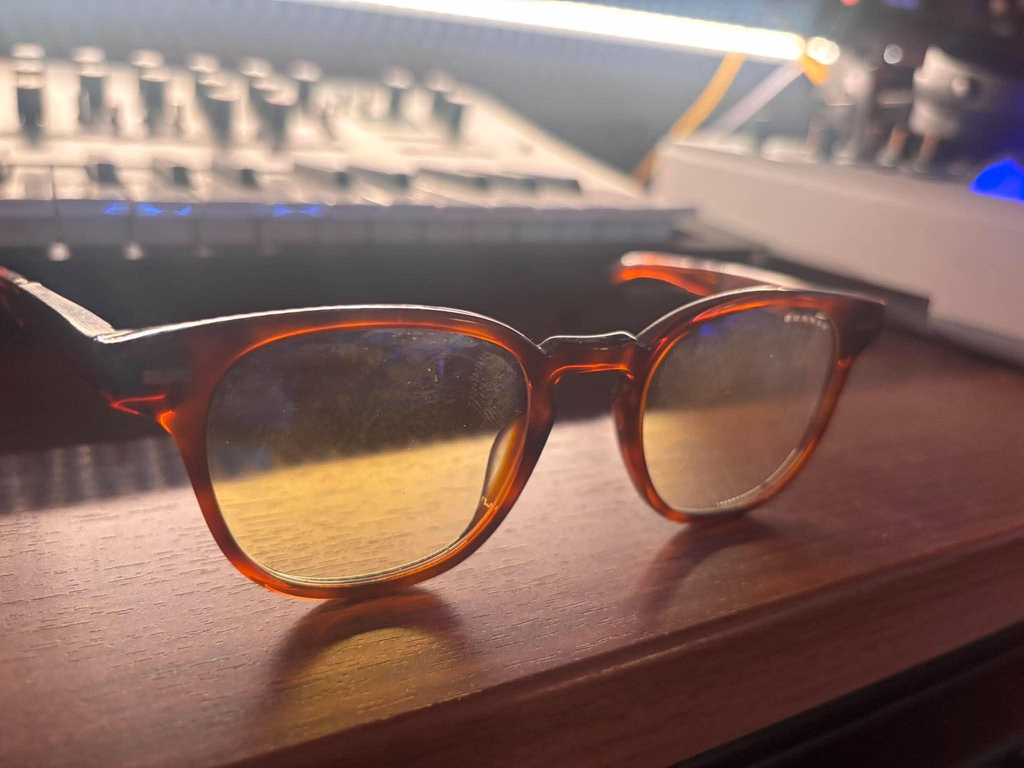
The $250 GUNNAR Tioga gets a lot right from the start. GUNNAR uses Italian acetate, carbon-fiber-strengthened wood, flexible spring hinges, and mineral-glass lenses, and offers it in Gray Crystal Walnut or Maroon Rosewood with 65 Amber or 20 Clear Pro lenses. The materials feel appropriate for one of GUNNAR’s Mythic models, and the glasses look as expensive as the price suggests.
The complication is weight…
The Tioga looks polished, the lenses perform extremely well, and the build quality holds up once I wear them daily.
After about an hour, though, I found myself thinking less about the optical quality and more about the pressure building on my nose. My final opinion came down to how much comfort I was willing to trade for premium materials and excellent lens performance.
The Design Looks Worthy of the Price
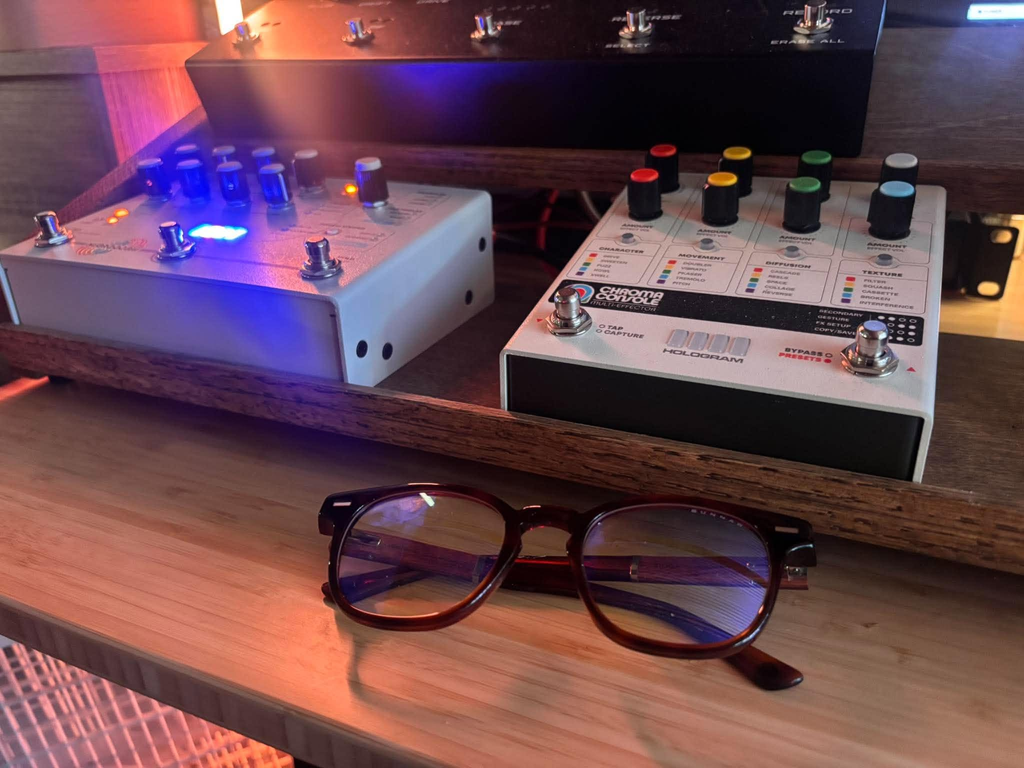
My review sample came in Gray Crystal Walnut, which combines a semi-translucent gray body with visible wood detailing along the arms. The finish has some personality without crossing into the exaggerated styling used by certain gaming accessories. GUNNAR carves its name into the side, and the branding remains restrained enough that I could wear these in a meeting without feeling out of place.
The Tioga also feels properly built. The acetate has a reassuring density, the wood sections add texture, and the spring hinges open smoothly without pinching around my temples. Those hinges were especially welcome when I wore the glasses with headphones, since rigid arms can become uncomfortable once a headset adds pressure around the same area.
GUNNAR includes a Mythic-level glasses case, microfiber pouch, and microfiber cleaning cloth.
The case has a squared profile that feels appropriate at this price, protects the glasses well, and does not take up an unreasonable amount of room in my bag. The pouch and cloth feel fairly generic by comparison. They do their assigned jobs, although I would have liked the accessories to feel a little more considered on a $250 product.
From a design perspective, my complaints are limited. The Tioga looks expensive without relying on oversized branding or decorative metalwork, and the mix of acetate and wood remains visible during normal use.
I could wear this pair while writing at home, traveling, attending a meeting, or working at an event. It looks professional in each setting and avoids the appearance of a dedicated gaming accessory.
The Lenses Handle Color Work Very Well
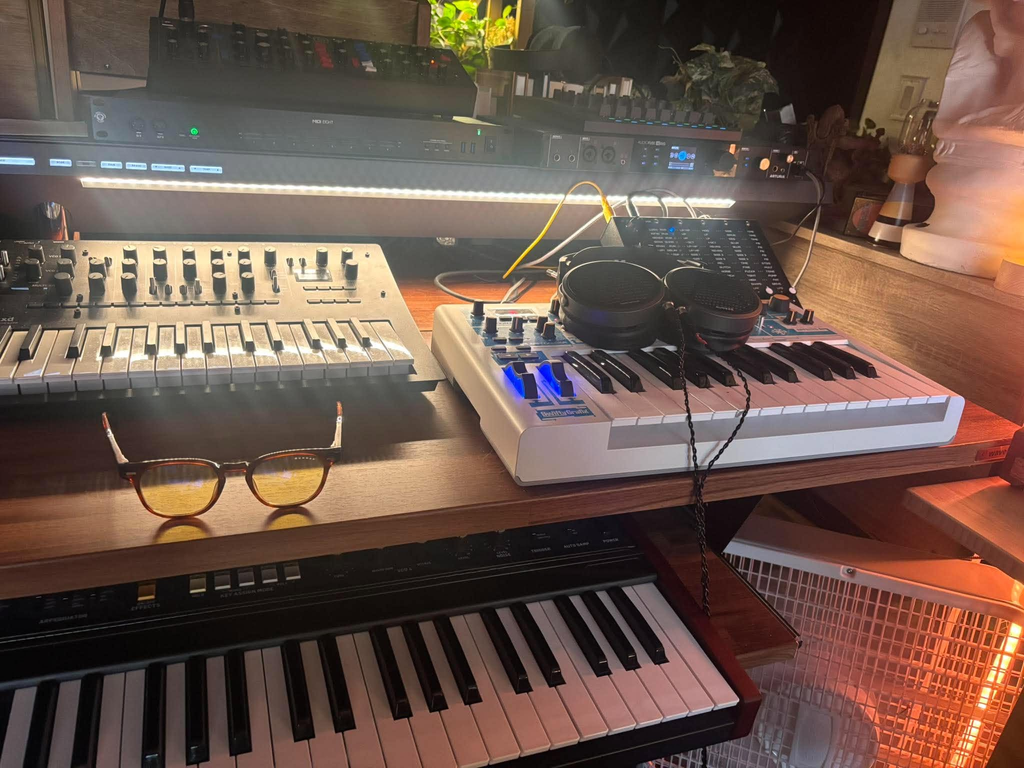
The mineral-glass lenses are the main reason I would consider buying the Tioga.
My Clear Pro sample produced an exceptionally transparent image with accurate color and no obvious distortion around text, interface elements, or the lens edges. During image work, whites remained neutral and interface colors looked as expected. I could also move among plug-in interfaces, meters, and arrangement views without feeling that the glasses were changing what I saw on the display.
GUNNAR offers two lens choices for this model.
The 65 Amber lenses block 65% of blue light at 450 nm and introduce a warmer tint, while 20 Clear Pro blocks 20% at the same wavelength and keeps color closer to the original display. Clear Pro is my preference for daytime writing, editing, and music production because I do not want a yellow tint influencing color decisions. Amber may suit someone who works later at night and wants greater blue-light filtration, as long as the warmer appearance fits the work being done.
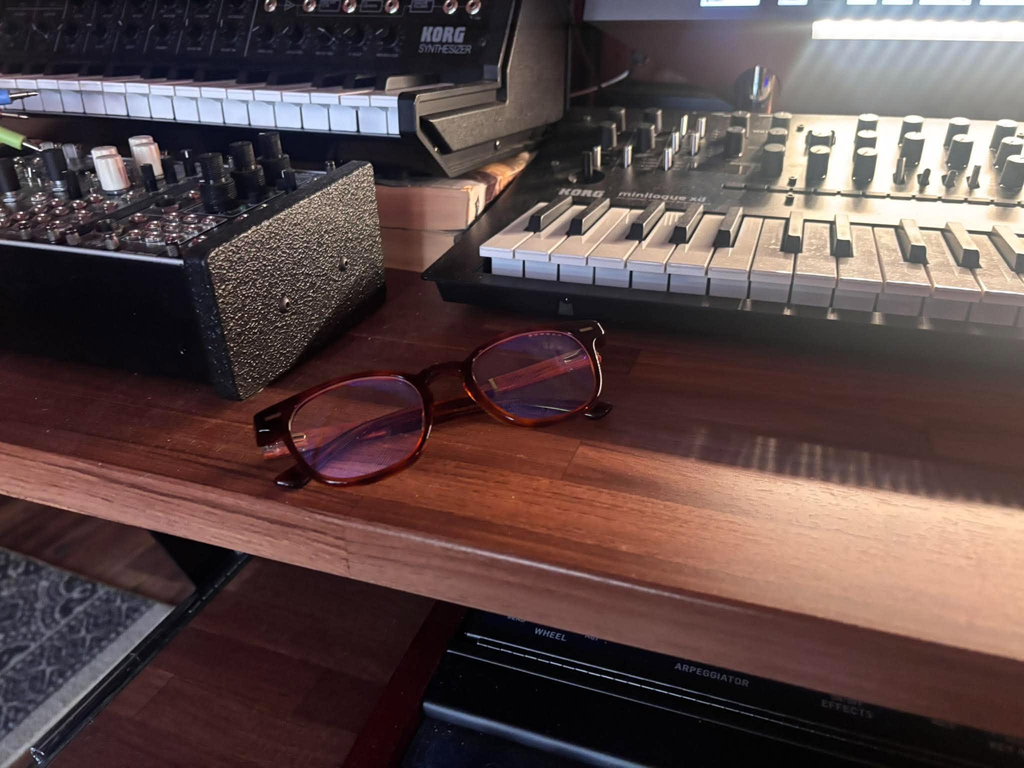
Reflections from my monitor and nearby lamps also felt less distracting with the Clear Pro lenses.
The G-Shield Premium Plus coating resisted fingerprints better than many less expensive pairs I have used, although the lenses still needed routine wiping after I adjusted the glasses by touching the lens area. The included cloth removed those marks without much effort, and the scratch-resistant mineral glass gave me some reassurance when moving the Tioga between my desk, case, and travel bag.
My eyes felt less dry and irritated after extended computer use, and I dealt with fewer headaches during longer workdays. I am treating that as my personal response rather than a medical conclusion. Screen brightness, room lighting, blinking frequency, prescription needs, and work habits can influence the same symptoms. The Tioga helped me, although someone else may have a different experience.
The Weight Changes the Recommendation

The Tioga weighs 37.1 grams, and the distribution of that weight became the main issue once I had worn the glasses for about an hour or more in the studio. Most of the pressure felt concentrated toward the front, especially around the bridge of my nose. When I removed the glasses after a longer period, I could see marks where they had been sitting… That is a difficult compromise for eyewear designed around extended computer use.
The balance bothered me as much as the overall weight.
The front felt heavier than the arms, so the glasses pressed downward instead of distributing the load evenly across my nose and ears. A headset helped keep them in place, although it didn’t reduce the pressure around the bridge. After less than an hour, I often wanted to remove them for a short rest.
Fit will change according to face shape, nose bridge, and tolerance for heavier eyewear.
The spring hinges kept the sides comfortable, and the glasses were wide enough for my head without pinching. Someone with a different nose profile may have a better result. Anyone considering the Tioga for eight-hour workdays should take the 37.1-gram weight seriously and buy from a retailer with a reasonable return policy if an in-person fitting isn’t available.
The Tioga is also unavailable with prescription lenses, which narrows the audience at this price. It is aimed primarily at people who don’t need corrective lenses or who can wear contacts underneath. Spending $250 on non-prescription computer glasses is already a specific decision, so you need to consider fit, lens choice, and your daily routine before ordering.
I would recommend the Tioga to someone who prioritizes color accuracy, likes the wood-and-acetate design, and already knows that heavier glasses work for their face. Clear Pro is my choice for writing, editing, and music production because it maintains natural color while reducing some of the discomfort I experience during long screen days. The 65 Amber version is the better option for someone who wants a warmer tint and greater blue-light filtration.
For my desk, I’m still torn which is not something I usually care to admit when it comes to the products I review…
I like how the Tioga looks, the Clear Pro lenses are excellent for color-sensitive work, and my eyes felt better after long periods at the computer. I also cannot ignore the pressure on my nose or the need to remove the glasses before the workday ends.
The Tioga gets plenty right, although its weight keeps me from recommending it for all-day wear without first checking the fit.


Will Vance is a professional music producer who has been involved in the industry for the better part of a decade and has been the managing editor at Magnetic Magazine since mid-2022. In that time period, he has published thousands of articles on music production, industry think pieces and educational articles about the music industry. Over the last decade as a professional music producer, Will Vance has also ran multiple successful and highly respected record labels in the industry, including Where The Heart Is Records as well as having launched a new label with a focus on community through Magnetic Magazine. When not running these labels or producing his own music, Vance is likely writing for other top industry sites like Waves or the Hyperbits Masterclass or working on his upcoming book on mindfulness in music production. On the rare chance he's not thinking about music production, he's probably running a game of Dungeons and Dragons with his friends which he has been the dungeon master for for many years.