Table of Contents
Between the Hologram Microcosm, Chroma Console, and SOMA WARP, I already have plenty of ways to add delay, reverb, and granular processing to my music. Another expensive hardware effect needs a specific reason to earn space in my studio, and the Cosmos gives me one with its approach to repetition.
It records audio into delay lines of different lengths, so a simple phrase can gradually produce note combinations I didn’t explicitly play.
That behavior interests me most, and it also explains why I think the Cosmos deserves a fair amount of thought before anyone buys it. I like having control over which sounds I record, how long they remain audible, and how much they change, but I also want to know when the processing will make a part harder to use in a finished track. With Cosmos, the same timing differences that make a sparse phrase interesting can make a dense arrangement difficult to manage.
For the melodic and organic house music I make, I see the applications in supporting textures, extended introductions, and short recordings that I can edit afterward. The appeal is getting additional musical ideas from a limited amount of source material, then deciding which results belong in the production.
That is the basis for this review: what Cosmos contributes, where its limitations become frustrating, and whether its particular approach justifies the purchase and how it compares to not only the stuff I’ve reviewed but also some of the other cool gear producers I interview and cover on the site are using their gear as well…
SOMA Cosmos Design and Studio Setup
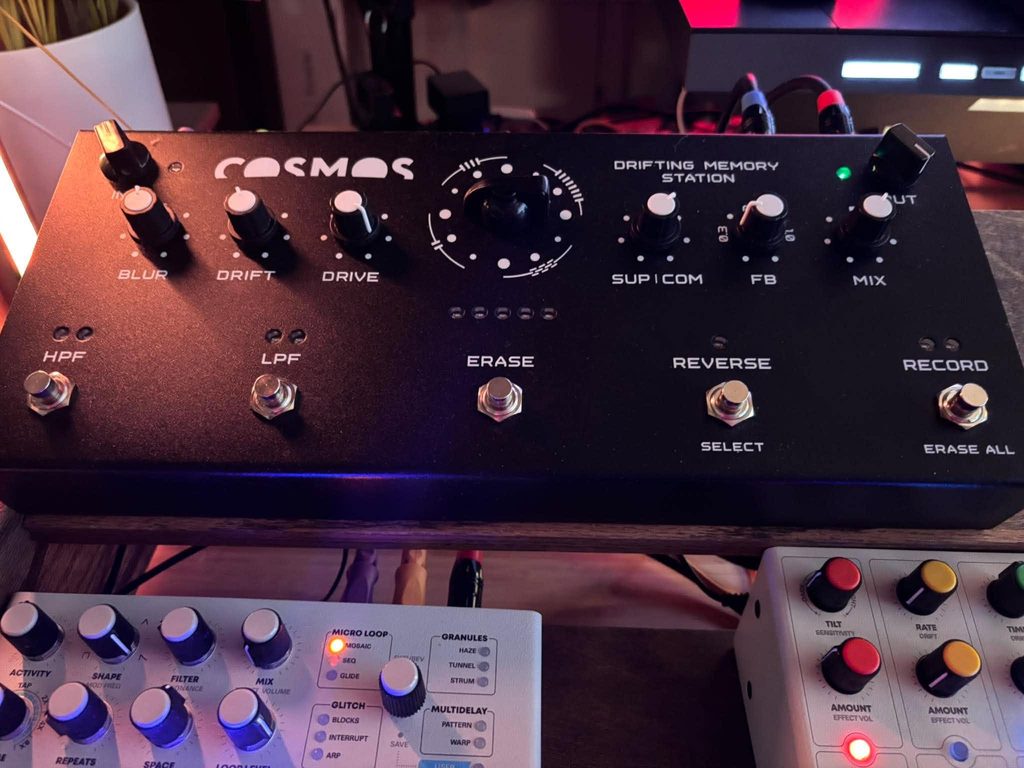
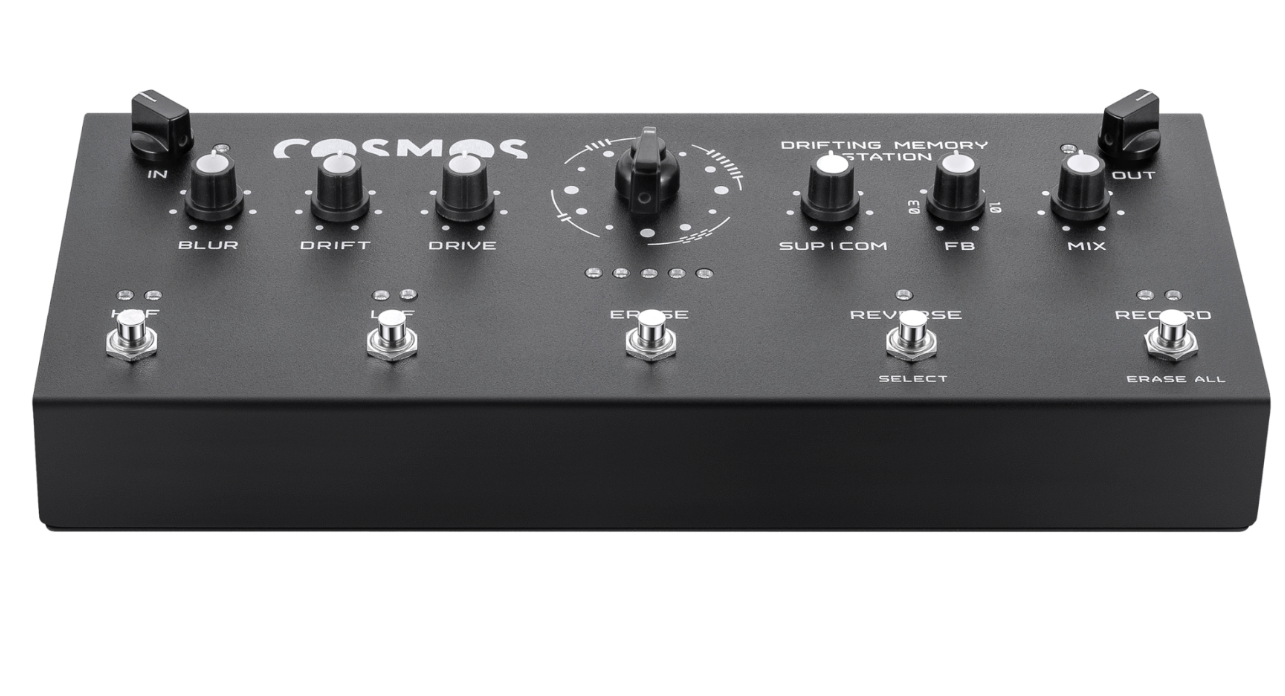
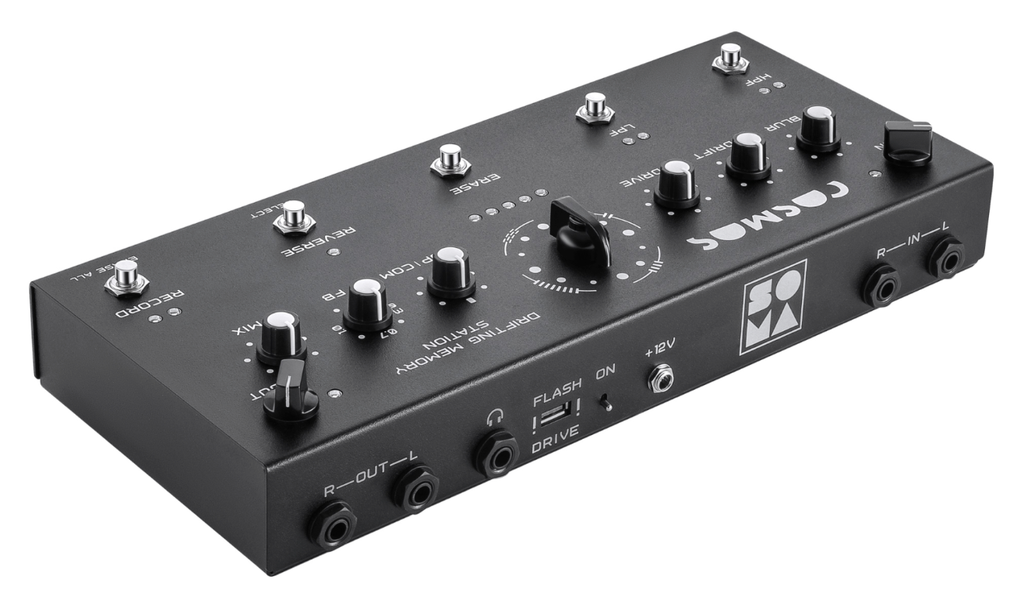
Cosmos is a hardware audio processor that needs an external source, and I can feed it synths, guitar, voice, or several instruments combined at a mixer. Its quarter-inch stereo connections and headphone output support recording, while separate incoming and outgoing level controls let me manage the audio without relying entirely on the device feeding it. I would place it within reach because the knobs are part of its appeal.
The enclosure measures 342 × 153 × 68 mm and weighs 2.2 kg, so I would allocate space before ordering. The metal construction and low-force switches suit both desktop and floor operation, although I think desktop placement is preferable when I expect to change parameters. Secondary functions involving two switches are also easier to operate by hand while I can see the panel.
That preference connects with what I discussed in my SOMA WARP review because direct access to the controls can affect how frequently I use a processor during writing, especially when I am adjusting an effect while a phrase repeats.
Cosmos has a different set of functions, but I see the same reason to give the hardware an accessible position rather than treating it as an occasional insert.
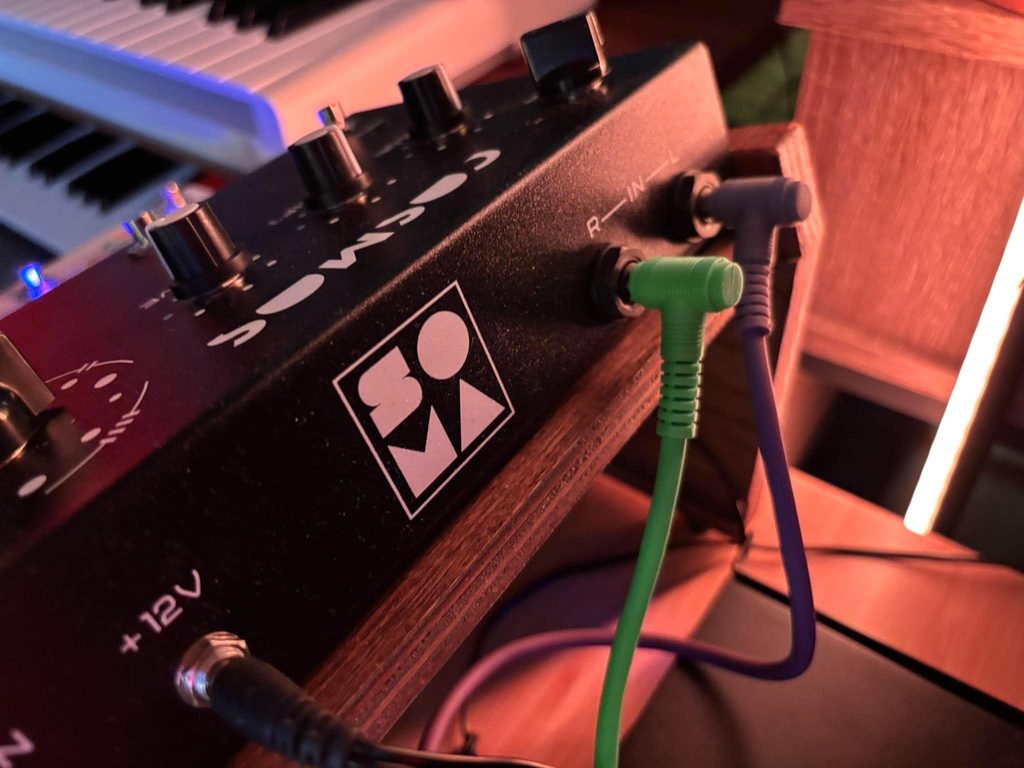
Power deserves attention because Cosmos uses 12V DC with center-positive polarity.
I’d use the supplied adapter, and I would follow SOMA’s specified replacement requirements if it needed replacing because, with devices like this it can get a little finicky, and I’ve actually had devices completely crap out on me because I used the incorrect power supply for a week or two… and it killed my day for sure. The USB-A connection has an equally specific purpose: firmware installation from a flash drive, without USB audio or MIDI functionality. I cannot connect it to my computer and treat it as a plugin interface.

Stereo monitoring would be my preference because the changing left/right relationships are part of the processing. A mono source is automatically duplicated when connected to a single incoming jack, while using one output produces a mono sum, and yet I also wouldn’t assume an incoming stereo patch retains its original positioning, since the channels feed different delay groups in the main firmware.
SOMA Cosmos Algorithms
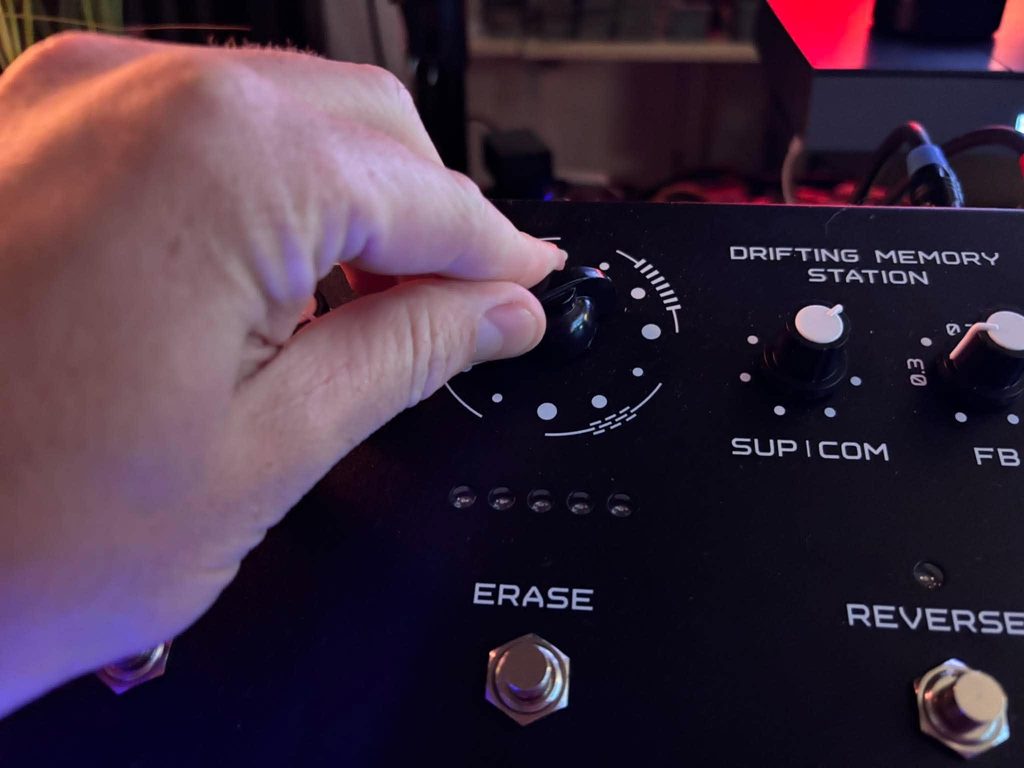
The main firmware offers Two Delays, Four Delays, Giant Reverb, and Granular Delay, with three selections in each family.
I like having twelve clearly accessible algorithm positions because the differences are substantial enough to encourage deliberate selection. The choice is about how the recording repeats and changes, and that is a more consequential decision than choosing a slightly brighter or darker ambiance.
Two Delays would be my starting point when I want to understand the timing behavior.
It uses two delay lines that gradually offset, with approximate repetition settings of 2.5, 9.5, and 22 seconds. A short sequence of notes can produce changing combinations as the repetitions stop matching, which is appealing when I want additional phrasing without manually writing another melodic part.
Four Delays increases the number of overlapping repetitions, with approximate settings of 2.5, 8.5, and 11.5 seconds. I would choose it when density is part of the intended result, although I would record less material at first. Four circulating delay lines already contribute plenty of activity, and adding a busy phrase risks making individual notes hard to follow before I decide what belongs in the track.

Giant Reverb asks for a different expectation because its initial reflections can remain audible as individual echoes before gradually combining. I would use it for extended ambiance and slowly developing passages, and I would give it time before changing the setting. If I need an immediate room sound around a lead, this would not be my first choice because the long response is central to its design.

Granular Delay is the family I would explore to create sustained material from short recordings. The three settings change delay and grain size, and the largest adds a central granular delay. I can imagine starting with a brief guitar phrase or synth note, keeping feedback moderate, and adjusting grain movement until the result supports the track without obscuring the original musical idea.
This connects with an application I described in my AIR Ether review, where short sounds and phrases became material for additional production detail. I see a similar reason to consider Cosmos, although I would judge the actual results independently. A processor earns repeat use when its output helps me write or finish something, and an unusual sound alone does not establish that.
Blur and Drift are where the distinctions between algorithms matter most.
In the delay modes, Blur introduces cross-feedback between the delay lines, while Drift modulates their stereo positioning. Blur alters the circulating content, so reducing it doesn’t reconstruct my original recording; reducing Drift changes the panning behavior without reversing whatever cross-feedback has already happened. I would learn those functions separately before using them together.
In Granular Delay, Blur modulates grain position with noise, and Drift modulates grain position using an asynchronous LFO whose frequency is influenced by a slowly changing chaotic modulation.
Neither control affects Giant Reverb. I appreciate that the processing can keep changing without manual adjustment, although I would avoid turning knobs indiscriminately and expecting every mode to respond the same way.
Feedback, Suppression, and Cosmos Performance Controls
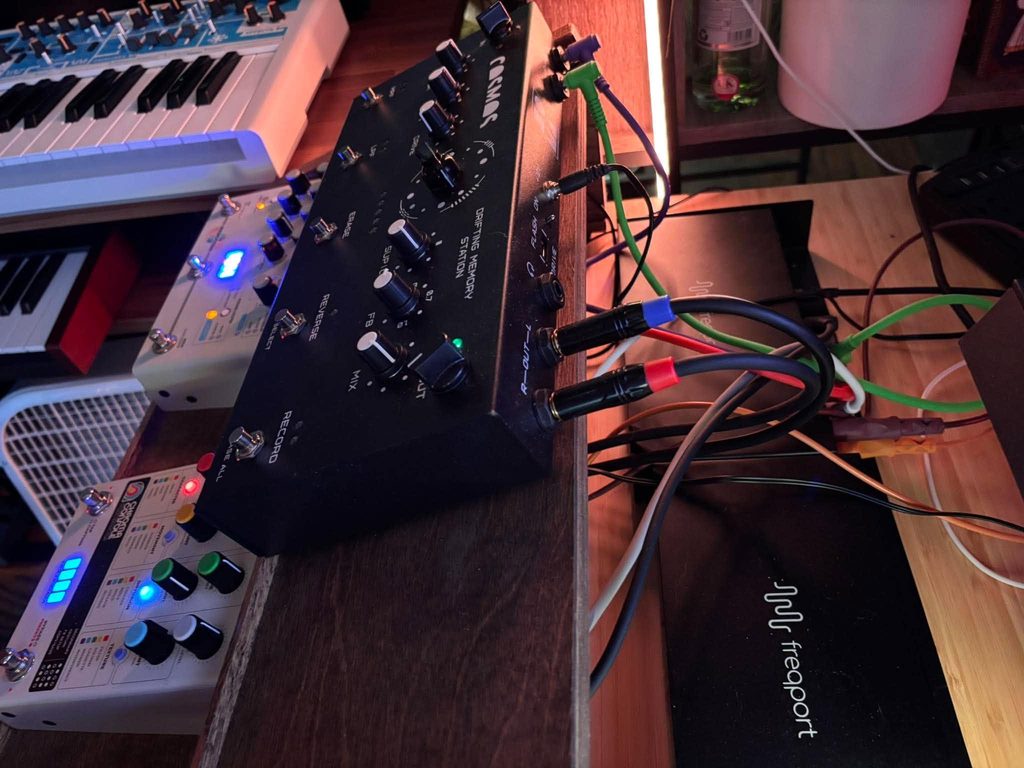
Feedback determines how recorded material persists, which is expected and probably not something I need to dive too hard into.
Below unity gain, the recording fades; at unity, its level is maintained; above unity, the circulating level increases. My starting position would be slightly below 1.0, which also follows SOMA’s recommendation, because I want a recording to remain audible while leaving capacity for additional material. I would lower it further for a deliberate transition or ending.
I think suppression deserves as much attention as the algorithm selector because turning the shared Suppressor/Compressor control counterclockwise from its midpoint reduces previously recorded audio in response to new sound, with louder incoming material producing stronger suppression.
That gives me a way to introduce another phrase without clearing the entire memory, although I would listen to what remains instead of assuming the previous harmony has disappeared immediately.
Clockwise from the midpoint, the same control applies compression, using the combined recorded and incoming audio to determine its response. I would use it cautiously because increasing quieter content can also reveal noise that was less apparent before. The manual says the midpoint disables these processes, so I wouldn’t repeat the claim that the center position should generally be avoided.
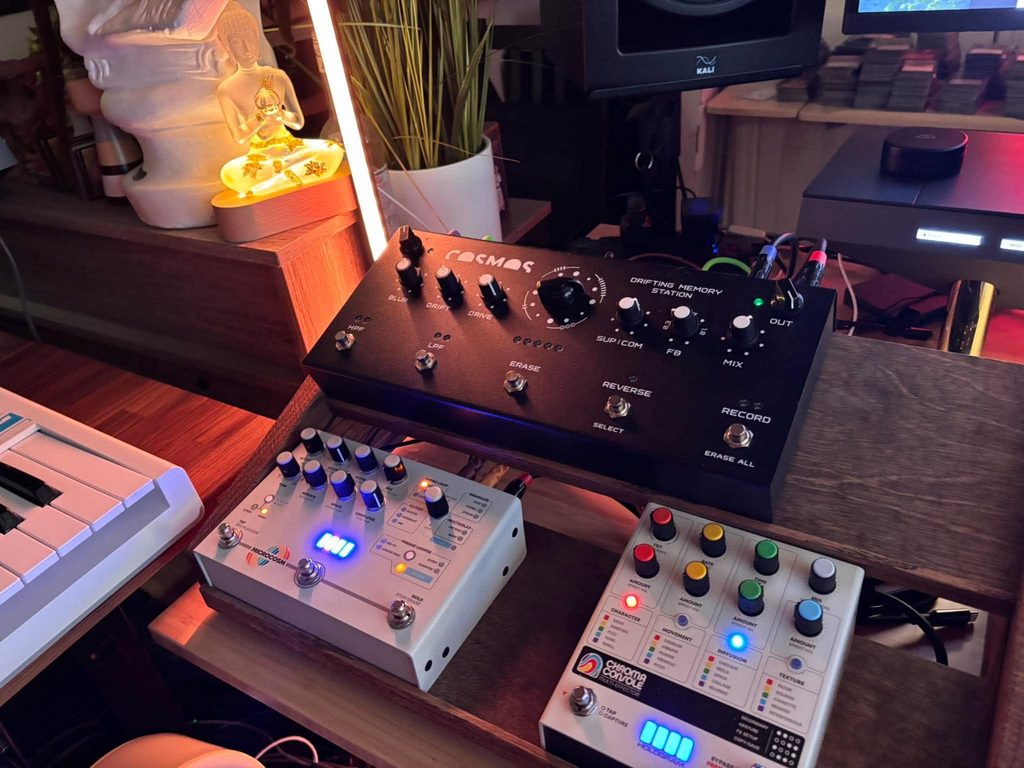
Drive adds gentle distortion, and I would treat it as a change to the repeated material rather than an automatic improvement. Combined with high feedback and compression, it can produce a denser result. I want that option available, but I would establish a comfortable monitoring level first and make one adjustment at a time so I can hear which control is causing the change.
There is an important distinction between converter overload and limiting within the delay system.
A red indication beside the incoming level control can indicate overloaded conversion, while the main sound-level display indicates the level circulating in the delays and whether the limiter is engaged. I would address overload at the source or incoming level rather than assuming that turning down the final output fixes distortion already introduced.

The high-pass and low-pass filters each provide three fixed cutoff settings, and I would use them frequently as material accumulates. A high-pass setting can reduce unwanted bass in the processed recording, while a low-pass setting can reduce excessive treble. This also lets me give the texture a different frequency emphasis from the live instrument, which is especially relevant when I am playing another part over sustained audio.
Reverse and selective recording provide additional performance options.
I can change playback direction, record into selected delay groups, or stop recording while the stored audio continues. Holding Record for longer than five seconds in the delay algorithms also switches their playback to half speed. I would treat that as an intentional change in pitch and duration, with the existing recording sounding an octave lower.
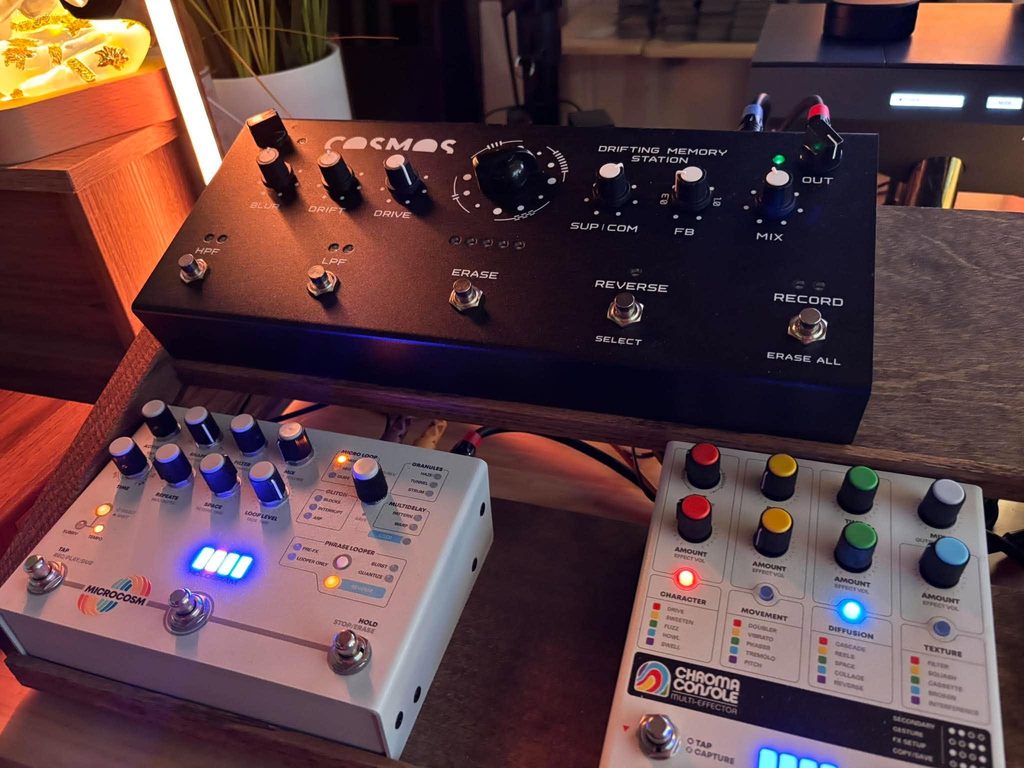
Algorithm changes retain the memory content, but I would not describe them as completely transparent. SOMA’s FAQ explains that transitions use fades and crossfades, and brief gaps or artifacts can occur, particularly during rapid changes. I like having the option to reprocess stored audio, but I would account for those transitions when recording something intended for a polished arrangement.
Using SOMA Cosmos for Recording and Improvisation

I would start with one source, a short phrase, and enough silence to hear its repetitions develop. A piano motif, clipped synth chord, or brief guitar line gives me a manageable amount of harmonic information. Once I understand what the delay lines are doing, I can decide whether another note improves the result or whether the existing recording already provides enough material.
I would be interested in processing short percussive sounds, although I would distinguish texture creation from tempo synchronization. Individual clicks, metallic hits, and noise bursts could provide additional rhythmic detail without committing to a complete drum pattern. Sustained synth patches would need a different approach because the original note lengths and the repeated material can combine into continuous audio much sooner.
The source-selection question connects with my article on hardware effects for synths. An effect needs a role alongside the patch I am already playing, especially when that patch contains modulation or a dense arrangement. With Cosmos, I would leave room for its repetitions by simplifying the source before adding another processing stage.
I also see an application in soundtrack work, where a processed recording can become material for editing rather than a complete performance that must remain untouched. In our Black Rabbit production feature with Danny Bensi and Saunder Jurriaans, they discussed using Cosmos on strings, drum kits, and piano. Their insert-based approach also made experimentation possible without immediately committing the processing to the original recording.
That is close to how I would integrate Cosmos into a DAW project.

I would record the dry source separately, capture the stereo processed return, and then choose the passages that belong in the arrangement. I could use a short section beneath a melody, an extended passage during an introduction, or a filtered recording during a transition, while preserving the option to change the balance later.
I would keep recording during experiments because the changing delay relationships make exact recreation difficult. Even if a long improvisation contains several minutes I do not need, one short passage might provide the texture I was looking for. I would rather evaluate the recorded result afterward than stop playing to decide whether each moment deserves saving.
Stopping recording is equally important because this implementation has no undo function. I would disable recording before auditioning an uncertain chord, and I would check the wet/dry setting so my live playing remains audible. Fully wet processing has its own application when I want to hear a phrase only after it has been delayed or granulated, without its direct version appearing first.
This is also where I see a clear distinction from my Hologram Chroma Console review. I discussed parameter recording, stored settings, and MIDI integration there, which support a different kind of repeatability. With Cosmos, my priority would be capturing an audio result that I can use later, rather than expecting the next performance to reproduce the same sequence of events.
SOMA Cosmos Limitations and Verdict
The standard firmware does not let me set a conventional loop endpoint, and the hardware has no MIDI connection for receiving clock. Those are substantial purchasing considerations if my setup depends on synchronized phrases and predetermined changes. In my Black Lion Audio MIDI Eight review, I discussed distributing clock to the Microcosm; Cosmos cannot join that MIDI routing in the same way.
Rhythmic firmware is available now, so older reviews describing it as a future release need updating.
SOMA lists a rhythmic version with conventional looping possibilities, alongside pitch variants and firmware intended for a two-unit, four-channel setup. I would read the separate rhythmic manual before selecting that implementation because the functions differ substantially from the main version discussed here.
My other reservation is the amount of direct control available from a floor setup.
Cosmos has no expression-pedal connection or external footswitch expansion, so knob changes and secondary switch functions still demand access to the unit. That is acceptable for my preferred desktop placement, but I would consider it carefully if I needed to keep my hands on a guitar throughout a performance.
The purchase also needs to hold up against simpler alternatives. In my Del-Verb Ambiance Companion review, I discussed delays and reverbs on supporting melodies, percussion, and background recordings. If those are my primary applications, I would assess how much Cosmos adds beyond effects I already own before committing to another substantial hardware purchase.
My verdict is that Cosmos makes the clearest case for sparse ambient writing, improvised recording, and producers who want changing phrases they can subsequently edit. I like the focused controls and the options for modifying stored audio, while the lack of exact repetition remains a genuine compromise.
I would buy it for those specific behaviors, with a clear recording plan and realistic expectations about synchronization, rather than expecting it to become my general-purpose delay or conventional looper.

Will Vance is a professional music producer who has been involved in the industry for the better part of a decade and has been the managing editor at Magnetic Magazine since mid-2022. In that time period, he has published thousands of articles on music production, industry think pieces and educational articles about the music industry. Over the last decade as a professional music producer, Will Vance has also ran multiple successful and highly respected record labels in the industry, including Where The Heart Is Records as well as having launched a new label with a focus on community through Magnetic Magazine. When not running these labels or producing his own music, Vance is likely writing for other top industry sites like Waves or the Hyperbits Masterclass or working on his upcoming book on mindfulness in music production. On the rare chance he's not thinking about music production, he's probably running a game of Dungeons and Dragons with his friends which he has been the dungeon master for for many years.