Table of Contents
The first thing I liked about the SOMA Laboratory WARP was how quickly it got out of my way. It’s a hardware processor that gives you direct access to what it does, rather than slowing you down with screens, layers, or menu logic. That counts for a lot on a unit like this, since WARP is clearly built for active use and real-time changes instead of passive preset browsing.
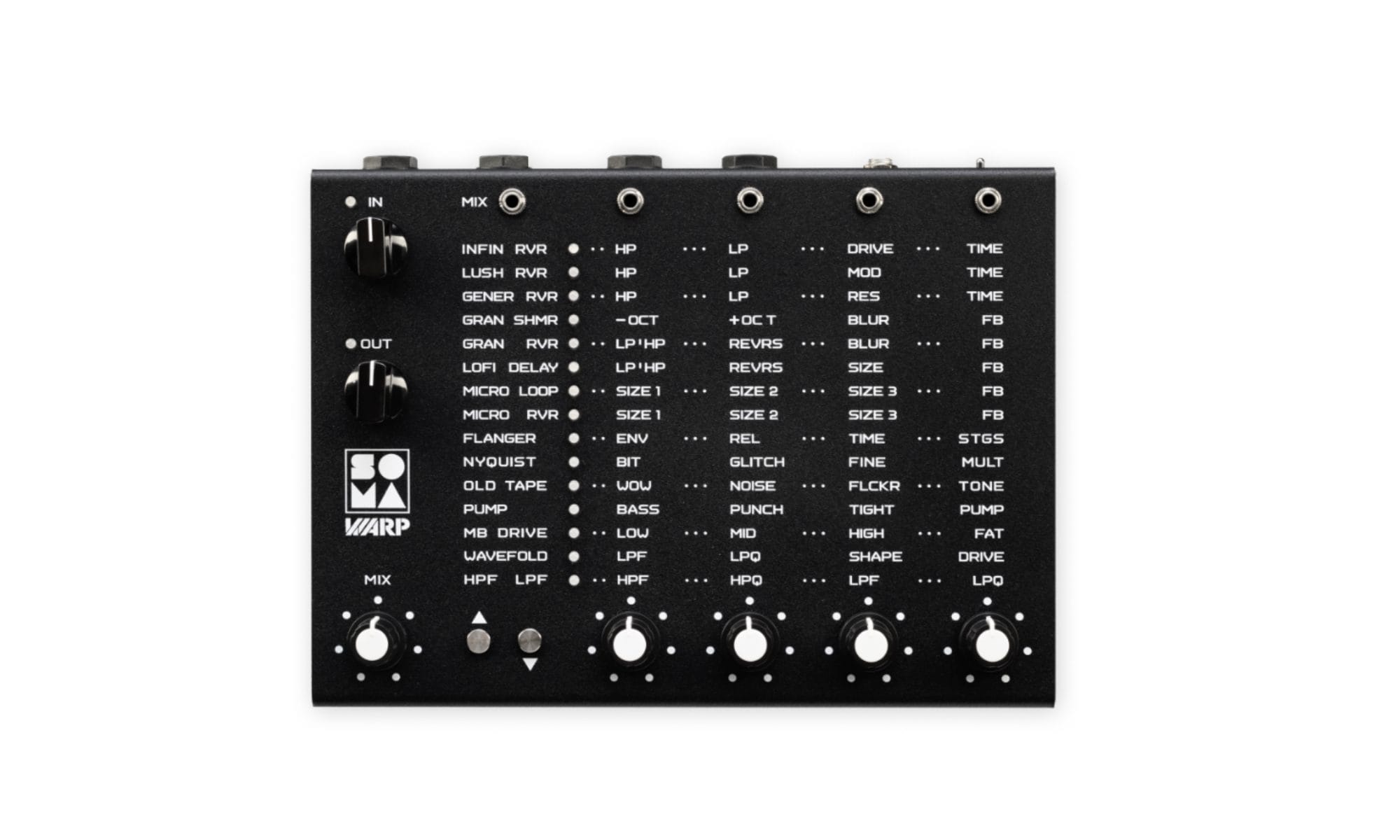
The layout is one of the more intuitive ones I’ve seen in a unit with as much potential as this, and the controls are readable; plus, every algorithm keeps its four parameters printed right on the panel, so I never felt like I was guessing what a knob was supposed to do. I also came away liking the physical design, because the metal housing feels built for regular use, and the size fits the role this product is trying to fill.
So let’s dive into the knitty, the gritty, and everything in between of this powerhouse studio and stage machine (whoops, didn’t mean to rhyme).
Build, I/O, and Desktop Footprint
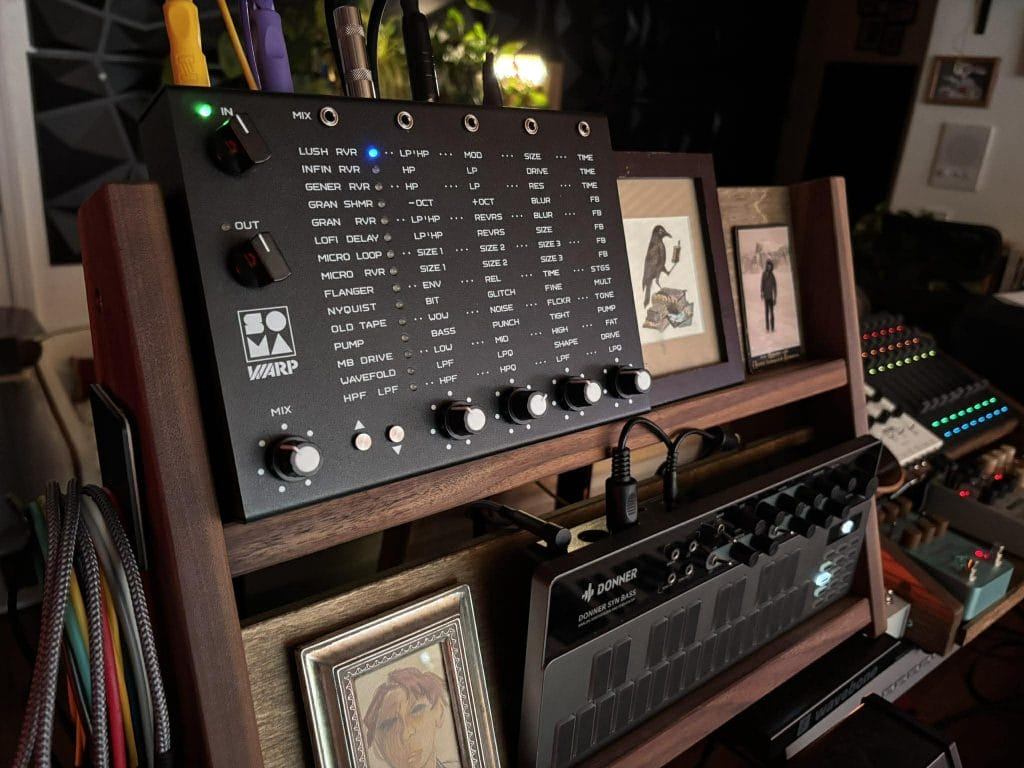
At 220 x 170 x 70 mm and 1.5 kg, the WARP is not trying to disappear on a pedalboard, and I think that is the right call because this feels far better suited to desktop work, live performance, and hardware rigs where you actually want room to grab the controls. The rear-panel setup is convenient too, with stereo inputs and outputs on 6.3 mm TS/TRS jacks, mono operation when only one side is connected, and pseudo-balanced compatibility that makes the unit easy to drop into mixed studio chains. It also runs on a 12V center-positive supply and ships with a proper power adapter, which gives it a more serious studio-hardware identity than the usual 9V pedal crowd.
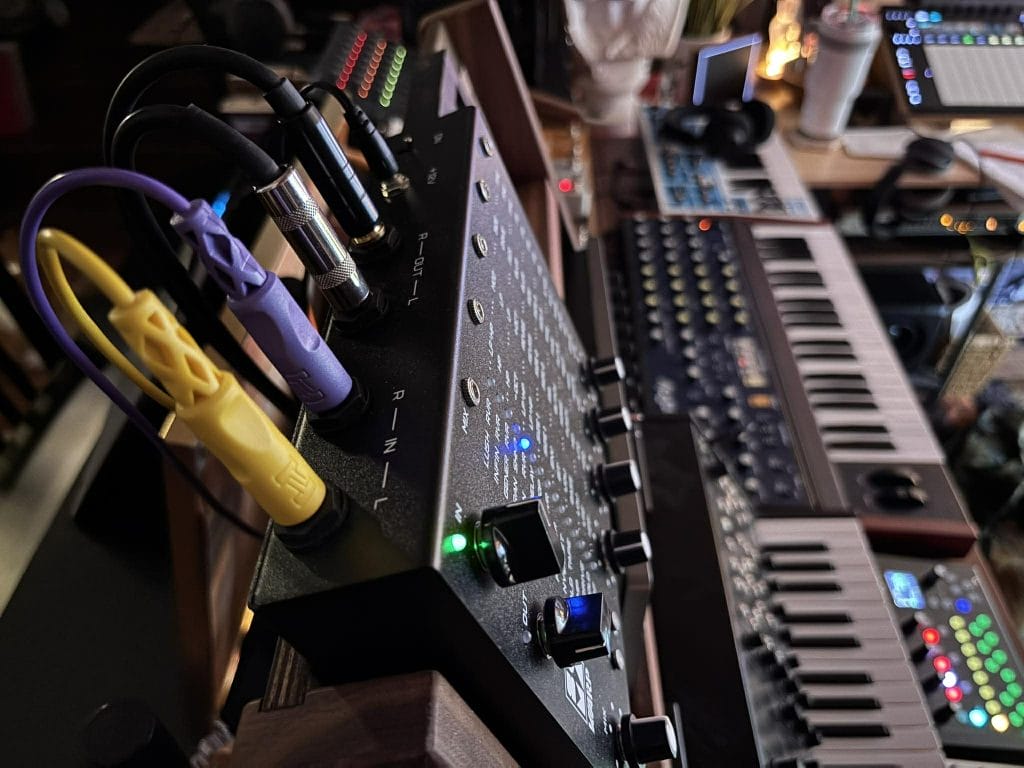
The conversion and processing specs help support that impression, since WARP runs at 24-bit / 48 kHz with 32-bit internal digital processing and a frequency range of 10 Hz to 22 kHz. That does not guarantee great sound by itself, though it does tell you SOMA did not build this as a novelty item. After spending time with it in the studio over the last two months, I think the best way to describe the WARP is as a flexible creative processor with a real studio backbone, because it encourages experimentation and still feels technically dialed in.
Design, Interface, and Why the Workflow Feels So Good
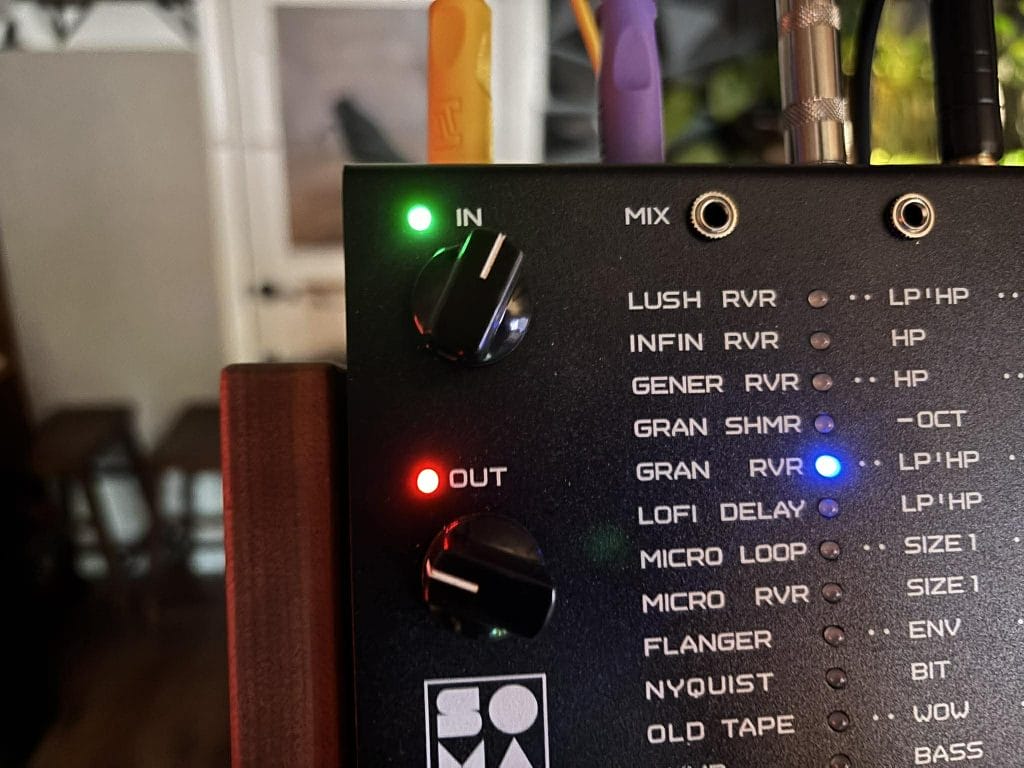
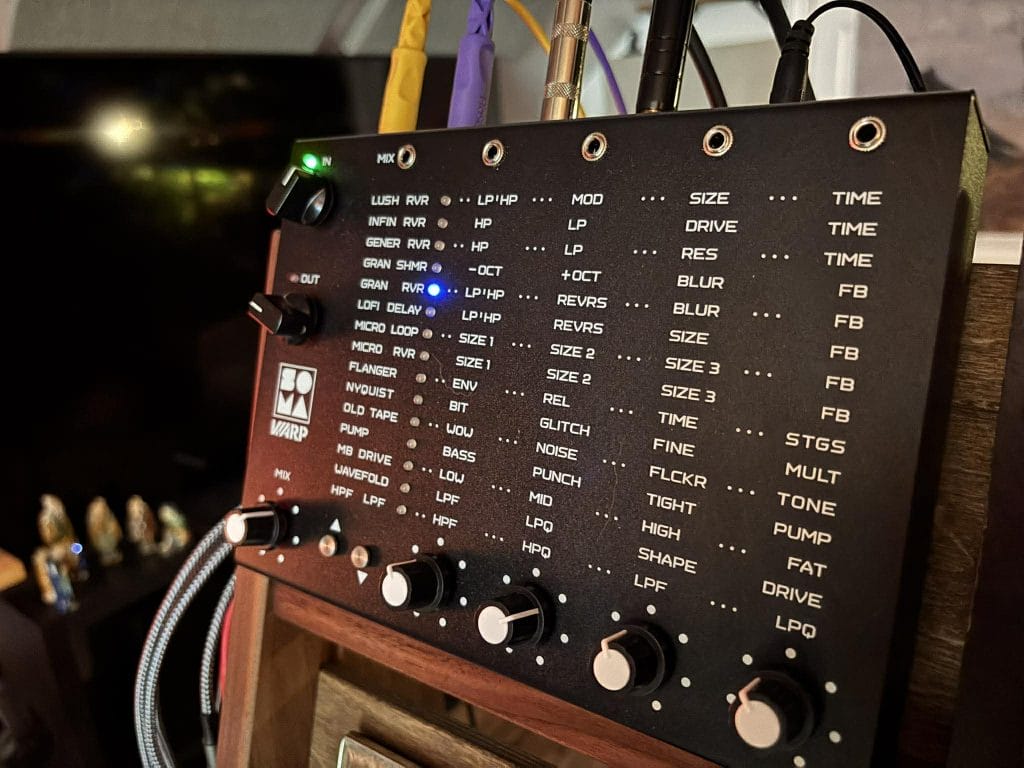
One of the most obvious strengths of the WARP is that its interface tells you what kind of relationship the company wants you to have with it, and that relationship is direct, physical, and fast. The top panel is arranged around input level, output level, mix, algorithm selection, four parameter knobs, and CV inputs, which means the whole unit reads like a performance instrument instead of a system you have to decode. I liked that the active algorithm is always obvious, because the LED system and printed labels make it easy to know where you are at a glance.
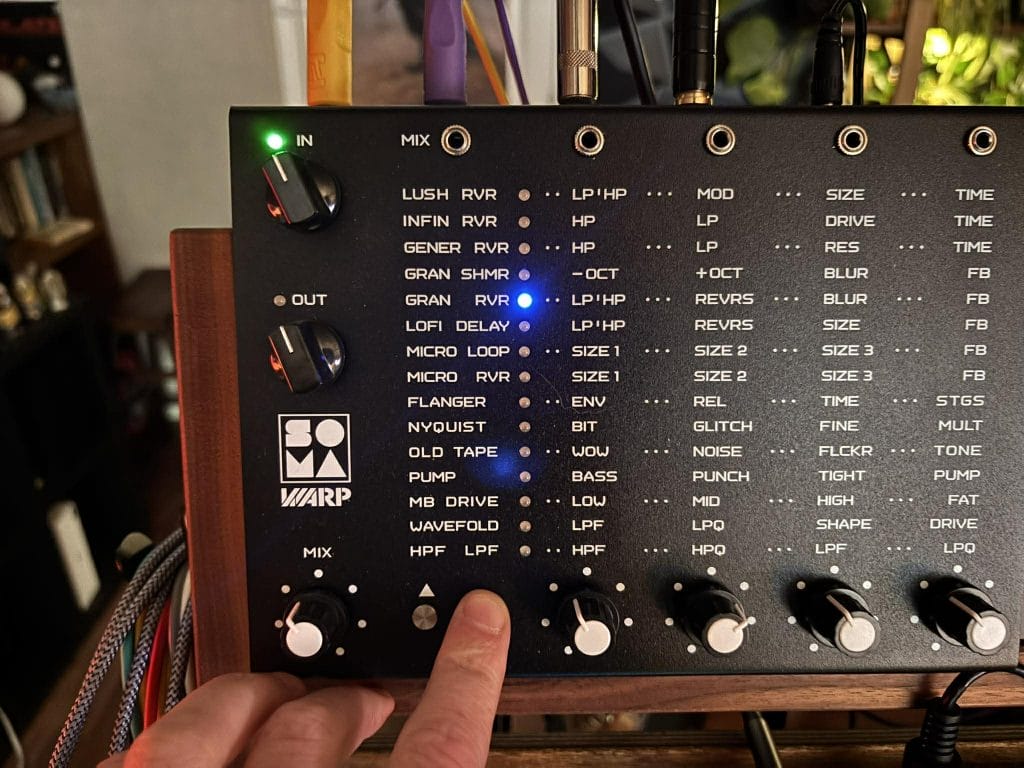
The algorithms are arranged into four LED color groups: reverb-based, delay-based, special effects, and master effects, and that simple grouping helps a lot because it gives the machine an internal logic that becomes second nature after a short stretch of use. I also liked the choice of touch sensors for moving up and down through algorithms, since SOMA uses them in place of buttons for durability. The mix control deserves its fair share of credit, too, because it works across all algorithms and makes it easy to run processing in parallel with the dry signal, which is especially useful for compression, distortion, and filtering.
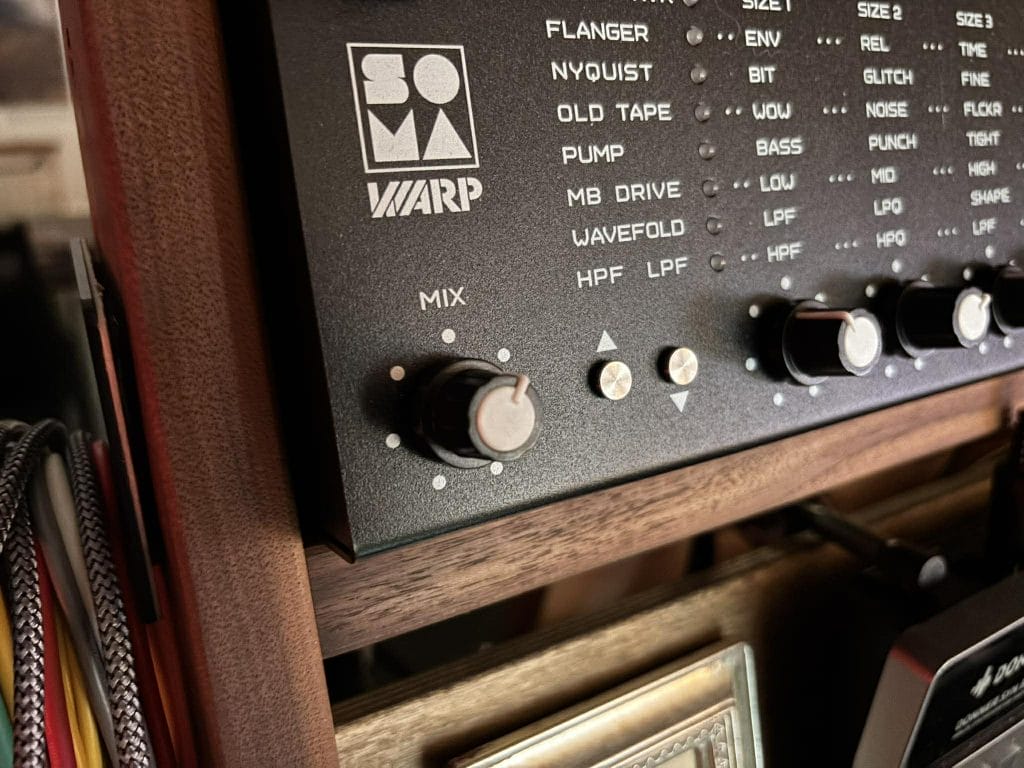
The two-color input LED and the red output LED also serve a solid purpose, because they tell you when you are running clean and when the digital soft clipping limiter is engaged. I like that WARP does not hide this behavior, and I like even more that it lets you decide how much of that edge you want to keep!
The whole design feels intuitive, and it is a big reason the workflow stayed satisfying well past the first few sessions.
The Algorithms – A Broad Set of Effects With a Clear Point of View
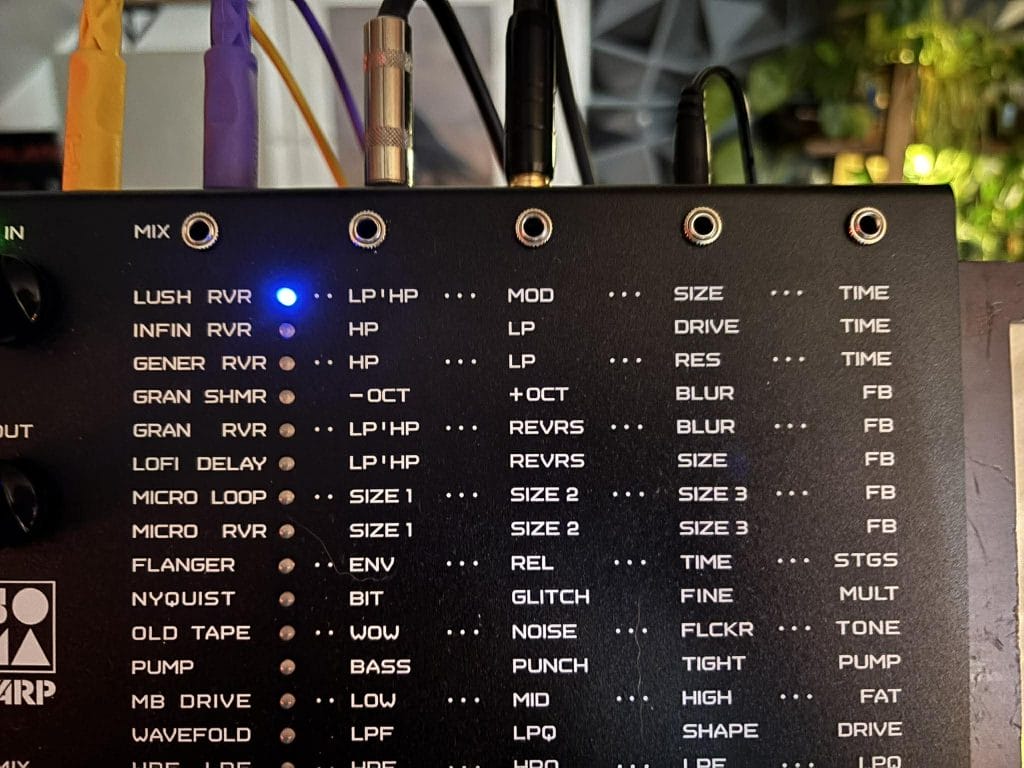
WARP includes 15 algorithms, and one of the things I respect about the unit is that the selection feels broad without feeling, for lack of a better term, random. The reverbs are the clearest reason to pay attention to it and are the true belles of the ball on this thing. Lush Reverb is based on delay lines with modulation, and at short delay times, it can move into chorus-like territory in a way that gives it more than one use. Infinity Reverb leans closer to a hall-style design, though the key point is that the time range extends to infinity and can create self-generating material at near-maximum settings.
Generative Reverb pushes farther in that direction, and the separate high-pass, low-pass, and resonance controls give it a more sculptable voice than a basic wash effect. Granular Shimmer also works well because the pitch-shifted octave material can get blurred and organ-like without turning into nonsense the second you push it. Granular Reverb adds reverse material with an adjustable blend, and that gives it a wider range than the average reverse reverb idea. Taken together, these reverb modes give the WARP a real identity from the start, and they were among the first things that made me feel this box had its own point of view.
The delay side also has a lot of personality. Lo-Fi Delay, Micro Loops, and Micro Loops Reverb all move away from standard straight-delay utility and toward textural treatment, which is exactly why I found them interesting. Lo-Fi Delay includes reverse content and buffer-size controls, and it can quickly move from rough repeats to smeared, degraded ambiance.
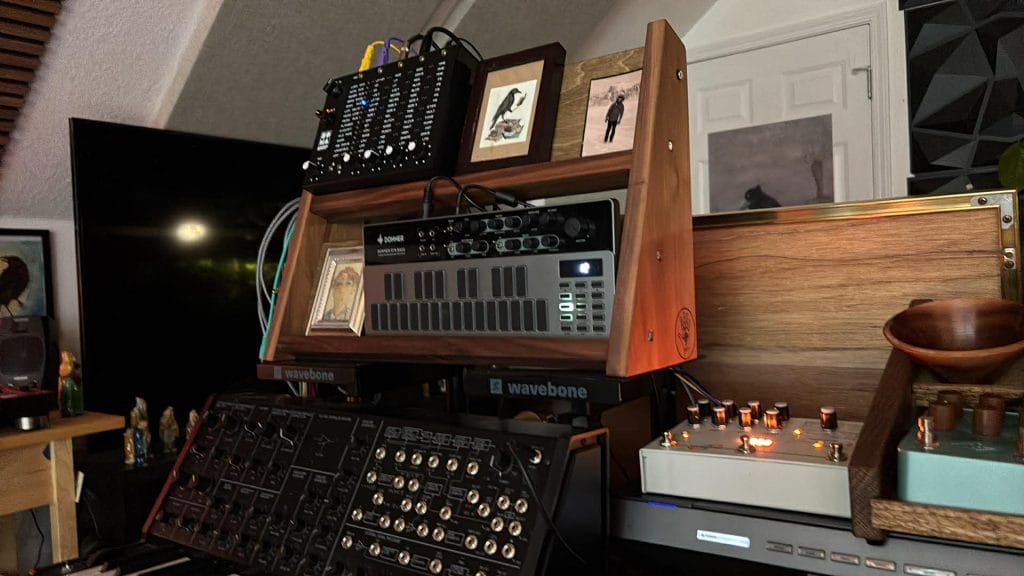
Sure, it’s not as good as the Hologram Microcosm for ambient textures, spaces, and turning a single note into a world of color and vibes, but I don’t feel like it’s trying to do that and instead delivers a bundle of incredibly good sounding reverbs that sound musical and are usable in the mix instead of something that dominates it (…like the Microcosm tends to do).
The two Micro Loops algorithms are built around three loops inside a large audio buffer, which gives them that drifting layered identity that feels more atmospheric than a normal repeat engine. Playing with the feedback on these was one of the more enjoyable parts of using the unit, because once you get near the top of the range, several of these algorithms drift into infinite sound-generating behavior that feels very aligned with the rest of the box.
Taken together, these spatial and delay-based algorithms give the WARP a clear creative identity, and they are a big part of why the unit never feels generic.
The Special and Master Effects
As good as the reverb and delay side is, the WARP would feel far less complete without the special effects and master effects sections, because those are what give it wider range across full productions and more grounded tone-shaping work. Flanger is a good example of how SOMA avoids stock implementations, since the effect uses an envelope follower tied to input level instead of the usual LFO modulation you get in a standard flanger. That makes it feel more responsive and more tied to performance, and I found that useful because it can stay subtle or get aggressive depending on how you set the ENV, REL, TIME, and STAGES controls.
Nyquist also deserves real attention, because it combines sample-rate reduction with bit crushing and can shift into a more unusual harmonic-tracking mode depending on how the multiplier is set. That gives it a stranger and more musically reactive behavior than a basic decimator. Old Tape is another good one, and I liked that it is built around wow, noise, flicker, and tone instead of reducing tape character to one nostalgia knob. It can get rough, unstable, and degraded in a way that still feels usable in a production context.
Pump has a lot of attitude too, especially on drums and rhythm material, and the added bass, punch, density, and compression controls let it move from thickening into outright effect territory. Multiband Drive also brings real value because it splits low, mid, and high processing into independent zones, and the FAT control can add enough feedback to produce soft self-oscillation with the right settings. Wavefolder feels more restrained than some modular versions I have used, and I actually think that helps here because it keeps the effect usable across a wider set of sources. The HPF/LPF mode also turned out to be more useful than I expected, especially because the filters can move from series into parallel behavior depending on where the cutoffs land.
Sound Quality, Gain Staging, and the Technical Deets
A lot of hardware in this category tries to win you over with personality first and then hopes you do not ask too many questions about the audio path, but the WARP actually holds up once you look at the dry technical side too. The audio inputs are rated at 50 KOhm impedance, the outputs at 100 Ohm, and the input range spans from 0.35 V peak-to-peak up to 8.3 V peak-to-peak, which tells me SOMA expected this to live in real rigs with a range of sources.
I also liked seeing that the CV side is not vague or half-finished: there are dedicated 3.5 mm inputs for mix and the four algorithm parameters; the nominal range is 0 to 5V; negative voltages are ignored; and the CV input impedance is 50 KOhm.
In practice, that makes the WARP far more appealing in modular and hybrid environments than the average desktop processor, and it is one of the clearest reasons I think this unit has a real role beyond standard pedal or rack replacement duties. The output limiter also deserves a clear explanation: the red output indicator shows that the digital soft-clipping limiter is engaged, and the OUT knob itself does not change how the limiter works, since it sits in the analog output stage. That is great information to be armed with because it means if you want less limiting action, you need to back off the input, the mix, or the algorithm intensity instead of reaching for the output knob and expecting it to fix the problem.
I actually like that the WARP leaves this part of the process visible, because it helps you understand that gain staging is part of the instrument. None of this is flashy, though these are the details that make the WARP feel like a serious processor rather than a colorful desktop experiment.
When a box asks this much money, it needs to earn that confidence, and I think this one does.
Live Use, CV Integration, and the Main Tradeoff in the Design
The part of the WARP that really brings the whole concept together is the combination of real-time control and CV access, because it makes the unit feel open to movement instead of trapped in static settings. Every processing parameter has its own dedicated CV input, and that includes mix, which is exactly the kind of detail modular users care about because it gives them control over the effect as a performance object instead of only as a static insert.
I liked that the accepted voltage range is the familiar 0 to 5V range, because that makes the unit easy to pair with Eurorack gear and other common CV sources without special translation.
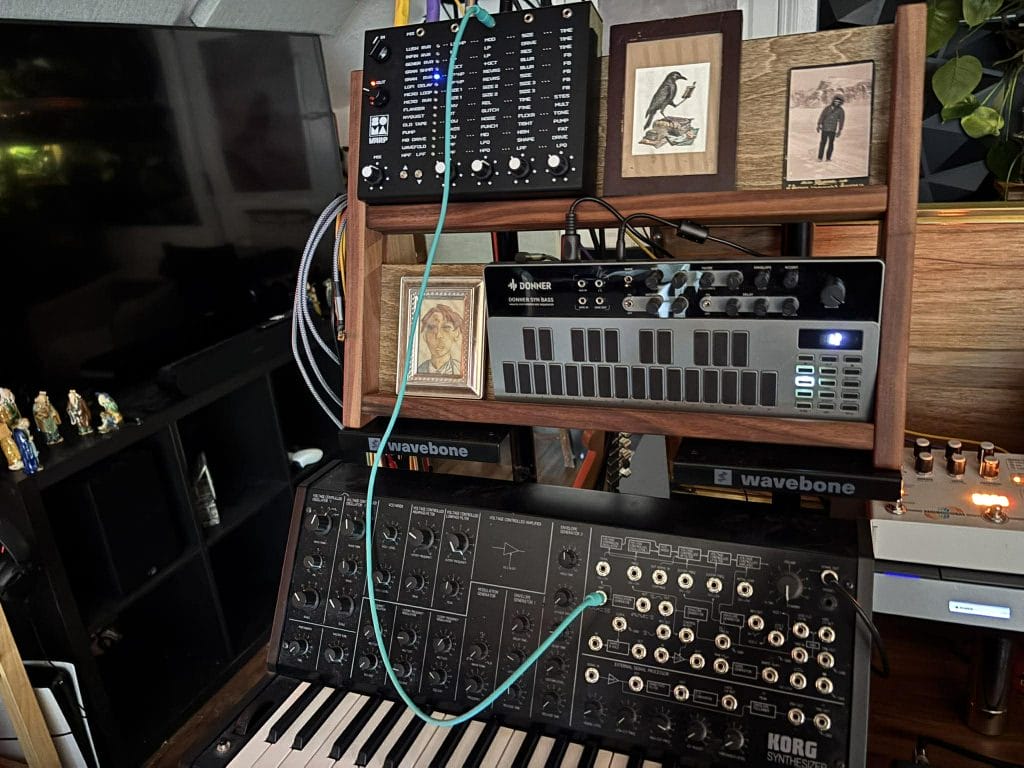
This is also where the WARP starts to separate itself from a lot of standard desktop effects hardware, since many units can be touched in real time and far fewer are ready to be sequenced, modulated, and animated from outside with this level of directness. In use, I found that the WARP encourages you to grab controls, push feedback, sweep filters, and force a sound into a different place mid-performance, and that is clearly the mindset the product was built around. I also think the lack of preset recall fits that goal, because the WARP wants you to listen and react instead of treating it like a library of saved states.
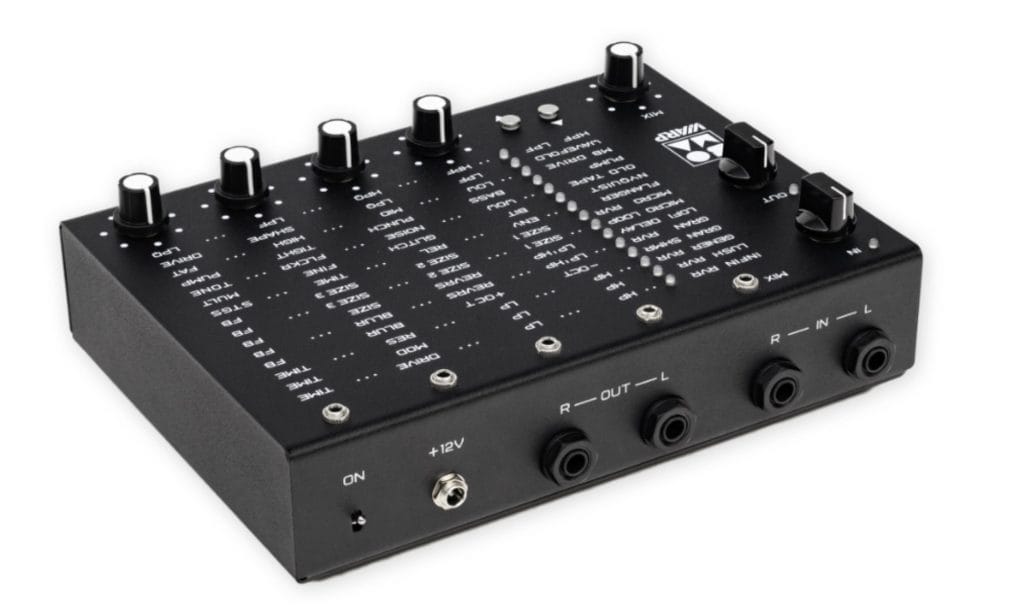
At the same time, one of the main design compromises should be stated clearly, since the WARP runs only one algorithm at a time. I understand why that choice was made, and I think it helps keep the interface clean and the use case focused, though it is also the one place where I did feel the limitation of the concept, because several of these algorithms are appealing enough that I did want to stack them. Algorithm switching is also not seamless in a performance context, so I would still treat this as a focused real-time processor instead of a layered workstation.
Even with that limitation, I think the balance SOMA chose is smart, because the whole box is aimed at flow, interaction, and movement rather than accumulation.
Editor’s Choice – Why It Earned It
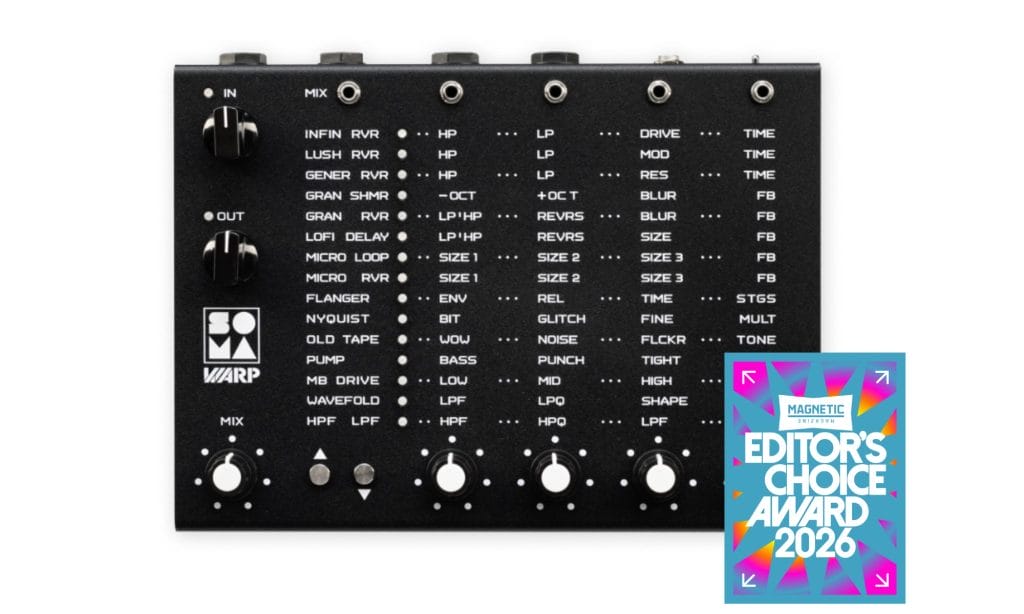
I think the WARP earns an Editor’s Choice award because it has a clear identity, a high level of execution, and enough unusual thinking in the design to feel fresh in a crowded field of hardware processors.
The most important thing for me is that its creativity is backed by a usable interface, because there is no shortage of weird hardware out there that sounds interesting in theory and then becomes a chore the second you actually try to work with it. I also think SOMA deserves credit for building a unit where the reverbs, delays, special effects, and master effects all feel like part of the same philosophy, rather than unrelated features living in one enclosure.
The reverbs have real character, the delays can drift into long-form texture, the special effects go beyond stock versions of familiar ideas, and the master effects give the box practical reach across drums, groups, and even full mixes. The CV side is also a major reason this product deserves recognition, because it gives the WARP a place in modular and hybrid setups that many desktop processors never really claim.
On top of that, the audio path and gain structure feel credible enough that I would not hesitate to use it on serious material, and that goes a long way in a category where some experimental tools can sound cheap on the way in or out.
The WARP is not trying to be everything, and I think that is better. It knows its lane, executes it well, and gives players, producers, and sound designers a very tactile way to reach ideas that can feel harder to get from safer gear. That combination is enough for me.
Final Verdict On The SOMA Warp
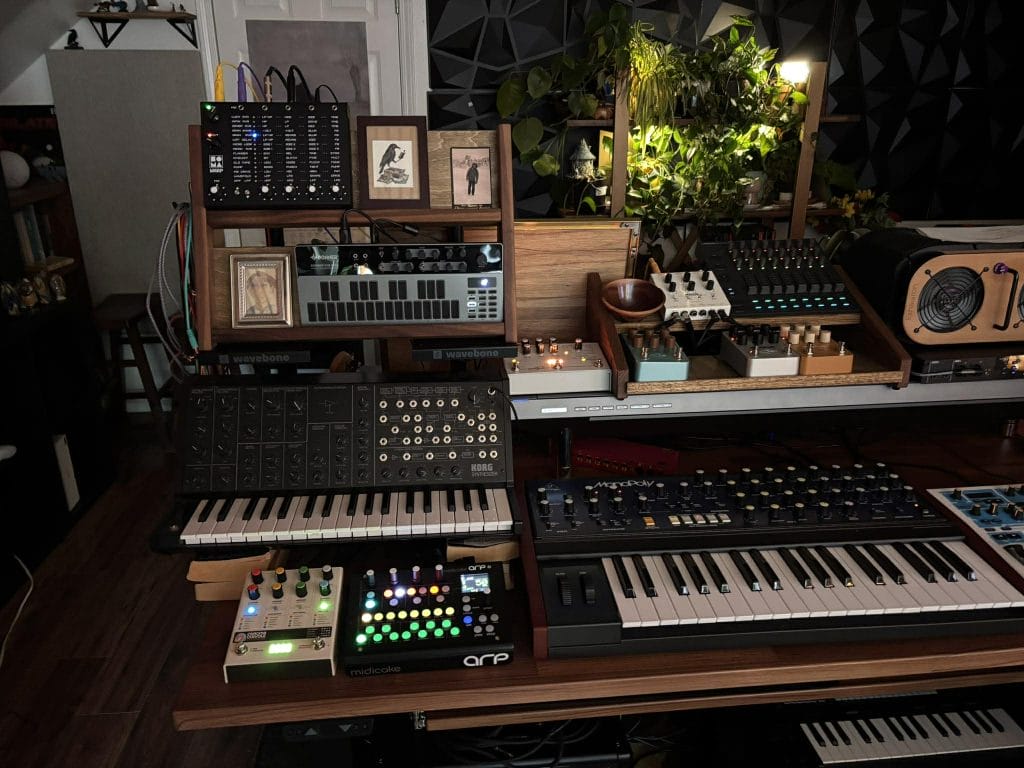
After about two months with it, I have landed in the same place on the WARP that I did in the first week, which is usually a good sign with any piece of gear because the honeymoon glow tends to wear off fast around here. I like how immediate it feels, how readable it is, and how the controls encourage action instead of caution. The reverbs are a major reason to care about the unit, especially the Infinity, Generative, and granular options, though the rest of the effect set gives it enough range that I would not think of it as a reverb box alone.
The special effects and master effects help it earn its footprint and price, because they let the WARP move from texture design into broader tone shaping and aggressive mix treatment. The gain staging and limiter behavior also feel like part of the instrument in a good way, and the technical specs back up the sound’s more serious side. I would rather have this focused, tactile, hands-on design than a more bloated machine that loses its immediacy.
For someone who wants a preset-heavy all-purpose processor, there are other products built for that mindset. For someone who wants a creative hardware tool with personality, manual control, real-time responsiveness, and a sound that does not feel generic, the WARP makes a convincing case for itself.

Will Vance is a professional music producer who has been involved in the industry for the better part of a decade and has been the managing editor at Magnetic Magazine since mid-2022. In that time period, he has published thousands of articles on music production, industry think pieces and educational articles about the music industry. Over the last decade as a professional music producer, Will Vance has also ran multiple successful and highly respected record labels in the industry, including Where The Heart Is Records as well as having launched a new label with a focus on community through Magnetic Magazine. When not running these labels or producing his own music, Vance is likely writing for other top industry sites like Waves or the Hyperbits Masterclass or working on his upcoming book on mindfulness in music production. On the rare chance he's not thinking about music production, he's probably running a game of Dungeons and Dragons with his friends which he has been the dungeon master for for many years.