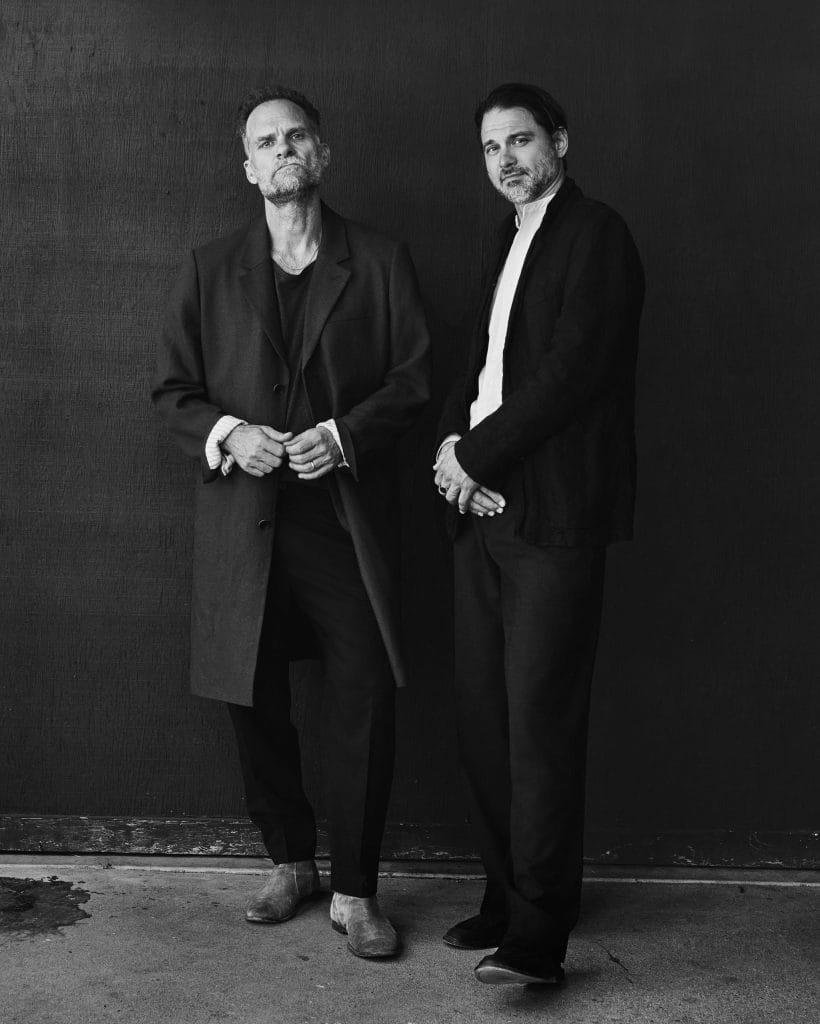
Header IMG: C/O Brian Higbee
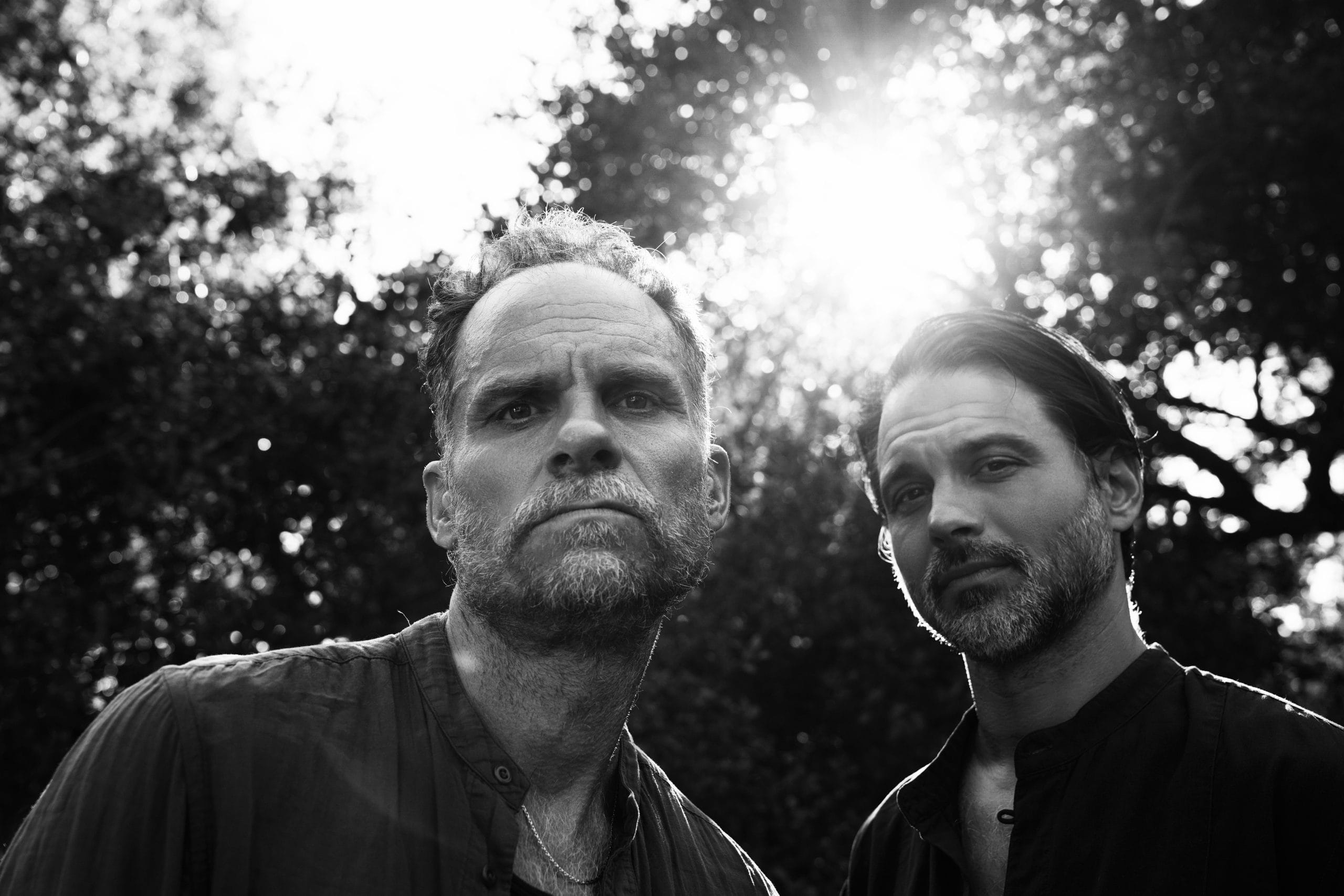
Danny Bensi and Saunder Jurriaans have built a reputation for scores that bend convention and emotion in equal measure. Their latest work for Black Rabbit continues that streak, matching the show’s dark, disoriented energy with a sound that feels alive, unstable, and human. Premiering on Netflix, the limited series explores the extremes of nightlife and survival through the story of two brothers in New York City — a setting the duo know intimately from their own early years in the music scene. That personal connection runs through the score, where chaos, improvisation, and raw texture drive the emotion as much as melody or harmony.
Built from analog synths, broken percussion, and unconventional processing, the Black Rabbit soundtrack leans into unpredictability. At director Jason Bateman’s request for something “darker and more f’d up,” the pair abandoned structure and leaned into instinct, using gear like the Soma Pulsar 23, Lyra 8, and randomizing modules to create movement that feels volatile and real.
Their approach resists perfection by letting the gear guide the process and embracing the unrepeatable moments that happen when control slips. The result is a score that feels as chaotic as it is deliberate, grounding the series’ intensity in sound rather than sentiment.
In this How It Was Made feature, Bensi and Jurriaans walk through the tools and techniques that shaped the Black Rabbit score. From the tactile unpredictability of the Soma instruments to the raw saturation of the Overstayer Modular Channel and the warped looping of the Soma Cosmos, they share the experiments that led to its final form.
Soma Pulsar 23 and Soma Lyra 8

There were a few key instruments that shaped the sound of Black Rabbit, but the Soma Pulsar 23 and Soma Lyra 8 stood out the most. What we love about these synths is how wild they are — probably because we don’t totally know what we’re doing when we use them. They always seem to sound a little f*cked up, and we can never get the same sound twice. We have some basic knowledge about why certain patches work, but in the end it becomes chaos, and we’re learning by trial and error. The Pulsar, in particular, can be patched with your fingers, so you can try all sorts of weird ideas before committing with a cable.
One of the main concepts we wanted to play with was chaos and unpredictability. We wanted to throw time signatures and tempos out the window. We used Soma’s sequencer, the Ornament, quite a bit — which again, we just barely understand how to use. Throwing in randomizing modules like the Wogglebug was also common, and that unpredictability helped give the score its unstable, human feel.
Honestly, we wish someone would teach us how to use these synths properly. One thing we keep coming back to is that it’s almost as important not to understand something as it is to be adept. Let’s say you’re a brilliant cellist, but you’re put in front of a modular synth. What happens? What do those instincts allow you to do that someone with full technical knowledge couldn’t achieve? That’s the space we like to work in.
Overstayer Modular Channel
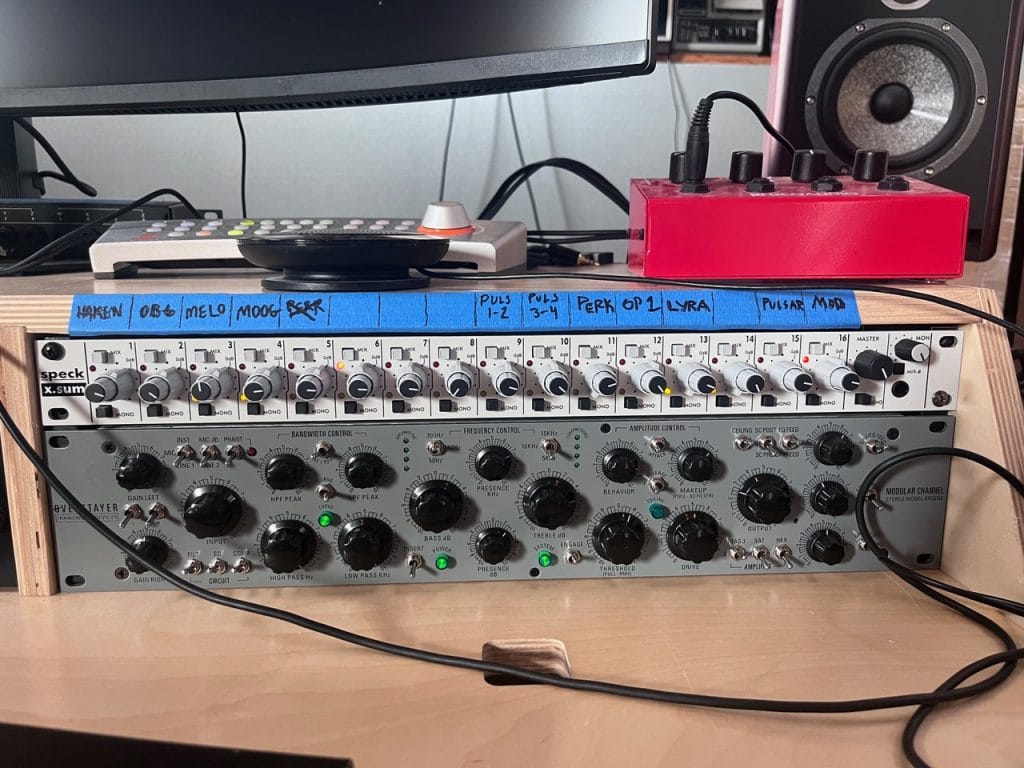
This is a one-stop shop for everything from adding warmth to completely annihilating a sound.
We basically ran everything through it — synths, horns, strings, percussion. I have it set up in my studio (Saunder) as an insert and on the patch bay, so I can either run a signal straight through into Pro Tools or pull it up like a plugin. One thing we discovered, which we hadn’t used much before, is sidechain compression. For example, running a kick drum sound as a sidechain into a brass drone creates this heaving, breathing movement that makes you feel like there’s physical pressure in your head.
There’s so much you can do with it. The advice would just be to get it and experiment.
Soma Cosmos
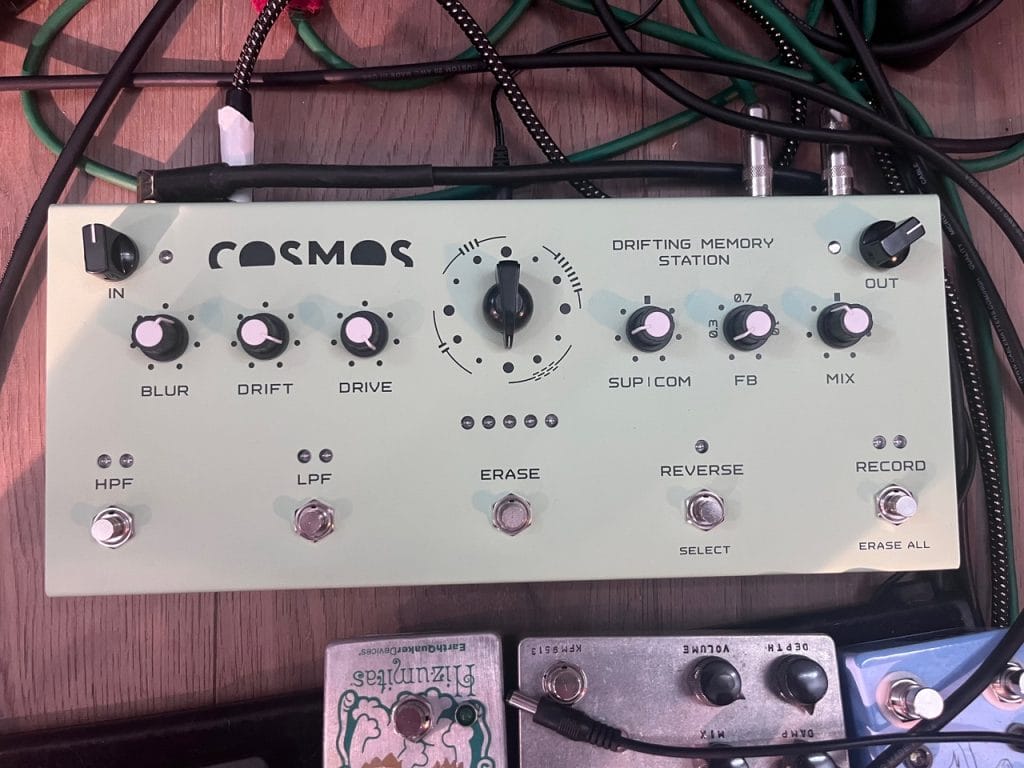
Another weirdo from Soma — you can use it as a sort of crazy delay or as a looper, but again, it’s very unpredictable.
We recorded all sorts of instruments — strings, drum kits, piano — and ran them into the Cosmos. We looped them and glitched them out using the different settings. We also used the chaotic delay effects quite a bit. There’s really nothing else like it.
I have this set up as an insert (Saunder), so it’s easy to experiment without having to commit. I do this with all my hardware gear. It keeps the process open and makes it simple to find happy accidents that become the backbone of a track.
Quick-Fire Hot Takes
Hot Take on the Scene:
We don’t really have any strong opinions. We try to keep our heads down and do our thing. We’ve managed to get through COVID and the strikes with very little impact by staying versatile and efficient, being able to work on anything from a narrative feature to a documentary series.
Hot Take on Production:
Maybe one of the biggest challenges of scoring TV is keeping an arc and symphonic connectedness throughout a series, while sometimes not knowing what happens when you start. We like to get all the episodes — even if they’re rough — as early as possible in the process.
Hot Take for Artists:
Maybe AI is a concern, maybe it’s a tool. We’re not sure. We wish we were paying more attention to it, but there’s too much work to do.

Will Vance is a professional music producer who has been involved in the industry for the better part of a decade and has been the managing editor at Magnetic Magazine since mid-2022. In that time period, he has published thousands of articles on music production, industry think pieces and educational articles about the music industry. Over the last decade as a professional music producer, Will Vance has also ran multiple successful and highly respected record labels in the industry, including Where The Heart Is Records as well as having launched a new label with a focus on community through Magnetic Magazine. When not running these labels or producing his own music, Vance is likely writing for other top industry sites like Waves or the Hyperbits Masterclass or working on his upcoming book on mindfulness in music production. On the rare chance he's not thinking about music production, he's probably running a game of Dungeons and Dragons with his friends which he has been the dungeon master for for many years.