Table of Contents
Finding the best hardware effects for synths usually comes down to how well a pedal handles movement, stereo width, transients, modulation, and hands-on control once it leaves a guitar chain and starts working with hardware.
Synths already bring plenty of tone on their own, so the right effects pedal should add space, grit, delay, reverb, texture, or rhythmic motion without swallowing the original patch.
That is why I tend to gravitate toward pedals that react well to line-level sources, stay playable in real time, and give producers clear ways to shape a sound while the idea is still fresh.The best effects for synths are usually the ones that can take a simple sequence, drone, arpeggio, lead, or pad and give it enough movement to feel finished without needing a huge plugin chain afterward.
Some pedals work best as spatial tools, adding delay, reverb, ambience, and stereo depth around a part that already has a clear role in the track. Others work better as sound design boxes, bending a synth line through glitch, tape-style processing, modulation, filtering, looping, or CV control until the original patch becomes something new.
I’ve spent a lot of time running synths, drum machines, field recordings, and softsynths through pedals in the studio, and the ones that stay in rotation are the units that offer fast results while still rewarding deeper use over time. This list breaks down the best effects for synths based on actual workflow, sound quality, creative range, and how naturally each pedal fits into a producer’s hardware setup.
Hologram Electronics Microcosm

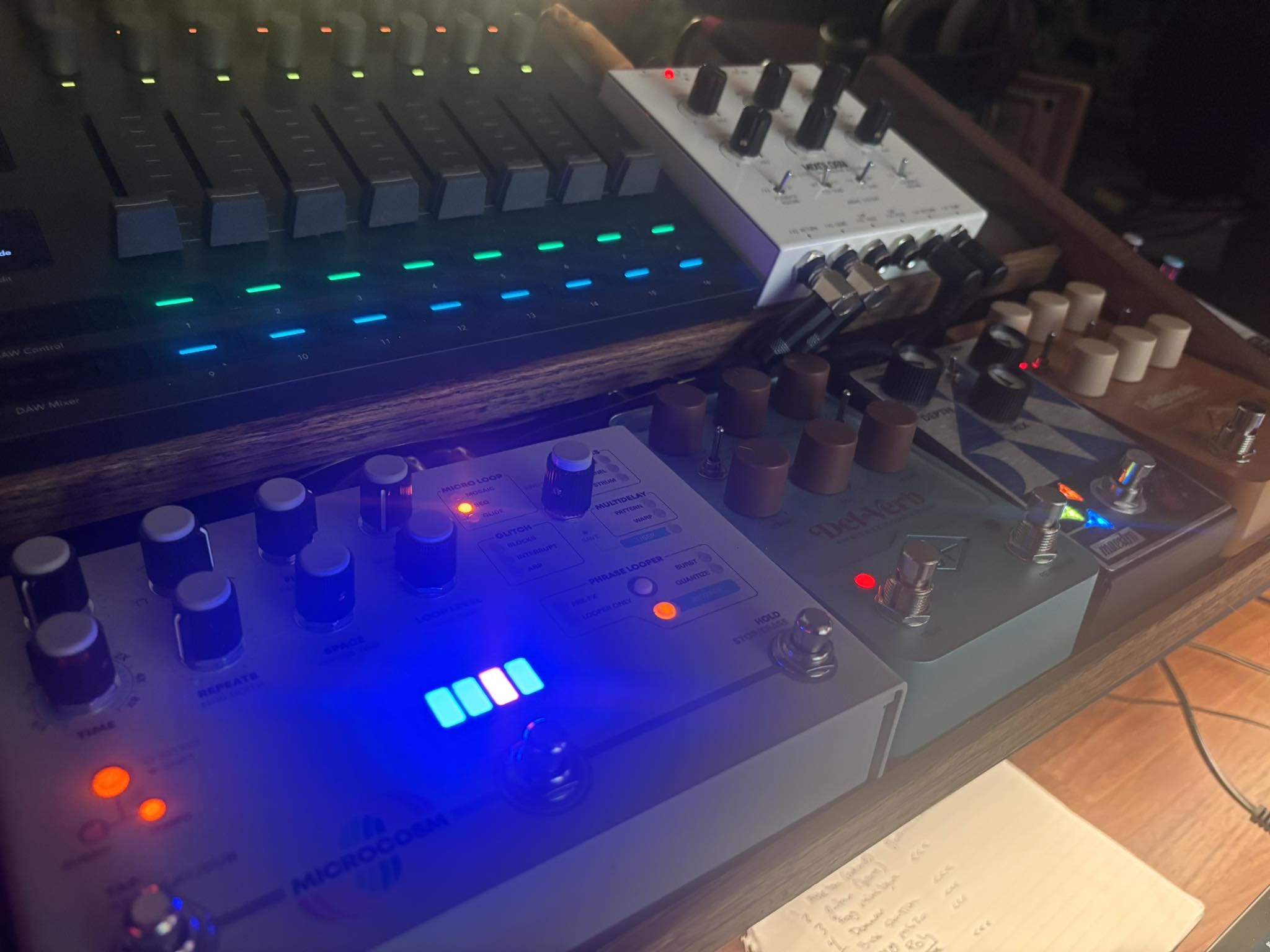
The Hologram Electronics Microcosm can turn almost any source sound into an ambient work of art, which makes it an easy pedal to reach for when processing hardware synths outside the box. I had an absolute blast running my Korg MS-20 through it, and the most experimental ideas came when I started feeding it semi-modular patching instead of plain synth lines.
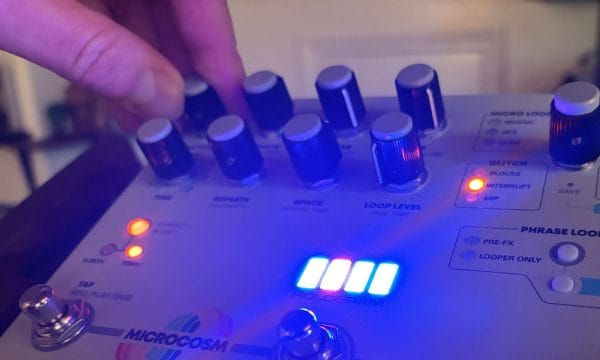
The synth’s own movement gave the Microcosm a great source to react to, and the pedal’s modulation pushed those patches into drone territory fast. The looper is a big part of the appeal, since you can record a clean loop, place the effects before or after it, and keep testing new modes until a riff locks in. The Activity knob adds a lot of real-time control, and depending on the mode, it can stretch the delayed grains, smear the audio, or push the modulation into stranger territory.

For synth players who want one small box that can turn a simple idea into a full ambient bed, the Microcosm earns its spot quickly. It works best for melodic, ambient, and detail-heavy music where fluid transitions, drones, and textured backdrops are part of the writing.
Learn More Here
SOMA Laboratory WARP
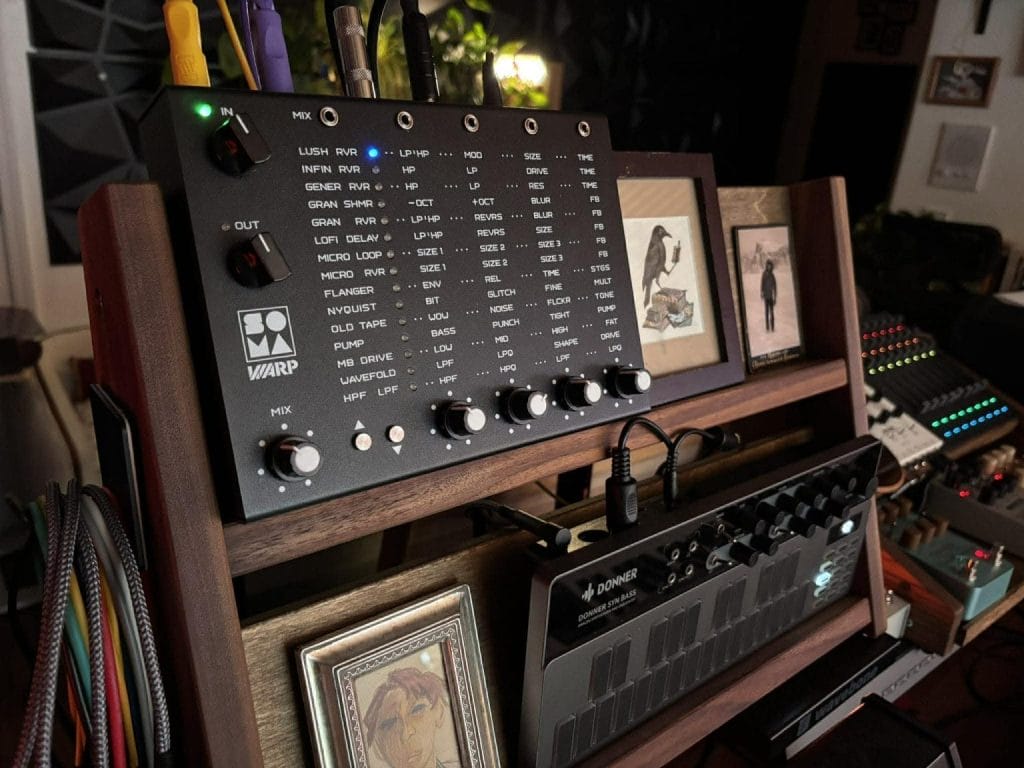
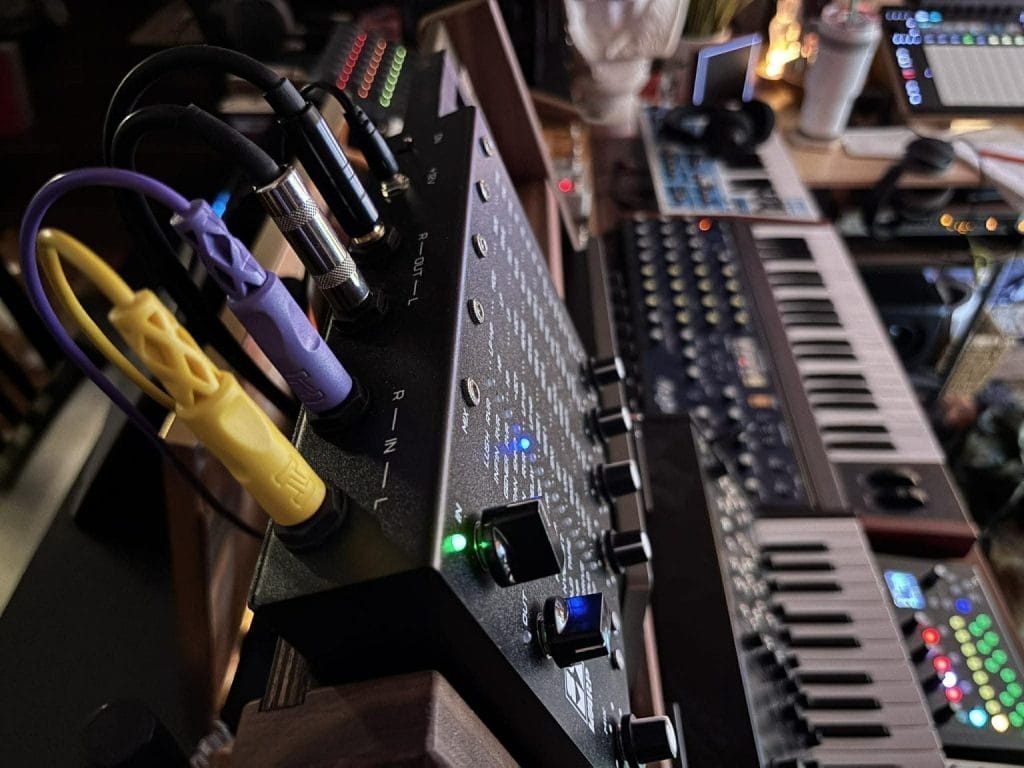
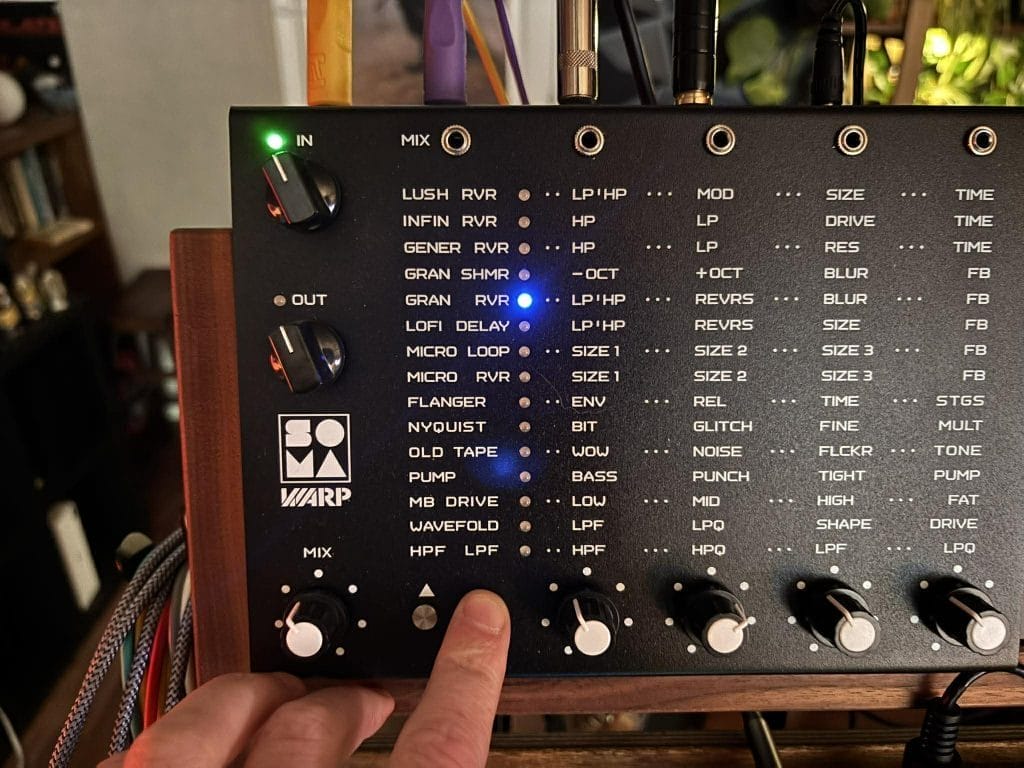
The SOMA Laboratory WARP feels especially good on outboard synths because it gives you direct access to what it does, rather than slowing you down with screens, layers, or menu logic. The whole unit reads like a performance instrument, with input level, output level, mix, algorithm selection, four parameter knobs, and CV inputs all sitting right on the top panel where you can actually grab them.
That direct, physical workflow is a big part of why it works so well in hardware rigs, because WARP encourages you to push feedback, sweep filters, move parameters, and force a sound somewhere new in real time. The reverbs are the clearest reason to pay attention to it, especially the Infinity, Generative, and granular options, which can move from sculpted space into self-generating material when pushed near the top of the range. The delay and micro-loop algorithms also suit synth work well, because they move away from straight-delay utility and toward smeared, drifting, layered treatment.
CV integration gives it a serious role in modular and hybrid setups too, with dedicated inputs for mix and all four algorithm parameters across a familiar 0 to 5V range. After spending time with it, the WARP feels like a creative hardware tool with personality, manual control, real-time responsiveness, and a sound that never feels generic.
Learn More Here
Hologram Chroma Console
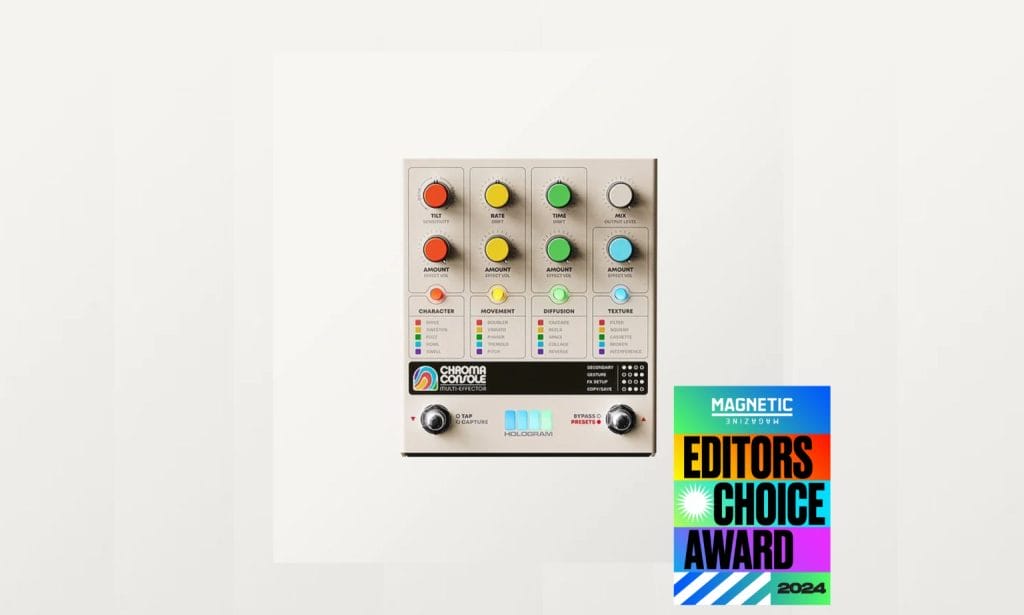
The Hologram Chroma Console is one of those pedals that makes a synth setup feel wider open fast, because its four reconfigurable modules let you stack, reorder, and reshape effects without getting buried in a confusing interface.
Character, Movement, Diffusion, and Texture each bring a different lane of sound design, from drive and fuzz to modulation, delay, tape wobble, glitch, filtering, compression, and broken cassette-style artifacts. The stereo effects are a major part of the appeal for synths, since you can run wide delays, modulation, and tone-shaping without fighting mono routing or losing the width of the source.
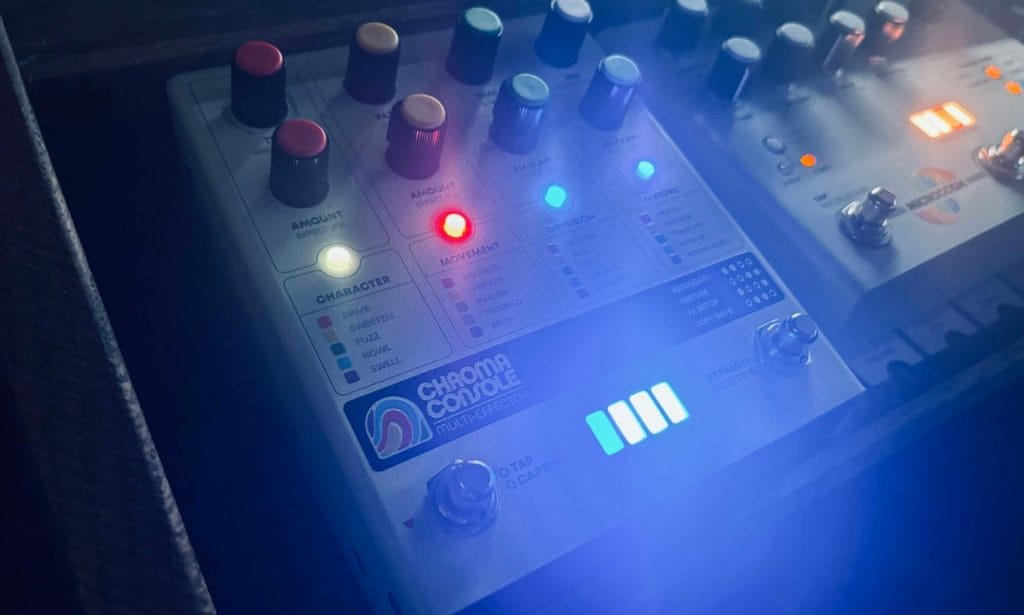
Gesture recording is the feature that really pushes it into creative territory, since you can record knob movements in real time and create automated changes in delay time, feedback, modulation depth, or effect intensity without needing a separate MIDI controller.
I also love the Capture feature for synth drones and pads, because it lets you loop up to 30 seconds of audio, build a base layer, and then keep manipulating it with filters, modulation, and texture effects.
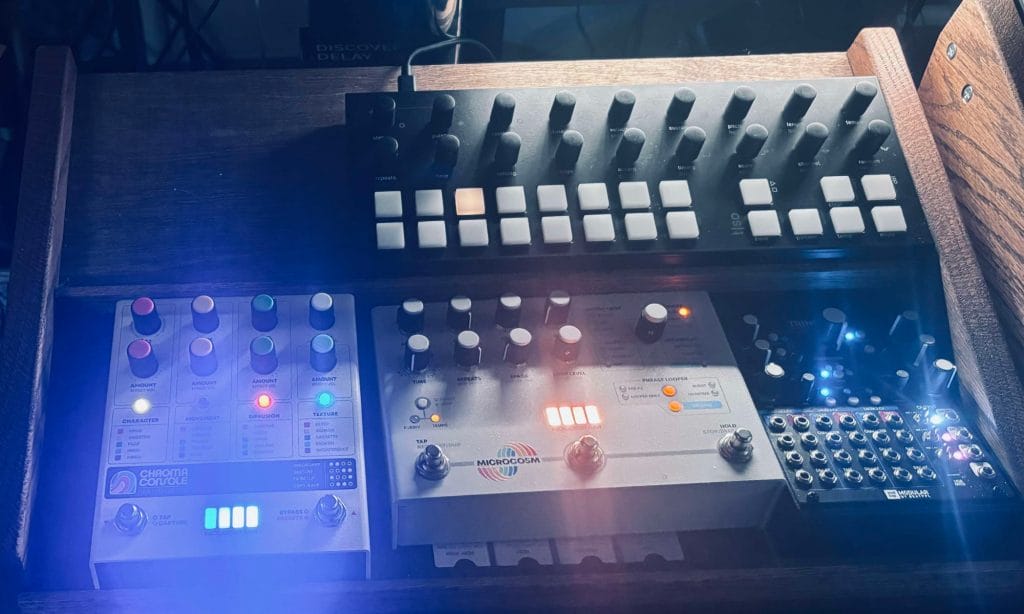
The Chroma Console works especially well when a simple synth line needs to turn into an evolving layer, a rhythmic pattern, a glitchy transition, or a background drone that keeps moving without taking over the track.

It is a flexible, high-quality, and very playable pedal for producers who want one box that can handle tone shaping, movement, space, and weird tape-inspired processing in a hardware synth rig.
Learn More Here
Universal Audio Del-Verb Ambience Companion
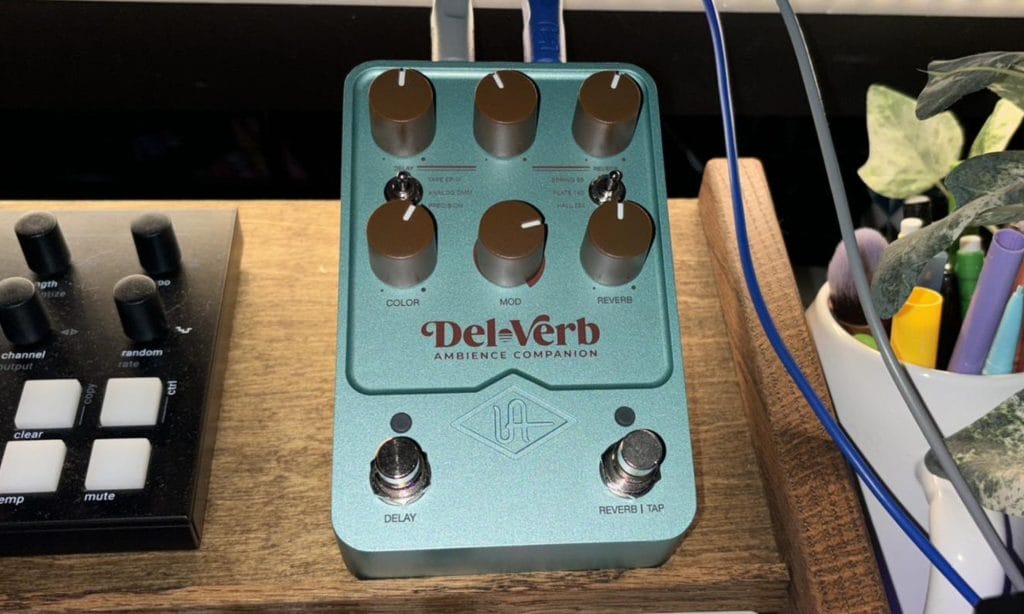
The Universal Audio Del-Verb Ambience Companion is a fantastic spatial pedal for outboard synths because it gives you reverb and delay in a format that feels easy to navigate, fast to dial in, and inspiring without turning into a menu-diving exercise.
The biggest thing I liked about it was how well it handled transients, since a lot of delay and reverb pedals wash out the source signal and push the sound too far into the back of the mix. With Del-Verb, lead sounds can stay spacious and evolving without losing the initial attack that helps them stay present. Every turn of the dial or flip of a switch changes the source signal in a noticeable and useful way, which makes it a great choice when you want quick touchpoints for shaping space around a synth line.

I also liked how much the pedal molded itself to the source, since the same settings could react completely differently on a pitched part, a hat loop, a field recording, or a background texture. That makes it especially useful for counter melodies, rhythmic synth parts, and ambient beds where you want movement, space, and color without burying the original idea.
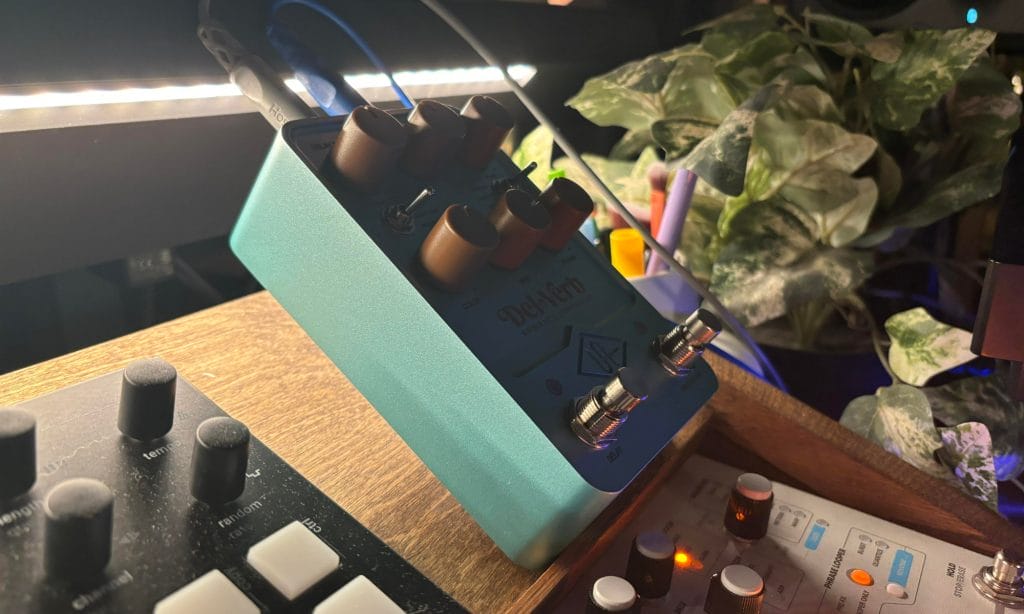
It is a bulky pedal, so space is worth considering, though in a studio setup with synths, sequencers, and other hardware, that size feels easier to justify.
Learn More Here
Empress Effects ZOIA
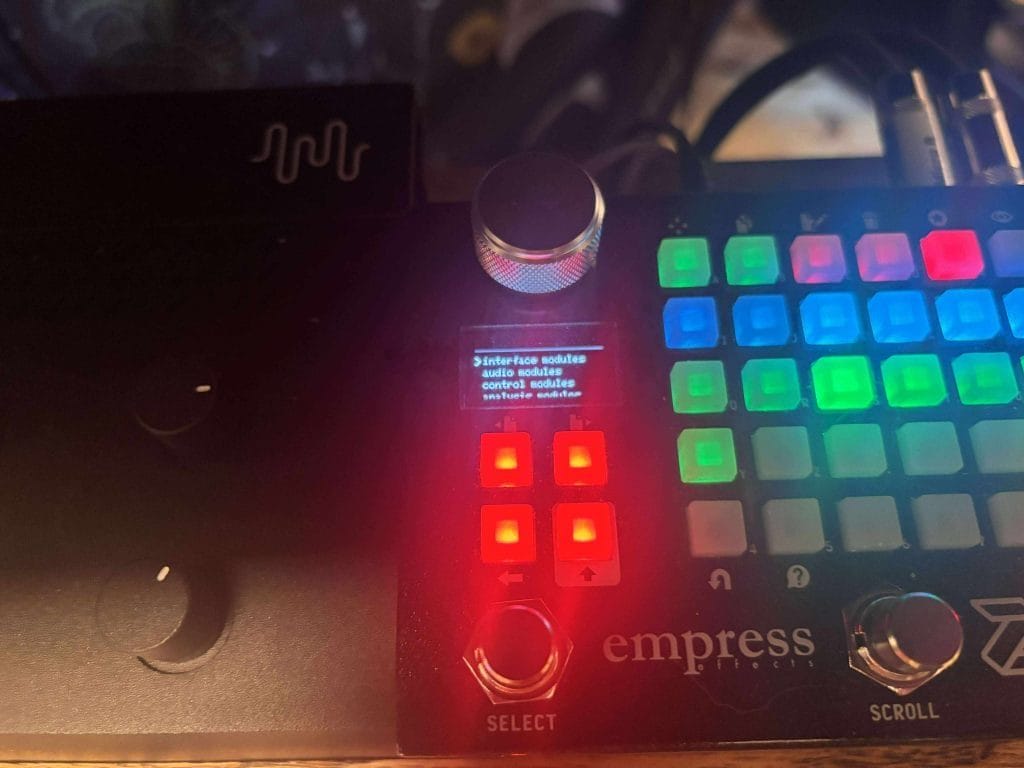
The Empress Effects ZOIA is one of the few pedals that can sit in a synth setup and feel like a full modular environment in a compact box. It gives you the building blocks to design your own effects, synth engines, MIDI tools, and virtual pedalboards, which makes it useful for hardware synth players who want one unit that can cover a lot of ground.
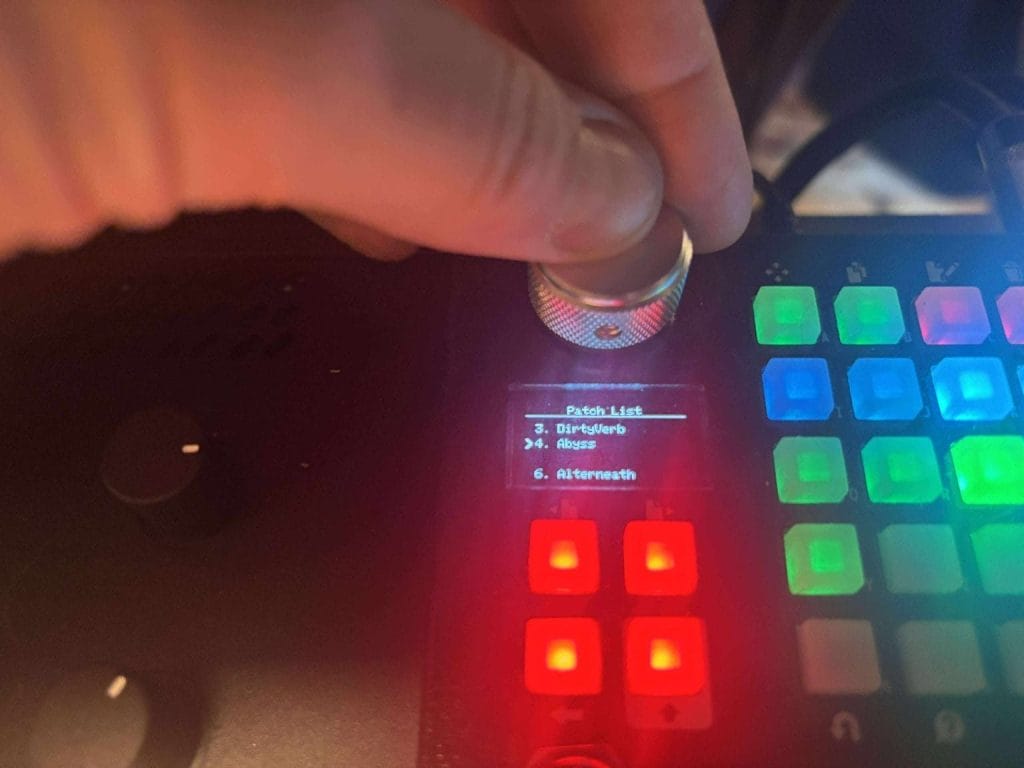
I’ve used it in hybrid studio rigs, as a standalone modular synth, and as a MIDI processor, and the experience always comes down to how much effort you’re willing to put into it. The learning curve is real, though once the logic of inputs, outputs, and connections starts to click, it becomes much easier to see why it has stayed relevant for years.
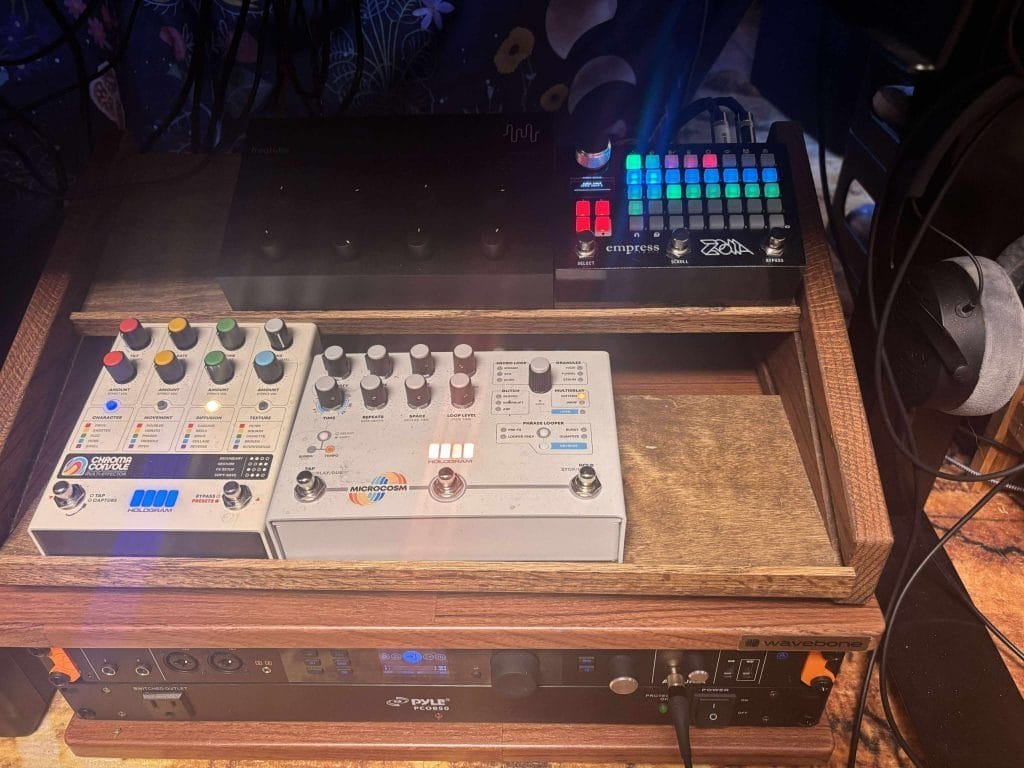
The stereo inputs and outputs, control port, CV options, and MIDI connectivity make it easy to slot into synth rigs, modular setups, or a DAW-based workflow. The community patch library also adds a lot of long-term value, since you can load ready-made effects when you want quick results or study those patches when you want to build your own.
For synth players who like programming, patching, and pushing one box into multiple roles, the ZOIA still feels like one of the most flexible pedals you can add to a hardware setup.
Learn More Here
Maestro Discoverer Delay Pedal
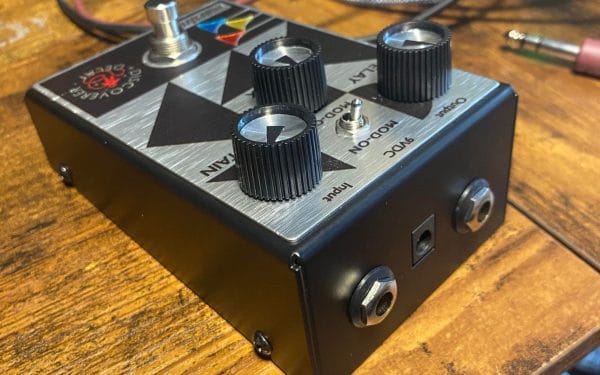
The Maestro Discoverer Delay is a solid choice for synth players who want an affordable analog delay that feels bright, present, and easy to dial in.
Its analog BBD delay gives hardware synths that warm, imperfect texture producers often chase when they want to bring analog tools into a digital workflow without spending studio-desk money. What I liked most was how the delay stayed crisp through the decay, since a lot of delay pedals and plugins can get grungy or muddy once the echo starts fading out.
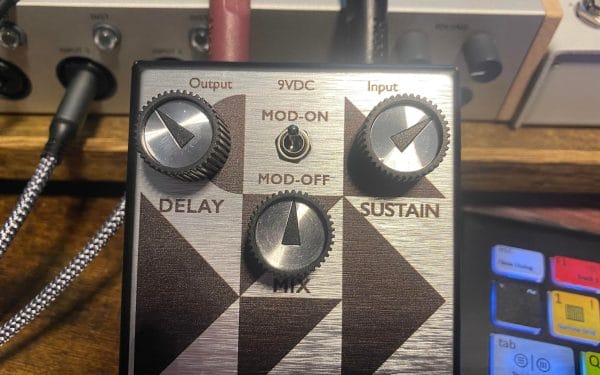
The Mod-On toggle adds another layer of movement, and the internal trim pots for modulation width and rate give you a lot of control over how much space and motion the pedal adds to the source. It can move from short slapback delays to big washy effects when the parameters are pushed, so it covers a wide enough range without turning the workflow into a chore. The lack of MIDI sync is worth knowing going in, especially for DAW-based producers, though that off-grid timing is also part of why analog delay can feel alive on synth parts.
For around $150, it gives producers a practical way to add bright analog delay, modulation, and hands-on character to hardware synths without taking up too much room in the setup.
Best Hardware Effects For Synths (…For You)
Choosing the best effects for synths starts with being honest about the role you need the pedal to fill in your setup. A delay pedal that sounds great on a guitar may feel totally different once it is handling a wide stereo synth patch, a sharp sequence, or a long pad with a lot of low-end information.
Before buying anything, I would think about the problem you are trying to solve first: do you need space, movement, grit, looping, modulation, stereo width, or a box that can push a simple patch into stranger territory?
I also think workflow should be a major part of the decision. Some producers want a pedal that gives them instant results with a few knobs and a clear signal path, while others want a deeper unit that can take CV, MIDI, preset changes, or real-time automation. Neither approach is wrong, though they serve different types of setups. If you write fast and want the pedal to stay out of your way, something immediate and hands-on will probably get used often. If you enjoy programming, routing, and building patches from scratch, a deeper multi-effect unit can earn its place quickly.
Signal level and routing are worth checking before you get too attached to the sound demos.
Synths can hit pedals harder than guitars, and stereo operation can change how useful a pedal feels in a real studio setup. Line-level support, stereo inputs and outputs, MIDI sync, tap tempo, trails, bypass behavior, and gain staging all become practical details once the pedal is sitting next to your synths, drum machines, and interface. These specs may seem dry, though they can be the difference between a pedal that stays connected and one that gets pulled out only when you feel patient.
The best advice I can give is to choose pedals around the way you actually write.
If you build tracks from small loops, look for looping, delay, and modulation tools that help a part grow over time.
If your synths already sound full, look for pedals that add movement without crowding the patch. If your music leans on performance, prioritize controls you can grab quickly. The best pedal for your synth setup is the one that gives you a result you keep using after the first week, because that is when the novelty wears off and the real workflow starts to show.

Will Vance is a professional music producer who has been involved in the industry for the better part of a decade and has been the managing editor at Magnetic Magazine since mid-2022. In that time period, he has published thousands of articles on music production, industry think pieces and educational articles about the music industry. Over the last decade as a professional music producer, Will Vance has also ran multiple successful and highly respected record labels in the industry, including Where The Heart Is Records as well as having launched a new label with a focus on community through Magnetic Magazine. When not running these labels or producing his own music, Vance is likely writing for other top industry sites like Waves or the Hyperbits Masterclass or working on his upcoming book on mindfulness in music production. On the rare chance he's not thinking about music production, he's probably running a game of Dungeons and Dragons with his friends which he has been the dungeon master for for many years.