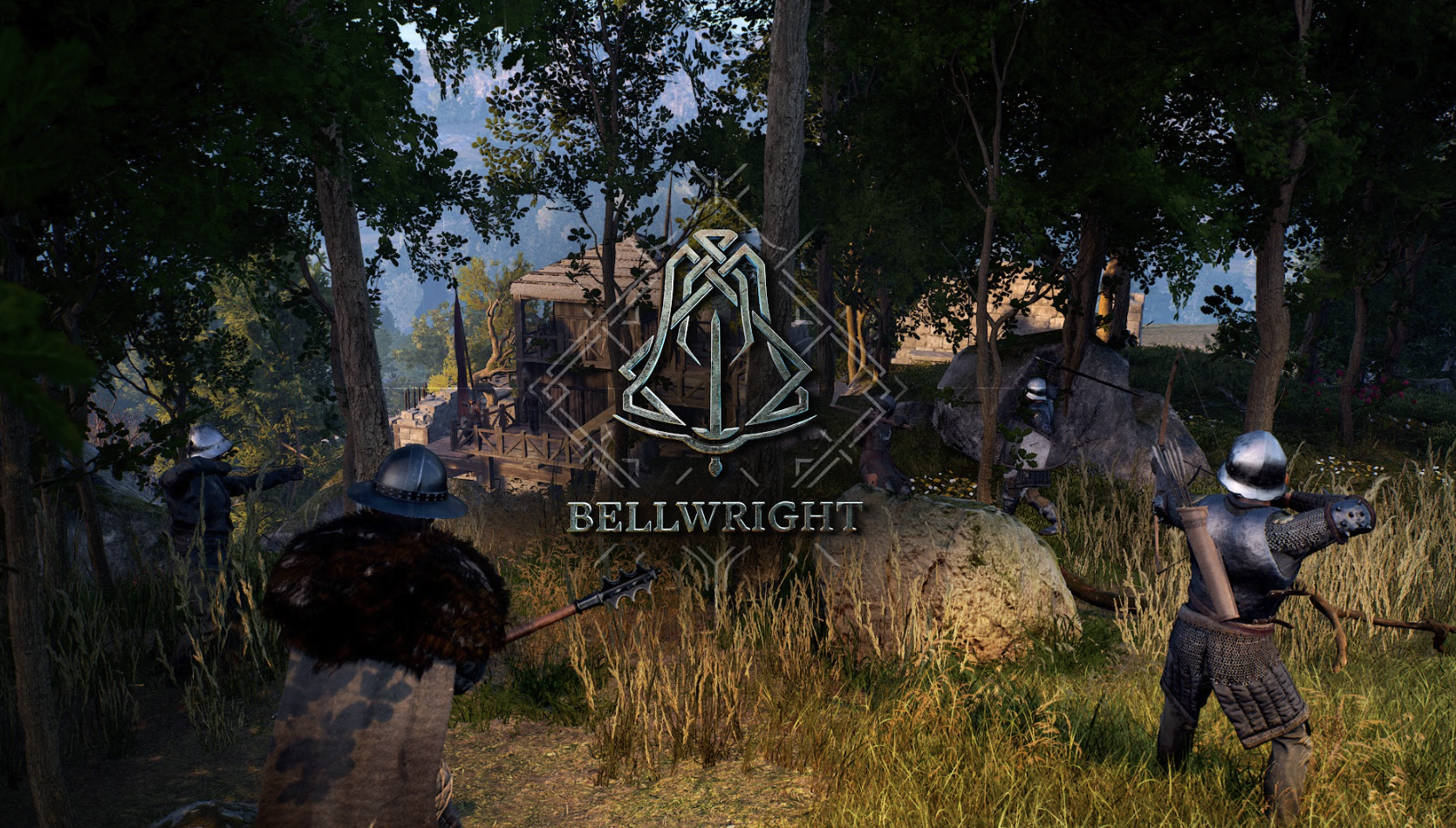
Medieval game audio can go wrong fast. Add a lute, throw birds into the trees, put a few wooden impacts under the UI, and the world may sound old enough on paper while still feeling like a set dressed for the player. Bellwright needed something more patient than that, because its world is not only there to be looked at. It has to be lived in for hours at a time.
That is the part Kamil Nowak had to solve as Donkey Crew’s one-person audio department.
He was not only making sounds and dropping them into Unreal Engine. His work covered field recording, foley, gameplay audio mechanics, voice recording direction, implementation, and the larger audio identity of the game. For him, the answer began with a material: wood. Houses, carts, fences, bridges, workshops, UI feedback, construction, crafting, and village life all needed to share the same physical language without turning the mix into constant clutter.
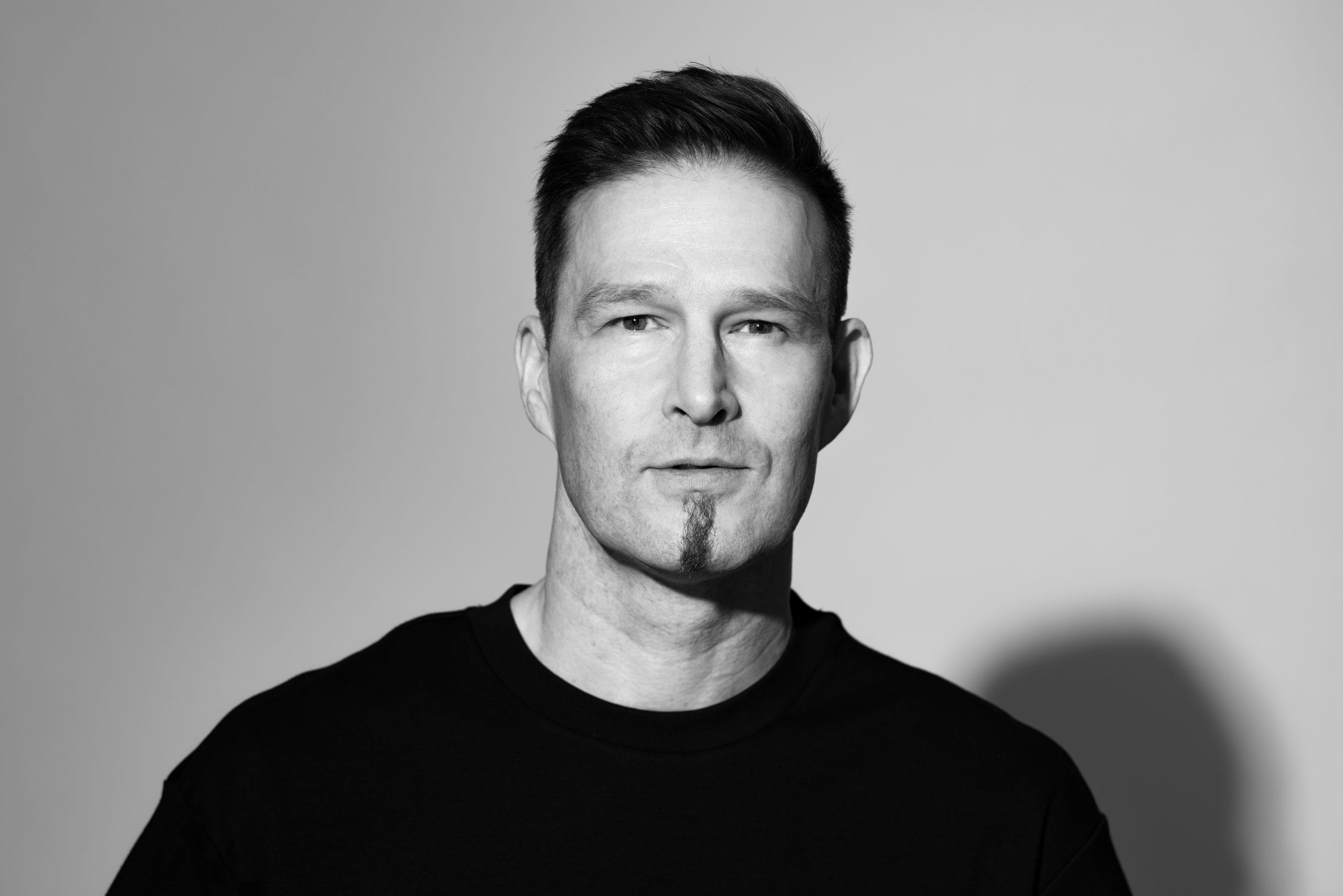
The conversation also brings in composer Jakub Pietras, who joined Bellwright for the Halmare Isles expansion. His work pushed the score toward Mediterranean colors without falling into the usual fake-medieval package of huge brass, trailer choirs, and tavern music on loop. Together, their answers show how much of game audio depends on restraint, systems thinking, and knowing when the world should speak quietly enough that players can still hear themselves inside it.
Interview With Kamil Nowak And Jakub Pietras
Before getting into the technical side, what was your role on Bellwright, and which parts of the finished audio came directly from your work?
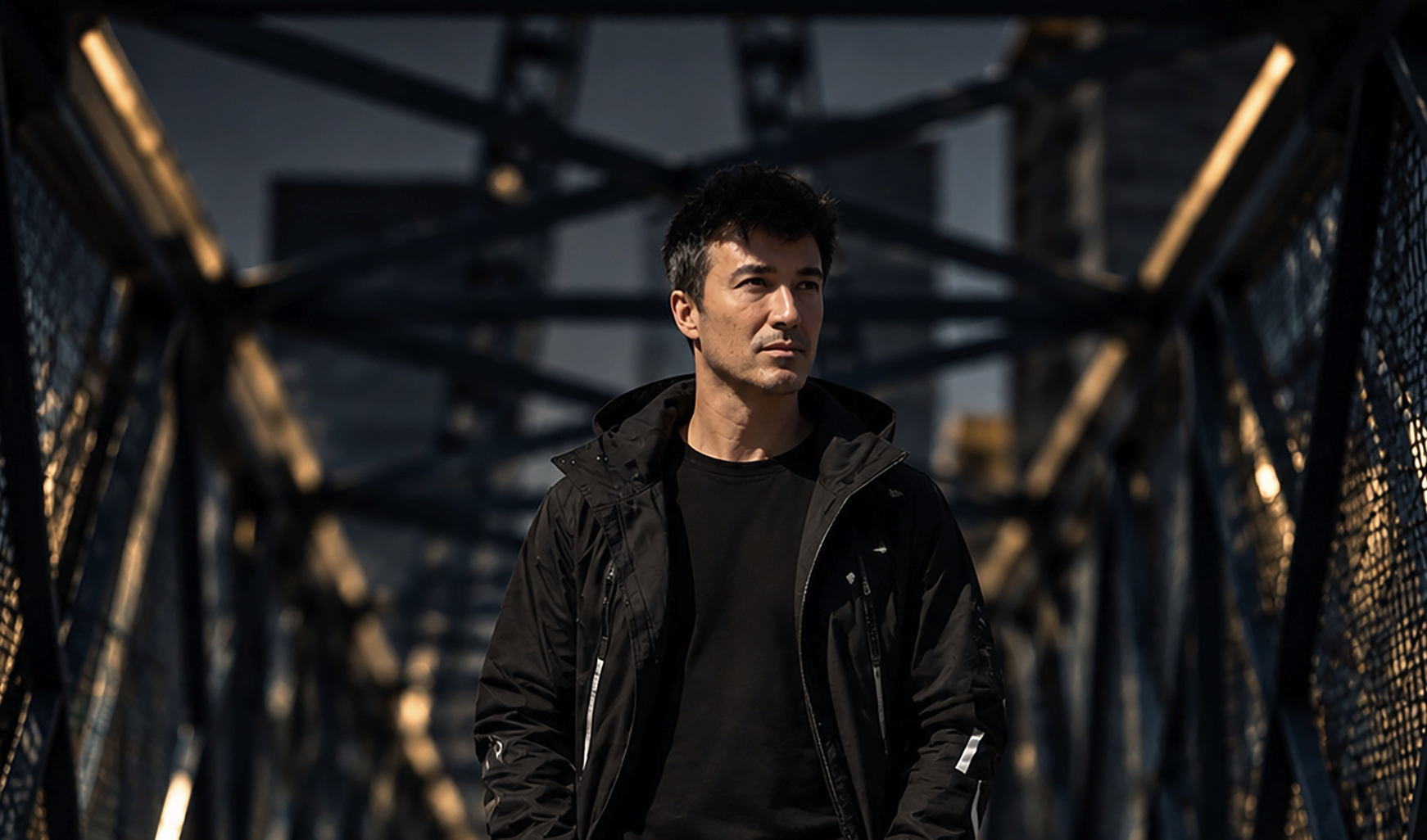
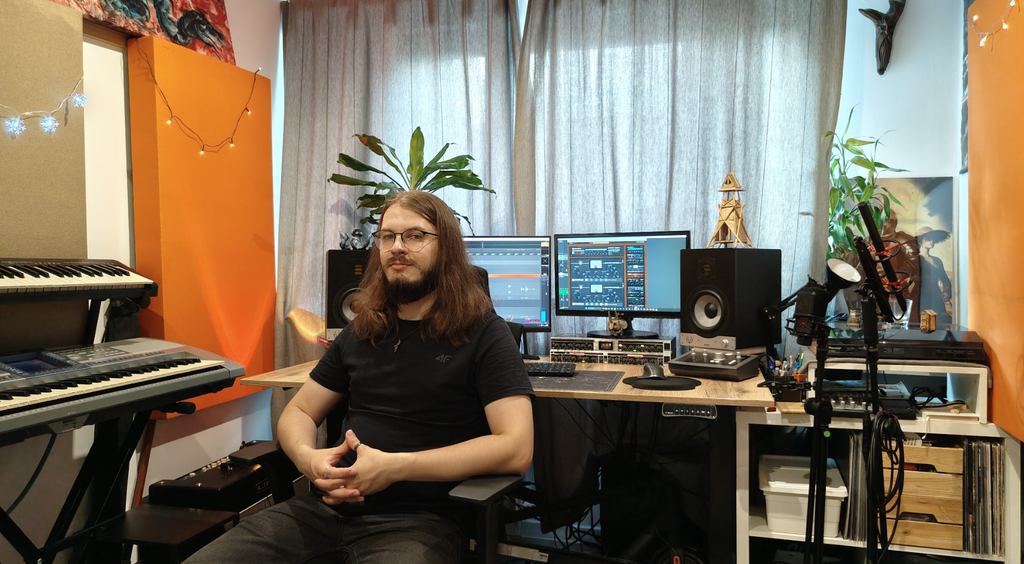
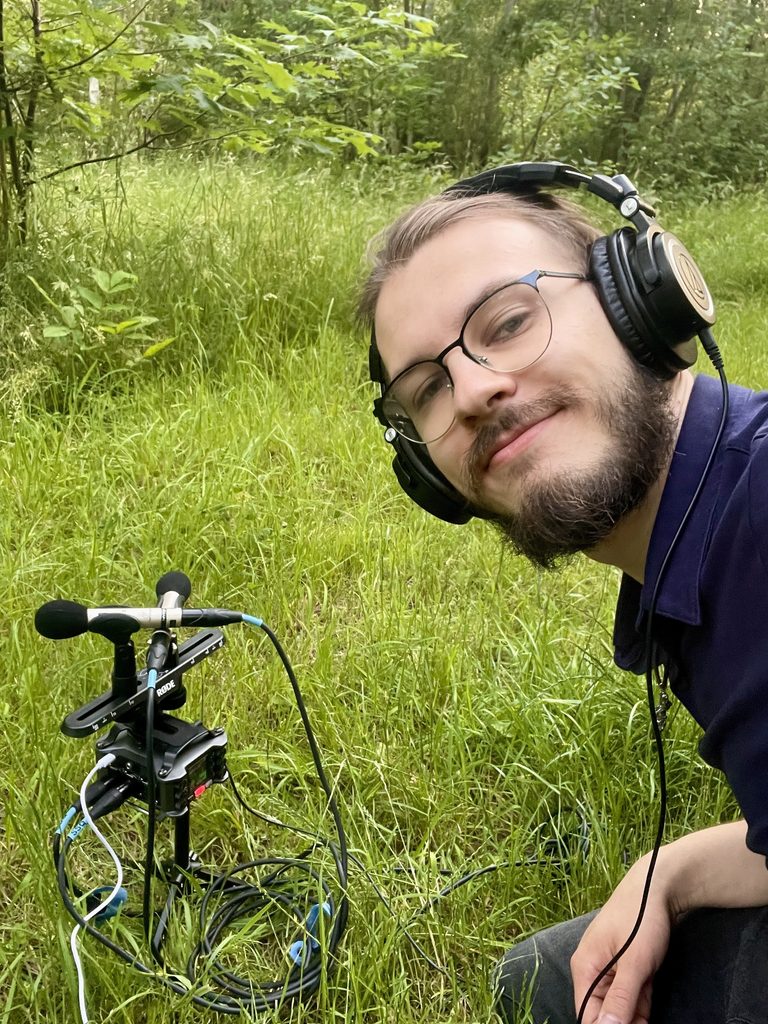
Kamil Nowak: First of all, thank you for the invitation for this interview. My name is Kamil Nowak, and for over four years I have been the sound designer at Donkey Crew. Working as a one-person audio department involves various tasks, so my duties cover nearly all aspects of the audio creation process.
Right from the beginning of the project, I was responsible for planning and overseeing the overall audio vision of Bellwright. My duties included foley recording, field recordings, creating sound effects, implementation in Unreal Engine, designing gameplay audio mechanics, directing player voice recording sessions, and defining the overall audio direction of the project.
I have managed to cooperate with many skilled composers within the process of game development. The main Bellwright soundtrack had already been created before I joined the team, with Michał Korniewicz responsible for that main score. Last year, I collaborated with our outsourcing composer, Jakub Pietras, while working on The Maiden Voyage update. Together we managed to create an adaptive soundtrack for Halmare Isles.
Apart from the music, almost everything players hear in Bellwright has passed through my hands in one way or another. I also had the good fortune to get help from Tomasz Zuba, our QA/Audio QA, whose fresh ears helped us find possible flaws in the audio systems.
Jakub Pietras: I joined Bellwright as the composer for the Halmare Isles expansion, working directly with Donkey Crew. Virtually all of the music you hear in that region came either from my studio or from the studios of talented musicians specializing in Mediterranean music. The sound design and implementation were handled by Kamil Nowak’s team, while my contribution was the music itself, delivered primarily as adaptive cues and stems designed to work within the game’s implementation system rather than as standalone concert pieces.
Medieval games come with established musical expectations. Which conventions did you keep, and which ones did you decide were wrong for Bellwright?

Kamil Nowak: Medieval games come with a lot of musical expectations, no doubt about it. It’s surprisingly easy to lean too far toward fantasy sounds, or toward a more modern interpretation that loses the historical atmosphere. From the beginning, we wanted Bellwright to feel grounded, so authenticity was always our main reference point.
The main soundtrack, composed by Michał Korniewicz, is built around instruments that players associate with the medieval era. In hostile areas, those traditional instruments are blended with gentle ambient pads. That modern element is almost invisible, but it helps the music set the right mood without breaking immersion. Michał did an amazing job finding that balance.
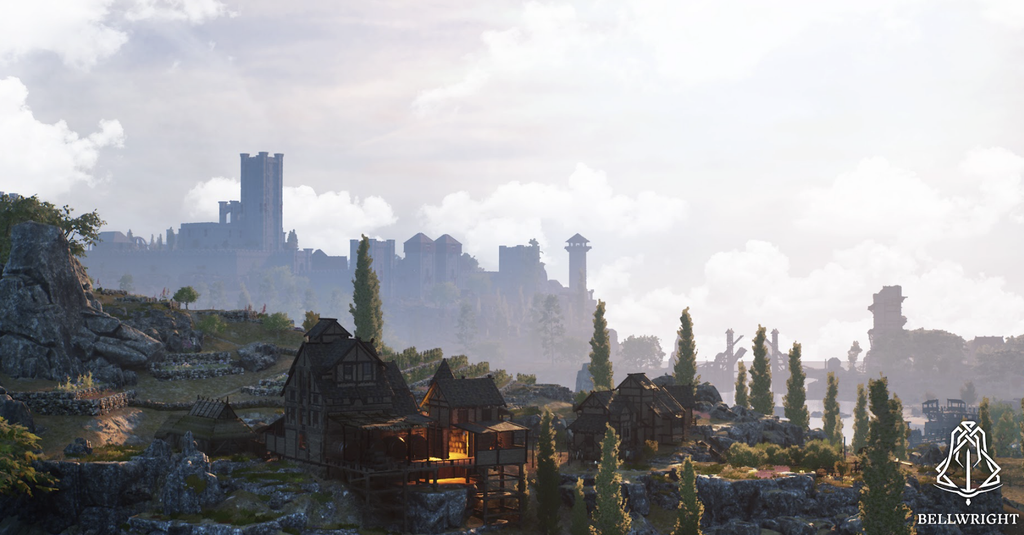
One other thing we needed to consider was the actual gameplay. Bellwright is an open-world game where the player spends much of their time moving around, collecting resources, and establishing settlements. Therefore, the exploration music could not demand too much attention from the player. It had to support extended play without becoming repetitive or overwhelming.
The most difficult musical task was creating the soundtrack for Halmare Isles. We worked with Jakub Pietras because we needed a distinctive soundtrack for that region. Halmare is set in a Mediterranean environment, so it was important to add regional features while keeping the music consistent with the main game’s established language. Balancing Mediterranean atmosphere, medieval instruments, and the existing musical identity required several attempts. I remember that once we placed Jakub’s first draft into the new map and walked across the island, we immediately felt that it belonged there. That was the moment we knew we were on the right track.
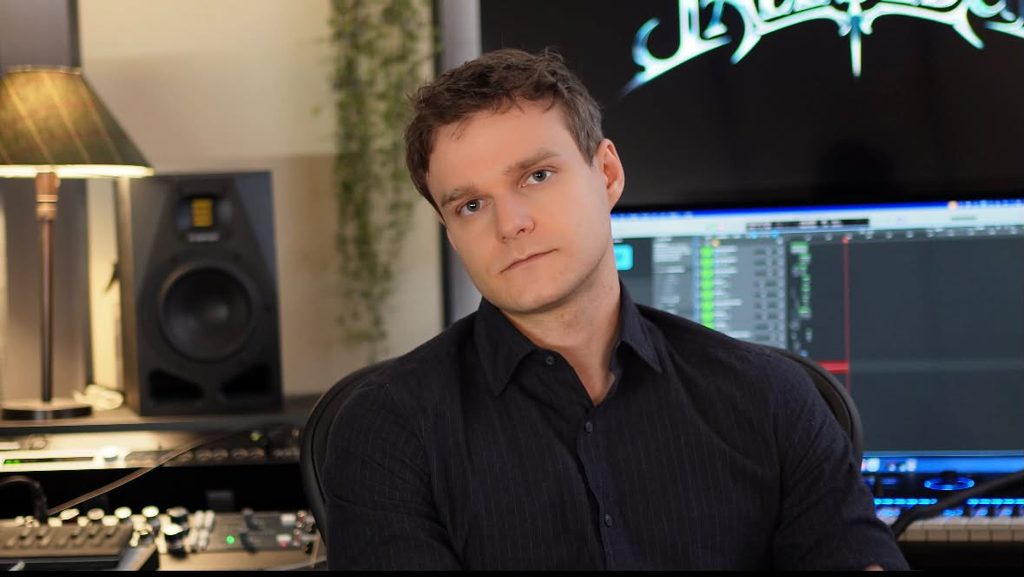
Jakub Pietras: The convention I kept without hesitation is that the music has to sound like it could have been made by people who live in that world. Modal writing, acoustic sources, drones rather than functional harmony, and instruments that feel physically plausible in that era were all important.
What I threw out was the Hollywood medieval package: the wall of brass, the fake Latin choir, or the epic trailer grammar that has almost nothing to do with the period and everything to do with film marketing from the last ten years. I also avoided the tavern-tune reflex, the idea that folk music in a game must mean a cheerful dance tune on repeat.
Halmare Isles is an island region, and islands carry a very different emotional character than the mainland. There is the constant presence of wind and water, a sense of isolation, and settlements that feel exposed and fragile. As a result, the music leans on airy textures, drones, and long, evolving melodic lines rather than rhythmic drive.
Which instruments became central to the score, and what led you toward those specific timbres?
Jakub Pietras: For Halmare Isles, I wanted the center of the score to be rooted in authentic medieval Greek instruments, so the palette is built primarily around the Byzantine lyra and the oud, instruments we know were widely played across the Mediterranean during the medieval period.
However, since Bellwright is not trying to recreate one specific historical era, I had the freedom to move beyond strict historical accuracy and incorporate influences from later periods as well. For example, I used the Cretan laouto, performed by Lester Paredes, which emerged later but is still deeply rooted in the musical traditions of the Mediterranean.
The guiding principle was geographic and emotional rather than strictly historical. I was not aiming for a documentary reconstruction. First and foremost, I wanted to capture the feeling of the place while also drawing from the region’s rich musical history.
The instruments we used also naturally lend themselves to microtonal writing, which was something I was eager to explore across the score. That made the music feel lived in rather than manufactured, and it is why I prefer recording these instruments myself or collaborating with musicians who specialize in playing them.
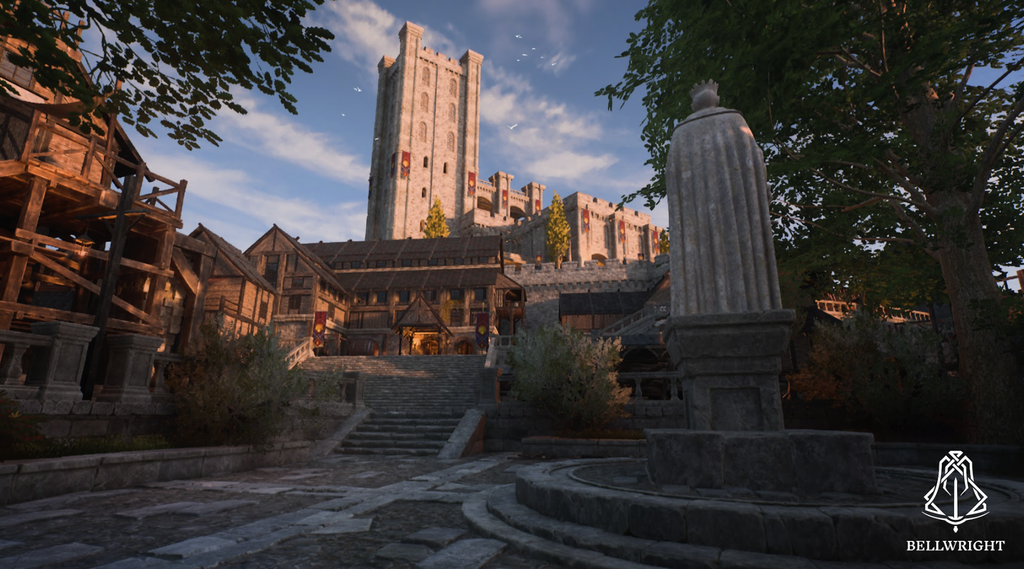
How did you build the environmental audio for forests, villages, work areas, taverns, and exposed countryside without filling every area with constant activity?
Kamil Nowak: One of the very first questions I asked myself when I joined Donkey Crew was: “What should Bellwright sound like?” Before creating hundreds of individual sound effects, I wanted to define the sonic identity of the world. The answer came surprisingly quickly: wood.
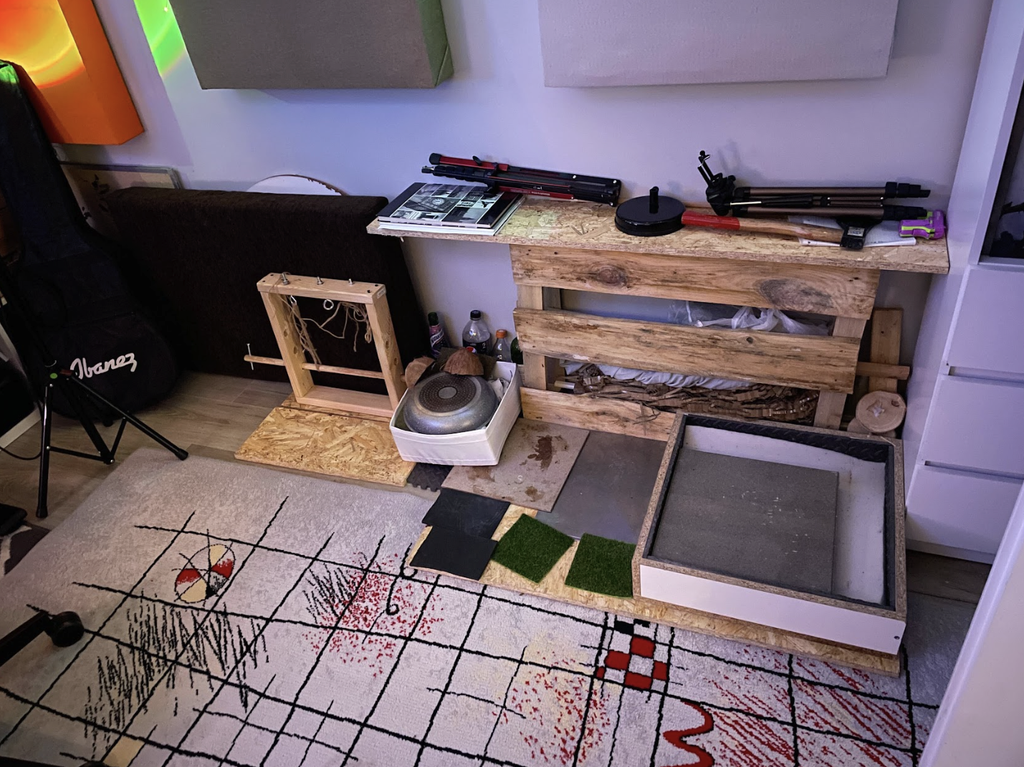
When most people imagine medieval times, they picture wooden houses, carts, fences, bridges, and workshops. Wood became the foundation of my sound palette. That decision influenced not only environmental sounds, but also UI interactions, crafting feedback, construction, and countless gameplay sounds. Having that consistent material helped everything blend naturally together.
The next challenge was making the world feel alive without making it feel too noisy. Bellwright is a big game where players can spend hundreds of hours exploring what we created, so I never wanted the ambience to constantly demand attention. Instead, I wanted it to become part of the experience and create a supporting atmosphere while still reacting to what the player was doing.
That philosophy shaped the entire environmental audio system. Early on, after listening to field recordings from different parts of Europe and recording my own ambiences, I realized the world should not simply play a few looping audio tracks. It should respond to player actions and game events. If the player cuts down an entire forest, there should not still be dense tree rustling or birds singing as if nothing had happened. The system checks the density of trees around the player and adjusts the environmental sounds accordingly.
Wildlife activity also changes with weather and time of day. Birds are most active during the morning and evening, become much quieter at night, and almost disappear during heavy rain. Insects follow similar behavioral patterns, which helps the world feel more believable.
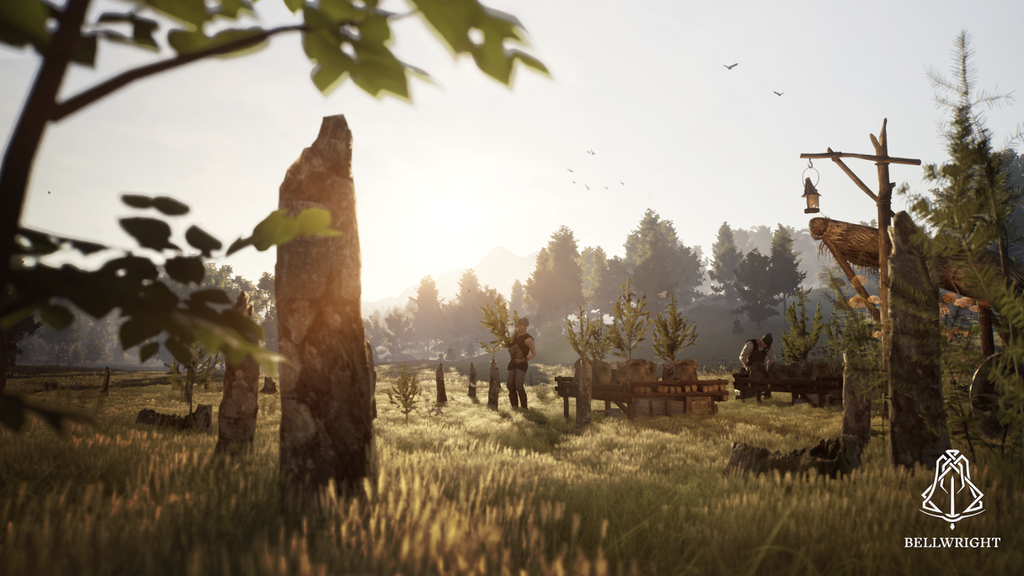
Bellwright features a large open world with very different environments: dense forests, open fields, swamps, highlands, lowlands, villages, and coastal regions. I built the ambience around one central element: wind. Wind is present almost everywhere, but every environment responds to it differently. Higher hills and mountains bring gusts and whistling air. In forests, you hear leaves rustling and trees creaking. In villages, you hear wooden buildings creak from subtle movement and wind whistling in narrow passages. Wind became the common element tying the map together.

Players can also build their own settlement and hire NPCs to work for them. Many buildings, from campfires and smelters to workbenches and cauldrons, have their own multi-layered sound design. I wanted to give the player feedback with each interaction type. A cauldron, for example, does not simply play one sound each time. Adding water sounds different from adding other ingredients, and once crafting begins, you hear boiling water. Individually, these are small details, but together they make crafting feel physical and believable.

Technically, building this system was an interesting challenge because Bellwright does not use middleware like FMOD or Wwise. Many systems that would normally be handled by dedicated audio middleware had to be built directly inside Unreal Engine. Once MetaSounds became available, it gave me much more flexibility to create adaptive behaviors and procedural variations. I built systems that allow certain sounds to appear only around the player, others exclusively on trees or foliage, and others only in carefully selected locations, which helps the world feel alive without overwhelming the mix.
One of my personal rules across development was that less is often more. Silence is just as important as sound because it gives players room to breathe. Finding that balance with animal and environmental sounds took many iterations, but I believe it is one of the reasons the world feels alive without ever becoming exhausting to listen to.
Because Bellwright is in Early Access, the audio systems also had to be designed with flexibility in mind. New buildings, foliage, mechanics, and gameplay situations could appear during development, so I focused on creating systems that could grow with the game.
What does your mix process look like when material must translate across headphones, television speakers, gaming headsets, and larger playback systems?
Kamil Nowak: My approach to mixing is quite simple: I never assume that players will experience the game on the same system that I am using. Bellwright is played on everything from studio headphones and gaming headsets to laptop speakers, televisions, and home theatre systems, so the mix has to translate well across all of them.
I usually start working on studio monitors and headphones, but that is only the first step. During every mixing session, I test the game on different playback devices: consumer headphones, laptop speakers, and a TV, to make sure important gameplay information remains clear regardless of the listening environment. A sound that feels balanced on studio monitors can easily become too quiet or too harsh on smaller speakers, so those reality checks are an essential part of my workflow.

Those tests often led to small but important adjustments. For example, after testing Bellwright on consoles and consumer TVs, our QA tester Tomasz spotted that the tree-chopping sounds were losing some of their definition, so I added a little more high-frequency layering to help the axe impacts cut through the mix. I also adjusted the balance of our AI voices to improve dialogue intelligibility on small speakers. These are subtle changes individually, but together they make the game feel much more consistent across different playback systems.
Sometimes the solution was not making a sound louder, but changing the balance of frequencies or giving it more space in the mix. As the only sound designer on the project, I also spend a lot of time playtesting the game. Bellwright is a sandbox game where players can spend hundreds of hours in a single save, so the overall mix needs to remain comfortable across long play sessions. Combat should feel impactful, UI/UX sounds should always be readable, and ambience should support the world without competing for the player’s attention. My goal is not to create a mix that sounds perfect on one specific system. It is to create one that feels consistent wherever players experience the game.
How are musical transitions managed when gameplay can move unpredictably between exploration, dialogue, construction, and an enemy encounter?
Kamil Nowak: In a sandbox open-world game like Bellwright, we cannot predict what players will do. They can explore the world, enter a village, build their settlement, progress through a quest, or suddenly get into combat. Because of that, the music system needed to understand the current gameplay context and smoothly transition between different states.
We have several main music categories: Exploration, Village, Combat, and Narrative. Each category has its own purpose and priority rules that define how transitions work. Narrative music has the highest priority because it supports feedback after the player finishes each of the main quests. Once it starts playing, it cannot be interrupted by other music states.
Combat has the second-highest priority, and while a fight is happening, the system prevents transitions back to exploration and village music. After combat ends, the system checks the player’s current location, then smoothly transitions either back to village music or exploration music. Exploration and village music have the lowest priority, allowing them to transition into any other category when gameplay requires it.
For Halmare Isles, we wanted to make combat music more reactive and responsive. Together with Jakub, we created a layered combat music system built around three musical layers that combine into one complete piece. Depending on the number of enemies during the fight, different layers are active, creating a more dynamic arrangement. Besides adding musical variation, this system also provides players with subtle gameplay feedback. When additional enemies join the fight, the music changes by adding new layers, allowing players to feel the increasing danger and making combat more impactful and rhythmic.
For composers and sound designers who want to work in games, what technical skill do you think receives too little attention compared with composition, recording, and conventional mixing?

Kamil Nowak: I think one of the most underrated skills for future sound designers is learning to think about implementation before thinking only about the sound itself. Creating a great sound asset is important, but games are different from linear media like movies. Games are interactive experiences, and great sounds often come from understanding how that sound will behave inside the game.
My background studying computer science at Wrocław University of Technology helped me a lot in this area, especially when I started designing my first more complex audio systems. Understanding how systems work and how gameplay data can change audio opened up many more possibilities during the creative process.
For example, you can create a single loop for a moving wooden cart, and that is fine. When you start by thinking about implementation, you immediately see more possibilities. Can I check cart speed? What type of surface is it moving on? How large is the cart? How heavy does it feel? Which parts of the sound should react dynamically?

Instead of one static loop, you can create a system built from multiple layers that respond to gameplay. The wheels, wood creaks, ground interaction, rattling elements on the cart, and other details can change depending on the situation, creating a much more believable result. This approach changed the way I design almost every interactive sound in Bellwright, because I rarely think about a sound as a single asset anymore. I think about it as a system. A sound is not just something the player hears. It is something that can react, evolve over time, and become a meaningful part of the gameplay experience.
I think this mindset is a huge advantage for game audio. The best game sounds are not always the ones that sound the most impressive in isolation, outside the game. They are the ones designed to live, react, and evolve inside the game world.
Being up to date with the state of the game audio industry, and working as the only sound designer on Bellwright, also taught me that technical knowledge is not just an addition. It is a necessity. When you do not have a dedicated audio programmer or a large audio team, understanding the technology behind the system allows you to create solutions independently and move faster.
For me, game audio is most interesting when creativity and technology meet. Technical knowledge does not replace your creativity. It gives you more ways to express it.
Jakub Pietras: Implementation. Or more precisely, the ability to think in systems instead of finished pieces.
Most people entering this field train to deliver a beautiful three-minute cue. What a studio actually needs is music that survives being cut, layered, faded, transposed, and re-triggered by a player who is doing something the composer never imagined. That means understanding loops that do not betray themselves at the seam, transitions that work on any beat, and vertical layers that can be added and removed without collapsing the harmony. You do not need to be the audio programmer, but you need to be able to hold a conversation with one and design your material so it does not fight the engine.

Closing Thoughts
Kamil’s best answer is the one about wood. It is specific enough to sound almost too simple, then it starts explaining half the game. Medieval worlds are built from wood before they are built from myth: carts, fences, bridges, workshops, walls, doors, tools, tables, buildings, fires, wheels, and work surfaces. By making that material the basis of the audio identity, Bellwright avoids feeling like a pile of unrelated assets and starts feeling like a place made from the same physical matter.
That connects naturally with my recent interview with Steve Pardo on scoring Farthest Frontier with live instruments and restraint. Pardo was dealing with another settlement-driven game where the music had to stay livable across long play sessions rather than announce itself every few seconds. Kamil and Jakub are working from the same practical reality. When players may spend hundreds of hours inside a world, audio cannot keep demanding attention just because the sound designer knows how to make a scene feel busier.
There is also a clear line to Jan Valta’s interview on the music of Kingdom Come: Deliverance 2. Valta’s work lives closer to historical reconstruction and large-scale RPG scoring, while Bellwright takes a more systems-heavy survival route, but both conversations circle the same trap. Medieval audio can become costume very quickly. The answer is rarely more period dressing. It is choosing which historical, regional, and emotional cues actually serve the world the player is moving through.
Jakub’s Halmare Isles comments are especially useful there.

He keeps modal writing, acoustic sources, drones, and instruments that feel plausible inside the world, then drops the fake medieval grandeur that has become shorthand in too many games. The Byzantine lyra, oud, and Cretan laouto give Halmare a Mediterranean fingerprint, but the point is not documentary accuracy. The point is making the island feel exposed, windy, and fragile.
That also sits beside Ilja Varha’s breakdown of sound design in Grand Tactician: Napoleonic Wars. Varha talked about audio as a way to make a tactical environment readable, where sound gives the player information about distance, danger, and the state of the battlefield. Bellwright applies that logic to a slower world. Tree density changes ambience. Birds react to time of day and rain. Combat music gains layers as enemies enter the fight. The player may not consciously notice every rule, but the world feels less fake because it is listening back.
The no-middleware detail is important too. Kamil was not leaning on a standard FMOD or Wwise pipeline for the game’s adaptive audio. Many of the systems had to be built directly inside Unreal Engine, with MetaSounds giving him more flexibility as development moved forward. That makes the interview more than a “how we got the sounds” feature. It becomes a reminder that game audio is often closer to design and engineering than outside observers assume.

That lesson is echoed in Jakub’s final answer. A beautiful three-minute cue is not enough if the music collapses the moment a player interrupts it, loops it, layers it, or forces it into a context the composer did not predict. Game composers need to think in stems, seams, transitions, priorities, and layers. That does not make the work less musical.
It makes the music capable of surviving contact with a player.

Will Vance is a professional music producer who has been involved in the industry for the better part of a decade and has been the managing editor at Magnetic Magazine since mid-2022. In that time period, he has published thousands of articles on music production, industry think pieces and educational articles about the music industry. Over the last decade as a professional music producer, Will Vance has also ran multiple successful and highly respected record labels in the industry, including Where The Heart Is Records as well as having launched a new label with a focus on community through Magnetic Magazine. When not running these labels or producing his own music, Vance is likely writing for other top industry sites like Waves or the Hyperbits Masterclass or working on his upcoming book on mindfulness in music production. On the rare chance he's not thinking about music production, he's probably running a game of Dungeons and Dragons with his friends which he has been the dungeon master for for many years.