ASUS Republic of Gamers has launched the ROG Gjallar Gaming Soundbar in the U.S., and the pitch is pretty simple: gaming audio does not always need to live on your head.
That is the more interesting angle here. Headsets still make the most sense for competitive play, late-night sessions, and shared living spaces, but they are not always how people want to experience games, films, music, streams, or Discord hangs from the same desk. The modern gaming setup has become a weird little media center, and the audio side has had to catch up.
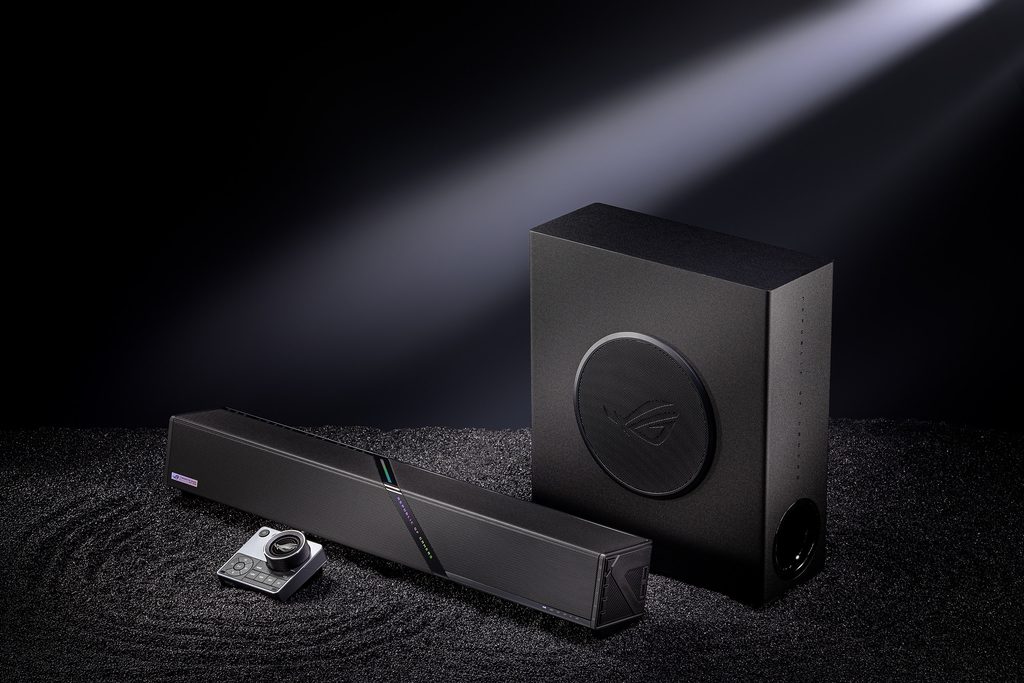
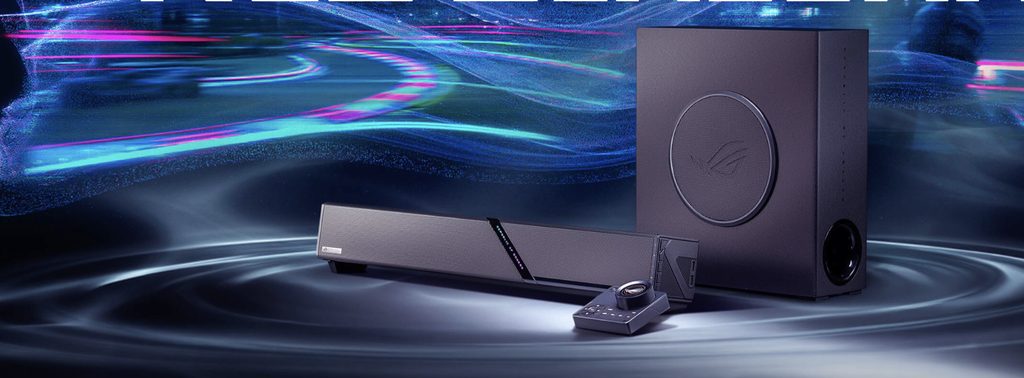
The ROG Gjallar is ASUS ROG’s first gaming soundbar, and it is built for that exact middle ground. It brings Dolby Atmos, a 5.1.2-channel speaker layout, dedicated up-firing drivers, a wireless 6.5-inch 65W subwoofer, and a desktop audio control box into one system priced at $599.99.
That puts it closer to a serious setup centerpiece than a casual monitor speaker replacement.
Dolby Atmos Makes More Sense for Games Than People Think
The ROG Gjallar’s 5.1.2-channel layout is the main audio story.
The dedicated up-firing drivers are there for Dolby Atmos height effects, which gives the soundbar a better shot at placing in-game movement, environmental detail, and cinematic effects in a more three-dimensional field. That matters because game audio is rarely background anymore. Footsteps, reverb tails, room tone, weather, explosions, weapons, engines, and UI cues all tell the player where they are and what is changing around them.
We have covered that idea from a few angles, including our interview on spatial audio in gaming, where the larger point was that immersive audio is not only a hi-fi flex. In games, space is part of how information reaches the player.
The included wireless subwoofer adds the physical part of that equation. A 6.5-inch 65W sub is not only for bigger explosions, though that is obviously part of the appeal. It gives low-frequency effects, soundtracks, and cinematic moments more body, while the 5GHz wireless connection helps keep placement flexible without adding another cable run across the desk.
The Control Box Is the Smartest Part
The most ASUS ROG part of the Gjallar may not be the soundbar.
It may be the desktop control hub.
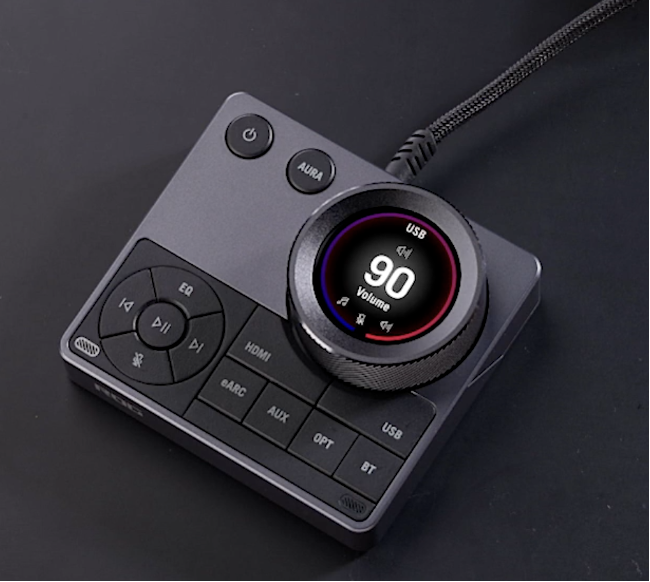
The hub gives players quick access to volume, playback, input selection, EQ profiles, Aura RGB lighting, and display settings through a built-in LCD. That already solves a real desk problem, because most gaming setups have too many devices fighting for control at once.
The more interesting move is voice.
ASUS built microphones into the control hub and paired them with a dedicated digital signal processor, Acoustic Echo Cancellation, and AI beamforming. The goal is headset-free communication that can filter out game audio coming from the speakers while reducing ambient noise around the player.
That is a hard problem to solve because open-speaker gaming and clear voice chat usually hate each other. If ASUS has it dialed in, the Gjallar could become a cleaner option for players who want room audio without losing team comms.
It also fits the wider shift we covered in our article on music culture and multiplayer gaming communities. Gaming setups are not only for the game anymore. They are voice rooms, listening rooms, streaming rigs, and social spaces.
One Soundbar for the Whole Setup
The ROG Gjallar is built around platform switching.
It includes USB-C, HDMI 2.1 with eARC, optical, 3.5 mm AUX, Bluetooth 5.3, and two USB Type-A ports for wireless dongles and peripherals. ASUS is aiming it at gaming PCs, Macs, mobile devices, PlayStation, Xbox, Nintendo Switch, TVs, and handhelds.
That matters because a lot of people no longer have one clean gaming device. They have a PC, console, handheld, phone, work laptop, and TV all orbiting the same room. The audio system has to move across that setup without turning every switch into a cable problem.
HDMI 2.1 support also gives the Gjallar up to 4K at 120Hz video pass-through, while eARC supports high-resolution audio synced to the action. That makes the soundbar a better fit for people running newer consoles, living-room gaming displays, or hybrid TV-and-desk setups.
For a broader audio-system comparison, our article on Bluesound soundbars integrating Dolby Atmos, BluOS, and smart home control covered how soundbars have been moving into more complete audio-hub territory. ASUS is taking that same idea into the gaming desk, where RGB, voice chat, HDMI switching, and low-latency play matter more than traditional living-room polish.
ROG Gjallar Is Available Now
The ASUS ROG Gjallar Gaming Soundbar is available now in the U.S. for $599.99 through the ASUS eShop and Best Buy.
The system makes the most sense for players who want bigger, more cinematic sound at a desk or gaming TV setup without giving up the control and communication features they usually get from a headset. Dolby Atmos, the wireless subwoofer, HDMI 2.1, eARC, broad device support, and the AI-assisted voice hub all point toward one idea: the gaming soundbar is becoming a real hub, not only an accessory under the monitor.
That is the part I like most about this launch.
ASUS is not just making a louder speaker for gamers. It is trying to solve the whole “I want room audio, but I still need my setup to behave like a gaming rig” problem in one box.

Will Vance is a professional music producer who has been involved in the industry for the better part of a decade and has been the managing editor at Magnetic Magazine since mid-2022. In that time period, he has published thousands of articles on music production, industry think pieces and educational articles about the music industry. Over the last decade as a professional music producer, Will Vance has also ran multiple successful and highly respected record labels in the industry, including Where The Heart Is Records as well as having launched a new label with a focus on community through Magnetic Magazine. When not running these labels or producing his own music, Vance is likely writing for other top industry sites like Waves or the Hyperbits Masterclass or working on his upcoming book on mindfulness in music production. On the rare chance he's not thinking about music production, he's probably running a game of Dungeons and Dragons with his friends which he has been the dungeon master for for many years.