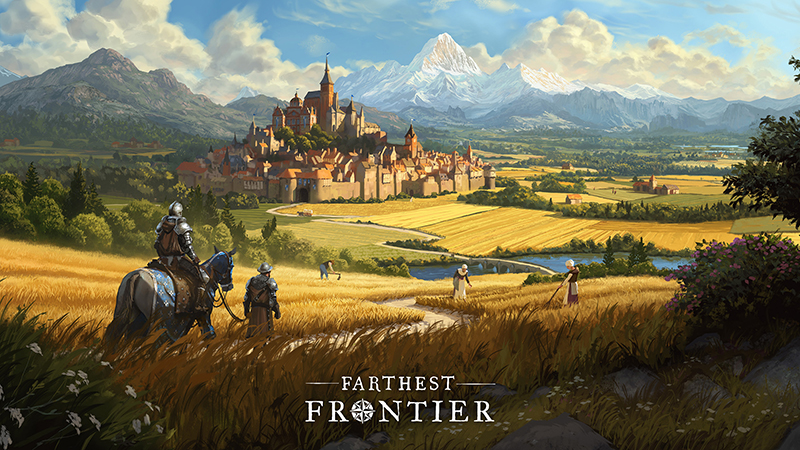
A survival town-builder can easily push music toward utility: give the player something pleasant, stay out of the way, loop cleanly, and avoid becoming irritating after the hundredth hour. Steve Pardo’s score for Farthest Frontier sounds like it came from a more specific question than that.
How do you write music for a game about building a settlement at the edge of the known world without turning that world into fantasy wallpaper, and without over-defining a culture, nation, or time period the game itself wants to keep more open?
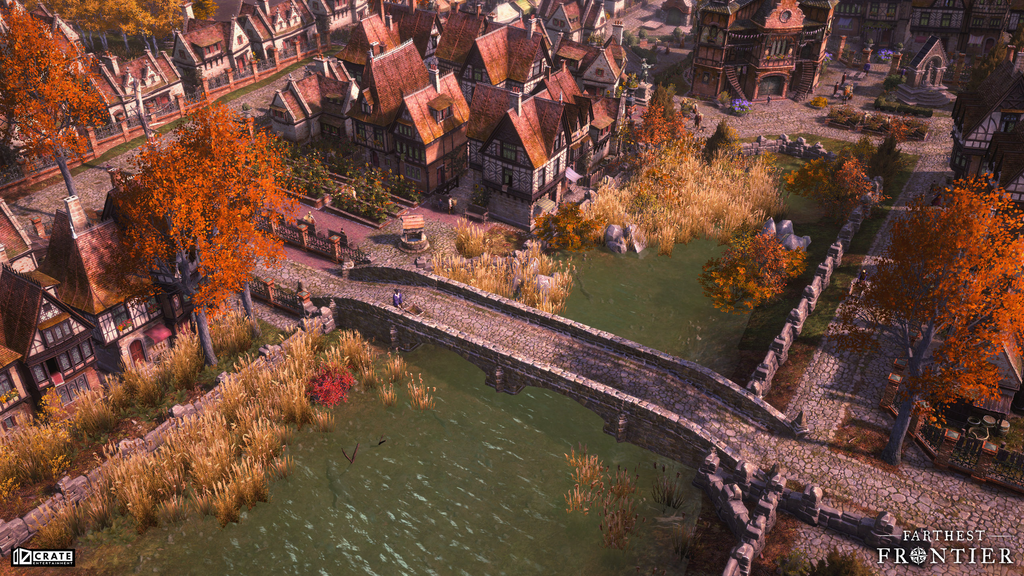
That question became sharper because Farthest Frontier was such a tonal departure from Crate Entertainment’s previous game, Grim Dawn. Pardo describes Grim Dawn as dark, gritty, and horror-adjacent, with orchestral weight, Americana rock, distorted guitar, twisted keys, and heavy drums. Farthest Frontier needed almost the opposite kind of presence: pastoral, medieval, slower, more methodical, and more humble in how it sat beside the player. The result is a soundtrack rooted in chamber writing, folk texture, acoustic performance, and the kind of restraint that lets a town slowly appear around the music instead of being buried under it.
The clearest example is “Pastorale,” which began as a more high-art chamber idea before Pardo pulled it closer to folk language through subtraction.
The melody stayed, the cello stayed, and the final arrangement moved toward a string quartet, layered acoustic and classical guitars, and piano performed by his mother, Julie Chapman.
In the interview below, Pardo talks about concept art, live instruments, the limits of sample libraries, writing music for an “invisible playlist,” and what years of working with Crate have taught him about building a score around a game’s design rather than repeating what worked before.
Interview With Steve Pardo

When Crate first described Farthest Frontier to you, what part of the game gave you the clearest musical direction?
It’s been a while since Farthest Frontier development, writing this in September 2026, but what I recall is that this title was to be a creative and tonal departure from the studio’s previously released title, Grim Dawn. The tone of Grim Dawn is dark and gritty, with horror-adjacent orchestral music blended with Americana rock with distorted guitar, twisted keys, and heavy drums.
So, Farthest Frontier would be quite a shift, but one that I was sincerely excited about. Given the pastoral tone of the natural setting, the Medieval time period and sense of place in the world, as well as the slower and more methodical pace of gameplay, the soundtrack needed to reflect a more humble and down-to-earth tone.
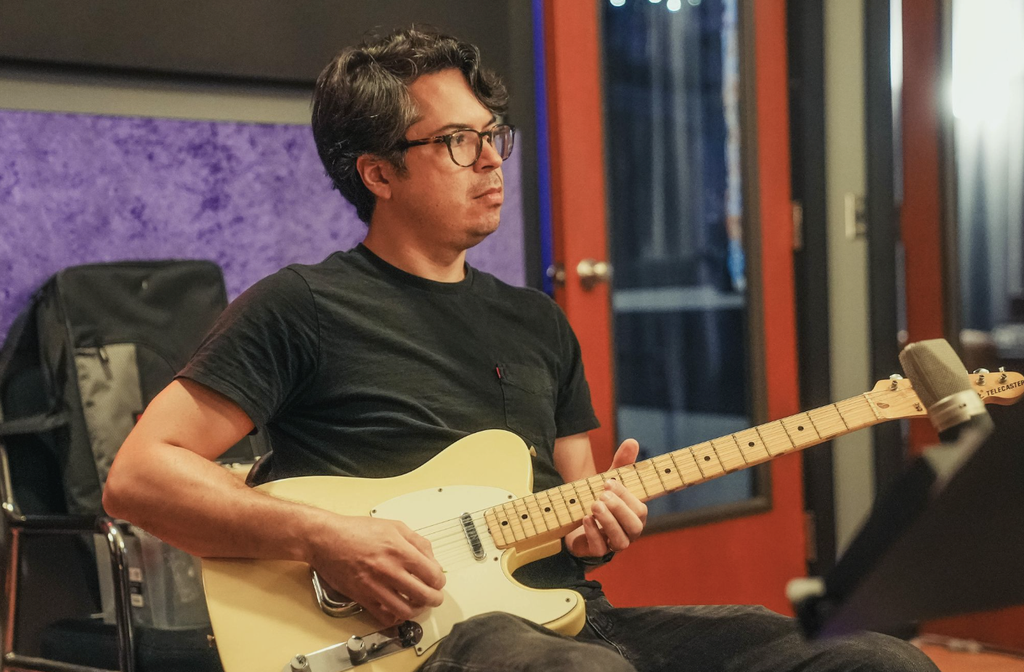
I’ve always been a fan of smaller ensemble and chamber music writing, as well as folk songs and live/acoustic production and performance, so to get a chance to lean into that part of my influences and experience was an opportunity I couldn’t let go.
How much of the game did you play before the musical identity started to take shape?
To be honest, I didn’t need to play much of the game before the musical tones started to work for the game. The theme and tone was reached pretty quickly, even before the first playable version of the game was presented to me. I was able to get started with composing with concept art and through initial musical direction.
Sometimes it works out like that. Arthur and the team at large had a pretty solid idea of the tone of the game, and we were able to begin production-ready work on music after just a short amount of time.
What instruments became central to the Farthest Frontier score, and what made them appropriate for this setting?
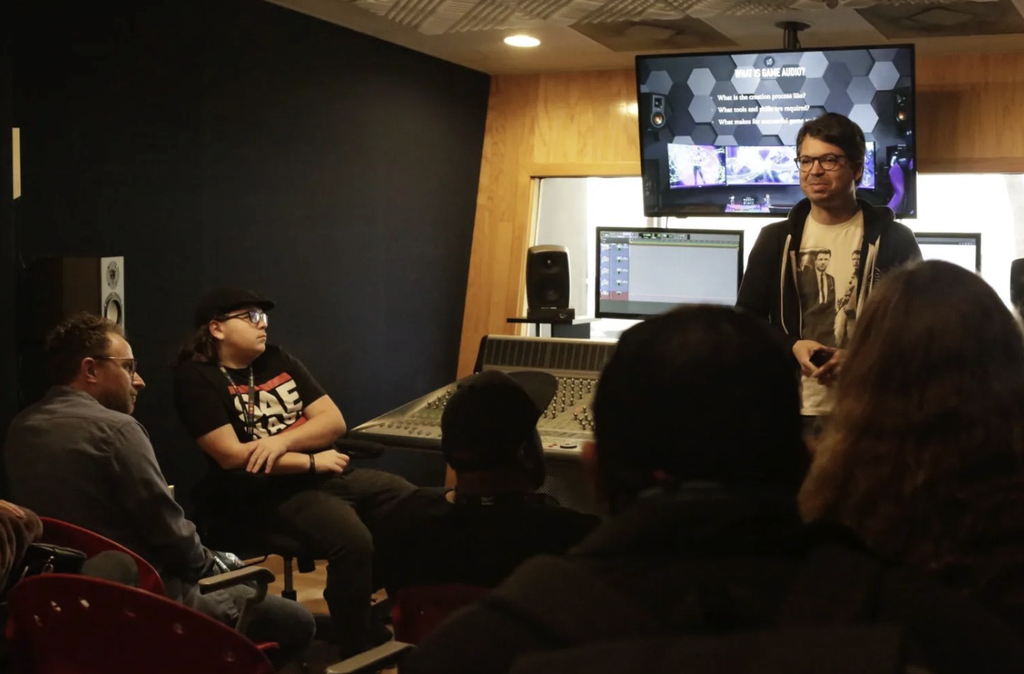
My first composition for the game, “Pastorale,” which ended up becoming an initial take on the main theme for the game at large, included a classical chamber ensemble blended with folk instruments, including cello, flute, clarinet, harp, acoustic guitar, piano, and vibraphone. At the time, I was heavily influenced and inspired to write music along the lines of Eighth Blackbird and yMusic, both being modern chamber classical ensembles that are releasing some of my favorite new classical music from modern composers today.
While that was surely a good first stab and helped us get closer to the correct direction, it was evident that the initial concept was a little too “high art” for this game, and needed to be more rooted in the folk tradition.
The good news is that the team was really pleased with the melody I had written for “Pastorale,” as well as the application of cello, so I decided to rework the piece instead of starting from scratch. I ended up with what now exists on the soundtrack: a string quartet with an emphasis on the cello, layered acoustic and classical guitars, and just a touch of texture with piano performed by my mother, Julie Chapman. “Addition by subtraction” sometimes is the best policy.
The team agreed that this approach was working very well, and for a long time it was the only song in the game. Given that the song didn’t wear on the team, it is almost as if the game matured around this arrangement, and from there I was able to begin work on the remaining songs for the soundtrack.
The compositional approach rides a fine line between American and western European influences, so as to not over-define the specific nation in the real world or lean on certain cultural tropes too much, but keen ears may certainly pick up on the subtle influences that are present in a lot of my original music.
Would you talk about some of your favorite plugins, soft synths and VSTs that define your workflow as well?
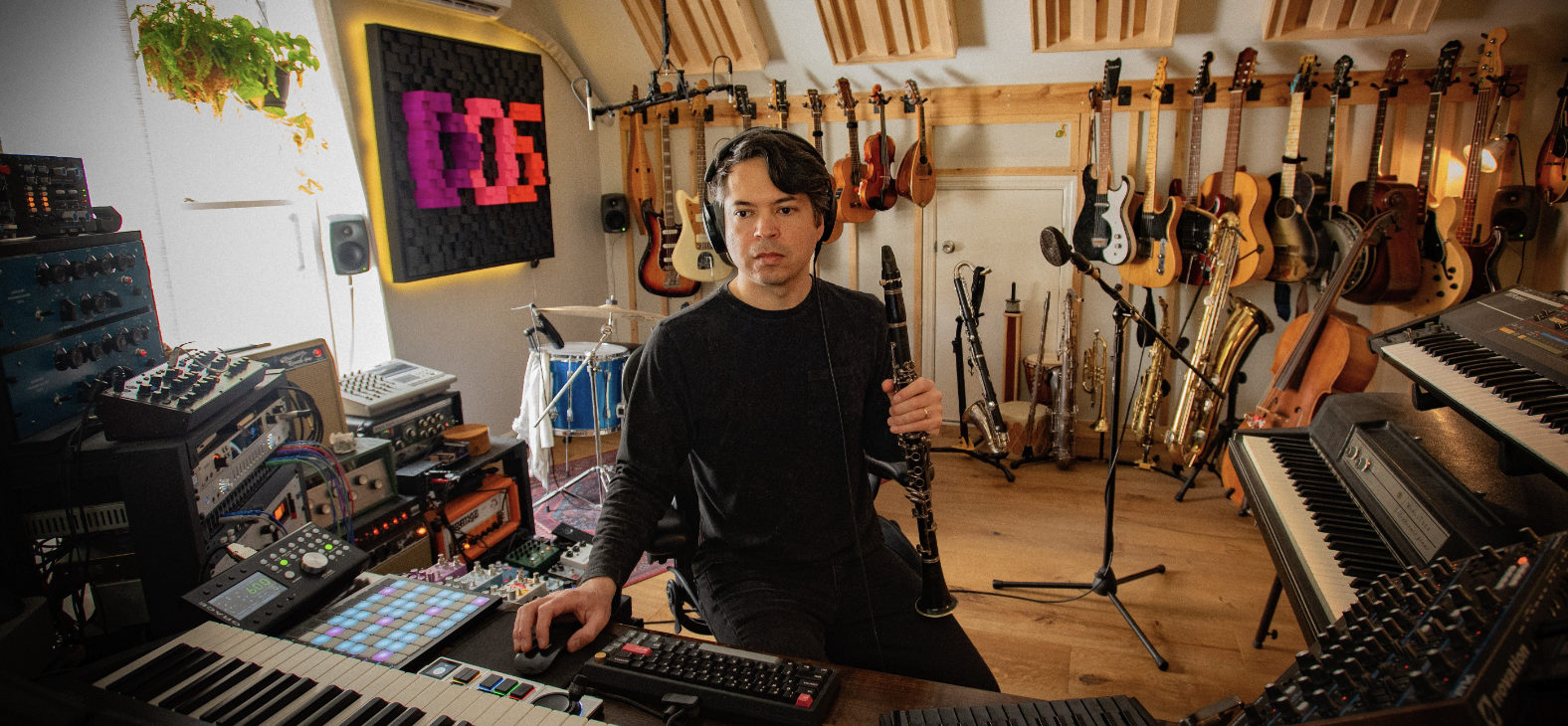
For Farthest Frontier, every instrument is performed live with real instruments on the soundtrack, with the exception of one song, “Raiders,” being the sole combat/epic orchestral piece that required some extra muscle. But I make it a point to try and not rely on the use of in-the-box instruments as much as possible when delivering shipping acoustic music. This is especially true for this soundtrack, which works especially well when it’s at its most intimate. While certainly powerful, no software instrument can replicate the nuance and emotion of a live performer.
When I do turn to software instruments and sample libraries, the off-the-shelf tools like Spitfire and Cinesamples have been a staple for a long while. I also am using 8dio instruments here or there, especially for epic percussion, and turn to Keyscape for piano and keyboards more often than any other library. I don’t do anything terribly unique for mixing, with FabFilter, Soundtoys, and UAD plugins making up most of my signal chain, but I have been mixing out-of-the-box with real hardware if the workflow doesn’t get in the way.
The soundtrack release contains 12 tracks across roughly 56 minutes. What had to change when preparing music written for interactive play as a standalone album?
The game itself certainly has complexity, being a survival and town-building game with robust tools and mechanics to keep players engaged, but in this case the music did not need to be hyper-interactive, reacting to every single moment-to-moment decision. Simply reflecting the environment and tone of the natural landscape and medieval-era time period was the best job for music in Farthest Frontier, and its simple instrumentation helped keep that focus.
The music in-game is presented as a glorified playlist, making the composition somewhat straightforward, and I didn’t have to worry much at all about player-facing messaging or music intensity states. But I did find that the dynamic range of the music had to be somewhat limited. It could never be too dull or too intense. The peaks and valleys had to be somewhat within a bandwidth appropriate for the overall tone and pace of the gameplay.
Most of the job was in the development and variation within each composition, and with a dynamic ebb and flow inherent in each piece, I had to be conscious about this “invisible” playlist, and that everything needed to flow smoothly.

After spending years with Crate’s games, what have you learned about writing music that supports their design style without repeating decisions from an earlier project?
Every project, whether it be for Crate or for other projects, has its own musical needs and requirements, being creative or technical, gameplay or environment-setting, story-telling or mechanical. The music likely will reflect the narrative and tone, while also not relying heavily on cultural tropes or genre to do the job. In a way, every original soundtrack needs to be a self-contained original vision that is married to the game product at large, not just reflecting the authenticity of myself as an artist but also those on the creative development team at large. This takes patience and time: weeks, months, or even years depending on the circumstance.
Thankfully, I’d like to think that I am a life-learner, and am excited about growth not just for my career, but as a human. Learning about new music, cultures, instruments, and compositional methods is a huge perk of this job, so getting the opportunity to stretch and be challenged is one of its best gifts.
It isn’t easy, but that’s the point: some of the best work comes from overcoming a seemingly impossible assignment. Notably, with Crate, I’ve been fortunate enough now to be given a number of opportunities to grow with the team, finding a shared trust that I will never take for granted.
Closing Thoughts
The most telling phrase in this interview is “addition by subtraction.” Pardo’s first instinct was not wrong, but it was too elevated for the game in front of him.
Keeping the melody and cello while stripping the arrangement closer to folk language gave Farthest Frontier a musical identity that could support hours of play without turning the settlement into a stage set.
That connects with Jan Valta’s interview on the music of Kingdom Come: Deliverance 2. Valta’s work had to deal more directly with historical specificity, while Pardo is careful not to pin Farthest Frontier to one real-world nation or trope too tightly. Both scores show how much restraint it takes to make a game world feel grounded without letting research, instrumentation, or period flavor do all the thinking.

There is another line to Ilja Varha’s piece on the sound design behind Grand Tactician: Napoleonic Wars. That conversation focused more on battlefield information, orders, drums, bugles, and the sound of massed soldiers, while Pardo’s problem is almost inverted. Farthest Frontier needs music that can live with slow decisions, expanding settlements, and long stretches of player attention without becoming too dramatic for the work being done on screen.
That also sits beside Kamil Nowak and Jakub Pietras on the sound and score of Bellwright.
That discussion also dealt with medieval-world sound, but with a different production problem: how to make wood, wind, instruments, ambience, and adaptive music feel plausible inside a living space. Pardo’s score approaches that from the composition side, using chamber and folk textures to keep the world present without crowding it.
The “invisible playlist” idea is useful because it names a kind of game music players may feel more than notice. Farthest Frontier does not need hyper-reactive cueing at every turn. It needs a musical current that can hold the tone while the player builds, waits, adjusts, and survives. That puts pressure on range, pacing, and repetition. The music cannot be dull, but it also cannot behave like every action is a climax.
There is a related connection to Paul Leonard-Morgan’s interview on Watson, AI, and protecting the creative process. Leonard-Morgan spoke from a television-composer perspective, but both pieces circle the same larger job: serving the project without letting the composer’s ego or the technology dominate the final work. Pardo’s score works because he lets the game’s pace determine the scale of the music.
The broader takeaway is that Farthest Frontier gave Pardo a chance to write smaller without writing less.
The score is not trying to impress the player every thirty seconds. It is trying to make the world feel settled enough to inhabit, fragile enough to protect, and open enough that the player can keep building inside it. That kind of music asks for patience from the composer, and Pardo’s answers make clear that patience was not a compromise. It was the method.

Will Vance is a professional music producer who has been involved in the industry for the better part of a decade and has been the managing editor at Magnetic Magazine since mid-2022. In that time period, he has published thousands of articles on music production, industry think pieces and educational articles about the music industry. Over the last decade as a professional music producer, Will Vance has also ran multiple successful and highly respected record labels in the industry, including Where The Heart Is Records as well as having launched a new label with a focus on community through Magnetic Magazine. When not running these labels or producing his own music, Vance is likely writing for other top industry sites like Waves or the Hyperbits Masterclass or working on his upcoming book on mindfulness in music production. On the rare chance he's not thinking about music production, he's probably running a game of Dungeons and Dragons with his friends which he has been the dungeon master for for many years.