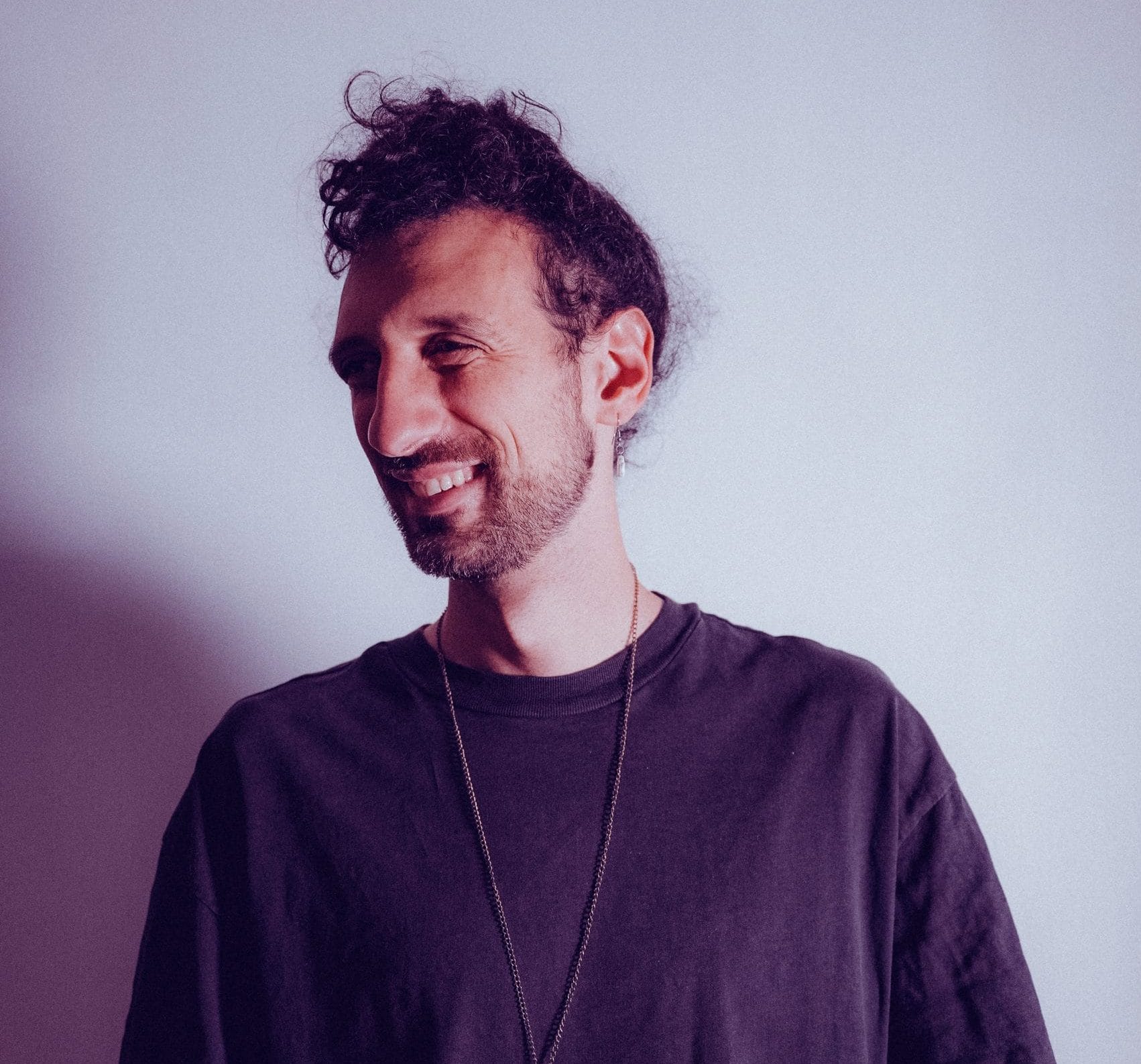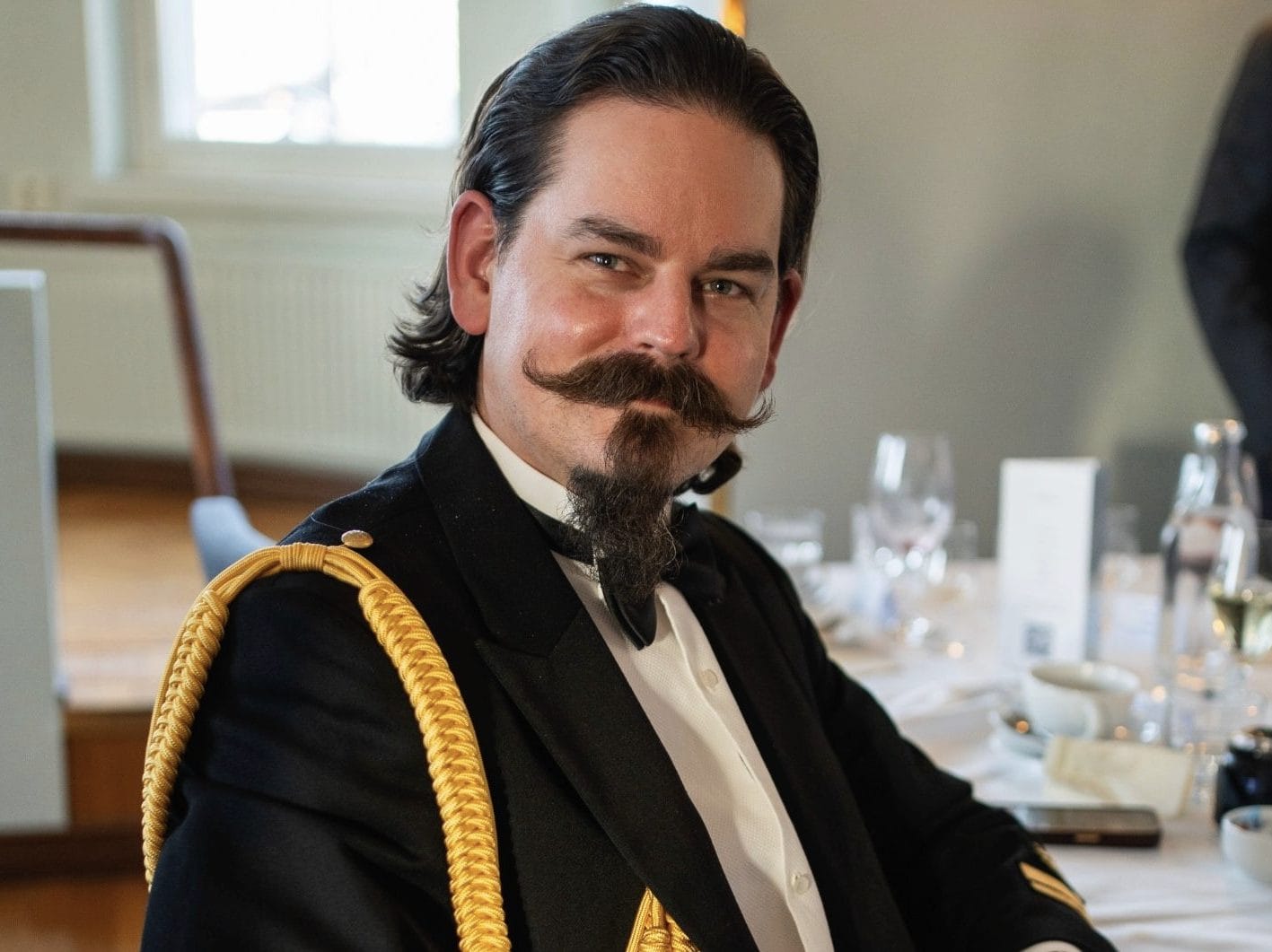
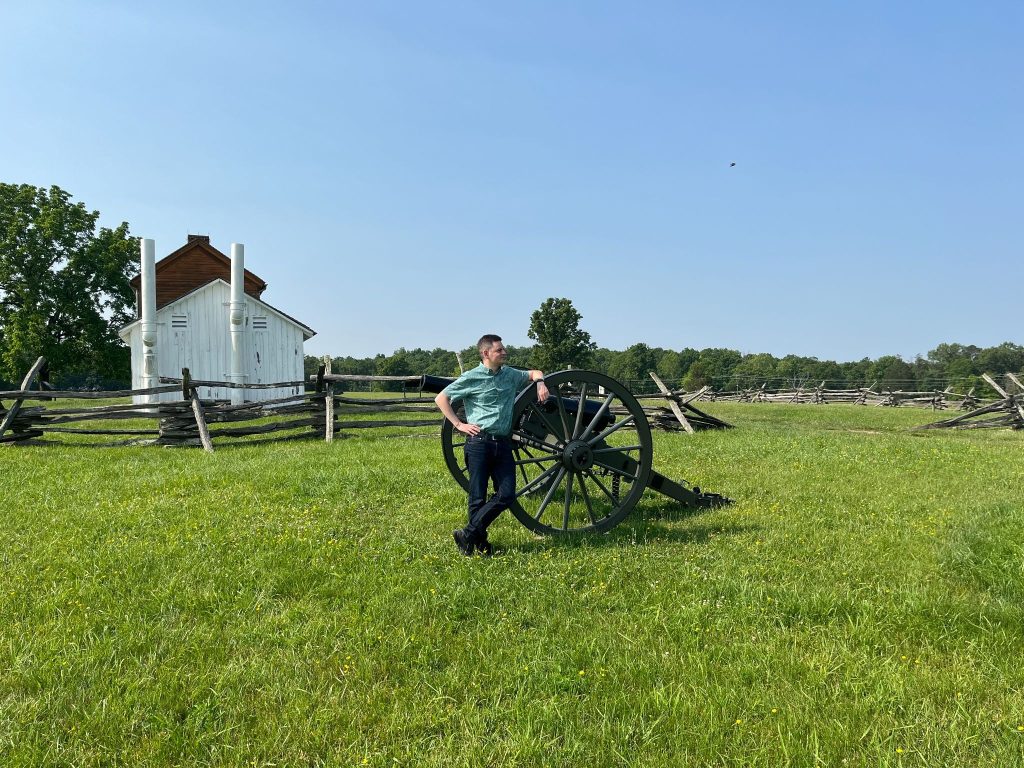
Grand Tactician: Napoleonic Wars is the next title from Grand Engineer Corps, the team behind Grand Tactician: The Civil War. The series is built around realistic tactical and strategic warfare during the musket era, and the new game moves the scope into the Napoleonic period from 1792 to 1815. For Ilja Varha (pictured above and throughout), the Finnish retired officer, self-taught game developer, lead designer, and founding member of Grand Tactician, the sound of the battlefield is one of the main ways the game creates a believable historical atmosphere.
That audio work is not treated like background music sitting on top of the action.
In The Civil War, the team wanted the battle itself to become the soundtrack, using muskets, cannons, bugle calls, drum and fife music, environmental sound, and spoken voices to help players understand what was happening around them. For Napoleonic Wars, that same idea becomes more complicated, because the period includes more nations, more military traditions, more languages, and a wider musical vocabulary.
In the interview below, Varha explains how Grand Engineer Corps thinks about sound design when battles involve thousands of soldiers, why historical accuracy has to be balanced against gameplay clarity, and how the team researches drum calls, bugle calls, spoken orders, and battlefield signals without simply copying the language of war films.
His answers show how much of the game’s atmosphere comes from details most players may not consciously notice, but would immediately feel if they were wrong.
Check Them Out On YouTube As Well!
Interview With Ilja Varha
Could you start by explaining your role at Grand Engineer Corps and how closely you work with the audio side of each game?
In short, I am the lead designer. This means that after the macro-level design with Oliver Keppelmüller, the Austrian co-founder of Grand Tactician, I am responsible for the detailed design of different systems of the game, while Oliver focuses on technical implementation. As we are a small team, my role contains historical research, through which comes designing different concepts like how combat functions in the game, what kind of data is required in the engine from a gameplay and historical accuracy point of view, the playable content like maps, campaign scenarios and storylines, and then UI construction for player controls.
In this, I work with many volunteers and freelancers, who specialize in different details such as orders of battle, tactics, units, and uniforms.
In parallel is the overall audiovisual design, where the aim is to bring to life a coherent and historically accurate presentation of the game’s era in a way that respects history and immerses players in the portrayed conflict, keeping them engaged. For visual art, the Corps now has a number of 2D and 3D artists, as the art team was expanded during this early summer.
In the audio side, I am working with musicians and reenactors, who create the game’s musical score. All the mentioned artists are experts in their own trade, and my role is making sure their work aligns with the game’s overall audiovisual vision. I also create many of the game’s non-musical sound effects.

When you look back at Grand Tactician: The Civil War, what did that project teach you about designing audio for battles involving thousands of soldiers?
First of all, there needs to be vision: when closing your eyes, how do you visualize the battle through what you can hear? As The Civil War was my first large-scale game design opportunity, of course, the vision matured during the development process, when I learned more about the conflict, the historical details, and also the technical aspects for designing the game’s sound engine. From the beginning it was clear that we didn’t want a “gamey” approach, where there is some sort of soundtrack playing on top of the battle action. Instead, we wanted the battles’ sounds to be the “soundtrack”.
I think the most interesting part in this learning process involved reading and learning from some helpful subject matter experts about how battlefield communication worked during this era, and how music was used during a battle. This created the “palette” to work with: sounds of weapons, movement, bugle signals, drum and fife music, environmental sounds. One of the main learning experiences was structuring how all of this would work. There were two sides to this that required the most effort: historical accuracy, for the desired atmosphere, and clarity required from the gameplay perspective.
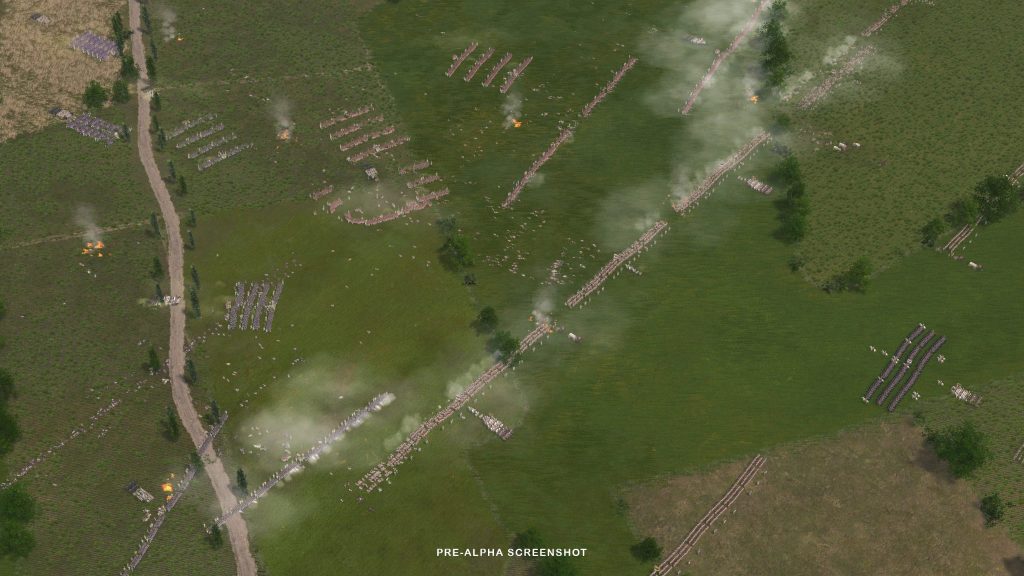
For the first, the booming cannons and cracking of muskets was created into near and far sound sets, and delay through distance was added. As players have the ability to move within the battlefield using camera controls, it’s important to instinctively recognize sounds that come nearby and those from further distance, by other means than volume alone. This included a few aha moments regarding the Doppler effect among other things. For the latter, if players could hear everything happening in the battle within reasonable distance from the camera’s position, which is quite high up above the battlefield, the end result would be a complete cacophony where details would sink into the massive wall of audio-bombardment.
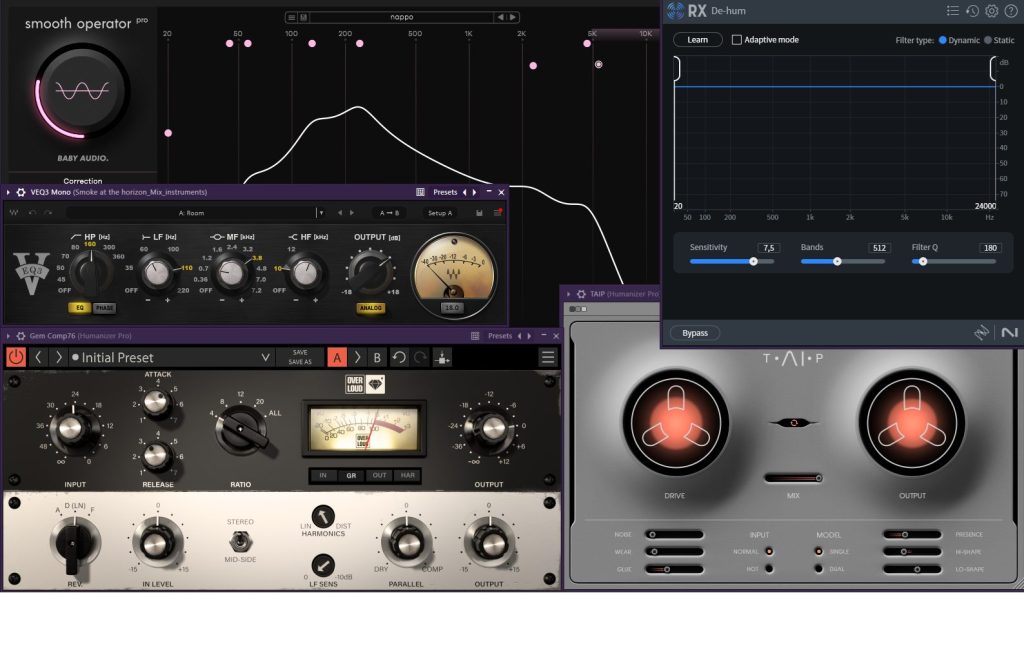
For this reason, certain sounds are triggered while others are not. For example, if 5 units within similar distance from the player move out at the same time, in reality one would hear multiple bugle signals and/or drumrolls/drum and fife songs played. Instead, the game engine checks which signals these are, and plays only the nearest one so the player can recognize the signal in question, and only one drum and fife song is heard at a time.
Grand Tactician: Napoleonic Wars is the second game in the series. How early did audio enter the planning process for the new title?
During the Civil War development, the soundscape grew bit by bit.
At that time, it was just me and Oliver and a bag full of ideas; we didn’t have many means available. When the project moved forward, we were lucky to find talented artists who were able to help us closer to our vision. With each opportunity, the soundscape grew, with the last added element being voice acting you can hear when zooming closer to troops. This was added post-release, when voice actor Brian Watts contacted us and offered his support, as his grandfather is a huge Civil War fan, and Brian wanted to make it possible for him to have a role in it. So, Brian and his grandfather are now the Confederate soldiers you hear during a battle.
When we started with the Napoleonic Wars, a working concept was already there, and we wanted to expand on that. But, compared to the Civil War, there is a lot more to take into account: different nations, military traditions, music in general on and off the battlefield. It takes quite a lot of research and design to get a good mix. For this reason, the soundscape has been built in parallel with the other parts of the game.
How much research is required to distinguish authentic drum calls, bugle calls, spoken orders, and battlefield signals from material created later for films?
For the Civil War this was quite straightforward. There was only one military tradition to take into account, and the war is well documented and in language understood by most. There is also a very large and eager reenactment scene and the National Field Music School Association that provided helpful insight and contacts. Such was Alan Tolbert, a bugler who recorded the game’s signals according to the manual by William Nevins. You can see his introduction into the recording process below.
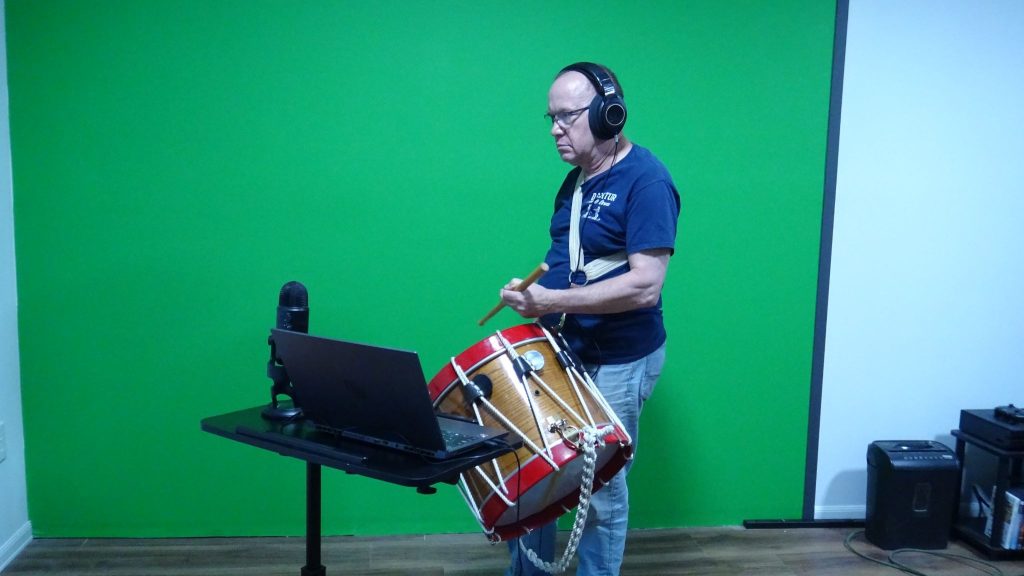
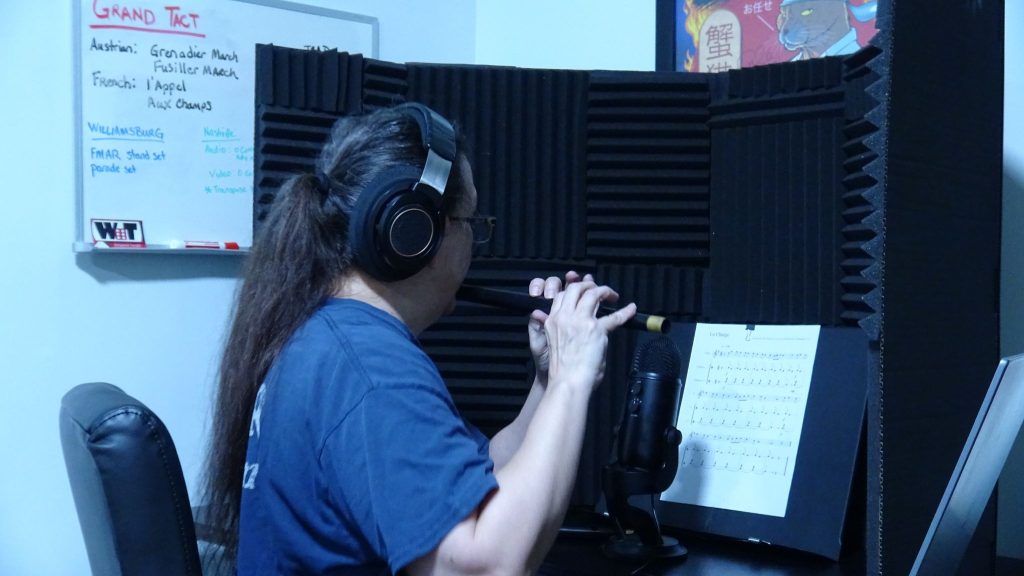
For the Napoleonic era, it’s slightly trickier due to the number of nations, military traditions involved, and the availability of surviving documentation. I’ll let our signal researcher and drummer Kurt Braunsroth, who with fifer Miss Kim recorded also the Civil War European nations’ drum and fife score, explain:
“Most movies present calls and signals as simply background music, probably because that is all that they need, and researching authentic calls and signals is problematic due to the fact that much of what was performed by field musicians, fifers, drummers, buglers, trumpeters, etc., and precisely how each call or signal was used was only rarely written down and simply learned from experiencing day to day life in the army.
The lack of official manuals on the subject is due to the fact that the field musicians had to be prepared to march on foot 20 to 25 kilometers per day in all weather conditions, all while performing calls and signals, and improvise new calls and signals, some unique to their regiment, when the situation called for it and nothing already existing would suffice.
Therefore, research involves searching for sheet music for each call or signal and pouring through field manuals and various books to determine how and when the calls and signals were actually used. Our search is lucky to have the assistance of Stephan Southard, the vice president of the National Field Music School Association and an instructor at Fifes & Drums of Yorktown.
The search for drum parts is particularly difficult because there was no standardized system of drum notation as there is today. Many drum parts were never written down, and those that can be found require interpretation since the writers employ a rudimentary system that omits important details.
But, although the research is time-consuming and sometimes tedious, given sufficient time and effort and interpretation, a comprehensive system of calls and signals can be fashioned from the available resources that acts and sounds authentic and would be recognizable to the historical field musicians.”
With spoken orders, the difficulty is not always knowing the commands used, but rather how to use them in the game. Most of the drill commands are found in many manuals, but they are for the micro-tactical level and do not have the “triggers” on the level of gameplay we portray, which is battalion and up. And of course, there are different languages, each of which has changed a lot since the 18th- 19th centuries. So, there is a lot to research, and hopefully the players will find our result satisfactory. Making it perfect is simply not possible, at least with our resources.
The Napoleonic period covers several nations, campaigns, and musical traditions. How are you deciding which music belongs in the game and where it should appear?
With music, we face a similar dilemma as with signals, when comparing the Civil War and Napoleonic era. For the Civil War, we chose to divide the musical score into two parts: the campaign music and then battlefield music. Wasel Arar recorded the game’s original soundtrack with his band Wasel & the Weasels for the campaign side, and for battles, the American drum & fife music, playing the drum himself; he is a reenactment drummer in Finland, and a friend of his, Lauri Gadd, plays the fife. For the Civil War, the whole audiovisual theme is very personal and lingering as inspired by Ken Burns’ documentary The Civil War.
This includes the visual representation utilizing colorized photos, slow camera movement, as well as the slightly melancholic and minimalistic music.
This kind of minimalistic approach alone does not work for the Napoleonic era in my opinion.
For the sequel there will be more forward going momentum in general, including in the music. For this, the musical layering is expanded. I’ll let our soundtrack creator Artificiers Chamber explain how the overall audiovisual design is crafted into the musical score this time around:
“In the campaign layer we draw inspiration from a pivotal era in music history where Baroque counterpoint and Galant elegance converged with early Romanticism. Rather than defaulting to a loud, over-compressed “Hollywood sound” that quickly becomes just background noise, we consciously chose a refined chamber ensemble framework, quartets, quintets, and sextets, introducing fuller orchestral layers only when the game’s narrative demands it. During battle transitions, we elevate the intensity by adapting military marches, preparing the troops and the players’ mindset for the upcoming confrontation. This includes heavy drums and brass, which is absent in the Civil War soundtrack.
Once on the battlefield, the studio score purposefully cuts out completely, leaving zero studio music during active combat. This deliberate silence clears the acoustic space entirely for the physical reality of the battlefield: environmental audio, the cracking of musket volleys and the thunder of the Grand Battery with live-recorded historical signals using drums and fifes, trumpets and horns.”
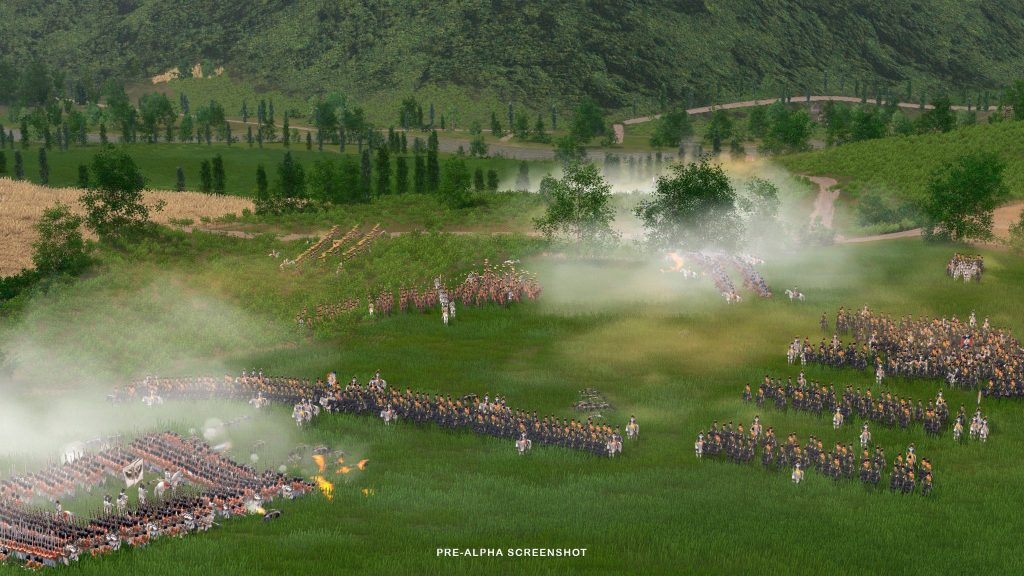
The music style is not universal. In the first campaign, focusing on Napoleon’s Italian campaign of 1796-97, the main belligerents, France and Austria, are treated somewhat differently. The French music reflects the inspiration brought by the revolution, while the Austrian score is deliberately conservative, more in mid-18th-century fashion, highlighting strict professional military discipline and the estate system. This is taken into account not only in the arrangement and used instruments in the music, but also in the tempo, which underlines the tactical differences between the nations.
As you can see, there is a lot to consider and draw inspiration from.
Hopefully our approach tickles the correct nerves of hardcore strategy grognards who are deep in the know of this period, as well as newcomers, throwing themselves into the fray to experience something unique.

Will Vance is a professional music producer who has been involved in the industry for the better part of a decade and has been the managing editor at Magnetic Magazine since mid-2022. In that time period, he has published thousands of articles on music production, industry think pieces and educational articles about the music industry. Over the last decade as a professional music producer, Will Vance has also ran multiple successful and highly respected record labels in the industry, including Where The Heart Is Records as well as having launched a new label with a focus on community through Magnetic Magazine. When not running these labels or producing his own music, Vance is likely writing for other top industry sites like Waves or the Hyperbits Masterclass or working on his upcoming book on mindfulness in music production. On the rare chance he's not thinking about music production, he's probably running a game of Dungeons and Dragons with his friends which he has been the dungeon master for for many years.