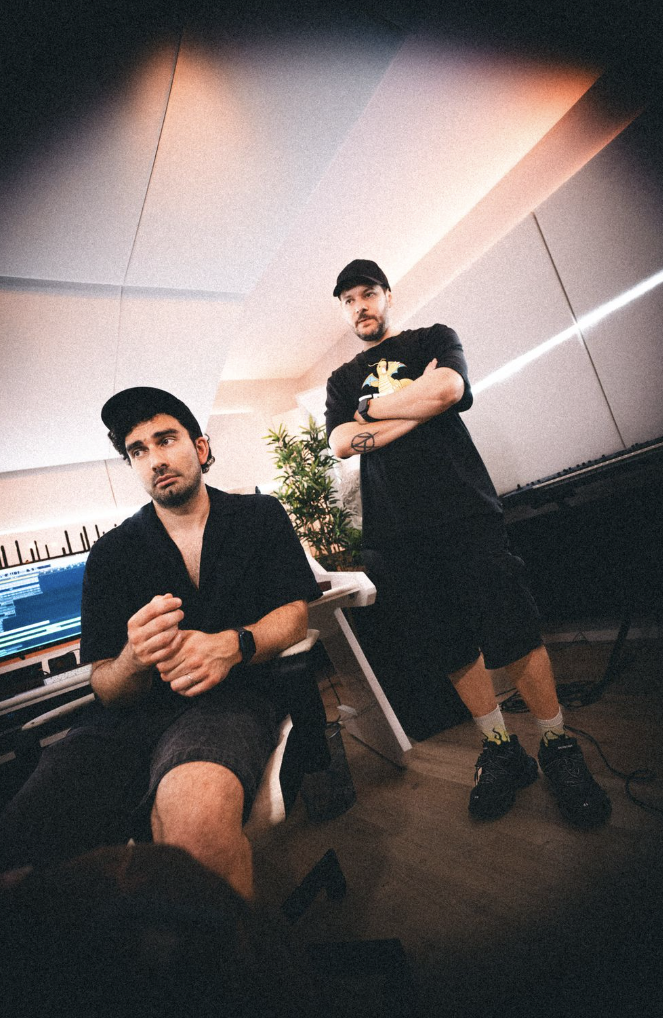
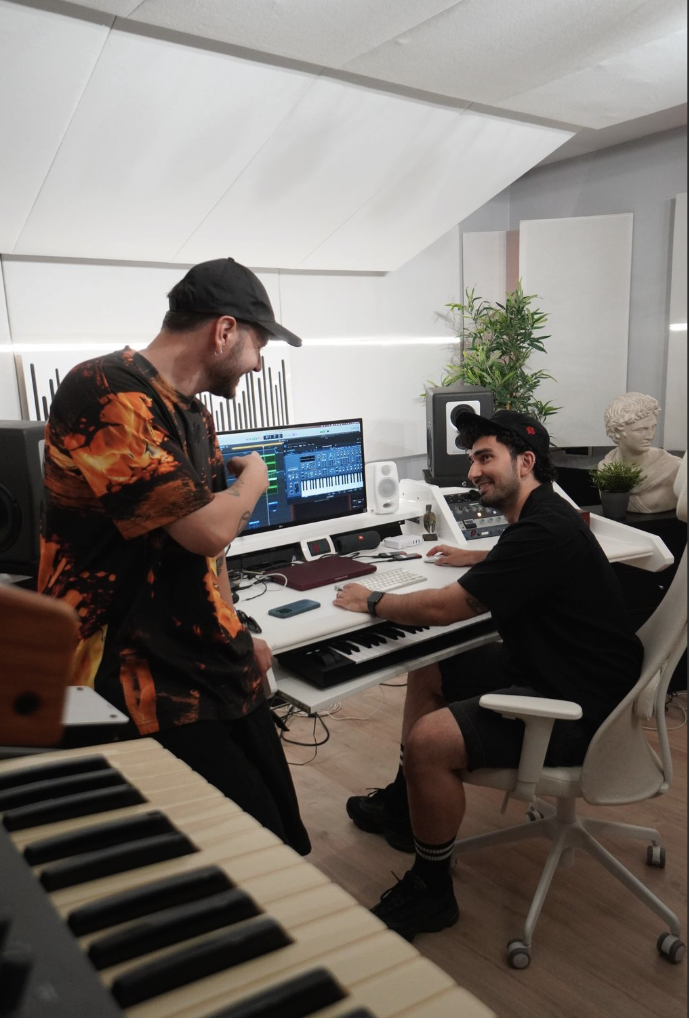
MARNIK (@marnikofficial) have spent the last decade operating at the festival end of electronic music, but the duo’s current phase is moving further into hard dance, techno and neo-rave without abandoning the scale that built their audience in the first place.
That evolution now has a home in ARENA Records, their new label and live concept, which gives Alex and Lele a more defined space to develop the harder side of the project while connecting the studio work directly to what happens onstage.
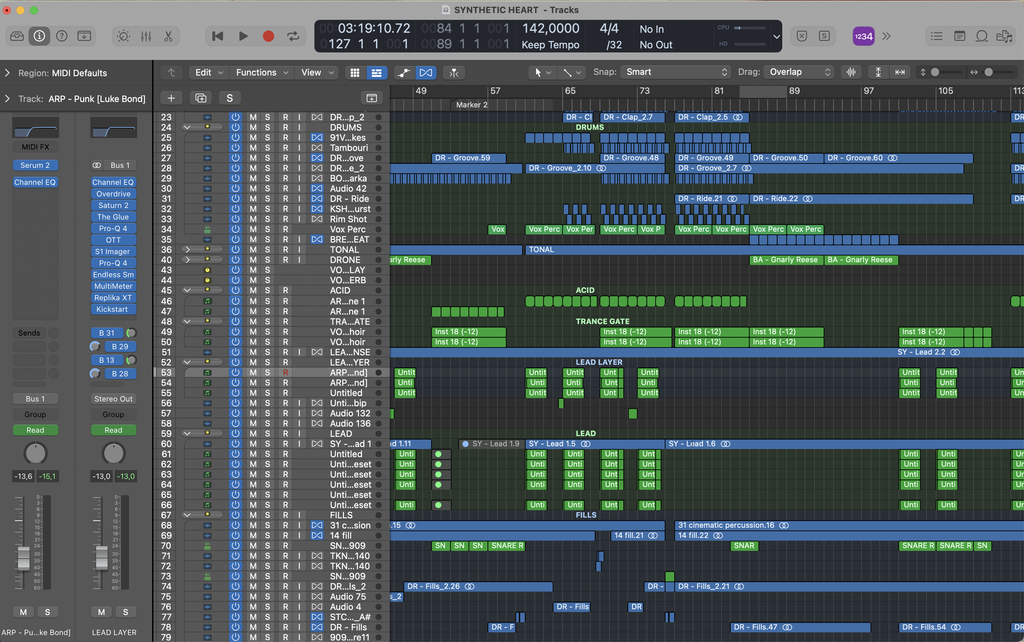
“Synthetic Heart,” featuring Crooked Bangs, fits directly into that transition. The track leans into tech-trance and mainstage pressure, but the production itself is built from fairly deliberate layering rather than simply making every element louder or more aggressive. DIVA sits underneath the main trance lead to add warmth and body, SLM2V2 is used to control the relationship between kick and bass, while Decimort 2 and Replika XT bring additional texture and movement into the arrangement.
There is a recurring idea across the entire process: several of the most important production decisions are subtle enough that they are difficult to isolate once the track is finished. A quiet synth layer, restrained bit reduction, or a delay that only appears at the end of a phrase can change how the whole record feels without demanding attention on its own.
Below, MARNIK explain how they made “Synthetic Heart.”
DIVA
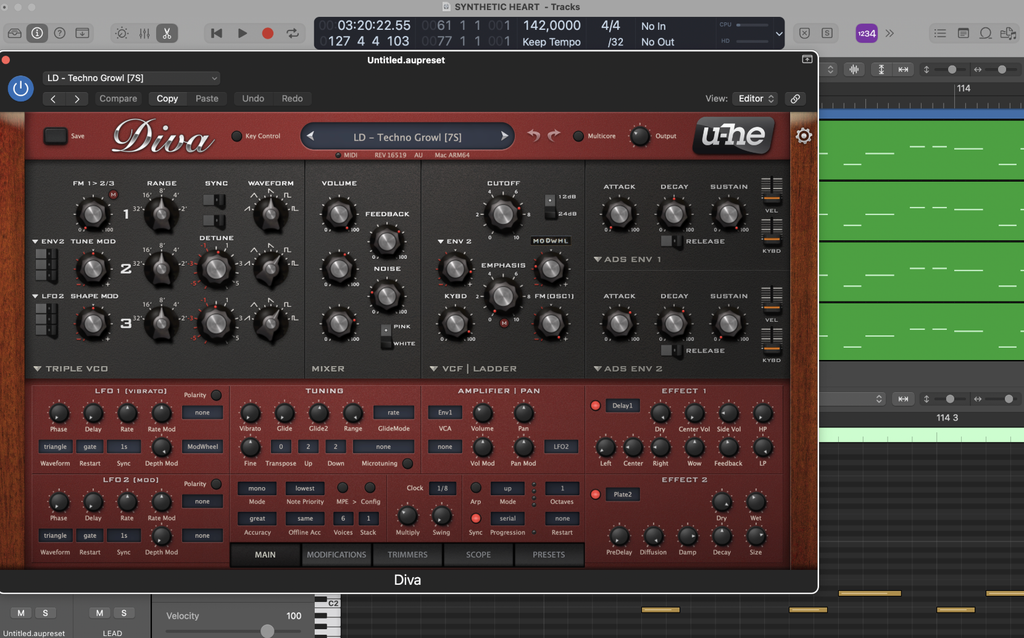
DIVA is one of those synths that just seems to work in almost any production. It has a really rich and organic sound, which makes it great for everything from leads and basses to pads and background layers. What we really like about it is that it rarely sounds too digital, instead it naturally brings a bit of warmth and life into any sound.
DIVA has a really warm, oldschool analog sound, which makes it useful even when it’s not the main synth in a track. In ‘Synthetic Heart’ we used it as a layer behind the main Trance lead, using a preset from our friend 7 Skies’ called ’Techno Growl’. The analog style character of DIVA adds extra warmth and body to the track, helping the other synths stand out and making the whole lead feel a little richer. You can barely hear it on its own in the mix, but it’s definitely doing its job. From there, it goes into the main Lead bus, where it’s treated together with the other layers using compression, EQ, saturation, and overdrive to make the overall sound feel powerful, full and cohesive. DIVA is honestly just one of the best synths around at the moment, especially when you want that warm analog character without having to reach for actual hardware.
This synth is perfect for any Trancy or Techy track because its warmth gives you back that classic analog feel without needing any hardware. We’ve found it works especially well for big leads, warm pads and reese basses. A good trick is not to worry about making it the loudest element: sometimes just having a quiet DIVA layer in the background can make the whole stack feel bigger and more alive. If you’re making Trance or Melodic Techno, it’s definitely one of those synths worth having for your Daw.
SLM2V2
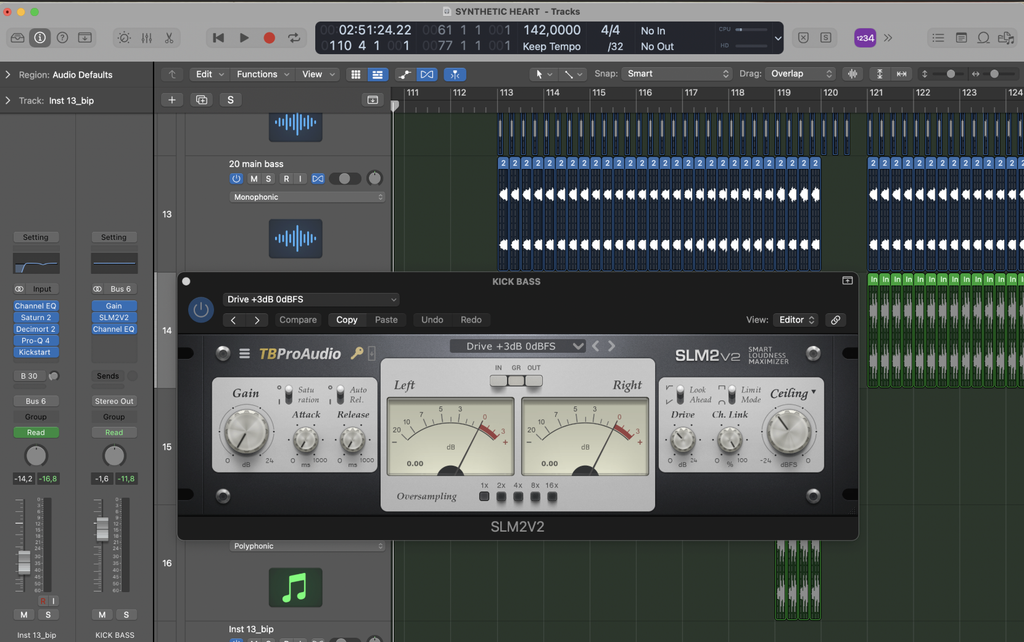
SLM2V2 is all about getting your kick and bass to sit together without making things complicated. It helps glue the low end together in a really easy and musical way, giving you a cleaner mix without endless tweaking. It’s quick to dial in, easy to understand, and great for getting that solid, punchy low end that just works.
For the kick and bass section in ‘Synthetic Heart’ we used SLM2V2 to help bring the whole low end together. We started with the ‘Drive’ preset and just tweaked it a little until we found the right balance between punch and weight. It was super quick to dial in and gave the kick and bass that extra glue we were looking for. Combined with some sidechain, it gave us a really powerful and controlled low end that became a big part of the track’s energy.
Of course, any good compressor can work well when dealing with kick and bass, but we discovered SLM2V2 recently and found it super easy and solid for this kind of sound. What we really like is how it controls and glues everything together without making the sound feel obviously compressed. It does the work, but you barely notice it. The ceiling knob is especially useful for finding that sweet spot, letting you push the low end while keeping everything controlled and punchy.

Decimort 2
Decimort 2 is a bit crusher and sample rate reduction plugin that’s great for adding that classic vintage digital character to any type of sound. It recreates the coloration and imperfections of old school samplers, giving you everything from warmth and crunch to really gritty textures. What’s nice is how much control you have over the effect, so you can add just a little character without completely destroying the original sound.
We used Decimort 2 on quite a few different elements in the track, especially the lead, vocals, and bass. We started from different presets depending on the sound, then adjusted the settings from there to fit each element. A trick we really liked was keeping the WET around 20 or 30 %, depending on how much character we wanted to add. This way, Decimort 2 doesn’t really feel like a destructive bit crusher, but more like a saturator that adds some extra texture, warmth, and digital grit.
If you really want to push Decimort 2 hard then it’s perfect for Hard techno or Hardstyle, where that aggressive digital character can become a big part of the sound (especially using the 16bit and 8 bit presets). But overall, it’s a plugin that can work in pretty much any genre, especially when used more subtly. There’s no real trick to it, it’s more about understanding what kind of character you want to add and how far you can push the sound you’re treating. Sometimes 20% is enough, and sometimes completely destroying it is exactly what you need.
Replika XT

Replika XT is a super flexible delay plugin by Native Instruments that goes way beyond a standard echo effect. It gives you different delay modes and plenty of control over modulation, filtering, feedback, and other effects, so you can really shape the space around a sound. You can use it for anything from depth and movement to wide, atmospheric textures or more experimental delays.
On ‘Synthetic Heart’ we used Replika XT mainly on the Trance lead section, automating it at the end of the melody to emphasize the call and response between the two different synths in the drop. We also used it on a few samples and FX throughout the track to create more atmosphere and give certain sounds a bit more space and movement. Usually, we cut quite a lot of the lows and a little bit of the highs from the delay so it doesn’t get in the way of the main elements.
There are two little tricks we’ve learned when working with delays like Replika XT. The first is to automate the delay manually whenever possible, because it gives you full control over exactly where and how the effect comes in. The second is to alternate between different delays and reverbs instead of using the same plugin everywhere: we often also use Valhalla Delay or EchoBoy by Soundtoys. They might seem similar at first, but every plugin has its own character, and combining those different flavors across a track can make the whole production feel warmer and more interesting.
Quick Fire Hot Takes on the Scene + Production

Hot Take #1
Don’t be extremist with your sound! Electronic music has been constantly evolving since it first emerged in the ’60s, so for us adapting has always been part of the game. We keep our epic, cinematic identity while mixing it with what we love most from Trance and Techno. Right now people are clearly drawn to harder sounds, but we know no trend lasts forever, so we’d rather evolve with the scene than chase it. If you chase then you have already lost the game.

Hot Take #2
Less is more, do you agree? Compared to the pre Covid period, production feels much faster because the whole world moves faster, and the Electronic music has naturally become more minimal too. Simple 909 drums patterns, a few clean sounds, and a strong, hooky vocal can already be enough. We’re producing one or two tracks a week now, which sounds a bit crazy, but we love doing it, so for us it feels completely natural.
Hot Take #3
Think as an artist, always! With music moving so fast, it’s easy to become just part of a niche where everything starts to sound the same, especially when you’re producing quickly and not giving enough attention to your own artistic identity. Social media is a huge part of the game right now, but in the long run, we believe that without a real musical identity and something that makes you recognizable, it’s very easy to get lost in the crowd.
Hot Take #4
Music is simple, freedom is key. Having more plugins and gear doesn’t make you more creative. Actually, sometimes having too many options just slows you down. Knowing a few tools really well and pushing them in your own way will give you a stronger identity than constantly chasing the newest synth or plugin.

Hot Take #5
Don’t chase trends! (Or do it your own way) Trends in electronic music will always come and go, and if you really know the history of the scene, you start to understand where they come from and how to dive into them without simply following the hype. The key for us is taking what feels exciting from a trend and bringing it into your own world, without losing the identity that made your music yours in the first place.


Will Vance is a professional music producer who has been involved in the industry for the better part of a decade and has been the managing editor at Magnetic Magazine since mid-2022. In that time period, he has published thousands of articles on music production, industry think pieces and educational articles about the music industry. Over the last decade as a professional music producer, Will Vance has also ran multiple successful and highly respected record labels in the industry, including Where The Heart Is Records as well as having launched a new label with a focus on community through Magnetic Magazine. When not running these labels or producing his own music, Vance is likely writing for other top industry sites like Waves or the Hyperbits Masterclass or working on his upcoming book on mindfulness in music production. On the rare chance he's not thinking about music production, he's probably running a game of Dungeons and Dragons with his friends which he has been the dungeon master for for many years.