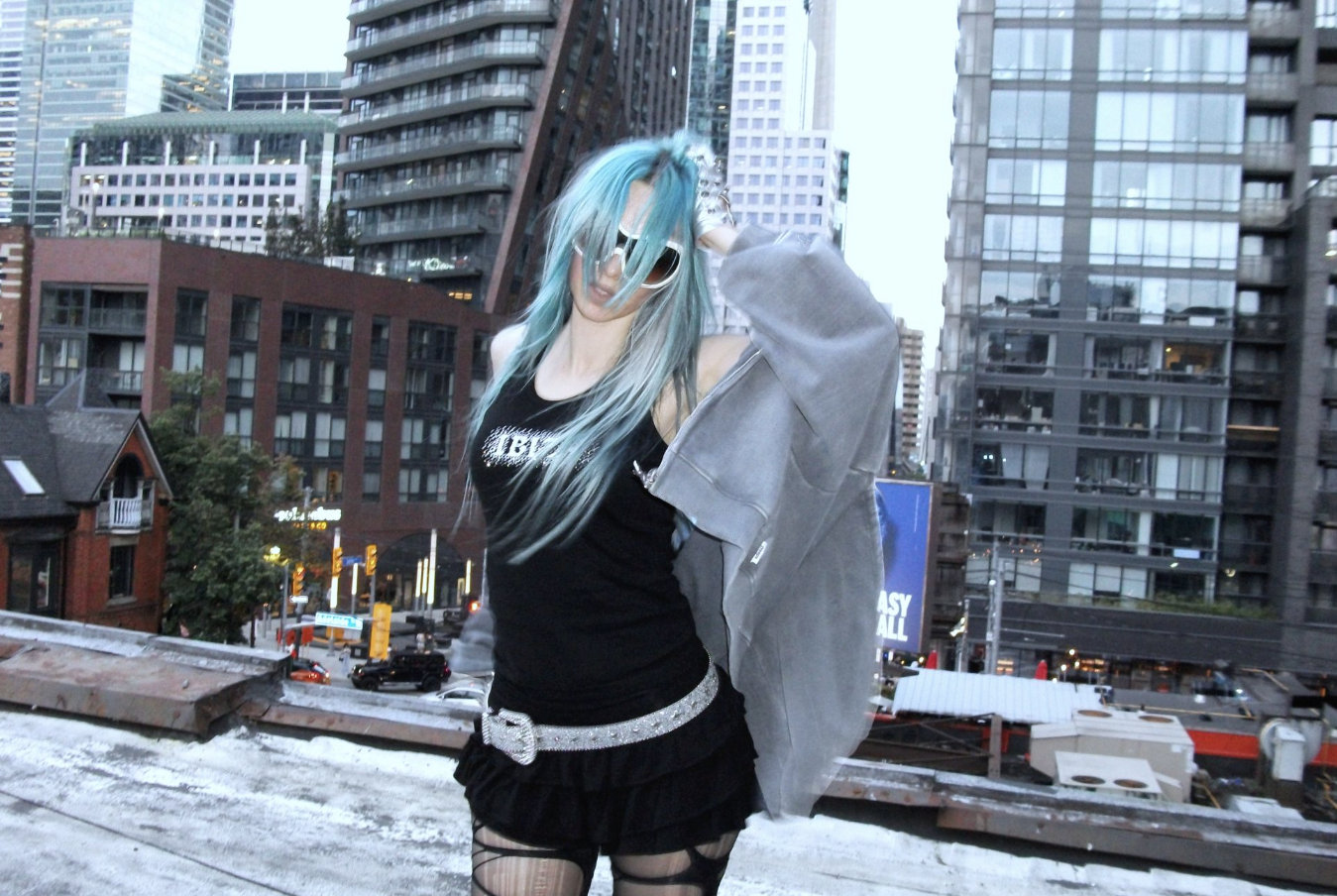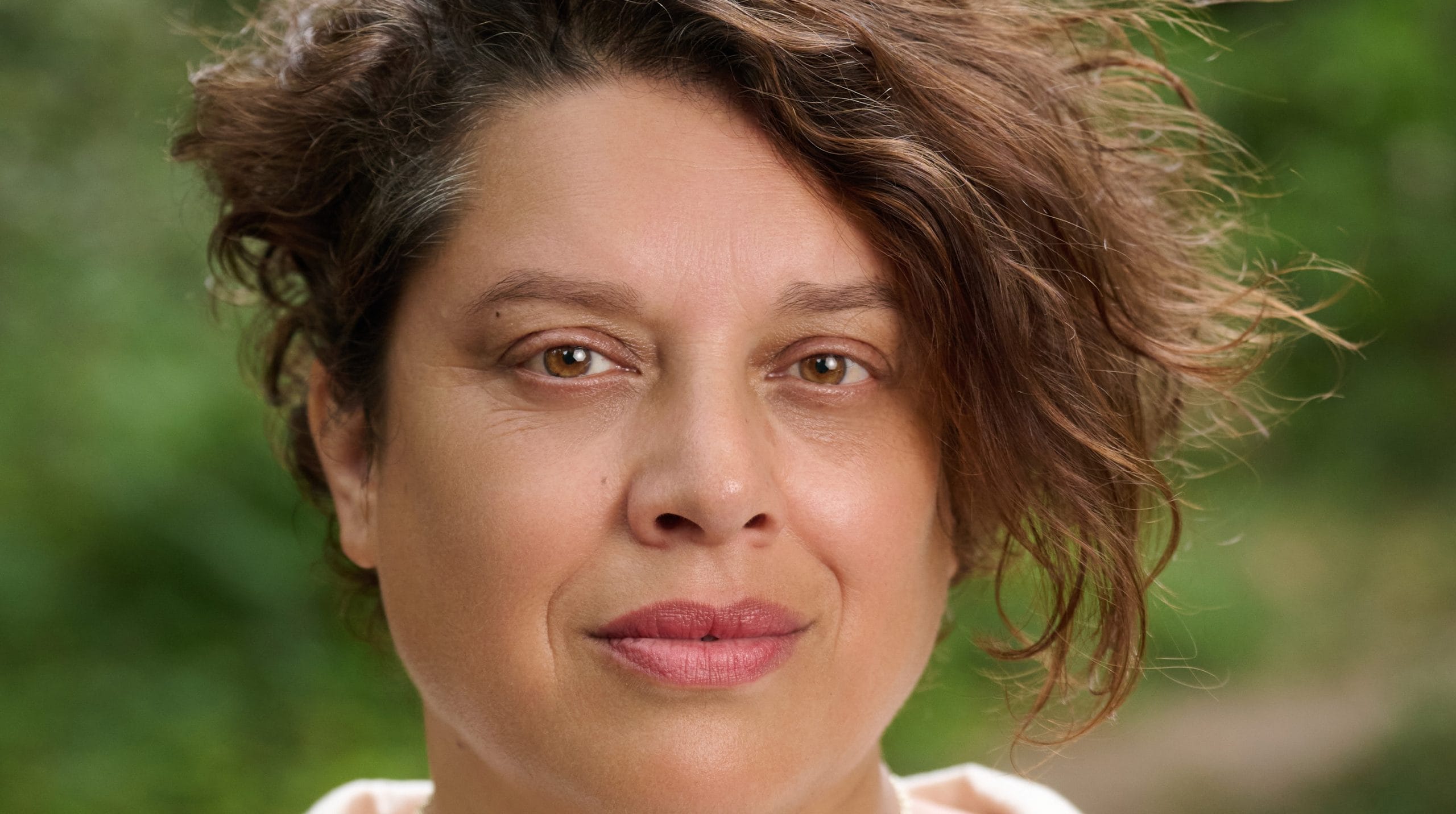
We spoke to producer and dancer Shak-T about her music and a stage fall.. that nearly de-railed everything
Shakti Wicked! Maragh has been in the room where it happens — several rooms, in fact, across several lives.
There was the medical school version: the student who spent her days immersed in anatomy and clinical theory while spending her nights on dancefloors, moving under lights, finding in rave culture something that the lecture hall couldn’t give her. Then there was the fall — a moment under a dance platform’s safety rail that fractured her back and changed the physical terms of her life in ways that couldn’t be undone. And then, slowly, there was what came after: the pivot to vinyl, to DJing, to finding a way back into the music through the decks rather than through her body.
Most people who experience that kind of rupture either leave the thing that broke them or cling to a version of it that no longer fits. Shak-T did neither. She rebuilt her relationship with music from the ground up, found her footing in warehouse sets and festival appearances, and eventually arrived somewhere she hadn’t originally been heading: as a songwriter, as a performer, as someone with something specific to say rather than simply a body in motion on a stage.
“The Light,” her debut single — released deliberately outside of Spotify and Amazon — is the first document of that arrival. Written and produced with producer Jack Gourlay, it’s a track about resilience and rebirth that doesn’t have to reach for those themes because it is, in the most literal sense, made of them. The dancefloor energy is still there. So is the weight of everything it took to get back to it.
We sat down with Shak-T to talk about the fall, the recovery, the decks, and what it means to finally make a record that sounds like yourself.
The fall happened under a dance platform’s safety rail. Can you take us back to that moment — what do you remember about it, and when did you first understand the extent of what had happened to your back?
The platform was stage right above balcony level accessed from the lighting walkway. I stepped up from the lower level to the higher, missed my step somehow (perhaps disorientated from the flashing lights) and fell out under the safety rail, thankfully down to balcony level rather than all the way down to the dance floor. I’d put my right arm down to break my fall so sprained that wrist. I remember instantly the pain in my back. I lay there for a few seconds, then decided to try wiggling my toes; I could move my toes so thought I couldn’t have done too much serious damage. 2 security guys came and an ambulance was called. It was a really busy club night, and with “the show must go on” ballet training mentality and adrenaline pumping, I figured it was easier to be held up and walked out by security rather than stretchered out by an ambulance crew. By the time we got outside to the ambulance I felt really nauseous. The crew wanted to take me to King’s but I somehow persuaded them to take me to St George’s, where I was a student.
I remember lying on a trolley in A&E and having just bought my first pair of proper dancer’s fishnet tights (expensive!) I pleaded with staff not to cut me out of them, which prompted the A&E doctor to scan my head for concussion rather than X-ray my back which was excruciatingly painful. Despite needing morphine injections in my leg to manage the back pain whilst in hospital, it took 3 days for the medical team to X-ray my back! There was a clear fracture line down three transverse processes of my L2-4 vertebrae. I was reassured it was not a serious fracture (no spinal cord damage) but the most painful fracture you can have – every time I moved, the muscles pulled the fracture apart. Bedpans were not pleasant so I then tried to walk to the toilet in the ward bay, crying out in pain with every step. I was discharged home after 5 days and spent the next couple of months on flat bed rest. It took about a year to recover, but I never fully regained the same strength on that side. I did get back to a level of performance for a while, but due to ongoing issues and several extreme flare ups, I moved into less physically demanding pursuits.
There’s a version of that story where someone walks away from music and the dancefloor entirely. What kept pulling you back, even when your body was telling you it couldn’t do what it used to?
My love of the music and the magic that can be created on a dance floor kept pulling me back. I was diagnosed with ADHD in my late 40s and I think being neurodivergent I experience musically differently to neurotypical folk; music feels all encompassing and compels me to move. In my 20s, raving was the best way I’d found to regulate my nervous system.
You channelled the recovery into DJing — vinyl, warehouse sets, festivals. What did that transition feel like? Was it a conscious decision to find a way back through the decks, or did it happen more gradually than that?
I’d had decks in my bedroom since 1994. My boyfriend at the time had gone with me to get 1210s and basic mixer set up. I didn’t have the confidence to play out, and when I did spin some tunes at a doctors mess party in 1997, being told “don’t give up the day job” kept me mixing in my bedroom for several more years. It was only in 2000 when I was on a festival tour with Save The Rhino, stage managing the show “Spirit of the Rhino Drum”, that the crew persuaded me to play on the set up in the crew kitchen horse box; the crew encouragement and cheers if I made a mistake boosted my confidence, and before I knew it I was playing off the back of the flatbed trailer as we went along the Notting Hill Carnival route.
Vinyl had become a passion, and I hustled a job at a distributors, spending most of my salary on tunes and my last pay check in 2001 on a small sound system so I could play what I wanted when I wanted, rather than having to haggle with guys to play on their rigs at warehouse raves or free parties. I did the music for several of my rave mates weddings and still play at their gatherings and small festivals.
I was struggling with lugging records around in 2002 due to back flare ups, so started exploring digital set ups with Final Scratch, and finally parted with my soundsystem in 2006.
Working with producer Jack Gourlay on the track — how much of the song came from you needing to tell this particular story, and how much of the sound evolved through the collaboration?
The song mostly evolved through collaboration with Jack Gourlay. “The Light” is the story of experiencing heart arrhythmias one night in 2024 as a consequence of what I believe is chronic Lyme’s disease, contracted at a music festival in 2018.
I’d emailed Jack some themes for the song ahead of the day in his studio towards the end of April
It will pass (health challenges and flares)
Keep showing up
Breathe deep
Get through the dark hours of the night (before sunrise)
The warmth of the sunlight
I’d also sent Jack a playlist of some of my musical inspiration and we started choosing instrument sounds, drum loops and samples and he got a loop going. I started with a simple chorus, and then wrote the lyrics for the verses. The melody for the verses started emerging and Jack was really helpful at shaping the structure of the song. The overlaying vocals at the end of the track came to me towards the end of the day, and we honed those more when recording final vocals in mid-July for all 4 tracks on the EP.
You’ve chosen to release on Bandcamp and outside of Spotify and Amazon. For an artist putting out a debut single, that’s a deliberate stance. What does that decision say about the kind of relationship you want to have with the people who find your music?
I trust some of the people who find and resonate with my music will want to come on a journey with me, and Bandcamp offers features that enable that connection to grow, as well as a fair deal for artists. I’ve been blown away by the generosity of people purchasing my track who have also donated on top, and I’m putting that money towards preparations for live performances of the EP.
Connect with Shak-T: Instagram
Interview with Allen Hulsey