Most independent artists know the dead air that comes after sending music into the world.
You finish the record, write the pitch, find the blogs, radio hosts, playlist curators, labels, and industry contacts that seem like the right fit, then watch the whole thing disappear into inboxes where silence is the most common answer. Before strategy, before fan capture, before export markets, before a team can form around the project, there is still the same brutal problem: getting the right person to press play.
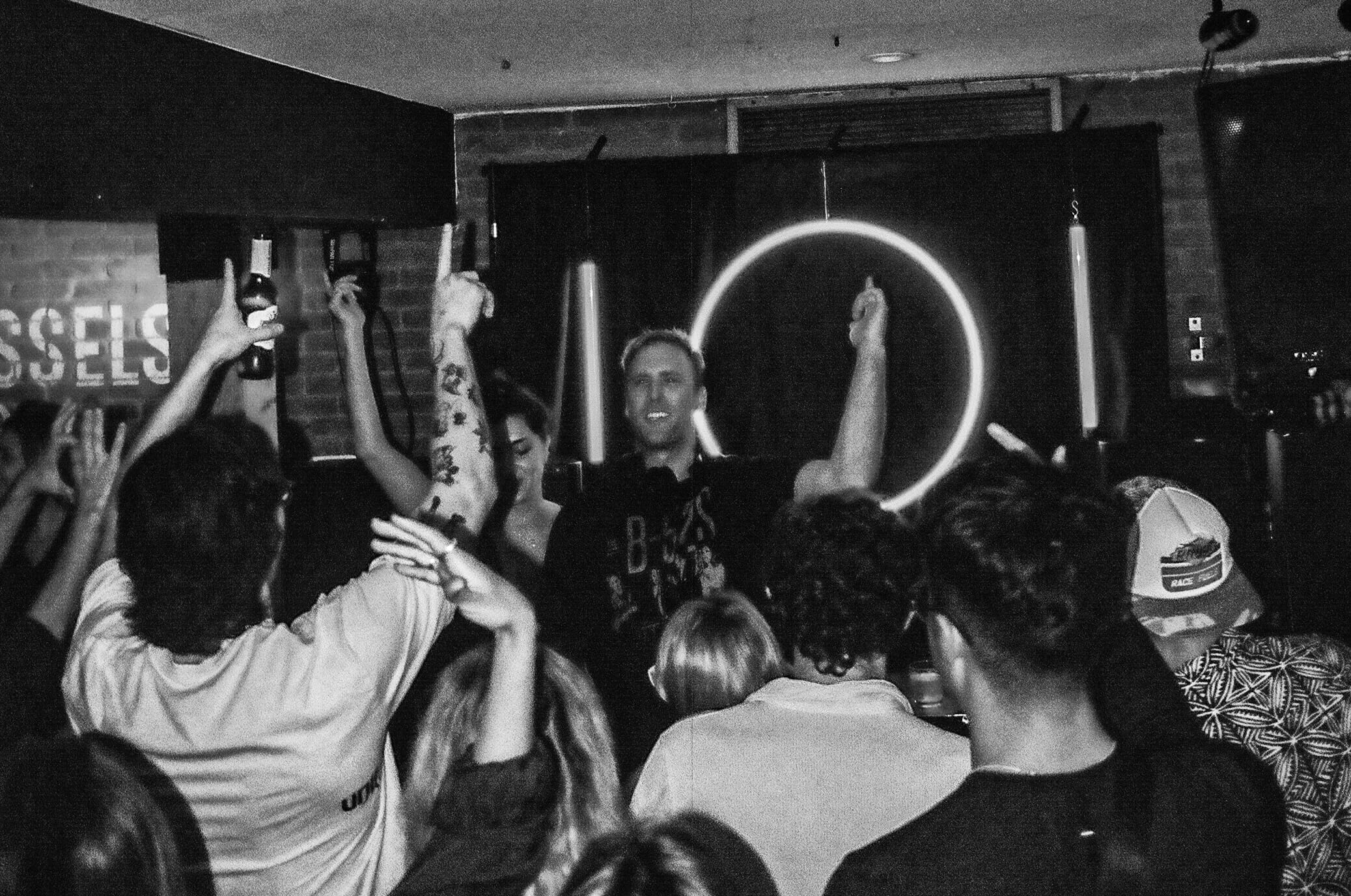
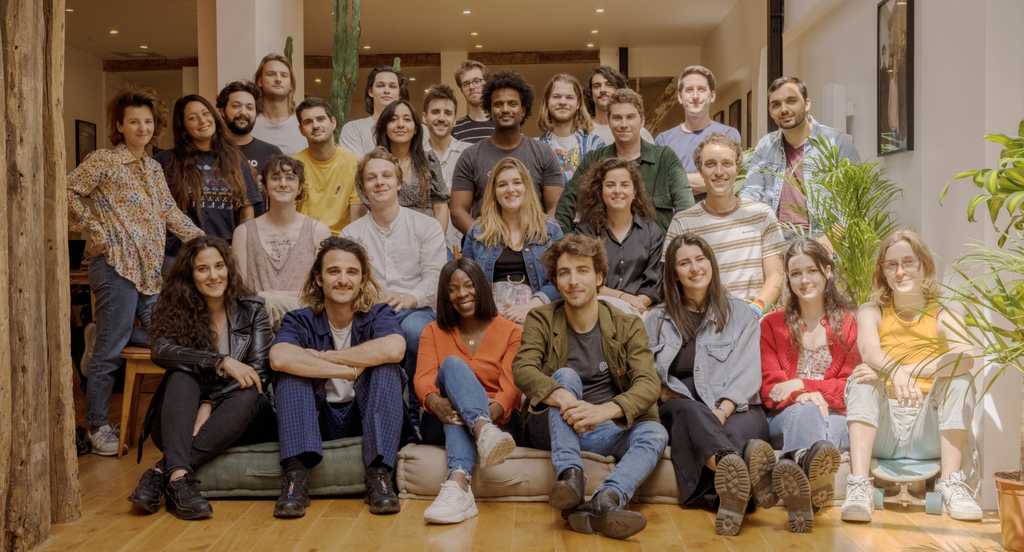
Groover was built around that first listen, which is probably why the company’s expansion into wider artist services feels more logical than it would if it had started as another vague creator platform. Dorian Perron (pictured above) came from the blog side with Indeflagration; co-founder Romain Palmieri (pictured right in the image below) had been sending music from the artist side, and the team’s early artist interviews kept pointing back to the same issue: promotion was expensive, opaque, and often built around no guarantee that anyone had actually listened.
Groover’s first job was to make that exchange more direct: artists choose who they reach out to, curators and pros give feedback, and the process feels less like a message in a bottle.

The next question is what happens after attention arrives. A campaign can earn feedback, coverage, playlist support, a label reply, or a useful industry contact, but an artist still needs a way to turn that moment into something that lasts beyond the release week.
That is where Groover’s Temple integration, coaching offers, acceleration programs, and partnerships with companies like Yamaha start to matter.
The platform is moving from access toward continuity, from getting heard once toward helping artists build a fanbase, understand where their music travels, and spend less time stitching together tools that do not speak to each other.
Interview With Dorian Perron

Groover began by connecting artists with music professionals. What convinced you that promotion alone addressed too small a portion of the artist’s career?
To give a bit of context, I had created an indie music blog called Indeflagration in 2013, and my co-founder Romain had released a first EP and started a record label with his family. We had both witnessed the communication struggle between independent artists and the people that can actually move the needle for them: curators, blogs, radio stations, record labels and other industry pros. Romain felt like sending a message in a bottle every time he was submitting his EP to a journalist, and my inbox was exploding with requests from artists.
I was in California with Romain and my other co-founder Rafaël, on an entrepreneurship program at Berkeley. We knew we wanted to build something in music, and really wanted to solve problems for struggling indie artists. So we went and did over 200 interviews with artists to find out. The pain point that kept coming back, over and over, was promotion: artists were paying thousands of dollars to PR agencies or promo services with zero guarantee of results, or they were sending hundreds of emails and getting no answers. No feedback, no visibility into who actually listened, sometimes not even a reply.
That’s the problem we set out to fix first.
But we always knew promotion was one moment in a much longer career, and we quickly mapped that helping address the promotion and curation issues will also open a way for us to solve other topics such as broader marketing, career development, educational topics etc. An artist doesn’t just need someone to listen to a track once; they need to build a team, a fanbase, a strategy that holds up release after release. Focusing on solving this problem first and obsessing over it is what earned us the right to keep going, but it was never going to be the whole story if we wanted to really make a difference for independent artists.
Why did acquiring Temple offer a better route than developing comparable capabilities within Groover?
Our objective has been to turn Groover into an all-in-one platform for promotion and artist services, not just a submission tool. We could have tried to build fan-growth and direct-to-fan tools ourselves, but Temple already had a great product, a strong brand, and a real community behind it: customizable microsites, fan data capture, a CRM and advertising tools built specifically for artists. Rebuilding all of that from scratch would have cost us years we didn’t need to spend.
On top of that, we knew Omar, Temple’s founder, well, and he was looking for the right home to scale his vision faster. That combination — a product we believed in, a team we trusted, and a founder who wanted this outcome as much as we did — made it a better opportunity for both companies than trying to compete with each other. We announced the deal in September 2025, and Temple by Groover has been live and free for any artist to set up ever since. We recently merged Temple into the Groover platform, so that each artist can benefit from a seamless and customizable micro-site for free as soon as they join Groover.
It can be both used as their Groover profile for the curators to learn more about them, and their link in bio for their broader audience. This way, artists can both showcase their music and project the best way to everyone, and use the interactions and data to keep on building up and owning their fanbase directly.
What did you learn during the acquisition process about evaluating a music-technology company whose product relies on artist and fan data?
A lot of it came down to the relationship we already had with Omar. Because we knew him and trusted him, there was a level of confidence going in that you don’t get with a cold acquisition. That trust mattered a lot when you’re talking about handing over artists’ fan data and audience relationships; you want to know the team on the other side cares about that data the same way you do.
Omar also wanted the tool he had built to join a home whose mission was to address independent artists and help them. We had already built a large community, and it felt like the perfect choice so that more and more artists could benefit from the tools Temple had built.
Beyond that, we looked at it the way you’d expect: user numbers, retention, engagement. But just as important was complementarity, meaning how well Temple’s tools would sit alongside what Groover already offered, and what real value the combination would bring to artists rather than just growing our feature list for its own sake. If it doesn’t make the artist’s life easier, the acquisition isn’t worth doing.
How are you connecting Groover campaigns with Temple activity so artists can follow the path from professional support to fan action?
When we first acquired Temple, we kept it as a separate product, and we only rebranded the website as Temple by Groover while the two platforms ran independently. That changed more recently: over a few days in September, we fully migrated Temple into the Groover ecosystem. It’s not a companion app anymore, it sits directly inside an artist’s Groover profile, alongside their promotion campaigns.
Everything an artist had on Temple carries over as-is: their link-in-bio page, their Drops for music, event, merch, RSVP and content, their full audience and fan segments, and their analytics. The idea is straightforward: an artist runs a Groover campaign to get their music in front of curators and industry pros, and now they can point that same attention toward a Temple page that turns listeners into fans they can actually track and message, watching their audience grow off the back of the exact campaign that drove it, all in one account instead of stitching two tools together. The interconnections are endless and feed a lot of our ideas for the months and years to come.
Where do outside partnerships remain preferable to adding another service directly to Groover?
Partnerships are core to how we operate. We’ve built strong relationships with SoundCloud, TuneCore, Amuse, CD Baby, UnitedMasters, Yamaha, Symphonic, Audiomack, Bandzoogle, Deezer and a number of other players in the industry.
Whenever we recognize an expertise we don’t have, whether that is distribution, hardware, or a distinct creator audience, we think a partnership makes a lot more sense than trying to build a weaker version of it ourselves. We believe in growing by helping each other rather than trying to own every layer of an artist’s toolkit.
Do you expect the next phase of artist services to favor large integrated platforms, or will artists continue assembling separate providers for each part of their business?
I do believe we’re heading toward more integration. With how many subscriptions people juggle today — forgetting passwords, forgetting they even have some of these subscriptions — artists and creators generally want to centralize things.
You can see that shift happening already with offers like Yamaha’s Creator Pass, which bundles a curated selection of vetted tools, including Groover, under one login instead of asking creators to shop around separately for production software, mastering, and promotion. That’s the direction we’re heading in, and we’re glad to be part of it.
When you launched Groover, which problem in music promotion did you want to solve first?
The very first wall we wanted to break was the first listen. If you don’t have a network and you’re making music alone in your bedroom, it’s genuinely hard to get your work heard by anyone beyond friends and family. That’s exactly why we built Groover: to give every artist access to a vetted selection of curators and music professionals who will actually listen and give feedback, and to do it at a reasonable price. Artists don’t need to spend thousands of dollars the way they would with a traditional PR agency; on Groover they control who they reach out to and how much they spend.
What does an artist gain when promotion, coaching, acceleration and direct-to-fan services are available within one company?
Our vision is to be the go-to music promotion platform for independent artists, whatever stage of their career they’re at. That’s exactly why we’ve built different offers rather than one single product: Groover itself for promotion and curator feedback, Groover Coaching, formerly Groover Club, for coaching and personalized follow-up, Groover Obsessions for artists ready for a more intensive acceleration program, and now Temple by Groover for direct-to-fan growth. Everyone should be able to find the service that matches where they actually are, instead of being pushed into a one-size-fits-all package.
Which differences have you observed in how artists approach promotion from one market to another?
That’s a great question. Music promotion is closely tied to language: an English-language song naturally has a stronger international ceiling than a French one, simply because of how much of the world understands it. But that’s exactly the kind of frontier Groover exists to help artists push past: because you can target curators and pros in specific countries directly through the platform, you can test an export market before investing heavily in it.
I’ve talked about this before with American artists who love that Groover lets them target France, Italy, Brazil or Canada from day one, get real curators and pros to listen, and start building initial contacts and coverage in a market where they’re starting from zero.
It’s often smarter to build that first layer of traction through a Groover campaign before bringing in an expensive PR agency for a market. A PR push tends to land a lot better once there’s already some initial visibility and contacts to build on, rather than starting completely cold. With a community that today spans more than 180 countries, we see this play out constantly: artists using the platform as a low-risk way to discover where their music actually travels, language barrier and all.

As Groover adds services, how are you keeping the pricing and product choices easy for independent artists to understand?
We try to keep each service distinct from the others: Groover, Coaching, Obsessions, Temple by Groover, all under the same Groover brand, but each with clear messaging about what it’s for and who it’s for. And we make these lines evolve when it makes sense, such as including the Temple micro-site within the Groover platform in September. We never want an artist to have to guess which product solves their problem. Staying accessible is a priority across the board, whichever service they land on.
What does the Yamaha partnership allow Groover to offer that would have been difficult to provide independently?
We started with something quite straightforward: a call for applications where one independent artist could win a package of Yamaha tech and social amplification. From there, it grew into a much deeper integration through Yamaha Creator Pass, an all-in-one subscription for music creators that bundles tools from Output, LANDR, Riverside and Groover, among others, under a single Yamaha ID. Producer and Producer Plus pass holders now get Groover credits, or Grooviz, added directly to their wallet every month, and they can sign up or log in to Groover using their Yamaha account.
Being part of an innovative platform like this, alongside a partner as established as Yamaha in our industry, is exactly the kind of collaboration that lets us support independent artists further than we could on our own.
Looking ahead, what would you like an independent artist to be able to manage from a single Groover account that they cannot manage there today?
We want Groover to be the all-in-one promotion platform for independent artists: sending promotion campaigns, building and running a mini-site, launching ad campaigns, collecting fan data, and tracking analytics, all from one account. Some of that already exists since the Temple merge, but we’re not done. Whether it comes through new features we build ourselves, deeper integrations like the one with Yamaha, or new partnerships altogether, the goal is the same: fewer tools an artist has to juggle, and more time they can spend actually making music and building their artistic universe.
Company Spotlight: What Groover Does
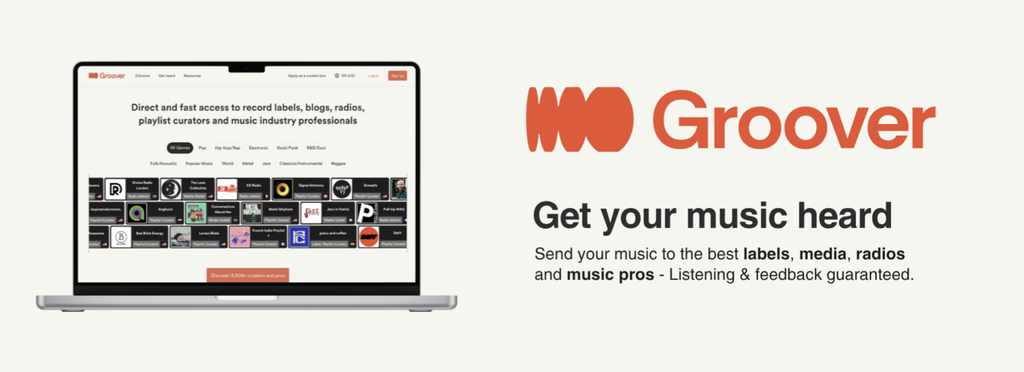
Groover is a music promotion and artist-services platform built around a specific problem independent artists know too well: getting the right people to actually hear the record. Artists and their teams can send music to selected curators, blogs, radio stations, playlist owners, labels, and other music professionals, then receive feedback rather than waiting on a blind inbox.
The company now says more than 3,000 active curators and pros have used Groover to give more than 6 million pieces of feedback, with more than 1 million shares, reviews, playlist adds, and related opportunities, plus more than 1,500 label signings. Those numbers explain the scale, but Groover’s current direction is more interesting than the scale alone. The company is trying to move beyond “send the song and wait” into the wider problem of what artists do with attention once they get it.
That is where Temple by Groover comes in.
Temple adds direct-to-fan infrastructure to the Groover ecosystem, giving artists customizable microsites, link-in-bio pages, fan data capture, audience segments, analytics, Drops, and tools built around music, events, merch, RSVP, and content. The point is not only to make a campaign look cleaner. It is to help artists turn campaign activity into fan relationships they can see, track, and continue.
Groover’s other services fill in different parts of the artist path. Groover itself handles promotion and curator feedback, Groover Coaching adds more personalized follow-up, Groover Obsessions is built for artists ready for a more intensive acceleration layer, and Temple by Groover pushes into direct-to-fan growth. The company’s own framing is less about pushing every artist into the same product and more about meeting them at the point they are actually at.
Partnerships remain a major part of that strategy.
Groover works with companies including SoundCloud, TuneCore, Amuse, CD Baby, UnitedMasters, Yamaha, Symphonic, Audiomack, Bandzoogle, Deezer, and others, and Dorian’s answer makes clear that the company does not want to build weaker versions of services better handled elsewhere. Yamaha Creator Pass is one example of that thinking, placing Groover inside a wider creator subscription alongside other tools for production, mastering, recording, and promotion.
That makes Groover less interesting as a submission platform alone and more interesting as a company trying to organize the messy middle of independent music careers.
The first listen still matters, because no artist career moves if nobody hears the work. But the next layer is turning feedback, coverage, audience interest, and early market signals into something the artist can actually use.
Website: https://groover.co
Closing Thoughts
Groover’s sharpest idea is still the first one. Independent artists do not only need “promotion” in the abstract; they need proof that somebody relevant heard the record, had a reaction, and either passed, supported it, shared it, or opened a door.
That first listen is easy to underrate once a company starts expanding, but it remains the pressure point every artist recognizes.
That is why this pairs cleanly with my interview with Hype-Index on curation, trust, and emerging artists. Hype-Index is built more like a human-led editorial filter, while Groover is an artist-facing campaign platform, but both are dealing with the same overload problem. There is too much music moving too quickly, and the real work is helping the right people find each other without pretending that algorithmic motion is the same thing as taste.
The Temple move is the part that gives Groover’s next phase more shape.
Getting a curator to listen is one thing, and getting a share or playlist add is another, but those moments can disappear quickly if the artist has no direct path back to the people who cared. Temple turns part of that attention into a page, a data trail, an audience segment, and a fan relationship the artist can return to later.
That thread also connects with Sample Focus founder Daniel Trostli on building a better sample library. Sample Focus works earlier in the process, helping producers find material that can move a track forward, while Groover works later, helping finished music reach people who might act on it. Both companies are responding to a similar creative economy problem: artists do not need more clutter around the work. They need systems that reduce the amount of time lost between having an idea and doing something with it.
Yamaha Creator Pass gives the partnership strategy a more concrete example. I wrote about Yamaha Creator Pass adding DAWs, tutorials, and a $9.99 starter plan, and the interesting part of that model is the same one Dorian points to here: artists are tired of managing too many accounts, logins, subscriptions, and partial solutions. A platform does not have to own every part of the stack to make the stack easier to move through.
That is also where Groover’s acquisition logic feels more grounded than the usual “all-in-one” language. Dorian is not claiming Groover should build every artist tool internally. The better read is that Groover wants to own the handoff between promotion, feedback, fan capture, and campaign learning, then partner where another company already has deeper expertise. That is a more believable version of integration than pretending one company can be the best at everything.
There is also a useful link to ELPHNT on building a sustainable music life. ELPHNT talks from the creator-tool and education side, but the overlap is the same pressure independent artists feel every day: the need to make work, communicate around it, build an audience, stay visible, and avoid letting the admin swallow the reason they started making music in the first place. Groover’s promise only works if it reduces that drag rather than adding another dashboard for artists to maintain.
The export-market point is especially practical.
An artist in the U.S. can test France, Italy, Brazil, or Canada before hiring an expensive PR partner in that territory, and that kind of campaign can give an artist a cheaper first layer of information before they commit serious budget. That does not replace deeper local strategy, but it can make the next move less cold.
The broader takeaway is that Groover is moving from access toward continuity.
The company started by making the first listen less random, and that still gives the platform its center. But the more interesting artist-services question comes afterward: once the record gets heard, how does the artist hold onto the people, data, feedback, and market signals created by that moment? Groover’s next phase is built around that handoff, and that is where the company’s original promise starts becoming a fuller argument for independent artists trying to build something release after release.

Will Vance is a professional music producer who has been involved in the industry for the better part of a decade and has been the managing editor at Magnetic Magazine since mid-2022. In that time period, he has published thousands of articles on music production, industry think pieces and educational articles about the music industry. Over the last decade as a professional music producer, Will Vance has also ran multiple successful and highly respected record labels in the industry, including Where The Heart Is Records as well as having launched a new label with a focus on community through Magnetic Magazine. When not running these labels or producing his own music, Vance is likely writing for other top industry sites like Waves or the Hyperbits Masterclass or working on his upcoming book on mindfulness in music production. On the rare chance he's not thinking about music production, he's probably running a game of Dungeons and Dragons with his friends which he has been the dungeon master for for many years.